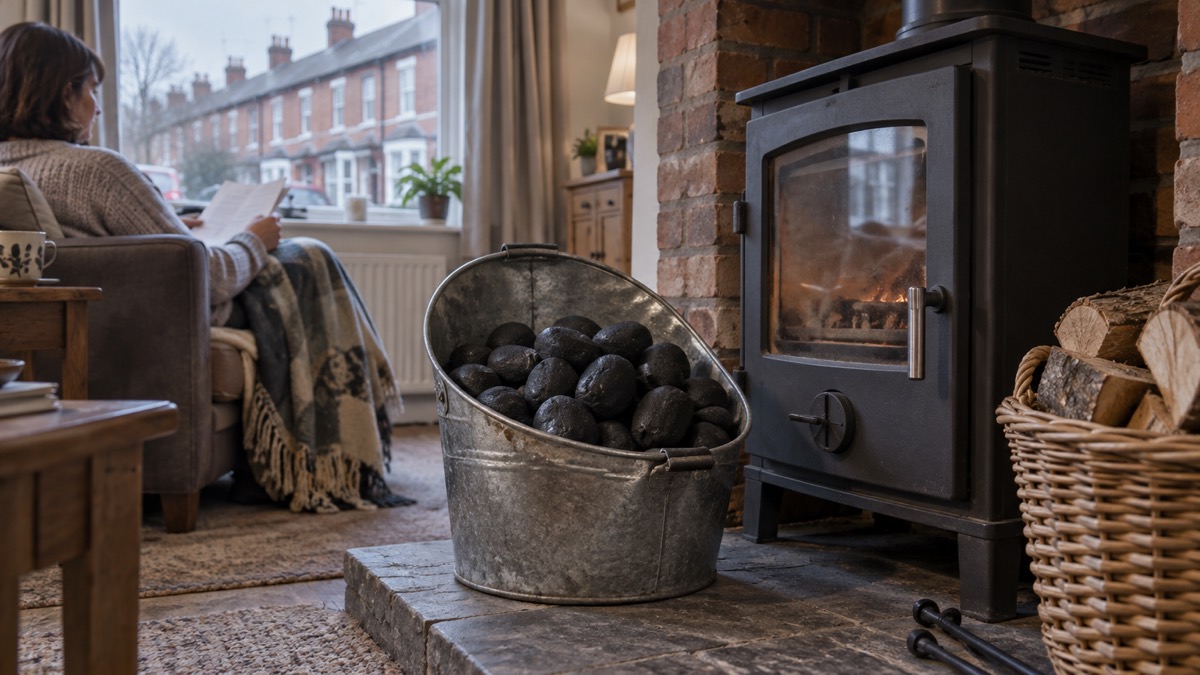
If you have an open fire or a wood burner at home, or you are thinking about one as backup heating for a power cut, the first thing to establish is whether you live in a smoke control area. In these areas you cannot emit a substantial amount of smoke from your chimney, and you may only burn fuels such as wood in an appliance that the government has approved for that purpose1. Getting it wrong carries two separate penalties: a financial penalty of between £175 and £300 for emitting substantial smoke from a chimney, and a fine of up to £1,000 for buying an unauthorised fuel for use in a smoke control area unless it is to be used in an approved appliance1.
The rules are set out in official guidance published by the Department for Environment, Food and Rural Affairs (Defra), and they apply to ordinary households, not just to industry. This page sets out what the rules mean in practice: how to find out whether your address is affected, what you can burn and in what, what the penalties are, how garden bonfires are treated, and how to use a fire safely in a power cut without falling foul of the rules. Related guidance on heating and cooking without mains power or gas covers the wider picture of keeping warm in an outage.
What a smoke control area means for your household
A smoke control area is a legally defined area where you cannot emit a substantial amount of smoke from a chimney1. Defra's guidance puts it plainly: additional regulations apply to burning in these areas, and you could be committing an offence if smoke is released from the chimney of your home3. The rule is about the chimney, which is why it bites hardest on open fires and wood burners, the two most common ways households burn solid fuel at home.
The practical effect is that the fuel and the appliance both matter. You cannot solve the problem by buying a "cleaner" fuel alone, nor by installing an efficient stove alone. In a smoke control area you may only burn unauthorised fuels, which include wood, on a Defra exempt appliance1. An unauthorised fuel burned in the wrong appliance, or the right fuel burned carelessly so that substantial smoke escapes, can each lead to trouble. Defra's guidance describes these fuels as "controlled (also known as unauthorised fuels)"2, so you may see either term used by councils and retailers.
For a household thinking about emergency heating, this matters before you buy anything. A stove that is not on the exempt list, or a store of logs bought without checking the rules for your address, is money spent on something you may not lawfully use at home. The pages on wood burners and multi-fuel stoves in a power cut and firewood: how dry it should be cover the practical side of choosing and storing fuel; this page covers the legal side of whether you may burn it where you live.
Your council decides where the areas are, and enforces them
Smoke control areas are declared locally, and enforcement runs through your local authority. This is worth understanding because it shapes who you deal with at every stage: confirming whether you are in an area, reporting a neighbour's smoke, and answering questions about a particular fuel or appliance.
If you have concerns about smoke, whether from a chimney or a garden bonfire, the environmental health department of your local council is the right contact. Most nuisance complaints about garden bonfires are dealt with by the environmental health department of the local council4, and London Fire Brigade likewise directs garden bonfire concerns to Environmental Health5. Dorset & Wiltshire Fire and Rescue Service gives the same advice for controlled burning: concerns about the environmental impacts of bonfires, such as smoke, should be directed to your local council6.
The Environmental Health Officer at your local council will be able to advise you on the next steps and can make the person responsible comply with the law7. In other words, the council does not merely offer mediation: it has the power to act. Humberside Fire and Rescue Service describes how it will work with local councils to enforce where occupiers are breaching the Environmental Protection Act8, which shows how smoke nuisance and fire risk can overlap in practice.
A short checklist for dealing with your council on smoke matters:
- To confirm your address: contact your local authority, since the official map data is indicative only2
- To report chimney or bonfire smoke: contact the environmental health department4
- To ask about a fuel or appliance: the same department can advise before you buy6
- If you rent: raise concerns with your landlord as well as the council; tenants have specific protections covered later on this page9
Burning wood: only on a Defra exempt appliance
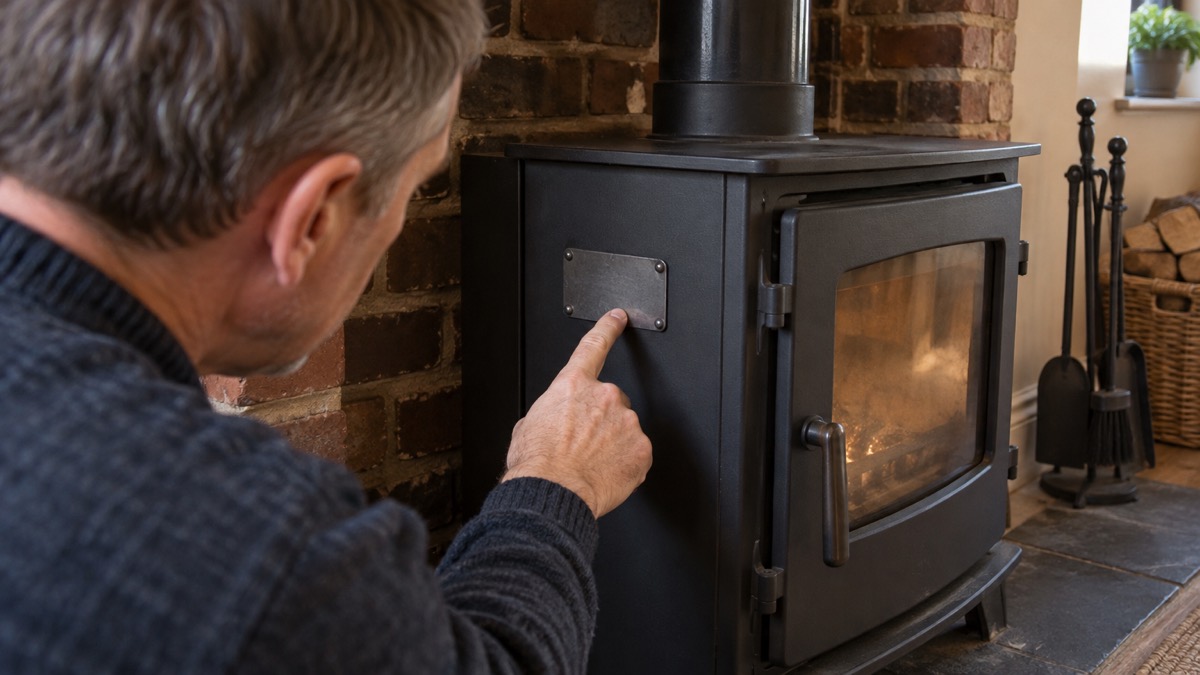
The single most important rule for households with a wood burner is the appliance rule. In smoke control areas, you can only burn controlled fuels, such as wood, on Defra approved appliances2. Defra's practical guidance for England states the same: in smoke control areas, you can only burn unauthorised fuels, such as wood, on Defra exempt appliances1.
Defra keeps a list of exempt appliances, and the check is by make and model, not by brand or type. Two stoves from the same maker can differ, so note the exact model name and number before you check. If you are buying a stove second hand or inheriting one with a house, ask for the installation paperwork or check the plate on the appliance, then confirm the model against the list.
One point catches out many households: a newer, cleaner-burning Ecodesign stove is not automatically exempt. You can only burn controlled fuels in Ecodesign stoves if they also appear on the list of Defra approved appliances2. Ecodesign is an efficiency and emissions standard, not a legal exemption for smoke control areas, so an Ecodesign label alone does not give you permission to burn wood in one of these areas.
Beyond the legal question, burning cleanly is also the practical answer to staying within the rules. Oxford City Council's fuel campaign advises: "Always look for the approved 'Ready to Burn' logo when buying fuel"10. Dry fuel produces less smoke, which reduces both the risk of a penalty and the nuisance to neighbours. The page on what wood and rubbish you should never burn lists the materials to keep out of any fire, and how often a chimney should be swept covers the maintenance that keeps smoke down.
Buying fuel: authorised fuels and the up to £1,000 fine
The rules reach into the purchase itself. You must not buy a controlled fuel, also known as an unauthorised fuel, for use in a smoke control area unless it is to be used in an approved appliance2. Defra's guidance for England states this plainly, and it is backed by a financial penalty for anyone who buys an unauthorised fuel for use in a smoke control area unless it is to be used in an exempt appliance1. The same rule appears in Defra's later guidance2. Your local authority is responsible for implementing the Clean Air Act 1993, including the designation and supervision of smoke control areas2.
This is why the question "can I still buy house coal in England" has a conditional answer. Fuels classed as unauthorised may still be bought, but only for use in an approved appliance if your home is in a smoke control area. If you are not in a smoke control area, the smoke control rules do not restrict your purchase, though the Ready to Burn scheme still applies to how fuel is sold. Confirm your status with your council before stocking up.
On the authorised side, Defra's Ready to Burn scheme grants exemptions to a range of newer fuels. The exemptions cover coffee logs, olive logs, wine logs, and fuels where they are mostly made of wheat husks, straw, miscanthus, bamboo or compressed food waste3. These are fuels made from waste plant material, and they carry the Ready to Burn mark when sold under the scheme.
| Fuel type | Where it stands |
|---|---|
| Wood (logs) | Unauthorised fuel: only on a Defra exempt appliance in a smoke control area1 |
| Coffee logs, olive logs, wine logs | Ready to Burn exemptions3 |
| Fuels mostly of wheat husks, straw, miscanthus, bamboo or compressed food waste | Ready to Burn exemptions3 |
| Any fuel with the Ready to Burn logo | Look for the approved logo when buying10 |
When you buy fuel for use in a smoke control area, choose authorised fuels, since only those may be burned in the appliances that are permitted there. If a penalty question ever arises, being able to show what you bought and where helps demonstrate good faith. For storing what you buy, see firewood: how dry it should be and how to season logs.
Smoke from your chimney: penalties of £175 to £300
Emitting smoke is the offence most likely to affect an ordinary household, because it can happen even with the right fuel in the right appliance if the fire is lit badly or the fuel is damp. You can be issued a financial penalty of between £175 and £300 if you emit a substantial amount of smoke from a chimney in a smoke control area1. Defra's later guidance gives the same range, £175 to £3002.
The word "substantial" is doing the work in that rule. A properly lit stove burning dry fuel on a correct appliance will produce some visible vapour at lighting but should not pour smoke once up to temperature. Persistent, heavy smoke is what draws complaints, and complaints go to the environmental health department of your local council11. An Environmental Health Officer can then advise on next steps and can make the person responsible comply with the law7.
The best protection against a penalty is the same as the best practice for burning:
- Burn only fuel that is right for your appliance and area1
- Look for the Ready to Burn logo when buying fuel10
- Keep the ventilation system of your wood stove clean, with no blockages, to prevent carbon monoxide build-up10
- Have the chimney swept regularly, as covered in chimney sweeping
- Watch your chimney once the fire is established; substantial smoke means something is wrong1
If you do receive a penalty notice and believe it is mistaken, for example because your appliance is exempt and your fuel was dry, contact your council's environmental health department with your appliance details and fuel receipts.
How do I know if I live in a smoke control area?
Defra publishes a map of smoke control areas, but treat it as a starting point only. The guidance is explicit: the data on the map is indicative only and you should always contact your local authority to confirm if you live in a smoke control area2. Defra's earlier guidance for England carries the same caveat1.
This caveat exists for a practical reason: areas are declared by councils over many years, boundaries can be complex, and map data can lag behind local decisions. A street that appears just outside a boundary may in fact be inside it, or the reverse. Since the difference decides whether you may burn wood at all, confirmation is worth a phone call or email to your local authority before you buy fuel or an appliance.
When you contact the council, have your full address to hand and ask two things: whether the address is in a smoke control area, and, if it is, whether the council holds any local guidance on fuels or appliances. Your local authority is responsible for implementing the Clean Air Act 1993, including the designation and supervision of smoke control areas, so it is the body whose answer settles the question.
If you are moving house or buying a property, make this check part of your enquiries. A fireplace that came with the house is not evidence that burning is allowed: the rules attach to the area, not to the hearth.
Garden bonfires and burning waste
Garden bonfires sit outside the smoke control area rules in one sense and inside the wider nuisance rules in another. Cheshire Fire and Rescue Service states the legal position: "There are no specific laws preventing you from having a bonfire in your garden. However, there are laws that deal with the nuisance they can cause, such as smoke affecting neighbours, traffic on the road or nearby properties."12
The practical advice from fire services is consistent. Avoid burning garden waste that is wet or green, as it creates excessive smoke and can cause nuisance12. Mid and West Wales Fire and Rescue Service asks householders to consider the effect the smoke may have on neighbours when burning anything in the garden13. Defra's guidance adds that most garden waste will not be dry and can emit a lot of smoke, and suggests disposing of garden waste through your local council's disposal scheme or composting it instead1.
There are firmer rules on waste beyond the garden shed. The burning of business and commercial waste is an offence unless it is authorised, and such waste should be disposed of through proper licensed routes rather than on a fire. Community events such as Scout and Guide campfires and Guy Fawkes' night bonfires can fall within narrow allowances, but only where the specific requirements that govern them are met in full. With any controlled burn, it is illegal to leave a fire unattended or to have too few people present to control it. Your local authority is responsible for implementing the Clean Air Act 1993, including the designation and supervision of smoke control areas, so it is the body to check with on what is allowed where you live14.
If you are planning a controlled burn on rural land, tell the fire and rescue service beforehand. Dorset & Wiltshire Fire and Rescue Service explains that Control needs the exact location of the fire, the planned burning times, and a contact number for the person responsible for the site6. In Wales, rural burning follows the Heather and Grass Burning Code for Wales 2008, and burning illegally could result in penalties being applied to any rural payments received as well as criminal offences15. Breaking these rules can result in penalties of up to £1,000 in Wales13. One community council in Wales notes that controlled burning is permitted between 1st October and 31st March16.
In the countryside, the fire services' message is simpler still: do not light fires in the countryside or other open spaces, including parks, moorland and wooded areas17, and only use barbecues in designated areas where they are permitted17. Forestry and Land Scotland asks visitors not to start fires in woodlands, following the Scottish Outdoor Access Code's advice18.
Using a fire or stove in a power cut without breaking the rules
A power cut does not suspend the smoke control rules. If your home is in one of these areas, the same appliance and fuel restrictions apply whether the grid is working or not, so a household that plans to use a fire as emergency heating needs to have sorted the legal position in advance. The page on wood burners and multi-fuel stoves in a power cut covers the practicalities of running a stove during an outage.
Before an outage, do three things. First, confirm with your council whether you are in a smoke control area2. Second, check your stove model against the Defra exempt list if you intend to burn wood2. Third, stock only fuel you may lawfully burn, looking for the Ready to Burn logo10.
During the outage, the fire and rescue services' safety advice applies alongside the smoke rules. Scottish Fire and Rescue Service's power cut guidance is blunt about candles: keep candles well away from anything that could catch fire, and never leave a lit candle alone19. A community resilience group in Wales goes further for power cut preparation: avoid using candles and paraffin heaters, and keep a torch handy16. Torch-first lighting is both safer and cleaner; see emergency lighting at home for the options.
Make sure that the ventilation system of your wood stove is clean, and has no blockages, to prevent carbon monoxide build-up10. That check matters most before the first fire of the season, which is exactly when many power cuts and cold snaps coincide. The pages on using a wood burner safely and chimney fires cover the operating side in detail.
Alarms, tenants and the rules across the nations
Solid fuel burning brings legal duties on alarms, and these differ between England and Scotland in ways worth knowing before you rely on a fire for heat.
In Scotland, every home must meet a standard set in law: one smoke alarm in the living room or the room you use most, one smoke alarm in every hallway and landing, and one heat alarm in the kitchen, all mounted on the ceiling and interlinked20. The Scottish Government's policy confirms the requirement for a smoke alarm in the living room and in circulation spaces such as hallways and landings, and a carbon monoxide alarm where there are fixed combustion appliances such as boilers and wood burners21. It is the property owner's responsibility for meeting the new standard20. In open plan areas, one alarm can cover the whole room provided it can be located where it is no more than 7.5 metres from any point in the room20. The tolerable standard guidance gives the same pattern: one smoke alarm in the room most frequently used for general daytime living purposes, one smoke alarm in every circulation space on each storey, one heat alarm in every kitchen, all alarms ceiling mounted and interlinked22, with all smoke and heat alarms required to be interlinked23. The standard also states that only heat alarms should be used in kitchens, though an existing kitchen smoke alarm need not be replaced until it reaches the end of its manufacturer's recommended lifespan23.
In England, the Smoke and Carbon Monoxide Alarm (England) Regulations 2015 came into force on 1 October 2015, requiring at least one smoke alarm on each storey in the private rented sector24. Cornwall Council's guidance adds that a carbon monoxide alarm is required in any room used wholly or partly as living accommodation which contains a solid fuel burning combustion appliance25. From 1 October 2022, landlords must ensure a carbon monoxide alarm in any room with a fixed combustion appliance, excluding gas cookers, and repair or replace faulty alarms once informed24. If you are a tenant, your landlord, unless they are excluded, must ensure that at least one smoke alarm is provided on each level of the home where there is a room used as living accommodation, under the Smoke and Carbon Monoxide Alarm Regulations which came into force on 1 October 20229. Local authorities can impose a fine of up to £5,000 where a landlord fails to comply with a remedial notice24. The regulations specifically exclude Houses in Multiple Occupation, as these properties are already covered by other legislation25.
| Where you live | What the law requires around solid fuel |
|---|---|
| Scotland | Interlinked smoke alarms in the living room and every hallway and landing, a heat alarm in the kitchen, and a carbon monoxide alarm where there are fixed combustion appliances such as wood burners20 |
| England, renting | A smoke alarm on each storey, and from 1 October 2022 a carbon monoxide alarm in any room with a fixed combustion appliance, excluding gas cookers24 |
| England, owning | A carbon monoxide alarm in any living room containing a solid fuel burning appliance25 |
On the smoke control rules themselves, the core Defra guidance on exempt appliances, authorised fuels and penalties is published for England1. In Wales, the distinct body of rules covers rural burning under the Heather and Grass Burning Code for Wales 2008, with penalties of up to £1,000 for breaking them13. If you live in Scotland, Wales or Northern Ireland and want to burn solid fuel at home, contact your local authority to confirm the rules for your address, in the same way an English householder confirms smoke control area status.
Gas cylinders: a safety notice worth checking
If your backup heating or cooking plans include bottled gas, one point from the safety notices deserves a place here. A Flogas Gold Butane Gas Cylinder sold with a regulator was made subject to a safety notice in December 2024 because it does not meet the requirements of The Gas Appliances (Enforcement) and Miscellaneous Amendments Regulations 201826. The notice explains the failure mode: regulators are designed for a maximum inlet pressure of 7.5 bar, and if exceeded this could lead to leakage of joints, failure of components or gas or flames to be emitted from the appliance itself26.
The lesson for households is to check that any cylinder and regulator combination you own has not been the subject of a safety notice, and to use only the regulator specified for the cylinder. The pages on bottled gas: butane, propane and regulators and how to change an LPG cylinder safely cover the practical steps, and where to store gas cylinders at home covers storage.
Sources (26)
- Ready to Burn: practical guidance on open fires and wood-burning stoves, Defra UK Air, April 2023
- Ready to Burn web guidance, October 2023 edition, Defra UK Air, October 2023
- Burn Better guidance, Defra UK Air, 2026
- Garden safety, North Yorkshire Fire and Rescue Service, August 2026
- Extreme weather summer guide, London Fire Brigade, May 2024
- Controlled burning, Dorset & Wiltshire Fire and Rescue Service, January 2022
- Landlord Responsibilities - Greater Manchester Fire Rescue Service, Greater Manchester Fire Rescue Service
- Celebrate safely, Humberside Fire and Rescue Service, October 2026
- Additional advice for tenants: smoke and heat alarms, Manchester Fire and Rescue Service, October 2026
- Fuel Good campaign, Oxford City Council, 2026
- Garden Bonfires - Seasonal Safety - Keeping You Safe - North Wales Fire And Rescue Service, North Wales Fire And Rescue Service
- Bonfires and burning waste, Cheshire Fire and Rescue Service, October 2026
- Wildfires and open fires in your garden, Mid and West Wales Fire and Rescue Service, October 2026
- Bay Baygt Bay VL - update.cdr, Charnwood
- Farm fire safety, Mid and West Wales Fire and Rescue Service, October 2026
- Adverse weather events, Llangattock Community Council, October 2026
- How to prevent wildfires, Wiltshire and Swindon Prepared, October 2026
- Wildfire prevention, Forestry and Land Scotland, October 2026
- Power cuts: safety advice, Scottish Fire and Rescue Service, October 2026
- Keep Safe, Keep Well winter safety campaign 2024 to 2025, Winter and Health Incident Coordination Hub Scotland, October 2024
- Home fire safety policy, Scottish Government, October 2026
- Tolerable standard guidance: satisfactory fire and carbon monoxide detection, Scottish Government, June 2023
- Tolerable standard guidance, chapter 16: satisfactory fire detection, Scottish Government, June 2023
- Smoke alarms: landlord and homeowner duties, Staffordshire Fire and Rescue Service, October 2026
- Smoke alarms at home, Cornwall Council, 2021
- Flogas Gold Butane Gas Cylinder safety notice, London Borough of Bromley, December 2024
 Before-Winter Heating Checks
 Backup Stove Kit Checklist
 Wood Burner Lighting Kit
 Keeping One Room Warm
 Clothing and Bedding for Cold
 Stopping Draughts
 Hot Water Bottle Safety
 Wheat Bags and Fire Risk
 Electric Blanket Safety
 Portable Heater Types
 Portable Heater Safety
 Wood Burners in a Power Cut
 Using a Wood Burner Safely
 Open Fires and Fire Guards
 Firewood and Seasoning Logs