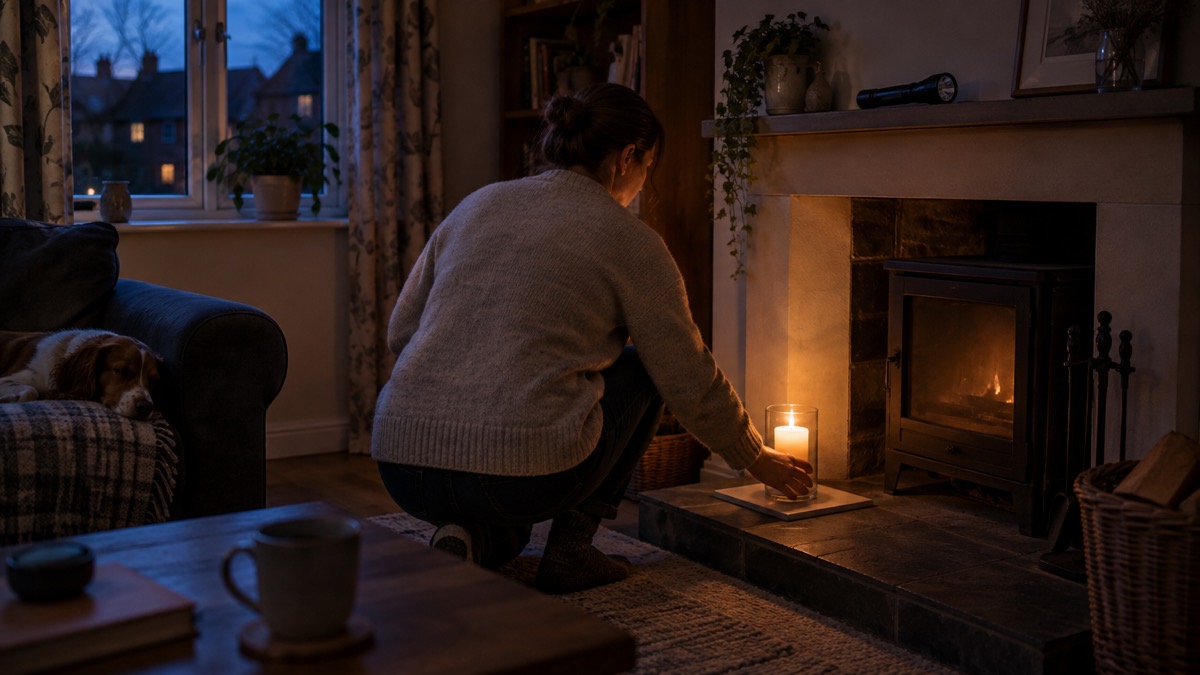
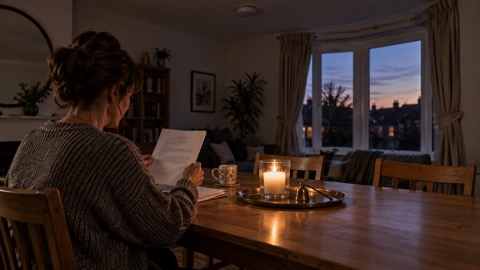
Candles start 850 accidental fires in the home every year in England alone, according to government fire statistics published in fire service guidance1. Around 30% of fires started by candles and attended by fire and rescue services result in death or injury2. Those two figures together explain why every fire and rescue service in the UK publishes the same short set of rules: never leave a lit candle alone, use a proper holder on a heat-resistant surface, keep flames away from anything that can catch fire, and put candles out before you leave the room or go to bed.
The safest option, as Devon and Somerset Fire and Rescue Service put it, is to avoid candles altogether and choose battery-powered lights instead3. But if you do burn candles, whether for atmosphere, for a festival, or because the power has gone off, the rules below are what fire services ask every household to follow. They take a minute to learn and they are the difference between a candle being a pleasant light and the start of a house fire.
Why candle fires are so dangerous
A candle is a naked flame sitting in your living room. Cumbria Fire and Rescue Service notes that candles are one of the most common causes of fires in the home precisely because they burn with a naked flame that can quickly set fire to clothing and soft furnishings6. There is no barrier between the flame and the room: a draught, a curious pet, a curtain that moves in the breeze, or a sleeve that brushes past is all it takes.
The consequences are unusually severe. Mersey Fire and Rescue Service reports that around 30% of fires started by candles and attended by fire and rescue services result in death or injury2. That is a far higher casualty rate than most household fire causes, and it reflects how candle fires start: close to people, close to fabric, and often in the evening when the room is full of exactly the materials that burn fastest.
The scale is national. Government guidance published through the fire sector states that 850 accidental fires in the home are started every year in England from candles1. The National Fire Chiefs Council adds the wider context: over 250,000 accidental dwelling fires in England over the past decade, with 1,804 deaths and 44,806 injuries7. Candles are one avoidable slice of that total, and the slice that fire services say is easiest to remove by switching to battery lights.
Never leave a lit candle unattended
This is the single rule every fire service repeats. The Scottish Fire and Rescue Service's home fire safety guide puts it at its bluntest: never leave a lit candle alone, even for a few seconds, and if you are going out or going to sleep, make sure candles are put out first4. Carmarthenshire Council's housing safety advice, which carries fire service guidance for Wales, says the same: never leave lit candles unattended, put burning candles out when you leave the room, and make sure they are out completely once you have finished with them5.
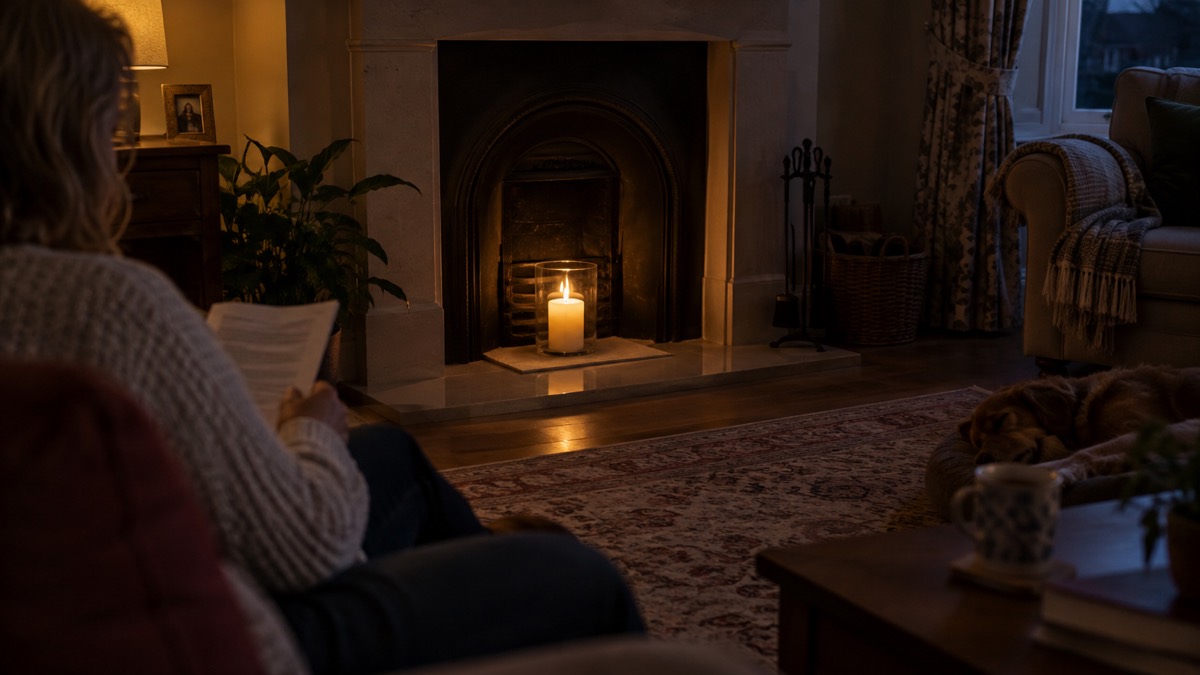
The reason "even for a few seconds" matters is that a candle fire takes seconds to start and minutes to take hold of a room. A candle left alone on a windowsill while you answer the door can be knocked by a pet, catch a blind, or simply flare in a draught, and there is nobody there to act in the first few seconds when acting is still easy.
Going to bed is the highest-risk moment of all. Devon and Somerset Fire and Rescue Service, reporting on fire risks during power cuts, asks households to never leave candles unattended and to extinguish them before leaving the room or going to sleep8. The Northern Ireland Fire and Rescue Service's New Year fire prevention campaign makes the point about sleep directly: candles can make you feel relaxed and provide lighting in a room, but you should never leave them unattended and always extinguish them if you think you will fall asleep9. Fire Scotland's festive safety guidance adds the reason: if you are tired, have been drinking, or taking drugs, you will be less alert to the signs of fire, more likely to fall asleep, and less likely to wake up if a fire starts10.
"Never leave a lit candle alone, even for a few seconds, and if you're going out, or going to sleep, make sure candles are put out."
Use a proper holder on a heat-resistant surface
A candle needs two things underneath it: a holder that cannot catch fire, and a surface that cannot be damaged by heat. Carmarthenshire Council's safety advice, carrying fire service guidance, is to always place candles and oil burners on a stable, heat-resistant surface5. Devon and Somerset Fire and Rescue Service, advising households during power cuts, says that if candles must be used, they should be in a heat-proof candle holder and kept well away from anything that could catch fire, including furniture, curtains, books and shelves8.
Different candles need slightly different treatment:
| Candle type | What fire services say |
|---|---|
| Ordinary candles | Secure in a proper holder on a stable, heat-resistant surface5 |
| Tea lights | Always burn in or on a suitable, non-flammable holder on a heat-resistant surface12 |
| Scented candles | Always put in a heat-resistant holder, as they are designed to liquefy when heated to maximise fragrance5 |
| Night lights | Place away from soft furnishings, on a non-flammable surface such as a plate or tile5 |
| Oil or incense burners | Use a heat-resistant, stable, non-flammable surface such as a ceramic tile or metal plate13 |
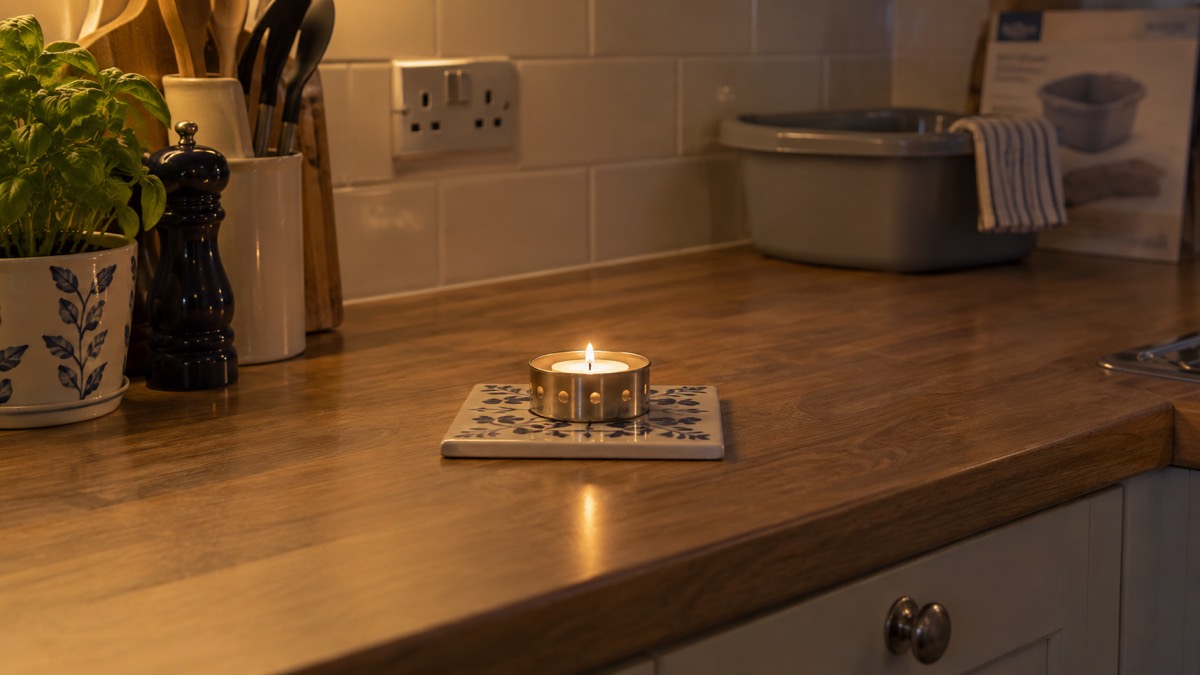
The tea light rule deserves special attention because tea lights look harmless. The Northern Ireland Fire and Rescue Service states it in capitals in its home safety advice: always burn tea lights in or on a suitable, non-flammable holder on a heat-resistant surface12. Fire Scotland adds that a tea-light holder should be made of non-flammable materials and sturdy enough to hold the candle upright13. The reason is that tea lights get hot enough to melt through what they stand on. Carmarthenshire Council's guidance warns that night lights and tea lights can melt plastic surfaces like TV tops and bathtubs5. A tea light on the plastic casing of a television, or on the rim of a bath for a "relaxing evening", is a fire waiting to happen: the plastic softens, the candle sinks, and the flame meets flammable material.
Scented candles catch people out in a different way. Because they are designed to liquefy when heated, an uncontained scented candle will spread molten wax, and the flame with it, across whatever it is standing on. That is why the holder for a scented candle is not optional5.
Keep candles away from curtains, clothing and soft furnishings
The flame needs clear space around it. North Yorkshire Fire and Rescue Service's Halloween advice is to secure candles in a proper holder and keep them away from flammable materials like curtains11. The National Fire Chiefs Council extends the same rule to the whole festive season: candles, heaters and decorations should be kept well away from flammable materials such as curtains or furnishings7. Devon and Somerset Fire and Rescue Service's list of what to keep clear includes furniture, curtains, books and shelves8.
Think about what is near the candle in every direction, not just below it:
- Curtains and blinds, including ones that move when a door opens or a draught comes through a window
- Clothing hanging nearby, and the sleeves and hems of anyone who walks past
- Soft furnishings: sofas, cushions, throws, bedding
- Books, shelves, papers and decorations
- Hair, which catches fire easily and is often close to a candle on a table or shelf
One further rule: keep candles away from soft furnishings, decorations, Christmas trees and wrapping paper, make sure they are out of reach of pets and children, and never leave them unattended14. A candle placed too near a curtain or a festive decoration gives the fire its next fuel. Move each one well clear, or better, use fewer.
Where a lit candle must never be
Some situations are not about distance or holders; they are absolute. North Yorkshire Fire and Rescue Service's Halloween safety advice states that children should not be left alone with lit candles, and that you should never leave children or pets alone in a room with lit candles11. A child reaching for a pretty light, or a cat jumping onto a shelf, can turn a candle into a clothing fire or a house fire in the time it takes to fetch something from another room.
The same principle applies to costumes and loose clothing. Humberside Fire and Rescue Service's celebrate-safely guidance warns against wearing fancy dress costumes or flowing materials when cooking or when near a naked flame or heat source, because they can very easily catch fire16. This matters most at Halloween, covered below, but it applies year-round to dressing gowns, scarves and long sleeves near candles.
There are also places a naked flame simply does not belong. The Northern Ireland Fire and Rescue Service's safety advice includes a rule for camping that shows how the risk scales: never light candles or have anything else with a naked flame in or near to a tent12. A tent is made of exactly the kind of lightweight fabric that burns fast, and a home full of curtains and furnishings is not so different when a flame gets loose.
LED candles and battery lights: the safer way to light a room
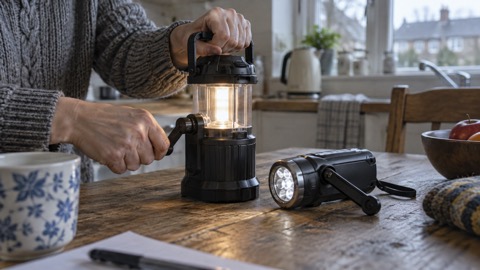
Every fire service that discusses candles also discusses the alternative, and they all point the same way. The advice is that it is safest to avoid using candles at all and to choose safer alternatives such as battery-powered lights3. The same message comes through in general home safety guidance: LED candles and lights, and battery or wind-up torches, are among the products that are safer for lighting your home17. If you are decorating lanterns or pumpkins, battery-operated lights are much safer than candles inside them18.
For the specific case of tea lights, the London Fire Brigade's extreme weather winter guide notes that flameless LED candles can be a safer alternative19. For pumpkins, lanterns and decorations, fire services are unanimous: use battery-operated lights, because they are much safer than traditional candles15.
What each alternative gives you:
| Alternative | What the safety advice says |
|---|---|
| LED candles and lights | Among the products that are safer for lighting your home16 |
| Battery-powered candles | A safer alternative to burning candles3 |
| Battery-operated lights in pumpkins and lanterns | Much safer than candles for decorations19 |
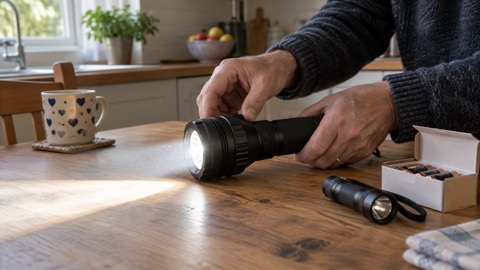
| Battery or wind-up torches | Torches are safer than candles16 |
If you are weighing this up, our comparison of LED candles or real candles goes through the trade-offs, and the lighting section covers torches, lanterns and other flame-free options for the whole house. For a power cut specifically, see lighting your home safely when the power goes off.
Halloween and Christmas: when candle risk rises
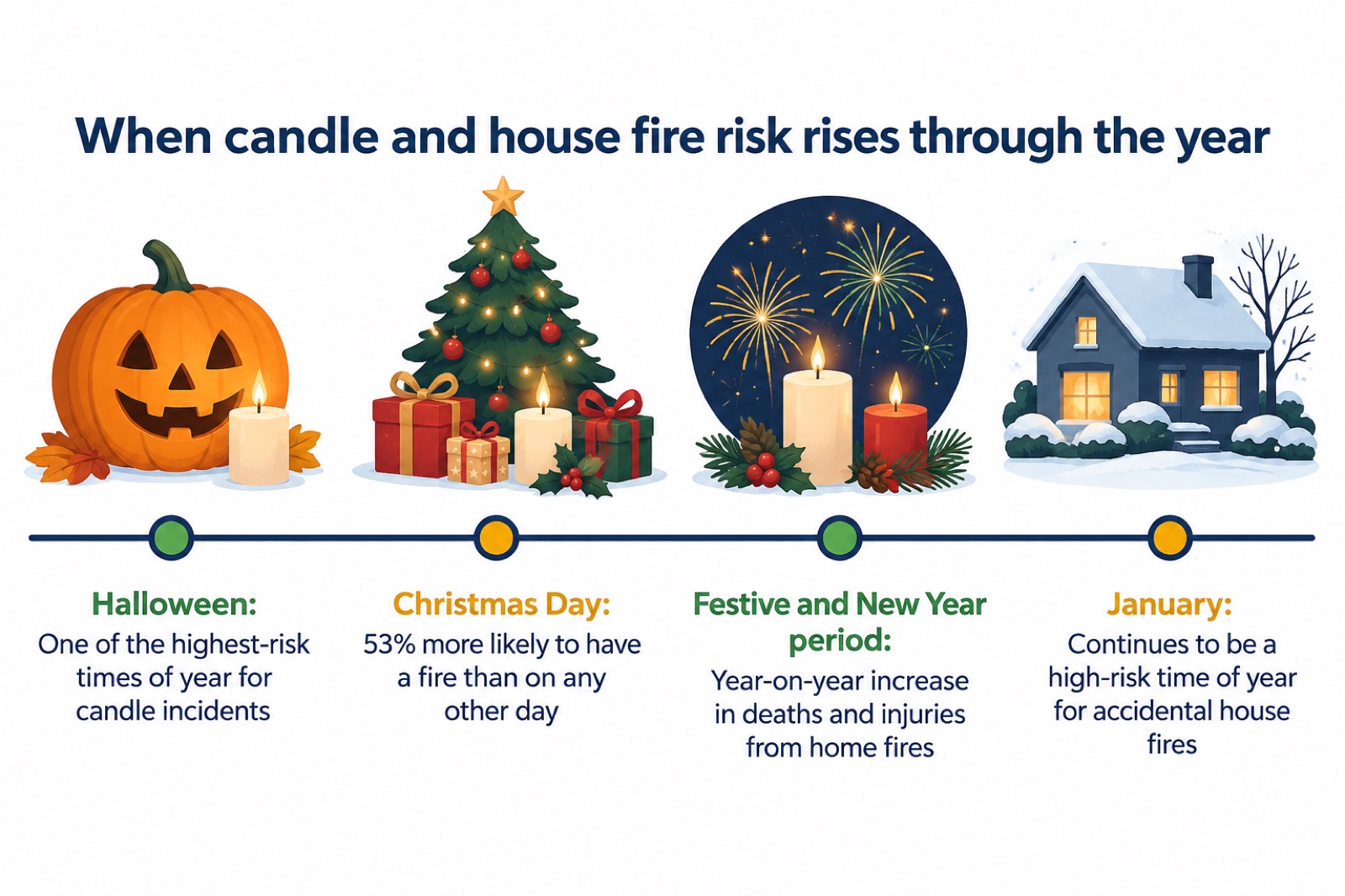
Candle fires are not spread evenly through the year. Devon and Somerset Fire and Rescue Service reports that Halloween remains one of the highest-risk times of year for these kinds of incidents22. Fire Scotland's Halloween candle safety guidance explains one reason: every year many adults and children are injured when lit candles come into contact with costumes and wigs23.
The costume problem is structural, not just carelessness. Devon and Somerset Fire and Rescue Service warns that children's fancy dress outfits are classed as toys, not clothing, so they do not have to meet the same fire safety standards as everyday clothes, making them more flammable22. The Northern Ireland Fire and Rescue Service says the same: costumes can be highly flammable and can catch fire easily24. North Yorkshire Fire and Rescue Service adds that many Halloween costumes and outfits are made with materials that would easily set alight on contact with a naked flame, and recommends alternatives to real candles such as battery-operated lights, glow sticks or imitation candles21.
If clothing does catch fire, the instruction from fire services is consistent: stop, drop and roll. Halloween safety advice warns that Halloween costumes can be flammable, so check clothing for suitable safety marking, avoid naked flames, and know how to "Stop, Drop and Roll" if clothing catches fire24. Every year many adults and children are injured when lit candles come into contact with costumes and wigs, so keep costumes and wigs well away from any candle or other naked flame23.
Fire Scotland also warns against putting candles too close to paths where trick or treaters will walk, as their flowing costumes might catch fire23. And Devon and Somerset Fire and Rescue Service's message on Halloween decorations is simple: by using battery-powered tea lights, you are reducing your risk of fire this year and in the future too26.
Christmas carries its own elevated risk. The National Fire Chiefs Council reports that you are 53% more likely to have a fire on Christmas Day than on any other day7. Fire Scotland's festive safety guidance notes a year-on-year increase in deaths and injuries from fires in the home over the festive and New Year period, and that candles pose a significant fire risk especially around the holidays, when there are more objects in the home that can catch fire10. The Northern Ireland Fire and Rescue Service's winter warning lists the additional dangers the season brings: candles, fairy lights, open fires, portable heaters and electric blankets27, and its festive-period advice notes that candles, Christmas tree lights, open fires and portable heaters all add risk, with alcohol consumption also a factor28.
The risk does not end when the decorations come down. The Northern Ireland Fire and Rescue Service states that January continues to be a high-risk time of year for accidental house fires29, and its New Year campaign reported 189 accidental house fires attended the previous winter, with cooking and electricity supply the biggest causes9. Candles, heaters and fires stay in use through the dark months, so the candle rules apply well past Twelfth Night. Our page on using candles safely at Christmas covers the festive season in more detail.
Candles in a power cut
A power cut is the moment households reach for candles, and it is the moment fire services worry about most, because people who rarely use candles suddenly use them in every room. Devon and Somerset Fire and Rescue Service reported a worrying increase in fire risks due to power cuts, and its advice for households without power is direct: never leave candles unattended, extinguish them before leaving the room or going to sleep, and if candles must be used, put them in a heat-proof candle holder and keep them well away from anything that could catch fire8.
The London Fire Brigade's extreme weather winter guide takes the same line: if you do use candles, take extra care, and always put them out before leaving the room or going to bed19. Northern Ireland's nidirect storm advice goes further and asks households to keep a supply of candles for emergencies, but pairs it with the warning that if you must use naked flames, take extra care and make certain they are put out before you go to bed30.
The practical reading of all this: candles are a last resort for lighting, not a first choice. A torch kept where you can find it in the dark, a lantern for lighting a room, or rechargeable emergency bulbs that come on by themselves when the power fails all give you light with no flame and no risk of falling asleep beside it. If you do use candles during a power cut, treat them exactly as you would any other night: proper holder, clear of fabric, out before bed, and never left alone with children or pets. Our power cut checklist for lighting sets out the full kit.
Other common causes of house fires: cooking, electrics and smoking
Candles are one strand of household fire risk, and it helps to see them in context, because the same evenings that involve candles often involve the other main causes too. Northern Ireland's nidirect guidance lists the things that increase the risk of accidental house fires: cooking or cooking appliances, electricity supply or other electrical equipment and appliances, and smoking or smoking-related materials32. The Northern Ireland Fire and Rescue Service's winter data shows the ranking in practice: the top cause of accidental fires in the home during the winter is cooking, followed by electrics and careless use of smoking materials28.
Cooking is the leading cause of accidental dwelling fires in the home, and the second most common cause is connected to electrical items33. Fire Scotland's electrical safety guidance explains why electrical fires are so dangerous: they can spread rapidly, igniting nearby materials, and burning electrical products produce a variety of toxic fumes and gases34. Devon and Somerset Fire and Rescue Service identifies deep fat frying with chip pans as the highest-risk cooking activity, because hot oil can easily catch fire3.
Two rules from this wider picture apply on any evening with candles in the house:
- Never leave cooking unattended. If you have to leave the kitchen, turn the cooker off and take saucepans off the heat32.
- Never throw water on an oil-based fire33. More than half of all accidental house fires start in the kitchen, and cooking is the number one cause of accidental fires in the home, so stay focused while cooking and keep flammable items clear of the hob32.
Fire Scotland's kitchen guidance also repeats the alertness warning in a cooking context: if you have been drinking, you will be less alert to the signs of fire, more likely to fall asleep while appliances are turned on, and less likely to wake up if a fire does start35. A festive evening that combines cooking, candles and alcohol stacks several of these risks at once, which is exactly why fire services single out Christmas and New Year.
If any of this makes you want a wider check of your home, your fire service offers a free home fire safety visit, and working smoke alarms are the one piece of kit that changes the outcome of any fire, candle or otherwise. You can also work through our candle safety checklist before the next occasion you light one.
Sources (35)
- Fire safety when celebrating, GOV.UK publishing service (fire service guidance), 2021-11
- Candle safety advice, Mersey Fire and Rescue Service
- Top ways to reduce your risk of having a fire at home, Devon and Somerset Fire and Rescue Service
- Your guide to fire safety, Scottish Fire and Rescue Service
- Candle safety, Carmarthenshire County Council
- Candle safety, Cumbria Fire and Rescue Service
- Prevention activity essential to help prevent fires in the home, say fire chiefs, National Fire Chiefs Council, 2025-12-19
- Fire service sees worrying increase in carbon monoxide incidents and fire risks due to power cuts, Devon and Somerset Fire and Rescue Service, 2022-02-20
- Ring in 2025 with a safer home, Northern Ireland Fire and Rescue Service, 2025-01-02
- Festive safety, Scottish Fire and Rescue Service, 2024-02-06
- Halloween safety tips, North Yorkshire Fire and Rescue Service, 2025-10-24
- Other safety advice, Northern Ireland Fire and Rescue Service
- Candle safety at home, Scottish Fire and Rescue Service, 2024-06-12
- NIFRS Statement: NIFRS Home Fire Safety Appeal After Four Fatalities Across Weekend - Northern Ireland Fire & Rescue Service, Northern Ireland Fire & Rescue Service
- Safety advice for Halloween, North Yorkshire Fire and Rescue Service, 2019-10-24
- Celebrate safely, Humberside Fire and Rescue Service
- Cost-of-living-toolkit.pdf, National Fire Chiefs Council (NFCC)
- Stay Safe this Halloween - North Yorkshire Fire & Rescue Service, North Yorkshire Fire & Rescue Service
- Extreme weather winter guide, London Fire Brigade, 2025-01
- NIFRS issues Halloween fire safety tips, Northern Ireland Fire and Rescue Service, 2024-10-21
- Stay safe this Halloween, North Yorkshire Fire and Rescue Service, 2023-10-27
- Firefighters advise using battery tealights this Halloween, Devon and Somerset Fire and Rescue Service, 2025-10-23
- Halloween candle safety, Scottish Fire and Rescue Service, 2023-10-17
- Don't let flames play tricks on your treats this Halloween, Northern Ireland Fire and Rescue Service, 2025-10-21
- NIFRS issues safety advice for Halloween, Northern Ireland Fire and Rescue Service, 2023-10-23
- Safety during Halloween, Devon and Somerset Fire and Rescue Service, 2026-10-14
- Winter warning as fire fatalities rise this year, Northern Ireland Fire and Rescue Service, 2020-12-03
- Cooking still the leading cause of house fires during the festive period, Northern Ireland Fire and Rescue Service, 2021-12-07
- Impact of Covid-19 on operational response, Northern Ireland Fire and Rescue Service, 2021-01-13
- Strong winds and heavy rain warning: information and advice, nidirect, 2026-01-27
- Candles, Devon and Somerset Fire and Rescue Service
- Avoiding accidental fires in the home, nidirect, 2025-10-16
- Charge safely for your own safety, Northern Ireland Fire and Rescue Service, 2026-09-21
- Electrical safety at home, Scottish Fire and Rescue Service, 2025-02-27
- Kitchen safety, Scottish Fire and Rescue Service, 2024-11-11
 Spare Batteries for Lights
 Candle Safety Checklist
 Lighting Checks Before Winter
 Lighting Home in a Power Cut
 Choosing a Torch for Home
 Head Torches for Power Cuts
 Lanterns for Lighting a Room
 Emergency Bulbs
 Solar and Wind-Up Lamps
 Lumens and Beam Distance
 Torch Batteries Explained
 Charging and Storing Torches
 Lights for Disabled People
 Torches, Candles and Children
 Recalled Torches and Chargers