
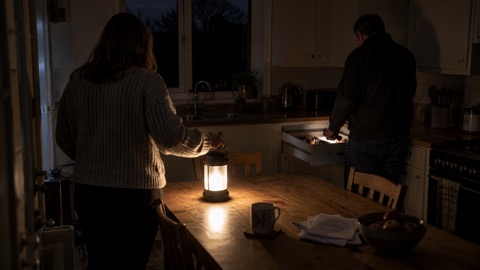
When the power goes off, the first thing most people reach for is a light. The government's power cut advice is simple: keep a battery or wind-up torch and spare batteries at home, because torches are safer than candles1. The fire service says the same, and adds that you should use a standing electric torch or battery-powered lights rather than candles, which are a fire risk2.
So the short answer to what batteries to keep is: enough for your torches, plus a torch you can find in the dark. Keep a battery-operated or wind-up torch somewhere easy to find3, and make sure you have spare batteries if the torch is battery operated4. A wind-up torch needs no batteries at all, which is why official guidance suggests it as an option4.
This page sets out a checklist of what to keep, then explains how to store it, how to check it still works, and how to stay safe with batteries and lights.
Your spare battery and torch checklist
Work through this list once, then check it before winter and before any forecast storm.
Why a torch beats a candle, and what to do if you keep candles anyway
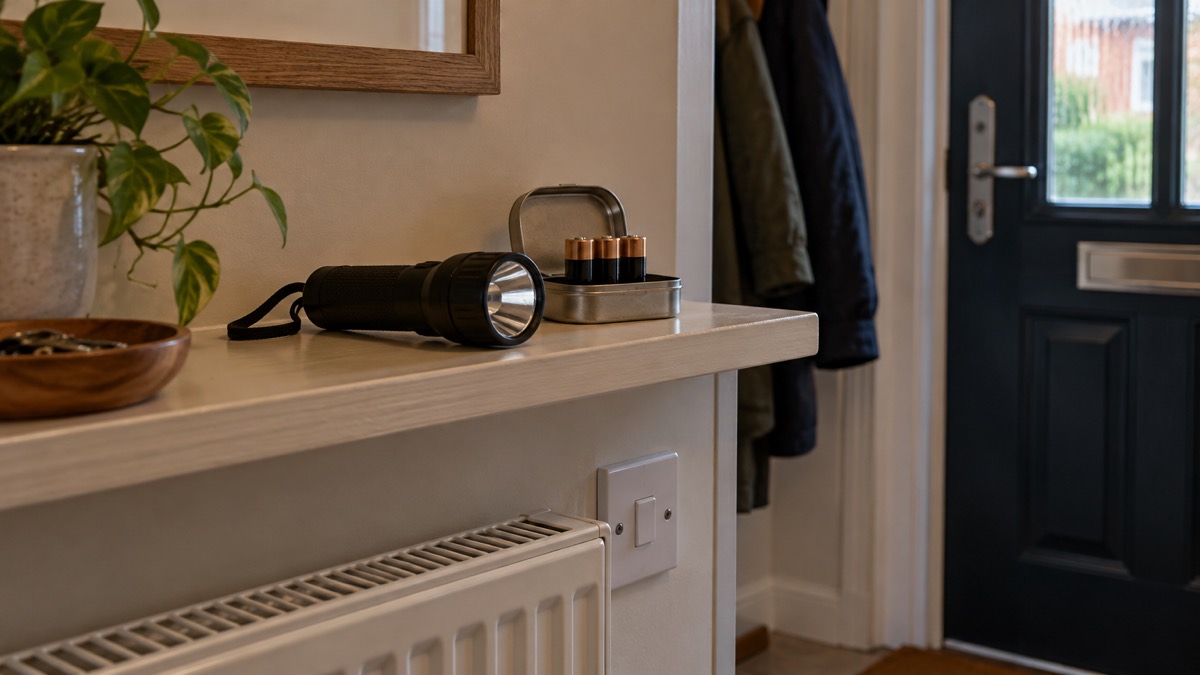
Every official source on this page points the same way. The government's power cut guidance says torches are safer than candles1. The fire service says to use a standing electric torch or battery-powered lights because candles are a fire risk2. The National Risk Register makes the same point: a torch and batteries are safer than candles9. The advice is to avoid using candles where possible, as they increase the risk of fire13.
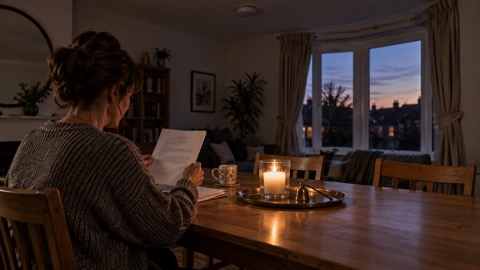
Candles are not banned, but they need care. The fire service says that if you use candles, make sure they are secured in a proper holder and away from materials that may catch fire, like curtains14. The safest approach for most households is to treat candles as a last resort and rely on torches, lanterns and LED lights instead. If you want to go further on candle safety, our guide to lighting your home safely when the power goes off and the candle fire safety at home page cover it in detail.
Battery torch or wind-up torch: which to keep
Both are recommended, and many households keep both. The table below sets out what each does and who it suits.
| Type | What it does | Who it suits |
|---|---|---|
| Battery torch | Works from standard or built-in batteries; needs spares or a charge4 | Households that will check and replace batteries regularly |
| Wind-up torch or lantern | Requires no batteries at all4 | Anyone who wants a light that always works, and as a backup to a battery torch |
| Battery or wind-up radio | Gets updates during a power cut9 | Every household, to hear news bulletins7 |
A wind-up torch is also listed as an essential for a car winter kit, either as a large torch with spare batteries or a wind-up torch which doesn't require battery power15. If you are choosing between a hand torch and a head torch, our page on torches: types and how to choose one for home and the torch or head torch comparison go through the trade-offs. For a light that fills a room rather than a beam, see battery and rechargeable lanterns.
Where to keep the torch and its spare batteries
The single most useful thing you can do is decide where the torch lives, and tell everyone. Official guidance says to keep some torches and spare batteries to hand in case the power cut happens when it is dark outside, and to make sure everyone in your home knows where they are kept5. The same advice appears in independent guidance16, and the network operator says to keep a torch with spare batteries in an accessible location17.
A few practical points follow from that:
- Somewhere you can reach without a light. The point of the torch is to be found in the dark, so keep it where you can put your hand on it without switching anything on.
- Near the fuse box. The Anglesey winter-ready guidance suggests storing a torch somewhere you can access easily so you can use it to check on the fuse box and make your way around the house safely6.
- More than one place. With multiple torches8, keep one by the bed and one downstairs.
- Tell the household. Everyone in the home should know where the torches and batteries are kept5.
Our page on where to keep torches so you can find them in the dark goes further into placing them.
Storing spare batteries safely
Batteries are safe when stored sensibly, but a few rules matter. The National Fire Chiefs Council says to keep batteries in a cool, dry place away from heat, moisture and combustible materials, and not to allow loose batteries to come into contact with metal objects11. The same guidance applies to e-bike and e-scooter batteries, which should be stored and charged in a cool, dry place18.
If you have an e-bike or e-scooter, the fire service advises avoiding storing them, or their batteries, in areas that block escape routes19. In cold weather, avoid leaving the battery outside overnight, but if you keep it indoors make sure it will not block your escape route if it starts a fire20. If you notice warning signs of a failing battery, remove the battery and device from your home and store it outside and away from other items, preferably in a metal container19.
For rechargeable torches, our page on charging and storing rechargeable torches safely covers the charging side, and torch batteries: AA, AAA, 18650 and built-in packs explains which cells fit which torch.
Checking your batteries still work
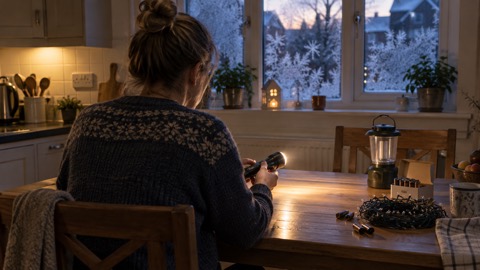
A torch with flat batteries is no better than no torch. The simplest routine is to switch each torch on before winter and before any forecast storm, and replace any batteries that are flat. Keep a supply of new batteries in torches and radios so they are ready when needed7.
For anything with a built-in battery, charge it fully ahead of a planned power cut, and for unplanned cuts make sure items not in use are charging or charged21. The Met Office suggests considering a separate battery charger and storing key information such as the power cut helpline number, 105, on your phone22. Keeping mobile phones, laptops or tablets fully charged means you have battery power for a short time at least if there is a power cut23.
A short checklist for the change of season:
- Switch on every torch and check it works, and keep spare batteries to hand7.
- Charge phones, power packs and rechargeable torches21.
- Check the spare batteries are still in their place and in date.
- Make sure everyone still knows where the torch is kept5.
Our lighting checks before winter checklist and the torches, lanterns and candles power cut checklist put these into a printable order.
Travelling with spare lithium batteries
If you take spare lithium batteries with you, check the rules before you travel. The London Fire Brigade says that when you travel you should avoid keeping all your items containing lithium-ion batteries together, especially on a plane, and to check with your flight carrier for additional information or advice24. Loose batteries should not come into contact with metal objects11, so keep spares in their packaging or a protective case.
Lithium-ion batteries hold more energy than other batteries, but must be stored and charged properly to reduce the risk of fire23. For more on battery fire safety at home, see our page on recalled and unsafe torches and chargers.
Where to get help
If the power goes off, call 105, the free national power cut helpline, and store the number on your phone22. If you rely on electrical equipment for medical reasons, ask your supplier about the Priority Services Register, and check your equipment is charged ahead of any planned cut21. For fire safety advice, your local fire and rescue service offers free home fire safety visits; our page on free home fire safety visits from your fire service explains how to arrange one.
Sources (24)
- Power cuts, GOV.UK Prepare, 2026
- Safety in severe weather conditions, Devon and Somerset Fire and Rescue Service, 2026
- Equipment services: what to do in a power cut, Mersey Care NHS Foundation Trust, 2026
- How to prepare for the loss of electricity, Wiltshire and Swindon Prepared, 2026
- 12 tips to prepare for a power cut, Horsted Keynes Parish Council, 2026
- Winter ready, Isle of Anglesey County Council, 2026
- Strong winds and heavy rain warning: information and advice, nidirect, 2026
- What to do in a power cut, Met Office, 2026
- National Risk Register, City of York Council, 2023
- Stay safe in a thunderstorm, Met Office, 2026
- Lithium-ion batteries, National Fire Chiefs Council, 2026
- Accessible PDF, Wrightington, Wigan and Leigh Teaching Hospitals NHS Foundation Trust, 2026
- Cost of living toolkit, National Fire Chiefs Council, 2023
- Stay safe this winter, North Wales Fire and Rescue Service, 2016
- Winter car kit, Met Office, 2026
- Tips to prepare for a power cut, National Grid, 2026
- What to do in a power cut, Northern Powergrid, 2026
- Charge safe, National Fire Chiefs Council, 2026
- Charging safety, Oxfordshire County Council, 2026
- Heat, cold and rain: how weather conditions affect e-bikes and e-scooters, London Fire Brigade, 2026
- Parental letter re power shortages, North West Children's Operational Delivery Network, 2022
- Top tips to be weather ready, Met Office, 2026
- Battery fires, Devon and Somerset Fire and Rescue Service, 2026
- Batteries and chargers, London Fire Brigade, 2026
 Candle Safety Checklist
 Lighting Checks Before Winter
 Power Cut Lighting Checklist