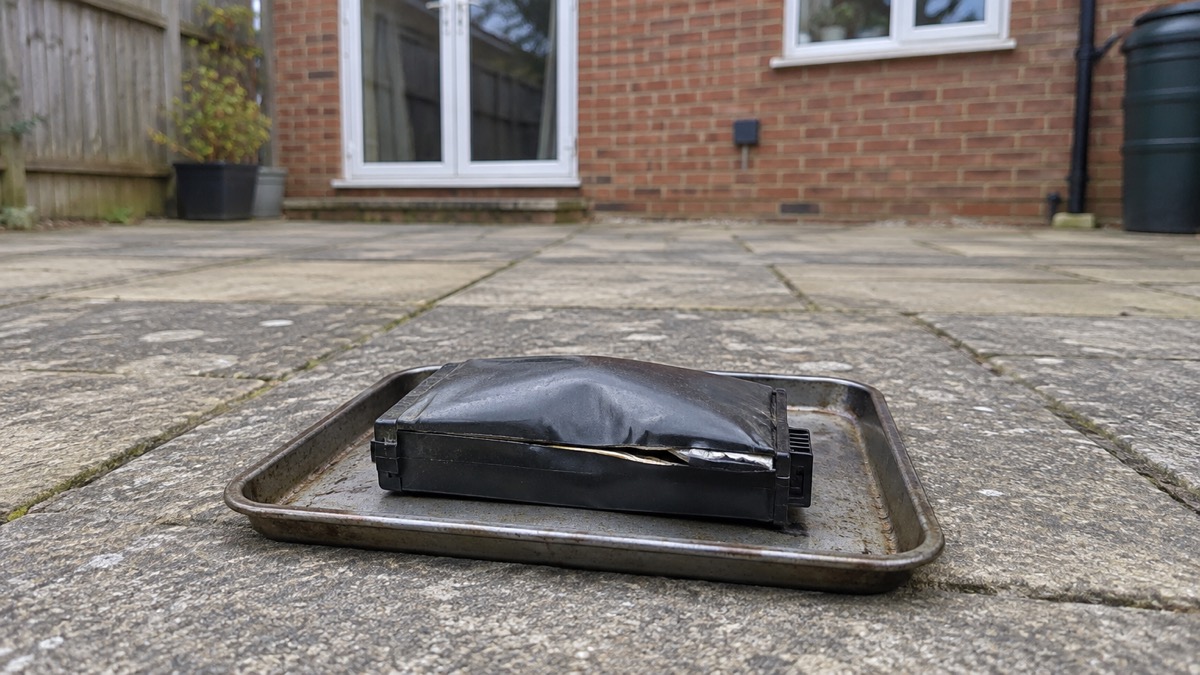
Lithium-ion batteries power phones, laptops, vapes, e-bikes, e-scooters and the portable power stations many households now keep for power cuts. Most of the time they are safe. But a battery that is damaged, overcharged or overheated can fail suddenly, and the fire and rescue services are clear that the warning signs are worth knowing. If a battery is swollen, leaking, unusually hot, making a noise or smelling strange, stop using it and stop charging it immediately1.
The single most important rule is this: do not use or charge a battery that is damaged, swollen, leaking or unusually hot4. A damaged lithium-ion battery can fail unexpectedly and start a fire, and it can do so without warning5. The good news is that most battery fires are preventable, and the steps that keep a household safe are simple: watch for the signs, charge in the right place, use the right charger, and get rid of a damaged battery properly.
This page sets out what the warning signs look like, which damage makes a battery unsafe to charge, where to charge safely at home, and how to dispose of a damaged battery without putting anyone at risk. It applies to the lithium batteries in everyday household devices, and the advice is to stop using batteries that are swollen, damaged or overheating7.
Stop using a battery that swells, leaks, smells or gets hot
The fire and rescue services list a consistent set of warning signs. A battery may be failing if it is producing smoke, feeling extremely hot to the touch, looking swollen or developing a lump or leak, making a hissing or cracking sound, smelling unusual, or taking longer to charge or not fully charging2. Any one of these is enough to act on. The advice from the National Fire Chiefs Council is blunt: stop using or charging your battery immediately if you notice any of these warning signs5.
What you should do depends slightly on the device, but the principle is the same. For a vape, the London Fire Brigade says that if the battery gets unusually hot, starts to bulge or starts hissing, stop using it immediately and leave it in a safe place until you can dispose of it properly11. For an e-bike or e-scooter, Oxfordshire Fire and Rescue Service says to stop using it immediately and turn the device off6. For any battery, the message is to stop charging immediately if it is swelling12.
The reason the signs matter so much is what happens when a battery fails. When overcharged or overheated, batteries rapidly overheat, release toxic fumes and ignite, causing intense fires that are hard to extinguish13. Where batteries fail, they can explode or lead to a rapidly developing fire8. The National Fire Chiefs Council describes lithium-ion battery fires as particularly dangerous because they are instantaneous and explosive in nature, potentially compromising escape routes14. That is why the warning signs are not a reason to wait and see: they are a reason to act now.
Damage that makes a battery unsafe to charge
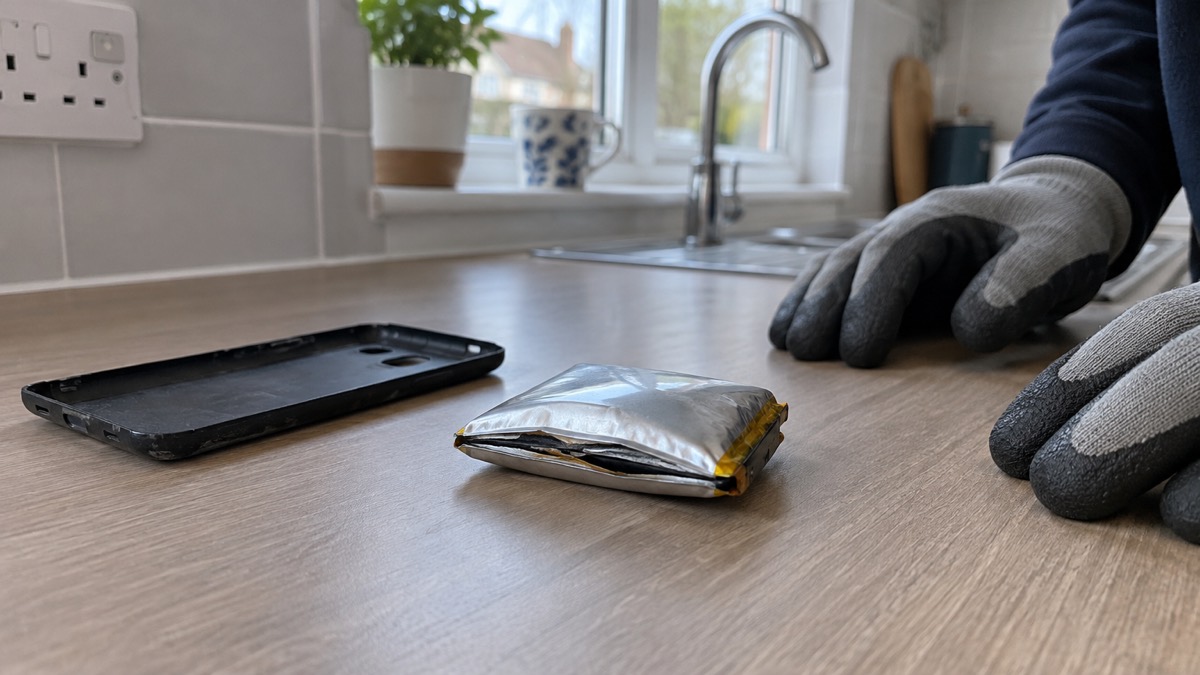
Not every battery problem announces itself with smoke. Some damage is invisible until it fails. The fire and rescue services warn that batteries can be damaged by dropping them or crashing e-bikes or e-scooters, and where the battery is damaged it can overheat and catch fire without warning8. A damaged lithium-ion battery can fail unexpectedly and start a fire5. Damaged batteries may also release flammable electrolytes, increasing the risk of fire15.
The advice is to check your battery regularly for any signs of damage, and if you suspect it is damaged it should be replaced and should not be used or charged5. That means a battery that has been dropped, crashed, crushed, punctured or exposed to water should be treated as suspect even if it looks fine. Submerging a battery in water or exposing it to heavy flooding can be particularly dangerous16. Batteries can present a fire risk when over-charged, short-circuited, submerged in water or damaged12.
Chargers matter too. Cheap chargers and batteries may not meet UK safety standards and can be dangerous1. Counterfeit electrical chargers can be deadly, and many fail to meet UK safety regulations, leading to fires and injury12. Electrical Safety First advises against buying substandard or counterfeit USB chargers from third-party sellers online, because they have serious safety concerns and may present a higher risk of exploding or catching fire17. Use the charger that came with the device, or one from a reputable seller, and check for UK safety markings.
| Warning sign | What it can mean | What to do |
|---|---|---|
| Swelling, bulging or a lump | Damaged cells, internal pressure | Stop using and charging; treat as damaged3 |
| Extremely hot to the touch | Overheating, possible defect | Stop charging immediately; do not charge a hot battery16 |
| Hissing, cracking or popping | Gas release, failing cell | Stop using; move away; call 999 if it smokes or flames3 |
| Unusual smell | Leaking electrolyte | Stop using; ventilate; treat as damaged3 |
| Smoke | Fire has started | Get out and call 9993 |
| Taking longer to charge or not fully charging | Reduced performance, ageing or damage | Stop using; seek advice from the manufacturer or retailer16 |
Where to charge lithium batteries in the home
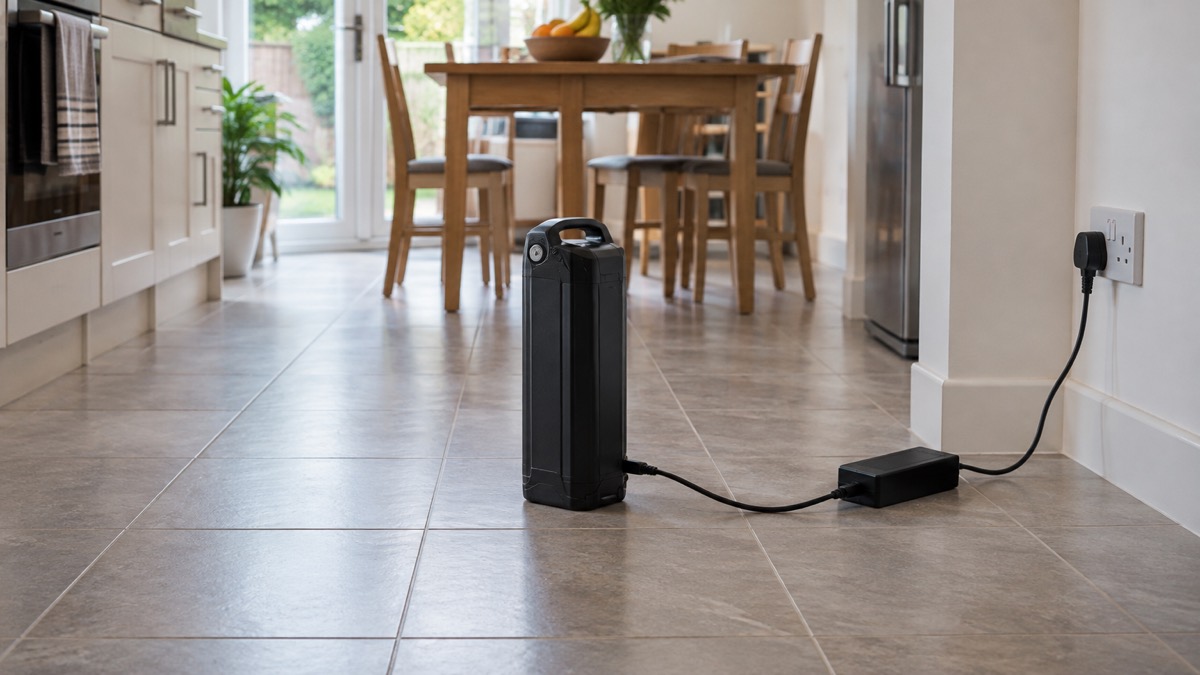
Many e-bike and e-scooter fires happen in homes while batteries are charging19. That single fact explains why the fire and rescue services are so specific about location. Do not charge batteries in hallways or communal areas that serve as escape routes2. If a battery fails there, it can block the way out for everyone in the household.
The safer approach is to charge in a room where a fire would be contained and where you can see the battery, away from anything that burns. It is dangerous to charge a battery close to combustible materials or hazardous substances, or where high temperatures or direct sunlight are likely9. Never cover a charger or device while it is charging, because that traps heat and increases fire risk1. And do not charge a battery that already feels very hot16.
A few practical habits make a difference. Charge on a hard, non-combustible surface rather than on a bed, sofa or carpet. Keep the charger and battery in sight while charging, and unplug when charging is complete. If you have an e-bike or e-scooter, consider charging it in a garage or shed away from the house where possible, but never in a hallway or communal corridor15. For households with children, keep button batteries and spare batteries out of reach, because lithium button batteries are the most dangerous if swallowed and can cause serious internal burns or even death within hours21.
How to dispose of a damaged lithium battery safely
A damaged battery is not ordinary rubbish. Do not put damaged batteries in household waste4. The incorrect disposal of lithium-ion batteries, such as placing them in the general waste bin at home, can lead to significant waste fires2. These batteries, when punctured or crushed, can cause fires in bin lorries, recycling and waste centres5. The same applies to vape batteries, which are a known fire risk when disposed of incorrectly and whose chemicals can contaminate water sources and soil22.
If a battery shows signs of overheating, swelling or other forms of damage, do not use it. Dispose of it appropriately and report the defect to the manufacturer15. You should contact the manufacturer for specific advice on how to dispose of a damaged battery or device safely, and to confirm that it is safe to transport it6. If you suspect a battery is damaged, it should be recycled and should not be used or charged2.
For a battery that is hot, swollen or smoking, do not carry it through the house. Do not use or charge batteries that are damaged, swollen, leaking or unusually hot, and do not put damaged batteries in household waste11. If it is already smoking or flaming, get out and call 9993. For button batteries, even used flat batteries still hold enough charge to be dangerous, so store and dispose of them carefully and keep them away from children23.
Battery fires: what to do and how to prevent them
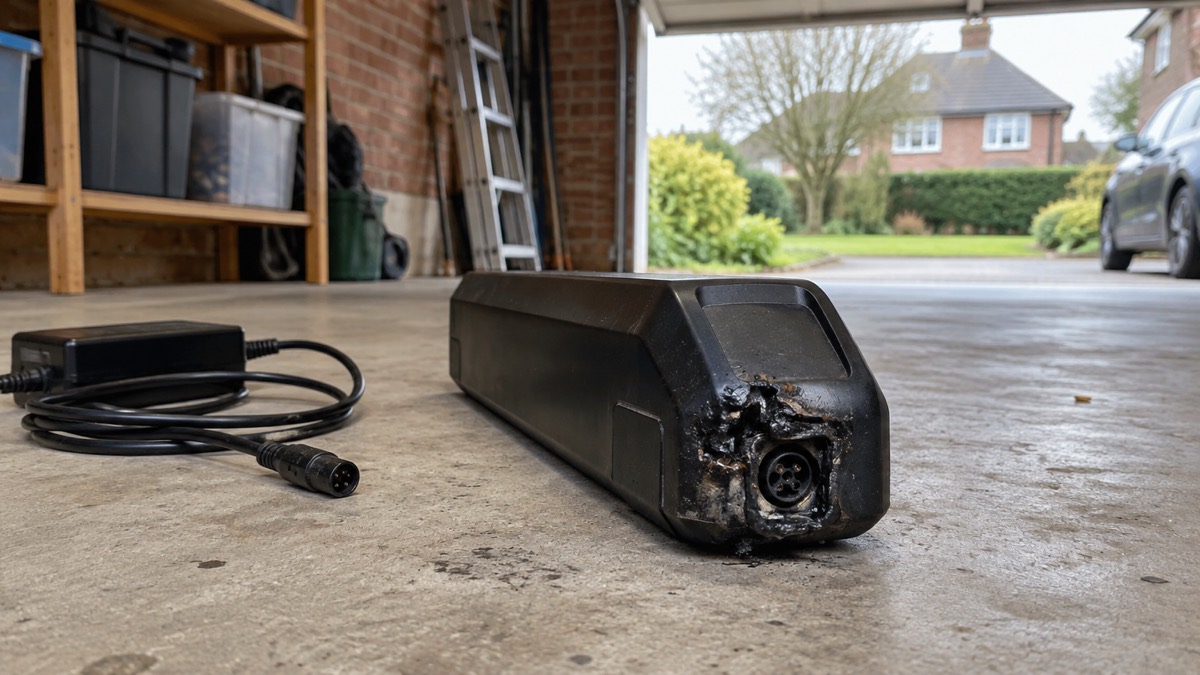
If a lithium battery catches fire, the priority is life safety, not property. Raise the alarm, get everyone out, and call 9993. Lithium-ion battery fires can spread rapidly and produce toxic smoke, so do not stay to fight the fire10. Close the door behind you if you can, and once out, stay out.
Prevention is where households have the most control. Keep an eye out for warning signs that the battery might be failing and becoming a fire risk25. Do not use or charge batteries that are damaged, swollen, leaking or unusually hot4. Avoid storing, using or charging batteries at very high or low temperatures12. And if you use e-bikes, e-scooters or mobility vehicles, remember that the larger the battery, the larger the danger7.
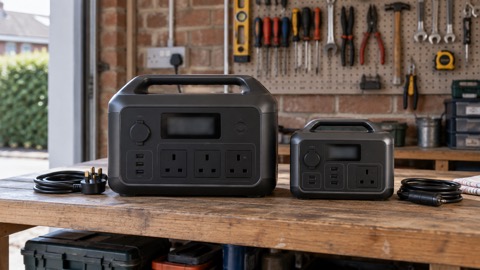
For households building a backup power kit, the same rules apply to portable power stations and power banks. Store them in a cool, dry place, charge them with the correct charger, and check them regularly for swelling or damage. If you are choosing backup power, our guide to lithium-ion battery safety at home sets out the wider picture, and the safe battery charging at home checklist gives a room-by-room routine. If a battery does start to swell, our page on what to do if a battery starts swelling walks through the steps, and what to do if a lithium battery catches fire covers the emergency response in more detail.
Sources (25)
- Lithium battery fire safety, Mid and West Wales Fire and Rescue Service, 2026-10-26
- Lithium-ion batteries, Scottish Fire and Rescue Service, 2025-11-27
- Spot the warning signs: could your e-bike or e-scooter start a fire?, London Fire Brigade, 2026-10-25
- Lithium-ion batteries, National Fire Chiefs Council, 2026-10-09
- E-bikes and e-scooters fire safety guidance, National Fire Chiefs Council, 2025-01-21
- Charging safety, Oxfordshire County Council, 2026
- How to stay safe during a heatwave, Devon and Somerset Fire and Rescue Service, 2026-06-23
- E-bike and e-scooters, Scottish Fire and Rescue Service, 2026-10-25
- Hoverboards and self-balancing boards, Electrical Safety First, 2026-10-25
- What to do if there's a fire caused by an e-bike or e-scooter, London Fire Brigade, 2026-10-25
- Vaping and e-cigarettes, London Fire Brigade, 2026-10-25
- Batteries and chargers, London Fire Brigade, 2026-10-25
- E-Scooter, E-Bike and Mobility Scooter Fire Safety Advice - North Yorkshire Fire & Rescue Service, North Yorkshire Fire & Rescue Service
- Home Safety - NFCC, National Fire Chiefs Council (NFCC)
- Battery fires, Devon and Somerset Fire and Rescue Service, 2026
- Heat, cold and rain: how weather conditions affect e-bikes and e-scooters, London Fire Brigade, 2026-10-25
- Chargers, Electrical Safety First, 2026-10-26
- USB chargers, Electrical Safety First, 2026-10-25
- E-bikes and e-scooters, London Fire Brigade, 2026-10-25
- Charge Safe campaign, North Yorkshire Fire and Rescue Service, 2026-08-18
- Button Batteries :: Healthier Together, South Yorkshire and Bassetlaw Healthier Together (NHS)
- Smoking, Devon and Somerset Fire and Rescue Service, 2026
- New button battery safety features, CAPT, 2026-10-21
- All I want this Christmas is for my child to be safe from button batteries, CAPT, 2023-03-27
- Lithium-ion batteries, North Wales Fire and Rescue Service, 2026-10-25
 Power Cut Backup Power Checklist
 Backup Power Before Winter
 Safe Battery Charging at Home
 Running a Generator Indoors
 Carbon Monoxide from Generators
 Generator Sizing for a Power Cut
 Generator Run Time on a Tank
 Storing Petrol at Home
 Diesel Storage at Home
 Storing a Generator
 Generators in Cold Weather
 Generator Noise and Neighbours
 Power Station Capacity Sizing
 Power Station Run Time
 Power Station for a Gas Boiler