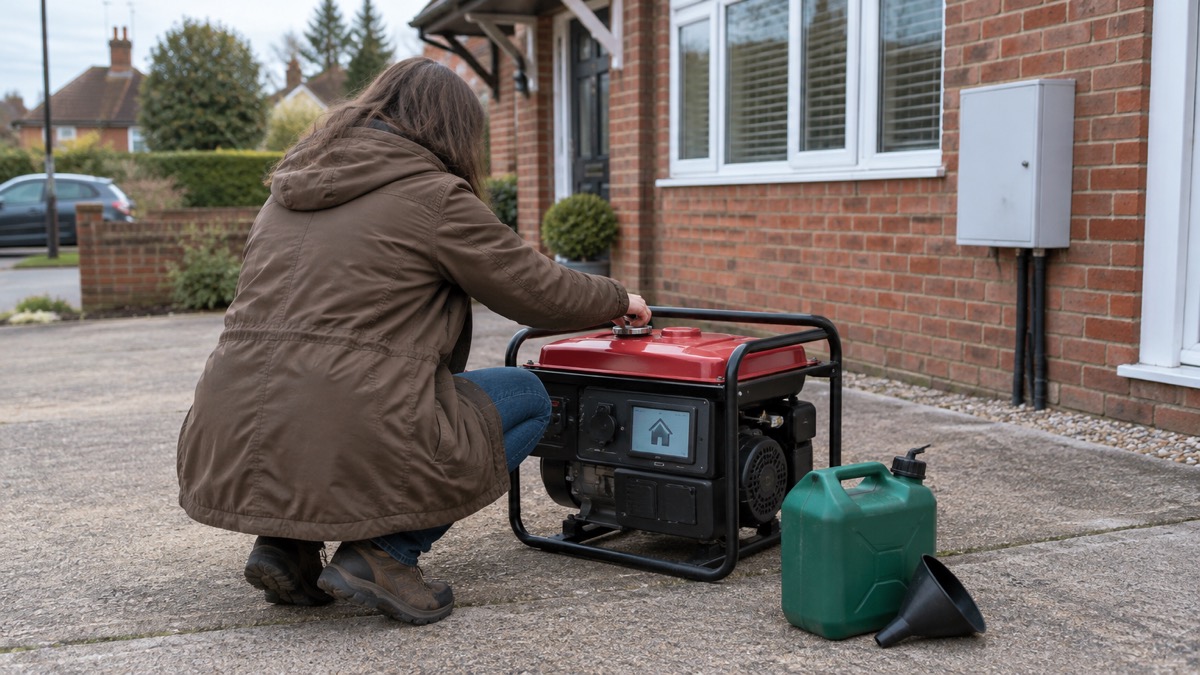
A generator's run time is not a single number. It depends on three things: how much power you draw from it, what fuel it burns, and how much fuel it holds. A small unit with a 5 litre tank running a light load of 500W will run for about 6 hours1. A larger petrol generator with a bigger tank can run for up to 10 hours at 50% load2. A dual-fuel model running on LPG alone can reach up to 12.5 hours3.
The practical answer for a household is to work out what you actually need to keep running, then match the generator and its fuel supply to that load. Run times quoted by makers are usually given at 25% or 50% load, so the figure on the box is not what you will get with a heavy load. A standard tank will last for 2 to 4 hours on many models4.
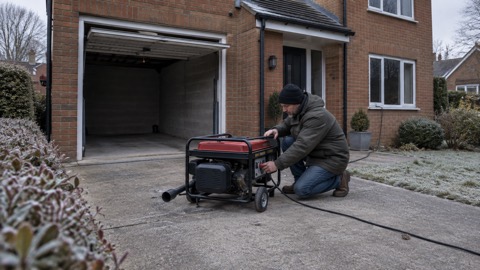
Whatever you choose, the generator must run outdoors. Official guidance is clear that petrol or diesel generators must never be used indoors because their exhaust gases contain carbon monoxide5. Plan your fuel and your run time around that rule, not against it.
Run time depends on load, fuel and the size of the generator
The load is the biggest single factor. Every appliance you plug in draws watts, and the more watts you draw, the faster the fuel goes. Makers quote run times at a stated fraction of the generator's capacity for exactly this reason. The Champion 5500 watt petrol generator runs for up to 10 hours at 50% load2. The Champion 3200 watt petrol generator delivers up to 12 hours at 50% load7. The Champion 3600 watt inverter runs up to 12 hours at 25% load from an 8.7 litre tank8.
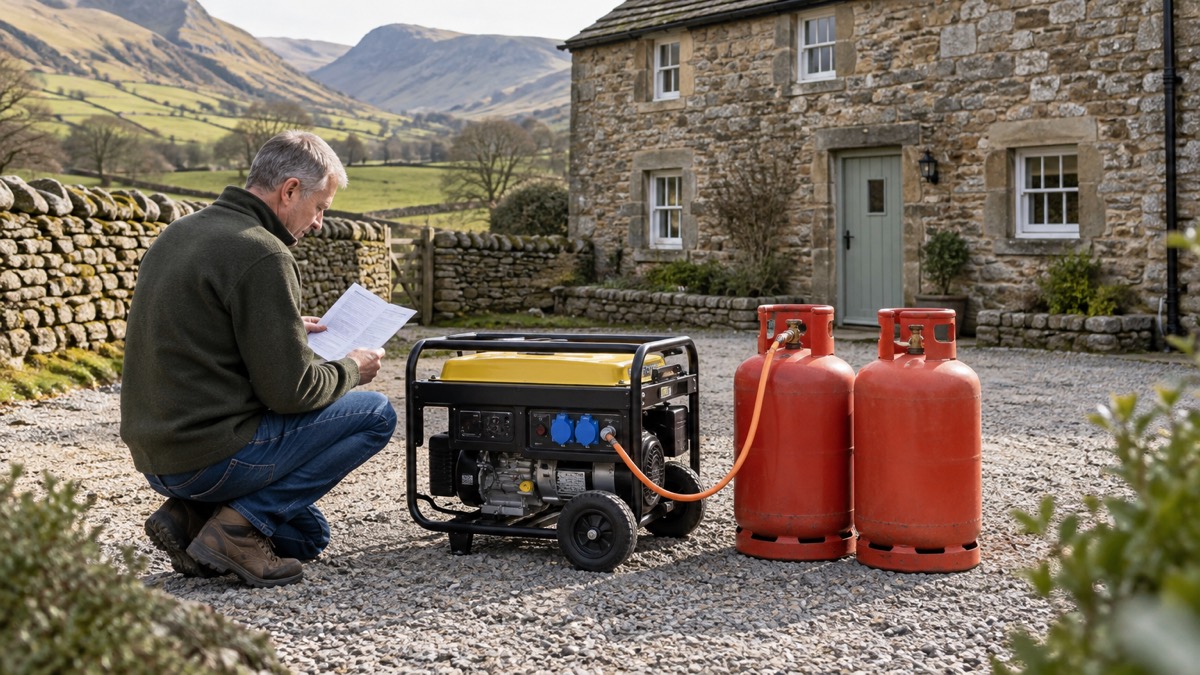
Fuel type matters too. Petrol and diesel generators carry their fuel in an internal tank, so run time is capped by tank size. LPG generators can be fed from an external cylinder, and the maker notes you can extend running time by using a bigger cylinder, so you are no longer limited by the internal fuel tank9. A dual-fuel generator offers flexibility and fuel alternatives10.
Tank size sets the ceiling. A standard tank will last for 2 to 4 hours4. Larger tanks stretch that: the 8.7 litre tank on the Champion 3600 watt inverter supports up to 12 hours at 25% load8. If you want to run through a long outage without constant refuelling, tank size and fuel type are the two specifications to compare first.
Power output: 700W to 6500W and what that means for run time
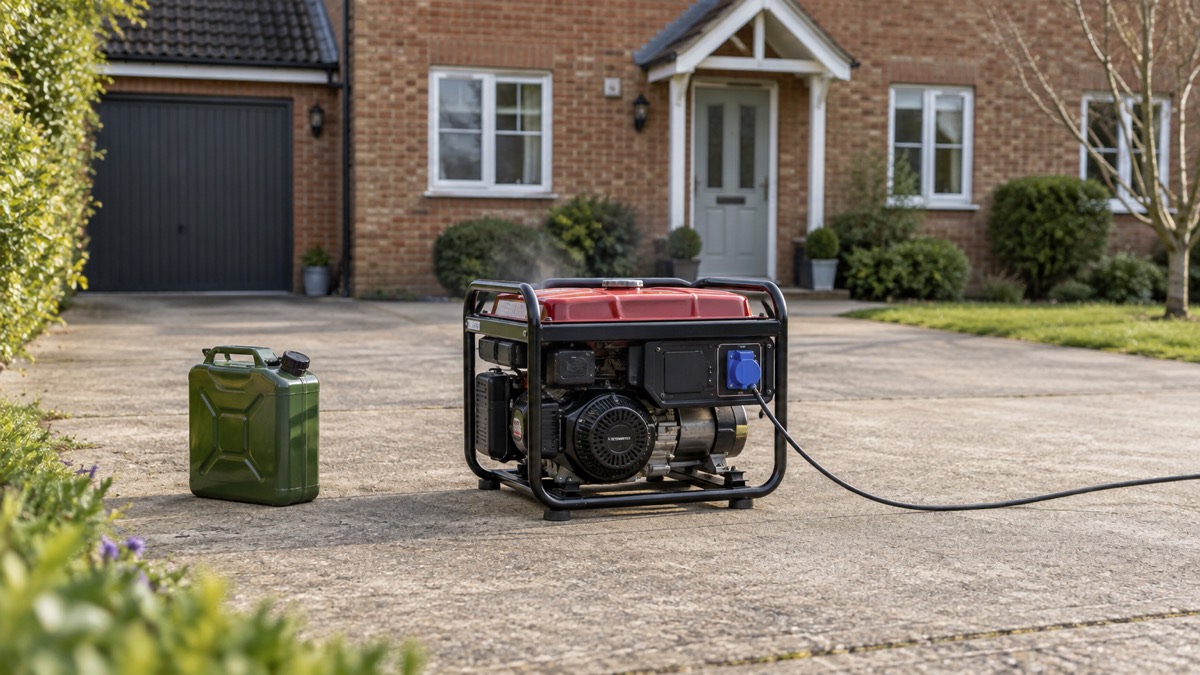
Generator output ranges from small units around 1000W to large models with 6000W running output. The Briggs & Stratton ProMax 7500EA provides 7500 starting watts and 6000 running watts11. The Champion 5500 watt model produces 6250 starting watts and 5000 running watts2. At the small end, a 1000W unit with a 5 litre tank runs about 6 hours at 500W1.
Output and run time pull in opposite directions. A bigger generator can carry more load, but it also burns more fuel doing it. A smaller generator sips fuel but cannot run heavy appliances. The maker's wattage guide for the Champion 5500 watt model lists a shredder at 700 to 2500 watts2, which shows how quickly a single tool can eat into capacity.
| Generator type | Output | Quoted run time | Fuel |
|---|---|---|---|
| Small petrol unit | 1000W | About 6 hours at 500W1 | Petrol, 5L tank1 |
| Champion 3200 watt petrol | 3200 watts | Up to 12 hours at 50% load7 | Petrol |
| Champion 3600 watt inverter | 3600 watts | Up to 12 hours at 25% load8 | Petrol, 8.7L tank8 |
| Champion 5500W petrol | 5000W running, 6250W starting2 | Up to 10 hours at 50% load2 | Petrol |
| Briggs & Stratton ProMax 7500EA | 6000W running, 7500W starting11 | Not stated | Petrol |
To work out what your own load will do to run time, see Watts, Watt-Hours and Surge Explained and What Size Generator Do I Need for a Power Cut?.
Petrol, diesel or dual fuel: how the fuel changes things
Generators run on petrol, diesel, or a combination of petrol and propane or LPG in a dual-fuel model12. Each has consequences for run time and for how you keep the generator fed.
Petrol is the most common fuel for portable generators. Conventional petrol generators use an engine to drive an alternator at a relatively constant speed, and are practical for tools, lighting, pumps, workshop equipment and general site use13. They often provide a higher output for the price13. The downside is that petrol is stored in the generator's own tank, so run time is fixed by tank size unless you refuel.
Diesel generators generally last longer than petrol generators and have a long running time, but diesel is more expensive to buy than petrol and can be noisier14. For a household facing occasional outages, the longer engine life matters less than the fuel logistics.
Dual-fuel generators run on petrol or LPG. The EcoFlow Smart Generator (Dual Fuel) gives up to 12.5 hours of runtime with LPG alone3. LPG has a practical advantage in a long outage: you can swap or upsize the cylinder rather than decant petrol. If you are weighing the two, see LPG or Petrol Generator for Emergencies and LPG Cylinders and Regulators for Dual-Fuel Generators.
Refuelling safely during a long power cut
Refuelling is where a long outage turns into a risk. Petrol and diesel are flammable, and a hot generator is not the place to handle them. The maker's service schedule gives a useful rhythm: check the oil level and clean around the air intake and muffler every 8 hours or prior to each use2. That check is a natural moment to plan the next refuel.
Keep the generator topped up during daylight hours where you can. EcoFlow advises that when an outage runs over several days, you keep a generator topped up by charging it during the daylight hours15. That is easier and safer than working by torchlight.
Maintenance during a long run matters as much as fuel. The Champion service schedule calls for an oil change in the first 5 hours as a break-in service8, and a fuel line replacement every 3 years8. Skipping these shortens engine life and can cause faults mid-outage.
For how much fuel you can legally and safely keep at home, see How Much Petrol Can I Store at Home Safely? and Is There a Limit on Diesel Storage at Home?.
Where a generator must never go: carbon monoxide and air flow
This is the rule that overrides every run time calculation. Petrol or diesel generators and similar fuel-driven equipment must not be used indoors because their exhaust gases contain carbon monoxide4. The London Fire Brigade is blunt: never run a petrol or diesel-powered generator indoors, as it can produce fatal levels of carbon monoxide5. Runnymede Borough Council adds that the exhaust gases contain carbon monoxide, which can kill16.
The Health and Safety Executive's advice is to locate petrol generators outside in well ventilated spaces so that fumes disperse and cannot gather or drift into building openings17. That last point matters: a generator in a garage with the door open, or just outside a window, can still let fumes drift inside. Northern Ireland's official warning is equally direct: never use standby generators indoors, as the fumes from the engine can be lethal18.
For more on siting and warning signs, see Generator Safety: Carbon Monoxide, Fuel and Electric Shock, Can You Run a Generator Indoors or in a Garage? and Carbon Monoxide from Generators: Warning Signs.
Network generators: when the electricity company provides one
You may not need your own generator at all. Electricity network operators sometimes use generators to restore customers temporarily while permanent repairs are completed19. They order these through network partners, who ensure a robust refuelling strategy is in place and connect to the network safely19. That is why a network generator can run for as long as the repair takes: the operator manages the fuel.
Network generators are only provided in exceptional circumstances. Electricity North West says they are used for medical needs like oxygen equipment, mobility aids or end-of-life care, and that in exceptional circumstances such as weddings or funerals the operator does its best to provide a generator to minimise the impact of the power cut20. If someone in your home depends on powered medical equipment, tell your network operator in advance. See Powering CPAP, Oxygen and Other Medical Devices From a Battery for what to arrange yourself.
Expect a brief interruption when power returns. Electricity North West says you may experience a short outage while you are being connected back to the network after the repair19. Keep your backup ready until the supply has been steady.
Choosing, siting and starting: the practical decisions
Choosing by run time. Compare the run time each maker quotes at a stated load, not the headline figure. A generator quoted at 12 hours at 25% load will not last that long with a heavy load. Match the tank or cylinder size to the hours you want between refuels, and remember a standard tank will last for 2 to 4 hours4.
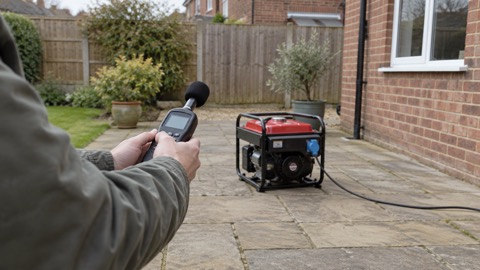
Noise. Noise varies widely. Champion quotes 74 dBA at 7 metres for its 5500 watt petrol generator2 and 58 dBA for its 3000 watt Atom Fusion inverter21. Inverter models are generally the quieter type. Think about siting and neighbours before a long outage, and never move a generator indoors to quieten it. See How Loud Is a Generator? Noise and Neighbours.
Electric or pull-cord start. Many generators offer electric or recoil start with a pull cord12. The Ford FG9250E lists electric key start with recoil backup22, and the Briggs & Stratton ProMax 9000EA has electric key start23. Electric start is easier in cold or wet conditions; the pull cord is your backup if the battery is flat.
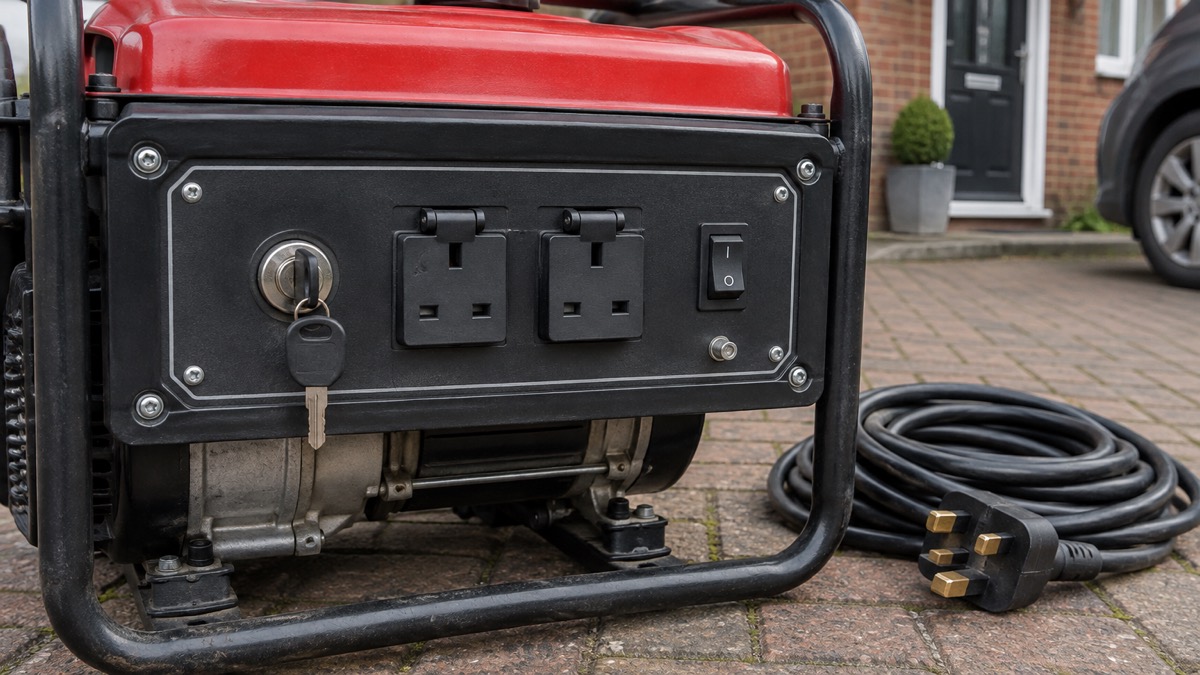
Which sockets to use. Generators commonly have 230V 16A household sockets, and larger models add a 230V 32A outlet23. The Briggs & Stratton Q6500 has 2x 230V / 16 amp household sockets24. Use the sockets the maker provides with the correct leads, and see Extension Leads and Overloading With Backup Kit.
Connecting to home wiring. Never connect a portable generator directly to household wiring or a wall socket, as this can create dangerous backfeed into the electricity network and may cause serious injury, fire or damage13. Any proper connection takes research and the advice of a qualified electrician25. See Connecting a Generator or Battery to Your Home's Wiring.
Sources (25)
- BLUETTI Elite 400 portable power station, BLUETTI, 2026-10-25
- Champion 5500 Watt Petrol Generator With Remote Start, Champion Power Equipment, 2026-10-25
- EcoFlow Smart Generator (Dual Fuel) - EcoFlow UK, EcoFlow UK
- Generators, Just Generators, 2026-10-25
- London Fire Brigade flooding advice after a flood, London Fire Brigade, 2026-10-25
- Portable Power Stations vs Generators - which should you choose? - Expert Advice - Machine Mart, Machine Mart
- Champion 3200 Watt Petrol Generator, Champion Power Equipment, 2026-10-25
- Champion 3600 Watt Inverter Petrol Generator, Champion Power Equipment, 2026-10-25
- EcoFlow Smart Generator (Dual Fuel), Champion Power Equipment, 2026-10-25
- Anker SOLIX power outage course, Anker SOLIX, 2026-10-25
- Briggs & Stratton ProMax 7500EA, Briggs & Stratton, 2026
- Machine Mart generators buyers guide, Machine Mart, 2026-10-25
- Clarke generators, Clarke International, 2026-10-25
- Which? how to buy the best generator, Which?, 2026-01-20
- EcoFlow portable solar panels, EcoFlow, 2026-10-25
- Runnymede flooding, Runnymede Borough Council, 2026-10-26
- HSE carbon monoxide, Health and Safety Executive, 2026
- Strong winds and heavy rain warning information and advice, nidirect, 2026-01-27
- Restoration following a power cut, Electricity North West, 2026-10-25
- Electricity North West FAQs, Electricity North West, 2026-10-25
- Champion 3000 Watt Atom Fusion Inverter Generator, Champion Power Equipment, 2026-10-25
- Ford FG9250E Q Series Petrol Generator, Generators Direct, 2026-08-14
- Briggs & Stratton open frame generator, Briggs & Stratton, 2026
- Briggs & Stratton Q6500 QuietPower Series, Briggs & Stratton, 2026
- Wiltshire and Swindon Prepared generators, Wiltshire and Swindon Prepared, 2026-10-25
 Power Cut Backup Power Checklist
 Backup Power Before Winter
 Safe Battery Charging at Home
 Running a Generator Indoors
 Carbon Monoxide from Generators
 Generator Sizing for a Power Cut
 Storing Petrol at Home
 Diesel Storage at Home
 Storing a Generator
 Generators in Cold Weather
 Generator Noise and Neighbours
 Power Station Capacity Sizing
 Power Station Run Time
 Power Station for a Gas Boiler
 Power Station UPS Mode