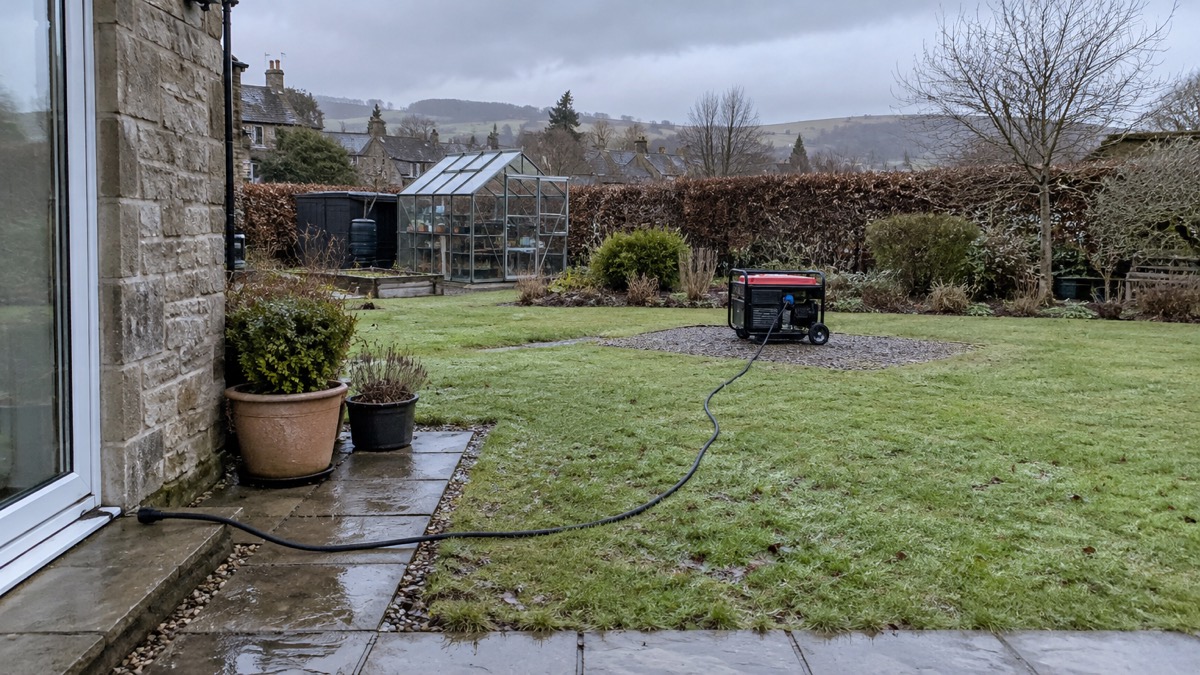
A generator can keep a fridge cold and a heating pump running through a power cut, but it can also kill the household it is meant to help. The Health and Safety Executive (HSE) warns that using petrol powered equipment, such as generators, indoors or in enclosed spaces can create significant levels of carbon monoxide which can kill even after a few minutes1. London Fire Brigade's flood recovery guidance is just as blunt: never run a petrol or diesel powered generator indoors, because they can produce fatal levels of carbon monoxide2.
The rules that follow come from the fire and rescue services, the HSE, the NHS and the UK's public health bodies. They are short, and none of them is optional. Run the generator outside, well away from any door, window or vent. Fit a carbon monoxide alarm and test it. Keep fuel away from heat and flames. And if the alarm sounds or anyone feels unwell, get out, get into fresh air and call for help: 999 if someone is unwell, and the National Gas Emergency Service on 0800 111 999 if you suspect a gas appliance3.
Never run a generator indoors or in an enclosed space
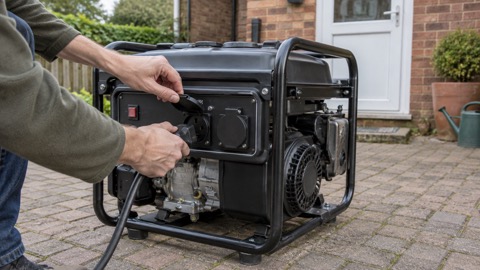
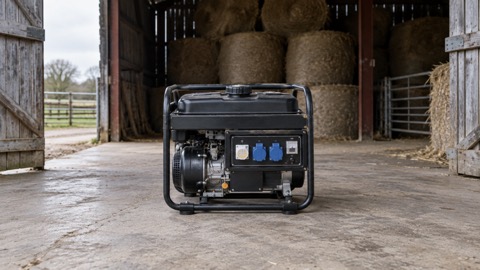
This is the single most important rule of generator safety, and every official body states it in the same terms. The HSE's guidance on petrol powered equipment is to locate petrol generators outside in well ventilated spaces, so that fumes disperse and cannot gather or drift into building openings, and never to use petrol powered equipment indoors or in enclosed spaces unless the ventilation needs have been fully assessed1. London Fire Brigade repeats the warning for flood recovery: never run a petrol or diesel powered generator indoors, as they can produce fatal levels of carbon monoxide2.
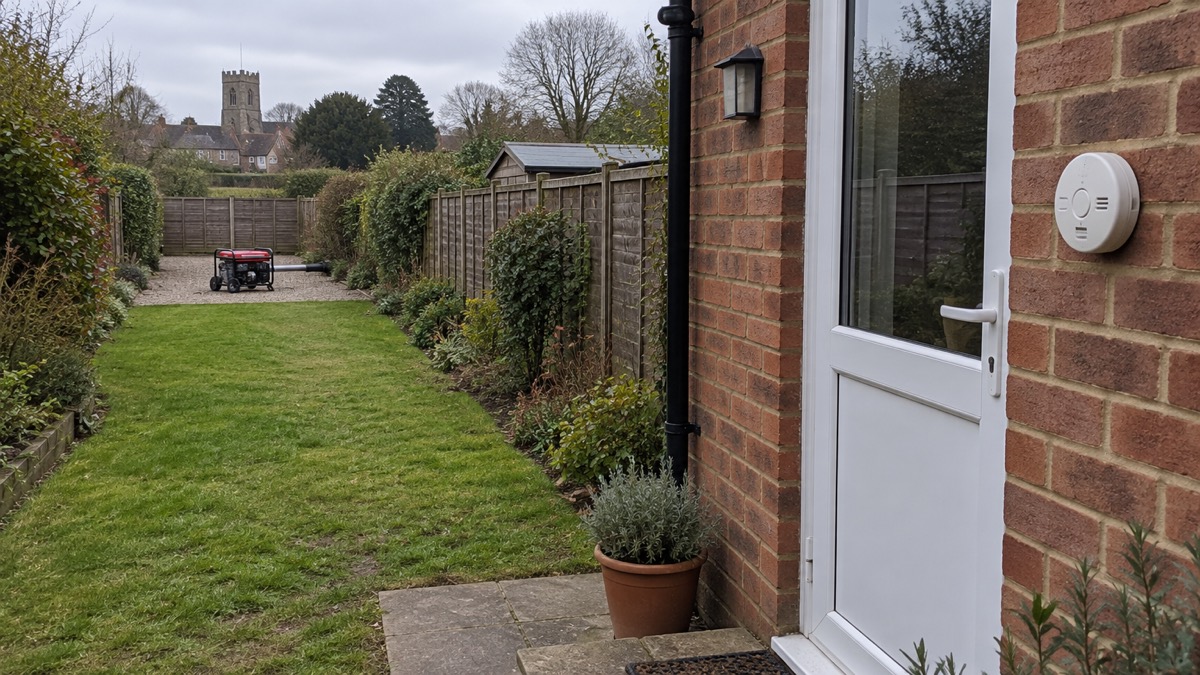
"Indoors" includes more than the rooms you live in. A garage with the door open, a lean-to, a shed, a covered porch and a caravan awning are all enclosed or semi-enclosed spaces where exhaust can gather. If you are using a generator, be careful where you put it in case of carbon monoxide poisoning10. North Yorkshire Fire and Rescue Service adds that exhaust gases from generators must always be properly vented away from occupied areas11.
Placement outside matters as much as being outside. Wiltshire and Swindon Prepared's guidance on generators is that the machine will need to be secure, with good airflow4. Keep the exhaust pointing away from the house, away from doors, windows, air bricks and vents, and away from neighbouring properties: exhaust that cannot drift into a building opening is the whole point of outdoor placement. Also keep the generator, its cables and its fuel store clear of escape routes, so that nothing blocks your way out in an emergency.
If you are weighing up a fuel generator against a battery power station, note that Which?'s independent guidance describes battery generators as smaller and more portable than generators that use a fuel tank, though only really useful if you have low power demand12. A battery power station produces no exhaust at all indoors, which removes the carbon monoxide risk entirely for small loads. Our page on portable power stations covers what they can run, and using generators and power stations during an outage covers the practicalities of running either through a cut.
Carbon monoxide: the gas you cannot see, smell or taste
Carbon monoxide (CO) is a colourless, odourless, tasteless, poisonous gas produced by the incomplete burning of carbon based fuels, including gas, oil, wood and coal13. The NHS puts it plainly: carbon monoxide gas is colourless and does not smell, so you cannot tell if it is around you9. Public health guidance describes it as non-irritating as well, which means it gives no warning sensation in your eyes, nose or throat while you breathe it14.
The reason it kills is mechanical and quick to explain. Carbon monoxide takes some of the oxygen's place in red blood cells, and blood cells carrying carbon monoxide cannot carry oxygen15. North Wales Fire and Rescue Service summarises the effect: carbon monoxide reduces your body's ability to carry oxygen, which can quickly make you seriously ill7. The HSE warns that CO levels can quickly kill without warning1, and in extreme cases prolonged exposure can cause paralysis and brain damage13.
The scale of the risk is small nationally but real. The HSE reports that every year around 7 people die from CO poisoning caused by gas appliances and flues that have not been properly installed, maintained or that are poorly ventilated16, and the Met Office's winter advice states that every year around 30 people die following accidental exposure to high levels of the gas5. A generator used wrongly concentrates that risk into your own home in a single evening.
The danger is not spread evenly through a house. Public health guidance notes that smaller rooms containing CO sources, such as fuel burning cookers and fireplaces, are particularly at risk, as the pollutant concentrates more quickly in confined spaces17. That is why a generator under a window, feeding a cable into a small room, is such a dangerous combination.
Symptoms of carbon monoxide poisoning, and how they differ from flu
The symptoms are the trap. The HSE states that early symptoms of CO poisoning can be confused with food poisoning, viral infections, flu or simple tiredness1. nidirect gives the key distinguishing fact: the symptoms of exposure to low levels of carbon monoxide can be similar to those of food poisoning and flu, but unlike flu it does not cause a high temperature (fever)18.
| Symptom | Mild or low-level exposure | High-level exposure |
|---|---|---|
| Most common | A tension-type headache18 | Impaired mental state and personality changes18 |
| Other early signs | Feeling sick, dizzy, tired and confused, stomach pain, shortness of breath19 | Vertigo, ataxia, breathlessness and a heart rate of more than 100 beats per minute18 |
| Serious | Being sick, symptoms that develop over days or months19 | Chest pain caused by angina or a heart attack, seizures, loss of consciousness18 |
| Pattern | May come and go, worse in an affected room, better outside20 | Can develop quickly19 |
Devon and Somerset Fire and Rescue Service lists headache as the most common symptom, and notes that symptoms can develop quickly or over a number of days or months19. nidirect's storm advice lists headaches, nausea, breathlessness, dizziness, collapse and loss of consciousness10. Doncaster and Bassetlaw Teaching Hospitals NHS Foundation Trust adds disorientation and vomiting to the list21.
There are clues beyond the symptoms themselves that point to carbon monoxide rather than a bug. nidirect advises you should suspect carbon monoxide poisoning if other people in your house, flat or workplace fall ill with similar symptoms, if your symptoms disappear when you go away and return when you come back, if your symptoms tend to be seasonal, or if your pets also become ill18. NHS 111 Wales adds that symptoms may get worse when you spend time in an affected room or building and get better when you leave or go outside20.
What to do if you suspect carbon monoxide poisoning
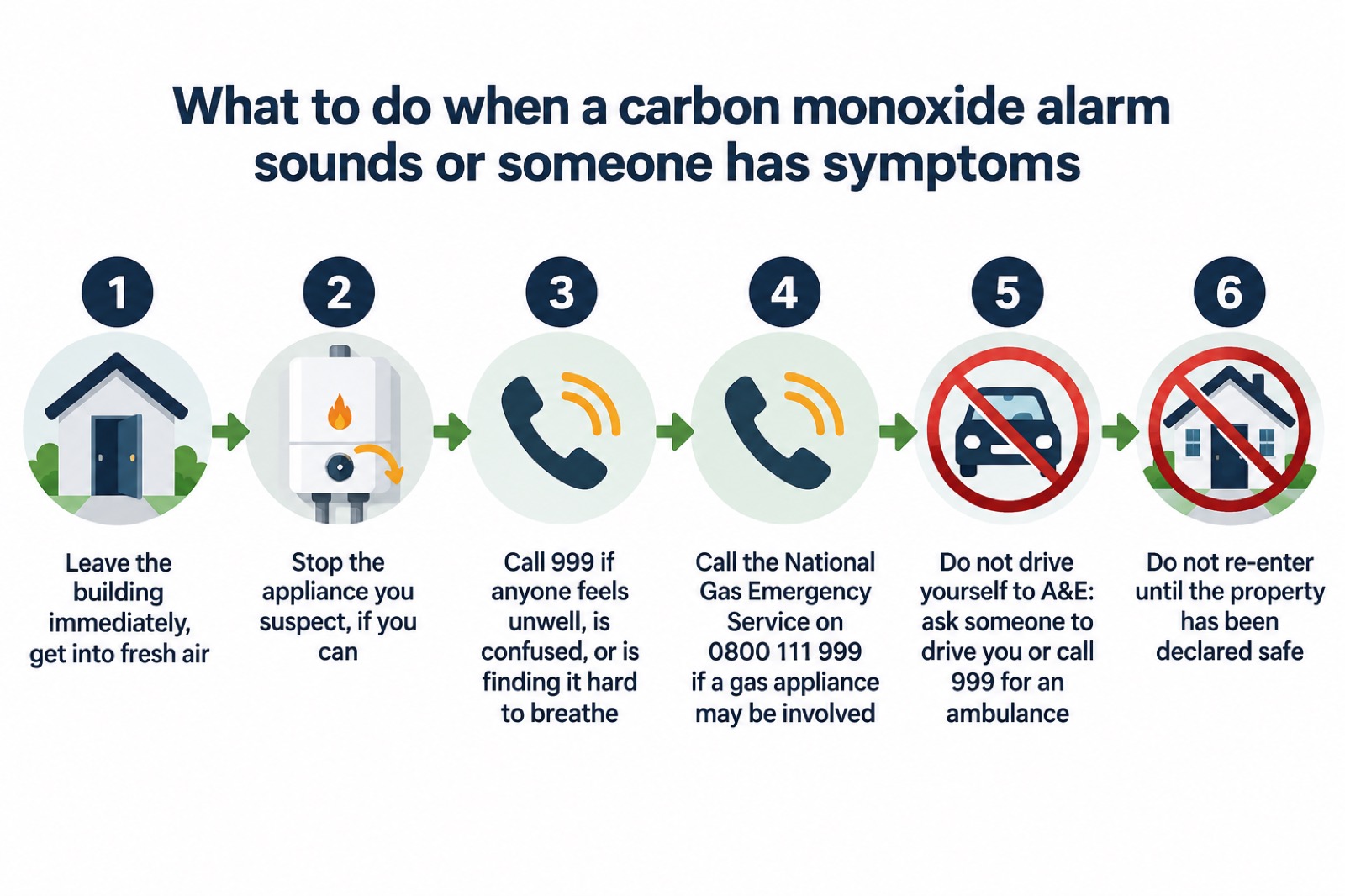
Act on the alarm, not on certainty. North Wales Fire and Rescue Service's instruction is: if your carbon monoxide alarm sounds, or you suspect carbon monoxide poisoning, leave the building immediately, call the emergency services if anyone feels unwell, and do not re-enter until it has been declared safe7.
Once you are out:
- Stop using appliances you think might be making carbon monoxide, such as a boiler, cooker or heater, if you can15.
- Call 999 if anyone is unwell, or if you are finding it hard to breathe, you suddenly become confused, or someone loses consciousness20.
- Call the National Gas Emergency Service on 0800 111 999 if you think a gas appliance is involved. North Yorkshire Fire and Rescue Service gives this as the number to call6, and NHS guidance for Yorkshire gives the same free National Gas Helpline number to call immediately22.
- Do not drive yourself to A&E. NHS guidance is explicit: ask someone to drive you or call 999 and ask for an ambulance9.
- Do not go back inside until the property has been declared safe7.
Hospital treatment is straightforward if you get there in time. NHS 111 Wales explains that in hospital you will usually have tests to check the level of carbon monoxide in your blood, and if the level is high you may be given oxygen through a mask20. You may need to be checked in hospital especially if you have symptoms of severe poisoning, you are pregnant, you are a child or older person, or you have anaemia or a condition affecting your lungs, heart or blood vessels20.
If you are using a generator, be careful where you put it in case of carbon monoxide poisoning23. Make sure there is plenty of air flow around the generator to supply oxygen and remove the fumes24, and always ensure your property has a carbon monoxide detector and be aware of the signs of carbon monoxide poisoning when using a generator25.
Who is most at risk from carbon monoxide
Carbon monoxide does not affect everyone equally. nidirect's gas safety guidance states that children, students, the elderly, pregnant women and anyone with heart or breathing problems are more vulnerable to its effects26. NHS Learning Hub guidance adds that carbon monoxide poisoning can disproportionately affect vulnerable people and unborn babies14. If your household includes anyone in these groups, the placement rules and the alarm matter even more.
Smokers carry an extra risk. NHS smokefree guidance notes that because of carbon monoxide, smokers are more at risk of heart attacks and stroke15. The same guidance offers a useful sense of how the body clears the gas: in 24 to 48 hours after stopping smoking, your carbon monoxide levels go back to the level of a non-smoker15. That recovery window is why getting into fresh air quickly matters so much after exposure.
Some situations concentrate the risk. Doncaster and Bassetlaw Teaching Hospitals warns there is a risk of carbon monoxide poisoning when you sleep in a room where a conventional coal or gas fire, a log burner, a cooker, or a back burner is left on overnight21. nidirect notes that incidents and fatalities because of CO can also occur in holiday homes, caravans and on board boats, where faulty gas cookers, appliances or petrol powered generators have led to carbon monoxide poisoning26. And the risk from correctly installed, well maintained appliances is very low, North Wales Fire and Rescue Service notes, while faulty, poorly ventilated or incorrectly used appliances can produce dangerous levels7.
Fitting and testing a carbon monoxide alarm at home
An alarm is the only reliable way to detect a gas you cannot see, smell or taste. The Met Office's winter advice is that a carbon monoxide alarm should be fitted in any room that contains a gas fuel burning appliance, like a boiler or gas fire, and a solid fuel burning appliance, and tested regularly, with rooms adequately ventilated5. North Yorkshire Fire and Rescue Service's heating guidance for households with solid fuel heating is that you should have smoke alarms and carbon monoxide alarms fitted and test them regularly27. Carbon monoxide alarms are available from DIY and hardware stores, Devon and Somerset Fire and Rescue Service confirms19.
Where you burn fuel, fit an alarm:
- Every room containing a solid fuel appliance such as an open fire or wood burner, and any gas appliance such as a central heating system, boiler, gas fire or paraffin heater5
- Any room where you use fuel-burning equipment indoors, where there must be good ventilation and a carbon monoxide alarm, and only equipment designed to be used indoors should be brought inside the home28
- Every room that needs one, because CO is a poisonous gas that can kill you29
Test the alarm regularly, along with your smoke alarms27. If you use any fuel burning equipment indoors, nidirect's storm warning is that there must be good ventilation and it must be used with a carbon monoxide alarm, that only equipment designed to be used indoors should be brought inside the home, and that you should always follow the manufacturer's guidance28. A generator is not equipment designed for indoor use.
Electric shock: damaged cables, plugs and wet weather
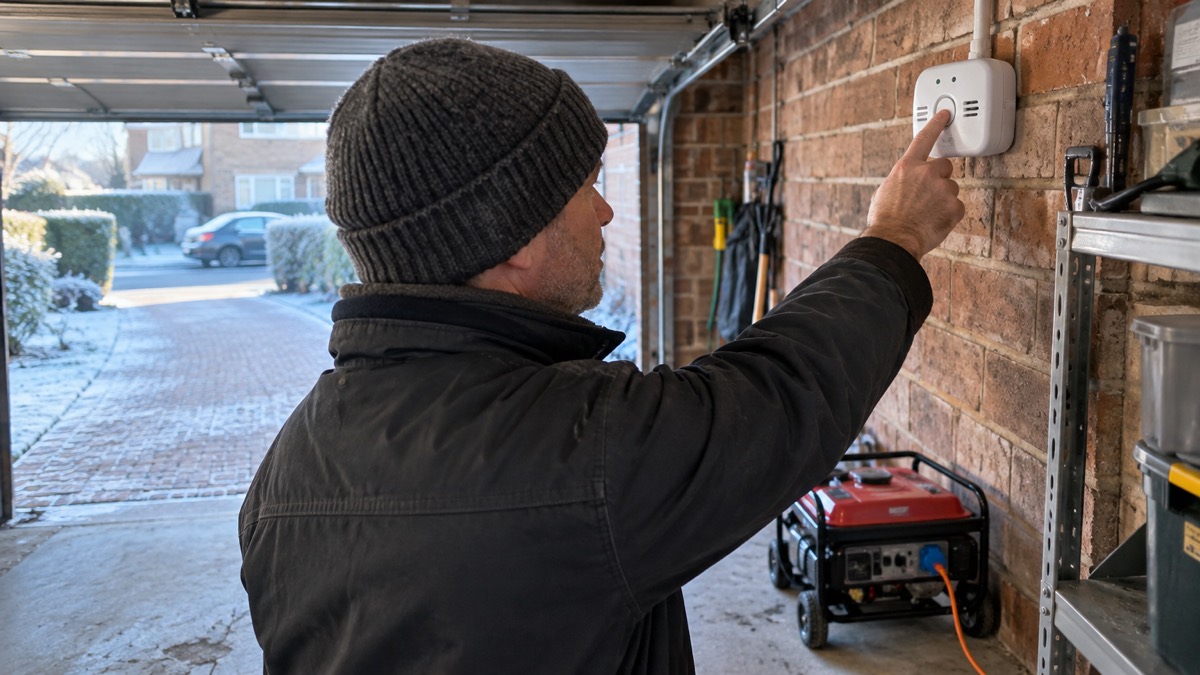
Generators bring electrical hazards as well as exhaust hazards. The HSE's guidance on electricity lists electric shock and burns from contact with live parts among the main hazards, and warns that even incorrectly wiring a plug can be dangerous and lead to fatal accidents or fires30. It also notes that electric shocks can lead to other types of injury, for example by causing a fall when working from ladders or scaffolds30. Check cables and plugs for damage before every use, and follow the maker's instructions for your own machine.
Storms and floods add their own dangers. nidirect's storm warnings instruct: do not approach any damaged electricity equipment or broken power lines, and be extra careful around fallen trees, as they often take electricity poles and wires with them as they fall10. The National Energy System Operator notes that natural causes such as lightning, flooding or fallen trees can damage cables and equipment and cause power cuts31. If you are running a generator after a storm, keep it and its cables well clear of anything the storm has brought down.
Wet weather matters in two directions. Never handle electrical equipment with wet hands or standing in water, and if flooding has affected your home, follow the flood recovery guidance before reconnecting anything: London Fire Brigade's after a flood advice includes never running a petrol or diesel powered generator indoors because of carbon monoxide, and being aware of the signs of poisoning when using one2. For how to connect a generator's output to your household circuits safely, see connecting a generator or battery to your home's wiring, and for avoiding overloaded sockets with backup kit, see extension leads and overloading.
Fire and explosion risks from generator fuel
Petrol and diesel are fuels, and they behave like fuels around a running engine. Wiltshire and Swindon Prepared's flood recovery guidance states the core rule: do not use petrol or diesel generators or other similar fuel driven equipment indoors, because their exhaust gases contain carbon monoxide, which can poison if in high concentrations in the air32. Outdoors, keep the fuel store and the refuelling point away from the hot exhaust and engine surfaces.
The same principles apply to any fuel burning equipment you might reach for in a cut. nidirect's fire and summer safety guidance on barbecues is never to use petrol or paraffin to start or revive a barbecue, but to use firelighters or starter fuel on cold coals, to site it flat and away from fences, trees, shrubs and sheds, to keep a bucket of water or garden hose nearby, to keep children and pets away, never to leave it unattended, and to let it cool before moving it33. For gas barbecues, make sure the gas tap is turned off before changing the cylinder and always disconnect the cylinder in open air, and turn off the gas cylinder before the barbecue controls when finished so gas in the pipework is exhausted33.
For how much fuel you can lawfully and safely keep at home, see our pages on petrol storage and diesel storage, and for looking after the machine between cuts, how to store a generator after a power cut.
Where else carbon monoxide comes from during a power cut
The generator is the most obvious source, but a power cut pushes households towards several others. nidirect's storm advice warns that if you are without electricity, using equipment such as kerosene heaters, charcoal grills (BBQs) and portable generators indoors can cause carbon monoxide poisoning10, and its 2026 storm warning repeats the same warning28. nidirect's camping, caravanning and boating guidance is never to use a barbecue inside to keep you warm25.
The full list of household sources is longer than most people expect. Devon and Somerset Fire and Rescue Service lists boilers, gas fires, central heating systems, water heaters, cookers, open fires and wood burning stoves19. London Fire Brigade adds blocked or poorly maintained chimneys or flues, portable heaters using liquid petroleum gas (LPG), gas boilers and appliances, gas cookers or clay ovens, car engines and generators, and BBQs, charcoal or gas8. NHS 111 Wales lists gas boilers, gas cookers and clay ovens, gas or paraffin heaters, wood, gas and coal fires, and portable generators20.
| Source | Where it turns up in a power cut |
|---|---|
| Portable generators | Run outdoors only, never indoors or in a garage1 |
| Charcoal or disposable barbecues | Never indoors, never to keep warm, even when cooling8 |
| Kerosene and paraffin heaters | Indoors only with good ventilation, a CO alarm, and equipment designed for indoor use28 |
| Gas boilers, cookers and fires | Faulty, poorly ventilated or incorrectly used appliances can produce dangerous levels7 |
| Car and boat engines | Do not leave vehicles or other engines on in enclosed spaces such as a garage9 |
| Blocked chimneys and flues | Have flues checked; blockages push CO back into the room8 |
There are warning signs on appliances worth knowing. The HSE lists yellow or orange rather than blue flames (except fuel effect fires or flueless appliances which display this colour flame), soot or yellow or brown staining around or on appliances, pilot lights that frequently blow out, and increased condensation inside windows as signs that incomplete combustion is occurring and CO may be produced13. London Fire Brigade adds flames that are not fully formed, for example if the flame does not go all the way around the ring8.
One further source is specific to solid fuel households: the HSE has issued a safety notice on wood pellet storage, where carbon monoxide can build up in the pellet store itself, and where inadequate equipment or a poorly designed flue can cause flue gas to back flow34. If you heat with wood pellets, treat the store as a confined space and follow the installer's guidance.
Generators in caravans, boats and mobile homes
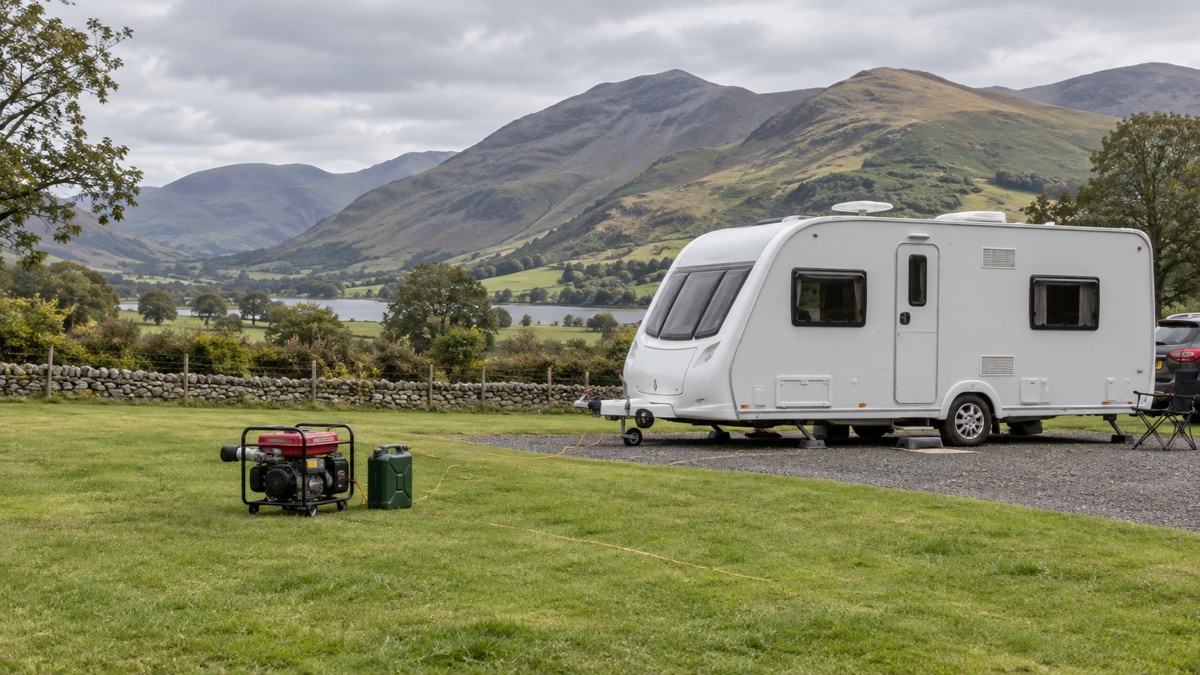
Caravans and boats deserve their own warning because the spaces are small and people sleep in them. North Yorkshire Fire and Rescue Service's caravans and camping guidance is never to use fuel burning devices inside the caravan, including disposable barbecues, camping stoves, camping heaters, lanterns and charcoal grills, and always to make sure exhaust gases from generators are properly vented away from occupied areas11. nidirect warns of carbon monoxide dangers when camping, caravanning or boating, and to call 999 if it is urgent25.
Devon and Somerset Fire and Rescue Service's caravan and mobile home guidance adds practical rules: keep vents clear and never block them, make sure the heaters work properly, and do not overload sockets, though using an adaptor with a lead is safe29. London Fire Brigade notes that if your home is a houseboat, carbon monoxide can also be produced by boat engines and generators, wood and coal burners, gas cookers or fridges, and car engines8.
If you are choosing backup power for a caravan or boat, a battery power station avoids the exhaust problem entirely for small loads, though Which? notes battery generators are only really useful if you have low power demand12. Our comparison of a portable power station or petrol generator for a power cut sets out the trade-offs.
Getting help, and getting prepared properly
The numbers to have to hand before you need them:
- 999: if anyone is unwell, confused, finding it hard to breathe or has lost consciousness20
- National Gas Emergency Service, 0800 111 999: if you smell gas or suspect a leak from a gas appliance6
- Gas Safe Register, 0800 408 5500: to check that a gas engineer is registered16
Beyond the emergencies, preparation is what keeps a generator safe. Choose the right machine for your loads with our guide to what size generator you need for a power cut, understand how long a generator will run on a tank of fuel, and work through the power cut backup power checklist before winter. If you are deciding between a fuel generator and a battery, the backup power section covers every option, including portable generators by type and home battery storage.
The pattern across every official source here is consistent: the machine is safe when it is outside with good airflow, the alarm is fitted and tested, the fuel is handled away from heat, and everyone in the house knows the symptoms and the numbers to call. Get those four things right and a generator is a useful tool in a power cut rather than a danger in your garden.
Sources (34)
- Carbon monoxide in construction and agriculture, HSE, Health and Safety Executive, 2026
- After a flood advice, London Fire Brigade, London Fire Brigade, 2026-10-25
- Best carbon monoxide detectors - Which?, Which?
- Generators, Wiltshire and Swindon Prepared, Wiltshire and Swindon Local Resilience Forum, 2026-10-25
- Keeping your home warm in winter, Met Office, Met Office, 2026-10-26
- Smoke and carbon monoxide alarms, North Yorkshire Fire and Rescue Service, North Yorkshire Fire and Rescue Service, 2026-02-20
- Carbon monoxide safety at home, North Wales Fire and Rescue Service, North Wales Fire and Rescue Service, 2026
- Carbon monoxide safety, London Fire Brigade, London Fire Brigade, 2026-10-25
- Carbon monoxide poisoning, NHS, NHS, 2025-12-16
- Strong winds and heavy rain warning, nidirect, nidirect, 2026-01-27
- Caravans and camping safety, North Yorkshire Fire and Rescue Service, North Yorkshire Fire and Rescue Service, 2026-05-13
- How to buy the best generator, Which?, Which?, 2026-01-20
- Carbon monoxide in the home, HSE, Health and Safety Executive, 2026
- Preventing exposure to carbon monoxide, NHS Learning Hub, NHS, 2026-10-26
- Carbon monoxide information, Yorkshire Smokefree Wakefield, NHS Yorkshire Smokefree, 2026-10-26
- Gas safety frequently asked questions, HSE, Health and Safety Executive, 2026
- The invisible danger of carbon monoxide, Wiltshire and Swindon Prepared, Wiltshire and Swindon Local Resilience Forum, 2026-10-25
- Carbon monoxide poisoning, nidirect, nidirect, 2024-12-16
- Carbon monoxide, Devon and Somerset Fire and Rescue Service, Devon and Somerset Fire and Rescue Service, 2026
- Carbon monoxide poisoning, NHS 111 Wales, NHS 111 Wales, 2025-10-02
- Carbon monoxide, Doncaster and Bassetlaw Teaching Hospitals, Doncaster and Bassetlaw Teaching Hospitals NHS Foundation Trust, 2026-10-25
- Carbon monoxide information, Yorkshire Smokefree Sheffield, NHS Yorkshire Smokefree, 2026-10-25
- Power cut help - what should I do in a power cut? | Northern Ireland Electricity Networks, Northern Ireland Electricity Networks
- Gas safety for tenants, Greater London Authority, Greater London Authority, 2026-10-25
- Carbon monoxide dangers if camping, caravanning or boating, nidirect, nidirect, 2026-04-02
- Gas safety and carbon monoxide, nidirect, nidirect, 2025-11-24
- Heating your home safely, North Yorkshire Fire and Rescue Service, North Yorkshire Fire and Rescue Service, 2026-03-09
- Strong winds weather warning, nidirect, nidirect, 2026-10-24
- Caravans and mobile homes safety, Devon and Somerset Fire and Rescue Service, Devon and Somerset Fire and Rescue Service, 2026
- Electricity at work: introduction, HSE, Health and Safety Executive, 2026
- Energy outages, National Energy System Operator, National Energy System Operator, 2026
- Flooding and health: safely cleaning your home, Wiltshire and Swindon Prepared, Wiltshire and Swindon Local Resilience Forum, 2026-10-25
- Fire and summer safety advice, nidirect, nidirect, 2026-07-03
- Safety notice: carbon monoxide from wood pellet storage, HSE, Health and Safety Executive, 2012-11-05
 Power Cut Backup Power Checklist
 Backup Power Before Winter
 Safe Battery Charging at Home
 What to Keep Running in a Cut
 Power During an Outage
 Watts and Watt-Hours
 Portable Power Stations
 Portable Generator Types
 LPG Cylinders and Regulators
 Connecting to Your Home's Wiring
 Home Battery Storage
 Portable Solar Panels
 12V Inverters
 Leisure and LiFePO4 Batteries
 Power Banks for Phone Charging