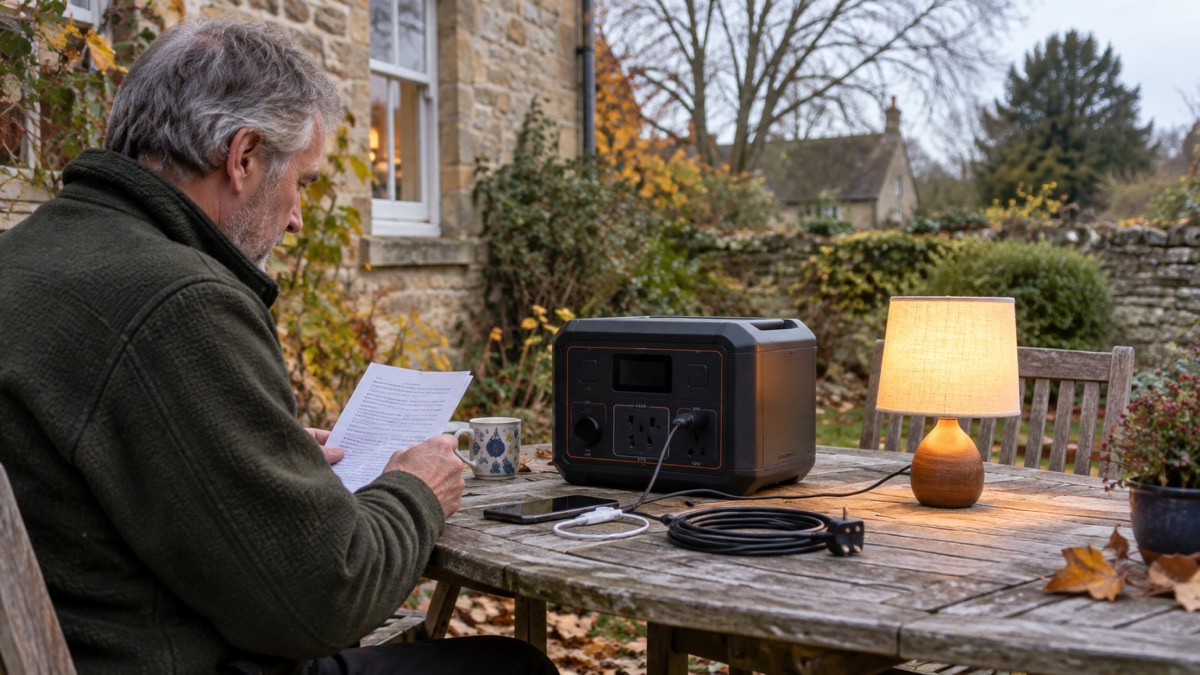
Winter is when the power most often goes, and the worst time to discover that a power station is flat or a generator will not start is in the dark. The work is done now, in daylight, while everything still works. Charge the power banks and any backup batteries, check the generator over and test it, and make sure you know where it can safely run. The Met Office's winter checklist puts it simply: make alternative plans1.
Two things matter more than any piece of kit. First, a generator must never run inside a house, garage, shed, tent or caravan, and must not be used in rain or standing water2. Second, if anyone in the household depends on electrical medical equipment, a power station is not a substitute for a plan made with their care team3. Everything else on this page is about getting the routine right before the first storm.
The winter backup power checklist
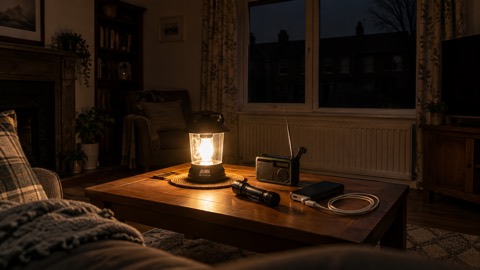
Work through this list once, in autumn, and then again whenever a named storm is forecast. Each item is there because it is the thing that most often fails when it is needed.
Power station checks: charge, outputs and the user guide
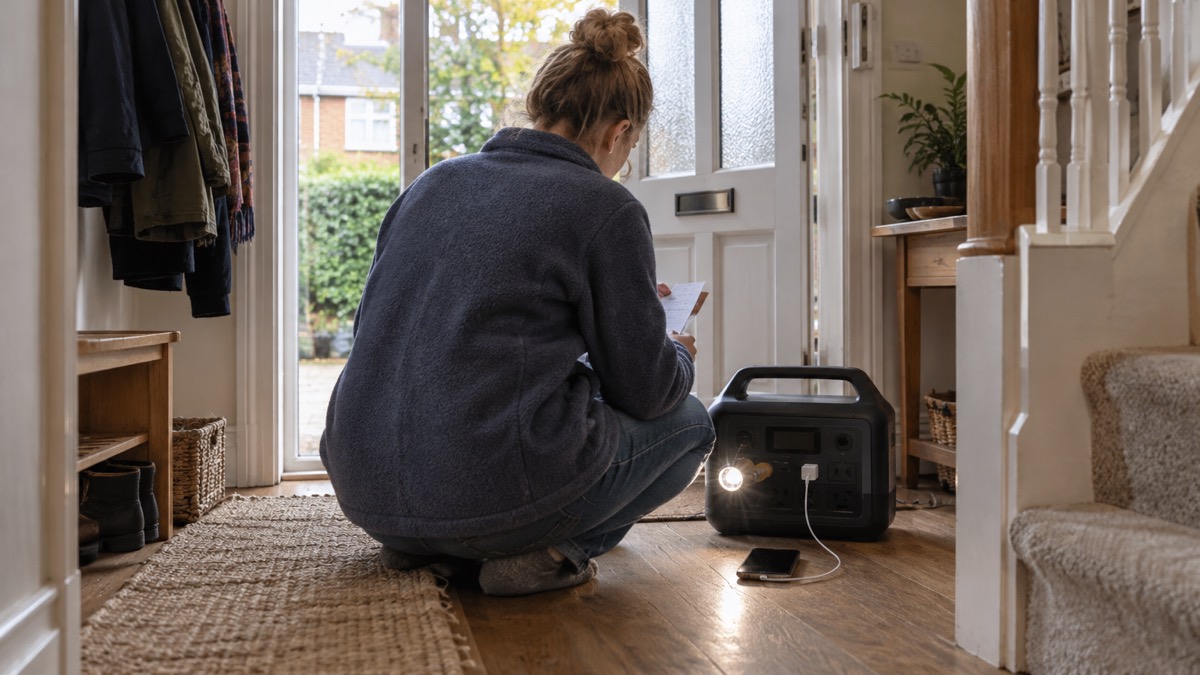
A portable power station is the simpler of the two options for most households: no fuel, no exhaust, and it can sit in a cupboard until it is wanted. That convenience depends on it being charged and undamaged when the cut comes. If you are worried about winter power cuts, keep your power pack charged up and ready to go in an emergency12.
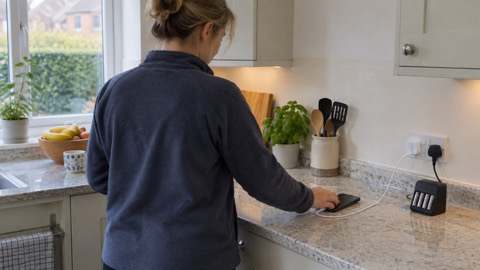
Start with the user guide. The fire and rescue service advice is to always follow the battery usage, storage and charging guidelines in the user guide8. That covers how the unit should be charged, how it should be stored and what it should not be asked to do. Then look at the hardware: inspect the battery, charger and charging cable for any signs of damage, and do not use or charge damaged equipment9. A cable that has been crushed in a drawer or a charger with a cracked case is a reason to stop, not to risk it.
Check the outputs against what you actually want to run. The Met Office's list of power cut supplies includes torches and batteries and a mobile phone power pack7. If you want to run more, the principle is the same as for a generator: list what you expect to power and check the wattage shown on each appliance, considering whether they will be used together or one at a time2. Our guide to watts, watt-hours and surge explains how those numbers add up, and what capacity power station you need takes it further.
Two checks are easy to forget. First, confirm the unit is not subject to a recall: check the list of recalled items on the Electrical Safety First website, which explains what to do with your recalled appliance10. Second, think about where it will live over winter. Batteries and charging are covered in more depth in our lithium-ion battery safety at home guide, and if you are choosing a unit from scratch, portable power stations: what they do and how to choose sets the options out side by side.
| Check | What to do | Why it matters |
|---|---|---|
| Charge level | Charge phones, power banks and backup batteries before a storm4 | A flat unit is no use in a cut |
| User guide | Follow the battery usage, storage and charging guidelines8 | The maker's rules for that unit |
| Condition | Inspect battery, charger and cable; do not use damaged equipment9 | Damaged kit should not be charged |
| Recalls | Check the Electrical Safety First recalled items list10 | Recalled units should not be used |
| Outputs | List what you will power and check each wattage2 | Prevents overloading the unit |
Generator checks: fuel, start method and where it must never run
A generator needs more looking after than a power station, and the checks are the ones that decide whether it starts on the night. The maker's maintenance list is a good annual routine: checking and changing engine oil, cleaning or replacing the air filter, inspecting the spark plug, checking fuel lines and connections, maintaining the starter battery where fitted, keeping ventilation openings clear, and inspecting sockets, controls and cables2. Farmers and livestock owners are told in storm warnings to check and test backup generators and equipment13, and the same logic applies to any household that owns one.
Sizing comes before fuel. Start by listing everything you expect to power and checking the wattage shown on each appliance, tool or item of equipment, considering whether they will be used together or one at a time2. Before connecting a power tool, check its voltage, running wattage and starting requirement, because tools with large motors may need a generator with substantially more capacity than their normal running wattage suggests2. If you are working out what a generator can carry, our guide to what size generator you need and the inverter or open-frame comparison cover the choices.
The maker's own words on siting are worth keeping in front of you:
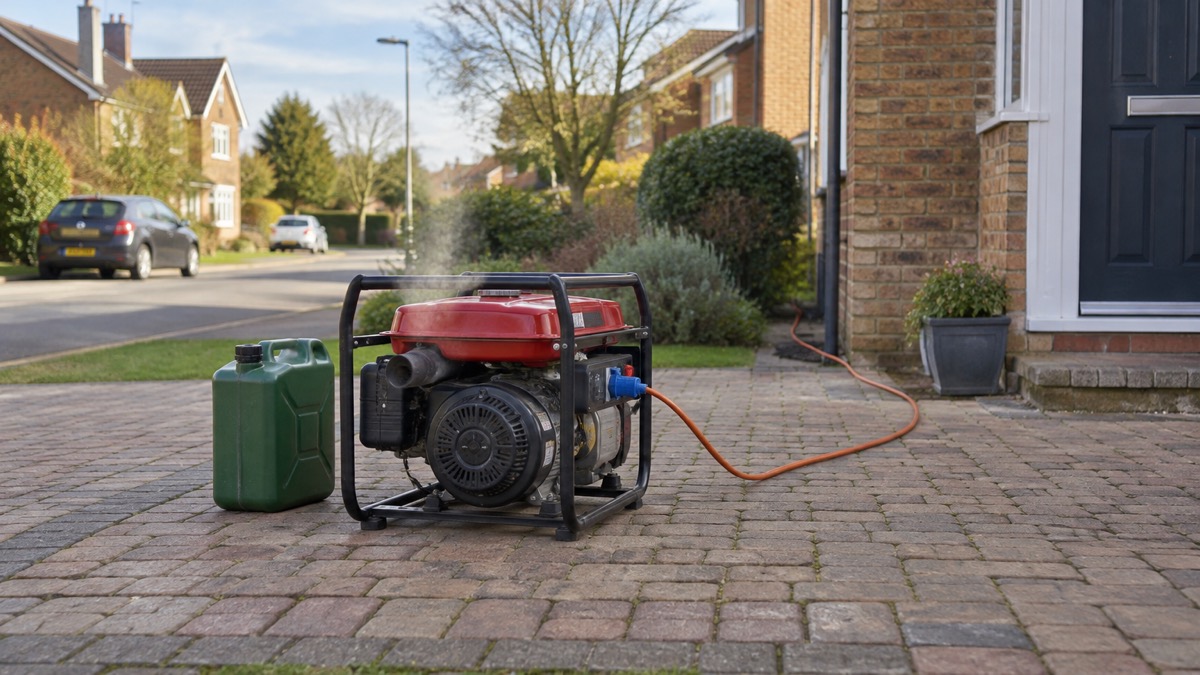
"Never operate a generator inside a house, garage, shed, tent or caravan"
Fuel and starting are the other half. Check fuel lines and connections as part of the annual service2, and keep ventilation openings clear so the machine can breathe2. If you plan to run two units together, only models specifically designed for parallel operation should be connected, always using the correct approved equipment and following the manufacturer's instructions2. For the wider picture on fuel, storage and carbon monoxide, see generator safety and how to store a generator after a power cut.
Power stations are not meant for medical equipment
This is the section to read if anyone in the household relies on powered equipment. A power station can keep a phone charged and a lamp lit, but it is not a care plan. The government's power cut guidance is direct: if you use medical equipment that requires a power supply, make a plan with your care provider and/or clinical care teams now about what will happen in a power cut, and the plan should set out what action you, or someone you care for, needs to take and who to contact if there is a power outage3.
The reason is that some equipment may stop working during a power cut, for example ventilators, oxygen concentrators, electric wheelchairs, hoists, communication devices and feeding pumps16. Power cuts can have a significant impact during winter, particularly for people who rely on electrical medical equipment or refrigerated medicines17. If you depend on power for medical equipment and do not already have your own power cut plan, speak to your healthcare provider now, because power cuts can happen all year round5.
What you can do is prepare the backup you have been told to prepare. Before or when a storm is forecast, charge mobile phones, power banks and any back-up batteries for medical equipment in case there is a power cut4. That is a supplement to the plan, not a replacement for it. Our guide to powering CPAP, oxygen and other medical devices from a battery goes into the equipment side, and the Priority Services Register is the route to extra help from your network operator.
Help from your network operator during a long power cut
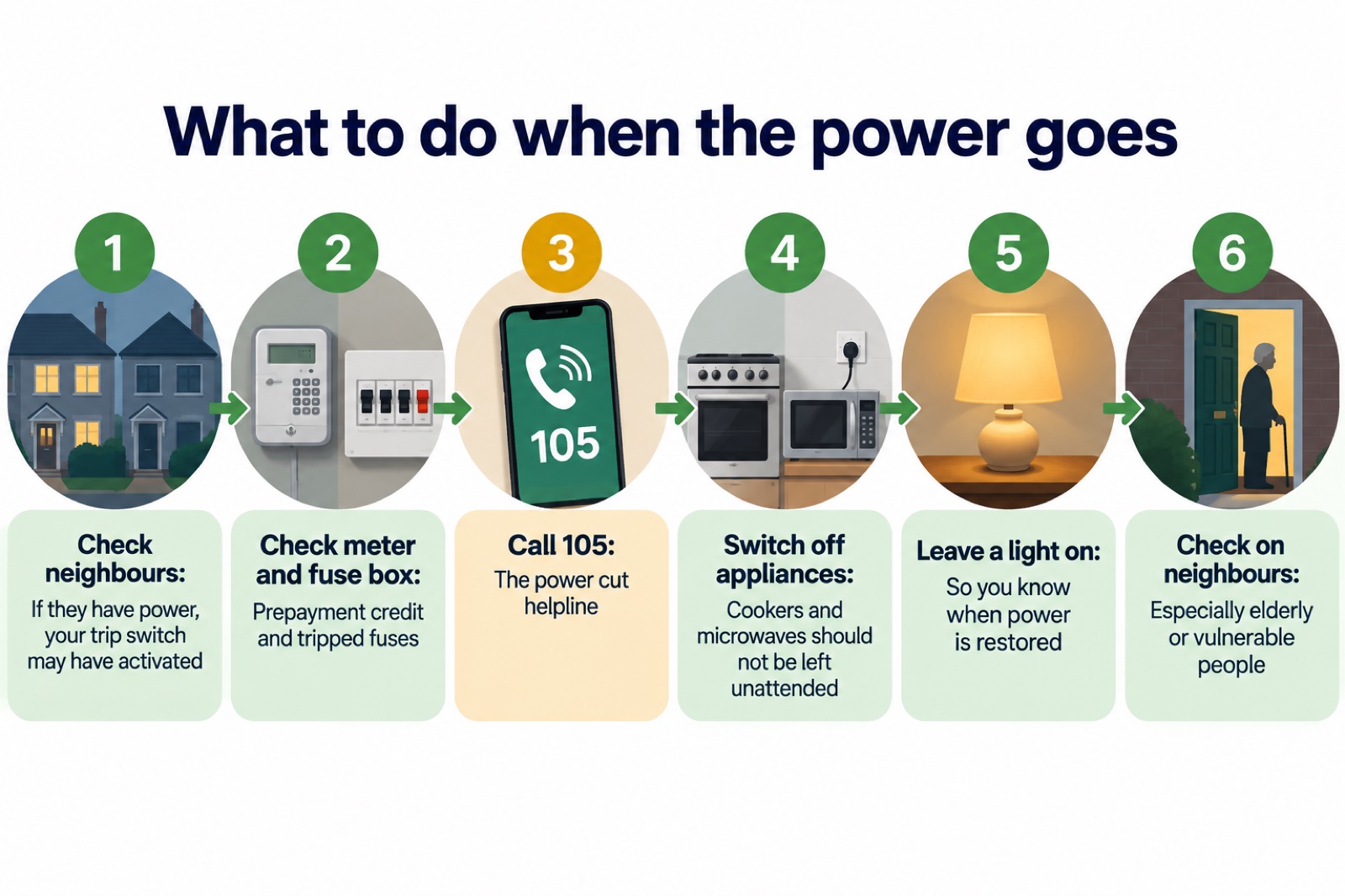
When the power goes, the first question is whether it is your fault or the network's. Check whether your neighbours are safe and whether they have a power cut too; if they have power, your trip switch may have activated7. Which? adds the same checks in more detail: check prepayment meter credit, check the fuse box for a tripped fuse, and look at neighbours' homes12. If it is a genuine cut, call 105, the power cut helpline the Met Office suggests storing on your phone6.
Network operators restore supplies in stages, and you may experience a short outage while you are connected back to the network after the repair18. Generators are sometimes used for temporarily restoring customers while permanent repairs are completed, ordered through network partners who ensure a robust refuelling strategy is in place and connect to the network safely18. That is the operator's job, not yours: do not attempt to connect a generator to your home's wiring. Official guidance is that it takes research by you and the advice and expertise of a qualified electrician before a generator may help you19.
While you wait, switch off all electrical appliances that should not be left unattended, leave a light on so you know when power is restored, and check on neighbours20. The fire and rescue service gives the same instruction for cookers and microwaves, because you never know when the power may be switched back on11. If you have elderly relatives or neighbours who might need help during a power cut, check up on them21, and look out for elderly neighbours to ensure they are prepared for a possible power cut7.
The Priority Services Register is the formal route to extra help. Check now whether you or someone you know can get extra help during bad weather through the Priority Services Register5. Northern Ireland Electricity Networks makes the same point in its winter campaign: think about the small things you can do to prepare in case you should experience a power cut22. It is particularly important for customers in the agricultural industry, rural communities and those with critical healthcare needs to think about how a power cut could affect them and put plans in place22.
Keeping batteries and chargers safe through winter
Batteries are the quiet risk in a winter kit. The National Fire Chiefs Council's campaign on lithium-ion batteries is the reference point, and the practical rules are short. Inspect the battery, charger and charging cable for any signs of damage, and do not use or charge damaged equipment9. Always follow the battery usage, storage and charging guidelines in the user guide8. If a white goods appliance starts making strange noises, unplug it and contact the manufacturer or a qualified repair technician23, and treat a power bank or charger that behaves oddly with the same caution.
Disposal matters more than people think. Dispose of old batteries safely: anywhere that sells batteries, such as a supermarket, should offer a collection of old batteries24. Batteries in general waste are a known fire cause at waste facilities, and the fire service has repeatedly warned about it. If a button battery is swallowed, the NHS advises getting help urgently24. For damaged or swollen lithium cells, our guide to disposing of a damaged lithium battery sets out what to do, and warning signs a lithium battery is dangerous helps you spot trouble early.
Sources (24)
- WeatherReady winter checklist, Met Office, 2026
- Generators, Clarke International, 2026
- Power cuts, UK Government Prepare campaign, 2026
- Storms, UK Government Prepare campaign, 2026
- Get winter ready, Powercut 105, 2026
- Top tips to be WeatherReady, Met Office, 2026
- What to do in a power cut, Met Office, 2026
- Electrical safety, North Yorkshire Fire and Rescue Service, 2026
- Lithium-ion batteries, National Fire Chiefs Council, 2026
- Electrical safety, Scottish Fire and Rescue Service, 2026
- Top tips for keeping warm and safe this winter, North Yorkshire Fire and Rescue Service, 2023
- What to do in a power cut, Which?, 2026
- Strong winds weather warning information and advice, nidirect, 2026
- Strong winds and heavy rain warning information and advice, nidirect, 2026
- Electricity and electrical equipment hazards, Health and Safety Executive, 2026
- Disabled people and carers, Ready Scotland, 2026
- Be prepared for winter emergencies, NHS Norfolk and Suffolk ICB, 2026
- Restoration following a power cut, Electricity North West, 2026
- Generators, Wiltshire and Swindon Prepared, 2026
- Met Office Weather Ready tips for snow and ice, Met Office, 2025
- After a flood, London Fire Brigade, 2026
- Winter ready, Northern Ireland Electricity Networks, 2026
- Total recalls: making white goods safer, London Fire Brigade, 2026
- Swallowed something, Alder Hey Children's NHS Foundation Trust, 2026
 Power Cut Backup Power Checklist
 Safe Battery Charging at Home
 30-Day Household Checklist