

Clarke is a maker of powered equipment: generators, heaters and water pumps among other things. For a household preparing for a power cut, a cold snap or a flood, the useful question is not what the range contains but which of these machines does a job you actually have, and where it is safe to run. A generator can keep a fridge and a few lights going through an outage, but only outdoors and never plugged into a wall socket. A pump can shift flood water, but not the water coming up through your drains. A heater can warm one room, but only one designed for indoor use, and never with a cylinder changed on the stairs.
This page sets out what Clarke makes for UK households, one short section per kit type, with the safety rules that decide whether the machine helps or harms. It then covers fuel and storage, support and warranty, and how to check a product for recalls. Every safety instruction here comes from fire and rescue services, the Health and Safety Executive or the NHS, and applies to any make of machine, not only Clarke's.
What Clarke makes for UK households
Clarke's household kit falls into three groups, and each answers a different kind of emergency. Generators answer a power cut, whether planned or caused by a storm. Heaters answer a heating failure or a cold snap, when the boiler is off or the gas has gone. Water pumps answer a flood or a leak, when water has got into a building and needs moving.
| Kit type | What it does for the household | Where it belongs | Section guide |
|---|---|---|---|
| Generator | Provides mains power away from the mains during an outage | Outdoors only, never indoors2 | Backup Power at Home |
| Heater | Warms one room when the central heating is off | Indoors, if designed for it, with ventilation clear6 | Heating and Cooking Without Mains Power or Gas |
| Water pump | Moves standing water out of a building or garden | Where flood water has collected, never in place of the water company7 | Flooding: A Household Guide |
The same caution applies to all three: they are fuel-driven or mains-driven machines, and the risks they carry are the ones fire services warn about most often. Before buying any of them, read the section guide for that kit, which sets out what the machine can and cannot do for a household like yours.
Clarke generators for power cuts
A generator is the one piece of kit on this page that can keep a household running through an outage: a fridge, a freezer, a few lights, a phone charger. It is also the one that carries the gravest risk if it is used wrongly, because a fuel-driven generator produces carbon monoxide, a gas you cannot see, taste or smell.
Do not expect help to arrive in the form of a generator. During a planned power cut, generators are provided only to customers who are medically dependent on electricity, not for businesses or personal use9. If someone in your household depends on powered medical equipment, tell your electricity network operator in advance and ask about the Priority Services Register; do not plan on a loan generator arriving.
For everyone else, the decision is whether to buy one, and the answer depends on what you need to keep running and for how long. A generator sized for a fridge and a few lights is a different machine from one that will run a heating pump. Work out the load first, then choose. The power cuts guide explains how long outages typically last and what to do while you wait.
Where a generator must never go
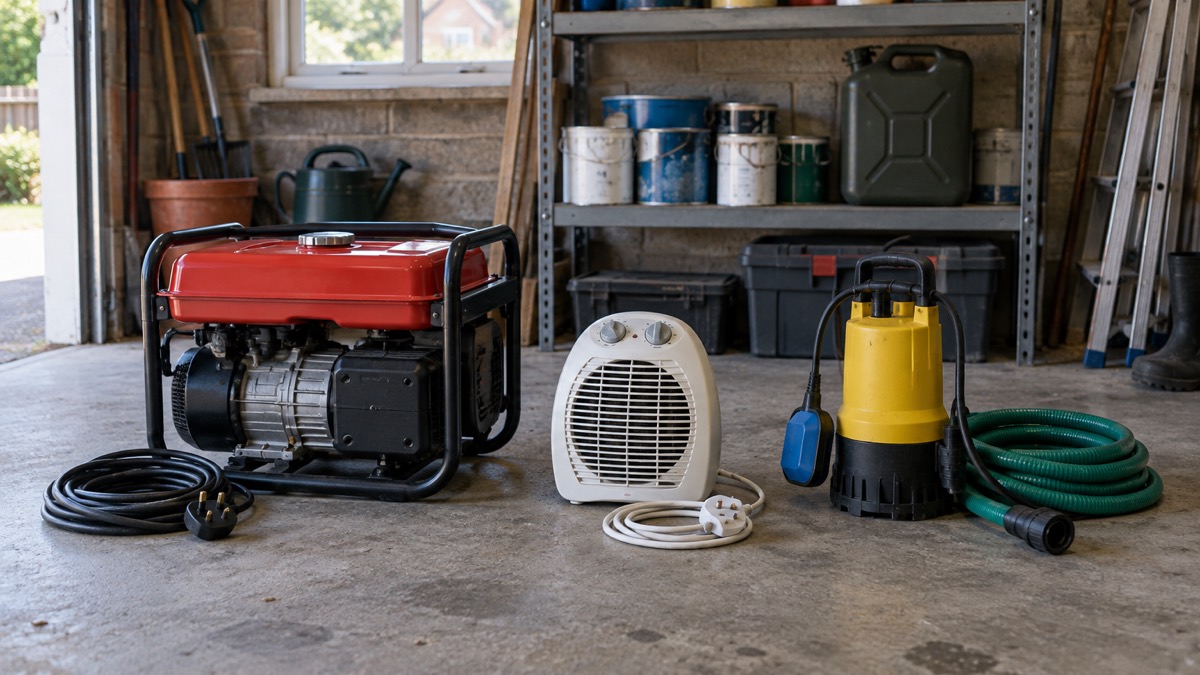
The rule is short and it is absolute: a fuel-driven generator never goes indoors. The NHS in Wales puts it plainly: "Never using a generator indoors"10. The fire and rescue services across England and Wales say the same in their own words: do not use any fuel-driven equipment, petrol and diesel generators or pumps, indoors2. The same warning covers a house, garage, shed, tent or caravan11, and generators and heaters must never be run inside a caravan, motorhome, tent or awning12.
Carbon monoxide from a generator can kill, and it can travel through a house from a machine running in an attached space. The fire services' guidance on carbon monoxide is the one to read before you first start a generator, and the home emergencies guide covers what to do if an alarm sounds.
The second rule concerns the cable. Never connect a generator directly to your domestic electrical system by plugging it into a wall outlet. This is called backfeeding: electricity flows back into the network and puts your neighbours and the workers repairing the lines at severe risk1. If you want a generator to power fixed circuits in the house, that is a job for a qualified electrician to set up properly, not something to improvise with a lead and a plug.
Clarke heaters and backup warmth
When the central heating fails or the gas goes off, the safest first move is not a fuel-burning appliance but an electric or oil radiator, which official advice for private properties recommends as an alternative heat source5. That advice assumes the power is on. If the power is off too, the options narrow, and the fire service's guidance on portable heaters is the one to follow: keep them clear of anything that can burn, never dry clothes on them, and never block ventilation6.
Clarke's heater range covers both the electric and the fuel-burning ends of that market, and the two carry different rules. An electric or oil-filled radiator indoors is straightforward. A gas or paraffin heater needs a room with ventilation that stays open, and a carbon monoxide alarm in the same room. The Health and Safety Executive's advice on gas appliances is blunt: never block ventilation6. A heater that is not designed for indoor use, such as a patio heater or a workshop model, stays outside.
If you are heating one room to sit in rather than the whole house, say so when you choose: a heater rated for a small room is the right size, and a larger one wastes fuel and adds risk. The heating and cooking guide sets out how to keep one room warm and safe through a heating failure, and the gas and heating failures guide covers what to do when the boiler stops.
Clarke water pumps for floods and leaks
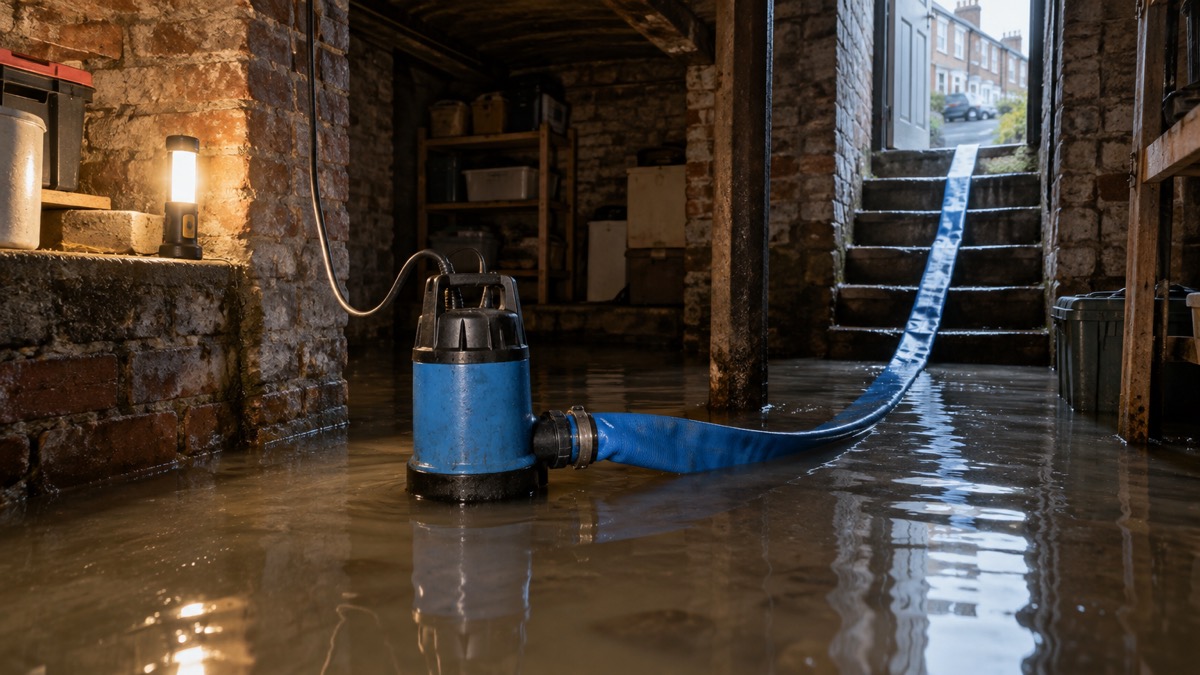
A pump is the kit you reach for when water has got in: a burst pipe, a leak, a flooded cellar, a garden under water. Clarke's pumps are for moving standing water out of a space, and they are at their most useful in the hours after a flood, once the water has stopped rising.
Before that point, the priority is keeping water out, not pumping it. The government's flooding advice is to use flood protection products if you have them, for example flood barriers or air brick covers14. A household flood kit might also include aquasacs or hydrosacks, plastic sheeting and tarpaulins, toilet bungs and non-return valves16. If flood water is about to enter your home, turn off gas, electricity and water supplies first, if it is safe to do so17.
A pump has limits, and it is worth knowing them before you buy. It cannot help with sewer flooding: if your toilet or sink is backing up during floods, call your local water company7. It cannot stop water coming in from surface water, groundwater, highways drainage or sewers, which are among the many sources of flooding besides rivers18. And it is not a substitute for the fire and rescue service's own pumping: London Fire Brigade keeps 5 High Volume Pumps across London for pumping large amounts of water during flooding19.
Safe use, fuel and storage
Most of the harm done by generators and fuel-burning heaters happens after the emergency, when the machine is put away or refuelled carelessly. Petrol is a dangerous substance: highly flammable, and when not handled safely it has the potential to cause a serious fire or explosion4. Storing it safely is covered by the Petroleum (Consolidation) Regulations 20143.
- Store fuel only in approved containers, labelled PETROL or HIGHLY FLAMMABLE, and check them regularly for condition and leaks4.
- Keep fuel out of the reach of children3.
- Do not overstock fuels of any type, including paraffin or biofuel, and store what you have safely21.
- Keep firewood, fuel and gas cylinders in a safe place, away from the house22.
- Clear at least a three-metre space around any fuel tanks, and stand them on non-combustible material such as gravel or concrete23.
Between emergencies, store the machines themselves dry and out of the reach of children, and check them over before the season you are likely to need them. A generator that has sat in a damp shed since last winter may not start when the lights go out. Run through the fuel, the oil and the leads before you need them, and check cables, chargers, plugs and sockets for damage24. Store fuel only in approved containers, keep it out of the reach of children, and do not overstock fuels of any type25.
Support and warranty
Registering a Clarke product is not paperwork for its own sake. Manufacturers issue product recall notices if an electrical appliance could develop a fault, including a risk of electric shock or fire, and registration is how they reach you25. Fire services across the country give the same advice: register your appliance so manufacturers can contact you about faults or recalls26, and register your electrical items with the manufacturer to be informed of any safety recalls27.
To register, you will typically need the model name or number, the serial number and the purchase date25. Have those to hand before you start, and keep a note of them somewhere you will find them again, because the same details are what you need when you ask about spare parts or a repair.
If something goes wrong, contact the maker or the retailer you bought from, quoting the model and serial numbers. Where a product is recalled, the manufacturer is expected to contact anyone who has purchased the faulty product where possible, publish details of the recall and the risk the product poses, and set out the steps being taken to resolve the issue28. Keep your proof of purchase with the product's paperwork.
Safety notices and recalls
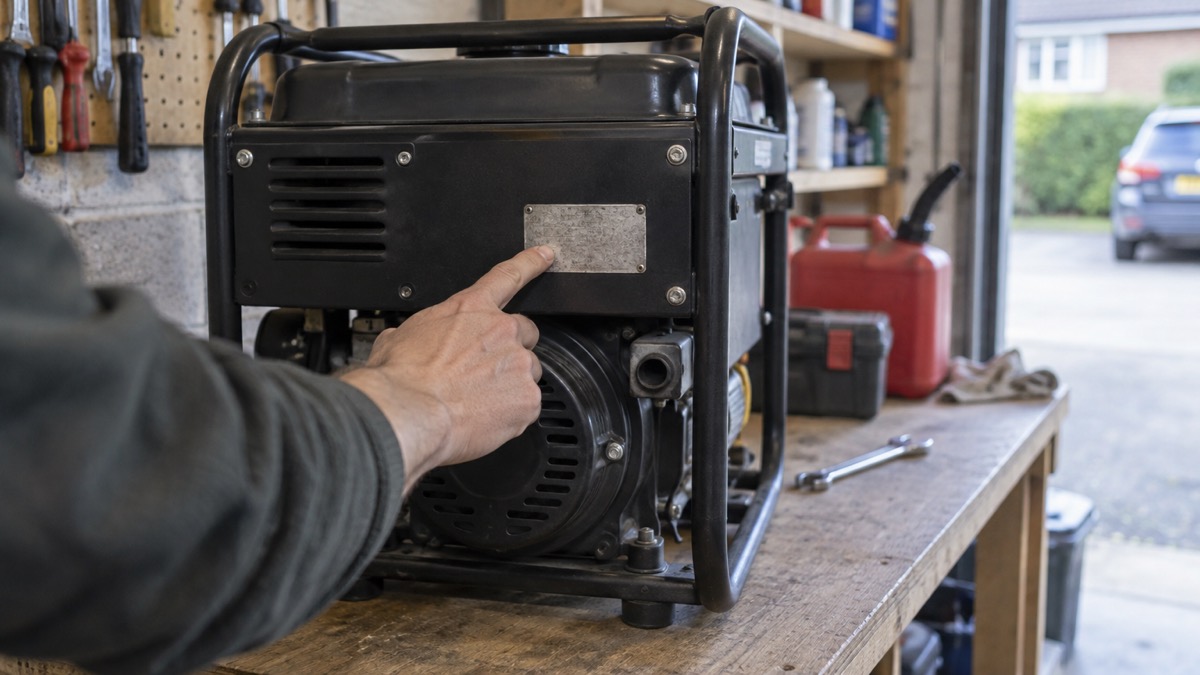
Before you use a second-hand generator, heater or pump, or one that has been in storage, check whether it has been recalled. The Office for Product Safety and Standards issue recalls and alert notices on their website27, and you can check for recalls or safety notices on the Electrical Safety First website8. Register electrical items with the manufacturer so you can be contacted if a safety recall is issued28.
If you search for a product you own and it is not listed, that means it has not been recalled and should be safe to use; if you have concerns, contact the retailer or manufacturer to alert them to a potential problem8. The same rule is repeated in Scotland: if an appliance is not listed as recalled it should be safe to use, and if you have concerns about its safety, contact the retailer or manufacturer25.
Recalls are specific to a model, so a general warning is not enough. Manufacturers issue product recall notices if an electrical appliance could develop a fault, including a risk of electric shock or fire29. The Office for Product Safety and Standards issue recalls and alert notices on their website, and you can check for recalls or safety notices on the Electrical Safety First website28. Check the model and serial numbers on your own machine against any notice before you assume it is unaffected.
Sources (29)
- Safe use of heaters and generators, Armagh City, Banbridge and Craigavon Borough Council, 2026-10-29
- Carbon monoxide safety, Mid and West Wales Fire and Rescue Service, 2026-10-29
- Staying safe with petrol and other flammable substances, Health and Safety Executive, 2026
- Domestic and non-workplace storage of petrol, Greater Manchester Fire and Rescue Service, 2026-10-29
- Sleeping in a room with a gas appliance, coal or log fire, Doncaster and Bassetlaw Teaching Hospitals NHS Foundation Trust, 2026-03-06
- Gas appliances: frequently asked questions, Health and Safety Executive, 2026
- What to do in a flood, Natural Resources Wales, 2026-10-29
- Checking your electrical products, Gloucestershire Fire and Rescue Service, 2025-11-05
- Planned power cuts, SSEN Distribution, 2026-10-25
- Carbon monoxide, Public Health Wales, 2025-12-08
- Caravan, motor home and campervan safety, Humberside Fire and Rescue Service, 2026-10-29
- Flooding advice, Scottish Borders Council, 2026-10-29
- Portable heaters, Mid and West Wales Fire and Rescue Service, 2026-10-29
- Flooding, Prepare campaign, UK Government, 2026-10-12
- Help during a flood, GOV.UK, 2026-10-25
- Emergency kits and grab bags, Central Bedfordshire Council, 2026
- During a flood, Kingston Council, 2026
- Flood wardens, Cheltenham Borough Council, 2026-10-29
- Flood response, London Fire Brigade, 2026-10-29
- Preparing for an emergency: be ready, stay safe, act now, Sussex Police, 2025-10
- Stay warm safely this winter, Greater Manchester Fire and Rescue Service, 2026-10-29
- Wildfires, South Wales Fire and Rescue Service, 2026-07-29
- Wildfires: rural, Devon and Somerset Fire and Rescue Service, 2026
- Electrical safety, Greater Manchester Fire and Rescue Service, 2026-10-29
- Electrical safety, Scottish Fire and Rescue Service, 2025-02-27
- White goods, Cheshire Fire and Rescue Service, 2026-05-20
- Electrical safety, Greater Manchester Fire and Rescue Service, 2026-10-29
- Product recalls, Bath and North East Somerset Council, 2026-10-29
- Product recall: Tucson 5m, 6m and 8m Pumps, Office for Product Safety and Standards, 2025-10-08