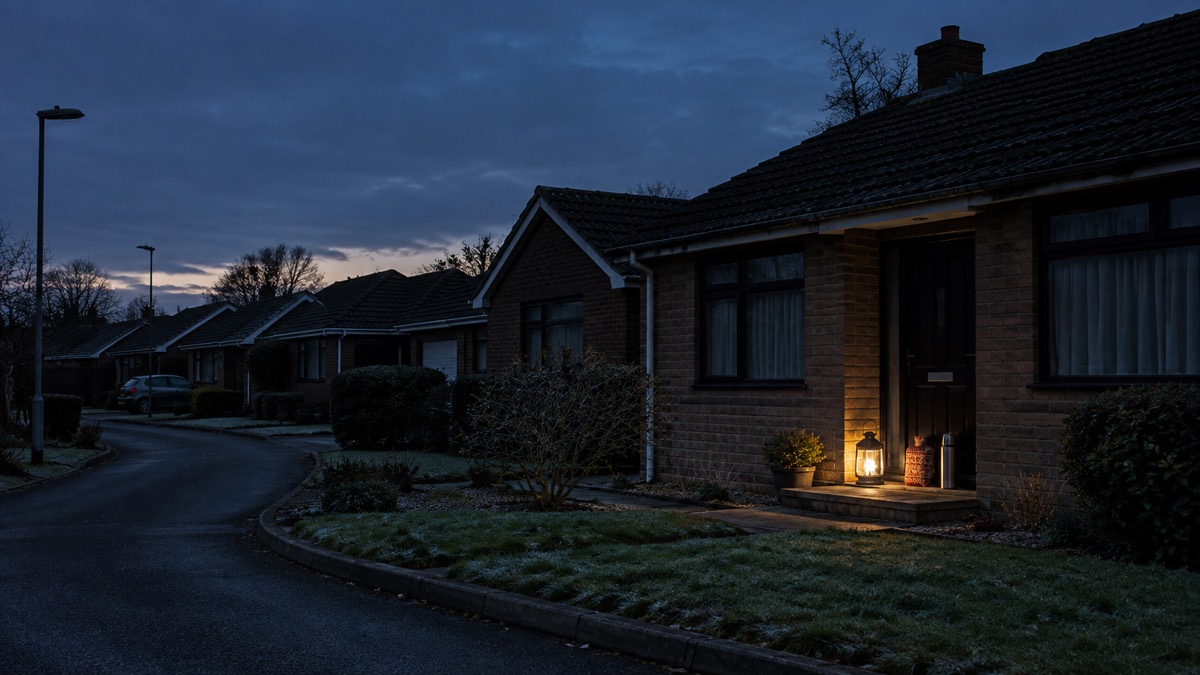
When the power goes off, the first useful thing most households can do is look after each other. Official advice from network operators and the Met Office is consistent: check on elderly or vulnerable neighbours to make sure they are safe and comfortable, and ask whether their power is off too1. That single question tells you whether the fault is in your own home or out on the network.
If your neighbours still have electricity, the problem may be your trip switch or fuse box rather than a wider cut2. If they are dark as well, the cut is local and you should report it by calling 1054. Either way, the check itself matters: a short conversation confirms that someone is warm, has food and drink, and that any medical equipment is still working6.
This checklist sets out who to call on, what to ask, and how to help someone who depends on electricity for their health. It is written for ordinary households in England, with notes where arrangements differ in Scotland, Wales and Northern Ireland.
The checklist: who to check on and what to ask
Work through this list as soon as you know the power is off, and again if the cut lasts more than a few hours. Each item is there because official or network guidance names it.
Ask whether their power is off too: it tells you if the cut is local
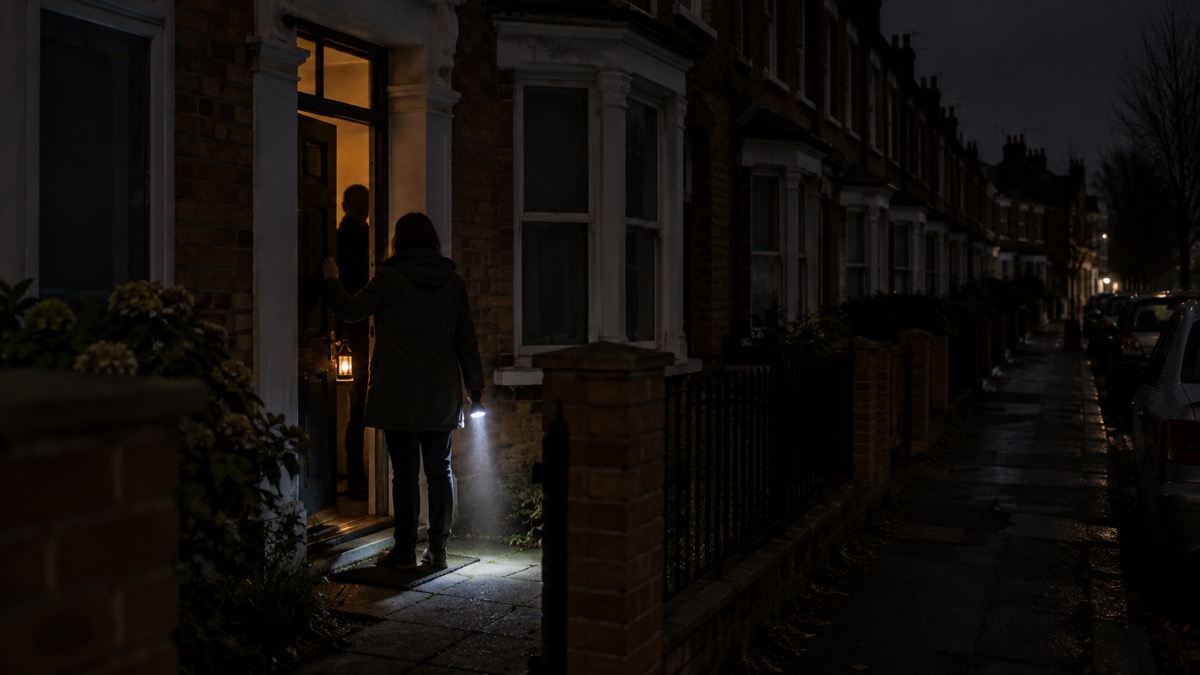
The single most useful question in a power cut is whether the people next door have lost power as well. The Met Office advises you to check to see if your neighbours are safe and if they have a power cut too; if they have power, your trip switch may have activated2. Electricity North West gives the same test: check if your neighbours and streetlights have power; if they do, it could mean there is a problem with your trip switches3.
There are two outcomes, and each leads somewhere different.
- Neighbours have power. The fault is likely inside your own property. Check your fuse box and meter before ringing anyone, and see our guide to how to check whether it is just your trip switches.
- Neighbours are dark too. The cut is local or wider. Report it by calling 105, and see how to report a loss of electricity4.
National Grid Electricity Distribution puts the same advice in its easy-read guidance: before contacting the network, ask your neighbours if their electricity is working and check whether a fuse has broken in the fuse box and the electricity meter6. Northern Powergrid's power cut plan asks simply: are your neighbours' lights on, or are the street lights on?7
Check they are warm, safe and have what they need
Once you know whether the cut is local, the next job is the welfare check. National Grid's guidance is to check on vulnerable neighbours, if possible, to ensure they are warm, any medical equipment is working, and they have sufficient food and drink supplies9. The same three questions work for relatives and friends.
Warmth. A cold home is the main risk in a winter outage. Ask whether they have a warm room they can stay in, blankets, and layers of clothing. Our guide to keeping warm without electricity sets out how to heat one room safely, and cold homes and health explains who is most at risk.
Safety in the dark. The fire and rescue service advises checking in on vulnerable neighbours, helping them check their smoke alarms are in good working order and that they have clear escape routes and emergency plans16. North Yorkshire Fire and Rescue Service adds checking on any elderly or vulnerable neighbours or relatives as part of winter preparation for power cuts21. Our pages on staying safe in the dark and alarms that keep working without mains go further.
Food and drink. Confirm they have enough food and drink that does not need cooking, and that they know what to do about the contents of the fridge and freezer. Our guide to fridge and freezer food when the electricity is off explains what to keep and what to throw away.
A plan. Wiltshire and Swindon Prepared advises checking on neighbours to see how they are and if they are having any difficulties22. A short conversation now means fewer surprises later.
Medical equipment that relies on electricity
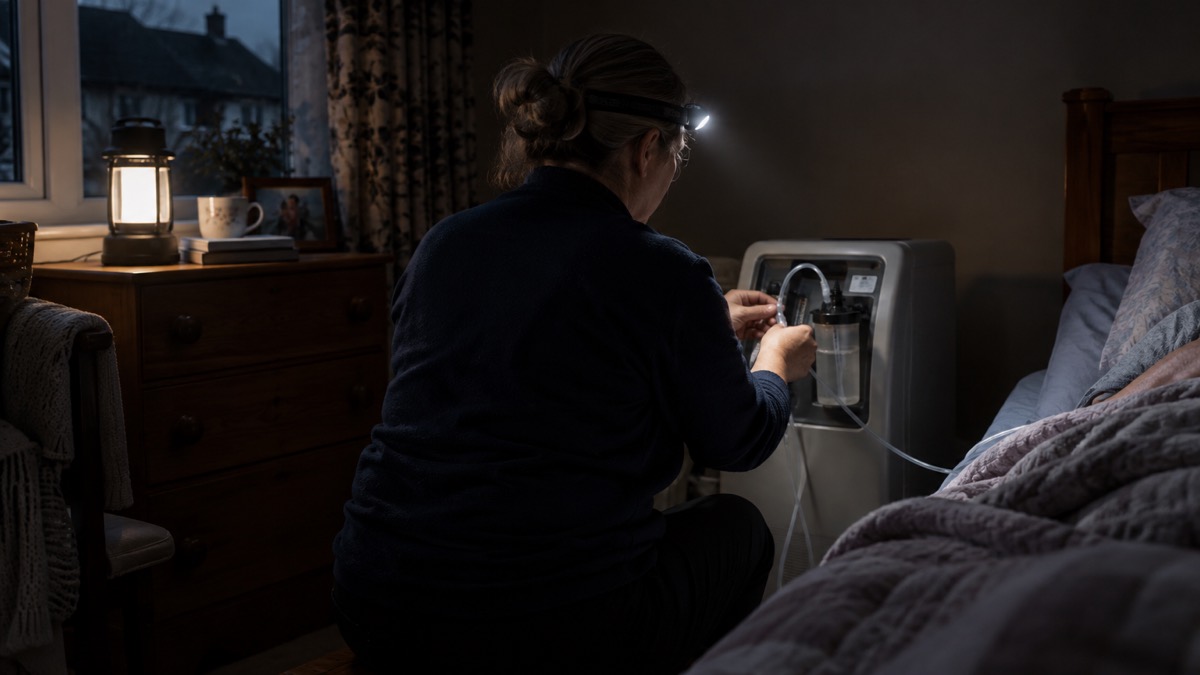
Some equipment stops working the moment the power does. Scottish Government guidance for disabled people and carers lists ventilators, oxygen concentrators, electric wheelchairs, hoists, communication devices and feeding pumps as examples10. SSEN adds stairlifts, bath hoists and adjustable beds, and advises making sure essential medical equipment has a battery backup23.
The risk is serious. Wiltshire and Swindon Prepared warns that vulnerable people dependent on breathing apparatus or dialysis machines run by electricity may be hospitalised without power22. That is why this part of the check deserves time and care.
- Ask what equipment they rely on and whether it has a battery backup23.
- Test the backup before winter, not during the cut.
- Speak to the device provider about personal alarms (telecare devices) and connected health monitors such as diabetes sensors, to understand how they will function during a power cut24.
- Seek advice from the local health service provider if someone requires a continuous supply of electricity for medical reasons and would need medical support during a power cut25.
- Keep lighting to hand. NHS guidance for families caring for technology-dependent children notes that chargeable lamps and headtorches are useful to allow your hands to be free for care such as suction, and advises getting these in advance26.
Our checklist for households using medical equipment and the guide to relying on medical equipment that needs electricity set out the full preparations.
Telling them about planned emergency power cuts
Planned emergency power cuts are different from an unexpected fault: the network tells customers in advance, and that warning is only useful if someone passes it on. NIE Networks advises checking on elderly or vulnerable neighbours, family and friends and making them aware of the planned emergency power cuts18. The same principle applies across Britain: if you know a planned interruption is coming, tell the people who might not see the notice.
Network operators can also help directly. If you rely on your energy supply for medical reasons, your network operator can tell you about planned power cuts, for example when they plan engineering work27. That service sits alongside the Priority Services Register, which is free to join and gives extra help during outages. You can read more about how planned power cuts could work and about extra help from network operators during long outages.
The Met Office adds a simple preparation step: look out for elderly neighbours and ensure they are prepared for a possible power cut2. That might mean helping them fill a flask, charge a phone, or find a torch before the lights go out.
Checking during storms and bad weather
Storms are when checks matter most, and when they are hardest to make safely. Network operators issue the same advice before and during severe weather: check on elderly or sick neighbours and relatives14. Northern Powergrid repeated it during Storm Lilian and again during Storm Eowyn14.
The Met Office amber warning for further snow in Scotland carried the same instruction: check to see if your neighbours are safe and if they have a power cut too12. The Department for Infrastructure in Northern Ireland advises checking on elderly or vulnerable neighbours in your area to make sure they are okay when electricity goes off13.
Practical points for storm checks:
- Ring first. A phone call avoids a journey in dangerous conditions.
- Go out only if it is safe. Avoid debris, flooded ground and any cable on the ground.
- Check the forecast. Our guide to storms and the electricity network explains what to expect and how to get ready.
Where to get help
Most power cuts are resolved by the network operator, and the number to ring is 1054. Keep it with your other emergency numbers, as set out in our list of emergency numbers to keep at home.
For people who need extra support, the Priority Services Register is the main route. You can read about registering a relative for extra help if the person you are worried about cannot do it themselves. In Northern Ireland, the arrangements are run by NIE Networks, and our guide to Northern Ireland explains reporting and help there.
If someone is in immediate danger, call 999. If you are worried about a vulnerable person's welfare but there is no immediate danger, contact their family, their GP or the local council.
Sources (27)
- What to do in a power cut, SP Energy Networks, 2026
- What to do in a power cut, Met Office, 2026
- Checks for if you are without power, Electricity North West, 2026
- Adverse weather events, Llangattock Community Council, 2026
- Community resilience plan, Wiltshire and Swindon Prepared, 2026
- Preparing for a power cut (easy read), National Grid Electricity Distribution, 2026
- Power cut plan, Northern Powergrid, 2026
- Strong winds and heavy rain warning: information and advice, nidirect, 2026
- Types of power cut, Powercut105, 2026
- Disabled people and carers, Ready Scotland, 2026
- Community emergency planning guide: prepare, Ready Scotland, 2026
- Amber warning for further snow in Scotland, Met Office, 2026
- Strong winds weather warning: information and advice, nidirect, 2026
- Northern Powergrid prepared to support customers during Storm Lilian, Northern Powergrid, 2024
- Storm Eowyn: Northern Powergrid prepared and ready to support customers, Northern Powergrid, 2025
- Staying safe this season, Devon and Somerset Fire and Rescue Service, 2025
- Make a plan to be winter ready, UK Power Networks, 2026
- Is there any action I should take when power is disrupted?, NIE Networks, 2026
- Is there any action I should take in preparation?, NIE Networks, 2026
- Get prepared for emergencies, Prepare, 2026
- Top tips for keeping warm and safe this winter, North Yorkshire Fire and Rescue Service, 2023
- Failure of national electricity, Wiltshire and Swindon Prepared, 2026
- Planned power cuts, SSEN, 2026
- Be informed about hazards: power cuts, Prepare, 2026
- Emergency power cuts FAQ, Northern Powergrid, 2025
- Parental letter re power shortages, NHS North West Children's Operational Delivery Network, 2022
- Be informed about hazards: power cuts, Be Ready, 2026
 Power Cut Kit Checklist
 What to Keep Charged
 Household Emergency Plan