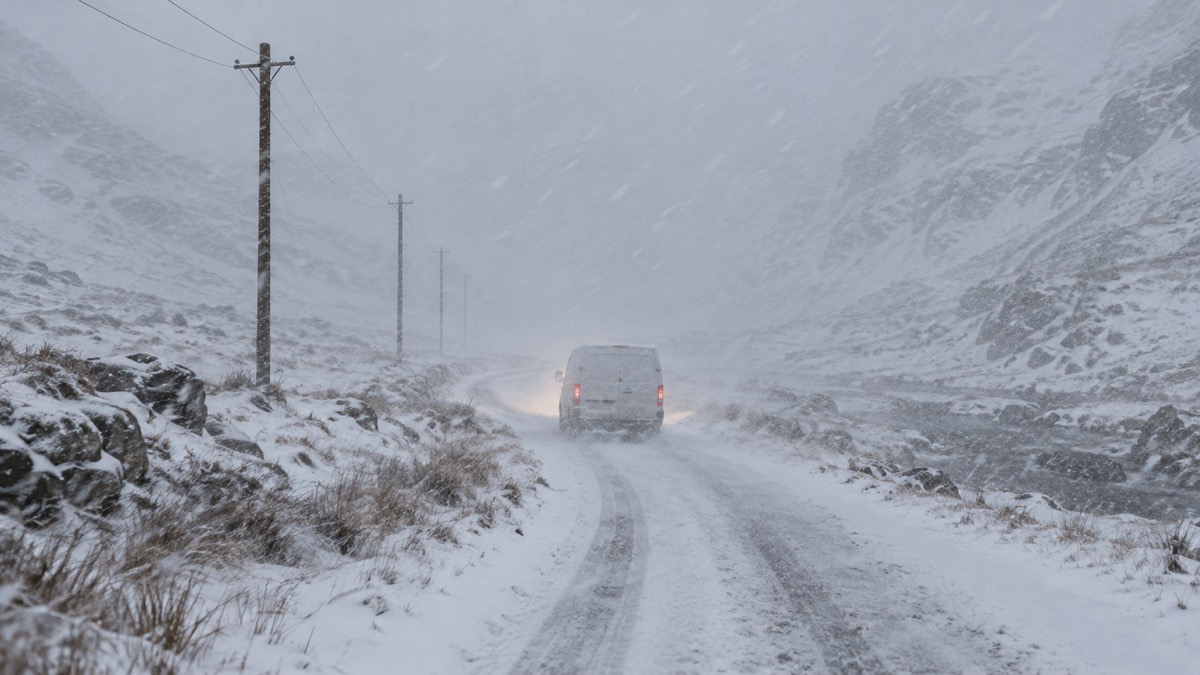
A power cut that lasts more than a few hours stops being an inconvenience and starts being a welfare problem: food spoils, homes go cold, and anyone who depends on electricity for heating or health comes under real strain. The good news is that you are not left to manage alone. Your local electricity network operator has a duty to restore your supply within set time limits, pays automatic compensation when it misses them, and in big storms runs support packages that can cover the cost of hot food and even a hotel room.
The single most important number is 105. It is free of charge, available 24 hours a day, and puts you through to your local network operator wherever you are in Great Britain, so you can report the cut, report damage to power lines or substations, and get updates on when your power will be restored1. If you or someone in your household needs extra support during outages, join the Priority Services Register with your electricity, gas and water suppliers in advance: it lets them know you need additional support, including when there is an interruption to your supply4.
Report the cut and any damage, but never go near it
Your first job in any outage is to make sure the network operator knows about it. Call 105, free of charge, to report the problem and get updates on when your power will be restored8. The line is staffed 24/7 with help and advice10. You can also visit your local network operator's website to report a power cut and track updates when there is a problem, which is worth doing if phone signal is poor but mobile data still works11. If you cannot report online, call 10511.
The 105 service is also the way to report damage to power lines or substations3. This matters because after a storm, damage may exist on the network that nobody has yet seen, and your report can bring engineers to it. But report it from a distance and never approach it. If you see lines down, damaged equipment or an open substation, keep well away, keep other people and animals away, and call 105. Our page on fallen overhead lines explains the dangers in full, and how to report a loss of electricity walks through the reporting process step by step.
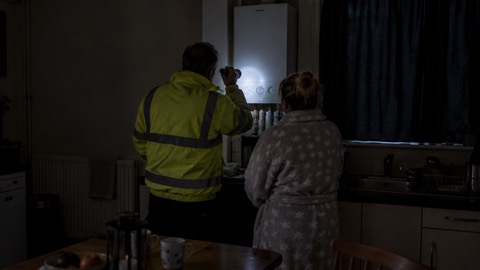
If you are unsure whether the fault is on the network or in your own home, check your trip switches before assuming a network-wide cut. Our page on trip switches explains how. If the whole street is dark, it is the network: report it and settle in.
Hot food and drink: up to £30 per person for every 24 hours
When a storm leaves customers off for a long time, network operators can step in to cover the cost of feeding people who cannot cook at home. During the response to Storm Amy in the north of Scotland in October 2025, SSEN confirmed that customers without power for more than 12 hours were entitled to £30 per person for every day without power, to cover the cost of food and drink1. That is per person, not per household, so a family of four off for two full days could claim support for eight person-days of meals.
The practical point is that this money is claimed afterwards, not handed out at the time. You pay for the hot meal, the takeaway or the café breakfast yourself, keep the receipts, and then submit a claim. SSEN directed customers to its storm claim page at www.ssen.co.uk/stormclaim, where receipts could be submitted for reimbursement2.
Not every operator runs the same scheme in every storm, and the terms can differ between companies and between events. What you should do in any long cut:
- Keep every receipt for food and drink bought because you could not cook at home2
- Keep copies of your receipts for any claim you make2
- Check your operator's website or call 105 to ask what support package is running for the current event1
- If your operator is SSEN, keep hold of your receipts and claim costs back at www.ssen.co.uk/stormclaim1
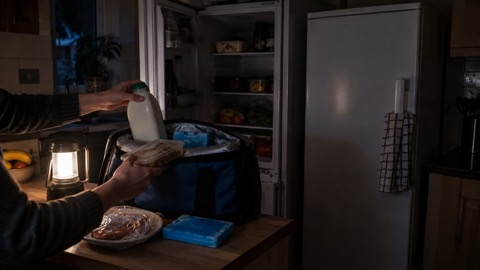
For day-to-day advice on what to eat and how to manage without cooking, see our page on what to do when the electricity goes off. For the food already in your fridge and freezer, and what will keep, see fridge and freezer food when the electricity is off.
Alternative accommodation: registered customers first, everyone after 48 hours
A home without electricity in cold weather can become unsafe to stay in, particularly overnight. Network operators recognise this and, in major storms, will reimburse the cost of somewhere else to sleep. During Storm Amy, SSEN confirmed that people registered for its Priority Services could claim reasonable costs for alternative accommodation if they were without power for more than 24 hours, with support with booking accommodation if needed1. And if a power cut was confirmed to have lasted beyond 48 hours, all customers could benefit from this support and claim costs back in the same way as for food and drink1.
So the help comes in two tiers:
| Who | When you can claim accommodation costs | What you can claim |
|---|---|---|
| Priority Services Register customers | After more than 24 hours without power | Reasonable costs for alternative accommodation, with help booking if needed1 |
| All customers | After a cut confirmed to have lasted beyond 48 hours | Accommodation costs claimed back in the same way as food and drink1 |
This is the strongest reason to join the Priority Services Register before anything goes wrong. Registration is free, and it lets your electricity, gas and water providers know that you need additional support, including when there is an interruption to your supply4. If your gas, electricity or water supply is cut off, your suppliers will know you need extra help12. Our page on the Priority Services Register explains who can join, and registering a relative explains how to sign up someone you look after.
If you rely on medical equipment that needs electricity, speak to your care team in advance to put a plan in place for what action to take and who you or they can ring 24/7 if there is a device-related problem during a power outage13. Our page on medical equipment that needs electricity covers this in detail.
Keep your receipts and claim afterwards
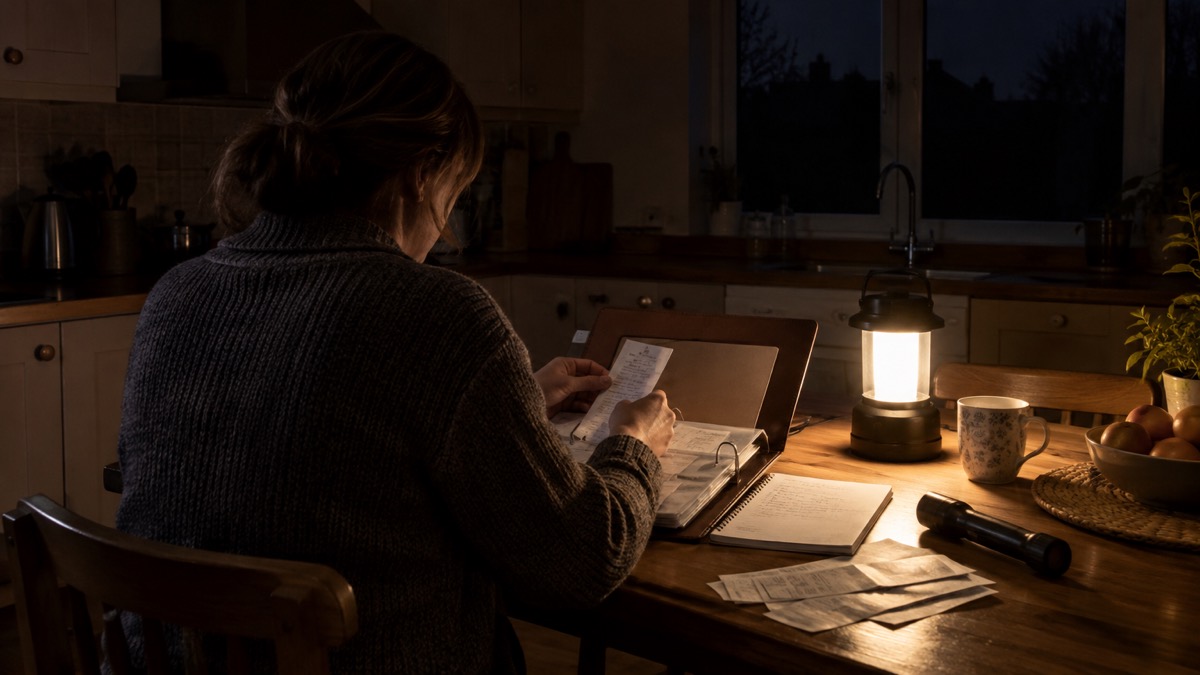
Whether it is meals, a hotel room or travel to somewhere warm, the support on offer after a long cut works on the same principle: you spend the money, you prove what you spent, and the operator reimburses you. That makes record-keeping the most useful habit you can build during the outage itself.
Keep the following in a folder or a phone album:
- Keep copies of receipts for any claims you make, including food and drink bought because you could not cook2
- Keep hold of your receipts and claim the costs back through your operator's claims process1
- If your operator is SSEN, claim costs back at www.ssen.co.uk/stormclaim1
The same discipline helps with the wider aftermath of any utility problem. Ofgem advises households facing supply problems to take regular meter readings and a photo of them if you can, keep old bills, download bills from your app, and note your account balance7. Those records support any claim or dispute later, whether with a supplier or a network operator.
Automatic compensation under the Guaranteed Standards
Separate from storm support packages, there is a system of automatic payments for power cuts that run too long. Ofgem's position is that you will automatically be paid by your local network operator if you do not have power for a certain number of hours4. You should not have to apply for these payments in the ordinary way; they are triggered by the length of the outage itself.
The amounts depend on the weather conditions, because operators are given longer to restore supplies in severe weather. The figures Ofgem sets out are:
| Situation | Payment | Further payments |
|---|---|---|
| Off 12 hours or more in normal weather | £95 domestic (£180 non-domestic) | £40 for each additional 12 hours, up to £360 total7 |
| Severe weather, Storm Category 1 (24-hour restoration target) | £85 domestic (£85 non-domestic) | £40 for each additional 6 hours, up to £2,000 total7 |
| Severe weather, Storm Category 2 (48-hour restoration target) | £85 domestic (£85 non-domestic) | £40 for each additional 6 hours, up to £2,000 total7 |
During Storm Amy, SSEN confirmed the storm version of this in practice: customers without power for more than 48 hours continuously received a Guaranteed Standards payment, with a subsequent payment for each continuous 6-hour period without power thereafter1. There are also payments for repeated cuts: you could claim if your power has gone off more than 3 hours on 4 separate occasions in the same financial year, which runs from 1 April to 31 March the following year6. And in a different scenario again, if a cut lasts more than 12 hours and is interrupted for 36 hours, you could receive 2 additional payments4.
The Guaranteed Standards also cover gas and switching. If your gas supply is interrupted without notice, you are entitled to at least £60 for every 24 hours you are without gas, with more claimable beyond 24 hours7. If a switch to a new electricity supplier takes longer than 5 working days, you are owed £307. And if you are disconnected for debt, your supplier should reconnect you within 24 hours if you pay the debt in full, agree a repayment plan or agree to a prepayment meter, or pay £30 compensation7.
If a payment is due and does not arrive, chase your network operator first, then complain to the Energy Ombudsman. Citizens Advice can help you through that process: freephone 0808 223 1133 or use their online webchat from 9am to 5pm, searching for the Citizens Advice energy chat7.
What a big storm response looks like on the ground
When a named storm hits, the response scales up well beyond a normal fault repair. As well as repairing the network, operators run support packages for customers waiting to be reconnected. During a recent storm, SSEN had meals being served in several locations to customers awaiting reconnection, with details of locations updated on social media and at www.ssen.co.uk/stormsupport and shared with local resilience partners1. That kind of operation involves engineers working through fault lists in order of priority, with the worst damage and the largest numbers of customers off supply dealt with first.
For you as a household, the storm response shows up in several ways:
- Restoration updates through the operator's website and the 105 service, giving estimated times1
- Storm support packages covering food, drink and, in long cuts, accommodation1
- Welfare contact for registered customers, whose suppliers know they need extra support4
- Community-level help coordinated through local authorities and resilience partnerships14
Before a storm arrives, the official advice is to charge mobile phones, power banks and any back-up batteries for medical equipment in case there is a power cut15. Our page on what to keep charged gives a full checklist, and storms and the electricity network explains what happens to the grid in severe weather.
How long restoration can take after severe weather
The deadlines that trigger compensation also tell you how long you may reasonably expect to wait. Outside severe weather, your local network operator has 12 hours to restore your supply6. In severe weather, the target is 24 hours in Storm Category 1 conditions and 48 hours in Storm Category 2 conditions4. Network companies also have 24 hours to restore your power if more than 5,000 homes are affected by a single fault in normal weather7.
Those are targets, not promises, and after the worst storms some customers wait longer, which is exactly when the additional £40 and £45 payments begin to stack up1. If your cut is running long, the practical sequence is:
- Call 105 or check the operator's website for the current restoration estimate1
- Check whether a storm support package has been activated for your event1
- Keep receipts from the moment the cut passes the qualifying threshold2
- Join the Priority Services Register for the next event, if you are eligible4
Our page on how long until the electricity comes back explains the categories and priorities in more detail.
Keeping older relatives and neighbours warm while the power is off
Official advice across the UK is consistent on one point: check on people who may struggle. Check on elderly or vulnerable neighbours in your area to make sure they are okay16. Check on older neighbours or relatives to make sure they are safe and well, warm enough especially at night, and have stocks of food and medicines so they do not need to go out during very cold weather17. Check in on neighbours, particularly anyone who might live alone or might need extra support, and make sure they know what is happening and have the help they need18. This is vital if they live alone or have serious illnesses12.
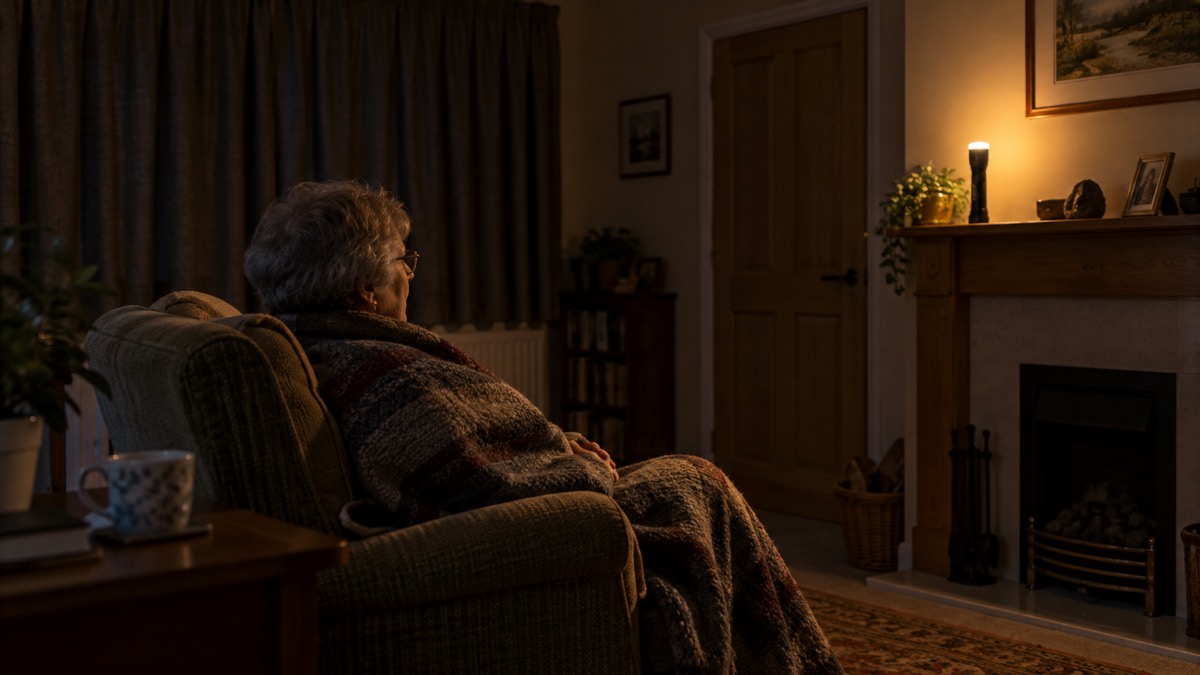
The Met Office gives specific temperature guidance for cold homes. Overnight, people who are 65 and over or who have pre-existing health conditions may find bedroom temperatures of at least 18 °C are good for their health19. Heat the home to at least 18 °C if you have reduced mobility, are 65 or over, or have a health condition such as heart or lung disease19. For a healthy adult under 65 who is active and wearing appropriate clothing, keeping the home slightly lower than 18 °C may be acceptable19. Having room temperatures slightly over 18 °C could be good for your health19.
Without electricity, holding 18 °C is hard, so the advice turns to behaviour:
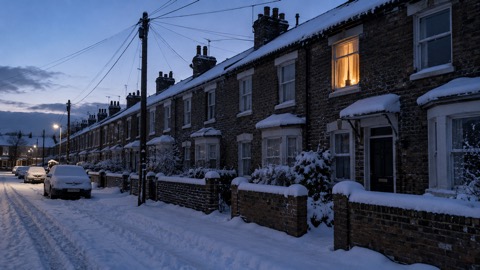
- Keep warm using blankets and layered clothing; keep doors of unused rooms closed and close curtains to keep the heat in20
- Keep blankets, warm jumpers and warm clothes easy to hand, remembering your heating may go off during winter storms21
- Concentrate warmth in one room rather than trying to heat the whole home; see our guide on keeping warm in one room
- Check in on people only if it is safe to do so: help prepare their home, pick up extra food, water, toiletries or medications they need, make sure they have important phone numbers written down, and keep in contact by phone or visiting8
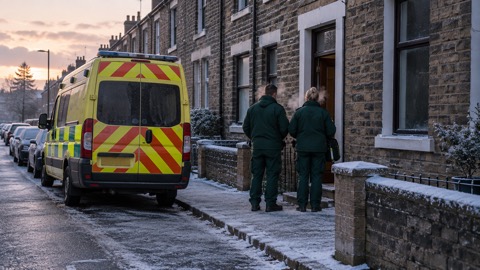
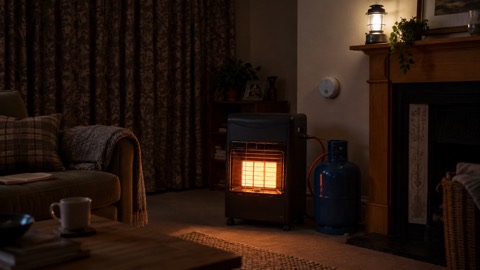
For the health risks of a cold home, see cold homes and health, and for the dangers of bringing barbecues or camping stoves indoors, see carbon monoxide risks when the heating is off. Our checking on neighbours and relatives checklist turns this advice into a list you can work through.
Local Resilience Forums: who warns and informs you
Behind every local emergency response sits a Local Resilience Forum (LRF). Each region across the country has one, made up of local authorities, the emergency services, the NHS and health bodies, and environment-related government agencies, set up to warn, inform and advise the public in the event of an emergency14. They bring together all responder organisations who have a duty to assess risks and plan for emergencies under the Civil Contingencies Act 200422. There are 38 LRFs in England and four in Wales23, with equivalent regional resilience arrangements covering Scotland and Northern Ireland.
For an ordinary household, the LRF matters in two ways. First, it is the body behind the local warnings, rest centre arrangements and public information that appear during a major incident, including widespread power cuts. Second, it is the route into community-level help: contact your local resilience forum for more information on helping your community in severe weather24. Council emergency pages, such as those run by Welsh and English local authorities, carry the local arrangements and alert systems for your area25.
If a power cut coincides with flooding, the advice widens: report the problem and get updates on when your power will be restored, and use Floodline, a 24-hour service27. Our page on storms and the electricity network covers combined weather events.
Where to get free advice and support
Several free services can help while the power is off or afterwards with the fallout.
| Service | How to reach them | What they offer |
|---|---|---|
| Power Cut 105 service | Call 105, free, 24/7 | Report cuts and damage, get restoration updates1 |
| Age UK Advice Line | 0800 169 6565, 8am to 7pm, every day of the year | Free advice for older people and those who care about them7 |
| Citizens Advice | 0808 223 1133 or online webchat, 9am to 5pm | Free energy advice, help with grants, benefits and supply problems7 |
| NHS 111 | Call 111 | Non-emergency health advice during the outage28 |
| Floodline | 24-hour service | Flooding advice when weather causes both problems27 |
One further point on staying connected: if your landline will not work during a power cut, your landline provider might offer you a free solution, such as a back-up battery unit, for a minimum of one hour, that would enable you to call the emergency services during a power cut if you needed to18. Ask your provider, particularly if you have a cordless phone that stops working the moment the mains fails. Our page on phone and broadband outages and the wider power cuts guide cover staying in touch.
Finally, preparation beats reaction. People cope better with power cuts when they have prepared for them in advance; it is easy to do, so consider gathering torches and batteries, a mobile phone power pack and other essential items29. Our power cut kit checklist and household emergency plan are the place to start, and getting your home ready for a loss of supply pulls it together.
Sources (29)
- Huge operation restores power to thousands more customers in the north of Scotland, SSEN, 2025-10-06
- We're coordinating a huge response following Storm Amy's destructive 100mph winds, SSEN, 2025-10-04
- Energy outages, National Energy System Operator, 2026
- Plan for a power cut, Ofgem, 2026
- Get prepared for emergencies, UK Government Prepare Campaign, 2026-10-21
- Check if you can get payment for a power cut, Ofgem, 2026
- England and Wales energy domestic consumer advice, Ofgem, 2024-11
- Storms and wind, Readiness Scotland, 2026-03-24
- Cold, snow and ice, Readiness Scotland, 2026-03-25
- Electrical items in the home, London Fire Brigade, 2026-10-25
- Power cuts, UK Government Be Ready Campaign, 2026-10-21
- Keeping warm, healthy and safe in cold weather, Greater London Authority, 2026-10-25
- What to do in a power cut, Met Office, 2026-10-25
- Emergency alerts, Denbighshire County Council, 2026-10-26
- Storms, UK Government Prepare Campaign, 2026-10-19
- Strong winds and heavy rain warning: information and advice, nidirect, 2026-01-27
- Adverse weather events, Llangattock Community Council, 2026-10-25
- Phone and broadband outages, UK Government Prepare Campaign, 2026-10-12
- Keeping your home warm in winter, Met Office, 2026-10-26
- Power cuts, UK Government Prepare Campaign, 2026-10-21
- Failure of national electricity, Wiltshire and Swindon Prepared, 2026-10-25
- Resilience and risks in Wales, Welsh Government, 2026-09-07
- The UK Government Resilience Action Plan, UK Government, 2025-07
- 10 things you should do now to prepare for summer, Met Office, 2026-10-25
- Get prepared, Carmarthenshire County Council, 2026-10-25
- Winter ready, Isle of Anglesey County Council, 2026-10-25
- After a flood, UK Government, 2026-10-25
- Strong winds weather warning: information and advice, nidirect, 2026-10-24
- Accessible UK warnings, Met Office, 2026-10-24
 Power Cut Kit Checklist
 What to Keep Charged
 Household Emergency Plan
 Reporting a Power Cut
 What to Do in a Power Cut
 Getting Ready for a Power Cut
 Fridge and Freezer Food
 Keeping Warm Without Electricity
 Central Heating Without Power
 Cold Homes and Health
 Carbon Monoxide Risks
 Staying Safe in the Dark
 Smoke and Carbon Monoxide Alarms
 How Long Until Power Returns
 When the Power Comes Back