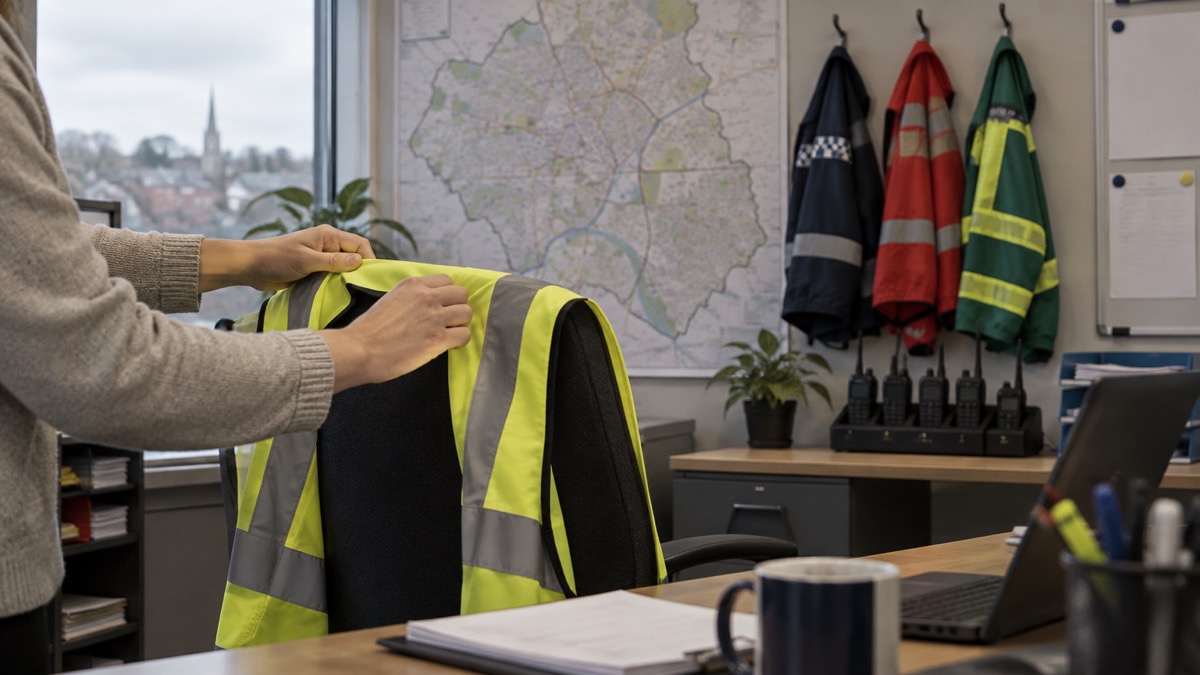
When something goes seriously wrong in your area, whether that is flooding, a storm, a major fire or a loss of power or water, the organisations that turn up do not do so by accident. The Civil Contingencies Act 2004 is the law that requires them to be ready before anything happens. For over two decades it has supported a consistent, co-operative approach to emergency preparedness and response across the UK1, and it places clear legal duties on the police, fire and rescue services, ambulance services, NHS bodies, councils and the Environment Agency to assess risks, plan for emergencies and keep the public informed2.
For your household, the Act matters in three practical ways. First, it means your local council and emergency services must have assessed the risks in your area and written plans to deal with them. Second, it means they have a legal duty to warn and inform you, before and during an emergency3. Third, it means the utility companies that supply your electricity, gas, water and telecommunications must co-operate with those responders2. What the Act does not do is place a legal duty on anyone to feed you or provide humanitarian assistance, which is why your own household preparations still matter. This page explains each of those points in turn.
What counts as an emergency under the Act
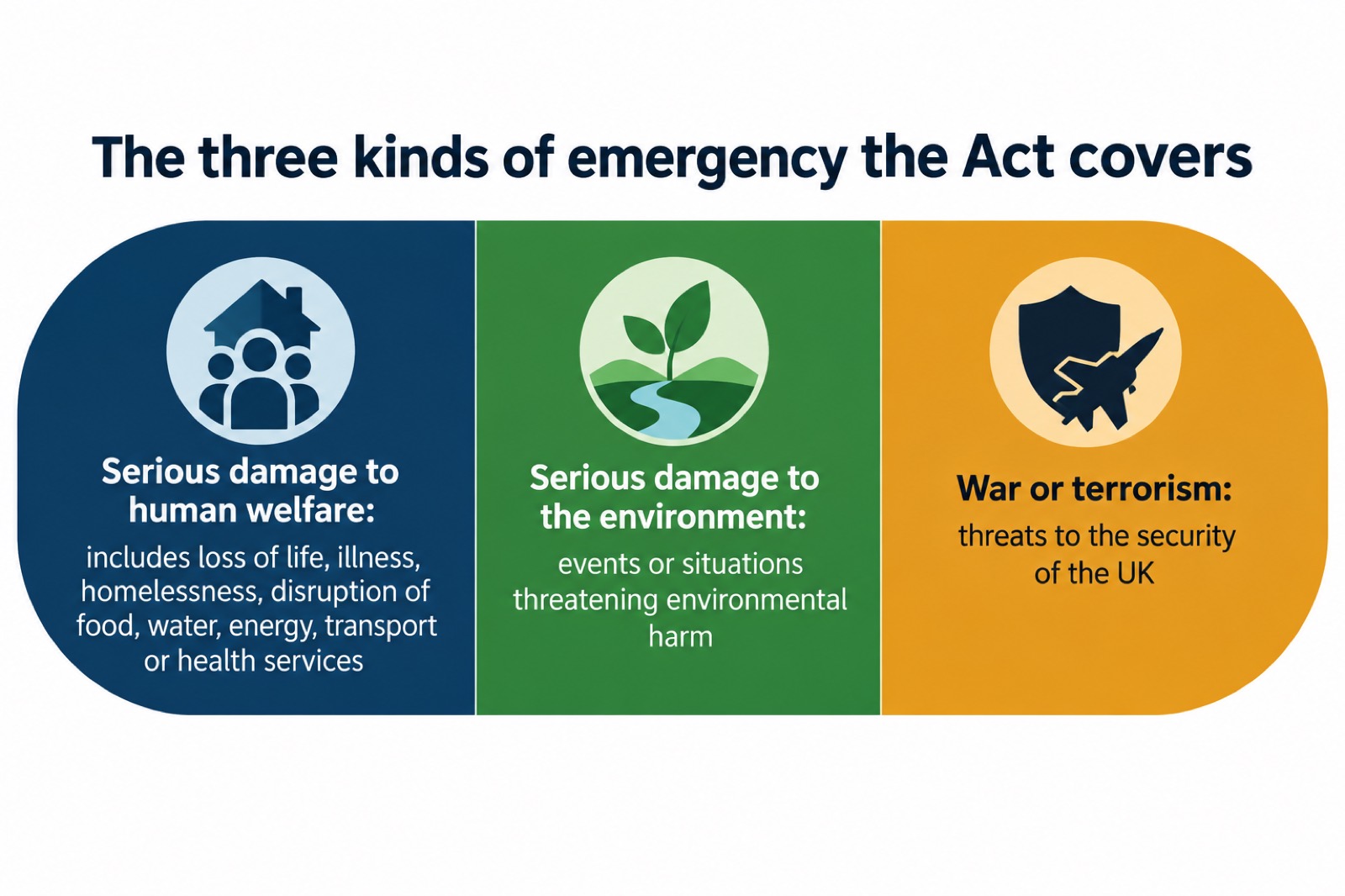
The Act defines an emergency in three ways: an event or situation which threatens serious damage to human welfare; an event or situation which threatens serious damage to the environment; or war or terrorism which threatens serious damage to security8. That definition is deliberately broad, and the Act spells out what damage to human welfare includes: loss of human life, human illness or injury, homelessness, damage to property, disruption of a supply of money, food, water, energy or fuel, disruption of a system of communication, disruption of facilities for transport, or disruption of services relating to health2.
In everyday terms, the kinds of civil emergency this covers are familiar rather than exotic: loss of electricity, telephone, water or gas; short term evacuation from your home; temporary isolation cutting off communities; damage to your home or nearby buildings; and injury, severe illness or death of members of your family or the wider community9. If you have lived through a power cut or a flood, you have lived through the sort of event the Act is built around.
There are limits to the definition. The Civil Contingencies Act Regulations identify three pieces of legislation pre-dating the Act that were introduced separately in Britain under sector-specific legislation operated by the Health and Safety Executive, and to avoid duplication the Regulations provide that the duty to maintain plans under the Act does not apply to emergencies dealt with by those pieces of legislation10. The Act also reaches into situations you might not expect. When extreme winter weather escalates, a senior council officer acting as a Category 1 responder can declare an emergency under the Act and call for the setting up of a Strategic Co-ordination Group, which is the moment the multi-agency machinery formally swings into action11.
Category 1 responders: the organisations at the core of the response
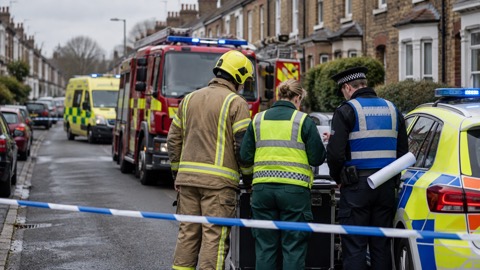
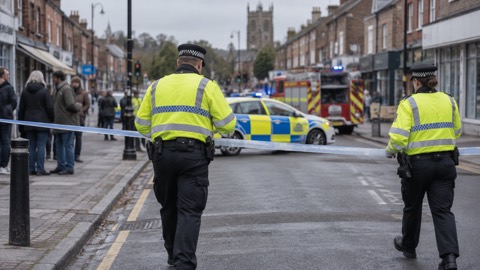
The Act splits the organisations involved in emergencies into two categories. Category 1 responders are the public sector organisations providing vital services in an emergency12, and they are at the core of the response to most emergencies: the emergency services, local authorities and NHS bodies5. In England and Wales the list includes the police, fire and rescue services, ambulance services, NHS bodies, local authorities and the Environment Agency5. Public Health Wales is also a Category 1 responder under the Act, providing a pan-Wales capability during a flooding incident or extreme weather event13.
Local authorities are a good example of how this works in practice. Councils are designated Category 1 responders as set out in the Civil Contingencies Act 200414, and Somerset Council, for instance, is classified as a Category 1 responder for most emergencies including flooding15. The Act requires local authorities, as Category 1 responders, to prepare contingency plans and develop response arrangements for a wide range of emergencies14.
In Scotland the same category exists but with Scottish organisations: Category 1 responders there include Local Authorities, Police Scotland, British Transport Police, the Scottish Fire and Rescue Service, the Scottish Ambulance Service, Health Boards, the Scottish Environment Protection Agency (SEPA), the Maritime and Coastguard Agency and Integration Joint Boards12. The groups and organisations involved in emergencies in Scotland are defined in the CCA 2004 in the same way as elsewhere in the UK12.
| Nation | Examples of Category 1 responders |
|---|---|
| England | Police, fire and rescue, ambulance, NHS bodies, local authorities, Environment Agency5 |
| Wales | The same core services, plus Public Health Wales for flooding and extreme weather13 |
| Scotland | Local Authorities, Police Scotland, British Transport Police, Scottish Fire and Rescue Service, Scottish Ambulance Service, Health Boards, SEPA, Maritime and Coastguard Agency, Integration Joint Boards12 |
If you want the fuller picture of who these organisations are and what each does, see Category 1 and Category 2 Responders: Who They Are.
The six duties Category 1 responders must carry out
Being a Category 1 responder is not just a label. It brings six duties, set out in the Act and its guidance3:
- Carry out a risk assessment and contribute to the development of a community risk register3.
- Plan for emergencies, including training and exercising3.
- Ensure robust business continuity arrangements are in place to maintain service delivery3.
- Ensure arrangements are in place to warn and inform the public both before and during emergencies3.
- Co-operate with partner agencies3.
- Share information with partner agencies3.
The risk assessment duty sits in Section 2 of the Act: Category 1 responders are under a duty to assess the risk of emergencies occurring and use this to inform contingency planning4. The Commons Library summarises the same point plainly: Category 1 responders must assess the risk of an emergency occurring and maintain plans for dealing with that emergency2. Those plans are not filed away in a drawer. Category 1 responders also have a statutory duty to publish their emergency plans, to the extent necessary or desirable for the purpose of dealing with an emergency13, which is why you can read many of them on council and resilience forum websites.
The co-operation duty has real teeth in the regulations. The 2005 Regulations require Category 1 responders with functions exercisable in particular local areas in England and Wales to co-operate under Section 2(1) of the CCA to assess, plan and advise in relation to emergencies, and Category 2 responders must co-operate with Category 1 responders16. In practice this is what produces the joint working you see during a major incident, with police, fire, councils and health services operating from a shared plan rather than separate ones.
Your council must warn and inform you before and during an emergency
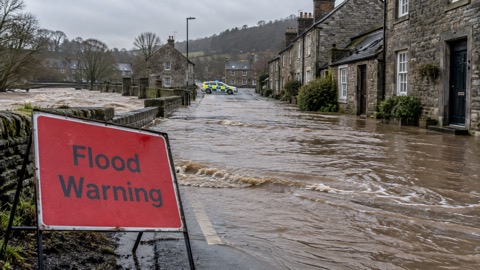
The fourth duty is the one your household will notice most directly. Category 1 responders must ensure arrangements are in place to warn and inform the public both before and during emergencies3. During an emergency, up to date information on the situation, including advice on what you should do and where to get further details, will be broadcast on local radio and television channels and websites9. Getting an early warning and staying informed can make a huge difference in your response to an incident17.
What this means for you is that there are official channels to plug into before anything happens:
- Sign up to flood warning alerts if you are in a flood risk area. Anyone can sign up, for free, by phoning Floodline on 0345 988 1188 or visiting the GOV.UK flood warnings page18.
- Know your local radio station, because that is where up to date information and advice will be broadcast during an emergency9.
- Check your council's emergency planning pages, which explain local arrangements and how you will be told what to do9.
For a fuller guide to the warning and informing duty and how messages reach you, see Warning and Informing: The Duty to Tell the Public and Staying Informed and in Touch in an Emergency.
Category 2 responders: utilities and transport must co-operate
The second category covers the organisations whose services you rely on daily but which are not the core emergency response. Category 2 responders can be described as co-operating bodies, and they can be either public or private sector bodies regulated by additional legislation related to preparing for an emergency12. In England the list includes utility companies covering water, gas and electricity, telecommunications providers, transport operators including airports, railways and highways, and the Health and Safety Executive5. Greater Manchester describes the split simply: a dedicated working group of emergency services, local authorities and NHS organisations, known as Category 1 responders, alongside utility companies, transport agencies and other supporting agencies, known as Category 2 responders19.
Category 2 responders have statutory duties to co-operate and to share information with Category 1 responders in the planning and response to major emergencies3. In Scotland, Category 2 responders include electricity operators, gas suppliers, Scottish Water, communications providers, railway operators, Public Health Scotland, airport operators, harbour authorities, NHS National Services Scotland, the Health and Safety Executive and the Met Office12. Scottish Water is a Category 2 responder under the Civil Contingencies Act 2004 and will support regional and local resilience partnerships as required20.
Utility companies carry duties from other laws as well, which is worth knowing because it shapes what they will do for you:
- Water companies are required under the Security and Emergency Measures Direction (2022) to identify and prioritise vulnerable customers, following Ofwat's guidance for maintaining up-to-date Priority Services Registers16. If someone in your household depends on water for medical reasons, contact your water company about joining its register.
- Electricity, gas and telecommunication companies attend emergencies relating to their service at properties where life is at risk as a result of flooding, and flooding emergencies at their own serviced installations21.
- Water companies lead on water infrastructure failure, including contingency arrangements for supply restoration and interim water supply22.
The practical point is this: during a utilities failure, the utility itself is responsible for restoring its service, while the Category 1 responders co-ordinate the wider response and look after people. Our guide to Backup Power at Home and Power Cuts covers what your household can do while that happens.
Food and humanitarian help are not a legal duty under the Act
Here is the limit of the Act that matters most for how you prepare. The six duties are about assessing, planning, warning, informing, co-operating and sharing information. Providing food, shelter and humanitarian assistance to the public is not among them. Local authorities are under a duty under Section 4 of the Act to provide advice and assistance to the public in connection with the making of arrangements for the continuance of commercial activities by the public, or the continuance of the activities of bodies other than public or local authorities whose activities are not carried on for profit, in the event of an emergency4. That is a duty to advise and assist with arrangements, not a duty to supply the arrangements themselves.
Councils do, in practice, open humanitarian assistance centres after major incidents. But that is good practice and local planning, not a statutory guarantee. This is the strongest argument for your own household stores of food, water and lighting, covered in our guides to Emergency Food, Water in an Emergency and Emergency Lighting.
The same principle applies to other organisations you might assume are covered. The Canal & River Trust, for example, is not a Risk Management Authority under the 2010 Act and so has no statutory duties in relation to flood risk management, and it is also not a Category 2 responder under the Civil Contingencies Act 200418. Other agencies not covered by the Civil Contingencies Act, including the Canal and River Trust and Internal Drainage Boards, are involved in flood planning, response and recovery21. If you are involved in a community group, note too that if a group is not employing anyone, health and safety legislation does not in general apply, but voluntary organisations and volunteers have a duty of care to each other and others affected by their activities23.
Community risk registers and published emergency plans
The first duty, risk assessment, produces something you can actually read. Each Local Resilience Forum publishes a Community Risk Register which sets out the different risks most likely to cause disruption in your region7. Local Resilience Forums are responsible for conducting Community Risk Assessments and developing a Community Risk Register, which identifies potential risks and hazards, such as floods, industrial accidents and pandemics, that could impact the local area5. The Essex Resilience Forum, for example, has a duty under the Civil Contingencies Act (2004) to produce a Community Risk Register24, and Surrey's Community Risk Register has been published in response to the Civil Contingencies Act (CCA) 200422.
How to find yours depends on where you live:
| Nation | Where to find your Community Risk Register |
|---|---|
| England | Each Local Resilience Forum publishes one, setting out the risks most likely to cause disruption in your region7 |
| Scotland | Community Risk Registers for Scotland can be found on the FireScotland website25 |
| Wales | Details of the Welsh Local Resilience Forums and Community Risk Registers are published online25 |
One caution when you read your local register: the CRR mainly talks about relatively high-level threats, and how the emergency responders can address them, so use local knowledge to identify other local risks not included23. A register that lists flooding as a district-wide risk will not tell you that your street floods when a particular drain blocks.
Emergency plans themselves are also published. Category 1 responders have a statutory duty to publish their emergency plans, to the extent necessary or desirable for the purpose of dealing with an emergency13. In Scotland, emergency plans are prepared and maintained under the Civil Contingencies Act 2004 by Category 1 and 2 responders and are co-ordinated through regional and local resilience partnerships20. National guidance also encourages responders to develop and publicise Community Risk Registers, including a core set of resilient behaviours for the public to take, relevant to the risk context4.
To understand how the risks in these registers are scored, see Likelihood and Impact: How Emergency Risks Are Scored, and for the national picture, The National Risk Register: What It Says and How to Read It.
Local resilience forums: how the responders work together
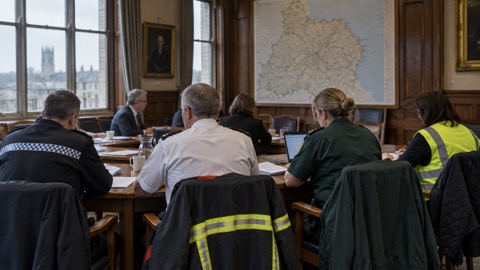
The Act does not just list duties on individual organisations; it requires them to work together, and the vehicle for that in England and Wales is the Local Resilience Forum. A Local Resilience Forum is a multi-agency partnership that brings together Category 1 and Category 2 responders under the Civil Contingencies Act (CCA) 2004 to co-ordinate planning, preparation and response for emergencies and major incidents within a specific geographical area5. Local resilience forums were developed under the Civil Contingencies Act 2004 to co-ordinate the actions and arrangements of responders26. Surrey's forum, for example, was formed to meet the requirements of the Civil Contingencies Act 2004, and is a partnership between local public services including the emergency services, local authorities, NHS England and the Environment Agency, all Category One responders under the Act27.
Two details are worth knowing. First, forums are based on the local police force area: the North Wales Local Resilience Forum is based on the local police force area and brings together all the organisations involved in emergency planning10. Second, a forum is not itself a legal entity with powers. The Northumbria Local Resilience Forum is not a statutory body, but each of its members has statutory duties under the Civil Contingencies Act 200426. The duties sit with the organisations, and the forum is where they exercise them together.
For more detail, see Local Resilience Forums: What They Do and How to Find Yours.
Who leads during a flood, and what the Environment Agency does
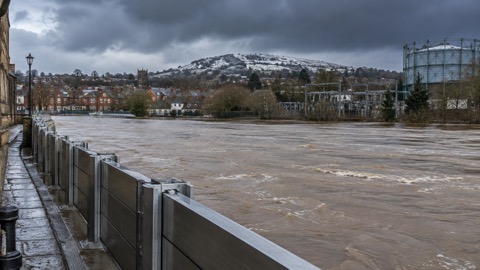
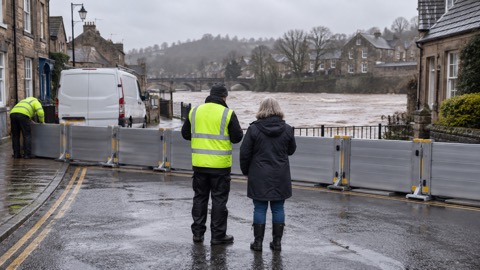
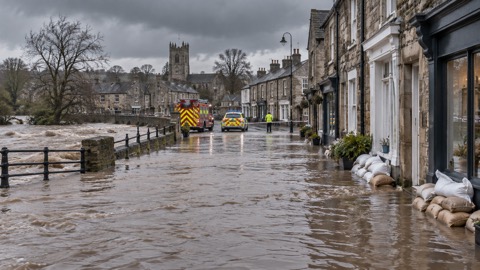
Flooding shows how the Act's framework works alongside other laws, and it is the emergency most UK households will actually face. The Environment Agency is a Category 1 responder, defined under the Civil Contingencies Act 200418, so it takes part in risk assessment and planning like any other Category 1 responder. But its specific flood roles come from other legislation: it is responsible for managing flood risk from main rivers, and it has a duty to produce flood risk maps and issue flood warnings to the public28. It is also responsible for 2,000 reservoirs in England and Wales and enforces the Reservoirs Act 1975, including maintaining the register of reservoirs for England and Wales and achieving compliance with the legislation29. Surrey's risk register records the same arrangement for reservoir and dam collapse, with the Environment Agency adopting a Reservoir Safety Enforcement role in line with the Reservoirs Act 197522.
Surface water flooding, the kind that arrives fast after heavy rain, works differently. The Flood and Water Management Act specifies that surface water flooding is the responsibility of local authorities, designated as Lead Local Flood Authorities30. Under the Flood and Water Management Act 2010, county and unitary councils lead the investigation into flooding incidents and flood risk assessment and management as Lead Local Flood Authority21. In the event of surface water flooding, the Environment Agency will support partners in responding to this if resources are not needed for fluvial (river) or tidal flood response30.
So during a flood, several organisations are each leading on their own piece:
- The Environment Agency manages flood risk from main rivers, issues flood warnings and enforces reservoir safety28
- Your council, as Lead Local Flood Authority leads on surface water flooding and investigates flooding incidents21
- Water companies attend emergencies on their own networks and where life is at risk from flooding21
- Your council, as a Category 1 responder co-ordinates the wider local response and support to residents15
Our Flooding: A Household Guide covers what your household should do at each stage.
The review of the Act and what could change
The Act has been in force since 2004, when its enactment broadened responsibilities and established new duties for agencies involved in planning and response8, and it has remained largely stable for over two decades1. That may now be changing. In a statement to Parliament on 14 July 2026, the Government announced it is launching a call for views on the Act's implementation review of the Civil Contingencies Act 2004, to gather evidence from across the resilience community on where it may need updating1.
For your household, nothing changes yet. The duties described on this page remain in force, and the review is an evidence-gathering exercise rather than a repeal. But it is worth knowing that the framework your council and emergency services work under is being actively examined, and that any changes to who must plan, warn and inform will flow through to the local arrangements described above. For the wider policy picture, see The UK Government Resilience Framework and Action Plan.
Where to go from here
The Act guarantees that responders are ready and that you will be told what to do. It does not guarantee that help will reach your door with food, water and warmth in the first hours of an emergency. The sensible response is to look up your area's Community Risk Register, published by your Local Resilience Forum7, to understand your risks, and to make your own household ready in parallel. Start with Getting Started: Preparing Your Household for an Emergency and Emergency Kit: What a UK Household Should Keep Ready, and if you or someone you depend on needs extra support, see Extra Help in an Emergency and ask your utility companies about their Priority Services Registers31.
Sources (31)
- National Resilience Annual Statement, 14 July 2026, Hansard, 2026
- The Civil Contingencies Act 2004, research briefing CBP-8016, House of Commons Library, 2026
- Civil contingencies, Argyll and Bute Council, 2026
- Community Resilience Development Framework, Cabinet Office, 2019
- What is a Local Resilience Forum?, Essex Resilience Forum, 2026
- Access to food in emergencies: learning from Covid-19, British Red Cross
- Check the risks where you are, UK Government, 2026
- London Resilience Partnership, Greater London Authority, 2026
- Preparing for civil emergencies in Argyll and Bute, Argyll and Bute Council, 2026
- Civil Emergencies Emergency Plan, Isle of Anglesey County Council, 2026
- Winter Service Plan, Lincolnshire County Council, 2025
- Who responds in Scotland, Lesson 3, Ready Scotland, 2026
- Wales Flood Response Framework, Welsh Government, 2016
- Emergency planning, Scottish Borders Council, 2026
- Flooding, Somerset Council, 2025
- Identifying and supporting persons who are vulnerable in an emergency, Cabinet Office, 2025
- Sign up to warnings and alerts, Surrey County Council, 2026
- Bassetlaw district flood risk information, Environment Agency, 2026
- Our risks and plans, Greater Manchester Combined Authority, 2026
- North East Flood Risk Management Plan consultation, SEPA, 2021
- Derby and Derbyshire Flood Warden Handbook, Derbyshire County Council, 2019
- Surrey Community Risk Register 2026, Surrey Local Resilience Forum, 2026
- Making your plan, Argyll and Bute Council, 2026
- The Essex Community Risk Register, Essex Resilience Forum, 2026
- Check the risks where you are, UK Government, 2026
- Northumbria Local Resilience Forum, Northumberland County Council, 2026
- Surrey's Local Resilience Forum, Surrey County Council, 2026
- Flood responsibilities, Derbyshire County Council, 2026
- Reservoir flood risk, Derbyshire County Council, 2026
- How to prepare for flash flooding, Greater London Authority, 2026
- Be Ready for Emergencies, Cheshire Fire and Rescue Service
 30-Day Household Checklist
 Emergency Plan Template
 Supply Interruption Checklist
 National Risk Register
 How Emergency Risks Are Scored
 What Counts as an Emergency
 Category 1 and 2 Responders
 Local Resilience Forums
 Strengthening Local Resilience
 What Your Council Does
 Central Government Response
 Gold, Silver and Bronze Command
 Major Incident Declared
 Emergency Powers
 Warning and Informing the Public