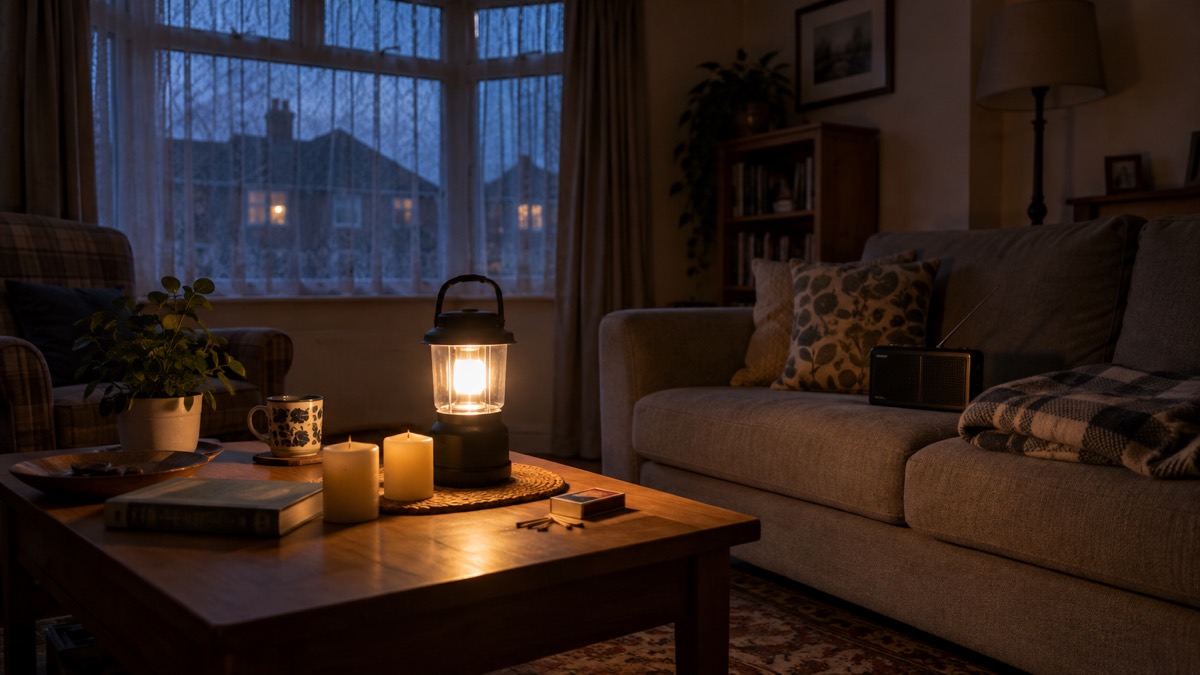
Most UK households will never face a terror attack or a radiation emergency. What they will face, at some point, is a flood, a power cut, a storm, a cold snap, a hot spell or a fire in the home. These are the emergencies worth preparing for, and the preparations are modest: a grab bag, a household plan, a torch, some stored water and food, and knowledge of a few phone numbers.
The scale of the flood risk alone explains why. Around 6.3 million properties, homes and businesses in England are in areas at risk of flooding from one or more sources1, and one in six homes in the UK is at risk of flooding2. Flooding has long been a high risk on any risk register no matter where you live3. Power cuts, storms and severe cold are rated alongside it in local risk registers across the country.
This page walks through each of the main risks in turn: what it is, who it affects most, and the few things worth doing now. Each section points to the fuller guide on this site where you can go deeper.
Flooding: the risk almost every UK household faces
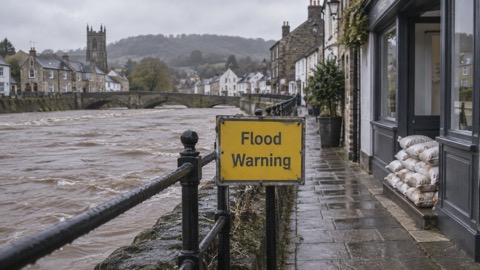
Flooding is the emergency most likely to affect you, wherever you live. A local resilience forum in Wiltshire and Swindon puts the figure for the UK as a whole at 1 in 6 homes2. The most recent national assessment for England, covering 2023 to 2024, totalled around 5.5 million properties at risk from all sources of flooding, including around 642,000 in areas at risk from rivers, the sea and surface water, and between 122,000 and 290,000 in areas at risk of groundwater flooding8.
Flooding comes in more forms than most people expect. River flooding, groundwater flooding and surface water flooding all affect households, and surface water flooding can hit homes nowhere near a river or the sea3. No matter where you live, rural or urban, it can almost be guaranteed that flooding will affect you somehow at some point3. In local risk registers, flooding is typically rated medium likelihood and significant impact2.
Flooding can often be predicted, but on occasions it occurs with very short notice and can be completely unexpected9. That is why the preparations matter before anything happens: it is your responsibility to manage your own flood risk and protect yourself, your family, property or business10. Remember to make provisions for domestic animals too, as pets and livestock need moving to safety when water rises9.
For the full picture, see our guide to flooding.
Check your flood risk and sign up for free warnings
The first step costs nothing. Check if your home is at risk of flooding and sign up for free flood warnings7. In England, if your home or business is at risk of flooding, you can sign up for free flood warnings by text, phone or email11. View the flood maps for your area, sign up to Floodline, and know who to contact if flooding happens10. The Met Office's community resilience guidance points each nation to its own flood authority: the Environment Agency in England, the Scottish Environment Protection Agency in Scotland, Natural Resources Wales in Wales, and NI Direct in Northern Ireland12.
Once you know your risk, adapt your home if you are at risk, for example by purchasing door guards, toilet stoppers and air brick seals13. These are modest products that keep shallow water out of the house, and they only work if you have them before the water arrives.
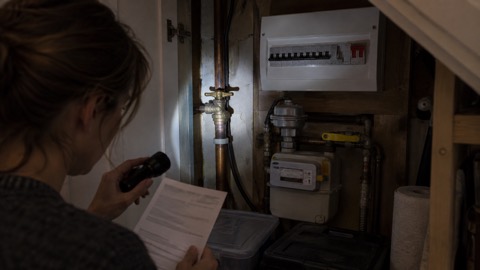
Then make a household flood plan and sign up for flood warnings if you have them in your area14. A flood plan sets out who does what when a warning arrives: where the stopcocks and switches are, where you would move valuables, and who you would call. Our guides to making a household emergency plan and to finding your stopcock, gas valve and fuse box cover this step by step.
What to do when a flood warning is in force, and after the water goes
When a flood warning or severe flood warning is in force, turn off your gas, electricity and water supplies, if it is safe to do so1. A flood plan should also cover moving valuable and sentimental items to higher ground, deploying property defences such as flood gates or sandbags, notifying family, friends or deliveries, and moving animals and livestock to safety9. If the emergency services tell you to evacuate, leave the area15.
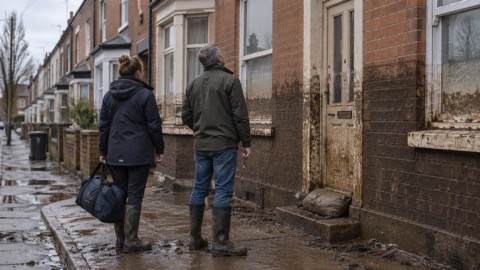
After the water goes, the danger has not fully passed. Only return to evacuated buildings if told it is safe, avoid electricity sources, and get an approved service engineer to check gas, electricity and water before turning them back on16. Beware of contaminated water and sharp objects in lying flood water, and take extra care with candles and open fires16. Water levels may rise and fall for several weeks depending on drainage and any further rainfall1.
If you are insured, take photographs or video footage of all damage and mark the water levels on the wall before they recede. Always ensure the insurance company has given approval before going ahead with any repair work, and do not dispose of any item until you are told to do so1. Contact your insurance company and ask advice before starting to clean up16. If you do not have insurance, contact your local council for information on hardship grants or charities that may be able to help you1. If your home is flood damaged and you are not able to live there, contact your local council for help getting emergency accommodation1.
Power cuts: call 105 and check your neighbours first
For power cuts, the number to know is 105. It is free, and it connects you to your local electricity network operator, whoever supplies your energy4. You can also report or get information about a power cut by calling 1054.
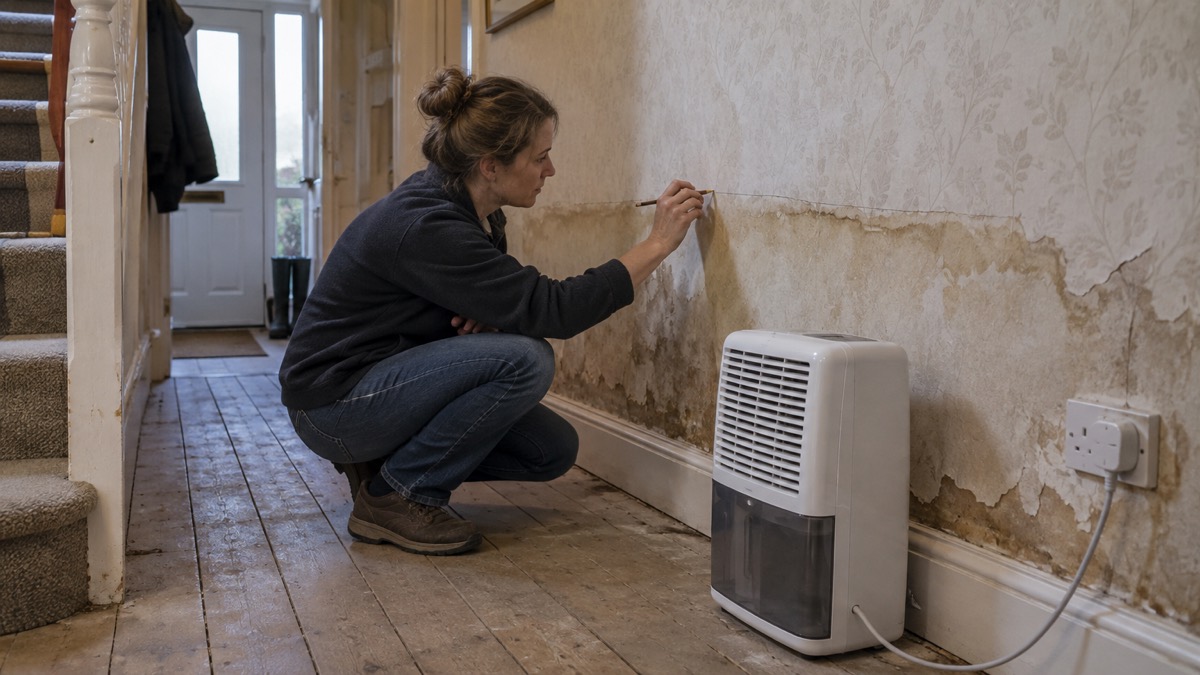
During the cut, protect the food in your fridge or freezer by keeping the door closed to protect the temperature4. Switch off appliances like straighteners and stoves, and keep a light switched on in one room so you know when the power returns4. Keep blankets and thick jumpers available4. Turn off electrical appliances at the plug to avoid possible damage from a power surge when the power is restored19.
Check on vulnerable neighbours, and notify a friend or neighbour if you are anxious4. It can be reassuring to agree with people you know who might need extra support, particularly those who live alone, that if there is an outage and you are unable to contact them, you will go to their home20.
If a power cut has affected your home and you have no electricity supply, it is important you continue to store and prepare food safely21. If your water supply is cut off as well, it is recommended to use alcohol-based hand sanitiser for cleaning your hands before touching food22. Our guides to power cuts, backup power and emergency food cover the practical detail.
Storms and gales: stay informed and stay off the roads
Storms and gales are among the most frequent emergencies on UK risk registers, and the advice centres on information and travel. Stay informed: look at the weather forecast and check the Met Office for weather warnings and details of risk in your area21. If it is not safe to go outside, go indoors, close all windows and doors, stay indoors, and stay up to date using radio, TV or online information18.
Avoid non-essential travel during the incident, and if you must travel, allow extra time21. Before a storm, make sure electric gates are open, so you are not trapped if the power fails21.
After the incident, make sure that any vulnerable neighbours or relatives are safe and help them arrange repairs if required21. Before any storm, keep properties in good repair, adequately insulated and lagged, and keep drains and gullies clear of blockages and leaves11. Keep in stock some basic provisions including a torch, check you are adequately insured, and actively check weather forecasts and warnings11. Our guide to storms, snow and ice goes further.
Cold weather: keep rooms you use at 18°C or above
Cold weather and snow are a health risk as much as a travel one. Keep your home warm: try to heat rooms you spend the most time in, such as the living room or bedroom, to at least 18°C6.
If heating or electricity fails, preparation matters. Ensure you have sufficient heating fuel and alternative heating equipment, plus sufficient fuel for it, in case the electricity supply is cut off11. If you use a kerosene heater, maintain ventilation to avoid a build-up of toxic fumes, keep fire extinguishers to hand, and make sure everyone knows how to use them11. Listen to local radio or television for weather reports and emergency information11.
While waiting for heating to return, dress in several layers of light, loose fitting clothing with a water repellent outer layer, wear mittens rather than gloves, and always wear a hat11. Eat regularly and drink ample fluids, avoiding caffeine and alcohol11. Watch out for signs of frostbite and hypothermia and get medical help immediately if symptoms are detected, and regularly check up on vulnerable family and friends such as the elderly11. Our guides to heating and cooking without mains power and gas and heating failures cover the options.
Hot weather is most dangerous for babies, older people and those with health conditions
Heat is less often thought of as an emergency in the UK, but it is treated as one in health guidance. NHS inform in Scotland lists those most at risk in hot weather: people aged 65 or over, children aged 5 and under, babies, people with underlying health conditions, pregnant people, people with a serious mental health condition, people who are ill and dehydrated, people taking alcohol or drugs, active people spending a lot of time outside, people in manual jobs outdoors, homeless people, people who live alone and cannot care for themselves, people with mobility problems, and people on certain medications23.
Make sure that babies, children and older people are not left in closed spaces or stationary cars: these areas can get hot very quickly23. Check on neighbours and relatives who fall into the at-risk groups during a hot spell, and follow the health advice for your part of the UK. Our guide to heatwaves and drought sets out the practical steps.
House fire: get out, stay out, call 999
A fire in the home is the emergency where seconds decide the outcome, and the advice is short and absolute. Get out, stay out and call 999. Remember 999 calls are free5. Do not tackle fires yourself: leave it to the professionals24. Do not waste time investigating what has happened or rescuing valuables24.
"Get out, stay out and call 999. Remember 999 calls are free."
What makes this survivable is preparation made in advance. A bedtime routine and an escape plan, agreed by everyone in the household, means each person knows the way out before smoke fills the stairs5. Our guides to home emergencies and first aid cover fire safety and what follows.
Pandemic flu, cyber-attack and space weather
Beyond weather and fire, three further hazards appear on national and local risk registers and are worth knowing about, even though they are less frequent.
Pandemic flu is the health emergency most often planned for. In the event of a pandemic, follow the latest guidance from health authorities, keep healthy, identify a flu friend who could collect medicines and supplies for you, have your free seasonal flu vaccine if eligible, and cover your mouth and nose when sneezing and wash your hands25. A flu friend is simply someone you agree in advance to help, and who agrees to help you. Our guide to health emergencies covers outbreaks and medicine supplies.
Cyber-attacks and major IT failures can knock out payments, phone and broadband for hours or days. The practical preparation is the same as for a power cut: some cash, a battery or wind-up radio, a torch, and a written list of important numbers. Our guide to cyber attacks covers what a household can do.
Space weather, caused by activity on the sun, can disturb power grids and communications. The household advice is the same as for any power interruption: turn off electrical appliances at the plug to avoid possible damage from a power surge when the power is restored19. See our guide to staying informed and in touch.
Make a home emergency pack and an evacuation plan
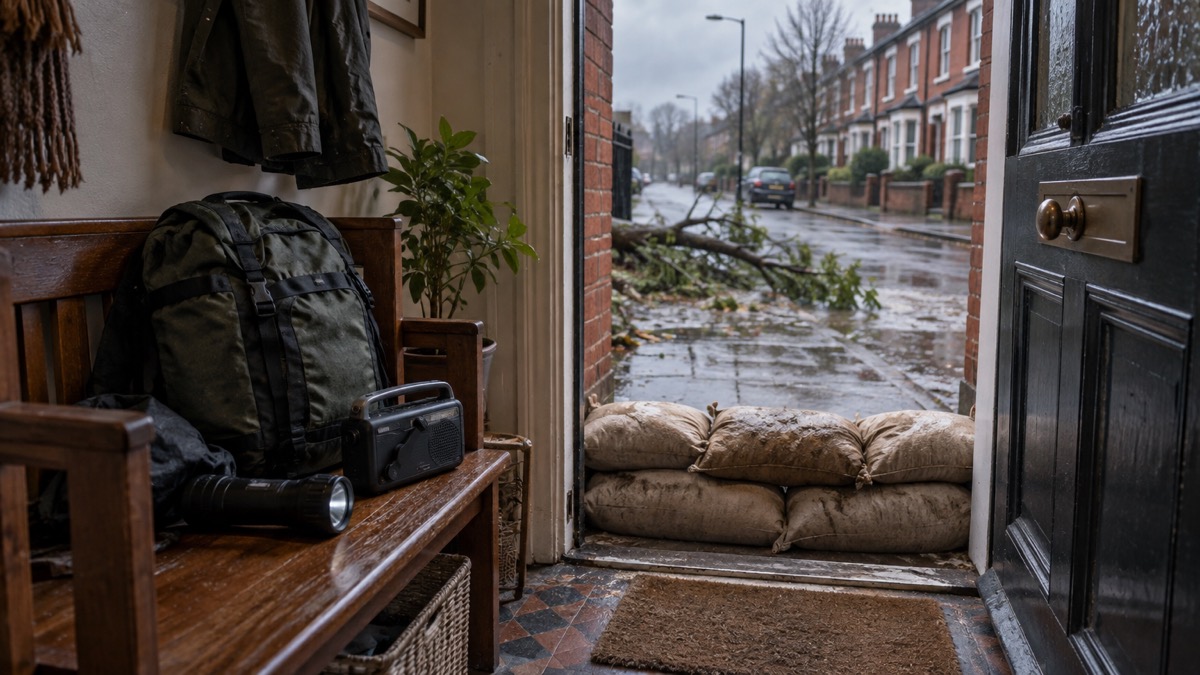
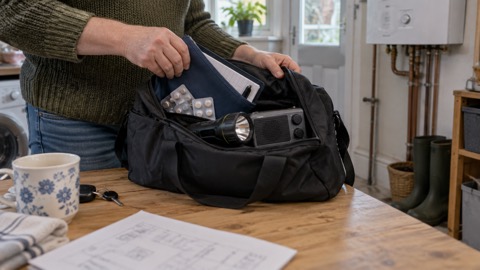
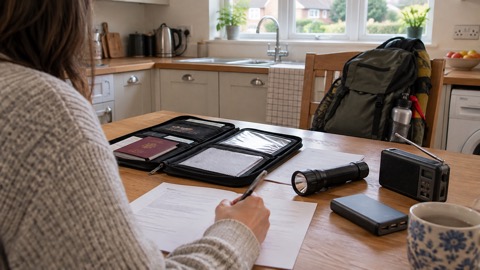
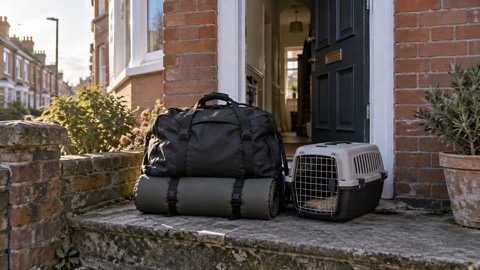
Whatever the emergency, two preparations cover almost all of them: a grab bag and a household plan. Whether you have to stay in or get out, it is recommended that you have an emergency grab bag ready and available in case of an emergency evacuation that requires you to leave quickly26.
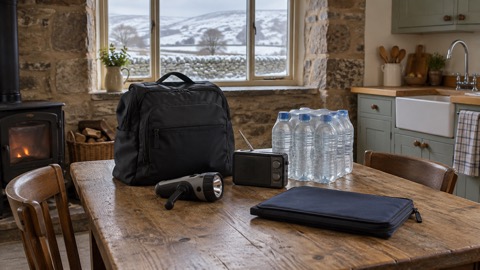
A flood kit gives a good model for the contents: essential items such as your insurance documents, a torch, a wind-up or battery radio, warm clothing and blankets, a first aid kit and any prescription medicine, bottled water and non-perishable foods12. Cornwall's fire and rescue service suggests keeping a torch, battery radio, emergency numbers, rubber gloves and your insurance policy in a safe place, and knowing where the mains electricity and gas switches are16.
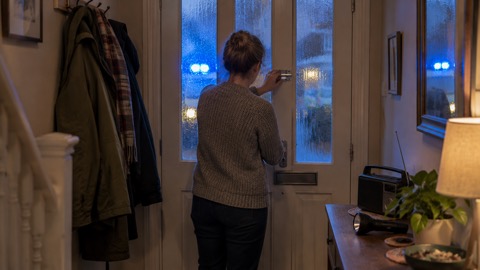
If you are told to leave:
- Leave as quickly and calmly as possible25
- Turn off electricity, gas and water, and unplug appliances25
- Lock doors and windows25
- Take bottled water and blankets if leaving by car25
- Take pets with carriers or leads, and pet food25
- Tune in to local radio or trusted social media25
Write the plan down. Keep a list of useful numbers including your insurance company and Floodline16. Our household emergency plan template walks you through it, and evacuation planning covers how your household would leave home.
Where each nation's advice differs
The hazards are the same across the UK, but the bodies and phone lines differ. For flooding, the Met Office's community resilience guidance directs you to the Environment Agency in England, the Scottish Environment Protection Agency in Scotland, Natural Resources Wales in Wales, and NI Direct in Northern Ireland12. In London, the London Resilience Partnership recommends starting with the London Risk Register to find out what emergencies may affect you27. Our guides to community risk registers and to Scotland's arrangements cover the differences.
Sources (27)
- Flooding: be informed about hazards, Prepare Campaign (GOV.UK)
- Flooding risks, Wiltshire and Swindon Prepared
- Flooding risk group, Wiltshire and Swindon Prepared
- Power cuts, Wigan Council
- Bedtime routine and escape plan, North Yorkshire Fire and Rescue Service
- Cold weather, snow and ice, Prepare Campaign (GOV.UK)
- Flooding, Drinking Water Inspectorate
- National assessment of flood and coastal erosion risk in England 2024, Environment Agency
- Preparing for a flood, Wiltshire and Swindon Prepared
- Developing our knowledge on flooding, Scottish Environment Protection Agency
- Severe weather, Pembrokeshire County Council
- Community resilience, Met Office
- Climate adaptation | Birmingham Women's and Children's, Birmingham Women's and Children's NHS Foundation Trust
- Flood Recovery Information - Flood Risk Management, Devon County Council
- Help during a flood, GOV.UK
- Flooding safety advice, Cornwall Fire and Rescue Service
- Emergency plan, Ready Scotland
- Storms and gales, Lancashire Prepared
- Be Ready, Stay Safe, Act Now, Sussex Resilience Forum, October 2025
- Phone and broadband outages, Prepare Campaign (GOV.UK)
- Strong winds weather warning information and advice, NI Direct
- Strong winds and heavy rain warning information and advice, NI Direct
- How to stay safe in hot weather, NHS inform
- Fire safety, Essex Prepared
- Preparing for an emergency: what you need to know, North Wales Resilience Forum, 2020
- Your home emergency plan, Royal Borough of Windsor & Maidenhead
- Preparing yourself for emergencies, Greater London Authority
 30-Day Household Checklist
 Emergency Plan Template
 Supply Interruption Checklist
 Household Emergency Plan
 Community Risk Registers
 What to Do in an Emergency
 Sheltering in Place
 Staying Put or Leaving
 If You Are Asked to Evacuate
 Planning Your Evacuation
 Rest Centres
 Stopcock, Gas Valve and Fuse Box
 Returning Home
 Recovering After an Emergency
 Scotland Emergency Planning