A pandemic happens when a new virus that people have no immunity to emerges and starts spreading as easily as normal flu1. Pandemics are rare, but as the country saw with COVID-19, caused by the novel coronavirus SARS-CoV-2 from 2020 onwards, they can have devastating and wide reaching impacts2. Unlike ordinary seasonal flu, which has a season from October to May in the UK, a flu pandemic can occur at any time3.
For a household, the practical reality of a pandemic is mostly familiar illness on a larger scale: flu or COVID-19 symptoms at home, days spent away from others, and pressure on everyday supplies and services. The actions that matter are the ones you can take now and the ones you take in the first hours of illness. If someone at home has symptoms, the immediate steps are to stay at home, rest, drink fluids, and follow NHS advice4. Most people with flu get better on their own, and many people with COVID-19 are no longer infectious to others after 5 days, though some can be infectious for up to 10 days6.
What to do now if someone at home has symptoms
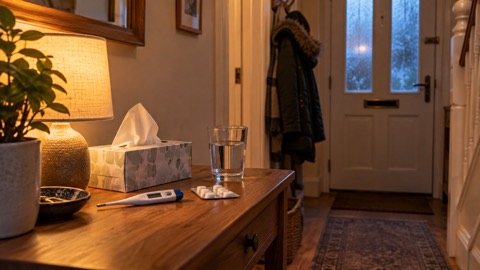
When someone in your household develops flu or COVID-19 symptoms, act early and keep it simple. If you develop flu-like symptoms, make arrangements to go home if you are at work, school or college, get lots of rest and drink plenty of fluids, stay at home until your symptoms have gone, and take over-the-counter medicines such as paracetamol, following the instructions on the medicines5. Follow NHS advice if you think you or your child has COVID-194.
Numbered, the first steps look like this:
- Go home and stay there. Stay at home until your symptoms have gone5.
- Rest and drink plenty of fluids. You may need to stay in bed for a few days if you have flu10.
- Take over-the-counter medicines such as paracetamol, following the instructions on the packaging5.
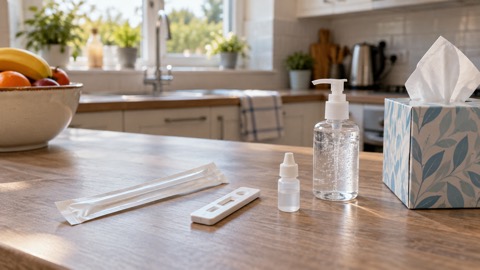
- If you are eligible for treatments for COVID-19, take a rapid lateral flow test as soon as you get symptoms6.
- Tell anyone who does need to come into your home that you have symptoms or a positive test result, so they can take precautions such as wearing a face covering, keeping their distance and washing their hands regularly11.
That last step matters more than people expect. Official guidance is explicit that visitors should be warned, because it lets them protect themselves and it protects anyone in your household who is at higher risk11. If you are worried about symptoms, if they are getting worse or not getting better, if there are other signs of illness such as a rash, loss of appetite or feeling weak, or if there is a high temperature lasting 5 days or more that is not coming down with paracetamol, ask for an urgent GP appointment or get help from NHS 1116.
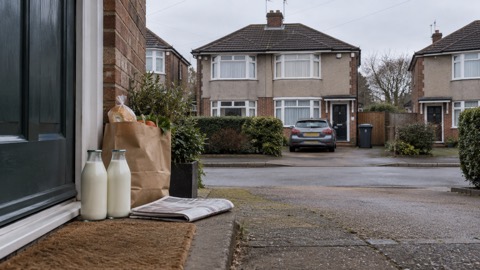
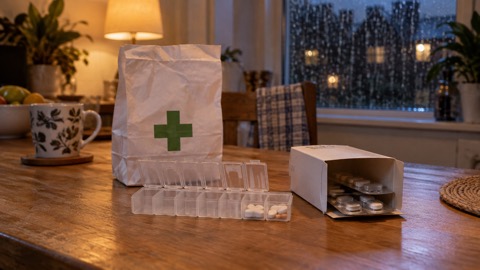
Being ready before illness arrives shortens the hard days. Local resilience advice for pandemic influenza is to identify an individual who can collect medication, food and supplies so you can stay home if you are unwell12. Keep a stock of over-the-counter cold and flu medication to relieve your symptoms3, and find out if any elderly or vulnerable neighbours might need your help13. A home emergency plan that records important information and the actions family members can take in advance is recommended by local authorities for any emergency, a pandemic included14.
How long to stay at home: 5 days, and 10 for people at higher risk
The length of time to stay away from others depends on the illness and on who you would be meeting. For COVID-19, if you are 18 years old or over, try to stay at home and avoid contact with other people for 5 days after the day you took your test6. The reason is timing: most people with COVID-19 will no longer be infectious to others after 5 days, but some people may be infectious for up to 10 days from the start of their infection11.
The two numbers serve two different purposes, and official guidance uses both:
| Situation | How long | Why |
|---|---|---|
| You have COVID-19 and are 18 or over | Stay at home, avoid contact with others, 5 days after the day you took your test6 | Most people are no longer infectious after 5 days11 |
| You have COVID-19 and might meet someone at higher risk | Avoid meeting them for 10 days after the day you took your test8 | You can be infectious for up to 10 days15 |
| You have flu | Stay at home until your symptoms have gone5 | You are more likely to spread flu in the first 5 days after infection7 |
| You are a household or overnight contact of a positive COVID-19 case | Infection can take up to 10 days to develop, so limit close contact, avoid people at higher risk, wear a well-fitting face covering and wash hands frequently11 | You may be developing infection without knowing it yet |
The 10-day figure for protecting vulnerable people appears consistently across sources: avoid meeting people at higher risk of becoming seriously ill with COVID-19 for 10 days after the day you took your test8, and try to wait 10 days after the day you took your test before meeting anyone who is more likely to get seriously ill from viruses16. Where the documents differ is on the general stay-at-home period, with one source saying 5 days for adults6 and the higher-risk advice running to 10 days8; both are official, and the safest reading is 5 days for the general public and the full 10 days before seeing anyone vulnerable.
For flu, the rule is symptom-based rather than date-based: stay at home until your symptoms have gone5. You are more likely to give flu to others in the first 5 days after getting infected, and you can spread flu even without symptoms7. Our page on how long to stay at home after a positive COVID test covers the timing in more detail.
How flu and COVID-19 spread, and how to cut the risk at home
Respiratory infections like COVID-19 and flu spread easily and may cause serious illness in some people17. The COVID-19 virus is spread by close contact with people who have the virus, via droplets released when someone carrying the virus speaks, breathes, coughs or sneezes; those droplets are either breathed in, or picked up from surfaces and transferred to the eyes, nose or mouth4. Flu works the same way: it is a virus that spreads easily from person to person, spread through coughing and sneezing, and it can live on hands and surfaces for 24 hours7.
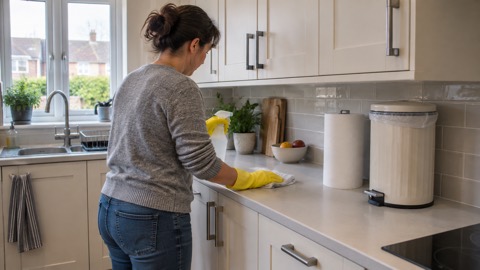
That 24-hour survival on surfaces is the reason the hygiene advice is so repetitive across every official source. Wash your hands often with warm water and soap; cover your mouth and nose with a tissue when you cough or sneeze, or cough into the bend of your elbow, not into your hand; and bin used tissues as quickly as possible18. Practise good hygiene habits: always wash your hands thoroughly and cough or sneeze into disposable tissues19.
The full set of everyday measures from official COVID-19 guidance is worth keeping to hand:
- Get vaccinated if eligible20
- Wash hands often with warm water and soap20
- Use tissues to trap germs and bin used tissues promptly20
- Cough into your elbow20
- Stay at home if unwell20
- Regularly clean surfaces that are touched often20
- Wear a face covering in crowded places or close contact20
- Let fresh air in when having visitors20
Two facts sharpen why these measures matter even when everyone feels well. First, you can still catch or spread COVID-19 if you do not have symptoms, are fully vaccinated, or have had the virus before15. Second, if you get flu and COVID-19 infection at the same time, you are more likely to become seriously ill21. It is expected that many respiratory germs including COVID-19 and flu will be circulating each winter, so it is important to take up any vaccines you are invited to have by the NHS if you can have them22. Our page on stopping infections spreading at home goes through hand washing, cleaning and ventilation in detail.
Who is at higher risk and needs extra protection
Some people are more likely to become seriously ill from these infections, and protecting them is where the 10-day rules and the extra precautions bite. For flu, those more likely to become seriously ill include children under 6 months old, people aged over 65, pregnant women, and those with certain underlying health conditions7. For COVID-19, people more likely to become seriously ill include older adults, those with some long term conditions, and those who are pregnant, especially after 28 weeks20.
Official hot weather guidance for England sets out a wider list of groups at higher risk of becoming seriously unwell, which is a useful checklist for any infection period: older people aged 65 years and over; babies and young children aged 5 years and under; people with underlying health conditions; pregnant women; people on certain medications; people with serious mental health problems; people already ill and dehydrated; people with alcohol or drug dependence; people physically active outdoors; manual labour or outdoor workers; people experiencing homelessness; and people who live alone and may be unable to care for themselves24.
If someone in these groups lives with you or is part of your family's circle, the practical steps follow from the spread section: keep your distance while infectious, avoid meeting them for 10 days after a COVID-19 test8, warn any visitor who must come into the home so they can take precautions11, and let fresh air in20. If you are unsure whether you or a family member qualifies for extra protection or treatment eligibility, speak to your GP or hospital specialist; the official eligibility lists are summaries and do not cover everything16. Our page on people at higher risk in an outbreak covers this in full.
Get the flu vaccine, and keep vaccinations up to date
It is important to get the flu vaccine if you are advised to23, and to get your flu vaccine when it is offered7. Beyond flu, make sure you and your family are up to date with available recommended vaccinations25. During a pandemic, follow guidance from NHS England3, which will set out who is being offered what and when.
The reasoning is straightforward. Flu outbreaks often occur during the winter each year, which is why the illness is sometimes referred to as seasonal flu, and cold weather has a significant impact on the number of cases26. Our pages on who can get a free flu vaccine and who can get a COVID-19 vaccine now list the current criteria.
Flu or a cold: how to tell the difference
Cold and flu symptoms are similar, but flu tends to be more severe18. The NHS comparison comes down to three things: how fast it starts, how much of you it affects, and whether you can carry on.
| Flu | Cold | |
|---|---|---|
| How it appears | Quickly, within a few hours18 | Gradually, over 1 to 2 days18 |
| What it affects | More than just your nose and throat18 | Mainly your nose and throat18 |
| How you feel | Exhausted and too unwell to carry on as normal18 | Unwell, but well enough to do normal activities18 |
Flu symptoms usually include fever, chills, headaches and aching muscles, and you can often get a cough and sore throat at the same time26. Flu symptoms hit you suddenly and sometimes severely26. Flu is a very contagious acute viral infection that affects people of all ages, but it can be more serious for pregnant women, very young children, and older people26. Flu often gets better on its own, but it can make some people seriously ill7. If you are unsure, Cold and Flu NHS advice is the recommended place to check3, and our page on whether it is a cold, flu or COVID-19 compares all three.
Caring for someone with flu or COVID-19 at home
Most care at home is ordinary nursing: rest, fluids, warmth and the right medicines at the right dose. You may need to stay in bed for a few days if you have flu10. Take over-the-counter medicines such as paracetamol, following the instructions on the medicines5. Practise good hand hygiene and wash your hands regularly, especially if you have a cough or cold17, and clean touched surfaces regularly20.
There are a few specific comfort measures from NHS COVID-19 guidance worth knowing. Try having a teaspoon of honey if you have a cough, but do not give honey to babies under 12 months6. Do not lie on your back if you have a cough; lie on your side or sit upright instead. Do not use a fan to cool your room, as it may spread the virus. If you are feeling breathless, try to stay calm, as distress can make it worse6.
If you are eligible for treatments for COVID-19, take a rapid lateral flow test as soon as you get symptoms6. If you test negative and are eligible for COVID-19 treatments, do a total of 3 rapid lateral flow tests over 3 days, one test a day, if symptoms continue16. You can show a letter or email from the NHS about COVID-19 treatments at the pharmacy to help confirm eligibility16. Our page on lateral flow tests explains how to use them, and the checklist for caring for someone ill at home lists what to have ready.
Babies and children
Children need their own rules. If your child has mild symptoms such as a runny nose, sore throat or mild cough, and they feel well enough, they can go to school or childcare6. Give paracetamol or ibuprofen to your child if they are distressed or uncomfortable, checking the packaging or leaflet, or speaking to a pharmacist or GP if unsure10.
There are age-specific temperature thresholds that should never be waited out. Ask for an urgent GP appointment or get help from NHS 111 if a child is under 3 months old and has a temperature of 38C or higher, or is 3 to 6 months old and has a temperature of 39C or higher6. Our page on when to keep your child off school or nursery covers the school side.
When to call NHS 111, and when to call 999
NHS 111 is the route for urgent-but-not-emergency help. Call 111 and speak to a fully trained adviser before self-presenting at A&E9. People should still call 999 and go to A&E in an emergency, when someone is seriously ill or injured and their life is at risk9.
Call 999 or go to A&E if you or a child seems very unwell, gets sudden chest pain, is so breathless as to be unable to say short sentences when resting, starts coughing up blood, collapses or faints, has a seizure or fit for the first time, or has a rash that does not fade when you roll a glass over it6.
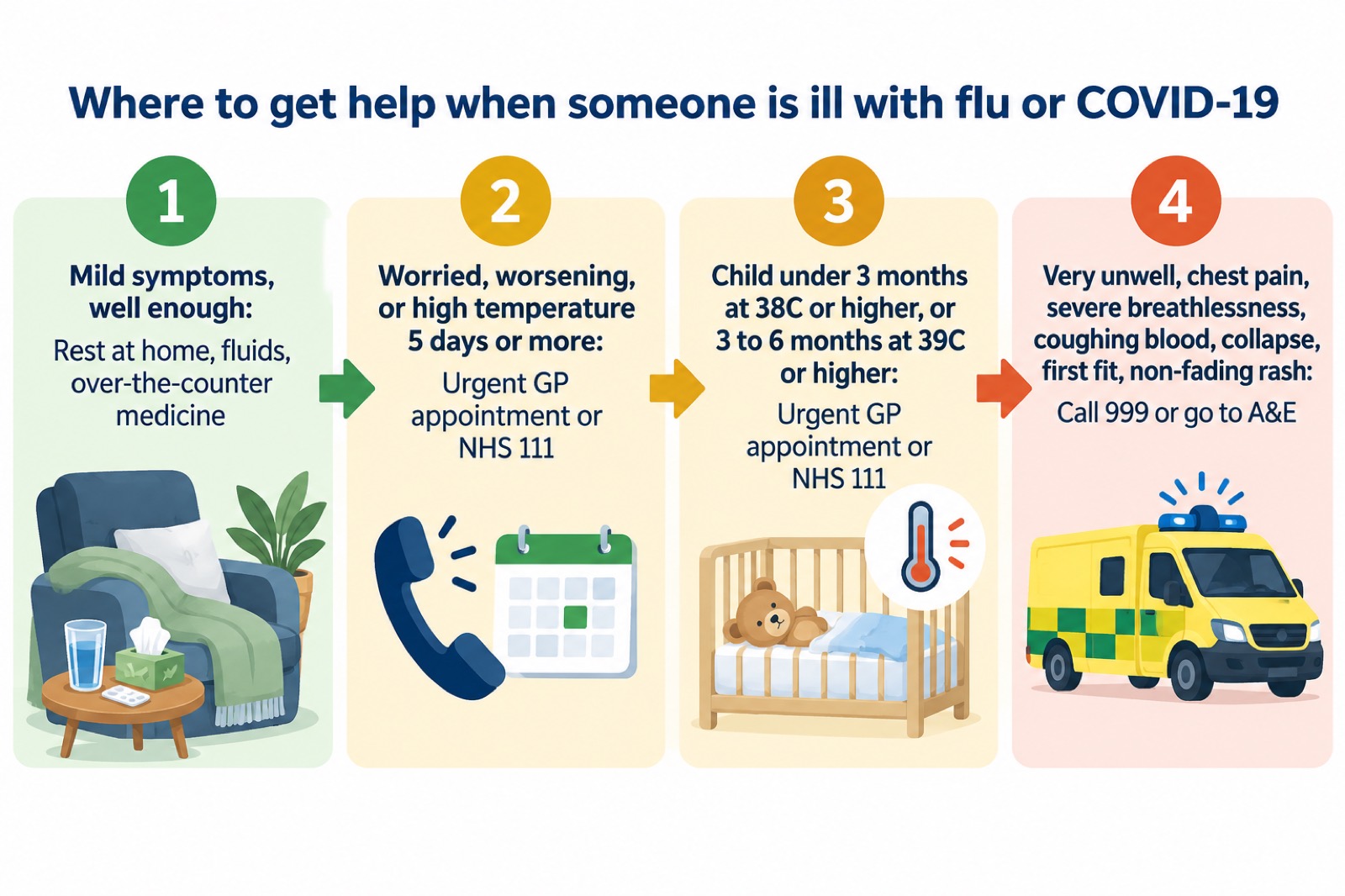
The middle tier is the one households under-use. Ask for an urgent GP appointment or get help from NHS 111 if you are worried about symptoms, if symptoms are getting worse or not getting better, if there are other signs of illness such as a rash, loss of appetite or feeling weak, or if there is a high temperature lasting 5 days or more or not coming down with paracetamol6. Our pages on NHS 111 and when to call 111 and when to call 999 set out the detail.
How the UK manages outbreaks: the role of UKHSA
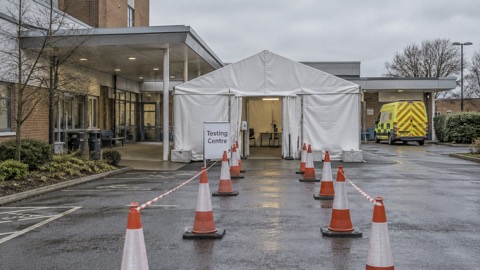
The system behind the advice is worth knowing in outline, because it explains who issues the guidance you will be following. The UK Health Security Agency (UKHSA) is responsible for controlling and managing outbreaks of communicable diseases27. The Local Authority Health Protection Team works closely with UKHSA and other organisations to respond quickly to possible outbreaks27. At the local level, all the partners within West Yorkshire Prepared, for example, have tried and tested plans in place to respond collectively to health pandemics, and agencies work closely with UKHSA and the NHS to support any measures required25. Local resilience partnerships also provide advice to local businesses about the impact a pandemic could cause, such as severe staff shortages25.
The UK's influenza pandemic plan works in phases. The detection phase starts when a pandemic is declared by the World Health Organization (WHO), or earlier on the basis of reliable evidence, or if an influenza-related Public Health Emergency of International Concern is declared by WHO. The assessment phase starts when the first patient with the pandemic strain of flu is identified in the UK28. In practice, that means official guidance can tighten before a pandemic is formally declared, and again once cases reach the UK, so the instructions you are asked to follow may change during an outbreak.
The government's preparedness rests on vaccination programmes enabling rapid development and deployment of vaccines, as seen during COVID-19, and international collaboration with the WHO and other nations to monitor and respond to emerging infectious disease threats2. UKHSA also runs alert systems with the Met Office: UKHSA and the Met Office jointly monitor weather forecasts and carry out a joint risk assessment before issuing alerts, aimed at health and social care professionals, emergency responders, the voluntary sector and the public29. Our page on the UK Health Security Agency explains its alerts and local teams, and how the UK prepares for emergencies covers the national picture.
Bird flu
Pandemic flu is rated a Very High Risk in at least one local community risk register1, which refers to a future new flu virus rather than any current strain. On bird flu specifically, the UK Health Security Agency advises that the risk from this bird flu strain is very low to humans and other mammals30. If you keep poultry, even if only kept as pets, you should register them so you can be contacted during an outbreak30. See our page on bird flu for the detail.
Getting your household ready: supplies, food and a plan
Pandemic preparation overlaps heavily with ordinary household emergency preparation, with a few additions around medicines and staying home. Local authority advice for any emergency is to make up a home emergency pack and prepare an evacuation checklist31, and to make a household emergency kit and an emergency plan before cold weather8. For a pandemic specifically, the additions are these:
- Identify an individual who can collect medication, food and supplies so you can stay home if you are unwell12
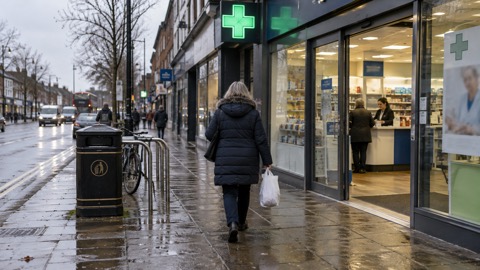
- Keep a stock of over-the-counter cold and flu medication to relieve your symptoms3
- Make sure you and your family are up to date with available recommended vaccinations25
- Find out if any elderly or vulnerable neighbours might need your help13
- Consider creating a home emergency plan covering important information and the actions family members can take in advance14
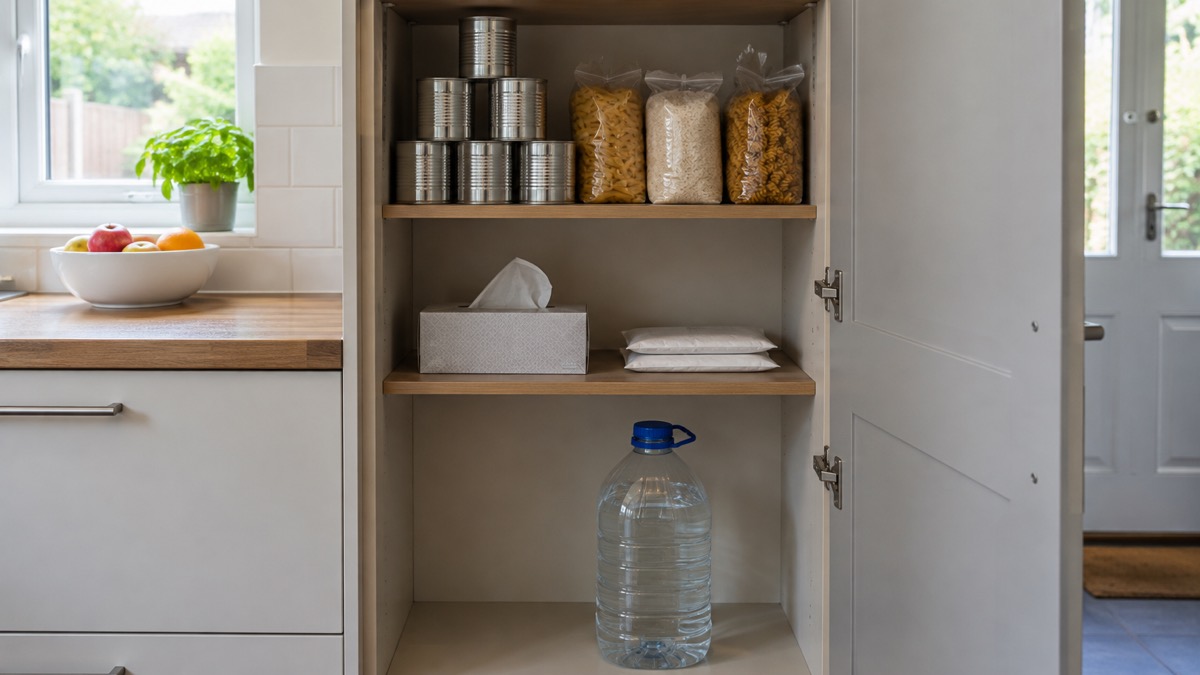
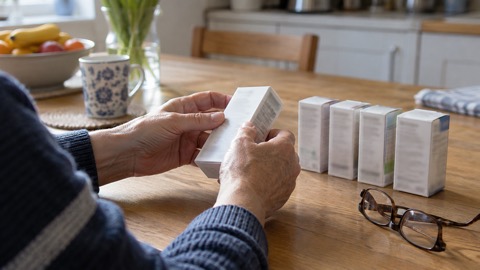
Food and supplies deserve a note on scale. During a pandemic the more likely pressure is not being able or willing to shop while ill, rather than supplies failing, so a buffer of store-cupboard food that needs no fresh ingredients, plus enough of your regular prescription medicines, covers most of the risk. Our emergency food guide covers what to store and how to use it, and the medicine cabinet checklist lists the over-the-counter medicines worth having. The full pandemic household checklist brings it together.
Translated guidance exists for households whose first language is not English: Doctors of the World published essential information on the virus and self-care, including what to do if you start to experience symptoms, how to book a COVID-19 test, and information on vaccinations32. If a pandemic strain emerges, follow guidance from NHS England3, and expect local authorities and local resilience partnerships to publish area-specific advice as they did during COVID-1925.
*A household buffer for illness: store-cupboard food, tissues, over-the-counter medicine and someone identified to collect supplies if you cannot go out.
Sources (32)
- Health related risks, Dorset Prepared, 2026-10-28
- Ongoing risks: pandemic, Essex Prepared, 2026-10-29
- Pandemic: protecting your family, Essex Prepared, 2026-10-29
- Coronavirus, Derbyshire County Council, 2026-10-29
- Don't Panic, Prepare booklet, West Yorkshire Prepared, 2020-11
- COVID-19 symptoms and what to do, NHS, 2026
- Flu, Derbyshire County Council, 2026-10-29
- Seasonal winter advice, Suffolk County Council, 2026-10-29
- NHS 111, NHS Lancashire and South Cumbria ICB, 2026-10-29
- What to do if you have flu symptoms, London Ambulance Service NHS Trust, 2026-08-10
- People with symptoms of a respiratory infection including COVID-19, GOV.UK, 2022-04-01
- Community Risk Register 2025, North Yorkshire Local Resilience Forum, 2025-02
- Emergency advice for residents, Warwickshire County Council, 2026-10-29
- Protect and prepare, Coventry City Council, 2026-10-29
- How to avoid catching and spreading COVID-19, NHS, 2023-03-21
- COVID-19 rapid lateral flow test, NHS, 2025-03-03
- Living with Covid, Nottinghamshire County Council, 2026-10-29
- Flu, NHS, 2026-02-03
- Prepare for emergencies: risks, Surrey County Council, 2026-10-28
- Coronavirus (COVID-19), Derbyshire County Council, 2026-10-29
- Staying well in winter - Derbyshire County Council, Derbyshire County Council
- Staying well in winter - Derbyshire County Council, Derbyshire County Council
- Flu, Derbyshire County Council, 2026-10-29
- Beat the heat: staying safe in hot weather - GOV.UK, UK Health Security Agency (GOV.UK)
- Infectious disease and pandemics, West Yorkshire Prepared, 2026-10-29
- Flu, health and wellbeing, Met Office, 2026-10-28
- Disease control, Derbyshire County Council, 2026-10-29
- UK pandemic preparedness, GOV.UK, 2020-11-05
- What is the difference between Weather-Health Alerts and Severe Weather Warnings? - News - Wiltshire & Swindon Prepared, Wiltshire & Swindon Prepared
- Avian influenza (bird flu), Suffolk County Council, 2026-10-29
- Preparing for emergencies, Somerset Council, 2026-09-17
- Translated COVID-19 guidance, Greater London Authority, 2026-10-25
 Medicine Cabinet Checklist
 Sick at Home Supplies Kit
 Caring for Someone Ill at Home
 Outbreaks Near You
 UK Health Security Agency
 Staying Home When Ill
 Stopping Infections at Home
 Caring for a Sick Person at Home
 Keeping Prescription Medicine
 Medicine Shortages Explained
 Storing Medicines Safely
 Urgent Care and A&E
 Vaccines Against Outbreaks
 Flu Symptoms and Getting Help
 COVID-19 Symptoms and Testing