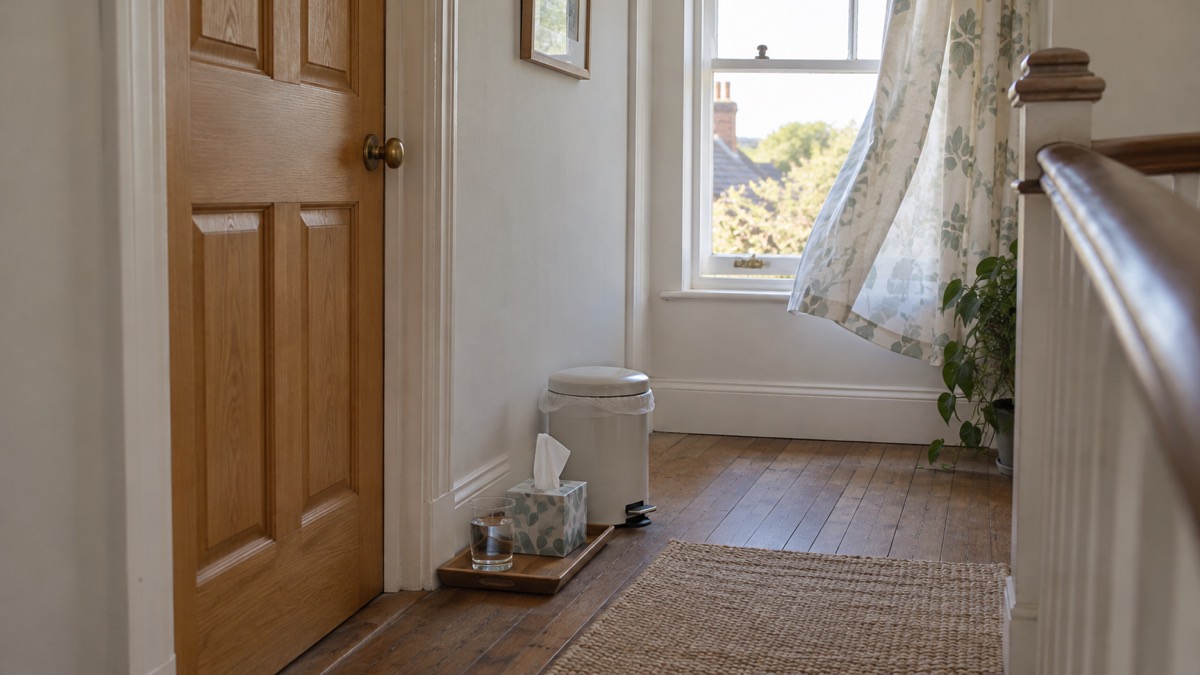
Flu spreads easily in a household because people share air, surfaces and close contact. The single most useful thing you can do is keep the person who is ill apart from everyone else: official advice is to stay at home if you have flu symptoms, and to avoid contact with other people if you have a high temperature, feel hot, cold or shivery, or do not feel well enough to do your normal activities1. Around that, good hand and respiratory hygiene helps: wash your hands often with warm water and soap, cover your mouth and nose with a tissue when you cough or sneeze, and bin used tissues as quickly as possible3.
Timing matters. Flu germs from coughs and sneezes can live on hands and surfaces for 24 hours, and you are more likely to pass flu on in the first 5 days after getting infected, even if you have no symptoms1. That is why the first few days are when the household needs to be most careful, and why cleaning and handwashing need to keep going after the worst of the illness has passed.
Most people recover at home without medical help. But some people in the house are at higher risk of becoming seriously ill, and there are clear signs that mean you should ask for an urgent GP appointment or call NHS 111. This page sets out what to do, in the order you need it, from the first day someone feels unwell.
Keep the person with flu apart from the rest of the household
The first and most effective step is separation. If you have flu symptoms, stay at home if you can to help avoid spreading germs to others2. If you have a high temperature, feel hot, cold or shivery, or do not feel well enough to do your normal activities, try to stay at home and avoid contact with other people1. This is not just about staying off work: it means keeping your distance within the house where you can.
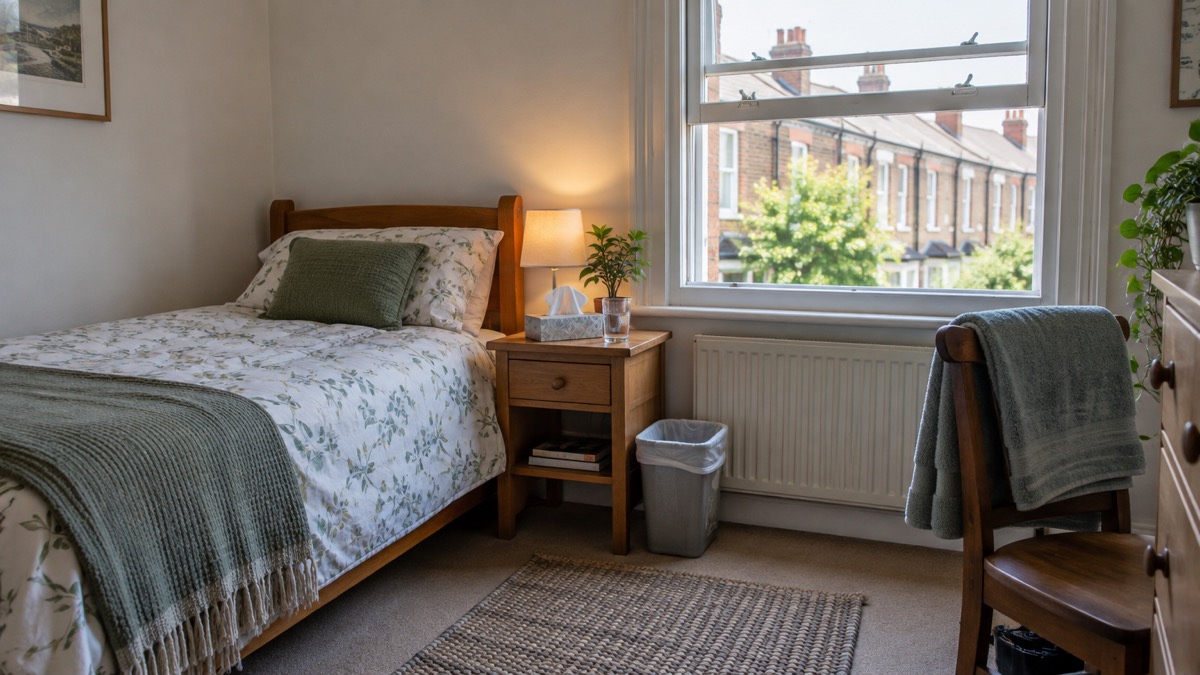
In practice, that means the person who is ill should use a separate room to rest in, and ideally a separate bathroom if the household has one. Keep their used tissues, cups and cutlery away from shared areas, and wash your hands after any contact with them or their things5. If you are unwell, try to stay home or avoid contact with other people; some diseases have specific exclusion periods, so check the guidance for the illness in question6.
Think about who else is in the house. If someone in the household is at higher risk from flu, keep contact with the ill person to a minimum and let one healthy adult do the caring where possible. The person who is ill should stay at home if they can, to help avoid spreading germs to others1.
A useful way to think about it is a simple set of rules for the household while someone is ill:
- The person who is ill stays in one room as much as possible.
- One adult does the caring, and washes their hands before and after.
- Everyone else keeps their distance and avoids sharing the ill person's things.
- Visitors are kept to a minimum until the person is better.
Handwashing and catching coughs and sneezes
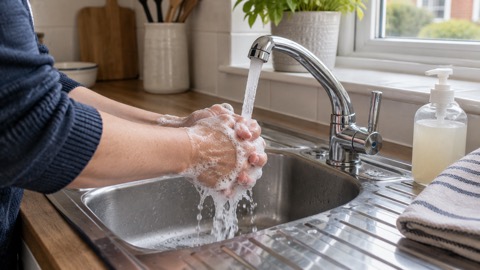
Handwashing is the single most effective way to stop the spread of infection7. Wash your hands often with warm water and soap, cover your mouth and nose with a tissue when you cough or sneeze (or cough into the bend of your elbow, not into your hand), and bin used tissues as quickly as possible3. Practising good hand and respiratory hygiene helps prevent the spread of viruses like flu and COVID-19 as well as the winter vomiting bug8.
Catching coughs and sneezes properly is the other half of the habit. Cover your mouth and nose with a tissue when you cough or sneeze, or cough into the bend of your elbow, not into your hand, and bin used tissues as quickly as possible1. Use tissues to catch the germs from coughs and sneezes, throw them away in the bin as soon as you can, and then wash your hands6. Covering your nose and mouth when coughing or sneezing, disposing of dirty tissues promptly by bagging and binning them, and washing hands frequently with soap and water are the basics of good hygiene9.
The order matters: catch it, bin it, wash your hands. A tissue in the hand is only useful if it goes in the bin and the hands are washed afterwards. Make sure children know the routine too, and remind them gently rather than expecting them to remember.
Cleaning the surfaces and items everyone touches
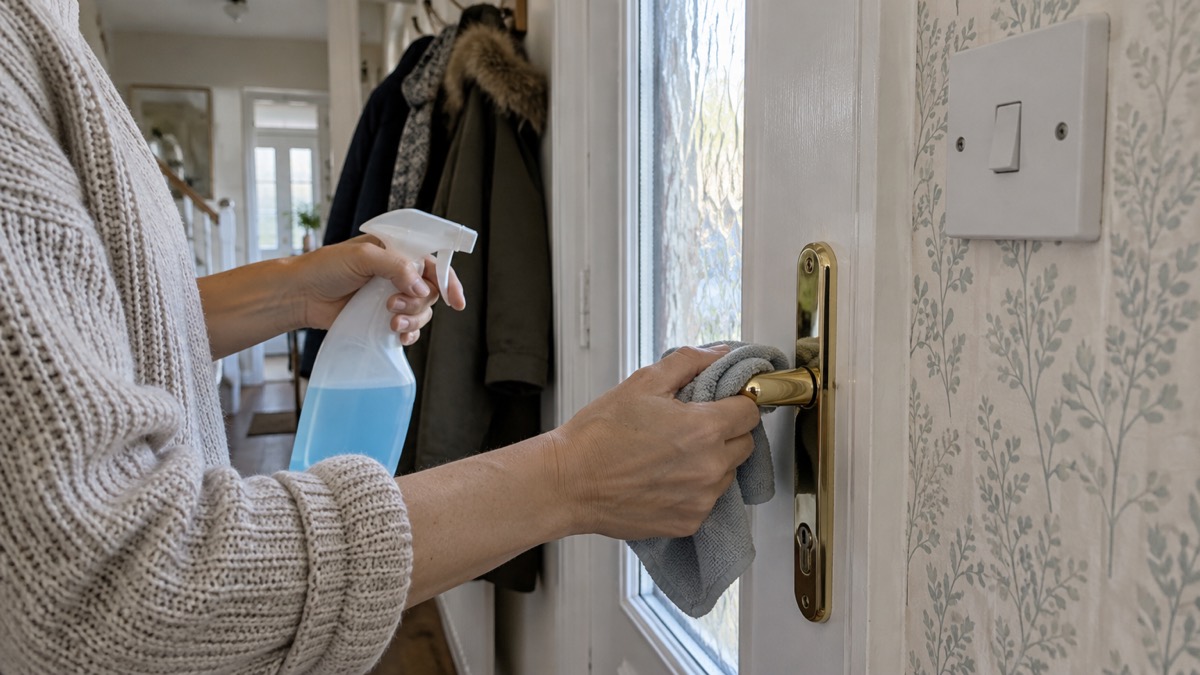
Flu germs can live on hands and surfaces for 24 hours, so cleaning is not a cosmetic chore while someone is ill: it removes the germs that handwashing has not reached1. Clean surfaces in your home often, paying particular attention to surfaces that are touched frequently, such as handles, light switches, work surfaces and electronic devices such as remote controls10. Clean surfaces that people touch a lot, such as door handles, and regularly clean and disinfect all areas in contact with food, dirt or body fluids, such as toilets12.
| What to clean | How often | Why it matters |
|---|---|---|
| Door handles, light switches, remote controls | Often, while someone is ill | Frequently touched surfaces such as handles, light switches, work surfaces and electronic devices such as remote controls10 |
| Work surfaces and food areas | Regularly, and before preparing food | Areas in contact with food need disinfecting12 |
| Toilets and bathroom surfaces | Regularly | Areas in contact with body fluids need disinfecting12 |
| The ill person's cups, cutlery and towels | After each use, kept separate | Do not share towels or face cloths6 |
Do not share cups, cutlery, towels, clothes or bedding with the person who is ill5. Give them their own towel and change their bedding regularly, and wash your hands after handling any of it. Keep frequently touched surfaces clean, and pay particular attention to the things everyone in the house uses without thinking: the kettle handle, the fridge door, the stair rail.
Who in the home is most at risk from flu
Most people who get flu recover at home, but some are more likely to become seriously ill. Those who are more likely to become seriously ill from flu include children under 6 months old, people aged over 65, pregnant women, and those with certain underlying health conditions2. If someone in your household falls into one of these groups, take the separation and cleaning measures more seriously, and be quicker to seek advice if they become unwell.
The flu vaccine helps to reduce the chance of catching and passing on flu, and it also reduces the risk of becoming seriously ill and needing care in a hospital2. If you are offered it, taking it protects you and the people you live with. Vaccination is a sensible preparation a household can make before flu season arrives.
If you are caring for someone at higher risk, keep a close watch for the signs that mean they need help. The NHS advises asking for an urgent GP appointment or getting help from NHS 111 if you or your child have symptoms of flu and you are worried about your baby's or child's symptoms, you are 65 or over, you are pregnant or have recently given birth, you have a long-term medical condition such as diabetes or a condition affecting the heart, lungs, liver, kidneys, brain or nerves, you have a weakened immune system, you feel very unwell, you feel short of breath, or your symptoms do not improve after 7 days1.
Opening windows and ventilation
Letting fresh air into indoor spaces can help remove air that contains virus particles and prevent the spread of COVID-19 and other respiratory infections such as flu10. Opening a window for a few minutes does not need to make the house cold: short bursts of ventilation in the rooms people share are enough to refresh the air.
If you have visitors, it can help stop the spread of germs to ventilate the room for a few minutes before and after they arrive13. The same applies to the room where the person with flu is resting: open the window briefly when you leave, and again before anyone else comes in. Schools and early years settings are advised to ventilate indoor spaces, especially where people gather, even for short periods each day to reduce the risk of spread of infection, and the same principle works at home14.
In hot weather, open doors and windows in the early mornings and overnight when it is cooler, then close any that get direct sunlight and shut curtains or blinds as it heats up to trap cooler air15. Keeping the home cool by closing the curtains in rooms that face the sun and ensuring there is plenty of ventilation helps everyone stay comfortable while someone is ill4.
When to call NHS 111 or get urgent help
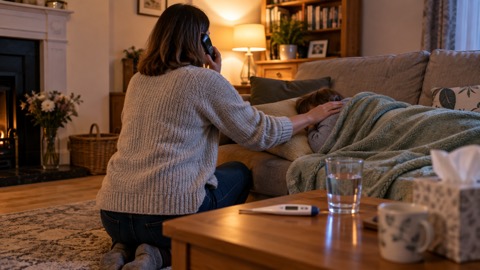
Most flu is managed at home, but there are clear points at which you should ask for help. Ask for an urgent GP appointment or get help from NHS 111 if you or your child have symptoms of flu and you are worried about your baby's or child's symptoms, you are 65 or over, you are pregnant or have recently given birth, you have a long-term medical condition, you have a weakened immune system, you feel very unwell, you feel short of breath, or your symptoms do not improve after 7 days1.
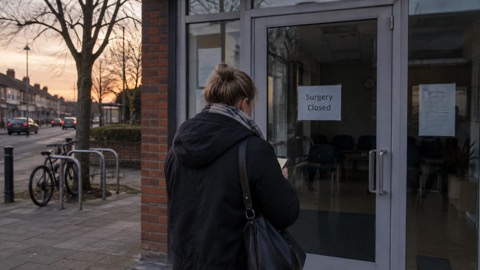
NHS 111 is for urgent but not life-threatening health advice, or when your GP surgery is closed and you cannot get help elsewhere17. Contact them online or on the phone: NHS 111 is sometimes the fastest way to get advice on non-life-threatening emergencies18. If you need urgent health advice, help with symptoms, or access to out-of-hours GP services, call 111 or visit the NHS 111 website19.
| Situation | Who to contact |
|---|---|
| Flu symptoms and you are worried, 65 or over, pregnant, have a long-term condition, or are not improving after 7 days | Urgent GP appointment or NHS 1111 |
| Urgent advice when the GP surgery is closed | NHS 111 online or on 11117 |
| Life-threatening emergency | 99920 |
For more on the routes available, see NHS 111: What It Can Help With and How to Use It and When to Call 111 and When to Call 999. If you are looking after someone who is ill, the checklist for caring for someone ill at home sets out what to keep ready, and Stopping Infections Spreading at Home covers the wider habits that protect a household.
Sources (20)
- Flu, NHS, 2026-02-03
- Flu, Derbyshire County Council, 2026-10-29
- Flu, Derbyshire County Council, 2026-10-29
- Staying safe over the summer, Healthier Together, 2026-10-29
- Measles, Derbyshire County Council, 2026-10-29
- Pandemic and infectious disease, Greater Manchester Combined Authority, 2026-10-29
- Food poisoning and waterborne infections | Shropshire Council, Shropshire Council
- Your Health Guide Winter 2025, NHS Western Isles, 2025-12
- Are You Ready booklet, Culham Parish Council, 2025-09
- Health protection, Devon County Council, 2026-10-29
- Health and wellbeing, Devon County Council, 2026-10-29
- Antimicrobial resistance, Prepare campaign, 2026-10-06
- Get the right help and support, South Western Ambulance Service NHS Foundation Trust, 2026-10-29
- Supporting vulnerable people before and during cold weather, GOV.UK, 2025-09-24
- Keeping cool in heat waves, Oxfordshire County Council, 2026
- Hot weather advice, nidirect, 2026-10-05
- Infectious disease outbreaks, Prepare campaign, 2026-10-12
- Wellbeing and safety, Surrey County Council, 2026-10-28
- Storm preparation, Cornwall Council, 2026-10-29
- Fire safety, Greater Manchester Fire and Rescue Service, 2026-10-29
 Medicine Cabinet Checklist
 Sick at Home Supplies Kit
 Caring for Someone Ill at Home
 How Long to Stay Home With COVID
 Time Off After Sickness
 How Long to Wash Your Hands
 When to Call 111 or 999
 When Your GP Is Closed
 Disposing of Unused Medicines
 Medicines in a Heatwave
 Taking Someone Else's Medicine
 Ordering Repeat Prescriptions
 Treating Dehydration at Home
 Cold-Health Alerts Explained
 The Glass Test for Meningitis