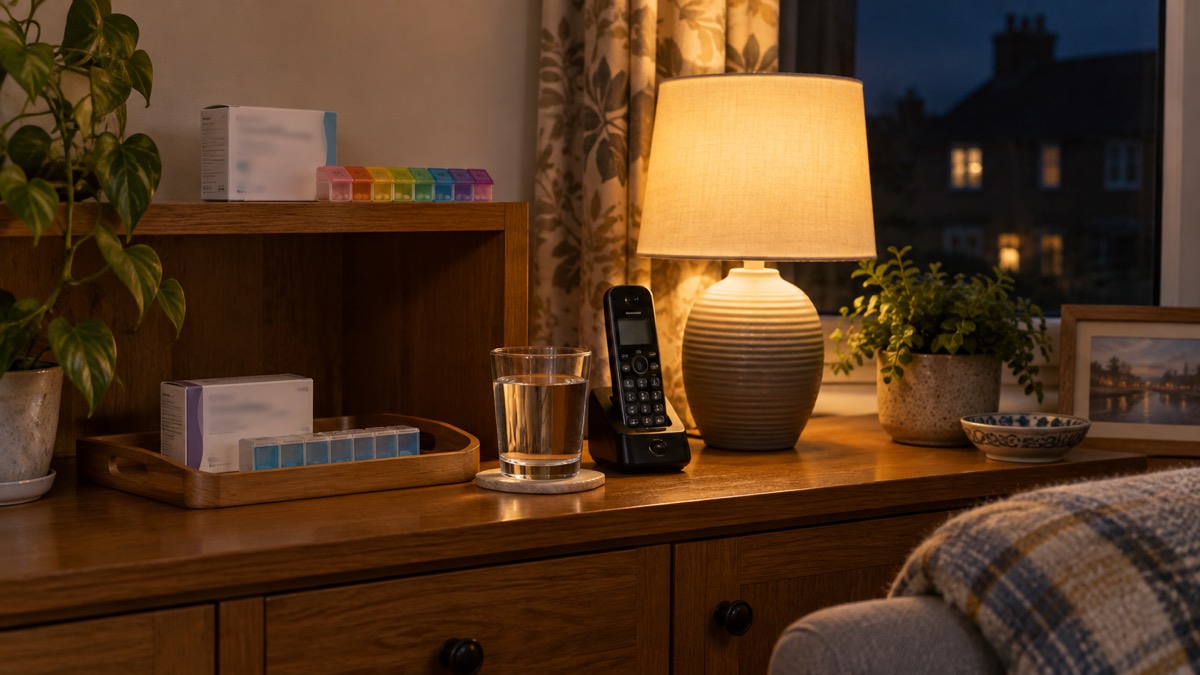
No. Prescription medicine is only for the person it is prescribed to, and taking someone else's can cause real harm. Prescribed medicines should only be used by the people for whom they have been prescribed1, and the advice from NHS services is blunt: if it is not prescribed for you, do not take it, ever2.
If you have run out of your own medicine, the answer is not a relative's leftovers. It is a pharmacist. If you run out of your regular medicine and your GP practice is closed, there are ways to get an emergency supply3, and pharmacists can help with minor illnesses and also give you an emergency supply of some medicines if you have run out4. Contact NHS 111 by phone or use its online emergency prescription service, and it will tell you which pharmacy to go to5.
The same rule applies in reverse: do not hand your own medicines to anyone else, and do not keep medicines that are no longer needed. Those with quantities of out-of-date or no longer used prescribed medications are encouraged to dispose of them safely by returning them to their GP practice or local pharmacy6.
The law says prescription medicine is only for the person it is prescribed to
The principle is simple and it runs through all NHS advice: prescribed medicines should only be used by the people for whom they have been prescribed1. Take medication exactly as prescribed8, and set a positive example by taking your medications only as prescribed9. This is not a technicality. A prescription records a decision about one person's condition, their other medicines, their age and their kidney and liver function. None of that transfers to you.
The law sits behind this in a particular way. Advertising any prescription medication to the public is banned in the UK10. The decision about who takes what belongs with a prescriber, not with a household swapping supplies.
There is one practical exception that people often confuse with sharing: collection. The Medicines and Healthcare products Regulatory Agency advises that if you are unwell or unable to collect your prescription, you should arrange for a family member to collect it for you11. Collecting a prescription for someone is fine. Taking their medicine is not.
If you are prescribed medicine and the weather turns hot, keep taking it. You should continue taking all of your prescribed medicines unless advised not to by a medical professional12. The same applies in an emergency: the answer to disruption is to protect your own supply, not to borrow someone else's. Our guide to keeping enough prescription medicine at home sets out how to do that.
Why someone else's medicine can harm you
Taking someone else's medicine can cause severe allergic reactions, dangerous interactions with other medications, overdose and poisoning, organ failure, and death2. That list is not a worst case invented to frighten people; it is the standard warning from NHS medication safety campaigns, and it applies to ordinary-looking tablets as much as to anything stronger.
Interactions are the part most people underestimate. Make sure you seek advice from a pharmacist if you are taking other medications as they can interact with each other13. Apply caution around taking multiple medicines that have the same or similar ingredients, for example many medicines for coughs and colds contain paracetamol; ask at your local pharmacy if you are unsure14. A borrowed painkiller plus your own cold remedy can add up to more of the same ingredient than you intended.
Some medicines carry specific risks that make sharing especially dangerous. If you take anti-seizure medication, you should not take any other medicines, including over-the-counter or complementary medicines such as St John's Wort, without speaking to your GP or epilepsy specialist, as they could interact dangerously and cause a seizure15.
Running out of your own medicine: get an emergency supply from a pharmacist
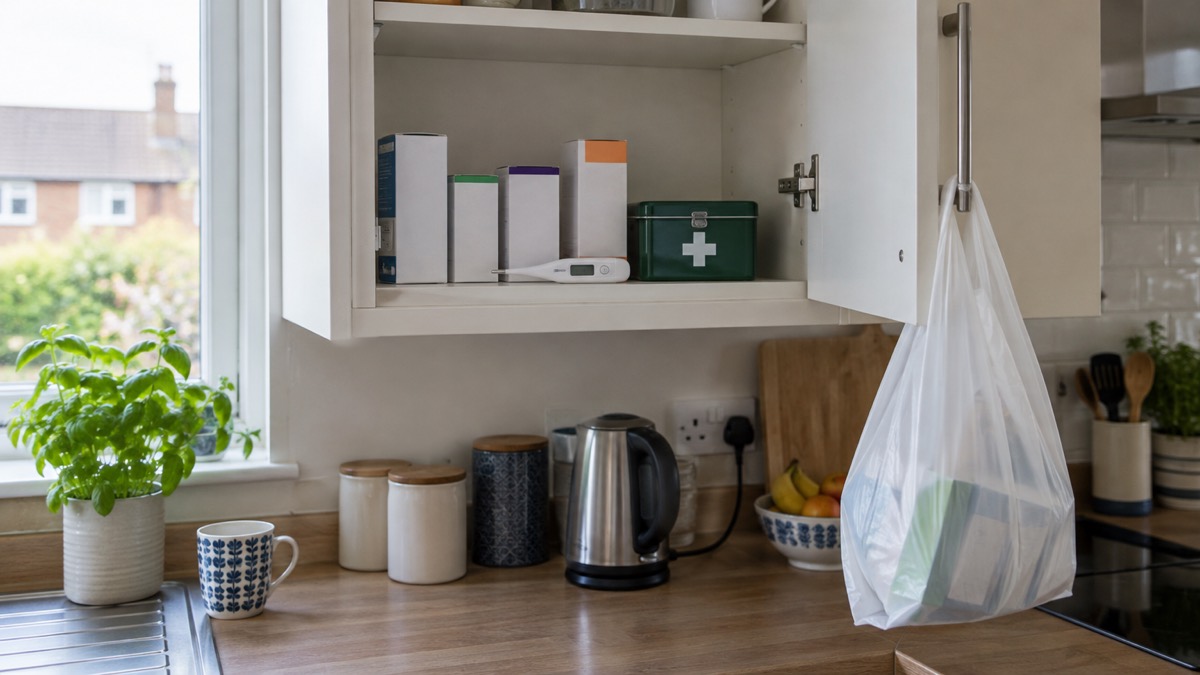
Running short is a common and understandable problem, and there is a proper route through it. If you run out of your regular medicine and your GP practice is closed, there are ways to get an emergency supply3. If you already have a prescription and urgently need the medicine, you can get it from any pharmacy as long as they have it in stock; some pharmacies are open until midnight or later, even on public holidays16.
There are two slightly different routes, and it helps to know which one you are on:
- You have a prescription already. Take it to any pharmacy that stocks the medicine16.
- The prescription has not reached the pharmacy. In the rare case that a prescriber cannot get a prescription to the community pharmacist quickly enough, a community pharmacist may issue an emergency prescription at the request of the prescriber5.
- You are not sure what to do. Contact NHS 111 by phone or use the online emergency prescription service, and NHS 111 will tell you which pharmacy to go to or direct you to an urgent care centre5. Pharmacists can help with minor illnesses and also give you an emergency supply of some medicines if you have run out4.
Two limits matter. Many controlled medicines, such as morphine or diamorphine, cannot be supplied without a prescription by a pharmacist in an emergency5. Only a few controlled medicines can be prescribed in an emergency, such as those for epilepsy, and only up to 5 days supply can be given5.
The out-of-hours service is not a repeat prescription service: it is for urgent medical problems only, and providing repeat medication may delay treatment of patients with an acute problem17. Plan ahead rather than relying on it. Our guide to running out of prescribed medicine walks through the pharmacy route in more detail.
When NHS systems are down: getting your prescription during an outage
Power cuts, IT failures and shortages can all interrupt the normal route from GP to pharmacy. The first thing to know is that the pharmacy network is wider than your usual shop: if you already have a prescription and urgently need the medicine, you can get it from any pharmacy as long as they have it in stock16. If one pharmacy cannot help, ask another.
During a national medicines shortage, your pharmacy or GP may ask you to do one of several things: go to another pharmacy to collect your medicine; accept a different formulation, such as a tablet instead of a capsule; accept a smaller quantity so you need to collect more often; or go back to your GP for a new prescription for an available medicine if the pharmacy and GP cannot sort it over the phone18. None of these means you should substitute something from your own cupboard. Our guide to medicine shortages explains why they happen.
If anyone in your household depends on powered medical equipment, the planning is different and needs doing before an outage. If you use medical equipment that requires a power supply, make a plan with your care provider or clinical care teams now about what will happen in a power cut; the plan should set out what action you or someone you care for needs to take and who to contact if there is a power outage19. Speak to your care team to put a plan in place for what action to take and who you can ring 24/7 if there is a device-related problem during a power outage20. If a medical device needs water to function, talk to your care team and make a plan for a water outage21.
Keeping your household's medicines ready for an emergency
The aim is not a stockpile. It is a small, current, findable supply that covers the gap between running low and getting more. Follow prescribing directions23, and order repeats in good time rather than building up leftovers.
Emergency planning guidance across the UK is consistent about what to keep together:
- Medication in the household emergency pack24.
- Prescription medications and glasses if required in the emergency kit25.
- Essential medication and a first aid kit at home in case of an emergency26.
- Your medicines and insurance documents to hand27.
- Your medication and, if possible, any medical equipment, taken with you if you have to leave28.
If you care for someone, write it down. A carers' emergency plan should include how you support your loved one, their needs including details of any medications they need to take and where these are stored29. That single line is what lets a neighbour, a relative or a paramedic help properly if you are not there.
For anyone whose medicine is life-sustaining, there is a specific question worth answering in advance: if there were a 7-day disruption in access to that medication, how would you manage7? Write the answer down, including which pharmacy you would try and who could collect for you.
Our medicine cabinet checklist covers the over-the-counter items worth keeping, and storing medicines safely covers temperature, children and expiry dates.
Giving medicines to children, and other household traps
Children are where household medicine mistakes most often happen. Check medicines and doses with your pharmacist and read the instructions carefully before giving anything to your child31. Always give medicines to young children yourself instead of letting them take it23. If a child is distressed or uncomfortable with flu, give paracetamol or ibuprofen, checking the packaging or leaflet or speaking to a pharmacist or GP if unsure32. What you must not do is halve an adult tablet on guesswork.
Antibiotics deserve their own line. Do not share antibiotics with others or take antibiotics that were not prescribed to you10, and follow the advice of a professional on how to take antibiotics that have been prescribed to you, taking the correct dose at the right times and completing the prescribed course10.
Disposing of what you no longer need is part of keeping the household safe. Those with quantities of out-of-date or no longer used prescribed medications are encouraged to dispose of them safely by returning them to their GP practice or local pharmacy6. After a flood, dispose of contaminated food or medicines safely; you can take your medicine to a pharmacy for disposal, or your vet can dispose of any contaminated medicine for your pet33. Our guide to disposing of unused medicines has the detail.
Where to get urgent help with medicines
| Situation | Who to contact |
|---|---|
| You have taken someone else's medicine and are conscious and stable | NHS 111 by phone or www.111.nhs.uk2 |
| You have run out and your GP is closed | NHS 111 phone or online emergency prescription service, which will tell you which pharmacy to go to5 |
| You need a pharmacy out of hours | Some pharmacies are open until midnight or later, even on public holidays16 |
| You need urgent medical help that is not an emergency | An urgent care centre, as directed by NHS 1115 |
| You are seriously unwell | 999 |
Pharmacists are the most underused source of help here. In some cases pharmacists can also help get you emergency medicine34, and they can advise on interactions between medicines you are already taking13. GP appointments are available seven days a week in the evening, on weekends and on bank holidays34, so a medicine problem on a Sunday is not automatically an out-of-hours problem.
If you have been in hospital, ask what support is available on discharge: in some areas this includes accessing medicine, collecting and delivering prescriptions from a pharmacy or supermarket35. Arrangements differ across the UK, so ask your own hospital team what applies where you live.
For anything beyond first aid, or if you are unsure whether a symptom is serious, our guides to NHS 111 and when to call 111 and when to call 999 set out which service fits. If a relative is older, disabled or medically dependent, extra help in an emergency covers the support available to them.
Sources (35)
- Chemical safety in the home, nidirect, 2026-04-14
- Medication safety, NHS Lincolnshire ICB, 2026-10-29
- Health advice for public holidays, NHS inform, 2026-09-15
- NHS 111 online, North East Ambulance Service NHS Foundation Trust, 2026-10-29
- Emergency supply of medication, NHS Nottingham and Nottinghamshire ICB, 2026-10-29
- Your Health Guide, Winter 2025, NHS Western Isles, 2025-12
- Emergency kits and grab bags, Central Bedfordshire Council, 2026
- Medication and medical devices, West Yorkshire Fire and Rescue Service, 2026-10-29
- Medicines and tablet safety, Just One Norfolk NHS, 2026-10-29
- Health: antimicrobial resistance, Prepare campaign, 2026-10-06
- MHRA safety notice, Medicines and Healthcare products Regulatory Agency, 2023-05-09
- Beat the heat: staying safe in hot weather - GOV.UK, UK Health Security Agency (GOV.UK)
- Keep well stocked medicine cabinet at home, NHS Black Country ICB, 2026-10-28
- Medication safety, Worcestershire County Council, 2026-10-29
- Epilepsy, NHS inform, 2026-10-28
- When you need urgent healthcare, NHS Cheshire and Merseyside, 2026-08-11
- Out-of-hours service, NHS Tayside, 2026-10-29
- Advice for patients during a medicines shortage, NHS Specialist Pharmacy Service, 2025-11
- Power cuts, Prepare campaign, 2026-10-21
- What to do in a power cut, Met Office, 2026-10-25
- Loss of essential services, Greater Manchester Combined Authority, 2026-10-29
- Water supply interruptions or outages, Prepare campaign, 2026-10-12
- Storing medicines at home, United Lincolnshire Hospitals NHS Trust, 2026
- Prepare for emergencies, Dumfries and Galloway Council, 2026
- Get help and advice in an emergency, Lincolnshire County Council, 2026-10-29
- Emergency kit checklist, Neath Port Talbot Council, 2026-10-29
- Preparing yourself for flooding incidents, London Resilience Partnership, 2026-10-25
- ICE template, Surrey County Council, 2026-10-29
- Carers' handbook: emergency plan, Oxford Health NHS Foundation Trust, 2025-09-16
- Summer health, NHS inform, 2026-08-06
- What to keep in your medicine cabinet, NHS Hertfordshire and West Essex, 2026-10-28
- What to do if you have flu symptoms, London Ambulance Service NHS Trust, 2026-08-10
- After a flood, London Fire Brigade, 2026-10-25
- Urgent care, NHS North East London ICB, 2026-04-14
- Hospital discharge, Nottinghamshire County Council, 2026-10-29
 Medicine Cabinet Checklist
 Sick at Home Supplies Kit
 Caring for Someone Ill at Home
 How Long to Stay Home With COVID
 Time Off After Sickness
 Stopping Flu Spreading at Home
 How Long to Wash Your Hands
 When to Call 111 or 999
 When Your GP Is Closed
 Disposing of Unused Medicines
 Medicines in a Heatwave
 Ordering Repeat Prescriptions
 Treating Dehydration at Home
 Cold-Health Alerts Explained
 The Glass Test for Meningitis