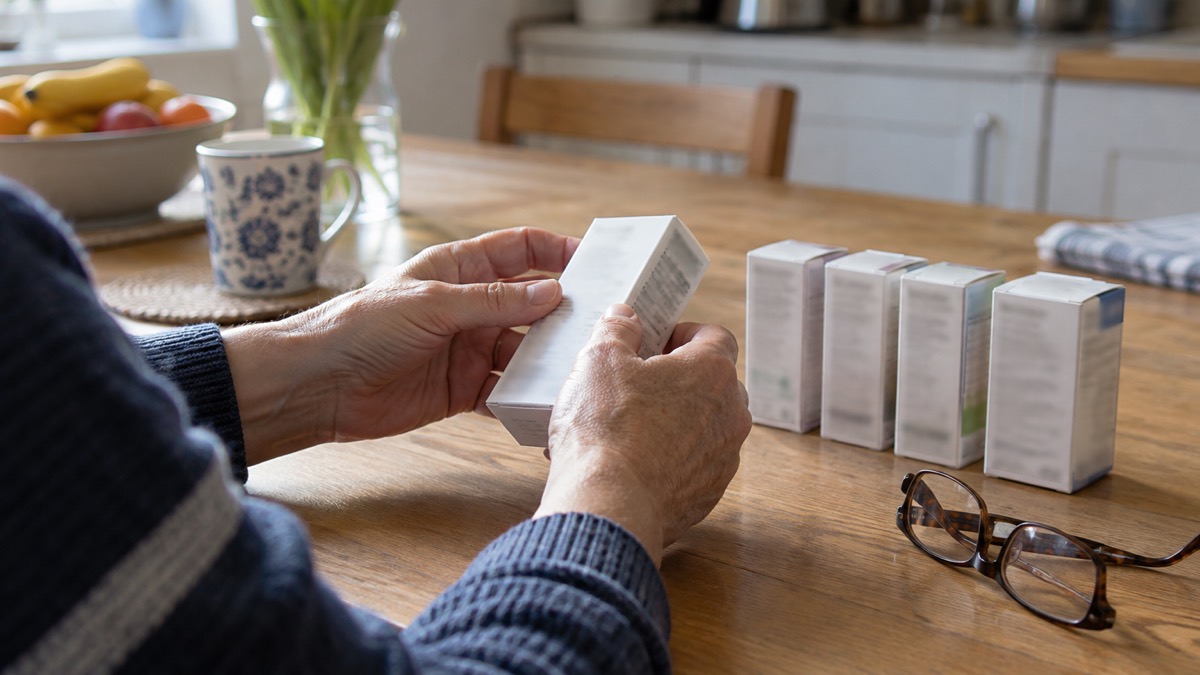
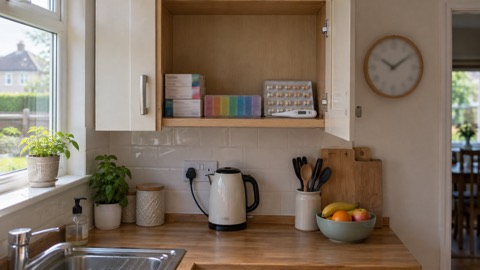
A well-stocked medicine cabinet means a headache, a cold or a bout of sickness does not send you out in bad weather or to a busy pharmacy. NHS guidance is consistent on the core: keep a small supply of over-the-counter medicines at home, covering pain relief, cold remedies and oral rehydration salts1. Add a thermometer, plasters and antiseptic cream, and you can treat most everyday illnesses at home2.
The aim is a small, in-date supply, not a stockpile. Medicines go out of date, so do not overstock your cabinet, and always follow the advice on the pack3. One NHS source goes further and advises limiting the amount of paracetamol and ibuprofen you keep in the house4. Before winter, check you have enough over-the-counter medicines for common winter issues such as colds and sore throats, and that they are in date5.
This checklist sets out what to keep, what each item is for, how much is sensible, and how to store and check it so it is ready when you need it. It also covers medicines for children and when to ask a pharmacist rather than guess.
The medicine cabinet checklist
Work through this list and tick what you already have. Each item earns its place because it treats something common, and each is available over the counter from a pharmacist8.
Pain relief: paracetamol and ibuprofen
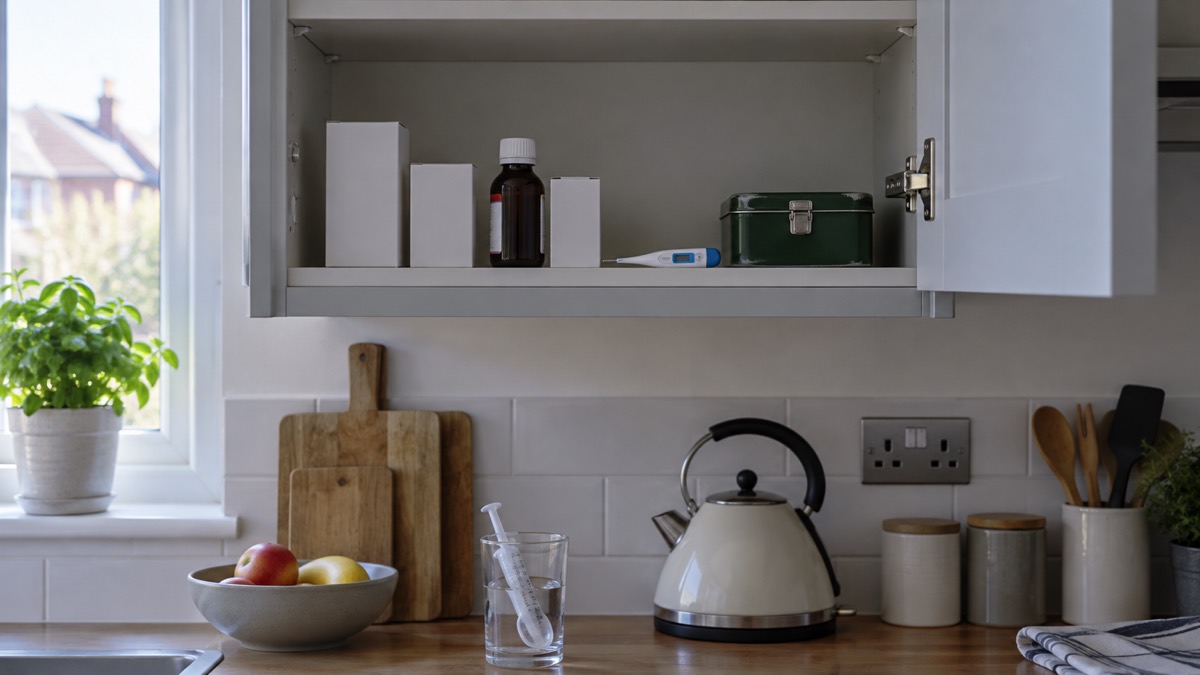
Paracetamol and ibuprofen are the backbone of the cabinet. NHS guidance describes painkillers like paracetamol and ibuprofen as highly effective at relieving most minor aches and pains, such as headaches and period pain, and says they help reduce aches, pain and high temperatures in minor ailments such as the common cold6. If you have flu, official advice is to take paracetamol or ibuprofen to lower your temperature and treat aches and pains14.
Keep both if they suit you, but keep the quantity modest. One NHS source advises limiting the amount of paracetamol and ibuprofen you have in the house4. That is partly about expiry: a large bottle that sits unused for years is more likely to go out of date before you need it.
Ibuprofen is not right for everyone. NHS guidance says ibuprofen must be taken with caution if you have certain conditions, such as asthma, and to check with your pharmacist if in doubt9. If you are unsure whether either medicine suits you, ask before you buy.
| Medicine | What it is for | Who should check first |
|---|---|---|
| Paracetamol | Minor aches and pains, headaches, period pain, reducing temperature in colds and flu6 | Anyone unsure of the correct dose, especially for children13 |
| Ibuprofen | Minor aches and pains and reducing temperature; also an anti-inflammatory6 | People with conditions such as asthma; check with a pharmacist if in doubt9 |
Medicines for children: ask your pharmacist which to keep
Children need their own versions of common medicines, and the dose depends on age. NHS guidance lists liquid paracetamol for children alongside adult paracetamol, ibuprofen, cold and flu remedies, antihistamines and medicine for indigestion, diarrhoea or constipation13. These are all available over the counter from a pharmacist8.
Ask your pharmacist which children's medicines to keep and how much to give for your child's age. NHS guidance suggests asking your pharmacist what medicines should be in your cabinet to relieve symptoms of common winter illnesses such as colds, sinusitis or ear infections16. A pharmacist can also confirm whether a medicine is suitable for a child at all.
Storage matters more with children in the house. Keep medicines out of the reach of children8, in a safe place where children cannot see or reach them, to prevent accidents and overdoses17. Always give medicines to young children yourself instead of letting them take it18.
Keeping a small supply ready for winter illnesses
Winter is when the cabinet earns its keep. Colds, flu, sore throats and sickness circulate, and icy weather or the Christmas holidays can make it harder to get out. Official advice is to make sure you have enough medicines available in case you are unable to get out in icy or cold weather and over the Christmas holiday period20. Several NHS sources advise keeping a stock of over-the-counter cold and flu medication to relieve symptoms21, and one suggests keeping a small supply of over-the-counter medications to help relieve symptoms22.
If you do become unwell, official advice for flu-like symptoms is to stay at home until your symptoms have gone, rest, drink plenty of fluids, and take over-the-counter medicines such as paracetamol following the instructions on the medicines23. For a cold, get plenty of rest, stay hydrated, and consider taking over-the-counter medicines to ease symptoms24.
Oral rehydration salts deserve a place for sickness and diarrhoea. NHS guidance says they help restore the body's natural balance of minerals and fluid lost through fever, diarrhoea and vomiting, but they do not fight the underlying cause of illness, such as a virus or bacteria7. They replace what is lost rather than treat the infection, which is why they sit alongside, not instead of, other care.
How much to keep, and how to check it
A small supply is the consistent message. NHS guidance recommends keeping a small supply of over-the-counter medicines at home1, and one source warns that medicines go out of date, so do not overstock your medicine cabinet3. Enough to see you through a few days of illness, or a few days when you cannot get out, is the aim; one source suggests enough medication to last you a few days25.
Expiry dates are the reason not to hoard. NHS guidance says to always check the expiry date on medicines and not to keep them for future use, as they lose their effect or become dangerous26. Check the cabinet regularly, and before winter confirm your medicines are in date5.
When something is out of date, do not use it and do not put it in the bin. NHS guidance says to take it to your pharmacy, where it can be disposed of safely7. The same applies to medicines you no longer need.
| Task | When | Why |
|---|---|---|
| Check expiry dates | Regularly, and before winter5 | Out-of-date medicines lose their effect or become dangerous26 |
| Take expired medicines to a pharmacy | As soon as you find them | Pharmacies dispose of them safely7 |
| Check you have enough for a few days | Before winter and holidays20 | Icy weather or holidays can stop you getting out20 |
| Limit paracetamol and ibuprofen | When stocking up | Avoid a large unused supply going out of date4 |
Where to store medicines safely
Store medicines out of the sight and reach of children, in a cool, dark place27. NHS guidance describes a high, lockable cupboard in a cool, dry place as ideal6, and another source says all medicines should be stored in a box or cupboard with a lock and kept well out of the reach of children26.
Temperature matters. NHS guidance says most medicines should be kept below 25°C, and to check the medicine leaflet for storage advice and keep medicines in a cool place out of direct sunlight28. Some medicines need to be refrigerated, kept out of light, or in specific containers18. If a medicine needs the fridge, keep it away from water drips and possible food contamination, ideally in a clean, dry plastic container18.
Keep medicines in their original packaging so the instructions and expiry date stay with them. The "Keep SAFE" guidance for households with children sets out the principles: keep things out of reach and out of sight, store medicines in locked containers and use safety caps, keep medicines in their original packaging, use products as directed, and take medicines to the pharmacy for proper disposal19.
Getting advice from a pharmacist
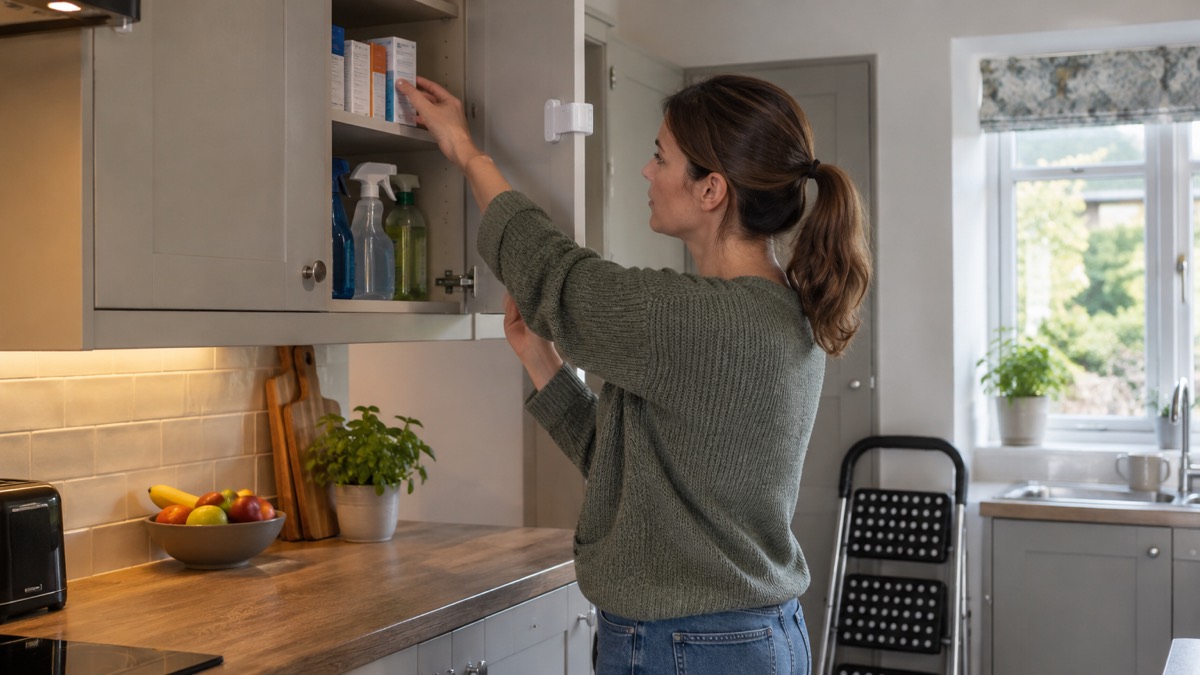
You do not have to work out the cabinet alone. NHS guidance says your pharmacist can advise on the most suitable medicines to keep in the house medicine cabinet3. They can also tell you what to keep for common winter illnesses such as colds, sinusitis or ear infections16, and advise on medicines for children13.
A pharmacist is also the right person to ask when a medicine might not suit you, such as ibuprofen if you have asthma9. And they are where you take medicines you no longer need, for safe disposal7.
For more on what a pharmacist can treat and when to use one, see What Is Pharmacy First and What Can a Pharmacist Treat?. If you need urgent help and are not sure where to go, NHS 111 can direct you, and When to Call 111 and When to Call 999 sets out the difference.
Sources (28)
- Take care of yourself in winter, Staffordshire County Council, 2026
- Keep winter well, Birmingham Community Healthcare NHS Trust, 2026-10-28
- Your Health Guide Winter 2025-6, NHS Western Isles, 2025-12
- Medication safety, Worcestershire County Council, 2026-10-29
- Stay Well this winter booklet, NHS England South, 2024-12
- Keep a well-stocked medicine cabinet at home, NHS Black Country ICB, 2026-10-28
- Which NHS service, NHS Somerset, 2026-01-13
- What to keep in your medicine cabinet, NHS Hertfordshire and West Essex, 2026-10-28
- What should you have in your medicines box?, NHS Leicester, Leicestershire and Rutland ICB, 2025-09
- Winter Wellness 2025-26 leaflet, NHS North East London ICB, 2025-11
- Prepare for winter, King Street Surgery, NHS Scotland, 2026-01-20
- Summer health, NHS Inform Scotland, 2026-08-06
- What to keep in your medicine cabinet, NHS Tayside, 2026-10-29
- What to do if you have flu symptoms, London Ambulance Service, 2026-08-10
- Self care, NHS Cheshire and Merseyside ICB, 2024-01-11
- When you need urgent healthcare, NHS North Cheshire and Mersey, 2026-08-11
- Medicines and tablet safety, Just One Norfolk NHS, 2026-10-29
- Storing medicines at home, United Lincolnshire Hospitals NHS Trust, 2026
- Poisoning, NHS Frimley Healthier Together, 2026-10-29
- Staying well in winter, Derbyshire County Council, 2026-10-29
- Pandemic and infectious disease, Greater Manchester Combined Authority, 2026-10-29
- Community Risk Register 2025, North Yorkshire Council, 2025-02
- Don't Panic, Prepare, West Yorkshire Prepared, 2020-11
- Self care at home advice, South Western Ambulance Service NHS Foundation Trust, 2026-10-29
- Easy Read: Disabled Persons and Carers, UK Government Be Ready campaign, 2024-07
- The family medicine chest, Vallance Medical, NHS, 2026
- Self care advice, NHS Birmingham and Solihull ICB, 2026-10-28
- Weather safety, Oxford Health NHS Foundation Trust, 2026-09-18
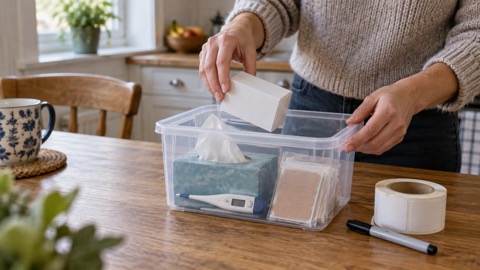 Sick at Home Supplies Kit
 Caring for Someone Ill at Home
 Medicine Supply Checklist