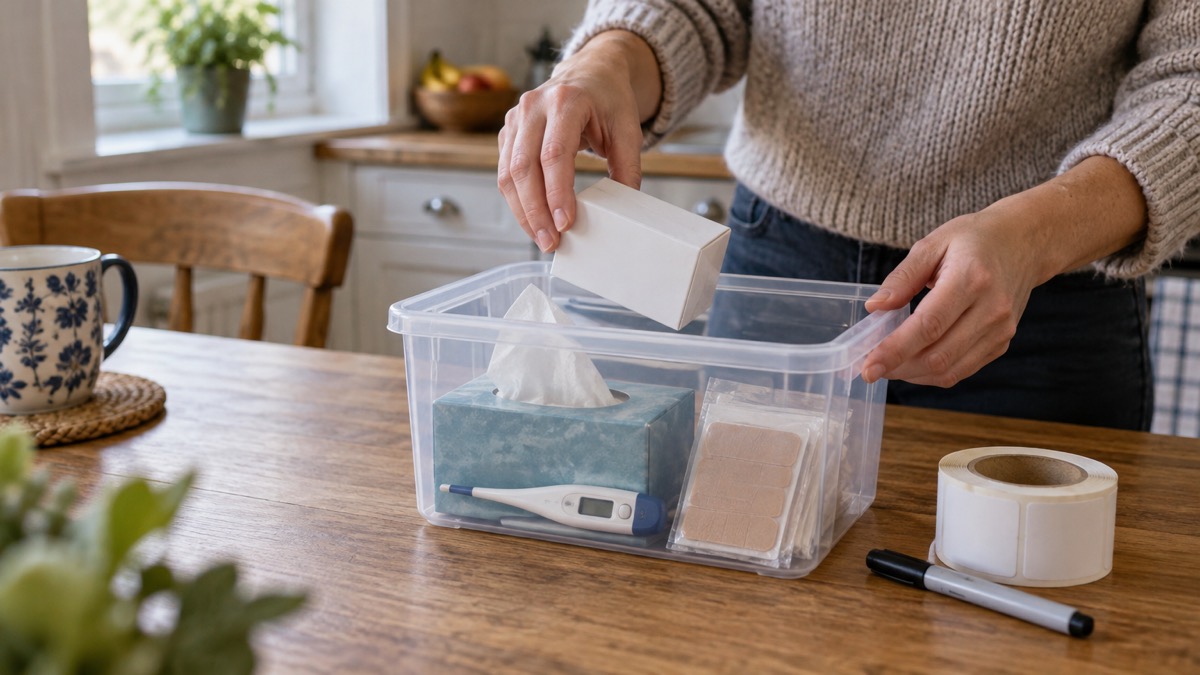
If you are ill at home, the things that make the difference are already in the cupboard: pain relief, a cold and flu remedy, something for an upset stomach, rehydration sachets, a thermometer and a first aid kit. NHS guidance for winter sets out exactly this sort of list, and adds that minor illnesses can often be treated at home, with a pharmacist able to advise and supply medicines over the counter1.
The aim is not a cupboard full of medicine. It is enough to see you through a few days when you cannot get out, without overstocking things that will expire before you need them. Official advice is to keep a small supply of long-life food, drinking water, toiletries and prescription medicines at home, and to think about extra supplies if you have babies, young children or pets1. Medicines go out of date, so buy what you will use and check dates as you go3.
This page is a checklist you can work through in an afternoon, followed by the reasoning behind each group of items: what a first aid kit and medicine cabinet should hold, how to keep them ready, and when treating yourself at home is no longer the right answer.
The supplies checklist
Work through this list and tick what you already have. Check your cupboards first to see what essentials you already keep at home, as the government's Be Ready campaign advises, then fill the gaps8.
A first aid kit and a well-stocked medicine cabinet handle minor ailments
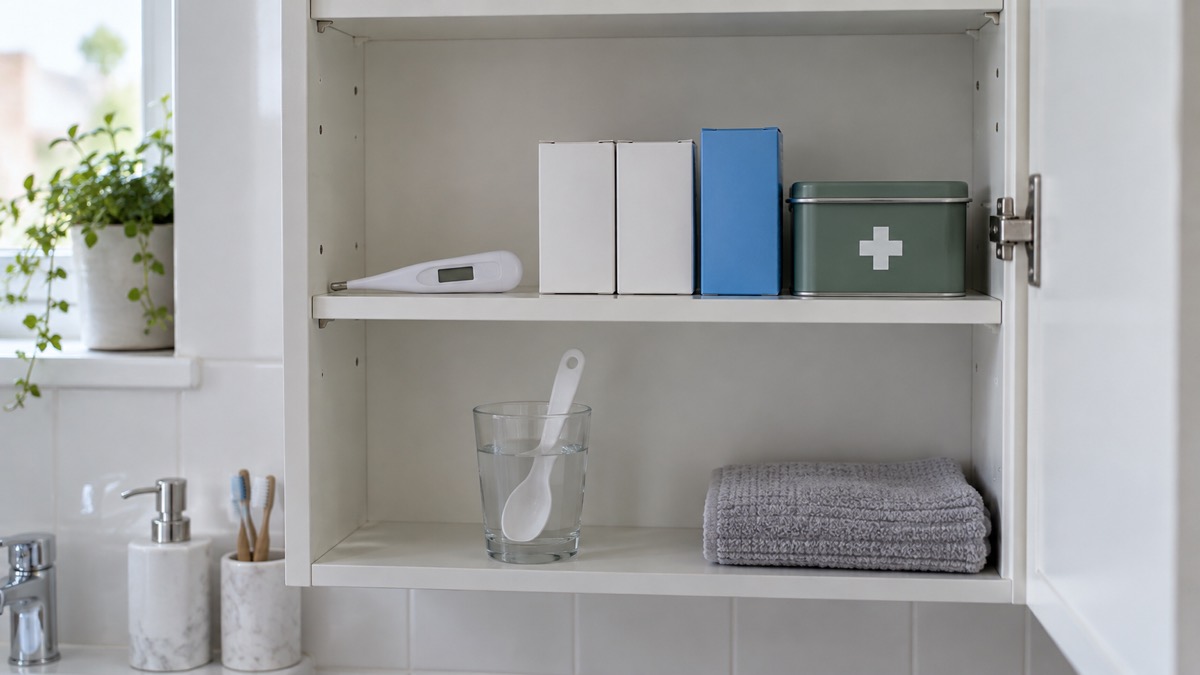
The point of both is the same: to deal with the small things at home so they do not become a reason to go out, and so a minor injury or illness does not sit untreated while you wait for a GP appointment. NHS guidance is direct about the first aid kit: it is important to have a well-stocked one in your home so you can deal with minor accidents and injuries4. The same principle applies to medicines. Many illnesses and injuries can be treated at home, so keeping a well-stocked first aid kit and medicine cabinet is very handy12.
What goes in the cabinet is fairly consistent across NHS sources, though no two lists are identical. The table below sets out the items that recur, and what each is for.
| Item | What it is for | Source |
|---|---|---|
| Paracetamol and/or ibuprofen | Pain and fever relief | 9 |
| Cold and flu remedies | Common winter illnesses | 8 |
| Antihistamines | Allergies | 8 |
| Anti-diarrhoeal medicine | Diarrhoea | 13 |
| Indigestion remedy (antacids) | Heartburn and indigestion | 8 |
| Mild laxatives | Constipation | 11 |
| Thermometer | Checking for fever | 8 |
| Plasters, bandages, antiseptic wipes and cream | Cuts, grazes and minor wounds | 14 |
A well-stocked first aid kit at home lets you deal with minor accidents and injuries6. If you are out and about, a small first aid kit helps with minor ailments like cuts, grazes and blisters15.
If you are unsure what to buy, ask. NHS guidance suggests asking a pharmacist what over the counter medication they recommend having available16, and specifically what medicines, including paracetamol and ibuprofen, should be in your cabinet to relieve symptoms of common winter illnesses such as colds, sinusitis or ear infections17. A pharmacist can also tell you what is suitable for children in your household.
Keeping your medicine cabinet ready
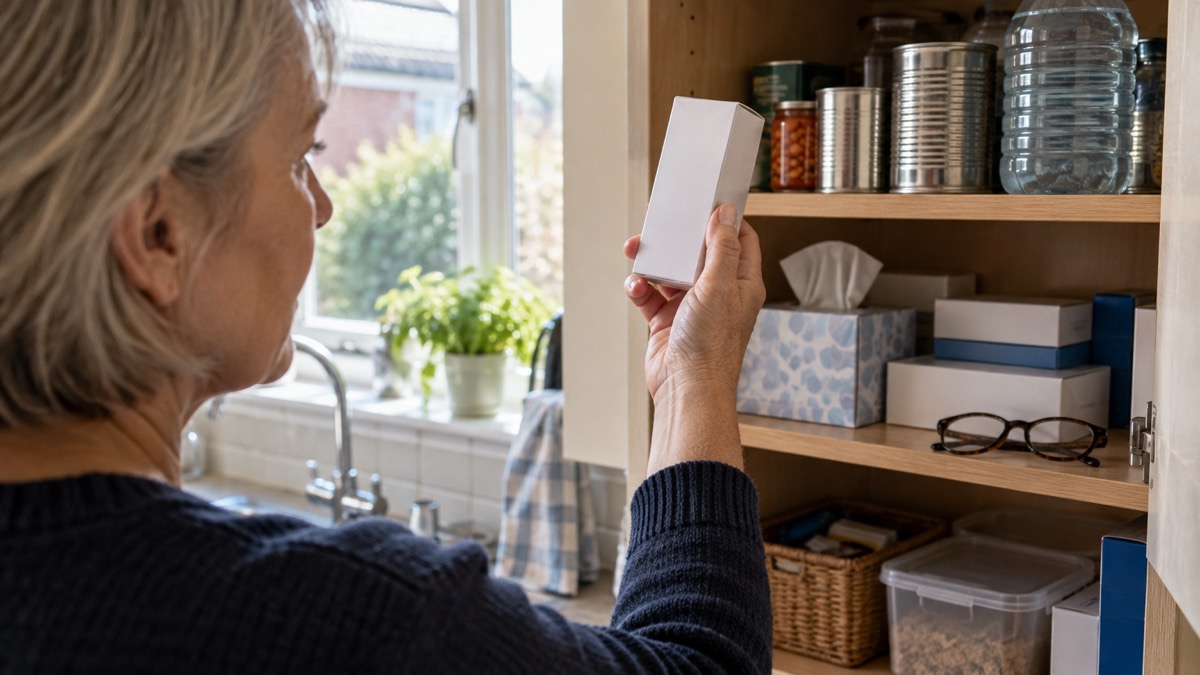
A cabinet is only useful if what is in it is in date and you know where it is. The single most common failure is a cupboard full of half-used packs that went out of date years ago. NHS guidance is blunt: medicines go out of date, so do not overstock your medicine cabinet, and always follow the advice on the pack3. Another NHS source puts it as a rule: watch expiry dates, and do not keep or use medicines past their sell-by date6.
A simple routine keeps this under control:
- Check dates at the start of winter. NHS ambulance service guidance suggests checking your home medicines cabinet and restocking with essentials including cold remedies, painkillers, indigestion tablets and diarrhoea and constipation remedies18.
- Buy small. A small pack you will finish beats a large one that expires. Do not overstock3.
- Write down your prescriptions. Keep a list of current medication, or spares so long as they do not go out of date5.
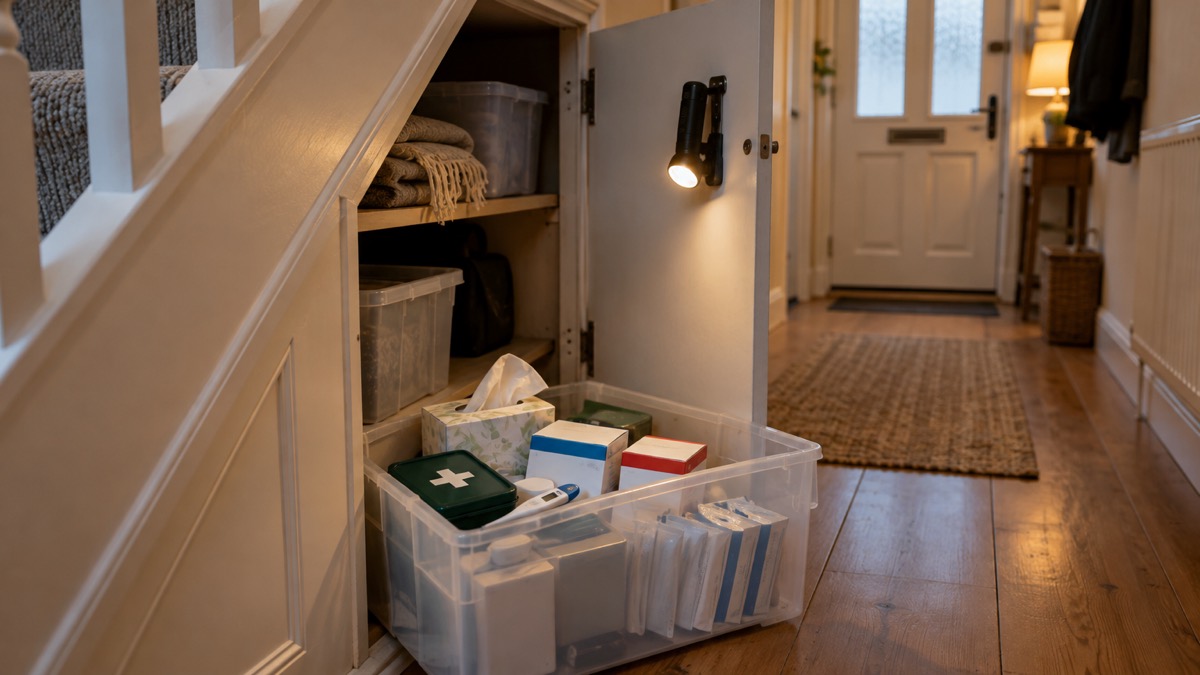
- Keep medicines where you can find them in the dark. A power cut or a night-time illness is not the moment to be searching. Have your medicines to hand, as London resilience guidance puts it19.
- Store them safely. Keep medicines out of reach of children and away from heat and damp, and follow the storage advice on the pack.
If you are ill and cannot get out, ask for help rather than going without. Official guidance for people isolating at home is to phone someone and ask them to leave food or medicine by your door7. The same applies to a neighbour or family member during any illness that keeps you in.
Treating colds, sore throats and other minor illness at home
Most of what keeps people at home is minor: colds, sore throats, coughs, sickness and diarrhoea. The treatment is largely rest, fluids and symptom relief, and the supplies above are what make that possible without a trip to the shops.
For a cold or flu-like illness, official guidance for people with respiratory symptoms is to get plenty of rest and drink water to keep hydrated, and to use medications such as paracetamol to help with symptoms20. The same guidance says to stay at home and avoid contact with others until you no longer have a high temperature or until you feel better, and to work from home wherever possible20. A sore throat is covered by the same approach: throat sweets from the cabinet, paracetamol for the pain, and fluids11.
If you do need to go out while unwell, official guidance suggests considering a well fitted face mask, avoiding crowded or poorly ventilated places such as public transport or large gatherings, and avoiding places where people may be at higher risk of serious illness such as hospitals and care homes20. At home, keep your distance from others where possible, and where it is safe, open windows to improve ventilation for at least 10 minutes after leaving a room20. There is more on this in Stopping Infections Spreading at Home: Hands, Cleaning and Fresh Air and Staying at Home When Ill: Keeping Your Household and Others Safe.
For sickness and diarrhoea, the cabinet items that matter are anti-diarrhoeal medicine and rehydration mixture15. Rehydration sachets are also listed in the standard winter cabinet1. If you are caring for someone else, the Checklist for Caring for Someone Ill at Home covers the practical side, and How to Treat Dehydration at Home explains what to watch for.
Food, water and the things that are not medicine
Being ill at home is often as much about not being able to shop as it is about medicine. Official advice is to keep a small supply of long-life food, drinking water, toiletries and prescription medicines at home, and to think about additional supplies if you have babies, young children or pets1. If you have a condition that makes going out harder, such as sickle cell disease, the advice is to make sure you have enough food and medication at home in case you cannot go out21.
A household emergency kit overlaps heavily with a sick-at-home kit. The standard list includes a first aid kit, essential medication and medical supplies, bottled water and ready-to-eat food that will not go off, a tin opener, spare glasses or contact lenses, toiletries and details of important medicines5. A torch and spare batteries matter too, so you can find what you need in a power cut14. If you want to build the wider kit, see Emergency Kit: What a UK Household Should Keep Ready and Emergency Food: A Household Guide to Stores, Safety and Meals Without Power.
Keep a small bag ready in case you have to go to hospital unexpectedly. NHS guidance suggests nightwear, toiletries, comfortable clothing, a phone charger, glasses, hearing aids and emergency contact details1.
When to seek help
Treating yourself at home has limits. Minor illnesses can often be treated at home, and pharmacists can offer advice as well as medication over the counter, but your GP surgery should usually be your first contact23. If you are not sure which service you need, NHS 111 can help: use a computer or tablet to go to 111.co.uk, or call 111, particularly if you feel worse7. There is more on this in NHS 111: What It Can Help With and How to Use It and When to Call 111 and When to Call 999.
The table below sets out the usual routes, in the order most people need them.
| Situation | Where to go |
|---|---|
| A minor illness or ailment | Treat at home; ask a pharmacist for advice1 |
| Something that is not settling | Your GP surgery, usually your first contact1 |
| Unsure, or feeling worse | NHS 111 online or by phone7 |
| An emergency | 999 |
In Wales, NHS 111 Wales offers the same triage role, and its guidance notes that many illnesses and injuries can be treated at home with a well-stocked first aid kit and medicine cabinet12. Arrangements for out-of-hours GP care differ across England, Scotland, Wales and Northern Ireland; if your surgery is closed, NHS 111 will direct you to the right service for where you live. For more on choosing between services, see Urgent Treatment Centres, Minor Injury Units and A&E: Which to Use.
If you are ill and need supplies, ask someone to leave them by your door rather than going out yourself7. If you are supporting a neighbour who is ill, the same principle works in reverse: leave shopping or medicine on the step, and check by phone that it has been collected.
Sources (23)
- Be prepared for winter emergencies, NHS Norfolk and Suffolk ICB, 2026
- Choose well and use the right health service, St George's University Hospitals NHS Foundation Trust, 2026
- Your Health Guide Winter 2025-6, NHS Western Isles, 2025
- What should I keep in my first aid kit, Collingwood Surgery, NHS
- Preparing for an emergency, Nottinghamshire County Council, 2026
- Medicine cabinet, Heaton Road Surgery, NHS, 2023
- Self-isolation: living with others, Oxford Health NHS Foundation Trust, 2020
- Get prepared for emergencies, UK Government, 2026
- Keep Winter Well | Website, Birmingham Community Healthcare NHS Foundation Trust
- The family medicine chest, Vallance Medical, NHS, 2026
- Prepare for winter, King Street Surgery, NHS Scotland, 2026
- What service do I need, NHS 111 Wales, 2021
- NHS Tayside, NHS Tayside
- Prepare your home for emergencies, Renfrewshire Council, 2025
- Summer health, NHS inform, 2026
- Alternatives to 999, Scottish Ambulance Service, 2026
- When you need urgent healthcare, NHS Cheshire and Merseyside, 2026
- SWASFT winter top tips and advice | SWAST Website, South Western Ambulance Service NHS Foundation Trust (SWASFT)
- Preparing yourself for flooding incidents, London Resilience Partnership, 2026
- Guidance for people with symptoms of a respiratory infection including COVID-19, Welsh Government, 2020
- Keeping warm and well in winter: sickle cell disease, University Hospitals of Liverpool NHS Foundation Trust, 2026
- Guidance for people with symptoms of a respiratory infection, Welsh Government, 2020
- Winter-Wellness-2025-26-leaflet-Barking-and-Dagenham-web.pdf, NHS North East London ICB
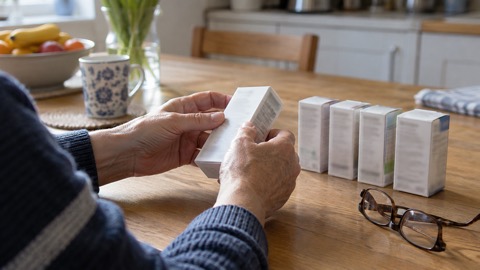 Medicine Cabinet Checklist
 Caring for Someone Ill at Home
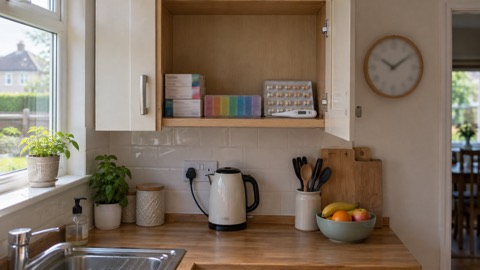 Medicine Supply Checklist