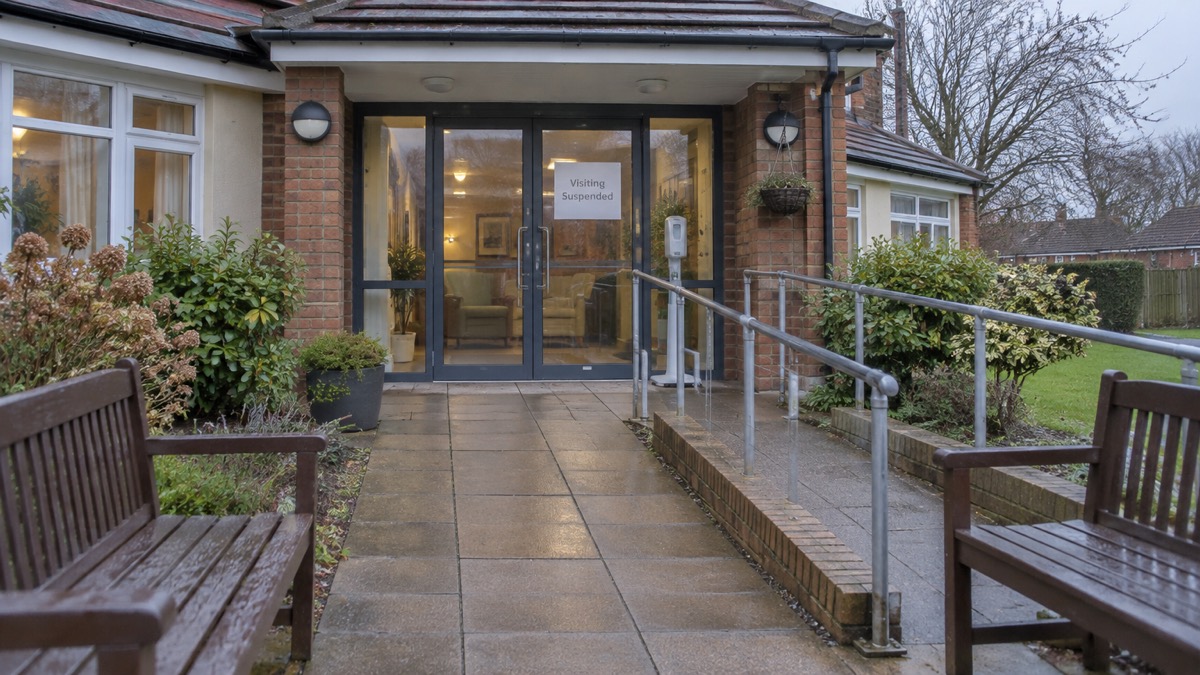
If you have had sickness or diarrhoea, the rule is simple: do not visit a hospital or care home until 48 hours after the last episode. The same wait applies if you have been in contact with someone who has had diarrhoea and vomiting in the last 48 hours1. Norovirus spreads very easily, and a visit from someone who is still infectious can take an outbreak into a ward or a home full of frail people.
For coughs, colds and flu the advice is softer but still clear. Official guidance says to stay away from people at increased risk of becoming more unwell from respiratory infections, if possible, and not to visit hospitals or care homes4. If you have flu symptoms, stay at home if you can5. A mild illness for you can be a serious one for a resident.
This page sets out when to stay away, how ward closures and visiting restrictions work during an outbreak, how to keep in touch when you cannot visit, and how to visit safely when you do go. It covers England first, with the differences in Scotland, Wales and Northern Ireland noted where they matter.
Stay away for 48 hours after sickness or diarrhoea stops
The 48 hour rule is the one to remember. NHS inform advises staying off work or school until at least 48 hours after norovirus symptoms have stopped, and avoiding visiting anyone in hospital during this time1. The infection prevention team at one NHS integrated care board puts it in terms of visitors: do not visit health care settings if you, or someone you have been in contact with, has had diarrhoea and/or vomiting until 48 hours after symptoms have ceased2.
The same 48 hour exclusion appears across official guidance for other tummy bugs. Shropshire Council advises staying off work, school or nursery until you have been completely free from any diarrhoea symptoms for 48 hours10. Guidance on Salmonella and E. coli (STEC) gives the same advice: stay away from work, school or nursery until you have stopped having symptoms for at least 48 hours6. The principle is consistent: two full days clear before you mix with others.
Why so long? Norovirus is very infectious, and people can still pass it on in the days after they feel better. The 48 hours is a margin that protects the people you would visit. Care home residents and hospital patients are often older or already unwell, and a tummy bug that lasts a day or two in a healthy adult can be far more serious for them.
If you have been in contact with someone who has diarrhoea and vomiting, the same caution applies. Warwickshire County Council advises that if you have been in contact with someone with diarrhoea and vomiting in the last 48 hours, please do not visit relatives or friends in hospital or residential and nursing homes3. Contact means living with them, caring for them or being close to them while they were ill.
Coughs, colds, flu and other infections: when to keep away
Respiratory infections follow a different pattern. There is no fixed 48 hour rule, but the advice is to keep your distance from people who would suffer most. NHS guidance on COVID-19 says to stay away from people at increased risk of becoming more unwell from respiratory infections, if possible, and not to visit hospitals or care homes4.
For flu, the advice is to stay at home if you can to help avoid spreading germs to others5. NHS guidance on flu says to try to stay at home and avoid contact with other people if you have a high temperature, feel hot, cold or shivery, or do not feel well enough to do your normal activities11. Derbyshire County Council's flu guidance repeats the message: if you have flu symptoms, stay at home if you can5.
For children, the COVID-19 guidance gives a rough guide rather than a hard limit. If a child or young person aged 18 or under tests positive or has respiratory symptoms, they should stay at home and can return when they no longer have a fever and do not need medicine to control it. There is no specific time limit, and 48 hours is a rough guide4.
| Illness | When to keep away from hospitals and care homes | Source |
|---|---|---|
| Sickness or diarrhoea (norovirus and similar) | Until 48 hours after the last episode | 1 |
| Contact with someone with diarrhoea and vomiting | For 48 hours after the contact | 3 |
| Flu with a high temperature or feeling unwell | Stay at home if you can | 11 |
| COVID-19 or respiratory symptoms | Stay away from those at increased risk if possible; do not visit hospitals or care homes | 4 |
| Child with respiratory symptoms | Until no fever and no medicine needed to control it; 48 hours as a rough guide | 4 |
If you are normally healthy, many coughs, colds and minor illnesses in winter can be safely managed yourself, with advice from the NHS and your local pharmacist12. That does not mean you should visit a ward with them. It means you do not need to seek urgent care for yourself, and you can afford to wait until you are well before visiting.
Ward closures and visiting restrictions during outbreaks
When an outbreak takes hold in a hospital or care home, the setting may restrict visiting. One NHS trust's infection control guidance explains that in norovirus outbreak situations it may be necessary to apply visiting restrictions, and that an information notice will be displayed at the entrance to the ward and visitors notified13. If you arrive and see a notice, read it before you go in.
Restrictions are there to break the chain of infection. Norovirus spreads through contact with contaminated surfaces, hands and food, and visitors are one of the ways it moves between wards and into the community. Closing a ward to visitors is a blunt measure, but it is used when the risk to patients is high.
The four nations take a similar approach, with local variation. In Wales, official guidance says to stay at home if you are ill and limit your contact with others14. NHS guidance on self-isolation for people living with others says not to have any visitors such as friends and family in your home15. The wording differs, but the principle is the same across the UK: when you are ill, you limit contact.
If you are unsure whether a ward is open to visitors, phone before you travel. A notice at the entrance only helps once you are there. A call ahead saves a wasted journey and avoids putting pressure on staff during a busy outbreak.
Ways to stay in touch when you cannot visit
Not visiting does not mean losing contact. There are practical ways to stay close while you wait out the 48 hours or a ward closure.
- Phone the ward or home. Staff can often arrange a call or pass on a message. Ask what is possible.
- Use text and messaging. Official advice on staying in contact in an emergency is to use non-voice channels such as texting or social media, as these are less likely to be broken up and will use less battery16. The same logic applies when someone is in a setting with limited phone access.
- Send cards, letters or photos. These do not carry infection and give the person something to look at between visits.
- Ask about video calls. Many settings can set up a video call if you ask in advance.
- Keep in touch with the staff. They can tell you how the person is and when visiting is likely to reopen.
If you are unwell yourself, official guidance is to try to stay home or avoid contact with other people, because some diseases have specific exclusion periods17. Staying well in winter guidance adds a simple instruction: stay at home if you are not well19. That applies to visits as much as to work.
For people who live alone or are isolated, keeping in contact matters for wellbeing as well as information. Official guidance on looking out for others during hot weather is to keep in contact by phone or visiting them20. When visiting is not possible, the phone call becomes the visit.
If you are going away and cannot visit for a period, tell the people who need to know. Official household emergency planning advice is to remember to tell family, friends and carers where you are going, and let NHS or social care providers know if you receive visits from them21. The same courtesy helps a care home plan around your absence.
Visiting safely when you do go
When you are well and visiting is allowed, a few habits make the visit safer for everyone.
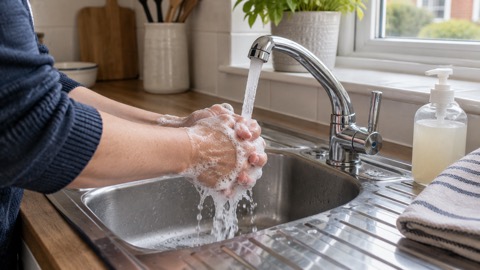
- Wash your hands with soap and water before you go in and after you leave. Alcohol gels do not kill norovirus, so do not rely on them6.
- Do not share towels or wash cloths if you are staying with someone who has been ill13.
- Check the ward notice for any restrictions before you enter13.
- Keep children close and supervised. Take extra care when visiting relatives' houses, as they may have medicines and other dangerous products within reach22. The same caution applies in a care home or hospital room with equipment and supplies.
- Keep your child out of the kitchen where possible if you are visiting a relative's home, to reduce the risk of burns and scalds24.
- Do not visit if you feel unwell, even mildly, if the person you are visiting is at increased risk8.
If you are visiting someone at home rather than in a setting, the same principles apply. Wash your hands, keep your distance if you have a cough, and do not bring a tummy bug into the house.
If you are caring for a disabled person and an emergency means it is too dangerous to visit them, call the emergency services and tell them someone you care for needs help26. Do not put yourself in danger to make a visit.
Visiting with children
Children can visit, but they need more supervision and a bit more planning. There is no single national rule on children visiting hospitals or care homes, and it depends on the setting and any outbreak restrictions in place. Phone ahead and ask.
If your child is unwell, keep them at home. NHS guidance on COVID-19 says to try to stay at home and avoid contact with other people if you or your child have symptoms and either have a high temperature or do not feel well enough to go to work, school, childcare, or do your normal activities8. A child with a temperature should not be taken into a ward or a home.
If you work as a childminder and are suffering from food poisoning symptoms, you should not look after children until you have been symptom-free for 48 hours10. The same 48 hour principle protects the children you visit.
During the visit, keep children close. Hospitals and care homes have equipment, medicines and surfaces that are not child-proof. Take extra care when visiting relatives' houses, as they may have medicines and other dangerous products within reach22. Keep your child out of the kitchen whenever possible if you are in a home, to reduce the risk of burns and scalds24.
Checking before you travel
A quick check before you set off saves a wasted journey and protects the people you are going to see.
- Phone the ward or care home. Ask whether visiting is allowed and whether there are any restrictions in place13.
- Check your own health. If you have had sickness or diarrhoea in the last 48 hours, or been in contact with someone who has, do not go1.
- Check the weather if you are travelling far. During a red warning, official advice is to avoid travelling, where possible, and follow the advice of the emergency services and local authorities27.
- Tell someone where you are going. Official household planning advice is to tell family, friends and carers where you are going, and let NHS or social care providers know if you receive visits from them21.
- Plan how you will keep in touch if visiting is not possible16.
If severe weather is forecast, check the warnings before you travel. A red warning is the highest level, and the advice is to avoid travelling where possible27. A hospital visit is not worth a journey in dangerous conditions, and the ward will understand.
If you are going away and will not be able to visit for a while, cancel deliveries of milk, newspapers or vegetable boxes before you go28. This is good household practice and it means nothing piles up at the door while you are away.
Where to get help
If you are unsure whether to visit, or you need advice about an illness, there are people who can help.
- NHS 111 can advise on symptoms and whether you need to seek care. Use the NHS 111 guide to see what it can help with.
- Your GP practice can advise on whether you or a family member should stay away from a setting. Do not go to the GP surgery with norovirus, as it spreads easily; phone instead1.
- The ward or care home can tell you about visiting restrictions and end of life arrangements9.
- Local volunteer groups can collect shopping and deliver it to your door, and will not normally enter your home29. This helps if you are supporting someone who cannot get out.
- The fire and rescue service offers safe and well visits for people at risk in their own home. A visit may not be needed; instead you may be given up to date guidance on reducing fire risk and free smoke alarms if required30.
For more on staying safe when you are ill, see Staying at Home When Ill and Stopping Infections Spreading at Home. For norovirus specifically, see Norovirus: Symptoms, How Long It Lasts and Stopping It Spreading. For flu, see Flu: Symptoms, Staying at Home and When to Get Help. For COVID-19, see COVID-19 Now: Symptoms, Testing and Staying at Home.
If you are caring for someone who is ill at home, the checklist for caring for someone ill at home sets out what to have ready. If you need to know how long to stay off work or school after vomiting and diarrhoea, see How Long to Stay Off Work or School After Vomiting and Diarrhoea.
Sources (30)
- Norovirus, NHS inform, 2026-10-13
- Norovirus, NHS Cheshire and Merseyside Integrated Care Board, 2024-09-20
- Norovirus, Warwickshire County Council, 2026-10-29
- Coronavirus (COVID-19) | NHS inform, NHS inform
- Flu, Derbyshire County Council, 2026-10-29
- Norovirus, Derbyshire County Council, 2026-10-29
- How to stop norovirus spreading, GOV.UK, 2023-04-17
- COVID-19 symptoms and what to do, NHS, 2026-10-20
- Getting a test, Suffolk County Council, 2026-10-29
- Food poisoning and waterborne infections | Shropshire Council, Shropshire Council
- Flu, NHS, 2026-02-03
- Stay well in winter, Met Office, 2026-10-28
- Norovirus infection control guidance, Wrightington, Wigan and Leigh Teaching Hospitals NHS Foundation Trust, 2025-08
- Together for Well: Keep Wales Safe, Welsh Government, 2026
- Self-isolation: living with others, Oxford Health NHS Foundation Trust, 2020
- Prepare yourself, Wiltshire and Swindon Prepared, 2026-10-25
- Health and infectious disease outbreaks, Prepare campaign, 2026-10-12
- Pandemic and infectious disease, Greater Manchester Combined Authority, 2026-10-29
- Staying well in winter, Derbyshire County Council, 2026-10-29
- Hot weather, Ready Scotland, 2026-03-24
- ICE template, Surrey County Council, 2026-10-29
- Poisoning, NHS South Yorkshire and Bassetlaw, 2026-10-29
- Safety for medicines and poisons, NHS West Yorkshire, 2026-10-29
- Burns and scalds, Andaman Surgery, 2026
- Safe and well checks, Surrey County Council, 2026-10-28
- Easy read: disabled persons and carers, Be Ready campaign, 2024-07
- Weather warnings guide, Wiltshire and Swindon Prepared, 2026-10-25
- While you are away, Mid and West Wales Fire and Rescue Service, 2026-10-29
- https://www.suffolk.gov.uk/coronavirus-covid-19/covid-19-community-support, Suffolk County Council
- Request a Home Safety Visit - South Wales Fire and Rescue Service, South Wales Fire and Rescue Service
 Medicine Cabinet Checklist
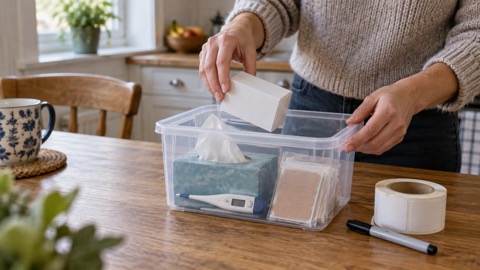 Sick at Home Supplies Kit
 Caring for Someone Ill at Home
 How Long to Stay Home With COVID
 Time Off After Sickness
 Stopping Flu Spreading at Home
 How Long to Wash Your Hands
 When to Call 111 or 999
 When Your GP Is Closed
 Disposing of Unused Medicines
 Medicines in a Heatwave
 Taking Someone Else's Medicine
 Ordering Repeat Prescriptions
 Treating Dehydration at Home
 Cold-Health Alerts Explained