Food poisoning is an illness caused by eating contaminated food, and most people get better within a few days without treatment1. If you do not work with food, the general guide is that most people can return to work 24 hours after the symptoms have stopped2. If you do work with food, the bar is higher: food handlers should not return to work within 48 hours of the last symptom, and must tell their employer they are ill2.
Symptoms usually begin within 1 to 2 days of eating contaminated food, though they can start a few hours later or several weeks later3. They may last for only a day or continue for one or two weeks4. While you have diarrhoea or vomiting, you should not prepare food for anyone else, and you should stay away from hospitals and care homes until 48 hours after the last episode4.
The sections below set out how long to stay off, how to look after yourself at home, how to keep the rest of the household safe, who needs extra care, and when to pick up the phone.
Stay home until your symptoms have stopped
The single most useful rule is simple: stay home until your symptoms have stopped. Most healthy individuals will recover after a short period of illness2, and food poisoning is not usually serious, with most people getting better within a few days without treatment1. Rest is part of the treatment, not a luxury.
How long that means in practice depends on what you do for a living. The two tracks are set out below.
| Your situation | When you can go back | Source |
|---|---|---|
| You do not work with food | 24 hours after symptoms have stopped | 2 |
| You prepare food as part of your work | Not within 48 hours of the last symptom, and you must inform your employer | 2 |
| Norovirus (a common cause of vomiting and diarrhoea) | Stay off school or work, especially if you are a food handler, until symptoms have stopped for 2 days | 6 |
| Salmonella infection | Avoid work, school or nursery until symptom-free for at least 48 hours | 7 |
| Cryptosporidiosis | Do not prepare food for others until symptom-free for at least 48 hours | 8 |
The 48 hour figure appears again and again because it is the point at which you are much less likely to pass the infection on. It applies to school and nursery as well as work: children with norovirus should not go to school or nursery until 48 hours after the last episode of sickness or diarrhoea5. The same guidance says not to visit others in hospital or care homes in that window5.
If you are self-employed, a zero-hours worker or on a rota, the pressure to go back early is real. The advice does not change: going back while still infectious risks passing the illness to colleagues and, if you handle food, to customers. Tell your employer what the guidance says.
How long symptoms last, and why the start date can surprise you
Symptoms may last for only a day or continue for one or two weeks4. Most people are at the shorter end, but a week or more is not unusual and does not by itself mean something is wrong.
The symptoms to expect include nausea, diarrhoea which may contain blood or mucus, lack of energy and weakness, loss of appetite, a fever of 38C or above, aching muscles and chills3. You do not need every one of them.
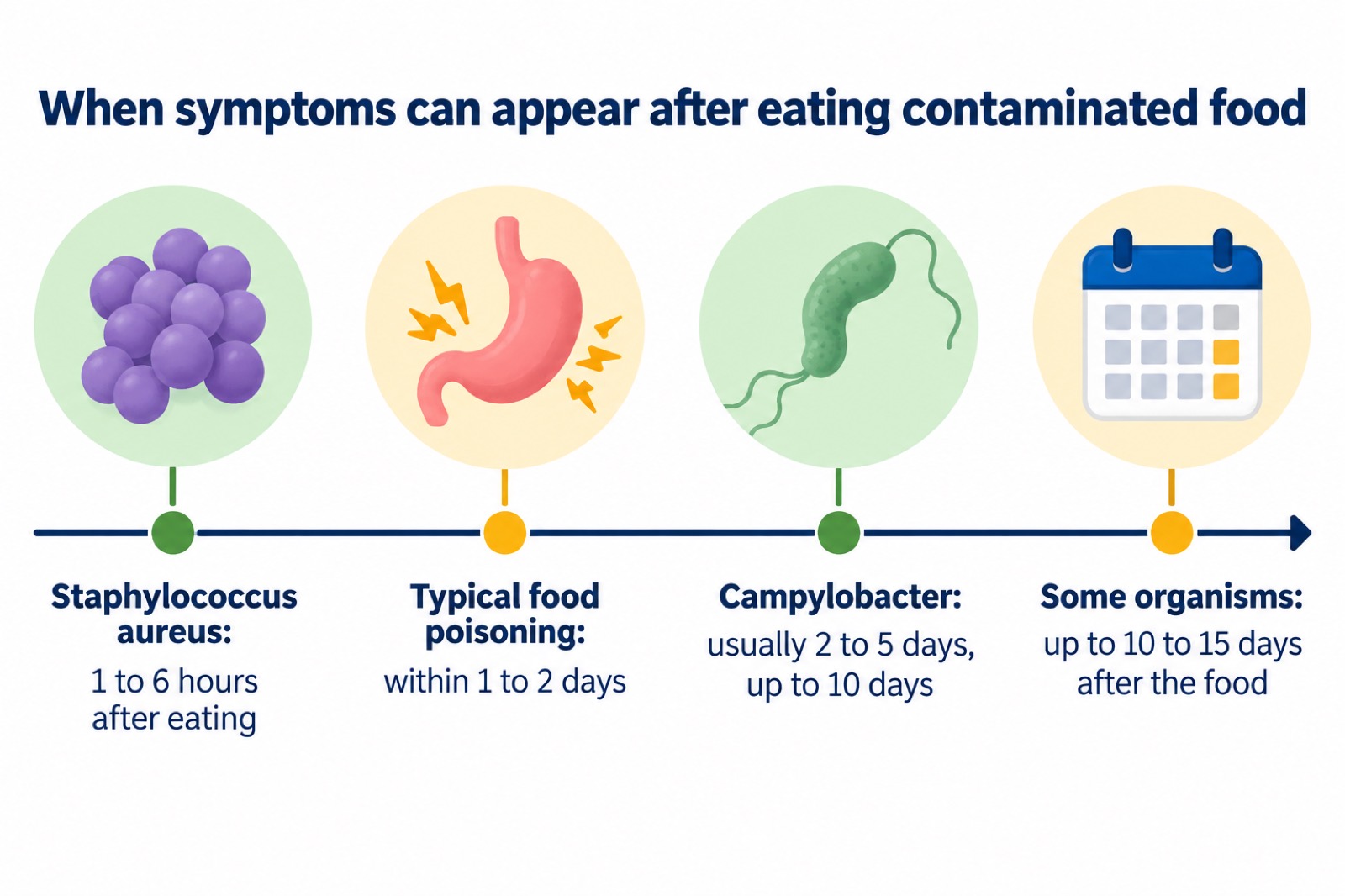
The start date is where people often get caught out. Symptoms usually begin within 1 to 2 days of eating contaminated food, but they can also start a few hours later or several weeks later3. The incubation period varies with each type of organism and in some cases can be up to 10 to 15 days after consuming the food1. Two examples show how wide the range is:
- Campylobacter: stomach cramps and severe diarrhoea but rarely vomiting, beginning 2 to 10 days after eating contaminated food but usually within 2 to 5 days10.
- Staphylococcus aureus: stomach pains and vomiting 1 to 6 hours after eating, with symptoms usually taking 12 to 24 hours to subside10.
This matters for two reasons. First, the meal you blame may not be the meal that caused it, so do not assume a restaurant is at fault because you ate there yesterday. Second, if you are unwell now, think back over the past week or two when you report it.
Looking after yourself at home while you recover
Food poisoning due to eating food that has not been prepared or stored properly can be treated at home11. Most people do not need a doctor, a test or a prescription. What they need is fluids, rest and time.
The official advice on what to drink and avoid is specific. Do not have alcohol, caffeine, fruit juice or fizzy drinks3. These can worsen dehydration, which is the main thing that makes food poisoning dangerous. Water is the drink that matters. Sip it steadily rather than in large amounts at once.
There are also things not to give children. Do not give children under 12 medicine to stop diarrhoea, and do not give aspirin to children under 163. Diarrhoea is one of the ways the body clears the infection, and stopping it can prolong the illness.
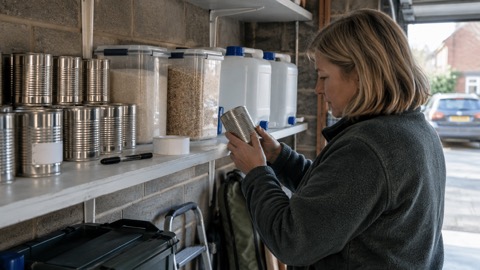
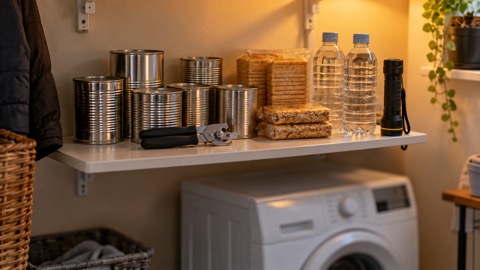
A small store of easy food and drink helps when you are the one who is ill. The British Red Cross suggests considering additional drinking water, extra non-perishable food, essential medication, pet supplies and baby supplies if needed13. You do not need to buy anything special: a few bottles of water and a packet of plain biscuits in the cupboard mean nobody has to go shopping while you are unwell. Our guide to what to keep in an emergency store cupboard covers this in more detail.
If you are preparing food for the household between bouts of illness, keep it safe. Never let cooked food be at room temperature for more than 4 hours, and store leftovers in the fridge as soon as they have cooled to room temperature14. Eat leftovers within 2 days15. Our page on how long you can keep leftovers in the fridge explains the detail.
Keeping others safe: no preparing food while you have diarrhoea or vomiting
This is the rule people most often break, usually without meaning to. Anyone with diarrhoea, vomiting or nausea should not prepare food4. That includes cooking for the family, making sandwiches, and handling food at a party or a workplace.
The reason is straightforward. Many different sorts of bacteria can cause foodborne illness, and when food is kept warm these bacteria can grow rapidly and reach dangerous levels within hours1. A person who is ill can transfer germs to food through their hands even if they feel well between episodes.
If you must be in the kitchen, keep to these points:
- Do not prepare food too far in advance. Keep the food either piping hot or refrigerated until it is served4.
- Wash your hands after using the toilet and before handling anything in the kitchen. Handled by someone ill or who has not washed their hands is one of the recognised causes of food poisoning3.
- Stay away from hospitals and care homes. Do not visit health care settings if you, or someone you have been in contact with, has had diarrhoea or vomiting, until 48 hours after symptoms have ceased16. If you have been in contact with someone with diarrhoea and vomiting in the last 48 hours, do not visit relatives or friends in hospital or residential and nursing homes17.
- Keep out of childcare and school settings until the 48 hour mark has passed, as set out above5.
If you are a food handler by trade, the duty is stronger. People who prepare food as part of their work must inform their employers of their illness and should not return to work within 48 hours of the last symptom2. This is not just a courtesy to your boss: it is how outbreaks in restaurants, takeaways and care kitchens are prevented.
Who needs extra care: young children, older people, pregnant women and those with a weak immune system
Most people recover without help, but food poisoning is not a mild illness for everyone. The very young, people who already have a weakened immune system, and the elderly are particularly vulnerable4. Babies, young children and the elderly can very quickly become very ill, and pregnant women, people with a pre-existing illness and anyone whose immune system is weakened can also be seriously affected10.
The groups to watch are consistent across official guidance:
| Group | Why they need extra care | Source |
|---|---|---|
| Babies and young children | Can very quickly become very ill | 10 |
| Older people | Particularly vulnerable; can become very ill quickly | 4 |
| Pregnant women | Can be seriously affected; must take particular care with what they eat and drink and follow advice from their doctor or midwife | 2 |
| People with a weakened immune system | Particularly vulnerable to serious illness | 4 |
| People with a pre-existing illness | Can quickly become very ill when infected | 9 |
Babies, young children, people with a weak immune system, pregnant women and the elderly should contact their GP if badly affected by food poisoning4. Do not wait to see whether things settle if someone in these groups is deteriorating.
Foodborne diseases can cause serious illness in some groups of people and in extreme circumstances even cause death2. Babies, young children and the elderly can very quickly become very ill, and pregnant women, people with a pre-existing illness and anyone whose immune system is weakened can also be seriously affected2. Babies, young children, people with a weak immune system, pregnant women and the elderly should contact their GP if badly affected by food poisoning2. Pregnant women must also take particular care with what they eat and drink and follow advice given to them by their doctor or midwife2.
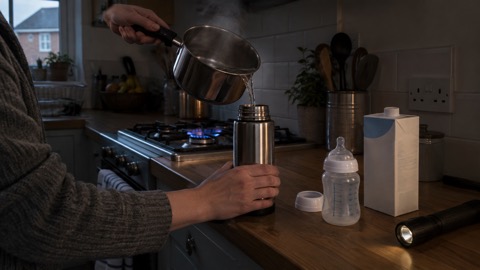
For households with a baby, our page on babies, young children and medical diets in an emergency covers formula, sterilising and supplies. If you are ill yourself and worried about making up feeds, how to make up baby formula in a power cut sets out the steps.
When to call your GP, 111 or 999
Most people do not need to call anyone. But there are clear signs that mean you should, and a smaller set that mean you should call 999 or go to A&E.
Phone 999 or go to A&E if you3:
- vomit blood or have vomit that looks like ground coffee
- have yellow-green or green vomit
- may have swallowed something poisonous
- have a stiff neck and pain when looking at bright lights
- have a sudden severe headache or stomach ache
- have blue, grey, pale or blotchy skin, lips or tongue
- have severe difficulty breathing
- are confused or not responding as usual
For less urgent concerns, contact your GP practice or call NHS 111. If you have been given advice after swallowing something harmful and symptoms persist for 4 hours or more without speaking to your GP practice or NHS 111 staff, recheck for red features12. If any red features are present, go to the nearest hospital emergency (A&E) department or call 999, and consider using What3Words to describe your location to the ambulance service12.
The same principle applies to other urgent situations. Phone 111 or contact your GP practice urgently if a wound has soil, pus or body fluids in it, or you feel generally unwell with a high temperature18. Call 999 for an ambulance if someone does not respond to treatment within 30 minutes or has severe symptoms such as loss of consciousness, confusion or seizures19. Call 999 if someone has had a seizure or fit, has lost consciousness, or has stopped breathing20.
Reporting food poisoning and getting a test
You can report an incident of food poisoning online through your local council2. You may need to give a food history of up to 5 days before becoming ill to assist with any investigation10. That is why it helps to note what you ate and where, even roughly, while you are ill.
A stool sample is not routine. Where food poisoning is caused by a bacteria or a parasite, it will normally be diagnosed once a patient has provided a faecal sample (stool) to their doctor or at a hospital, which is then tested at a laboratory4. You should report your illness to your doctor, and if you provide your doctor with a stool sample it can be tested to determine the cause10. Your doctor will decide whether that is needed.
Reporting also helps trace a wider problem. Food can be recalled for a number of reasons, for example contamination with pathogens like listeria or salmonella that could give you food poisoning, or because of manufacturing faults such as plastic or metal being found in the product21. If you suspect a particular product, check the Food Standards Agency's recalls and alerts before you eat any more of it21.
Our pages on reporting food poisoning or a food problem to your council and salmonella, E. coli, listeria and other causes of illness go further.
The most common causes, and how to avoid them next time
Campylobacter is the most common cause of food poisoning3. The other common routes to illness are well documented: food that was not cooked or reheated thoroughly, not stored correctly, left out for too long, handled by someone ill or who has not washed their hands, or eaten after its use by date3.
The number of cases of food-borne illness has increased dramatically during the past few years, particularly during the summer months9. Warmer weather makes chilling and prompt refrigeration more important, not less.
The practical steps that prevent a repeat are the same ones that prevent the first episode:
- Cook and reheat thoroughly. Not cooked or reheated thoroughly is a leading cause3.
- Chill promptly. Never let cooked food be at room temperature for more than 4 hours, and refrigerate leftovers as soon as they have cooled14.
- Watch the use by date. Food eaten after its use by date is a recognised cause3. Our guide to shelf life, use by and best before dates explains the difference.
- Keep raw and cooked food apart. Our page on handling raw meat, poultry and eggs safely covers the detail.
- Wash hands. Handled by someone ill or who has not washed their hands is a listed cause3.
If you are building a household food store, the same principles apply to stored food. Our emergency food section and the guide to food poisoning: symptoms, who is at risk and when to get help sit alongside this page.
Sources (21)
- Food poisoning, Belfast City Council, 2026-10-29
- Food poisoning, Somerset Council, 2026-07-09
- Food poisoning, NHS Inform, 2026-08-17
- Food poisoning and waterborne infections, Shropshire Council, 2026-10-29
- Norovirus, Derbyshire County Council, 2026-10-29
- Foodborne viruses, Food Standards Scotland, 2026-10-25
- FSS and FSA warns consumers and businesses not to eat or sell certain eggs imported from Ukraine, Food Standards Scotland, 2026-10-10
- Cryptosporidium public advice, UK Government, 2023-11-01
- Food poisoning advice, Northumberland County Council, 2026-08-11
- Infectious diseases, Cornwall Council, 2026-10-29
- Poisoning, NHS, 2025-06-12
- Poisoning and accidental swallowing, Healthier Together, 2026-10-29
- Prepare an emergency kit, British Red Cross, 2026-10-25
- Infectious diseases control, Northumberland County Council, 2026-10-28
- Chilling, Food Standards Scotland, 2026-10-25
- Norovirus, NHS Cheshire and Merseyside ICB, 2024-09-20
- Norovirus - Warwickshire County Council, Warwickshire County Council
- Cuts and grazes, NHS Inform, 2026-07-31
- Heat exhaustion and heatstroke, nidirect, 2025-12-02
- What to do in an emergency, Oxfordshire County Council, 2026
- Recalls and alerts, UK Government, 2026-07-07
 Long-Term Storage Kit Checklist
 Store Cupboard Checklist
 30-Day Household Checklist
 Baby Formula in a Power Cut
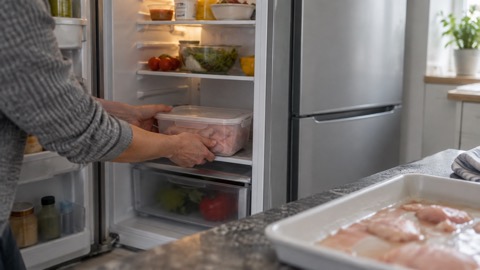 Refreezing Defrosted Meat
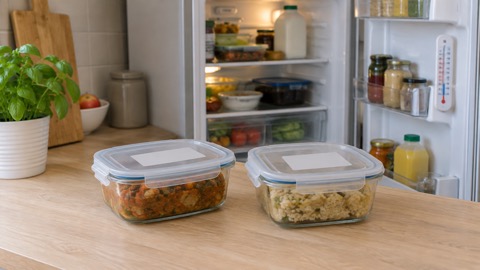 Leftovers in the Fridge
 Reducing Botulism Risk
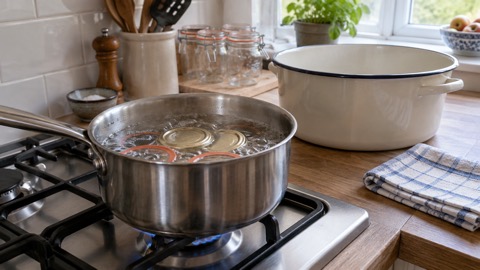 Sterilising Jars
 Spotting Spoiled Preserved Food
 Boiling Water in Glass Jars
 Mylar Bag Food Shelf Life
 Mylar Bag Sizes
 Are Mylar Bags Food Safe
 Oxygen Absorber Activation
 Silica Gel With Stored Food