Norovirus is the most common cause of stomach bugs in England and Wales, and most people make a full recovery within 1 to 2 days1. The illness usually announces itself suddenly: nausea, then vomiting and diarrhoea, sometimes with a fever, headache and aching limbs2. There is no specific treatment and no vaccine, so what you do at home matters: drink fluids frequently to prevent dehydration, rest, keep away from other people, and wash your hands with soap and water, because alcohol hand gels do not kill this virus3.
The single rule most people get wrong is how long to stay away from others. You are most infectious from the start of symptoms until 48 hours after all symptoms have stopped, so do not go back to school, nursery or work, and do not visit hospitals or care homes, until 48 hours after the last episode of sickness or diarrhoea4. That applies even when you feel completely well again.
What norovirus feels like: sudden sickness, vomiting and diarrhoea
Norovirus is often called the winter vomiting bug, and its arrival is hard to miss. The main symptoms are a sudden onset of nausea, followed by projectile vomiting and diarrhoea, usually beginning 1 to 2 days after you became infected2. Some people also get a high fever, a headache and aching arms and legs2. NHS guidance describes the same picture: feeling sick, vomiting and diarrhoea, with some people having a raised temperature, headaches and aching limbs3.
The suddenness is what distinguishes it from many other stomach upsets. One moment you feel fine, the next you are being sick, and the vomiting can be dramatic. A raised temperature counts as above 38°C6. Because the symptoms overlap with other foodborne illnesses, which can also cause stomach cramps, fever, nausea, headache and dizziness8, you cannot be certain from symptoms alone that a bug is norovirus. That does not change what you should do: the advice on fluids, rest, hygiene and staying away from others for 48 hours applies to vomiting and diarrhoea whatever the cause9.
People of all ages can be infected, and infections are usually self-limiting, meaning they clear up on their own1. Some people catch the virus and carry it without symptoms at all, with the highest incidence of these silent infections reported in children aged under five years10, which is one reason it spreads so easily through families.
How long norovirus lasts
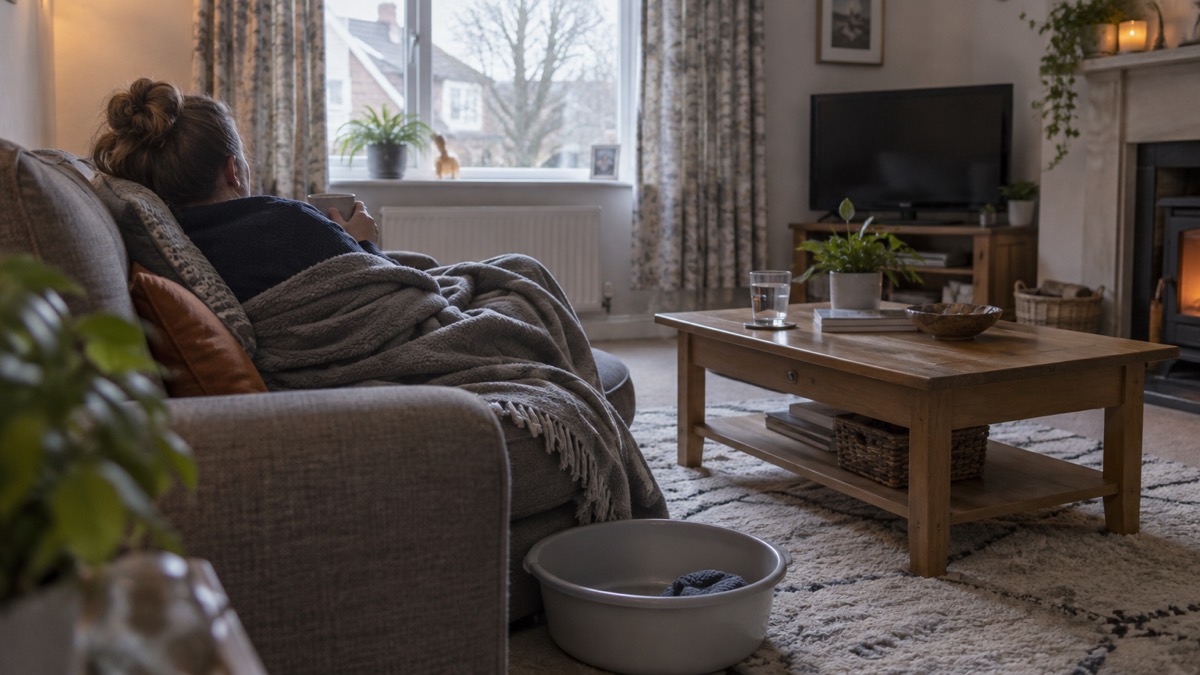
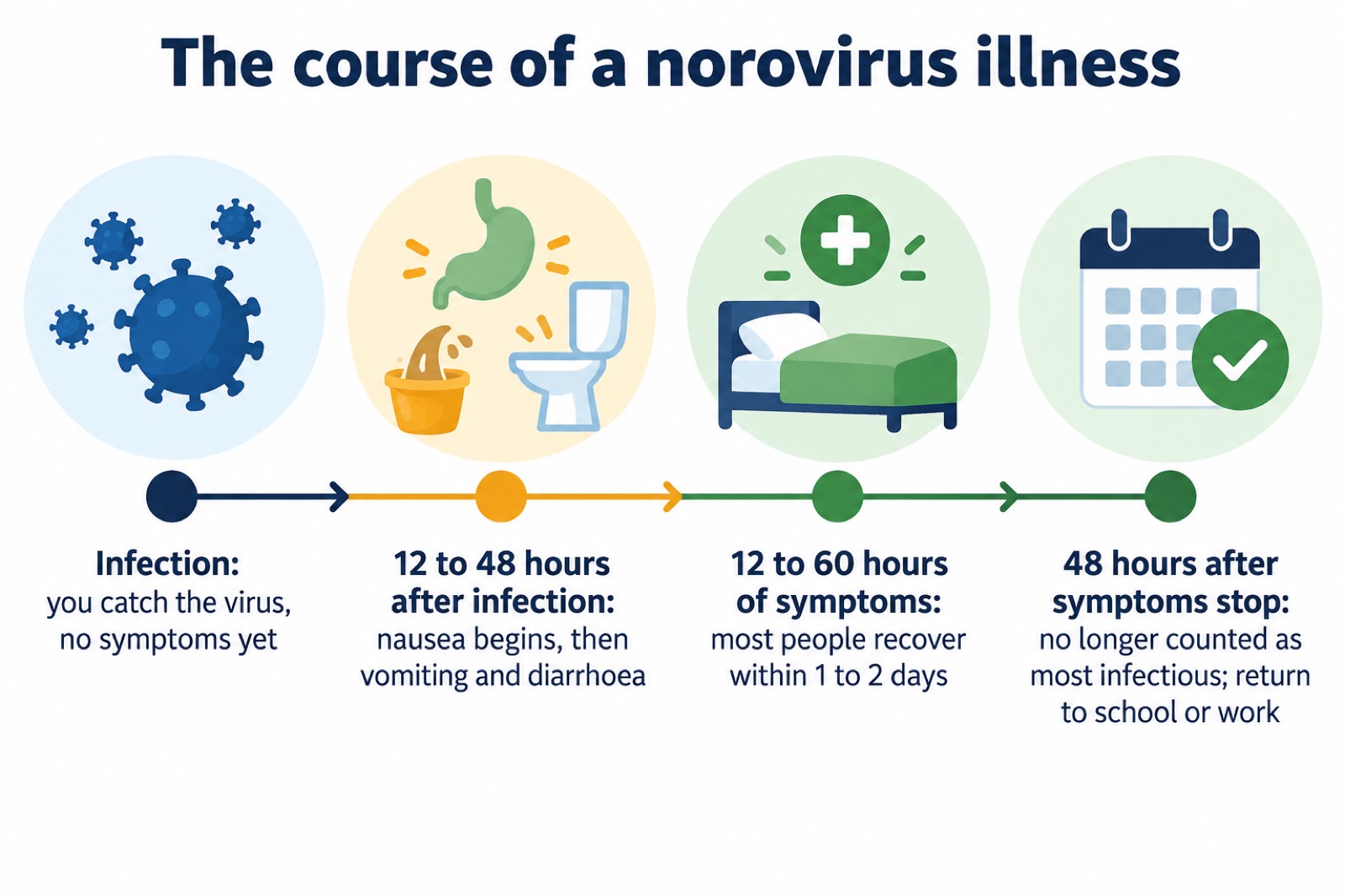
Most people make a full recovery within 1 to 2 days1, and Derbyshire's public health guidance says people usually recover in about 2 days7. The illness is short but intense, and different official documents give slightly different windows for how long symptoms can hang on: one NHS infection control leaflet says symptoms can last for 12 to 60 hours6, while another says between 12 and 72 hours6. NHS inform in Scotland says symptoms typically last for up to 2 or 3 days4. Treat 1 to 2 days as the usual course and a little longer as within the normal range.
The timeline starts before you feel ill. Symptoms begin around 12 to 48 hours after becoming infected6, so if the whole household comes down with it one after another, each person's clock started at a different moment. You are most infectious from the start of symptoms until 48 hours after all symptoms have stopped, and possibly for a short time before and after this4.
There are no long-term effects from norovirus, and apart from the risk of dehydration it does not cause serious illness6. The reason it is taken seriously anyway is its reach: it can close hospitals, care homes and schools1, and outbreaks tend to affect more than half of susceptible people in a setting6. Because there are many different strains, immunity after an infection is short-lived, so you can catch it again1. Norovirus can affect anyone, even if you have had it in the past6.
Looking after yourself at home: fluids, rest and no antibiotics
There is no specific treatment for norovirus other than allowing the illness to run its course6. Antibiotics do not work against it because it is a virus, not a bacterium7, so there is nothing to be gained from asking your GP for a course. What the illness takes from you is fluid, so the NHS advice is to drink fluids frequently to prevent dehydration6, and to stay at home and get plenty of rest9.
What to do:
- Stay at home and rest, and avoid contact with others as much as possible7.
- Drink fluids frequently, in small amounts if that is all you can keep down6.
- Do not have fruit juice or fizzy drinks, as they can make diarrhoea worse9.
- Do not take antibiotics; they do not work against viruses7.
- Wash your hands with soap and water after using the toilet and before touching food2.
For fever and aches, keep suitable medicines in the house before you need them. NHS guidance for families suggests planning ahead by stocking up on essentials, including liquid paracetamol or ibuprofen, a thermometer, antiseptic cream and plasters11. Do not give aspirin to children under 16 unless it has been prescribed by a doctor12. Our medicine cabinet checklist sets out a full list of what to keep ready, and our page on storing medicines safely covers keeping them away from children.
If you rely on regular prescription medicines and are too ill to get to your pharmacy, NHS 111 can direct you: contact NHS 111 by telephone or use the online emergency prescription service, and NHS 111 will tell you which pharmacy to go to or direct you to an urgent care centre13. See running out of prescribed medicine for how emergency supplies work.
Signs of dehydration to watch for
Dehydration means your body loses more fluids than you take in, and if it is not treated it can get worse and become a serious problem14. With norovirus, dehydration is the main danger, and the very young and the elderly should take extra care if infected because dehydration is more common in these age groups1. Babies, children and older adults are more at risk of dehydration generally14.
The early signs are similar at any age: feeling thirsty, dark yellow strong-smelling pee, peeing less often than usual, feeling dizzy or lightheaded, feeling tired, a dry mouth, lips and tongue, and sunken eyes14. An NHS infection control leaflet lists being thirsty, dizziness, dark coloured urine, and dry mouth, eyes and lips6.
| Who | Signs to watch for | Source |
|---|---|---|
| Adults and older children | Thirst, dark yellow strong-smelling pee, peeing less often, dizziness, tiredness, dry mouth, lips and tongue, sunken eyes14 | NHS |
| Young children | Thirst, weeing less, lightheaded, tired and irritable; sunken eyes, dry mouth, dry lips and tongue15 | NHS |
| Babies | Sunken eyes, drowsy, sunken fontanelle (soft spot on the head), headache, or no urine passed for 12 hours16 | NHS |
| Older people | Dryness of the mouth, lips and tongue; sunken eyes; dry inelastic skin; drowsiness, confusion or disorientation; dizziness and low blood pressure17 | NHS |
Two things make older people trickier to judge. Their symptoms are the same as in younger adults and children, but many of them, such as drowsiness or dizziness, can be easily mistaken for symptoms of pre-existing conditions17. If you are caring for an older relative with norovirus, treat any new drowsiness or confusion as possible dehydration and seek advice rather than assuming it is their usual condition.
Speak to a pharmacist if you or your child aged 5 years or over have norovirus and you have signs of dehydration, are an older person, have a weakened immune system, have other health conditions that increase your risk of dehydration, or need to stop diarrhoea for a few hours3. Our page on treating dehydration at home goes into this in more detail.
Babies and young children with norovirus
Children under 5 years are one of the groups for whom norovirus can cause serious illness, alongside older adults and those with weakened immunity7. That does not mean a toddler with a sickness bug needs hospital care; it means dehydration can take hold faster in small bodies, so you watch them more closely and ask for help sooner.
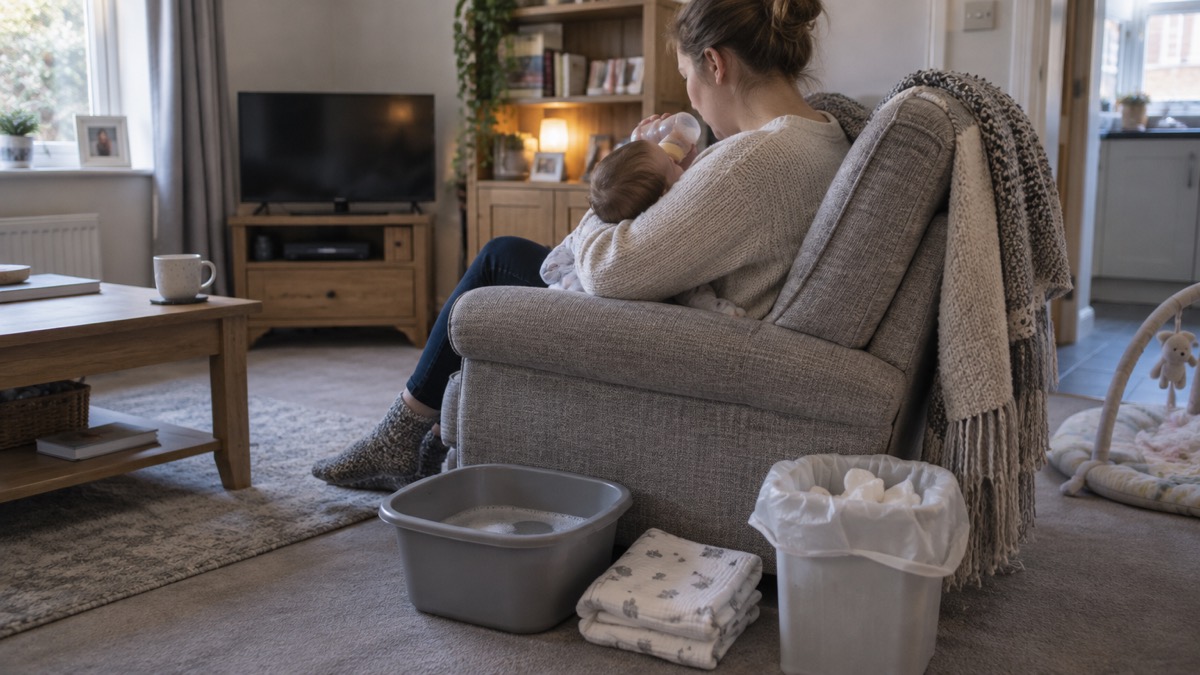
For babies, carry on breast or bottle feeding, and if they are being sick, try giving small feeds more often than usual9. Give babies on formula or solid foods small sips of water between feeds9. Do not make formula weaker, and do not give young children fruit juice or fizzy drinks, as these can make diarrhoea or vomiting worse14.
Call 111 if a baby or young child keeps vomiting and cannot keep any food or milk down18. NHS inform also lists signs that should prompt you to call 111 rather than wait: worry about a baby under 12 months, a child stopping feeding, signs of dehydration, being unable to keep fluid down, bloody diarrhoea, diarrhoea lasting more than 7 days or vomiting lasting more than 2 days4.
One caution from official guidance on very sick babies: very young babies may not have a fever even when seriously ill, and their temperature could be normal or low19. A normal reading on a thermometer is not on its own reassurance that a young baby is fine. If you are worried about a baby's breathing, feeding or responsiveness, do not wait for a fever to appear. Our page on thermometers explains the types available for checking a temperature at home.
If your household includes babies or very young children, it is worth keeping a small buffer of what they need, as emergency planning guidance suggests considering the availability of nappies, special food, baby formula and sterilisation of bottles20. A bout of norovirus in a household with a baby is a poor time to discover you have one day of formula left, because you should not be taking an infectious child to the shops.
When to get help: pharmacist, NHS 111 or 999
Most norovirus never needs a doctor. The ladder of help runs: pharmacist first for advice and rehydration help, then NHS 111 if you are not sure or the illness is not settling, then 999 or A&E only for severe symptoms.
- Pharmacist: speak to one if you or your child aged 5 or over have signs of dehydration, are older, have a weakened immune system or other conditions that raise your risk of dehydration, or need to stop diarrhoea for a few hours3. For less urgent health needs, contact your GP or visit your local pharmacy in the usual way21.
- NHS 111: contact NHS 111, online or by calling 111, if you have an urgent medical problem and you are not sure what to do about it22. The service can assess and direct you to the most appropriate local service, including urgent treatment centres, GP practices, urgent dental care or pharmacist consultations, and can arrange a call back from a nurse, doctor or paramedic22. Depending on what you need, you might be advised to call 999, go to an urgent treatment centre, see an out-of-hours GP, book a callback from a nurse, contact your own GP surgery, see a pharmacist, or look after yourself safely at home23. See our guide to NHS 111 and to when to call 111 and when to call 999.
- 999 or A&E: phone 999 or go to A&E for severe symptoms including vomiting blood, green vomit, possible poisoning, a stiff neck with pain when looking at bright lights, or a sudden severe headache or stomach ache4.
If you do need to go to A&E, NHS guidance is clear: do not drive to A&E yourself. Ask someone to drive you or call 999 and ask for an ambulance, and bring any medicines you take with you3.
How norovirus spreads
Norovirus is caused by a virus that spreads through poo, and it spreads to others very easily3. It is the most common stomach bug in the UK and is highly infectious5. You can catch it by close contact with someone who has it; eating food or drinks prepared or handled by someone who has norovirus; touching contaminated items or surfaces and then touching your mouth; and drinking unclean water or eating infected food7.
The virus survives outside the body for several days4, and NHS infection control guidance says it can survive in the environment for many days1. That is why cleaning matters as much as keeping away from the sick person: a door handle or flush handle can stay infectious long after the person feels better. Food Standards Scotland adds that infection can also happen by eating food grown in or treated with contaminated water, such as shellfish or fresh produce, or through infected food handlers5.
It spreads most easily in places where people have close contact, for example care homes, nurseries and schools7, with large outbreaks reported in institutional settings such as hospitals, schools, residential care and nursing homes10. Outbreaks tend to affect more than half of susceptible people1. In Scotland, the true contribution made by food to the rates of norovirus infection is currently unknown5.
Although infections tend to peak in the winter months in temperate climates10, norovirus can occur at any time of year7. The winter vomiting bug label describes the peak season, not a rule.
Stay off school or work until 48 hours after symptoms stop
This is the rule that protects everyone else, and it is stated consistently across official guidance: do not go to school, nursery or work, or visit others in hospital or care homes, until 48 hours after the last episode of sickness or diarrhoea7. NHS guidance puts it as staying off until you have not been sick or had diarrhoea for 2 days3, and the government's norovirus leaflet says to stay off school or work until you have not been sick or had diarrhoea for at least 2 days2.
The reason is that you remain infectious after you feel well. Norovirus is most infectious from the start of symptoms until 48 hours after all symptoms have stopped4. Going back on the morning you feel better is the classic way a sickness bug runs through a classroom or a workplace for a second round.
Food handlers should be especially strict: if you have norovirus, stay off work, especially if you are a food handler, until the symptoms have stopped for 2 days5. The same 48-hour exclusion applies to other diarrhoeal illnesses, so the habit is worth keeping whatever the bug turns out to be24. Our page on how long to stay off work or school after vomiting and diarrhoea covers this in full, and when to keep your child off school or nursery deals with the school side.
Do not visit relatives or friends in hospital or residential and nursing homes if you have been in contact with someone with diarrhoea and vomiting in the last 48 hours10, and do not visit healthcare settings if you or someone you have been in contact with has had diarrhoea or vomiting until 48 hours after symptoms have ceased1. During outbreaks, visiting restrictions may be applied, and an information notice will be displayed at the entrance to the ward and visitors notified6. Visits by people with symptoms may still be allowed in exceptional circumstances, such as end-of-life visits; contact someone responsible at the setting before visiting in these circumstances25. See when to avoid visiting hospitals and care homes.
Stopping it spreading at home: soap and water, not hand gel
The most effective way to help stop an outbreak is to disinfect the contaminated areas and ensure good hygiene1. Within a household, that comes down to three habits: handwashing, cleaning, and laundry.
Wash hands with soap and water. Wash your hands with soap and water after going to the toilet or changing nappies, and before preparing, serving or eating food7. Alcohol hand gels do not kill norovirus7, and the government's guidance is explicit: do not rely on alcohol gels instead of washing your hands, as these do not kill the virus2. An NHS infection control leaflet adds the moments that matter in a sick household: wash hands especially before handling food, before eating, after using the toilet, and after handling dirty linen or clothing, and do not share towels or wash cloths6. Our page on how long you should wash your hands covers technique.
"not rely on alcohol gels instead of washing your hands, as these do not kill the virus"
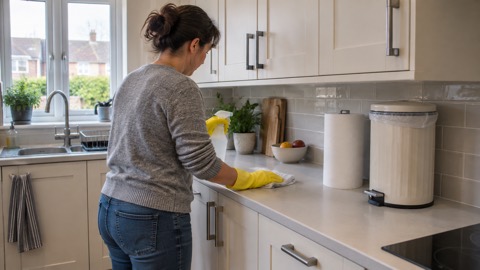
Clean the bathroom and touchpoints. Clean toilet seats, flush handles, taps and bathroom door handles7. Flush away any infected faeces or vomit in the toilet and disinfect the surrounding area, and flush the toilet with the lid down to stop the virus spreading6. Because the virus survives on surfaces for many days1, daily cleaning of these touchpoints while someone in the house is ill, and once more after they recover, is the practical approach.
Handle laundry carefully. Wash clothes and bedding that has poo or vomit on it on a 60°C wash and separately from other laundry7. Wash your hands with soap and water after handling dirty linen or clothing6.
Cleaning supplies for a sickness bug: what to have ready
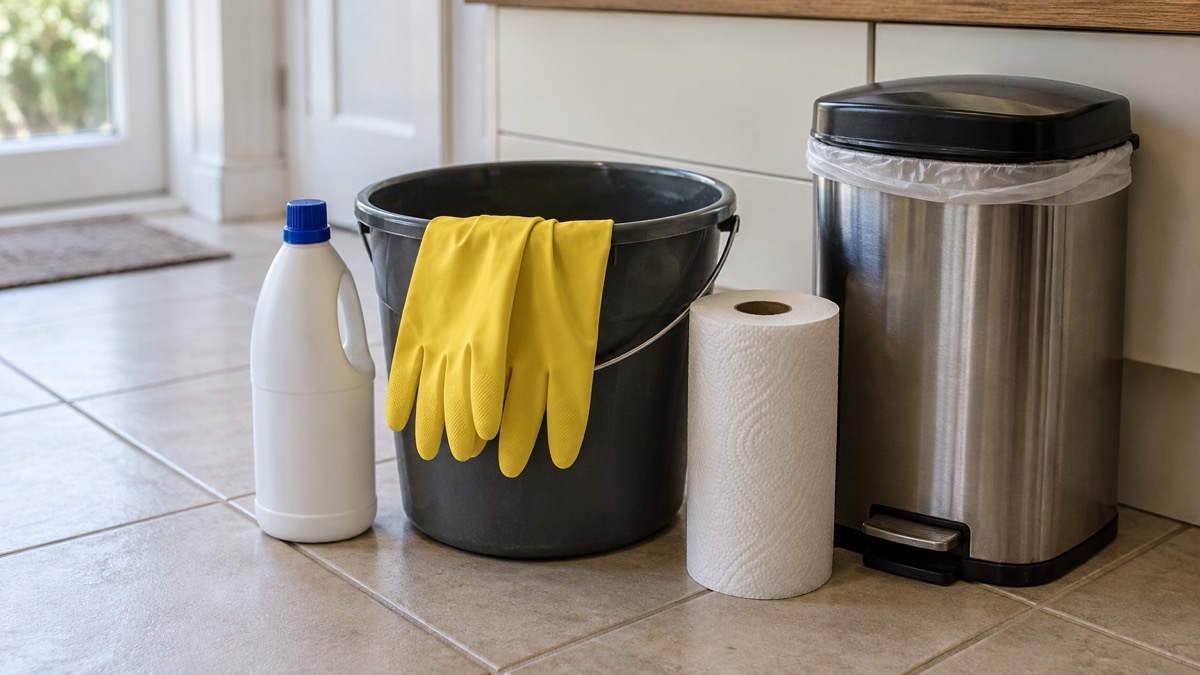
When a vomiting bug arrives, you do not want to be sending a well household member out to buy cleaning products, and you should not be receiving visitors. The guidance on what to use is simple, and a small stock covers it.
What to keep in the cupboard:
- Soap for handwashing at every sink, because alcohol gels do not kill norovirus7
- Household disinfectant for cleaning contaminated areas, as disinfecting them is the most effective way to help stop an outbreak7
- Paper towels or disposable cloths for cleaning contaminated areas, so you are not reusing cloths around the house
- Separate towels and wash cloths for each person; do not share them while anyone is ill6
- Laundry detergent capable of a 60°C wash for soiled clothes and bedding2
Beyond cleaning, the same planning logic applies to the rest of the household. Emergency planning guidance suggests households keep supplies ready for being stuck at home, and with babies or very young children to consider the availability of nappies, special food, baby formula and sterilisation of bottles20. Our staying at home when ill supplies checklist and the wider emergency kit guide set out what a UK household should keep ready. For the general principles of hygiene at home, see stopping infections spreading at home, and for caring for someone ill, looking after someone who is ill at home.
Sources (25)
- Norovirus, NHS Cornwall and Isles of Scilly Integrated Care Board, 2024-09-20
- How to stop norovirus spreading, UK Health Security Agency, 2023-04-17
- Norovirus, NHS, 2024-12-31
- Norovirus, NHS inform, 2026-10-13
- Foodborne viruses, Food Standards Scotland, 2026-10-25
- Norovirus patient information leaflet, WWL Teaching Hospitals NHS Foundation Trust, 2025-08
- Norovirus, Derbyshire County Council, 2026-10-29
- Infectious diseases control, Northumberland County Council, 2026-10-28
- Vomiting and diarrhoea first aid, North West Ambulance Service, 2025-03-13
- Norovirus, Warwickshire County Council, 2026-10-29
- What to do if your child is unwell, NHS North East London Integrated Care Board, 2024-10
- What to keep in your medicine cabinet, Healthier Together, 2026-10-28
- Emergency supply of medication, NHS Nottingham and Nottinghamshire Integrated Care Board, 2026-10-29
- Dehydration, NHS, 2026-10-29
- Summer safety, Healthier Together, 2026-10-28
- Staying safe over the summer, Healthier Together, 2026-10-29
- Advice for vulnerable people, NHS Norfolk and Suffolk Integrated Care Board, 2026-05-29
- Sepsis, NHS 111 Wales, 2026-01-12
- Meningococcal disease, Public Health Wales, 2026-10-15
- Emergency kits and grab bags, Central Bedfordshire Council, 2026
- NHS 111, Yorkshire Ambulance Service, 2026-10-29
- Keep winter well, Birmingham Community Healthcare NHS Foundation Trust, 2026-10-28
- NHS 111 online, NHS England, 2026-10-29
- Cryptosporidium public advice, UK Health Security Agency, 2023-11-01
- Getting a test, Suffolk County Council, 2026-10-29
 Medicine Cabinet Checklist
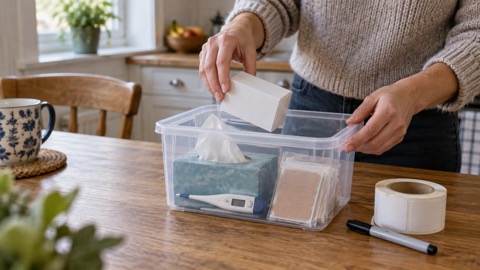 Sick at Home Supplies Kit
 Caring for Someone Ill at Home
 Pandemics and UK Household Plans
 Outbreaks Near You
 UK Health Security Agency
 Staying Home When Ill
 Stopping Infections at Home
 Caring for a Sick Person at Home
 Keeping Prescription Medicine
 Medicine Shortages Explained
 Storing Medicines Safely
 Urgent Care and A&E
 Vaccines Against Outbreaks
 Flu Symptoms and Getting Help