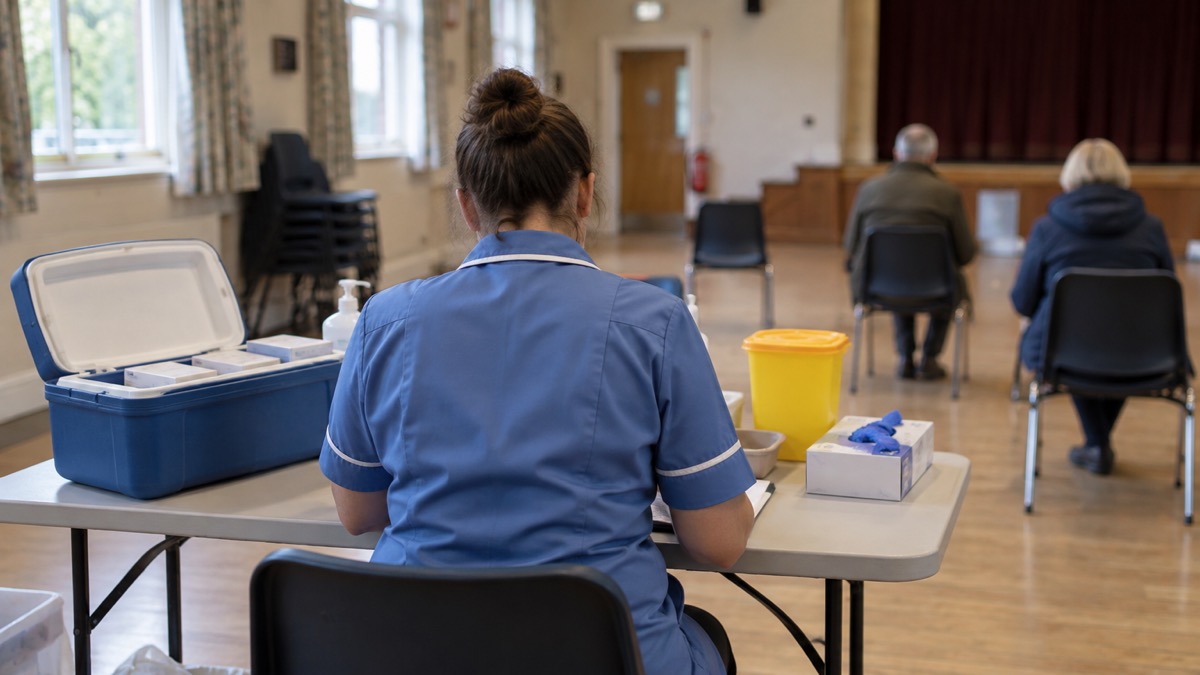
Flu season has started unusually early this year, with cases rising nationally, and that makes vaccination the single most useful thing an eligible household can do right now to protect itself against serious illness this winter1. The UK Health Security Agency has urged people to book their vaccinations against flu, COVID-19 and respiratory syncytial virus (RSV) as cases start to increase ahead of the winter months, with pregnant women and millions of children already vaccinated and appointments for most eligible groups available from 1 October2. The advice from NHS services is simple: get your vaccines as soon as they are offered to you3.
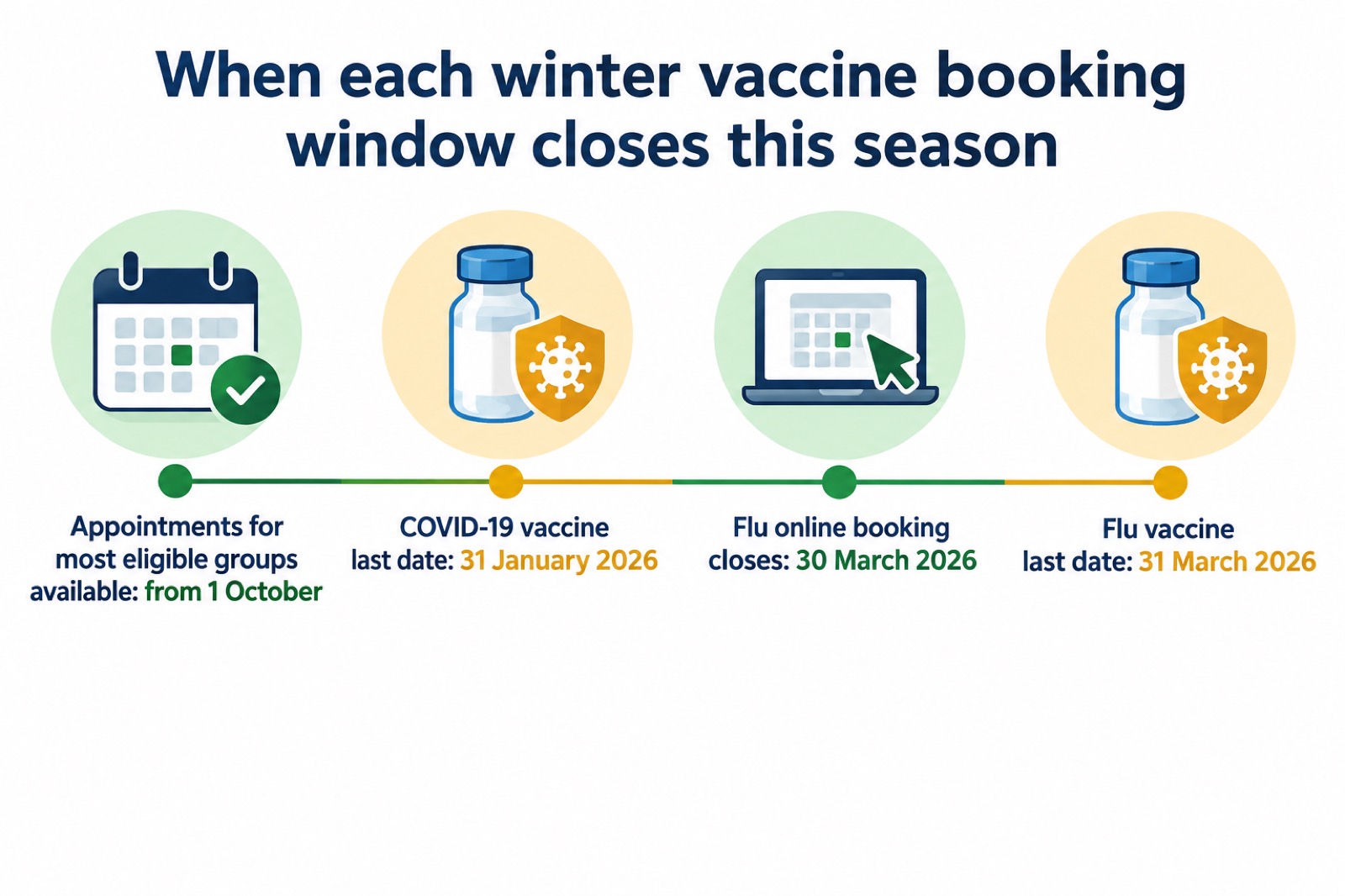
This page sets out, in one place, which NHS vaccines matter in an outbreak or a bad winter, who is offered each one, and how to book or catch up. The headline actions are these. If you are eligible for the flu vaccine, book it now: the last date you can get it is 31 March 2026, but protection is best built before the virus circulates widely4. If you are offered a COVID-19 vaccine, the last date is 31 January 20264. If you are 28 weeks pregnant or more, aged 75 to 79, or turned 80 after 1 September 2024, you are eligible for the RSV vaccine, which is given once4. And every child and adult can still catch up on missed MMR or MMRV doses at any age, which matters because measles cases are increasing after years of low vaccine uptake5.
Flu has started early: what to do now
Surrey County Council's winter health advice, dated 11 September 2026, reports an unusually early start to the flu season with increasing cases nationally, and says this makes flu vaccination a priority for all eligible people to protect against serious illness1. That timing matters. The vaccines are delivered in the autumn precisely so that protection is in place before infection rates rise, and the best defence is to get your vaccine before the virus starts circulating9.
The flu vaccine is offered every year because the vaccine changes slightly to ensure the best protection is offered: flu viruses mutate over time, so a new vaccine is produced every year based on the strains expected to be circulating10. It is available every year during the winter season, usually between September and March11. Even if you were vaccinated last year, it is important to get your jab again this flu season, because the viruses can change year to year and protection decreases over time9.
The vaccine does two things for a household. It reduces the chance of catching and passing on flu, and it reduces the risk of becoming seriously ill and needing hospital care7. The effect is measurable: last winter, getting vaccinated against flu cut the risk of being hospitalised by around 66 per cent in children, around 25 per cent in adults aged 65 and older, and around 33 per cent in other adults with underlying health conditions9. Flu is usually unpleasant but mild, but it can be more serious for pregnant women, very young children and older people12.
If you want to know more about the illness itself, see Flu: Symptoms, Staying at Home and When to Get Help.
Who can get a free flu vaccine
The flu vaccine is offered free of charge to people who are at most risk from the effects of the virus, to protect them and those around them13. In England, you can get the free NHS flu vaccine if you4:
- are aged 65 or over, including those who will be 65 by 31 March 2026
- are aged 6 months to 64 years with certain long-term health conditions
- are aged 2 to 3 years
- are pregnant
- live in a care home
- are the main carer for an older or disabled person, or receive a carer's allowance
- live with someone who has a weakened immune system
The same broad picture is given across the UK's local health services: the flu jab is free on the NHS if you are pregnant, over 65 or if you have a long-term health condition14, and free flu vaccinations are available for those who are at risk15. Frontline health and social care workers can also get a flu vaccine through their employer8. People aged 16 or over who are rough sleeping or staying in a homeless hostel or night shelter are also eligible10.
The list of long-term conditions that qualify is long, and it is worth checking rather than assuming. Conditions that make an adult eligible include heart or liver disease; chronic respiratory disease; diabetes; immunosuppression (a weakened immune system); and some neurological conditions such as Parkinson's, motor neurone disease, multiple sclerosis or cerebral palsy9. The NHS also lists breathing conditions such as asthma needing a steroid inhaler or tablets, COPD and cystic fibrosis, chronic kidney disease, some brain or nerve conditions, Addison's disease, spleen problems, learning disability, or a BMI of 40 or above10.
| Group | Free flu vaccine? | Notes |
|---|---|---|
| Aged 65 or over (or 65 by 31 March 2026) | Yes4 | Includes people turning 65 during the season |
| Aged 6 months to 64 with a long-term condition | Yes4 | Wide list of qualifying conditions10 |
| Children aged 2 to 3 | Yes4 | Nasal spray, invited by the GP7 |
| School children, reception to year 11 | Yes7 | Offered through school services8 |
| Pregnant women | Yes4 | Any stage of pregnancy7 |
| Care home residents | Yes4 | |
| Carers | Yes4 | Main carer, or receiving carer's allowance |
| Household contacts of people with weakened immune systems | Yes4 | |
| Frontline health and social care staff | Yes, via employer8 | Book through occupational health, pharmacy or GP16 |
For a fuller walkthrough of eligibility, see Who Can Get a Free Flu Vaccine?.
The children's flu vaccine: a nasal spray, usually at school
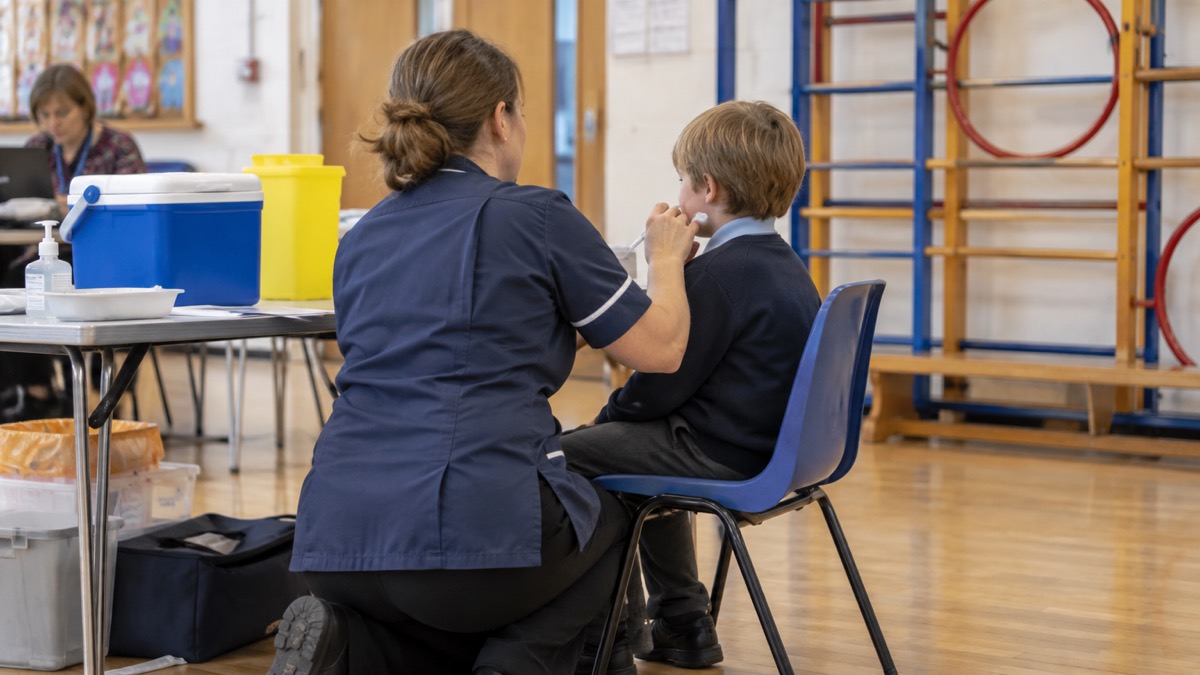
The children's flu vaccine is usually given by nasal spray11, described by local resilience partners as a quick and painless nasal spray9. Most children get it through their school, so parents should make sure to sign and return the consent form9. More precisely, parents and guardians should look out for the flu vaccination consent request from their children's school and return it promptly, because the vaccine can only be offered once consent has been received11.
GPs invite all 2 and 3-year-old children to have a flu vaccine7. For pre-schoolers, parents will be invited to bring their child forward in the coming weeks, or you can contact your GP practice to make an appointment9.
Two practical points are worth knowing. First, the nasal spray is not licensed for children under 2 years old17. Second, for the first time this year, toddlers can also get their flu vaccination, given as a nasal spray, at community pharmacies, in addition to the other routes2. The vaccine is usually delivered in schools, with community clinics available for children who are educated at home or at alternative education premises11. When your child turns 18, they become eligible for the injected flu vaccine for adults instead10.
There is a household benefit beyond the child themselves: vaccinating children also helps stop them passing flu on to elderly family members such as grandparents, who are likely to be more vulnerable9. Some children may get mild side effects like a runny nose after the spray, but the vaccine cannot actually give them flu9.
How to book your flu vaccine
If you are eligible for an NHS flu vaccine, you can contact your GP surgery to book an appointment, book online or in the NHS App if you are aged 18 or over, or find a pharmacy offering walk-in vaccination without an appointment if you are aged 18 or over4. The NHS summarises the routes as: use the NHS App, visit nhs.uk/BookFlu, call 119, or contact your GP practice or pharmacy8. You can get the vaccine at your GP surgery, at pharmacies offering NHS flu vaccinations, and at some maternity services if you are pregnant18.
A few details make booking easier:
- You do not have to use your own GP practice: if you are eligible for the free flu vaccine you may get it from your own GP practice or any pharmacy offering NHS flu vaccinations7.
- In London, you can book at a local participating pharmacy using the London Flu website19.
- Pregnant women can speak to their GP practice, pharmacist or midwife about booking a flu jab appointment9.
- You must be registered with a local GP surgery before accessing its services; you can register online on www.nhs.uk or in person20.
- If you cannot reach your GP surgery when it is closed, see What to Do When Your GP Is Closed.
The NHS advises that you ask your GP about having a free flu vaccination12, and local councils run the same message: contact your GP now to arrange your jab, or visit www.nhs.uk/flu for more information21. Contact your GP or pharmacist or visit the NHS website to learn more about both the flu jab and the COVID-19 booster22.
COVID-19 vaccine: who is offered it and how to book
You can get vaccinated against COVID-19 by the NHS23. People who are most at risk of severe illness from COVID-19 are offered an autumn COVID-19 vaccine10, and if you are at increased risk of severe illness from COVID-19 infection you may be offered a free seasonal COVID-19 vaccine24. The vaccine is usually offered in the spring and autumn24, and it helps to reduce your chances of becoming seriously ill if you become infected24. If you are invited to have the vaccine, please take up the offer24.
For the 2026 to 2027 season, eligibility includes people aged 75 or over, including those who will be 75 by 31 January 202710. You may also be eligible if you have a weakened immune system due to blood cancer, an organ, bone marrow or stem cell transplant, HIV, a genetic immune disorder such as SCID, chemotherapy, biological therapy or radiotherapy, steroid medicine, or long-term immunosuppressive treatment for conditions such as lupus, rheumatoid arthritis, IBD, scleroderma or psoriasis10. Since Autumn 2025, only people aged 75 and over, those aged 6 months to 74 years with a weakened immune system, and care home residents for older adults are offered a COVID-19 vaccination. For the detail, see Who Can Get a COVID-19 Vaccine Now?.
Booking is straightforward and does not require an invitation. You can book a COVID-19 vaccination appointment online or in the NHS App if you are aged 5 or over, or find a walk-in COVID-19 vaccination site, and you do not need to wait for an invitation before booking4. You can also visit an NHS walk-in centre, where you do not need an appointment25. With full NHS App access you can book and manage COVID-19 vaccinations26. You will be able to choose the most appropriate venue for you from the COVID-19 National Booking Service18.
The NHS also offers treatments to people with COVID-19 who are at highest risk of becoming seriously ill8. For symptoms, testing and staying at home, see COVID-19 Now: Symptoms, Testing and Staying at Home.
RSV vaccine: one dose for older adults, and in every pregnancy from 28 weeks
RSV affects the airways and lungs and can cause pneumonia, leading to thousands of hospitalisations each year8. The RSV vaccine is offered if you are 28 weeks pregnant or more, if you are aged 75 to 79, or if you turned 80 years old after 1 September 20244. Women and people who are pregnant are eligible from 28 weeks27, and pregnant women are offered the RSV vaccine from 28 weeks of pregnancy for each pregnancy, to protect both mum and baby8.
Unlike flu, this is not an annual jab. If you are in the eligible older adult group, you only need the RSV vaccine once8. The recommendation during every pregnancy is because the vaccine protects the baby as well as the mother8.
How you get it depends on which group you are in. If you are pregnant, you should be offered the RSV vaccine around the time of your 28-week antenatal appointment, through your GP surgery. If you are aged 75 to 79, your GP surgery will contact you by letter, text, phone call or email27.
One scheduling point catches people out: the RSV vaccine should be given separately from the flu vaccine8, so you will need a separate appointment for each. By contrast, the pneumococcal vaccine can be given at the same time as flu and COVID-19 vaccines8. The pneumococcal vaccine is offered to babies, to people aged 65 or over, and to children and adults at higher risk of getting seriously ill4.
Winter vaccines help protect you from flu and COVID-19, and Scottish health guidance carries the same message for households north of the border28.
Measles protection: 2 doses of MMRV or MMR
Measles is a vaccine preventable disease29, but it is very infectious and can spread very quickly if people are not vaccinated against it5. Due to years of low vaccine uptake, measles cases are increasing in the UK5. Younger children, pregnant women and people with weakened immune systems are more likely to become seriously unwell6.
You can be protected from catching measles if you have had 2 doses of the measles, mumps, rubella and varicella (chickenpox) vaccine, known as MMRV, or 2 doses of the MMR vaccine, or if you have had the infection before6. Having the 2 doses gives you the best protection5.
The schedule changed recently. The MMRV vaccine replaced the MMR in the routine childhood vaccination schedule in January 20266. Under the MMRV schedule, the first dose is given to children aged 12 months old and the second dose is given when they are aged 18 months old6. Under the previous MMR schedule, the first dose is given at 1 year old and the second dose at around 3 years and 4 months old5. Which vaccine you or your child is offered depends on your date of birth6.
| Vaccine | First dose | Second dose | Who is offered it |
|---|---|---|---|
| MMRV | 12 months old6 | 18 months old6 | Routine childhood schedule since January 20266 |
| MMR | 1 year old5 | Around 3 years and 4 months old5 | Those born before the schedule change, depending on date of birth6 |
You can catch measles through close contact with someone who has the infection, through the air when they cough or sneeze, or by touching things they have coughed or sneezed on6. To reduce spread in a household with a case: wash hands often with soap and warm water, use tissues when coughing or sneezing, bin used tissues and wash hands afterwards, do not share cups, cutlery, towels, clothes or bedding, and keep frequently touched surfaces clean29. For more on this, see Stopping Infections Spreading at Home.
If someone in your household has measles, they should avoid close contact with babies, pregnant women and anyone with a weakened immune system, and stay off work, school or nursery for at least 4 days from when the rash first appears5. See also When to Keep Your Child Off School or Nursery and Measles: Symptoms, Outbreaks and the MMR Vaccine.
Missed a vaccine? Children and adults can catch up
Children and adults can catch up on any missed vaccines5. If someone has missed a dose or is unsure whether they have had any vaccinations, the vaccine can be given at any age, and you will be offered either MMRV or MMR depending on your date of birth6.
To check a child's record, parents and guardians can check their child's red book for their vaccination records6. For MMR status specifically, you may find this on your online GP records, or in the red book5. If in doubt, contact your GP practice, which holds the record and can arrange catch-up doses.
One special case: a doctor may recommend the vaccine is given earlier than the scheduled doses to a close contact of someone with measles. If a dose is given to an infant aged under 12 months, the usual 2 doses of MMRV still need to be given at the usual times, with a minimum 1 month gap between any doses6.
MenB vaccine: cases in young children fell by over 60%
Meningococcal disease is most common in babies under one year old, with a smaller second peak among teenagers aged 15 to 19 years30. This is why babies are offered the MenB vaccine31. Since the MenB vaccine was introduced in 2015, cases of meningococcal disease in young children fell by over 60% by the third year of the vaccination programme31.
The MenB vaccine is designed to protect against most meningococcal disease due to MenB bacteria31. Meningococcal vaccines work very well and are the best way to protect against meningitis and sepsis31. The practical advice for households is to make sure babies get their MenB vaccinations when they are offered31, and for teenagers to get their MenACWY vaccination in school31.
Because meningitis and sepsis are medical emergencies where speed matters, it is worth knowing the signs before you ever need them. See Meningitis and Meningococcal Disease: Signs to Act On and Signs of Sepsis in Adults, Children and Babies.
Vaccines in pregnancy: flu, RSV and whooping cough
It is recommended that all pregnant women have a flu, RSV and whooping cough vaccine18. The flu vaccine can be given safely to expectant mothers at any stage of pregnancy, even right from the start9, and it is available at any stage of pregnancy during the winter season11. All pregnant women are encouraged to get vaccinated to protect themselves and their unborn babies9. Flu can be more serious for pregnant women, very young children and older people12.
The RSV vaccine is offered from 28 weeks of pregnancy, for each pregnancy, to protect both mum and baby8, usually around the time of the 28-week antenatal appointment27. Remember that the RSV vaccine should be given separately from the flu vaccine8, so plan two appointments.
What to avoid: pregnant women should not have the MMRV or MMR vaccine, and should speak to their GP or midwife if they think they have had contact with someone with measles6. If you have any questions about vaccinations in pregnancy, discuss them with your midwife or GP7. Households protecting a vulnerable relative may also find People at Higher Risk in an Outbreak useful.
Getting help and more information
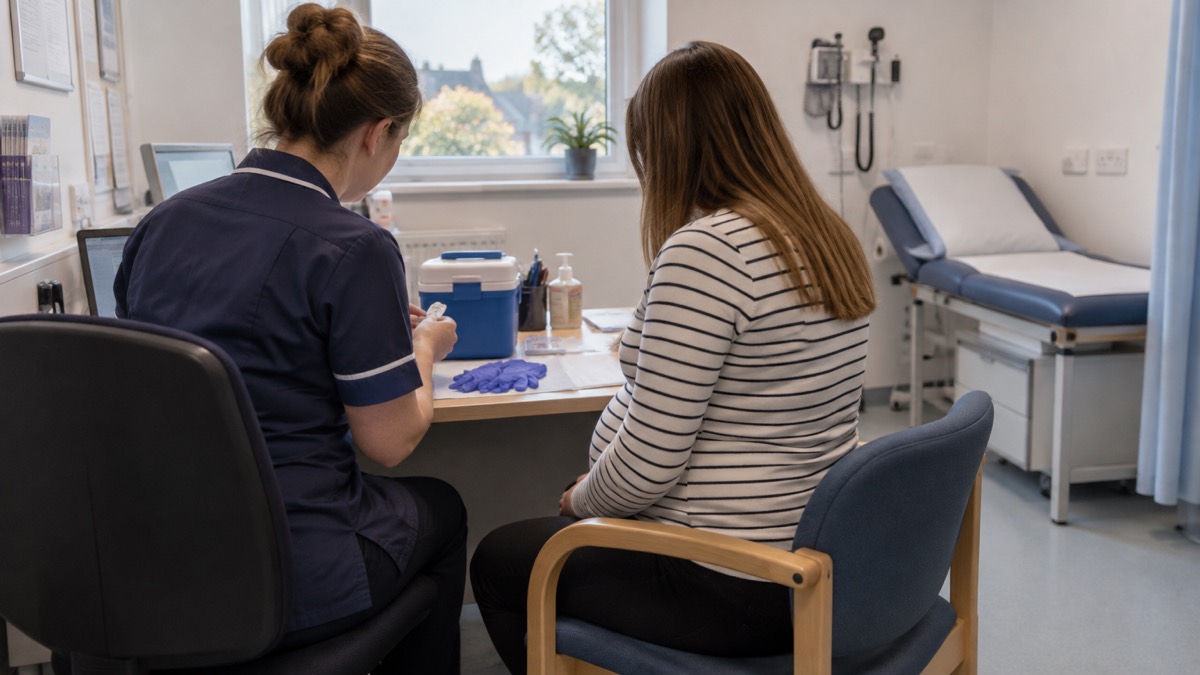
If you are unsure whether you are eligible for any vaccine, the fastest routes are your GP practice, a pharmacy offering NHS vaccinations, or the NHS website22. Social care staff can check eligibility for flu vaccination and book through occupational health services, their pharmacy or their GP; for COVID-19, NHS England will contact those eligible16. If you feel unwell and are not sure which service you need, NHS 111 can help: see NHS 111: What It Can Help With and How to Use It and When to Call 111 and When to Call 999.
For the wider picture of how outbreaks unfold and what a household should do, see Health Emergencies: A Household Guide to Outbreaks, Pandemics and Medicine Supplies, Infectious Disease Outbreaks Near You: What to Do and Pandemics: How the UK Plans and What Households Should Do.
Sources (31)
- Keeping well in winter weather, Surrey County Council, 2026-09-11
- UKHSA urges vaccination against respiratory viruses ahead of winter, Wiltshire and Swindon Prepared, 2026-10-25
- Prepare for winter, King Street Surgery, 2026-01-20
- Use the right service this winter, Hampshire Hospitals NHS Foundation Trust, 2026-10-29
- Measles, Derbyshire County Council, 2026-10-29
- Measles factsheet, UK Health Security Agency, 2026-10-29
- Flu vaccination, Derbyshire County Council, 2026-10-29
- Stay Well This Winter 2025, NHS England, 2025
- Why it is important to get a flu vaccine, Wiltshire and Swindon Prepared, 2023
- Keep warm, keep well, NHS, 2022-11-16
- Flu, Derbyshire County Council, 2026-10-29
- Flu, Met Office, 2026-10-28
- Stay well in winter, Met Office, 2026-10-28
- Severe weather advice, West Yorkshire Prepared, 2026-10-29
- Keep well, keep warm, Stonehill Medical Centre, 2022-11-01
- Supporting vulnerable people before and during cold weather, UK Government, 2025-09-24
- Seasonal winter safety advice, Suffolk Fire and Rescue Service, 2026-10-29
- Staying well in winter - Derbyshire County Council, Derbyshire County Council
- London Prepared update, Greater London Authority, 2026-10-25
- Your local 999 and 111 services, London Ambulance Service NHS Trust, 2026-08-10
- Top tips for keeping warm, Nottinghamshire County Council, 2023
- Winter leaflet, UK Government, 2023-08
- Coronavirus, UK Government, 2026-10-29
- Coronavirus, Derbyshire County Council, 2026-10-29
- Health emergencies, Somerset Council, 2026-10-28
- Get the right help and support, South Western Ambulance NHS Foundation Trust, 2026-10-29
- Winter Wellness 2025-26 leaflet, NHS North East London, 2025-11
- Your Health Guide Winter 2025-26, NHS West of Scotland Innovation Hub, 2025-12
- Measles, Derbyshire County Council, 2026-10-29
- Meningitis and meningococcal disease, Public Health Wales, 2026-10-15
- Meningitis, Public Health Wales, 2026-10-15
 Medicine Cabinet Checklist
 Sick at Home Supplies Kit
 Caring for Someone Ill at Home
 Pandemics and UK Household Plans
 Outbreaks Near You
 UK Health Security Agency
 Staying Home When Ill
 Stopping Infections at Home
 Caring for a Sick Person at Home
 Keeping Prescription Medicine
 Medicine Shortages Explained
 Storing Medicines Safely
 Urgent Care and A&E
 Flu Symptoms and Getting Help
 COVID-19 Symptoms and Testing