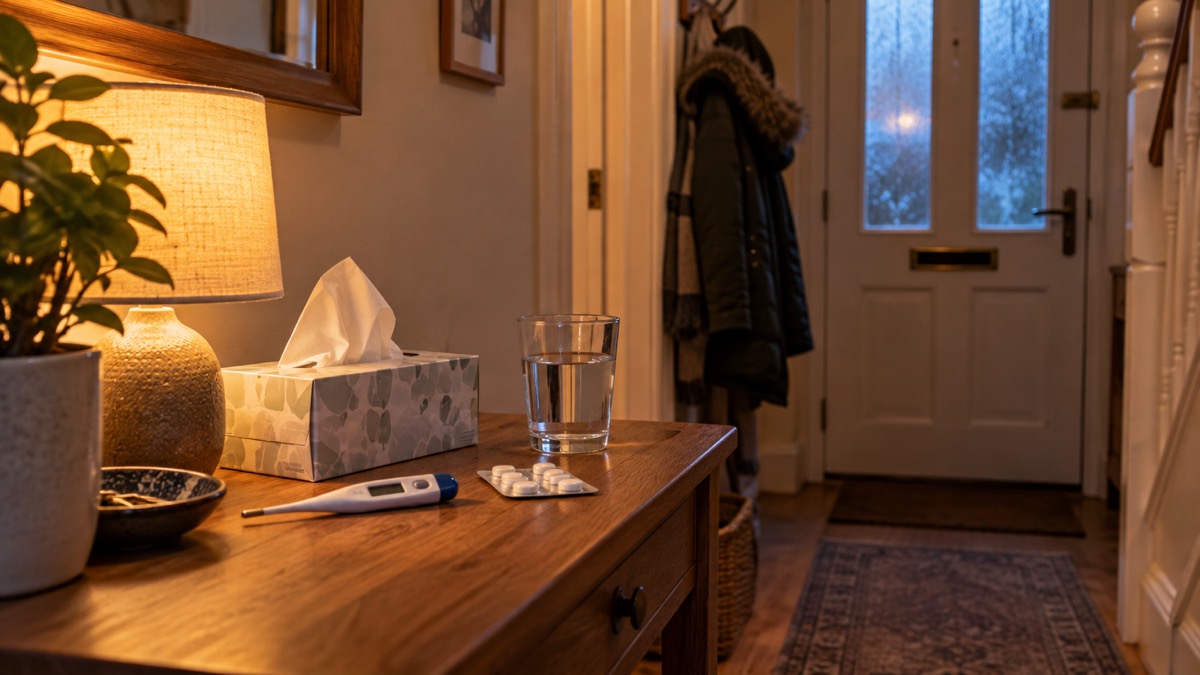
Flu is a very contagious viral infection that affects people of all ages, and its symptoms hit you suddenly and sometimes severely: usually a fever, chills, headaches and aching muscles, often with a cough and sore throat at the same time1. Most healthy people shake it off within a week at home with rest, fluids and paracetamol or ibuprofen3. But flu can make some people seriously ill, and it is more serious for pregnant women, very young children and older people2.
What to do first: stay at home, rest, drink plenty of water, and take paracetamol or ibuprofen to lower your temperature and treat aches and pains1. You are more likely to pass flu to others in the first 5 days after infection, so keep your distance from the household where you can and wash your hands often1. Call 111 if you feel very unwell, are short of breath, or are in one of the higher-risk groups; call 999 for sudden chest pain, severe difficulty breathing, or coughing up blood1.
Flu is not a stomach bug and it is not just a bad cold. It is a virus that spreads easily from person to person, through germs from coughs and sneezes that can survive on hands and surfaces for 24 hours5. Cold weather has a significant impact on the number of cases, which is why there are many more cases throughout the winter months2. This page covers what flu feels like, how to look after yourself and your family at home, how to stop it spreading through the household, and exactly when to pick up the phone for help. If you want to go deeper on any part of this, our pages on staying at home when ill, stopping infections spreading at home and NHS 111 expand on each step.
Flu symptoms come on suddenly
The clearest sign that this is flu rather than anything else is the speed. Flu symptoms appear quickly, within a few hours, and they hit you suddenly and sometimes severely1. The usual picture is a fever, chills, headaches and aching muscles, and you can often get a cough and sore throat at the same time2. What distinguishes flu from a heavy cold is the exhaustion: flu makes you feel exhausted and too unwell to carry on as normal, whereas with a cold you feel unwell but still well enough to do your normal activities1.
The symptoms are similar for children, but children can also get pain in their ear, sore eyes, swollen glands and appear less active1. A child who is unusually quiet, floppy or hard to wake is always a child to take seriously, and the emergency signs for children are covered below.
A fever at home is worth measuring properly rather than guessing. A thermometer lets you track whether a temperature is coming down after paracetamol and gives you a concrete number to report if you call 111. Keeping a thermometer in the house is one of the essentials that NHS advice recommends stocking up on ahead of winter, alongside liquid paracetamol or ibuprofen suitable for children8.
Flu or a cold: how to tell them apart
Cold and flu symptoms are similar, but flu tends to be more severe1. The NHS sets out three practical differences that you can judge from your own sofa:
| Flu | Cold | |
|---|---|---|
| How it starts | Appears quickly, within a few hours | Appears gradually over 1 to 2 days1 |
| How much it affects you | Affects more than just your nose and throat | Affects mainly your nose and throat1 |
| What you can still do | Makes you feel exhausted and too unwell to carry on as normal | You feel unwell, but still well enough to do normal activities1 |
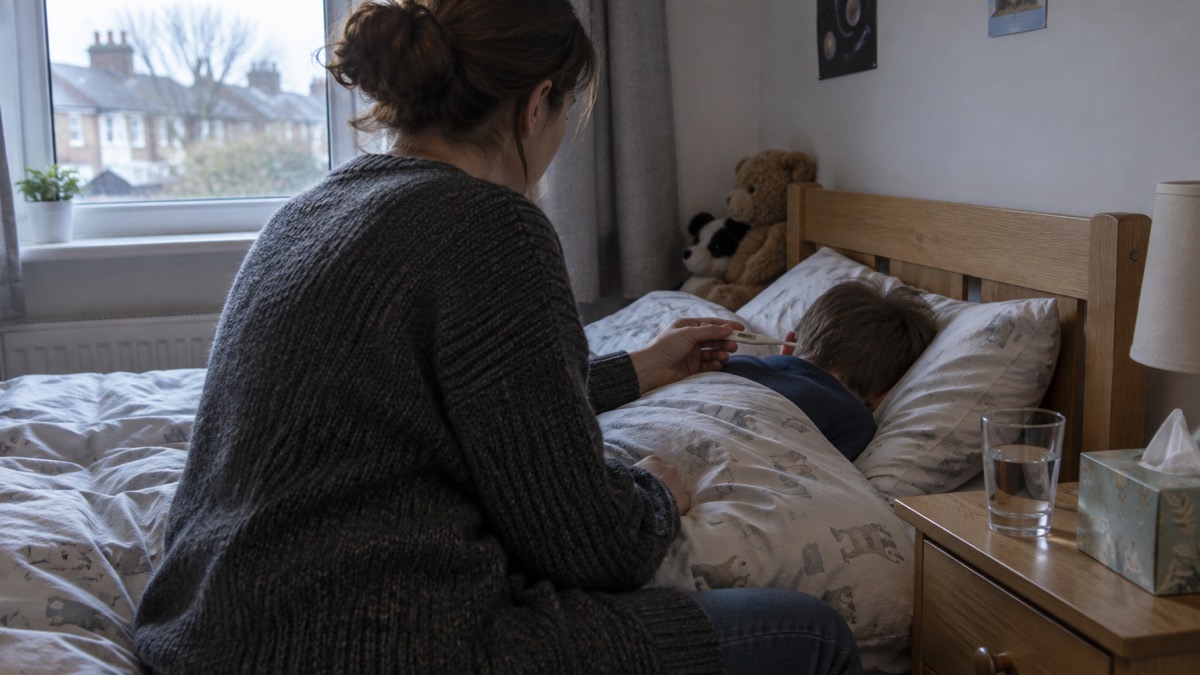
In practice, the question people ask is "can I go to work or school today?" If the answer is genuinely no, you feel knocked flat and you cannot function, that points to flu and you should stay at home. If you are snotty and croaky but functioning, that is more likely a cold. Flu tends to be more severe than a cold, appears quickly within a few hours rather than gradually over 1 to 2 days, and affects more than just your nose and throat9.
If you are unsure whether it is flu, a cold or COVID-19, our page on telling them apart goes through the comparison in more detail. And if symptoms of a cold, flu or respiratory infection are prolonged, or you have a chronic condition that is getting worse, contact your GP rather than waiting it out10.
Looking after yourself at home
Most flu is managed at home, and that is the right place for it unless you fall into one of the higher-risk groups or develop warning signs. The NHS advice for adults is simple and consistent:
- Rest and sleep. You may need to stay in bed for a few days if you have flu11. Do not push back into normal activity while you still have a temperature.
- Take paracetamol or ibuprofen to lower your temperature and treat aches and pains1.
- Drink plenty of water to avoid dehydration. A practical check the NHS gives: your pee should be light yellow or clear1.
- Stay at home and avoid contact with other people if you have a high temperature, feel hot, cold or shivery, or do not feel well enough to do your normal activities1.
If you are healthy, you will usually shake flu off within a week4. Flu often gets better on its own, but it can make some people seriously ill, which is why the sections on risk and warning signs below matter5.
Do not double up on paracetamol
Before you take any combination of products, read the ingredients list on the packet. If a flu remedy already contains paracetamol, it replaces your paracetamol dose, it does not add to it. If you are unsure what you can safely take together, you can get advice from NHS 111, online at 111.nhs.uk or by calling 111 for free from a landline or mobile, 24 hours a day, 7 days a week13.
Painkillers and care for children
For children, give paracetamol or ibuprofen if they are distressed or uncomfortable, and check the packaging or leaflet to make sure the medicine is suitable for their age, or speak to a pharmacist or GP if unsure1. Liquid paracetamol or liquid ibuprofen suitable for children are the usual forms. One caution from NHS advice for children's coughs and colds: children with asthma may not be able to take ibuprofen, so check with a pharmacist first8.
Beyond medicine, the basics are the same as for adults: get your child to rest and drink plenty of fluids8. Planning ahead helps here. NHS advice to parents is to stock up on essentials before winter, including liquid paracetamol or ibuprofen, a thermometer, antiseptic cream and plasters, so you are not making a trip to a pharmacy with a feverish child in tow8. Our medicine cabinet checklist and staying at home when ill supplies checklist set out what to keep in.
If you are caring for someone else who has flu, our page on looking after someone ill at home covers the practical side: fluids, meals, monitoring and when to escalate.
Stopping flu spreading in your household
You can spread flu even if you don't have symptoms, and you are more likely to spread it to others in the first 5 days after getting infected1. Those first 5 days are when the household measures matter most. The NHS and public health advice for reducing spread at home is:
- Wash your hands often with warm water and soap1.
- Cover your mouth and nose with a tissue when you cough or sneeze, or cough into the bend of your elbow, not into your hand1.
- Bin used tissues as quickly as possible1.
- Keep your distance from others in the house where possible12.
- Where it is safe, open windows to improve ventilation for at least 10 minutes after leaving a room12.
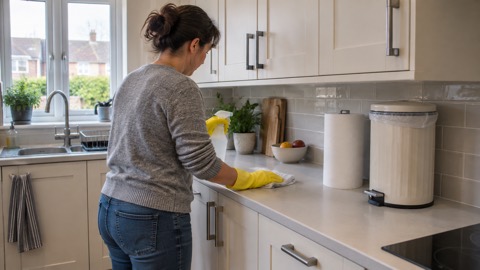
- Clean frequently touched surfaces regularly12.
- Wear a well-fitted face mask if someone at home has a long-term condition or a weakened immune system12.
- Tell visitors if you have symptoms12.
The 24-hour survival of flu germs on hands and surfaces is the reason behind the handwashing and surface cleaning5. Warm water and soap is what the NHS specifies; our page on how long to wash your hands covers the technique, and stopping infections spreading at home covers cleaning and fresh air in full.
If you have flu symptoms, stay at home if you can, to help avoid spreading germs to others5. Where you can, work from home, and tell recent contacts you are feeling unwell so they can watch for symptoms12. If you must attend a medical or dental appointment in person, tell them about your symptoms first12. Our page on how to stop flu spreading in your home develops all of this.
When to call 111 for flu
NHS 111 is a free service that provides urgent medical advice and support, available 24 hours a day, 7 days a week, for situations that are not life-threatening7. It is there for exactly the "I'm not sure whether this needs a doctor" moment. Calls are answered by health advisors supported by experienced clinicians, and your call may be referred to a trained nurse or paramedic for further assessment15.
Ask for an urgent GP appointment or get help from NHS 111 if you or your child have symptoms of flu and1:
- you're worried about your baby's or child's symptoms
- you're 65 or over
- you're pregnant or have recently given birth
- you have a long-term medical condition, for example diabetes or a condition affecting your heart, lungs, liver, kidneys, brain or nerves
- you have a weakened immune system, for example because of chemotherapy or HIV
- you feel very unwell
- you feel short of breath
- your symptoms do not improve after 7 days
You can call 111 for free from a landline or mobile phone, or use NHS 111 online at 111.nhs.uk7. The online triage service is for people aged 5 and over in England: you enter your age, sex, postcode and choose the symptom that's bothering you most today, and answer the same few questions you would be asked on the phone13. Depending on what you need, you might be advised to call 999 or go to A&E, go to an urgent treatment centre, see an out-of-hours GP, get a callback from a nurse, contact your own GP surgery, see a pharmacist, or look after yourself safely at home13.
If you have difficulty hearing, you can access NHS 111 using the British Sign Language interpreter service7. You can also call 18001 111 on a textphone16, or 18001111 using text relay14.
A general rule that holds whatever the illness: call 111 if you, your child or someone you look after feels very unwell or like there's something seriously wrong17. And if you are worried it might be sepsis, do not hesitate: "Do not worry if you're not sure if it's sepsis, it's still best to call 111"17. Our pages on NHS 111 and when to call 111 and when to call 999 go through the decision in detail.
When to call 999 or go to A&E
Sepsis is the other emergency to know about. The North East Ambulance Service lists these signs in children: fast breathing, a fit or convulsion, looking mottled, bluish or pale, a rash that doesn't fade when you press it, being very lethargic or difficult to wake, or feeling abnormally cold to touch18. If you or someone you look after has a quick progression of these symptoms, phone 999 or go to A&E straight away18.
For adults, the same principle applies: a quick worsening, extreme breathlessness, confusion or a sense that something is seriously wrong means 999, not 111. NHS 111 should be used by patients who have an urgent medical need, rather than calling 999 or going to your local A&E; 999 is for the life-threatening situations above19. If 111 decides you need A&E, they will direct you appropriately13. Our page on urgent treatment centres, minor injury units and A&E explains which service does what.
Who is most at risk of serious illness from flu
Flu often gets better on its own, but it can make some people seriously ill5. Those who are more likely to become seriously ill from flu include children under 6 months old, people aged over 65, pregnant women, and those with certain underlying health conditions5. For young children, older people, or those with chronic health conditions, flu can be very serious4. People with chronic conditions such as asthma, and older people, are most at risk of developing complications if they catch flu20.
The London Ambulance Service lists the long-term conditions that make the free seasonal flu vaccine worth having: a heart problem, chest complaint or breathing difficulties including bronchitis or emphysema, kidney disease, lowered immunity due to disease or treatment such as steroid medication or cancer treatment, liver disease, stroke or a transient ischaemic attack (TIA), diabetes, a neurological condition such as multiple sclerosis (MS) or cerebral palsy, or a problem with your spleen such as sickle cell disease or having had your spleen removed11.
If you live with or care for someone in these groups, the household measures in the spreading section above matter more, including wearing a well-fitted face mask at home if someone there has a long-term condition or a weakened immune system12. Our page on people at higher risk in an outbreak covers protecting vulnerable relatives in depth.
The free flu vaccine: who can get it and where
The flu vaccine helps protect against flu: it reduces the chance of catching and passing on flu, and it also reduces the risk of becoming seriously ill and needing care in a hospital5. It is offered on the NHS every year in autumn or early winter to some adults and children at higher risk of getting seriously ill from flu1.
In England, you can get the free NHS flu vaccine if you16:
- are aged 65 or over, including those who will be 65 by 31 March 2026
- have certain long-term health conditions
- are pregnant
- live in a care home
- are the main carer for an older or disabled person, or receive a carer's allowance
- live with someone who has a weakened immune system
The children's programme runs alongside this. GPs invite all 2 and 3 year-old children for a flu vaccination, and the flu vaccination is also offered to all primary school pupils and some secondary school aged children21. The children's flu vaccine is usually given by nasal spray, so no needle for most children5. Parents and guardians should look out for the flu vaccination consent request from their children's school and return it promptly, as the vaccine can only be offered once consent has been received5.
Where to get it
If you're eligible for the free flu vaccine you may get it from your own GP practice, or any pharmacy offering NHS flu vaccinations5. In England you can contact your GP surgery to book an appointment, book online or in the NHS App if you're aged 18 or over, or find a pharmacy offering walk-in vaccination without an appointment if you're aged 18 or over16. If you are pregnant, you can also get your flu vaccine through some maternity services21. Contact your GP or pharmacist if you think you, or someone you care for, should be eligible for a free flu jab23.
Why a new vaccine every year
Over time flu viruses can mutate, so a new vaccine is produced every year based on the strains of virus expected to be circulating2. The flu vaccine is offered every year as the vaccine changes slightly to ensure the best protection is offered21. In the words of NHS winter advice: "Flu viruses change each year, so you need to get vaccinated every year if you can"24. Getting your flu vaccine and COVID-19 vaccine every year, if you're eligible, tops up your protection and reduces your risk of getting severe symptoms25. Our page on who can get a free flu vaccine has the full eligibility detail, and vaccines that protect against outbreaks covers the wider picture.
Reducing your risk of flu this winter
Beyond vaccination, the practical steps to reduce your risk in flu season are the same ones that stop it spreading in a household. Wash your hands often with warm water and soap, cover coughs and sneezes with a tissue, and bin tissues quickly1. Flu germs can live on hands and surfaces for 24 hours, so cleaning frequently touched surfaces regularly during flu season is worthwhile5.
Keeping warm during winter can help prevent colds, flu and more serious health problems such as heart attacks, strokes, pneumonia and depression24. Cold weather has a significant impact on the number of flu cases, which is why flu season in the UK runs through the winter months2. It is important to get the flu vaccine if you are advised to5, and if you have any questions about vaccinations in pregnancy, discuss this with your midwife or GP5.
If you want to be ready for a winter in which flu reaches your household, our getting ready for a pandemic household checklist and the section page on health emergencies set out the wider preparations, from medicine supplies to caring for someone ill at home.
Sources (25)
- Flu, NHS, NHS, 2026-02-03
- Flu and how to avoid it, Met Office, Met Office, 2026-10-28
- Flu, Derbyshire County Council, Derbyshire County Council, 2026-10-29
- 10 things you should do now to prepare for winter, Met Office, Met Office, 2026-10-25
- Flu, Derbyshire County Council, Derbyshire County Council, 2026-10-29
- Self care, NHS Cornwall and Isles of Scilly ICB, NHS Cornwall and Isles of Scilly ICB, 2024-01-11
- NHS 111, NHS England, NHS England, 2026-10-29
- What to do if your child is unwell, NHS North East London ICB, NHS North East London ICB, 2024-10
- Winter health, Hanham Health, Hanham Health, 2026-10-29
- Winter health hub, South Western Ambulance Service NHS Foundation Trust, South Western Ambulance Service NHS Foundation Trust, 2026-10-29
- What to do if you have flu symptoms, London Ambulance Service, London Ambulance Service, 2026-08-10
- Guidance for people with symptoms of a respiratory infection including COVID-19, Welsh Government, Welsh Government, 2020-03-19
- NHS 111 online, NHS Digital, NHS Digital, 2026-10-29
- NHS 111, NHS Essex ICB, NHS Essex ICB, 2026-08-19
- NHS 111, Yorkshire Ambulance Service, Yorkshire Ambulance Service, 2026-10-29
- Use the right service this winter, Hampshire Hospitals NHS Foundation Trust, Hampshire Hospitals NHS Foundation Trust, 2026-10-29
- Sepsis, NHS 111 Wales, NHS 111 Wales, 2026-01-12
- Identifying sepsis, North East Ambulance Service, North East Ambulance Service, 2026-10-29
- Alternatives to 999, South Central Ambulance Service, South Central Ambulance Service, 2026-10-29
- Pandemic flu and infectious diseases, Dorset Prepared, Dorset Prepared, 2024-04-16
- Staying well in winter, Derbyshire County Council, Derbyshire County Council, 2026-10-29
- Staying well in winter, Derbyshire County Council, Derbyshire County Council, 2026-10-29
- Stay well in winter, Met Office, Met Office, 2026-10-28
- Stay Well This Winter, NHS England, NHS England, 2025
- Cold weather advice, West Midlands Ambulance Service, West Midlands Ambulance Service, 2026-05-20
 Medicine Cabinet Checklist
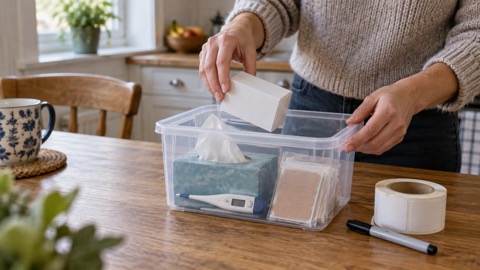 Sick at Home Supplies Kit
 Caring for Someone Ill at Home
 Pandemics and UK Household Plans
 Outbreaks Near You
 UK Health Security Agency
 Staying Home When Ill
 Stopping Infections at Home
 Caring for a Sick Person at Home
 Keeping Prescription Medicine
 Medicine Shortages Explained
 Storing Medicines Safely
 Urgent Care and A&E
 Vaccines Against Outbreaks
 COVID-19 Symptoms and Testing