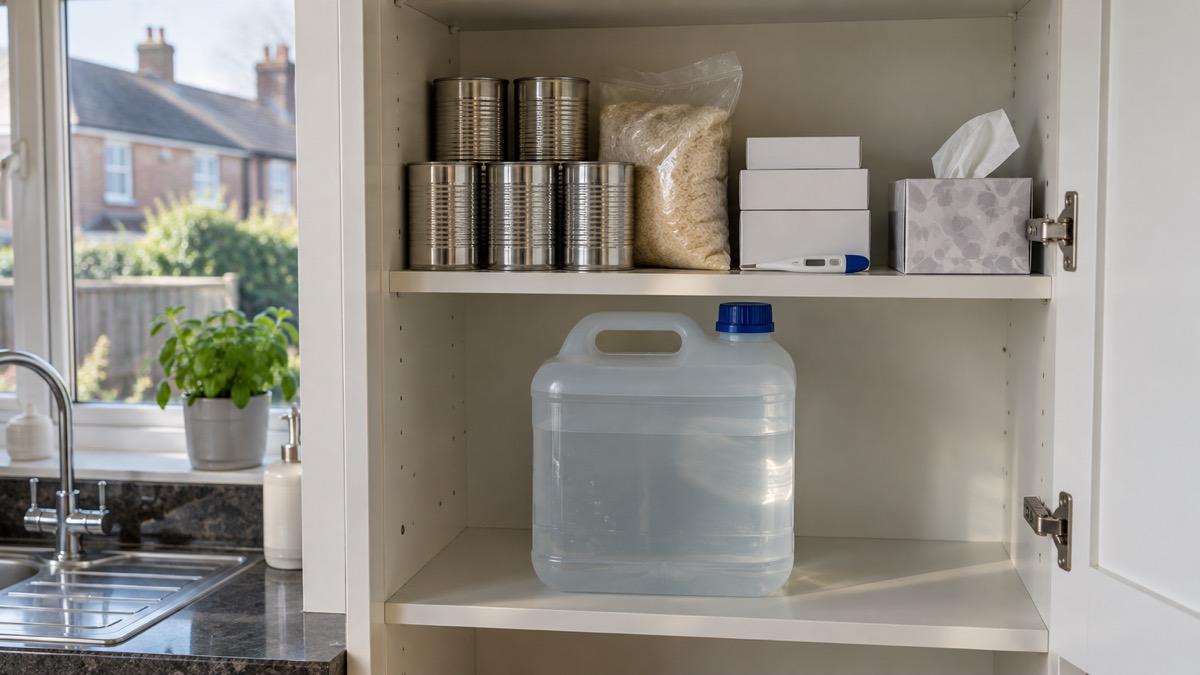
A pandemic is not a single event you can see coming and shelter from. It is a stretch of weeks or months when an infection is spreading widely, when you may be asked to stay at home, and when the sensible household job is to be ready to look after yourself and your family without extra trips out. The good news is that the checklist is short, cheap and mostly things you already have.
Start with three things. Keep a small supply of prescription medicine and over-the-counter cold and flu remedies, not a stockpile1. Write down your emergency contacts, anyone who might need checking on, and your regular medicines and doses3. And know the numbers: NHS 111 for advice when you are unsure, 999 for a life-threatening emergency4.
Everything else follows from those. The sections below set out the full checklist, then explain how long to stay home when you are infectious, who needs protecting, and when to pick up the phone.
Pandemic household checklist
Work through this list once, then check it at the start of each winter, when flu outbreaks often occur10. Each item is something you would be glad of if the household had to stay home for a week or two.
Vaccines and medicines: keep a small supply, not a stockpile
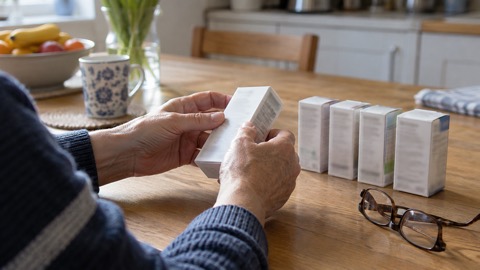
The single most useful medicine habit is boring: keep your prescriptions running and have a few days' supply at home. Official advice is to stock up on any medication you may need17, and to keep a small supply of long-life food, drinking water, toiletries and prescription medicines at home2. If you have babies, young children or pets, think about the additional supplies they need2.
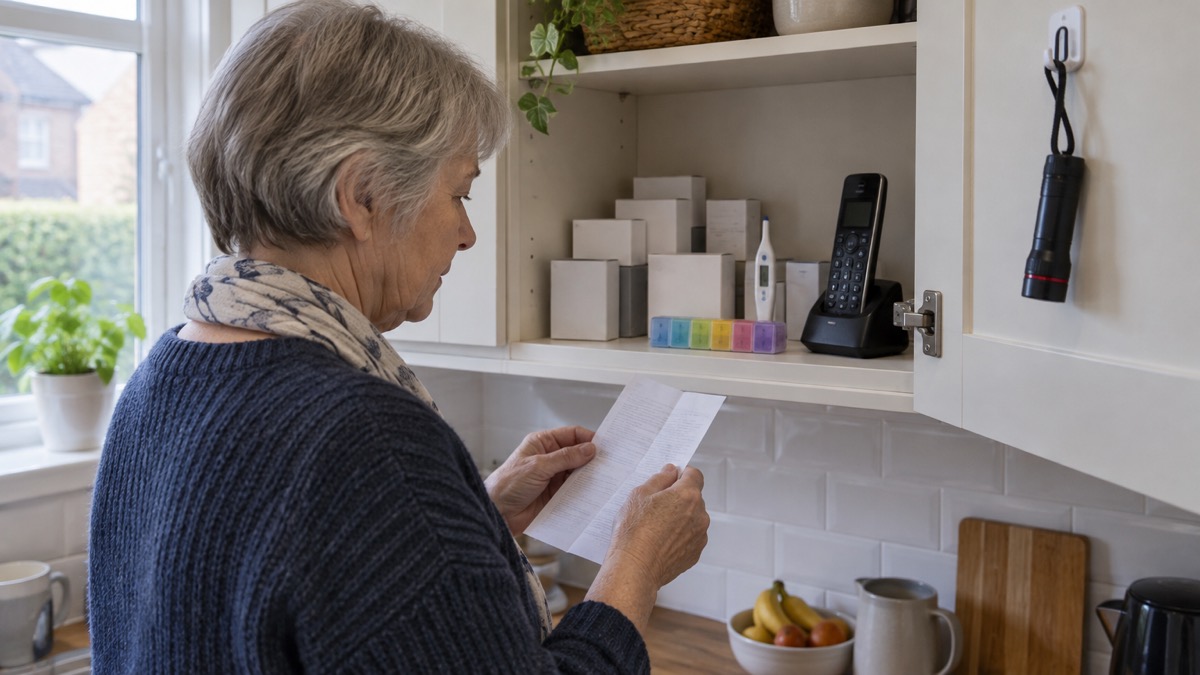
What you should not do is build a cupboard full of extras. NHS advice to patients during a medicines shortage is explicit: avoid stockpiling and ordering more than you need until your next prescription1. The same guidance applies in ordinary times. Medicines go out of date, so do not overstock your medicine cabinet, and always follow the advice on the pack18. A stockpile is wasted money at best and a temptation to take the wrong thing at worst.
For everyday illness, a stock of over-the-counter cold and flu medication to relieve your symptoms is what official pandemic guidance suggests12. Carry spare medication with you when you go out rather than relying on being home at the right time19.
If you are ever short of a medicine, do not simply stop taking it. The NHS advises that you do not stop a medicine without speaking to a healthcare professional, and do not stop medicines suddenly without advice18. For more on keeping supplies steady, see Keeping Enough Prescription Medicine at Home and Medicine Shortages: Why They Happen and What to Do.
Stay at home while you are infectious
The core instruction for any respiratory pandemic is the same: if you are ill, try to stay at home and avoid contact with other people21. For COVID-19, the NHS gives specific periods, counted from the day you took the test.
| Who | How long to stay home after a positive test | Avoid people at higher risk for |
|---|---|---|
| Adults (18 and over) | 5 days6 | 10 days7 |
| Under 18s | 3 days6 | 10 days7 |
Children and young people tend to be infectious for less time, which is why their period is shorter7. The 10-day figure is separate: it is about protecting anyone more likely to get seriously ill from viruses, not about your own recovery7.
For flu, the timing is different because the illness behaves differently. You can spread flu even if you do not have symptoms, and you are more likely to spread it to others in the first 5 days after getting infected9. Flu is spread through coughing and sneezing and can live on hands and surfaces for 24 hours9. That makes handwashing and surface cleaning matter throughout, not just when someone is visibly ill.
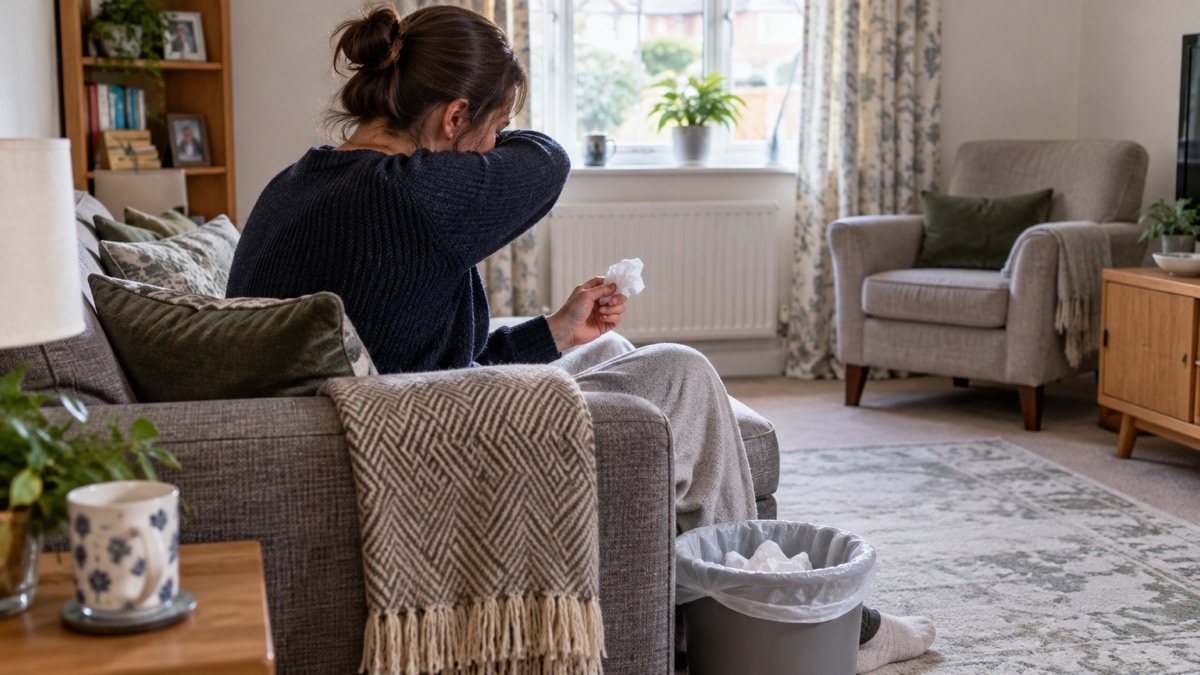
Practical steps while you are infectious, from official prevention advice: wash your hands often with warm water and soap, use tissues to trap germs and bin them promptly, cough into your elbow, regularly clean touched surfaces, wear a face covering in crowded places or close contact, and let fresh air in when you have visitors16. If you have a cough, do not lie on your back; lie on your side or sit upright instead, and do not use a fan to cool your room as it may spread the virus6.
Who is at higher risk and how to protect them
Some people get much sicker from these infections than others. Knowing who they are in your own circle is what turns a general instruction into a plan.
For COVID-19, official guidance lists older adults, those with some long term conditions, and those who are pregnant, especially after 28 weeks16. Greater Manchester's pandemic guidance also names pregnant people, older adults and health and social care professionals as higher-risk groups12. For flu, those more likely to become seriously ill include children under 6 months old, people aged over 65, pregnant women, and those with certain underlying health conditions9. Flu can be more serious for pregnant women, very young children and older people10.
The most protective single step is vaccination where it is offered. It is important to get the flu vaccine if you are advised to22. COVID-19 vaccination eligibility changed in the UK in autumn 2025, and the current offer is narrower than in earlier years; check Who Can Get a COVID-19 Vaccine Now? for the current position.
Beyond vaccination, protection is mostly about timing and distance:
- Keep the 10-day gap. After a positive test, try to wait 10 days before meeting anyone more likely to get seriously ill from viruses7.
- Test before visiting. If you are eligible for COVID-19 treatments, take a rapid lateral flow test as soon as you get symptoms6.
- Let fresh air in. Official prevention advice includes letting fresh air in when you have visitors16.
- Check on people without visiting. A phone call does the same job as a doorstep chat when you are infectious.
For more on shielding relatives, see People at Higher Risk in an Outbreak: Protecting Vulnerable Relatives.
When to call NHS 111, 999 or go to A&E
Most pandemic illness is managed at home. The skill is knowing when it is not.
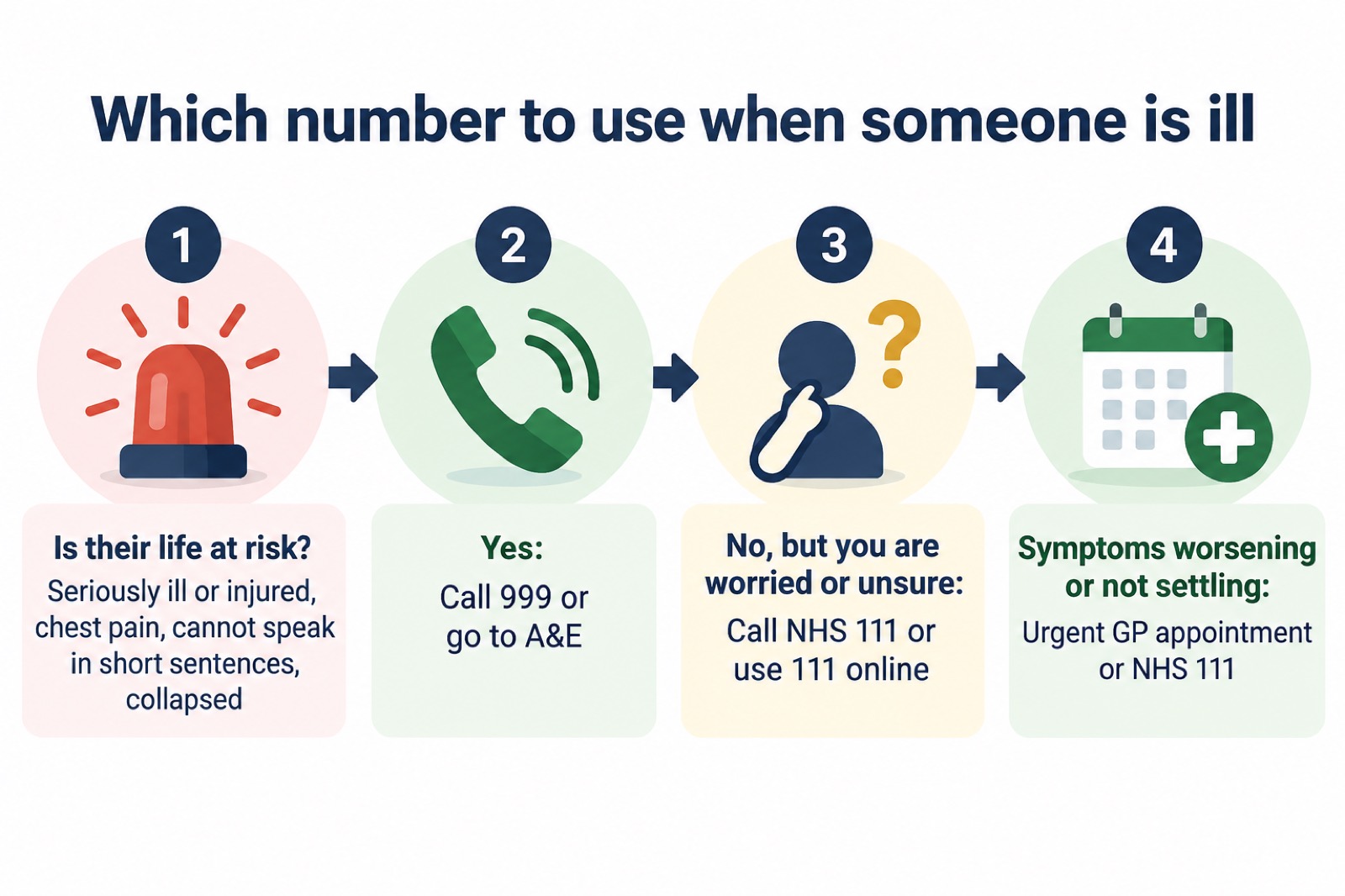
Call 999 or go to A&E if you or a child seems very unwell, gets sudden chest pain, are so breathless you cannot say short sentences when resting, start coughing up blood, collapse, faint, or have a seizure or fit for the first time, or a rash that does not fade when you roll a glass over it6. For flu, the same emergency list includes sudden chest pain, difficulty breathing and coughing up a lot of blood20.
For everything else, NHS 111 is the front door. Use 111 if you think you need to go to A&E or another NHS urgent care service but are not sure which one is most appropriate or closest5. Depending on the information you provide, you might be advised to call 999 or go to A&E in an emergency5. People should still call 999 and go to A&E in an emergency, when someone is seriously ill or injured and their life is at risk4.
Ask for an urgent GP appointment or get help from NHS 111 if you are worried about symptoms, symptoms are getting worse or not getting better, there are other signs of illness such as a rash, loss of appetite or feeling weak, or a high temperature lasting 5 days or more or not coming down with paracetamol6. For a child, the thresholds are tighter: a child under 3 months old with a temperature of 38C or higher, or a child 3 to 6 months old with a temperature of 39C or higher, needs an urgent GP appointment or NHS 1116. Contact your GP if your child has persistent vomiting18.
Keeping the checklist ready through winter
Flu outbreaks often occur during the winter each year, and cold weather has a significant impact on the number of cases10. That makes late autumn the natural time to run through the list: check expiry dates on medicines, restock tissues and soap, confirm your repeat prescriptions are up to date, and re-read your household plan18.
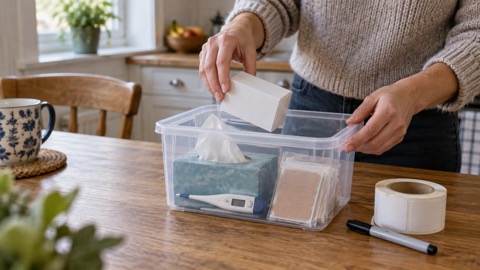
Keep the plan somewhere you will find it in a hurry, and put a copy in your emergency kit11. If someone in the household is at higher risk, note the 10-day rule somewhere visible so nobody forgets it in the relief of a negative-feeling day7.
Finally, know where the official advice lives. There are no COVID-19 restrictions in the UK, but COVID-19 is still detected in the population and new variants can emerge16. Advice can change with the variant and the season, so check the current position rather than relying on what you remember. The Health Emergencies section covers the wider picture, and Pandemics: How the UK Plans and What Households Should Do explains how official guidance is issued.
Sources (22)
- Advice for patients during a medicines shortage, NHS Specialist Pharmacy Service, 2025
- Be prepared for winter emergencies, NHS Norfolk and Suffolk ICB, 2026
- Be ready for emergencies, UK Government, 2026
- NHS 111, NHS Lancashire and South Cumbria ICB, 2026
- When to use 111, London Ambulance Service, 2026
- COVID-19 symptoms and what to do, NHS, 2026
- COVID-19 rapid lateral flow test, NHS, 2025
- Flu, NHS, 2026
- Flu, Derbyshire County Council, 2026
- Flu and wellbeing, Met Office, 2026
- Emergency kit, Ready Scotland, 2026
- Pandemic and infectious disease, Greater Manchester Combined Authority, 2026
- Pandemic, Essex Prepared, 2026
- What to do if you have flu symptoms, London Ambulance Service, 2026
- Planning for an emergency kit, Wiltshire Council, 2026
- Coronavirus COVID-19, Derbyshire County Council, 2026
- Snow buddies, Derbyshire County Council, 2026
- Your Health Guide Winter 2025-6, NHS Western Isles, 2025
- Out and about, Wiltshire and Swindon Prepared, 2026
- Self care, NHS Cheshire and Merseyside ICB, 2024
- Coronavirus (COVID-19), GOV.UK, 2026
- Flu, Derbyshire County Council, 2026
 Medicine Cabinet Checklist
 Sick at Home Supplies Kit
 Caring for Someone Ill at Home