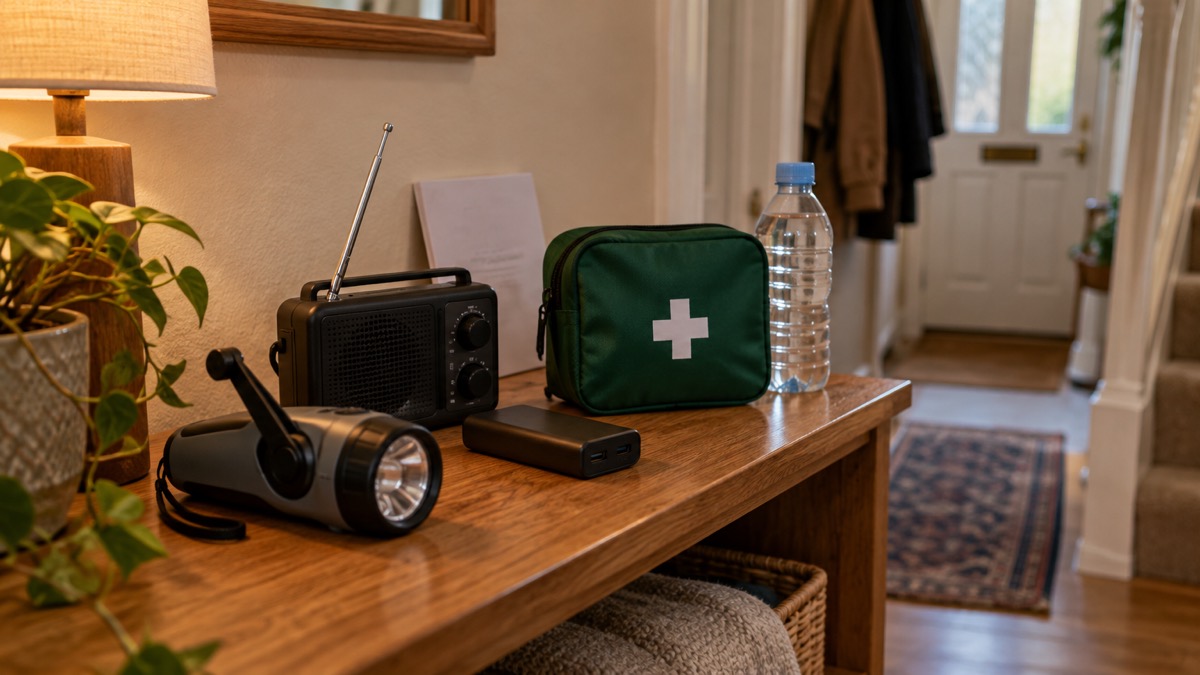
The UK government's advice to households is simple and consistent: make a household emergency plan, keep an emergency kit at home, store bottled water and food for three days, and know how to turn off your gas, electricity and water. On 22 October 2026 the government launched the Be Ready campaign, encouraging households to take a few small steps to stay prepared if everyday services are temporarily disrupted, including keeping a small supply of non-perishable food and bottled water at home1.
That advice is published on the government's Prepare website, which was created to provide advice to the public on actions they can take to be more prepared for emergencies2. It was developed by the Resilience Directorate of the Cabinet Office, in partnership with experts from across local and national government, the responder community, voluntary sector organisations and academia3. In Northern Ireland the same practical guidance appears on the nidirect government website4, and every part of the UK also has a Local Resilience Forum, made up of local authorities, the emergency services, the NHS and health bodies and environment-related government agencies, whose job includes warning, informing and advising the public in an emergency5.
This page sets out what the official advice actually asks you to do, where each piece of it comes from, and how to tell official advice from unofficial tips. It follows the government's own structure: the plan first, then the kit, then what to do if you have to leave your home.
Where the government's household advice comes from
The main national source is the government's Prepare website, which councils across England, Wales and Scotland point households towards. Cumberland Council, for example, tells residents that the government's Prepare website contains lots of advice on how to be prepared for many emergency situations10. The site is organised around hazards, such as power cuts, and around the practical steps a household can take before, during and after an emergency2.
In October 2026 the government added the Be Ready campaign, which distils the Prepare website's advice into a short checklist and a household plan template. The government has also worked closely with local resilience forums across the UK to root the advice in what works for local communities1. You can read more about the campaign itself on our page on Be Ready: the national resilience campaign.
Below the national level, your Local Resilience Forum covers your area. Each region across the country has one, made up of local authorities, the emergency services, the NHS and health bodies and environment-related government agencies, set up to warn, inform and advise the public in the event of an emergency5. Lincolnshire County Council, for instance, directs residents to Gov.uk or the Lincolnshire Resilience Forum for further advice11. Our guide to Local Resilience Forums explains what they do and how to find yours.
Councils add their own local layer. Greater Manchester Combined Authority asks households to prepare a Household Emergency Plan containing all the information needed to leave the property quickly and calmly if evacuated, using the template on the government's Prepare website12, and Nottinghamshire County Council advises residents to know the emergency procedures for their workplace or their child's school13. In Scotland, Argyll and Bute Council publishes a Community Emergency Plan template for local groups14, and in England West Northamptonshire Council publishes a protecting yourself guide with its own plan15. Somerset Council provides templates for personal, parish and business emergency plans16.
The arrangements differ slightly by nation, but the household advice is the same in substance. The government's Prepare website contains advice on how to be prepared for many emergency situations3, and the government has worked closely with local resilience forums across the UK to root the advice in what works for local communities3. Each region also has a Local Resilience Forum, made up of local authorities, the emergency services, the NHS and health bodies and environment-related government agencies, set up to warn, inform and advise the public in an emergency4. Wherever you live in the UK, the national Prepare site and your own council's emergency planning pages are the two places to start.
The emergencies the advice prepares you for
The government's advice is deliberately general. It does not ask you to prepare for one specific disaster; it asks you to be ready for any emergency in which everyday services are temporarily disrupted1. The Prepare website organises its hazard pages around events like power cuts, flooding, storms and snow, heatwaves and drought and cyber attacks and major IT failures, and the same practical kit and plan covers most of them2.
That is why the advice centres on losing essential services. The advice applies to a variety of emergency situations that could cause people to either be confined to their homes or kept out of them for a number of days8. The point of a three-day store of food and water is not any single scenario: the official guidance is non-perishable food to last at least 3 days that does not require cooking or refrigerating, such as tinned meat, fruit or vegetables, plus a tin opener8. Almost any disruption, from a storm to a burst main to a fuel supply problem, is covered by the same household preparations.
The advice also asks households to look outwards. Greater Manchester asks communities to speak with family, friends and neighbours about preparing for an emergency and to understand what support you and they might need17, and to sign up to alerts and warnings covering their area, pointing to the list of trusted sources of alerts on the government's Prepare website17. If you would like to help during an emergency, the government's advice is to look out for calls for support from local community groups and your local councils; in some emergencies calls for support may come from national government or national voluntary organisations2. Our community resilience page covers this in depth.
Make a household emergency plan
The plan is the first thing the government asks for, and it is a document, not a purchase. Councils advise households to prepare a Household Emergency Plan that contains all the information you need to leave the property quickly and calmly if evacuated, using the template on the Government's Prepare website6. The Royal Borough of Windsor and Maidenhead's version puts it plainly:
"Download this plan, fill it in and agree a plan in advance with your household. Print it out and keep it somewhere safe."
What goes in it follows a consistent pattern across official templates:
- Contact details of who you would need to contact in an emergency, including anyone who might need checking on, and a list of any regular medication and doses9
- Emergency contact numbers, including your doctor and local council4
- Where and how to turn off water, gas and electricity supplies in your home15
- The address of the fire and how to call 999, so children know what to do19
- Who needs copies of your plan, recorded using the template14
The government's advice is also to teach children how and when to call 999 and what they should do if there is an emergency, such as a fire, at home12. Nottinghamshire County Council adds that you should know the emergency procedures for your workplace or your child's school13, and our page on emergencies at school covers what parents should do.
Several councils will send you their plan in an editable form. West Northamptonshire Council publishes its protecting yourself guidance and plan online, and will email Word document versions of the plan template and guidance documents if you request them15. Argyll and Bute Council's Community Emergency Plan includes a Household Emergency Plan template for individuals and families to plan how they would cope in an emergency14.
Print the finished plan and keep it with your emergency kit. A plan stored only on a phone is no use in a power cut or a network outage, which is exactly the kind of emergency it exists for.
The Be Ready checklist, item by item
The Be Ready campaign encourages households to take a few simple steps to stay prepared if everyday services are temporarily disrupted9. Its checklist is deliberately modest: everything on it is ordinary, cheap to assemble and available anywhere. Here it is, item by item, with the reasons the government and councils give for each.
| Item | Why the advice asks for it |
|---|---|
| Household emergency plan, including emergency contact numbers | So you can contact the people you would need to reach, including anyone who might need checking on12 |
| Battery torch with spare batteries, or a wind-up torch | Safer than candles, and does not drain your phone8 |
| First aid kit | On the official list of top ten things to include20 |
| Important documents like birth certificates and insurance policies | On the official list of top ten things to include20 |
| Bottled water and ready-to-eat food that will not go off, plus a can opener if needed | Non-perishable food and water to last at least 3 days, without cooking or refrigerating21 |
| Spare keys to your home and car | On the official list of top ten things to include20 |
| Spare glasses or contact lenses | On the official list of top ten things to include20 |
| Toiletries and details of important medicines | On the official list of top ten things to include20 |
| Pencil and paper, penknife, whistle | On the official list of top ten things to include20 |
| Pet supplies | On the official list of top ten things to include20 |
The checklist also asks you to write down contact details you would need in an emergency, including anyone who might need checking on, and a list of any regular medication and doses9. Beyond the home kit, Somerset Council advises making up a home emergency pack, preparing an evacuation checklist of things to pack quickly, and, depending on the time of year, keeping a basic emergency kit in your vehicle22.
Council checklists in the other nations match it. Northern Ireland's nidirect household emergency kit list includes a list of useful phone numbers (your doctor, close relatives, local council), a battery or wind-up radio, a battery or wind-up torch, spare batteries, candles and matches, a first aid kit, spare keys, a spare pair of glasses or contact lenses, a spare charger for your mobile phone, toiletries and sanitary supplies, and special equipment for children and people with special needs4. Carmarthenshire Council's emergency kit checklist gives the same top ten items as the Be Ready list above20. Our emergency kit page builds the full kit out in more detail.
Food and water: the amounts the government advises
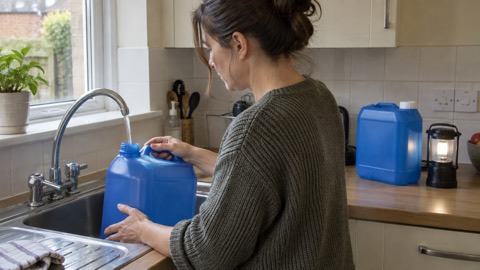
Water is the one item the official advice puts a number on. The Be Ready checklist says bottled water for 3 days, at 3 litres per person per day for drinking, and notes that more would be needed for other tasks such as cooking and washing7. The government's power cuts guidance says the same: keep at least 3 days' worth of bottled water, 3 litres per person per day23.
The underlying figure comes from the World Health Organisation. North Devon Council's guidance explains that a minimum of 2.5 to 3 litres of drinking water per person per day is recommended by the World Health Organisation for survival, and that 10 litres per person per day will make you more comfortable by also providing for basic cooking and hygiene needs24. Greater Manchester's guidance states both figures together: a minimum of 2.5 to 3 litres per person per day for survival, and 10 litres per person per day for basic cooking and hygiene8. For context, the Food Standards Agency advises that the average adult should take in 1.5 to 2 litres of water in a typical day, which is 6 to 8 250ml glasses25.
So a practical reading of the official advice for a household of two adults is: non-perishable food that does not need cooking or refrigerating to last at least 3 days, plus bottled water and ready-to-eat food in the kit, and a tin or bottle opener to get into it. The guidance does not give a litre-per-person figure for water, so buy what you would need for drinking over three days, and more if you want a margin for cooking and washing.
For food, the Household Emergency Plan template asks for non-perishable food to last at least 3 days that does not require cooking or refrigerating, for example tinned meat, fruit or vegetables, plus a tin opener6. The government's broader message is to keep a small supply of non-perishable food and bottled water at home1. Our water and emergency food pages cover storage, rotation and what to do when the supply is interrupted.
Where to keep your emergency kit
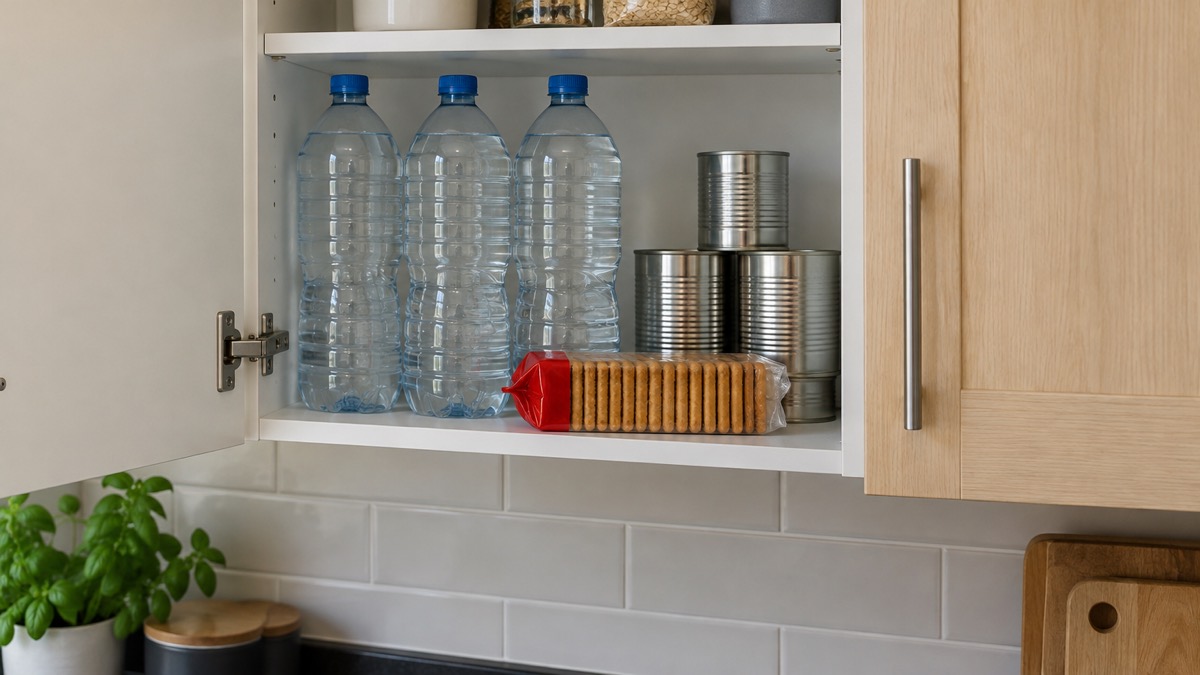
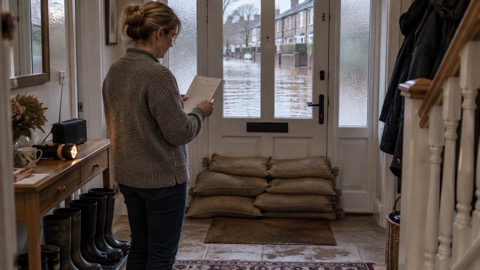
Official guidance is specific about this, because a kit you cannot reach is no kit at all. Wiltshire Council advises that your kit should be stored near an exit to your home, such as by the front door or under the stairs, so it can be easily grabbed if you need to leave quickly26. Carmarthenshire Council's advice is to keep it in a safe place at home where you can reach it easily, and to keep it in a waterproof bag20.
North Hertfordshire District Council adds a useful distinction: prepare a household emergency kit and a smaller personal kit, for example in a backpack, for use should you need to be evacuated, and make sure everyone knows where the kits are kept27. Neath Port Talbot Council likewise advises keeping a list of emergency contact numbers at home in the event of an emergency28.
In practice the official advice amounts to three rules:
- One place, known to everyone. Everyone in the household should know where the kit and the plan are kept27.
- Near an exit. By the front door or under the stairs, so it can be grabbed on the way out26.
- Protected. In a waterproof bag, so a flood or a leak does not ruin it20.
Plan for pets and for where you live
Two adjustments run through the official advice: your pets, and your local area.
On pets, the advice is unambiguous. Lincolnshire County Council's emergency advice says to take your pets with you if you evacuate11. Northern Ireland's nidirect guidance asks you to make sure to put some food in your kit for them and anything else they might need, like a collar or lead, water bowl or medication4. Carmarthenshire's checklist includes pet supplies in its top ten items20. Our pets and animals page covers the fuller arrangements.
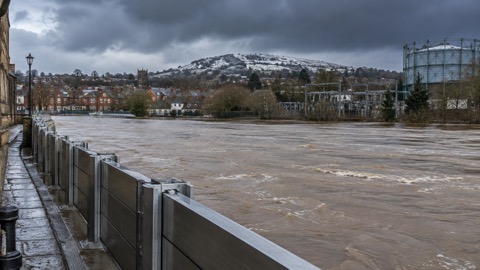
On where you live, nidirect's guidance asks you to think about your local area when planning: whether there is a river or waterway nearby, whether you live in a coastal position, whether you live in a remote or elevated area, whether you live near an industrial facility, and your location with regard to main arterial routes or railway lines4. Each of these changes what a realistic emergency looks like for you: flooding near a river, isolation in a remote area, evacuation or shelter instructions near an industrial site.
Some locations carry specific official arrangements. Households near naval bases with nuclear berths receive their own guidance, covered below. If you live near an industrial facility, ask your council what its emergency plan for that site says; councils have a duty to tell the public about site-specific risks, which our page on warning and informing explains.
How to turn off gas, electricity and water
Every official plan asks you to know this before an emergency, not during one. The Be Ready guidance puts it directly: know how to turn off your gas, electricity and water, because you will need to turn these off if you have to leave your home due to flooding or for other reasons, such as if there is a leak9. West Northamptonshire Council's advice is to find out where and how to turn off water, gas and electricity supplies in your home15, and nidirect's flood preparation asks you to know where to turn off your electricity or gas supply29.
Surrey Prepared's ICE template and Lincolnshire's guidance both instruct households to turn off gas, electricity and water if it is safe to do so when leaving30. The condition matters: only do it if it is safe, and never delay leaving in order to do it.
Walk round your home today and find:
- The gas shut-off valve, usually next to the meter
- The electricity main switch, on the consumer unit or fuse box
- The water stopcock, usually under the kitchen sink or near the point where the supply enters
Then write their locations into your household emergency plan, so anyone in the household, not just you, can find them6.
Leaving home in an emergency: what to do and what to take
If the emergency services or your council tell you to leave, the official advice is a short sequence. Follow the instructions you are given, turn off gas, electricity and water if it is safe to do so30, take your pets with you11, and take your essential medication28. Do not stop to gather things if there is no time: Mid and West Wales Fire and Rescue Service's fire escape advice is "Don't stop or go back for anything."33
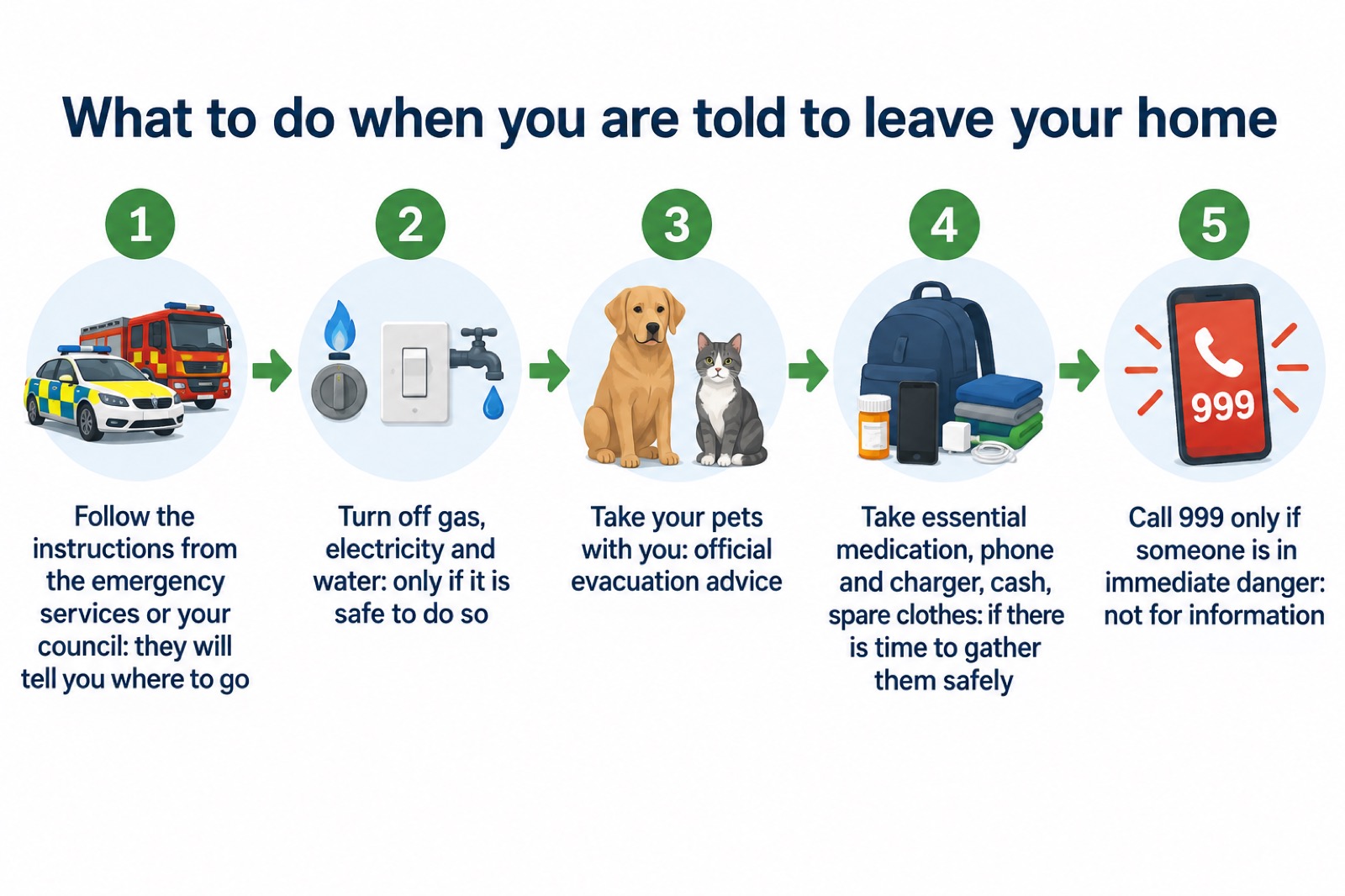
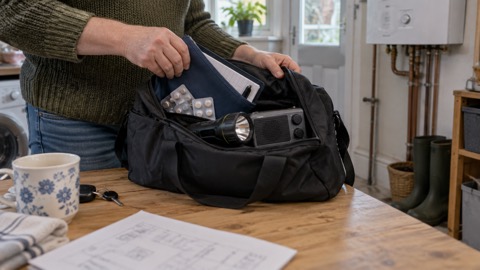
If you have time to gather things safely, Carmarthenshire Council lists what to think about taking in addition to your kit: essential medicines, mobile phone and charger, cash and credit cards, spare clothes and blankets, pets, and games, books or a child's special toy34. nidirect's equivalent list adds bottled water, ready-to-eat food, a bottle or tin opener, copies of important documents and photographic identification4.
Once you are out, official information reaches you through broadcast and official channels. Lincolnshire's guidance is to watch TV, listen to the radio or check the internet often for official news and instructions as they become available31, and Argyll and Bute Council advises that up-to-date information on the situation, including advice on what you should do and where to get further details, will be broadcast on local radio and television channels and websites35. Our staying informed page covers radios, alerts and keeping phones charged.
When you return, listen to advice from the emergency services and local authorities about any specific actions you must follow, such as advice about drinking water or power loss32. If vulnerable neighbours were evacuated, support them and alert the local council if further help is required, such as transport, medication, temporary accommodation or medical attention25.
On shelters: councils do not run standing emergency shelters. If the police ask you to leave your home, they will ask you to go to a place of safety, and if you decide to go somewhere else, let them know so you can be accounted for35. Follow the instructions given when you are evacuated, and they will tell you where to go. Our pages on being homeless after an emergency and humanitarian assistance centres explain the arrangements.
Radiation booklets near naval bases
If you live within 1.5 kilometres of the nuclear berths at Portsmouth naval base, you will have received a residents' booklet about radiation emergencies. It was distributed to all households within a 1.5-kilometre radius of the nuclear berths in accordance with emergency regulations, and it was produced by Portsmouth City Council, Gosport Borough Council and Hampshire County Council in consultation with the NHS, the Royal Navy and the Ministry of Defence36.
The booklet covers what a radiation emergency at the naval base would mean and what households should do. One detail worth knowing: schools more than 1.5km from the naval base will be told about any incidents by the council and will look after any pupils living within the 1.5km zone whose parents cannot collect them36. If you have children at school and you live in the zone, check what your school's own arrangements are.
If you received one of these booklets, read it and keep it with your emergency plan. Households near other nuclear sites receive equivalent information under the same regulations. Our major incidents page covers chemical and radiation emergencies more generally.
How to tell official advice from unofficial
The government's own test is simple: in an emergency, pay attention to official sources of information, such as the websites and social media accounts of local authorities, government agencies or emergency services, or messages to your mobile phone from the UK Government Emergency Alerts Service2. Before an emergency, the same rule applies to advice: prefer the national Prepare site, your own council's emergency planning pages, your fire and rescue service, and the nidirect and Welsh Government sites in Northern Ireland and Wales3.
Unofficial prepping advice is not necessarily wrong, but it often goes well beyond what the government asks for, and it is not accountable for what it tells you. The official advice is deliberately modest, because it is designed to be achievable by every household: a plan, a kit, three days of food and water, and knowledge of your shut-offs. Anything more is your choice, not a government instruction.
A few markers of official advice:
- It comes from a gov.uk, campaign.gov.uk, council, fire and rescue service, or NHS web address
- It names the body giving the advice and its date
- It asks for modest, checkable actions, not purchases from a particular seller
- In an emergency it reaches you through the Emergency Alerts Service or official broadcast channels2
If you want to help others prepare, Somerset Council asks residents who can offer help during emergencies to contact their parish or town council, and will give talks on emergency planning and community self-help on request16.
Sources (36)
- Households encouraged to take small, simple steps to stay prepared in an emergency, GOV.UK, 2026-10-22
- Be informed about hazards, Prepare campaign, 2026-10-22
- How to prepare for emergencies, Welsh Government, 2025-06-20
- Household emergency kit, nidirect, 2026-07-06
- National emergency alerts, Warwick District Council, 2026-10-29
- Be Ready Household Emergency Plan template, Be Ready campaign, 2026-10
- Be Ready checklist, Be Ready campaign, 2026-10
- Loss of essential services, Greater Manchester Combined Authority, 2026-10-29
- Be ready for emergencies, Be Ready campaign, 2026-10-21
- Snow, ice and winter ready advice, Cumberland Council, 2026
- Get help and advice in an emergency, Lincolnshire County Council, 2026-10-29
- Prepare yourself, Greater Manchester Combined Authority, 2026-10-29
- Preparing for an emergency, Nottinghamshire County Council, 2026-10-29
- Making your plan, Argyll and Bute Council, 2026
- Protecting yourself, West Northamptonshire Council, 2024-05-31
- Preparing for emergencies, Somerset Council, 2026-09-17
- Prepare your community, Greater Manchester Combined Authority, 2026-10-29
- Emergency home emergency plan, Royal Borough of Windsor and Maidenhead, 2025-10
- Household fire safety, Suffolk County Council, 2025
- Get prepared: emergency kit checklist, Carmarthenshire Council, 2026-10-28
- Power cuts - Be Ready, beready.campaign.gov.uk
- Preparing for emergencies, Somerset Council, 2026-09-17
- Power cuts, Prepare campaign, 2026-10-21
- Be prepared for emergencies, North Devon Council, 2026-10-29
- Are You Ready booklet, Culham Parish Council, 2025-09
- Planning for an emergency kit, Wiltshire Council, 2026-10-29
- Preparing for emergencies, North Hertfordshire District Council, 2015-01-12
- NPT Prepared emergency kit checklist, Neath Port Talbot Council, 2026-10-29
- Preparing for flood, nidirect, 2025-09-11
- ICE template, Surrey Prepared, 2026-10-29
- Get help and advice in an emergency, Lincolnshire County Council, 2026-10-29
- Step 3: recovering from an emergency, Essex Prepared, 2026-10-29
- Protecting your home, Mid and West Wales Fire and Rescue Service, 2026-10-29
- Get prepared, Carmarthenshire Council, 2026-10-25
- Preparing for civil emergencies in Argyll and Bute, Argyll and Bute Council, 2026
- REPPIR residents booklet 2024, Portsmouth City Council and partner councils, 2024-08
 30-Day Household Checklist
 Emergency Plan Template
 Supply Interruption Checklist
 National Risk Register
 How Emergency Risks Are Scored
 Civil Contingencies Act 2004
 What Counts as an Emergency
 Category 1 and 2 Responders
 Local Resilience Forums
 Strengthening Local Resilience
 What Your Council Does
 Central Government Response
 Gold, Silver and Bronze Command
 Major Incident Declared
 Emergency Powers