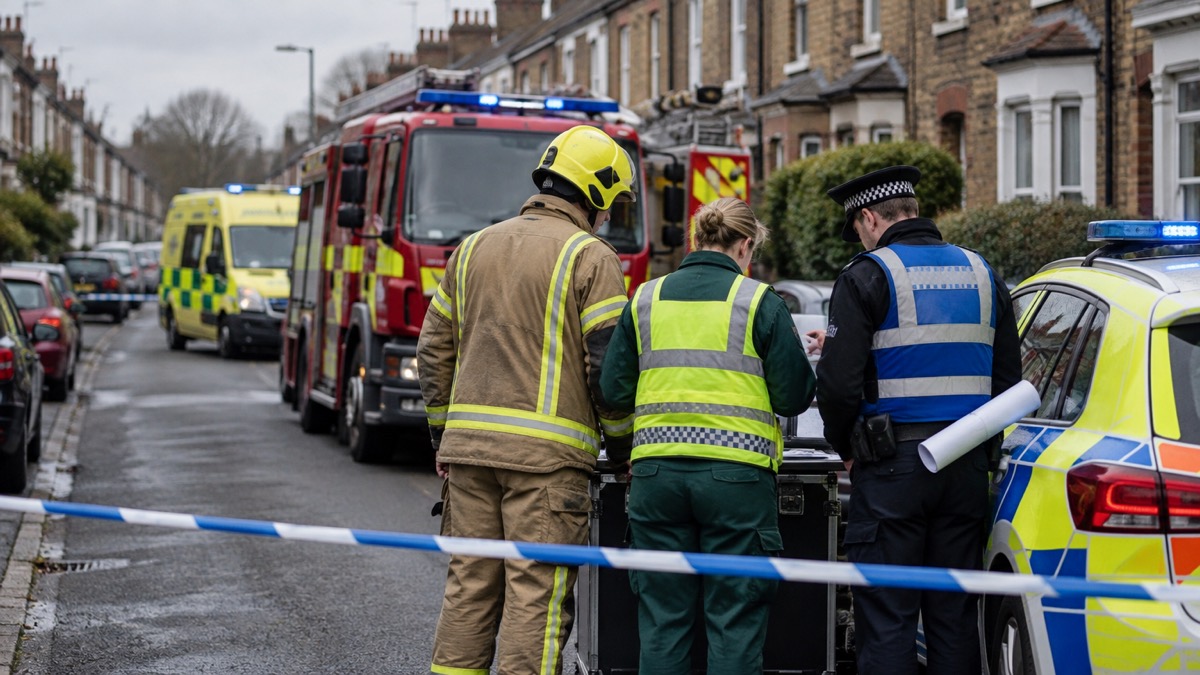
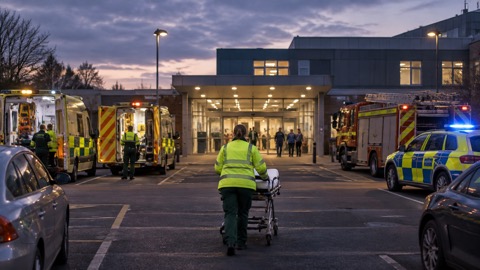
When something serious happens near you, whether a fire, a flood or a major incident, the emergency services do not each make up their own plan on the spot. They arrive with an agreed way of organising command and of working together, so that police, fire, ambulance and other responders pull in the same direction. For you, that has practical consequences: someone is always in charge, someone always decides whether you should evacuate or stay put, and there is a clear chain of instructions for you to follow.
The first thing to know is simpler still. If life is in danger, call 999 immediately1. If people are injured or there is a threat to life, call 999 or 1122. Everything else on this page is about what happens after that call, and what you should do while the responders do their work.
Call 999 or 112 when life or safety is at risk
The single most important action in any emergency is getting the right help on the way. Official guidance across the UK is consistent on this. South Western Ambulance Service's advice is plain: "Please always call 999 if someone is seriously ill or injured and their life is at risk."6 Nottinghamshire's flood guidance says the same for flooding: "If life is in danger, call 999."7 Derbyshire tells households to contact the emergency services, fire and rescue, as soon as possible when lives are in danger or there is a risk of injury8.
The national "Be Ready" campaign broadens it to other people as well as yourself: call 999 if you or someone else is in immediate danger9. Greater Manchester's resilience team gives the same advice10, and the Metropolitan Police guidance on gov.uk adds that you should call 999 if you are reporting a crime that is in progress or if someone is in immediate danger11. Police Scotland's advice is to call 999 now if someone is in danger, you need help now, or an incident is happening or about to happen12.
Belfast City Council lists the emergency services number as 999 or 1122, and both numbers reach the same emergency services in the UK. Cornwall Council's 24-hour emergency numbers page sets out which service to ask for: for an immediate risk to life, Fire, Police, Ambulance or Coastguard, dial 99913.
When you call, the more precise you can be, the faster the right response arrives. If you are reporting a fire, tell the call handler what is on fire, for example "a two-storey house"14. London Ambulance Service notes that calls about someone who is seriously ill or injured, where their life may be at risk, are handled with clinical advice on the line15.
What gold, silver and bronze command mean for you at an incident
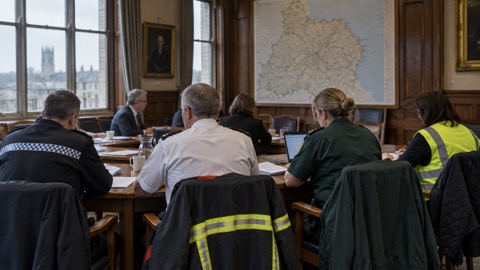
The emergency services describe their command arrangements at a major incident in layers, often called gold, silver and bronze, running from the strategic decisions at the top down to the operational work at the scene. For a household caught up in an incident, the detail of those layers matters less than what they produce: a single agreed response rather than several services working at cross purposes.
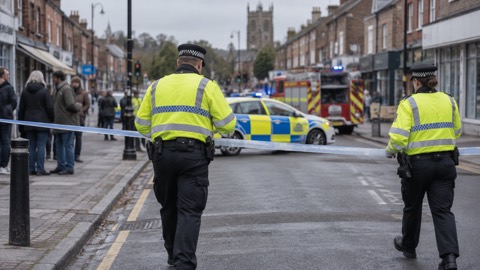
What the official guidance asks of you is simple. Shropshire Council's explanation of what happens in an emergency sets out that when emergency services arrive at an incident, the Joint Emergency Services Interoperability Programme (JESIP) doctrine will apply, and those attending will agree which agency assumes the "lead service" role3. That agreement is what you may notice on the ground: one service taking charge of the cordon, the evacuation or the public messaging, with the others supporting.
Your part is to follow the instructions that come out of that structure. North Devon Council's advice is to follow the advice in any official warning or emergency alert you receive17. West Midlands Ambulance Service's major incident guidance for the public is to move to a place of safety if it is safe to do so, follow instructions from emergency services and other authorised responders, avoid the incident area unless advised it is safe to enter, and follow official updates from emergency services and local authorities18.
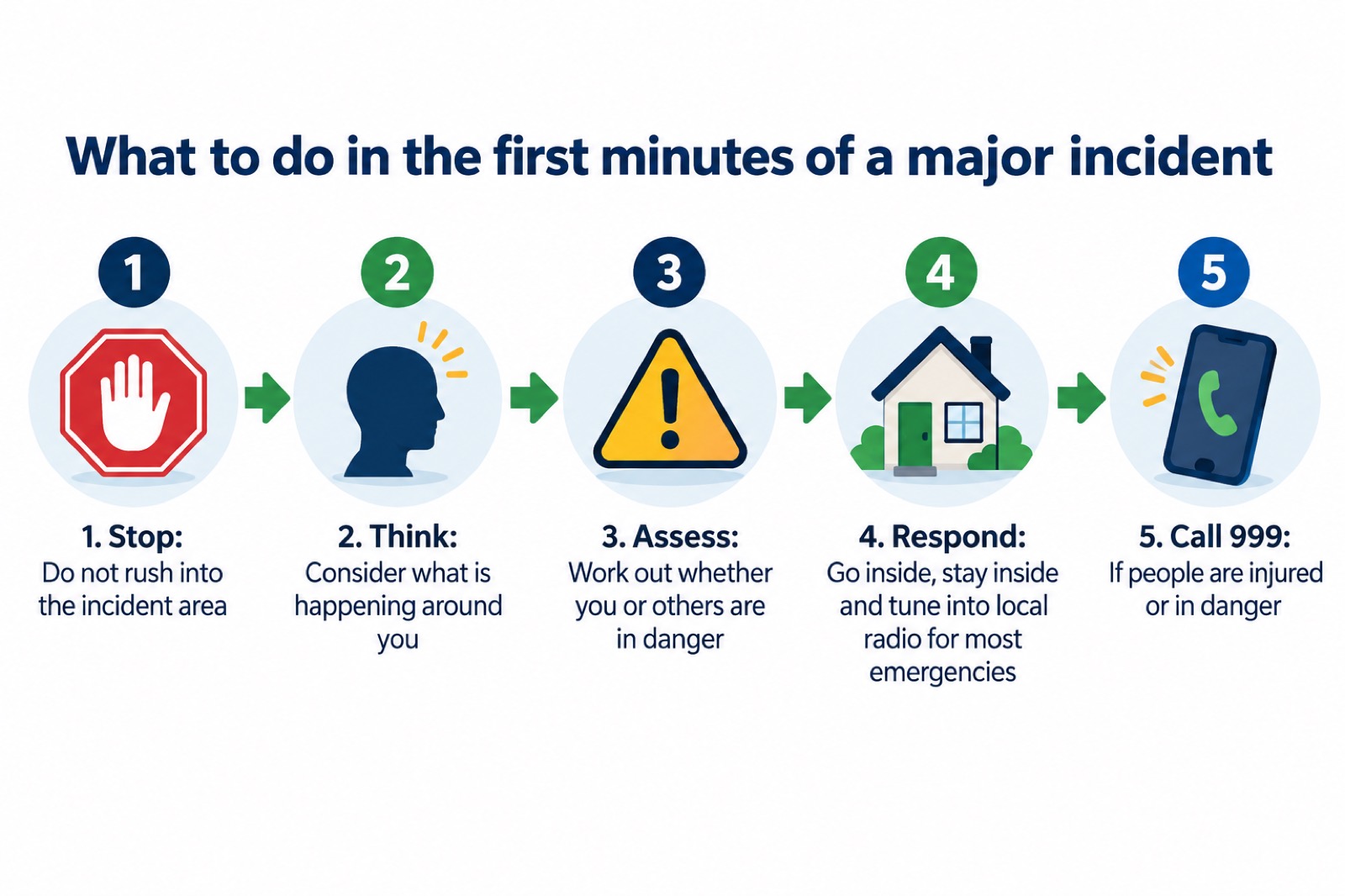
A widely used framework for the first moments of any emergency is captured in the "Are You Ready" booklet published for households: in the case of most major emergencies, the simple advice is to go inside, stay inside, and tune into local radio, and the booklet also sets out the STAR approach: Stop, Think, Assess, Respond, before contacting 999 if people are injured or in danger5.
When emergency services arrive: the JESIP way of working together
JESIP stands for the Joint Emergency Services Interoperability Programme. It is the agreed doctrine that police, fire, ambulance and other responders use so that they can work together at an incident rather than in separate bubbles. Shropshire Council explains that when emergency services arrive, the JESIP doctrine will apply and those attending will agree which agency assumes the lead service role3. West Midlands Ambulance Service puts it from its own side: "We follow agreed JESIP principles, which help emergency services work together during an incident."18
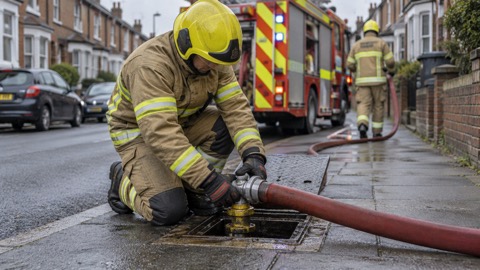
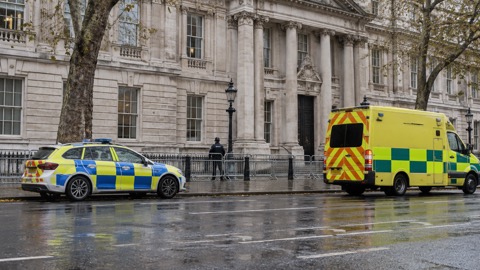
For you, JESIP shows up in three practical ways. First, you should expect one service to be visibly leading, and instructions from that service and other authorised responders to be consistent with each other18. Second, the cordon, the road closures and the traffic management around an incident are coordinated rather than improvised; in major flood incidents in Scotland, for example, Police Scotland manages traffic and cordon points in affected areas19. Third, public information comes through official channels, so follow updates from the emergency services and local authorities rather than rumour18.
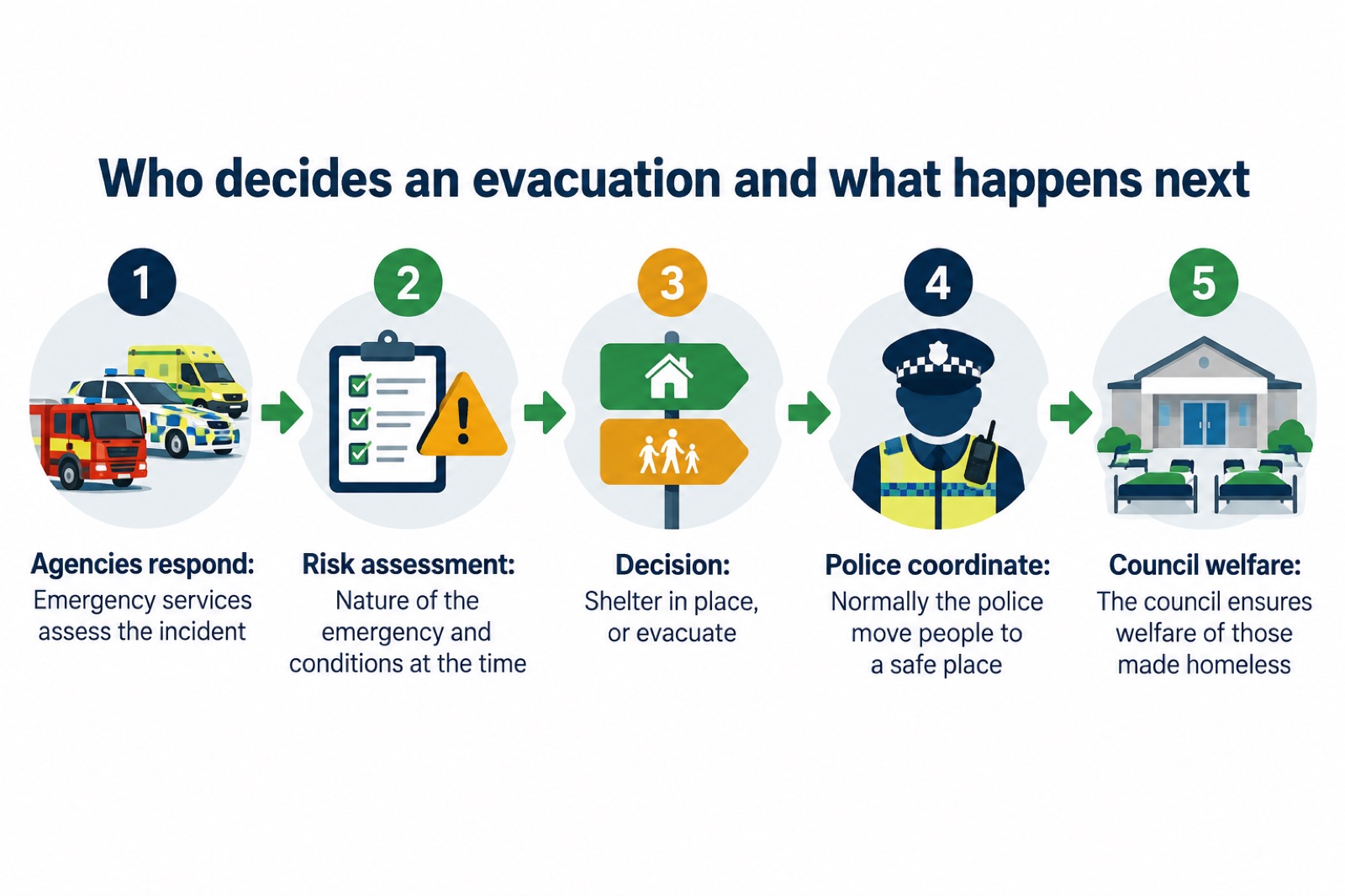
The decision that matters most to a household, whether to evacuate or to shelter where you are, is made within this structure. Shropshire Council's guidance is explicit: "The decision to shelter in-situ or to evacuate will be made by the agencies responding to the emergency, and will be based on a risk assessment of the nature of the emergency and the environment at the time."3 The "Are You Ready" booklet adds that the emergency services decide whether an evacuation is necessary, and it is then the council's duty to ensure the welfare of those made unintentionally homeless5. Argyll and Bute Council notes that the police normally coordinate evacuation of people from their homes to a safe place4.
Services must help those in greatest need first
Emergency response is not first come, first served. Responders prioritise according to need, and the arrangements around an incident are built to direct help to the people who need it most urgently. That is why following instructions matters even when they feel inconvenient: a cordon or a delay is often there to keep the route clear for casualties or to keep you out of danger.
The principle extends beyond the blue-light services. Surrey County Council's Priority Services Register page explains that energy suppliers give priority help in an emergency to those registered, and communications providers offer the use of emergency SMS for people who cannot make voice calls20. These registers exist precisely so that help can be directed quickly to those who need it most.
You can also play a part in directing help. Greater Manchester's preparedness guidance asks households to help friends, family or neighbours with particular vulnerabilities through age, ill health or disability, for example by contacting their loved ones or ensuring they have food and water10. In a widespread emergency, responders cannot be everywhere at once, and neighbours who know who on their street needs extra support are part of how the greatest need is met first.
Community groups can be formally involved too. Argyll and Bute Council describes roles for community emergency groups that include assisting with door knocking or delivery of emergency messages, looking after people in a rest centre, or identifying those who may need extra help to move to safety, and advises such groups to speak to those coordinating the response, normally the police, to see what role they can play4. If you are part of a local group, do not self-deploy into an incident area: offer your help through the coordinating structure instead.
Support for people with a disability or extra need
If you or someone in your household would need help in an emergency, there are arrangements you can put in place in advance, and they connect directly to how responders work.
Personal Emergency Evacuation Plans (PEEPs). London Fire Brigade's easy-read fire safety booklet explains: "PEEPS are special plans for anyone who may need help to leave the building safely if there is an emergency."21 In residential blocks, North Yorkshire Fire and Rescue Service runs a scheme for Refuges and Personal Emergency Evacuation Plans, and gives an assurance about how the information is used: "The fire and rescue service will only use this information to help them plan a safe and effective response if a fire in your building occurs."22 The building's evacuation plan itself is the responsibility of the Responsible Person, and your landlord, housing provider or managing agent needs to tell you about the fire safety arrangements for your building, including the evacuation plan23.
The Priority Services Register. Derbyshire County Council's guidance on keeping warm in winter explains that the register provides advance notice of power cuts, and that you may be eligible if you have extra communication needs24. Surrey County Council adds that energy suppliers on the register give priority help in an emergency20. You can find out more in our guide to extra help in an emergency.
Everyday steps. The Welsh ambulance service's guidance on falls gives an example of how preparation changes outcomes: make sure someone trusted has a key, or fit a key safe outside, and make sure the emergency services are aware of the code25. The same thinking applies to any household where someone might not be able to reach the door in an emergency.
| Support | What it gives you | Who provides it |
|---|---|---|
| PEEP | A plan to aid escape for someone unable to mobilise or evacuate when an alarm sounds, including assistive technology if required21 | Fire and rescue service |
| Priority Services Register | Advance notice of power cuts, priority help in an emergency20 | Energy suppliers |
| Relay UK | Contact with 999 via the Relay App, textphones or text messages from a mobile phone, for people who are deaf, hard of hearing or speech-impaired20 | Relay UK service |
| Key safe | Emergency services can reach you if you cannot answer the door25 | You, with the code shared with emergency services |
Flooding: emergency relief and co-ordinated evacuations
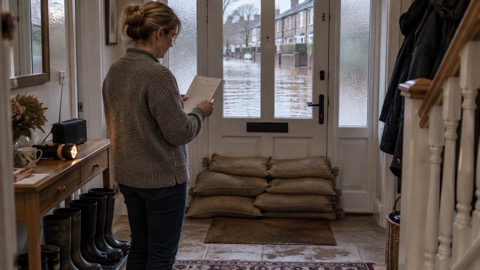
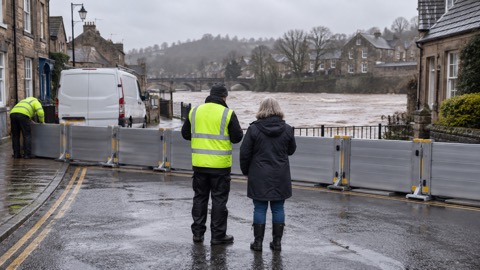
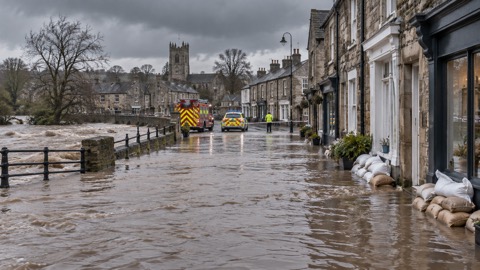
Flooding is the emergency most likely to bring the whole command structure into your street. SEPA, the Scottish Environment Protection Agency, notes that the emergency services provide emergency relief when flooding occurs and can co-ordinate evacuations26. Suffolk's Flood Smart Living guide gives the same message for England: where there is concern of danger to life, call 999 immediately, and a flood warning means flooding is expected with immediate action required27.
In Scotland, the warning system has named levels, and knowing them tells you how urgent the situation is:
| Level | What it means | What to do |
|---|---|---|
| Flood alert | Flooding is possible28 | Be prepared; remain alert and vigilant and make early preparations29 |
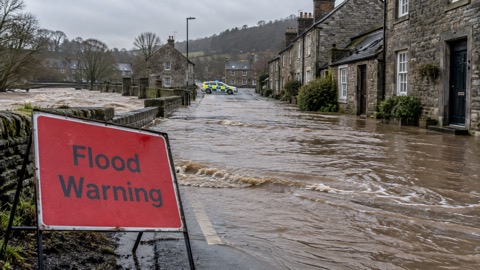
| Flood warning | Flooding is expected28 | Take action; immediate action is required to protect yourself and your property29 |
| Severe flood warning | The most serious level | Issued in consultation with Local Authorities and other responders28 |
SEPA aims to issue flood warnings 3 to 6 hours in advance of expected flooding28, which is the window in which households should act rather than wait to see the water. SEPA also reminds households of their own role: "You are the first line of defence against flooding, however other public bodies and organisations also have responsibilities."30
During a major flood incident in Scotland, Police Scotland coordinates agency actions, manages traffic and cordon points in affected areas, and leads evacuation efforts and public safety communications19. Floodline provides live flooding information and advice on how to prepare for or cope with the impacts of flooding, 24 hours a day, 7 days a week30. The Scottish Flood Forecasting Service combines SEPA's hydrological expertise and the Met Office's meteorological data to predict the likelihood and timing of river, coastal and surface water flooding26. After the water recedes, the Scottish Flood Forum, a Scottish Government supported organisation, offers support and advice on flood protection, insurance and recovery, and helps establish community flood groups19. Our flooding guide covers the household side of preparing for and getting through a flood.
Following instructions during an evacuation
If you are told to evacuate, the instruction comes from the responding agencies' risk assessment3, and the safest response is to act on it promptly and without detours.
- Move to a place of safety if it is safe to do so18.
- Leave quickly and calmly by the nearest safe route, and move to a safe location away from the building, fire or other danger2.
- Do not stop to investigate or pick up valuables23.
- If there is a fire or another immediate danger, leave straight away, follow the emergency services' instructions and do not delay to collect a bag17.
- Avoid the incident area unless advised it is safe to enter18.
- Follow official updates from the emergency services and local authorities18.
The instruction not to collect belongings is not bureaucracy. London Fire Brigade's guidance for people trapped by fire is that once you are safely outside you should use your mobile phone to dial 999, ask for the fire brigade, give the address, and not go back inside14. The easy-read fire safety booklet repeats it: "As soon as you are safely outside, use your mobile phone to dial 999. Ask for the fire brigade. Give the address. Do not go back inside."21
Evacuation from a block of flats has its own rules, and they are set out in advance rather than improvised. Your landlord, housing provider or managing agent needs to tell you about the fire safety arrangements for your building, and that includes the evacuation plan23. If your building's plan depends on you needing help to leave, that is what a PEEP is for21. Read more in our guides to home emergencies and major incidents.
Emergency alerts: how the government reaches your phone
One of the ways instructions reach you during an emergency, including evacuation instructions, is the Emergency Alerts service. Warwick District Council explains how it works: "Emergency Alerts are sent to compatible 4G and 5G mobile phones within an area of risk. They don't need your location or phone number. Only the government and emergency services can send them."31 The Cabinet Office factsheet describes them as messages sent to compatible 4G and 5G mobile phones and tablets when there is a danger to life32.
You will know when one arrives: you will hear a loud siren-like sound and your phone will use a distinct vibration, and a message will appear on your screen telling you about the emergency and what you need to do33. Croydon Council adds that alerts are sent using mobile phone networks to compatible mobile phones and tablets in a specific geographical area34.
A few practical points from the official guidance:
Emergency alerts are one of several ways official information reaches you, but they are not the only one. If you need urgent help at any point, call the emergency services on 999 or 1122. Our guide to staying informed covers the other ways official information reaches you in an emergency.
Emergency alerts are one channel among several, and you should not rely on any single one. If you need urgent help, call the emergency services on 999 or 1122. Our guide to staying informed covers the other ways official information reaches you in an emergency.
Where to get help after the emergency services leave
The command structure does not switch off the moment the fire is out or the water drops. Responsibility passes from the emergency services to the council: the "Are You Ready" booklet states that once the emergency services have decided an evacuation is necessary, it is the council's duty to ensure the welfare of those made unintentionally homeless5. If an emergency leaves you without somewhere to live, our guide on who houses you explains the arrangements, and a humanitarian assistance centre may be set up for those affected.
Rest centres, where evacuees are looked after, are run as part of this handover, and community groups may be asked to help look after people in a rest centre4. For longer recovery, the support available depends on the emergency: in Scotland after flooding, the Scottish Flood Forum provides advice on insurance and recovery and represents the interests of people affected by, or at risk of, flooding19.
For households, the practical steps after the responders leave are:
- Follow official updates from the emergency services and local authorities, and avoid the incident area until advised it is safe to enter18.
- Contact your council if you have been made unintentionally homeless; ensuring your welfare is its duty5.
- If you are on the Priority Services Register, tell your supplier what has happened; registered households get priority help in an emergency20.
- Check on neighbours with particular vulnerabilities through age, ill health or disability, and help by contacting their loved ones or ensuring they have food and water10.
To understand the wider machinery behind all of this, our guides to what your council does, Category 1 and Category 2 responders and Local Resilience Forums set out who plans for emergencies before they happen, and what it means when a major incident is declared explains the formal step that brings this command structure fully into play.
Sources (34)
- Flooding during a flood, easy read, Nottinghamshire County Council, 2025-11-02
- Emergency planning, Belfast City Council, 2026-10-29
- What happens in an emergency, Shropshire Council, 2026-10-29
- Responding and recovering, Argyll and Bute Council, 2026
- Are You Ready booklet, Culham Parish Council, 2025-09
- When to call 999, South Western Ambulance Service NHS Foundation Trust, 2026-10-29
- During a flood, Nottinghamshire County Council, 2026-10-29
- Flooding emergencies, Derbyshire County Council, 2026-10-29
- Be ready for emergencies, UK government campaign, 2026-10-21
- Prepare yourself, Greater Manchester Combined Authority, 2026-10-29
- Contact police, GOV.UK, 2026-10-29
- Major events advice, Police Scotland, 2026-10-29
- 24 hour emergency numbers, Cornwall Council, 2026-02-04
- If you are trapped by fire, Essex Prepared, 2026-10-29
- Clinical telephone advisor, London Ambulance Service, 2026-09-30
- Winter water safety, London Fire Brigade, 2026-10-25
- Be prepared for emergencies, North Devon Council, 2026-10-29
- Major incidents, West Midlands Ambulance Service, 2026-10-22
- Flooding, The Highland Council, 2025-09-25
- Priority Services Register, Surrey County Council, 2026-10-28
- Easy read fire safety booklet, London Fire Brigade, 2026
- Residential Personal Emergency Evacuation Plans, North Yorkshire Fire and Rescue Service, 2026-03-30
- Escape plan for blocks of flats, London Fire Brigade, 2026-10-25
- Priority Services Register, keeping warm in winter, Derbyshire County Council, 2026-10-29
- Some of the reasons people call 999, Welsh Ambulance Service NHS Trust, 2026-10-29
- Developing our knowledge, flooding, Scottish Environment Protection Agency, 2026-10-29
- Flood Smart Living, Suffolk County Council, 2024-11
- About flood alerts and warnings, Scottish Environment Protection Agency, 2026-10-29
- Flooding FAQs, Scottish Environment Protection Agency, 2026-10-29
- Prepare for flooding, Scottish Environment Protection Agency, 2026-10-29
- National emergency alerts, Warwick District Council, 2026-10-29
- Emergency Alerts System factsheet, Cabinet Office, 2025-08
- National Emergency Alert System, what is it, Essex Prepared, 2026-10-29
- Emergency alerts service, Croydon Council, 2026
 30-Day Household Checklist
 Emergency Plan Template
 Supply Interruption Checklist
 National Risk Register
 How Emergency Risks Are Scored
 Civil Contingencies Act 2004
 What Counts as an Emergency
 Category 1 and 2 Responders
 Local Resilience Forums
 Strengthening Local Resilience
 What Your Council Does
 Central Government Response
 Major Incident Declared
 Emergency Powers
 Warning and Informing the Public