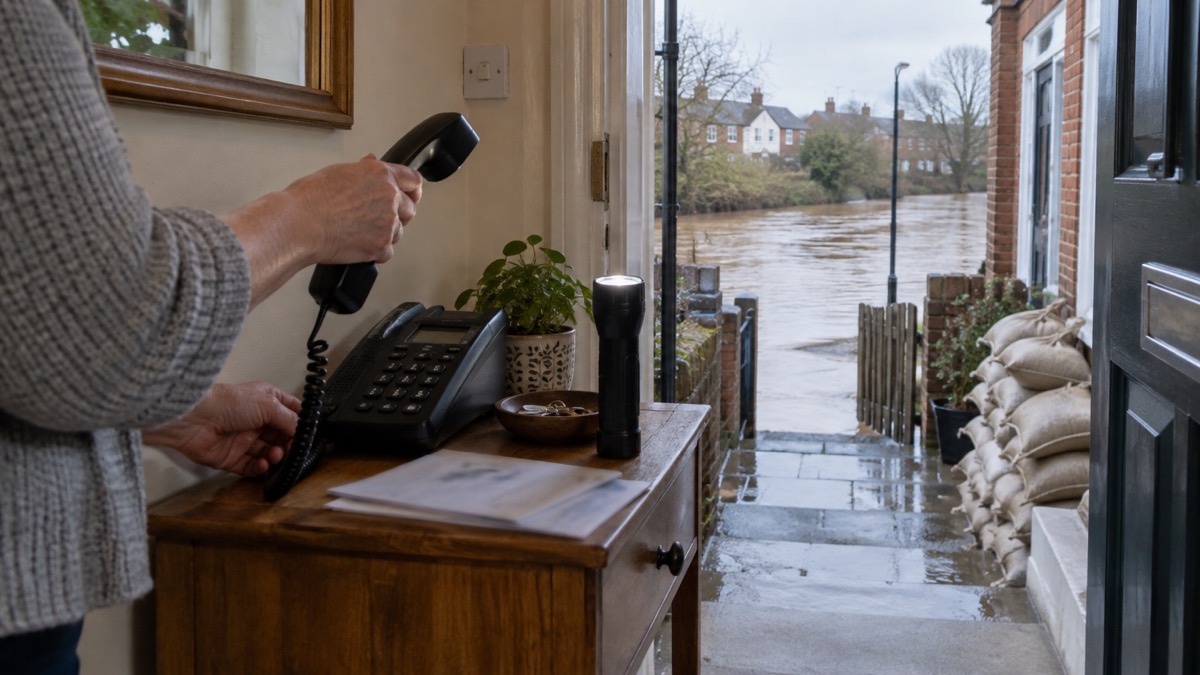
Floodline is the number to ring for flooding information and advice in England, Scotland and Wales. It is 0345 988 1188, and it runs 24 hours a day1. You can ring it to hear recorded flood messages for your area, to ask about flood risk, or to sign up for free flood warnings sent to your mobile, home phone or email2.
The same number serves all three nations: Floodline on 0345 988 11884. What you get from the call is broadly the same: live flooding information and advice on how to prepare for or cope with the impacts of flooding, at any hour4.
If there is a threat to life, do not ring Floodline. Call 999 if you are in immediate danger2. Floodline is for information, warnings and preparation, not rescue.
The number, the hours and the textphone line
Ring 0345 988 1188 for Floodline. Government guidance gives that number plainly, and councils, fire services and the London Assembly repeat it, which is a useful sign that it is the current one1. The service is described as a 24-hour service, and in Scotland SEPA says it provides live flooding information and advice on how to prepare for or cope with the impacts of flooding 24 hours a day, seven days a week3.
If you are deaf, hard of hearing or have difficulty using a voice phone, there is a textphone route. The type talk number for the service is 0345 602 63405. If you have a disability or need extra help, you can contact Floodline and ask for flood warnings to be sent to a friend, relative or carer as well6. That is worth doing before you need it, not during a downpour.
Signing up for free flood warnings
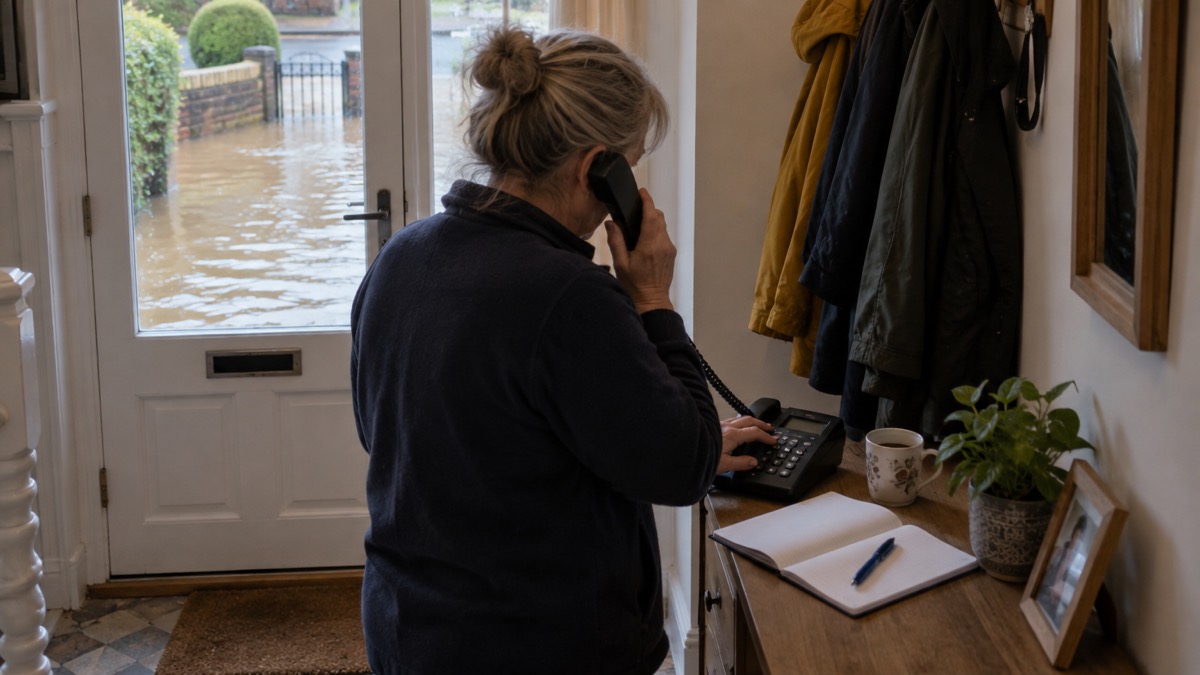
You do not have to ring to get warnings. You can sign up online to receive free flood warnings delivered by phone, email or text, and the service is free whichever method you choose3. The messages come direct to your mobile, home phone or email12. The Environment Agency's own sign-up page is the place to start for England1, and Natural Resources Wales runs the equivalent for Wales13.
If you have no email address, or you would rather speak to someone, you can register by phone. In Scotland, SEPA asks for an email address to register online, and says to call 0345 988 1188, option 2 for Scotland and option 3 to speak to an adviser, if you have no email or need assistance14. The same number takes you to a person wherever you are.
A few practical points make the difference between a warning that reaches you and one that does not:
- Give more than one contact method. A mobile and an email address give the message two routes.
- Register the right area. Warnings are tied to areas, not to your name, so check the map or search by postcode.
- Tell the household. Anyone who might need to act, including a carer, should know the warnings are coming and what to do.
Our guide to signing up for free flood warnings walks through the online form, and getting warnings without email or for several addresses covers the phone route and multiple properties.
Who runs Floodline in Scotland, and how its warnings differ
In Scotland, Floodline is operated by the Scottish Environment Protection Agency (SEPA)4. SEPA also advises local authorities on flood risk and planning, and coordinates flood risk management policy and activities across Scotland16. So a Scottish caller is reaching SEPA's service, not the Environment Agency's, even though the number is the same.
The practical differences are small but worth knowing:
| England | Wales | Scotland | |
|---|---|---|---|
| Runs Floodline | Environment Agency | Natural Resources Wales | SEPA4 |
| Number | 0345 988 11881 | 0345 988 118817 | 0345 988 11884 |
| Hours | 24-hour service3 | 24 hours17 | 24 hours a day, 7 days a week4 |
| Sign-up route | Online or by phone1 | Online or by phone13 | Online with email, or phone option 2 then option 314 |
Scotland also has its own flood forecasting arrangements, and SEPA publishes a Scottish flood forecast. If you want to know what the forecast means and how far ahead it looks, our guide to the Flood Guidance Statement and five-day forecasts explains the forecasting side, and Wales: Natural Resources Wales warnings and risk maps covers the Welsh service in more detail.
Quick dial codes: hearing your local message straight away
A quick dial code is a short number for your area. When you call Floodline on 0345 988 1188, enter your quick dial code to hear flood messages for your area directly, without waiting to speak to an adviser10. You can find out your quick dial code or codes online or by calling Floodline on 0345 988 11884.
For North Wales, North Wales Fire and Rescue Service gives the code 194902. Residents can contact Floodline on 0345 988 1188 using quickdial 194902 for up-to-date flooding information and advice7. Keep that code with your household flood plan, because you may be ringing in the dark or in a hurry.
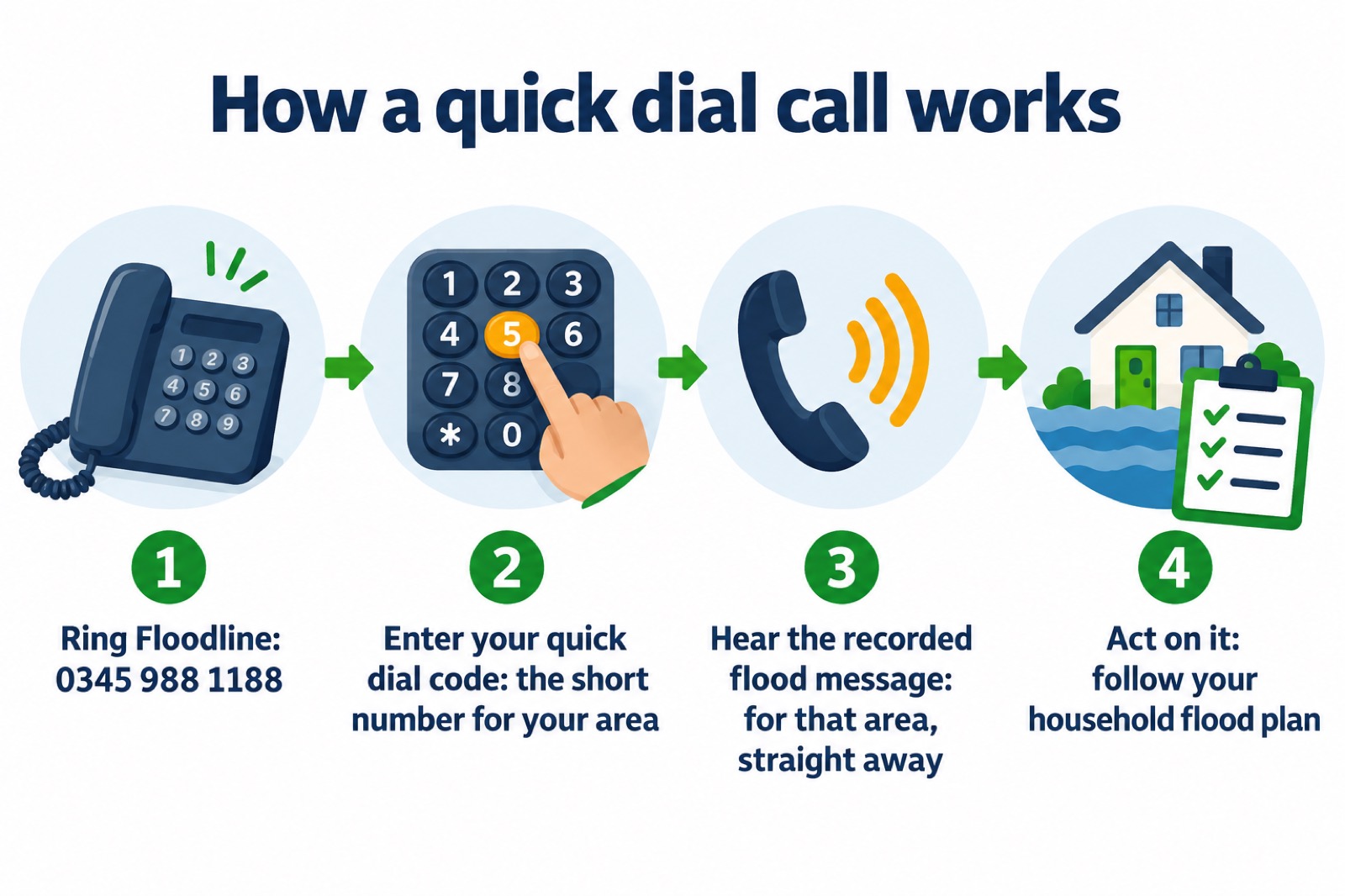
If you do not know your code, ring the main number and ask, or look it up online before the weather turns4. Writing it on a card by the phone is a small job that pays off on the night.
Managing your MyFloodline account
MyFloodline is the service that issues flood messages direct to customers' phones4. Once you are registered you can manage it yourself. Through your account you can add or remove warning or alert areas, edit your email address, password or name, add or remove your contact details, and deregister from the service4.
There is no limit to the number of warning areas you can have on your account4. That means one account can cover your home, a relative's address and a workplace, which is useful if you are the person who keeps an eye on several households.
Two things catch people out:
- Your email address is normally your username4. If you change your username, it invalidates the password, so you will need to set a new one4.
- Account problems go through the phone line. If you need help, contact Floodline on 0345 988 1188, selection option 2, then option 3, and a customer service agent can help4.
You can also register a workplace or school that is not your own property. When you sign up, search by the postcode or by town or city of the workplace or school to find the flood warnings available there4. That is a sensible thing for a school office or a site manager to do before the winter.
When to call Floodline about flooding near you
Ring Floodline when you want to know what is happening or what is forecast for an area, when you want your quick dial message, or when you want to check the long-term flood risk for a property. To receive long-term flood risk information over the phone, call Floodline on 0345 988 118818. SEPA's own advice line puts it simply: please call Floodline on 0345 988 1188 and an adviser will be able to help20.
Do not ring Floodline in an emergency. Call 999 if you are in immediate danger2. For anything else, the question is usually who is responsible, and that is often your council, your water company or the Environment Agency rather than Floodline. Our guide to who to report flooding to sets out which body handles what, and who manages flood risk explains the split between agencies, councils and water companies.
It also helps to know your own risk before you call. Checking your home's flood risk by postcode takes a minute and tells you whether you are in an area the warnings cover at all. Our guide to checking your home's flood risk by postcode explains how to read the result, and types of flooding explains why surface water flooding can arrive with little warning even when no river is nearby.
What a warning message means, and what to do next
Floodline issues three types of message21. The one that matters most for a household is the flood warning, which is a free service that sends you a direct message when flooding is expected and may affect your property22. Treat it as a prompt to act: read it, check which area it covers, and follow the plan you made when the weather was fine.
If a message does not arrive, there are reasons. In Scotland, SEPA states that if text messages cannot be delivered, the system retries the contact channels after five minutes, up to a maximum of three times4. That is why more than one contact method matters. A message left on a home answering machine is still useful when you get in, but it cannot warn you while you are out, so add a mobile number and an email address as well.
Our guides to flood alerts, flood warnings and severe flood warnings explain the levels, and the checklist when a flood warning is issued takes you through what to do in the hours before water arrives. If you are making a plan for the first time, making a household flood plan is the place to start, and extra help in an emergency covers households that need a little more support.
Sources (22)
- Get flood warnings, GOV.UK, 2026
- Be flood aware, London Assembly, 2026
- Preparing for flooding, Surrey County Council, 2026
- Flooding FAQs, Scottish Environment Protection Agency, 2026
- Sign up to warnings and alerts, Surrey County Council, 2026
- Be informed about hazards: flooding, UK Government preparedness campaign, 2026
- Flooding and high winds, North Wales Fire and Rescue Service, 2026
- Flooding advice: preparing for a flood, London Fire Brigade, 2026
- What to do in a flood, Suffolk County Council, 2026
- Live flood information quick dial codes, Scottish Environment Protection Agency, 2026
- Winter travel, Devon County Council, 2026
- Protecting your property from flooding, Met Office, 2026
- Sign up to receive flood warnings, Natural Resources Wales, 2026
- Floodline, Scottish Environment Protection Agency, 2026
- Flooding FAQs, Scottish Environment Protection Agency, 2026
- Flooding, Highland Council, 2026
- Emergency contacts, Carmarthenshire County Council, 2026
- Check your flood risk, Scottish Environment Protection Agency, 2026
- Check your flood risk, Scottish Environment Protection Agency, 2026
- Scottish flood forecast FAQs, Scottish Environment Protection Agency, 2026
- Flooding guide for older communities, Scottish Environment Protection Agency, 2026
- Personal responsibility, Derbyshire County Council, 2026
 Flood Warning Checklist
 First Steps After a Flood
 Insurance Claim Records
 Signing Up for Flood Warnings
 Flood Warnings Without Email
 Who to Report Flooding To
 Reporting a Blocked Gully
 Garden Safety After Sewage
 Council Sandbag Duties
 Filling and Laying Sandbags
 Makeshift Sandbags
 Disposing of Used Sandbags
 Turning Off Utilities
 Walking or Driving in Floodwater
 Turning Electricity Back On