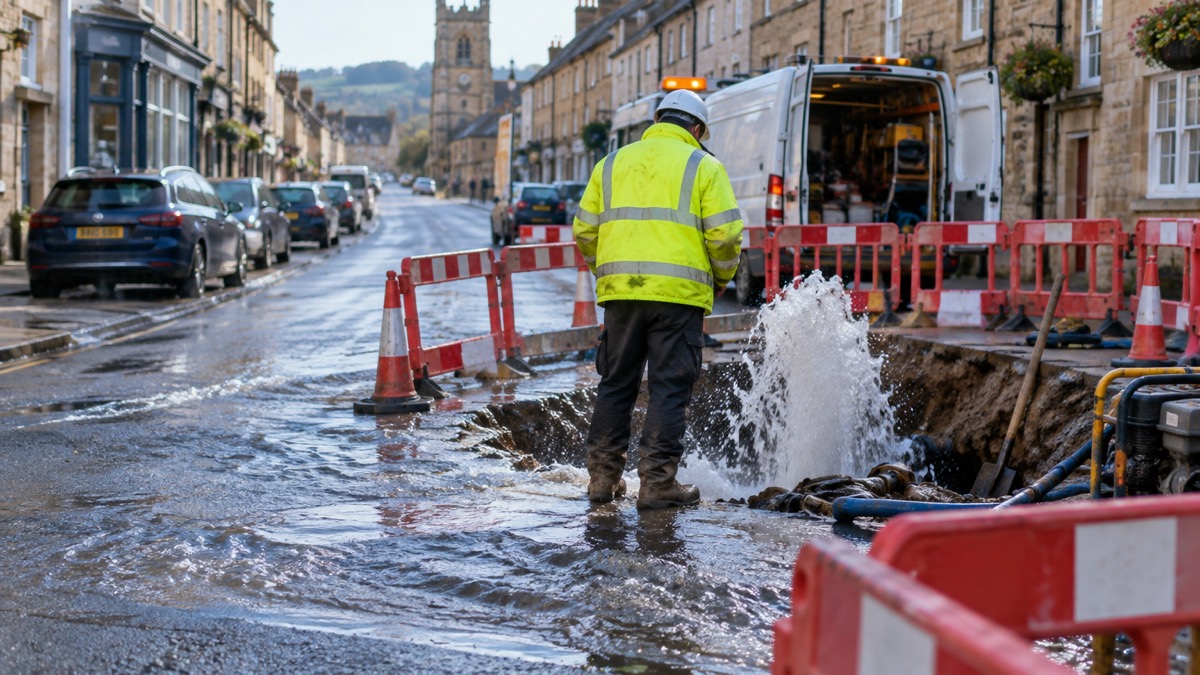
Flooding in the UK is managed by a patchwork of bodies, and the one you need depends entirely on where the water is coming from. A river bursting its banks is the Environment Agency's business in England. Water pooling in the road after heavy rain is your local council's, as your Lead Local Flood Authority. Sewage in your garden belongs to your water company, and a blocked drain inside your boundary is yours. Knowing this before a flood starts is itself part of the official advice: know who to contact if flooding happens1.
The other half of the picture is what no agency does for you. If you own your home, it is your responsibility to protect it from flooding2. Councils, the Environment Agency and water companies manage risk on the scale of rivers, sewers, roads and coastlines; the walls, doors and drains of an individual house are the owner's to defend. This page sets out who does what, how to reach each body, how Scotland and Wales differ, and where your own responsibility begins.
First, work out where the water is coming from
Before you pick up the phone, look at the water. Is it rising from a river or the sea? Running down the road in heavy rain? Coming up through a drain or toilet? Each of those points to a different authority, and reporting to the wrong one delays the response.
The table below matches the source of flooding to the body that manages it. It is drawn from council guidance across England8.
| Where the water is coming from | Who is responsible | How to reach them |
|---|---|---|
| A main river | Environment Agency | Incident hotline (24 hours): 0800 80 70 603 |
| The sea | Environment Agency | Incident hotline (24 hours): 0800 80 70 603 |
| Heavy rain pooling on the surface | Lead Local Flood Authority (your council) | Council switchboard4 |
| Groundwater rising | Lead Local Flood Authority (your council) | Council switchboard8 |
| An overflowing sewer | Your water company | Your water company's own reporting line5 |
| A burst water main | Your water company | The company you pay your water rates to10 |
| A blocked road gully or highway flooding | Local highways authority | Council reporting form or Fixmystreet12 |
| A burst pipe inside the property | You, or your landlord | A plumber10 |
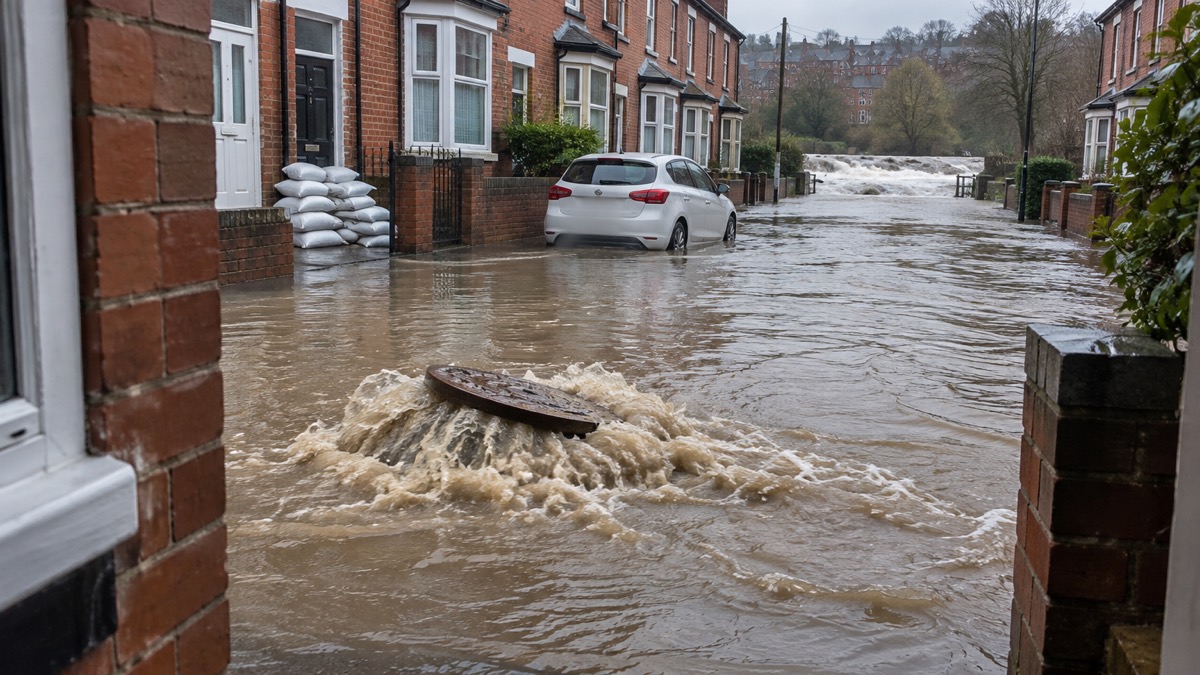
Two practical points from the official guidance on pumping water out during a flood: if you plan to pump flood water into public sewers, check with your water company first, and if you plan to pump it into street drains, highways or highway ditches, check with the local highways authority or National Highways. If you want to pump into rivers, ditches or watercourses, such as a brook or mill stream, check with your local Environment Agency office13.
Rivers and the sea: the Environment Agency
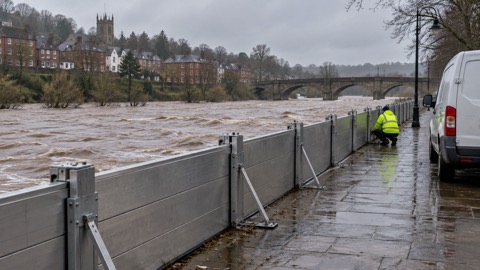
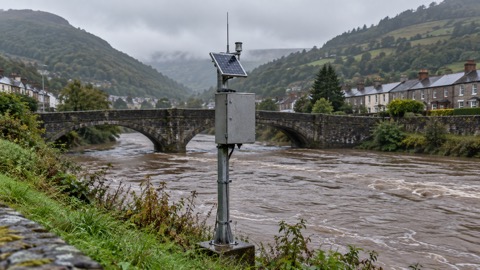
Flooding from main rivers, known as fluvial flooding, is managed by the Environment Agency, which should be contacted when this type of flooding occurs8. The Agency also manages flood risk from the sea, alongside monitoring the quality of watercourses14. It constantly monitors rainfall, river levels and sea conditions to forecast the possibility of flooding, alongside its counterparts in Wales and Scotland15.
To report flooding from a main river or the sea, Cornwall Council's guidance gives the Environment Agency Incident Hotline, staffed 24 hours, on 0800 80 70 603. Some councils also list an older Environment Agency number, 0845 933 3111, for main river matters16, and Nottinghamshire lists 0845 988 1188 for the Agency17.
One point that catches many householders out: if a river or stream runs through or beside your land, you are a riparian owner, and riparian owners are responsible for maintaining river beds and banks18. The Environment Agency manages flood risk from main rivers, but the upkeep of the watercourse itself beside your property can fall to you. Our page on living next to a watercourse covers this in detail.
The Environment Agency also officially holds the strategic overview responsibility for all types of flood risk, working closely with Lead Local Flood Authorities, who are responsible for surface water and other risk management authorities19. In practice this means that even where another body handles your flooding, the Agency sits above the system as a whole.
Surface water, groundwater and ordinary watercourses: your Lead Local Flood Authority
When heavy rain falls faster than drains can cope, the resulting surface water flooding is the responsibility of local authorities. The Flood and Water Management Act designates them as Lead Local Flood Authorities, or LLFAs19. In London this means there are 33 responsible authorities, one for each London borough and the City of London19; elsewhere in England the LLFA is usually the county council or unitary authority.
Your local council is your lead local flood authority for surface water flooding and may have further information and advice on its website20. Surface water flooding from heavy rainfall is reported to Lead Local Flood Authorities, reachable through the council switchboard4. The same authorities have a remit to manage the risk of groundwater flooding, so rising groundwater is also a matter for your council8. For the property owner, the council can provide advice, but responsibility for the home itself remains with the owner17.
Lead Local Flood Authorities co-ordinate the management of flood risk from what the law calls local sources: ordinary watercourses, surface water and groundwater18. Northumberland's strategy spells out the full list of local sources: surface water, ordinary watercourses, groundwater, lakes and small reservoirs9. Ordinary watercourses are the smaller streams, ditches and becks that are not designated main rivers, and problems with them go to the LLFA rather than the Environment Agency.
The Environment Agency maps flood risk from surface water across the UK21, so you can check your home's surface water risk on the flood maps before deciding how much this matters for you. Our page on checking your home's flood risk explains how to do that by postcode.
Sewer flooding and burst mains: your water company
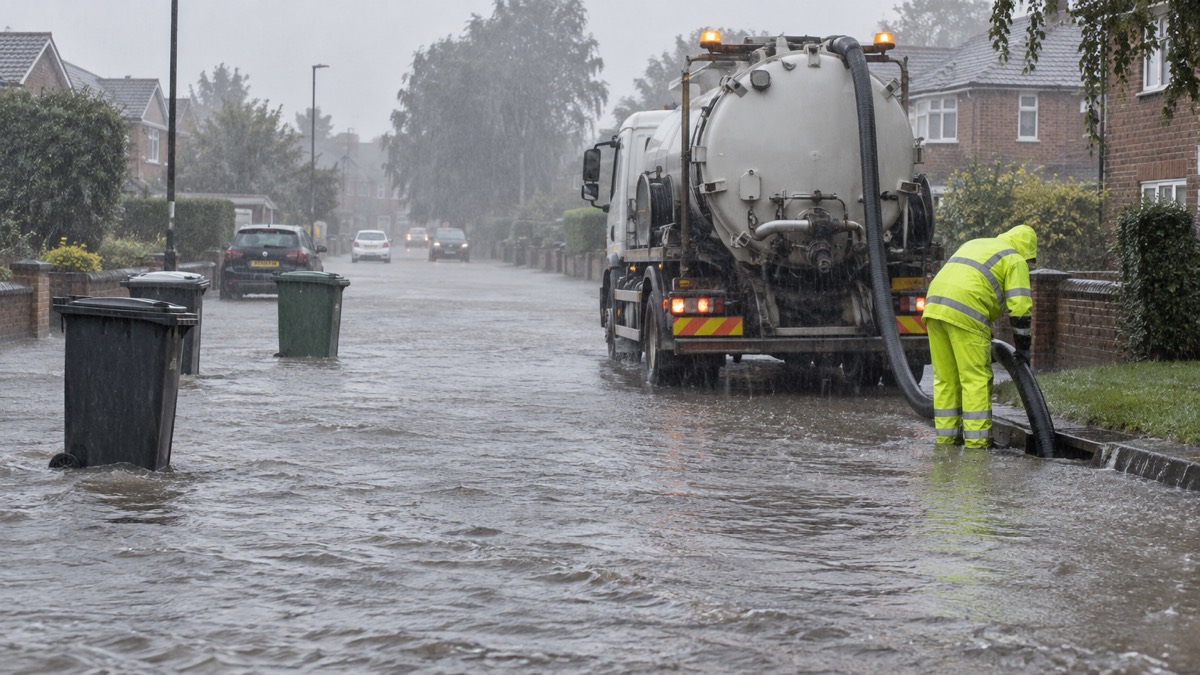
Water companies are responsible for managing flooding from sewers and water mains, and if you experience flooding from either you should contact your water company5. The water company owns and manages the network of public foul and surface water sewers16. Which company that is depends on where you live: in St Helens it is United Utilities8, and in Wales sewer flooding is the responsibility of Dŵr Cymru/Welsh Water and Hafren Dyfrdwy11.
Suspected leaks from a water main and any resulting flooding should be reported to the water company, which is the responsible Risk Management Authority for water leaking from its own mains8. If the flooding is due to a burst pipe, contact your water supplier, the company to whom you pay your water rates10.
The boundary between public and private is where confusion often arises. If your private drains or sewers are overflowing, you will need a drainage contractor to deal with any blockage, and a plumber for water service pipes or internal pipework16. The water company should be able to determine whether a blockage is in the public or private part of the system once it is on site, and it can then recharge you the cost of any work if it turns out to be a private sewer16. Our page on sewer flooding goes into the causes and the boundary in more detail.
Flood warnings: three levels from the Environment Agency
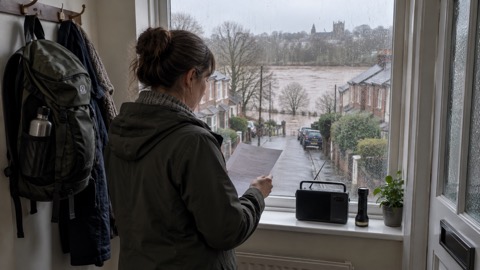
The Environment Agency's warning service includes three types of warning: Flood Alert, Flood Warning and Severe Flood Warning6. The Agency is responsible for issuing flood warnings throughout England and Wales6.
- Flood Alert: the earliest level, meaning flooding is possible and you should be prepared6
- Flood Warning: flooding is expected, and you should act on your flood plan22
- Severe Flood Warning: severe flooding and danger to life22
A Severe Flood Warning is issued in consultation with local authorities and other responders23. What each level means for your household, and how to sign up for free warnings by phone, text and email, is covered in our pages on flood warnings and how to sign up.
The Floodline service is provided by the Environment Agency24, and you can contact Floodline for advice on 0345 988 118823. When you call Floodline on 0345 988 1188, enter your quick dial code to hear flood messages for your area directly7.
Beyond the live warnings, the Environment Agency produces a five-day flood forecast, which you can see on the GOV.UK website2. This is the public face of the daily Flood Guidance Statement, each edition of which gives an assessment of the risk of flooding for the next five days25. Our page on the Flood Guidance Statement and five-day forecasts explains how to read it.
What your council does during a flood
During severe flooding, local authorities work with the emergency services and co-ordinate shelter for people evacuated from their homes26. This is the council's core role in a live incident: not defending individual properties, but coordinating the response for people displaced by the water.
Councils also take reports that help build the picture of a flood. Reporting a flood captures information on localised flooding and informs others7. Councils ask residents to report gully blockages or highway flooding and to log surface water flooding incidents, while foul sewer blockages and water main flooding go to the local water company27. Flooding on a highway, including blocked drains and gullies on roads, can be reported through the online reporting tool Fixmystreet in some areas12.
Parish and town councils work with county councils to involve local communities in flood risk management, emergency planning and flood recovery at a local level5. If your area has a flood warden scheme or community flood plan, the parish or town council is often the route in; our page on community resilience covers what neighbours can organise together.
If you are evacuated, Somerset's housing guidance sets out what happens next: contact your utility suppliers, as they may need to check your gas, electricity and water supply for safety, and contact your insurer immediately if your home has been flooded, because you are usually responsible for repair costs unless your policy covers them28.
Who checks the safety of reservoirs
Reservoir flooding is rare, but it has its own chain of responsibility. The safety of reservoirs is the responsibility of the reservoir's owners or operators29. The Environment Agency's role is oversight: it is responsible for 2,000 reservoirs in England and Wales and enforces the Reservoirs Act 197530.
The Agency's reservoir work has three strands: surveillance, meaning maintaining a register of reservoirs for England and Wales; enforcement, meaning achieving compliance with the legislation; and the enforcement of the Reservoirs Act 1975 itself30. If you live below a large reservoir and want to understand the specific risk, our page on reservoir flooding covers the risk maps and what to do if a dam fails.
After your home floods: investigations and support
Once the water has gone, the question of who did what often matters for getting it sorted. Lead Local Flood Authorities have a duty to investigate serious floods, and reporting your flooding to the council, through the routes above, is what feeds that process. Nottinghamshire's after-a-flood guidance lists who is responsible for what follows: rising groundwater flooding is the property owner's to deal with, but the council can provide advice17.
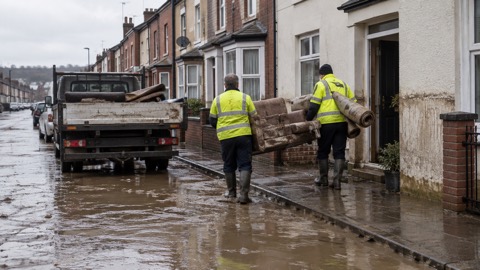
The practical steps after a flood are largely yours. Contact your utility suppliers, as they may need to check your gas, electricity and water supply for safety28. Contact your insurer immediately, because you are usually responsible for repair costs unless your policy covers them28. Our checklists on first steps after your home floods and making an insurance claim walk through these in order.
Scotland and Wales: SEPA and Natural Resources Wales
The arrangements described so far are England's. Scotland and Wales have their own bodies, and the numbers differ.
In Scotland, SEPA is the national flood forecasting, flood warning authority and strategic flood risk management authority26. Scottish Water is a responsible authority for flood risk management, working closely with SEPA, local authorities and other responsible authorities26. The framework is set by the Flood Risk Management (Scotland) Act 2009, which the Scottish Government oversees and which established the requirement for Flood Risk Management Strategies and Local Flood Risk Management Plans26. Scottish Ministers set the policy framework for how flooding is managed in Scotland and are ultimately responsible for approving the objectives and actions in the strategies26. Local authorities are responsible for producing Scotland's first Local Flood Risk Management Plans1.
SEPA issues flood alerts and warnings for Scotland, and you can contact Floodline for advice on 0345 988 118823. When you call, enter your quick dial code to hear flood messages for your area directly7. SEPA's daily Flood Guidance Statement gives an assessment of the risk of flooding for the next five days25.
In Wales, Natural Resources Wales constantly monitors rainfall, river levels and sea conditions to forecast the possibility of flooding, alongside the Environment Agency and SEPA15. The Environment Agency is responsible for issuing flood warnings throughout England and Wales6. For flooding from surface water and small watercourses in Wales, contact your local authority, who will direct you to their relevant department11. Sewer flooding in Wales is the responsibility of Dŵr Cymru/Welsh Water and Hafren Dyfrdwy11. Our page on Wales: Natural Resources Wales warnings and risk maps covers the Welsh arrangements in full.
Your local flood risk management strategy
Every Lead Local Flood Authority in England must create and apply a local flood risk management strategy under the Flood and Water Management Act 201031. This is not just paperwork: the strategy is the document that sets what your council will actually do about the flooding that affects you.
Derbyshire's strategy shows what one looks like. It is divided into 2 parts: part 1 provides information about flooding and flood risk, covering who to call and how local people can help themselves to become more resilient to the impacts of flooding; part 2 covers the more technical details of understanding flood risk, setting out the local objectives, the actions to achieve them and how they will be prioritised32. There are 5 local objectives around the key actions for managing local flood risk, and 11 guidance notes and 2 policy documents support the strategy32. Derbyshire's was first published in 201531.
The strategy also gives the role of the council's partners, such as district and borough councils, water companies, and parish and town councils32. Helping people to prepare for floods is a key part of delivering the strategy, as this helps communities to understand and manage flood risk31. If you want to know whether a scheme is planned for your area, or why one is not, the strategy and its supporting documents are where the answer sits, usually on the county council's website.
What is left to you
This is the part of the system no agency fills. It is your responsibility to manage your own flood risk and protect yourself, your family, property or business: view flood maps, sign up to Floodline and know who to contact if flooding happens26. If you own your home, it is your responsibility to protect it from flooding2.
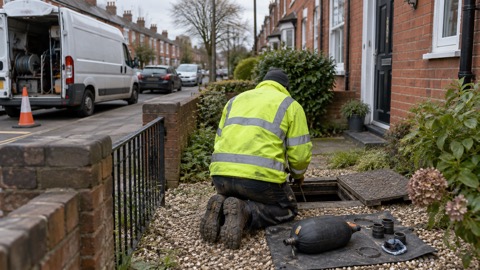
That responsibility extends to your drains. Keep private drains on your property clear and in good working order, and if they become blocked, call a drainage contractor27. A plumber handles water service pipes and internal pipework16.
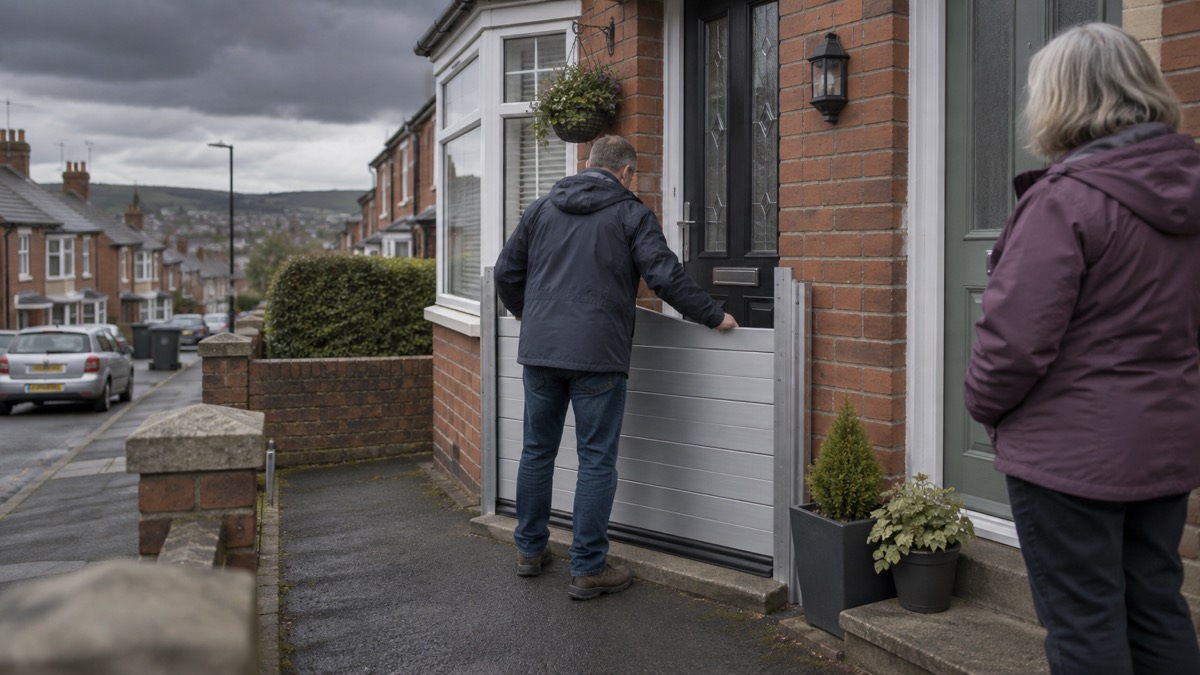
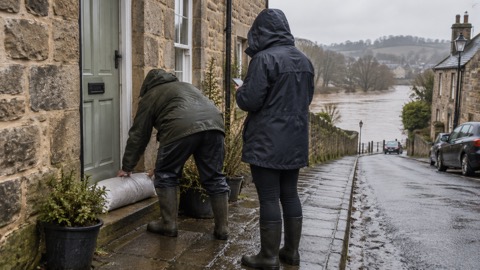
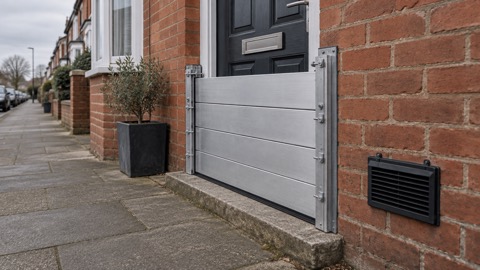
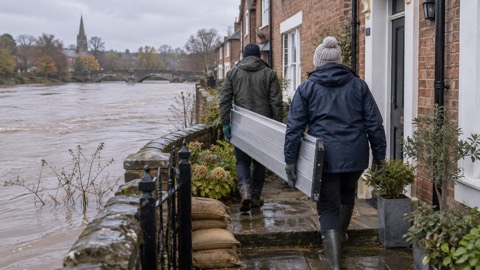
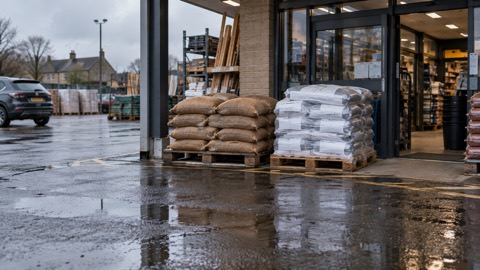
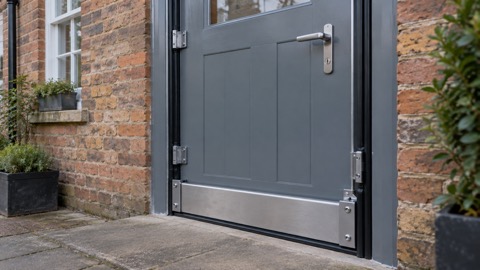
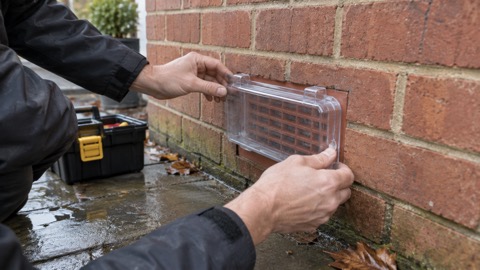
For the building itself, residents are responsible for flood mitigating their properties, and official guidance for flood wardens lists the options: self-closing air bricks, flood barriers for doors, flood doors and windows, flood-resistant kitchens, non-return valves, external wall sealants and flood water alarms33. Each of these has a page in our flooding section, from door flood barriers to non-return valves, and our guide to protecting your home sets out the resistance and resilience measures side by side.
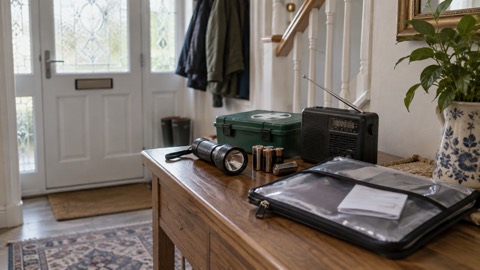
None of this means you face a flood alone. The bodies above manage the rivers, sewers, roads and coastlines, warn you before water arrives, and coordinate shelter when it does. But the last line of defence around a house is the householder's, and knowing that before the water rises is the point of this page. Start with a household flood plan and a checklist for when a warning is issued.
Sources (33)
- Responsibilities for flooding, SEPA
- Flooding: preparing for a flood, easy read, Nottinghamshire County Council
- Report a flood, Cornwall Council
- Be flood aware, Greater London Authority
- Flood risk responsibilities, Derbyshire County Council
- Flood warnings, Nottinghamshire County Council
- Live flood information quick dial codes, SEPA Floodline
- Types of flooding and who to contact, St Helens Borough Council
- Flood risk management, Northumberland County Council
- During flooding, Somerset Council
- Different types of flood risk, Natural Resources Wales
- Flooding and street maintenance, Oxfordshire County Council
- Help during a flood, GOV.UK
- Identifying flood risk, Derbyshire County Council
- Flood warnings guide, Met Office
- Flooding and road maintenance, Derbyshire County Council
- After a flood: further support, Nottinghamshire County Council
- Flood risk responsibilities, Derbyshire County Council
- How to prepare for flash flooding, Greater London Authority
- Preparing yourself for flooding incidents, Greater London Authority
- Surface water flood risk, Derbyshire County Council
- Community Risk Register 2025, North Yorkshire Local Resilience Forum
- About flood alerts and warnings, SEPA
- Preparing for flooding, Somerset Council
- Scottish flood forecast FAQs, SEPA
- Developing our knowledge of flooding, SEPA
- Personal responsibility for flooding, Derbyshire County Council
- Housing help if your home is flooded, Somerset Council
- Reservoir flooding, Derbyshire County Council
- Reservoirs, Derbyshire County Council
- Local flood risk management strategy, Derbyshire County Council
- Flood risk management strategy, Derbyshire County Council
- Be flood ready: guidance for flood wardens, Harborough District Council
 Flood Warning Checklist
 First Steps After a Flood
 Insurance Claim Records
 Checking Flood Risk by Postcode
 Types of Flooding
 Flood Alerts and Flood Warnings
 Flood Guidance Statement
 Wales Flood Warnings and Maps
 Making a Household Flood Plan
 Protecting Your Home
 Door Flood Barriers
 Sandbags and Alternatives
 Flood Doors and Windows
 Airbrick Covers
 Non-Return Valves and Bungs