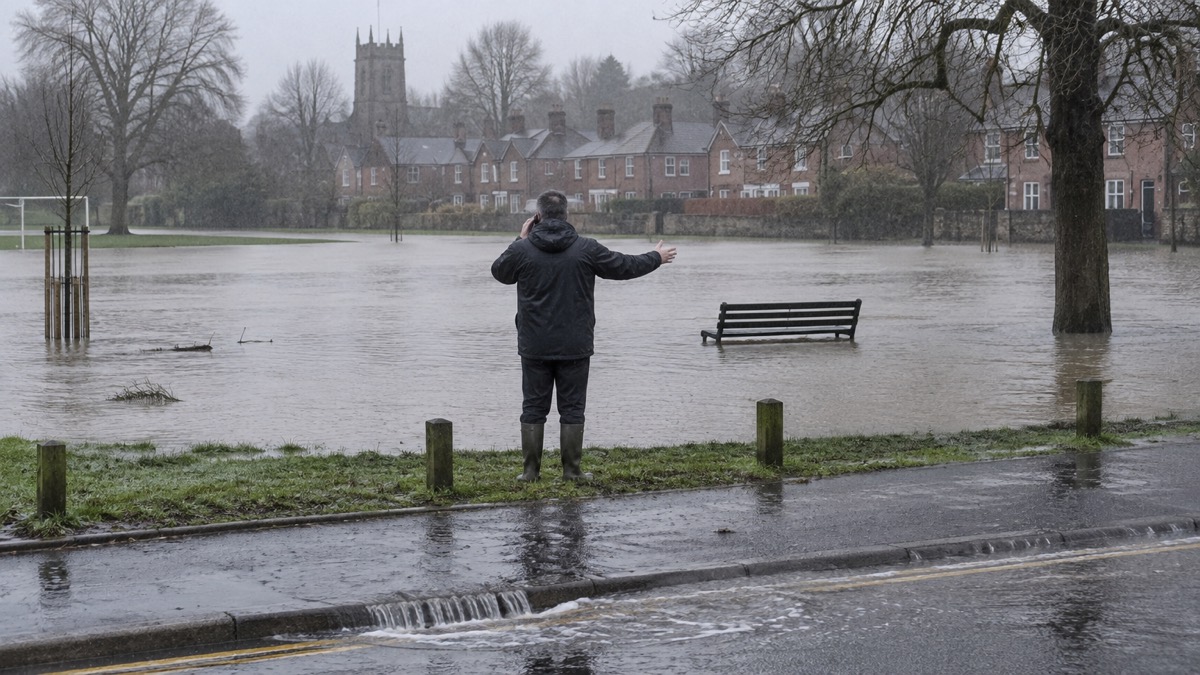
Flooding is reported to a different body depending on what is flooding and where you live. In England, severe river or coastal flooding goes to the Environment Agency on its 24-hour incident hotline, 0800 80 70 601. Surface water, road flooding and water entering your property go to your local council, which will direct you to the right department2.
In Scotland, Wales and Northern Ireland the bodies change: the Scottish Environment Protection Agency, Natural Resources Wales and NI Direct respectively3. The Met Office lists all four as the place to check the latest flooding information for your part of the UK3.
The most useful thing you can do is work out now which of these applies to your home, and save the numbers. Flooding rarely gives you time to look them up. If water is rising and there is a risk to life, ring 999 rather than any of the flood lines.
Who to contact depends on where you live in the UK
The four nations split the job differently, but the pattern is the same: a national body for river and sea flooding, and councils for everything closer to home. The Environment Agency, NI Direct, the Scottish Environment Protection Agency, Natural Resources Wales and local authorities share responsibility for giving the public advice and information during flood emergencies6.
| Nation | National flooding body | What it covers |
|---|---|---|
| England | Environment Agency | River and coastal flooding, warnings, flood history3 |
| Scotland | Scottish Environment Protection Agency (SEPA) | Flood warnings and advice3 |
| Wales | Natural Resources Wales | Flood warnings, river levels and advice3 |
| Northern Ireland | NI Direct | Flooding information and road drainage faults3 |
Natural Resources Wales, the Environment Agency and SEPA constantly monitor rainfall, river levels and sea conditions to forecast the possibility of flooding7. That is why the national body is the right first call for a river or the sea: it holds the readings and the warnings.
For surface water and small watercourses, contact your local authority, who will direct you to their relevant department2. Councils also hold historic flood information for surface water and small watercourses, so they are the place to ask whether a spot has flooded before8.
If you are not sure which type of flooding you are looking at, our guide to types of flooding sets out how river, sea, surface water and groundwater differ, and our page on who manages flood risk explains the split in more detail.
England: the Environment Agency
In England, report severe river or coastal flooding to the Environment Agency on its 24-hour service telephone line, 0800 80 70 601. The same number appears as the Environment Agency incident hotline, a freephone 24-hour service, for reporting a flooding incident9. It is for flooding from rivers and the sea, not for a blocked road drain.
Flooding from the sea should go to the Environment Agency incident hotline on the same number10. Flooding or muddy run-off from fields and farmland is different again: that goes to the Environment Agency's Land Management Team by email at landmanagementdcis@environment-agency.gov.uk10.
The Environment Agency also runs the flood warning service. You can get flood warnings by text, phone or email from the Environment Agency in England11. Signing up before anything happens is the single most useful step, and our guide to signing up for free flood warnings walks through it.
If you want to know whether a property has flooded before, you can request the flood history for the area around an address or postcode in England from the Environment Agency12. That is a written request rather than an emergency line, so keep it for a calm day.
Scotland, Wales and Northern Ireland: SEPA, Natural Resources Wales and NI Direct
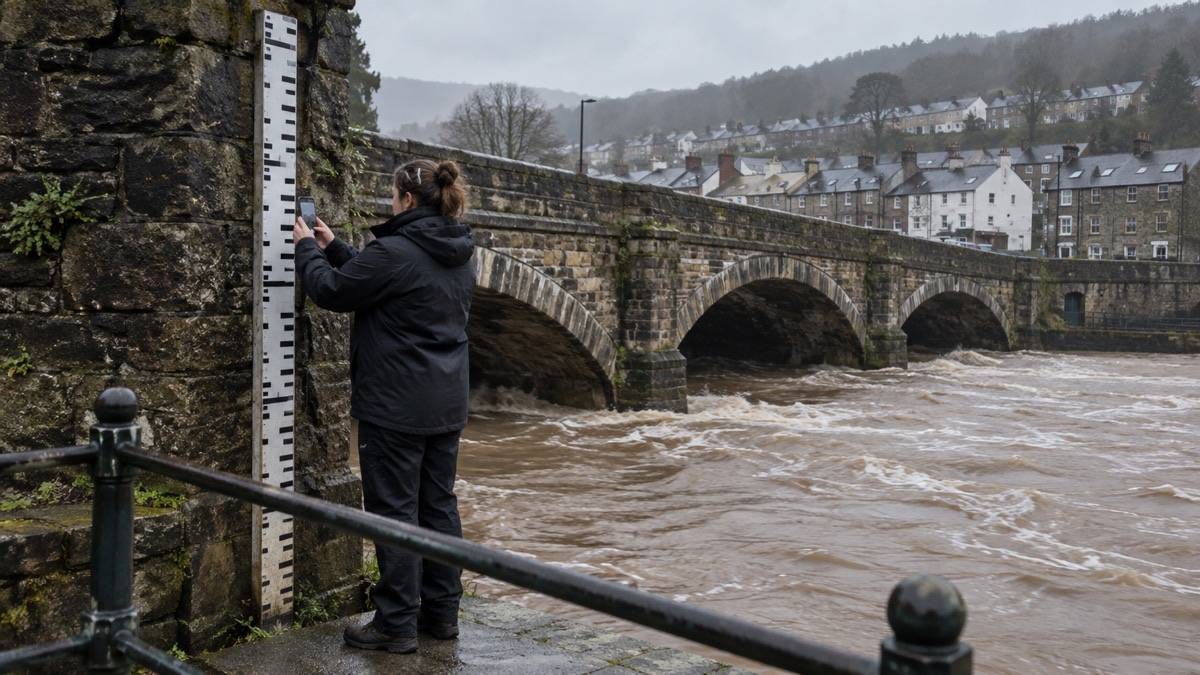
In Scotland, the Scottish Environment Protection Agency is the national flooding body3. SEPA's own advice to households is simple: know who to contact if flooding happens13. Doing that before a warning arrives is the whole point of this page.
In Wales, Natural Resources Wales monitors the weather situation closely and provides advice on flood warnings and river levels online14. For up to date information on flood warnings and advice, visit Natural Resources Wales14. Our guide to Wales: Natural Resources Wales warnings and risk maps covers how its warnings work.
In Northern Ireland, NI Direct is the flooding information body3. For road drainage faults, NI Direct runs a reporting service, and if you are reporting a current flooding issue affecting other road users or going into property from the road, you phone the Flooding Incident Line on 0300 2000 1005. Belfast City Council also lists 03002 000 100 for reporting serious flooding15.
Flooding at your property: report it online or on the phone
When floodwater has come into your home, tell your council. Many councils take this online, and some want photographs. One council, Nottinghamshire County Council, asks for property flooding to be reported to its Flood Risk Team through an online form with photographs, by email to flood.team@nottscc.gov.uk, or by phone on 0300 500 80 8016.
Report the flooding to your insurance provider as well, and contact your local council to report the flooding and get any help they can offer17. The insurance call starts the claim; the council call puts your property on the record and opens up any local support.
If you rent your home, contact your landlord to report the flood. They may arrange repairs or provide alternative accommodation18. Do that alongside, not instead of, telling the council.
Flooding from a burst water main or a sewer
Water companies own the pipes, so they take the reports. Suspected leaks from a water main and any resulting flooding should be reported to the water company, which is the responsible risk management authority for dealing with water leaking from its mains19. In the South West, flooding linked to public sewers or a burst water main should be reported to South West Water either by telephoning 0344 346 2020 or online10.
Sewer flooding is the same principle. Sewers should be reported to your water company20. If you have an overflowing sewer, contact your water company4. If you are thinking of pumping flood water into public sewers, check with your water company first4.
Our pages on sewer flooding and on non-return valves and toilet bungs explain what causes backflow and what can be done about it.
Flooding on a road
Road flooding is a highway matter, and the highway authority is usually the council. One council takes highway flooding, including blocked drains and gullies on roads, through its online reporting tool Fixmystreet22. Another takes road or highway flooding online or through its highway hotline23. A third takes flooding that involved mud, debris or spillage on a road online through its highways service10.
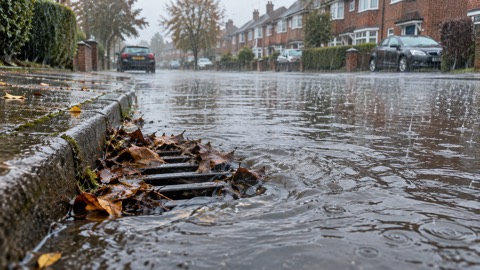
Blocked highway drains and gullies can be reported online or through the council's customer service centre20. If it is specifically a blocked road drain you are reporting, our page on reporting a blocked road drain or gully goes through what to include.
Reporting flooding at a neighbour's property
You can report flooding on behalf of someone else, and for vulnerable people you should. Check on vulnerable neighbours or relatives when flooding is about20. If you know someone who is frail or otherwise vulnerable and affected by flooding, contact the council as soon as possible24.
If a neighbour is away, they may have asked you to keep an eye on the property. Householders facing flooding are advised to arrange for a neighbour to make regular checks of their property, and to ask the neighbour to inform the police by the 999 system if they see or hear anything suspicious25.
If you are told to evacuate, follow the advice of emergency services before leaving your home, and cooperate with them if you are told to leave your property26. Our guide to what to do during a flood at home covers the sequence.
Know who to contact before flooding happens
The time to sort this out is now, not when water is at the door. SEPA's advice to households is to know who to contact if flooding happens13. That means a short list, saved in your phone and written on paper in case the power is out.
- The national flooding body for your nation, for river and coastal flooding3
- Your council's flooding contact, for surface water, roads and property flooding2
- Your water company, for sewers and burst mains4
- Your insurer, to start a claim17
- Floodline, for local flood warnings14
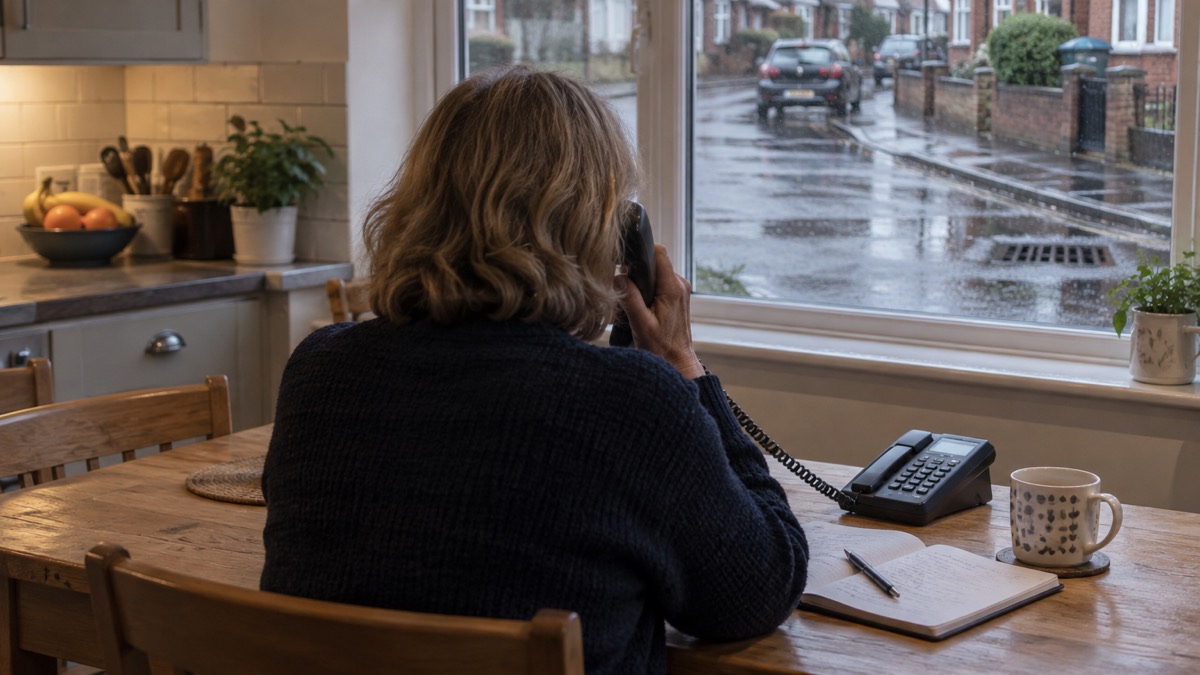
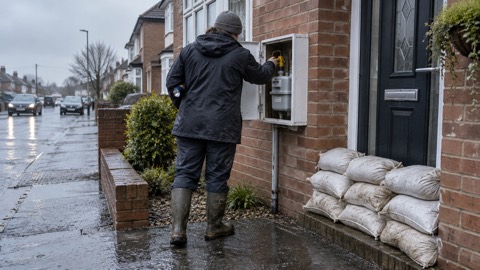
Make a flood kit and keep it somewhere you can reach without wading. Keep a torch, battery radio, emergency numbers, rubber gloves and your insurance policy in a safe place, and know where your mains electricity and gas switches are9. Our emergency kit guide lists what else earns its place, and our household flood plan helps you write the contacts down.
Sources (26)
- Flooding - Be Ready, prepare.campaign.gov.uk (UK government Be Ready campaign)
- Different types of flood risk, Natural Resources Wales
- Community resilience, Met Office
- Help during a flood, GOV.UK
- Report road drainage fault, NI Direct
- Protecting your property from winter weather, Met Office
- Flood warnings, Met Office
- Understanding your flood risk results, Natural Resources Wales
- Flooding - Cornwall Council, Cornwall Council
- Report a flood, Cornwall Council
- Get flood warnings, GOV.UK
- Request flooding history, GOV.UK
- Responsibilities for flooding, SEPA
- Flooding and high winds, North Wales Fire and Rescue Service
- Emergency advice, Belfast City Council
- Easy read, Nottinghamshire County Council
- Flood recovery information, Devon County Council
- Housing help if your home is flooded, Somerset Council
- Types of flooding and who to contact, St Helens Borough Council
- Flooding help and advice during a flood, Nottinghamshire County Council
- Flooding before, during and after: frequently asked questions, Nottinghamshire County Council
- Flooding, Oxfordshire County Council
- Stormy weather, Cumberland Council
- Flooding, Highland Council
- Be Prepared, Lancaster City Council
- Be flood aware, London Assembly
 Flood Warning Checklist
 First Steps After a Flood
 Insurance Claim Records
 Signing Up for Flood Warnings
 Flood Warnings Without Email
 Reporting a Blocked Gully
 Garden Safety After Sewage
 Council Sandbag Duties
 Filling and Laying Sandbags
 Makeshift Sandbags
 Disposing of Used Sandbags
 Turning Off Utilities
 Walking or Driving in Floodwater
 Turning Electricity Back On
 Appliances After Water Damage