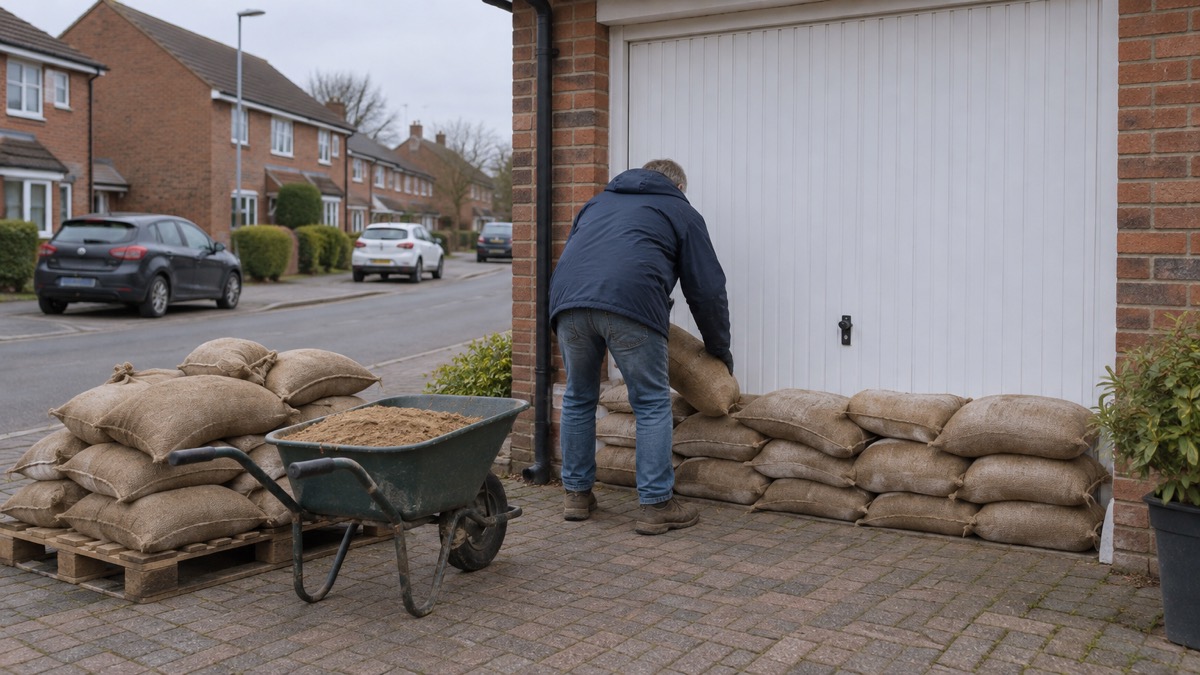
If you are watching a flood warning and wondering whether the council will bring sandbags, the short answer is that it does not have to. Councils across the UK say plainly that there is no statutory duty to provide sandbags to households1. Some will help in a flooding emergency, but usually only in limited amounts and usually only for vulnerable residents who cannot sort out their own4.
That makes sandbags something to arrange yourself, before you need them. Councils and fire services recommend that households in flood risk areas buy their own sandbags and sand in advance, or keep materials ready to make them, rather than waiting for a delivery that may never come6. Sandbags are a cheap measure that helps keep water out for short periods, and they work better with plastic sheeting8.
The rest of this page explains who is responsible for what, which council to ask, who may get a limited supply, and how to have sandbags ready so that a forecast does not leave you queueing at a builders' merchant with everyone else.
Councils have no duty to provide sandbags to households
The starting point for any household is that sandbag supply is discretionary. Lancashire County Council says it has no statutory duty to provide sandbags to the public1. Argyll and Bute Council makes the same point, adding that responsibility for protecting property rests with the property owner2. Moray Council puts it the same way: the responsibility for protecting property during a flood rests with the property owner, and there is no statutory duty for a local authority to provide sandbags3.
Some councils go further and do not supply householders at all. Exeter City Council says it does not provide sandbags to householders and points people to local builders' merchants for sand and bags9. Somerset Council states simply: "We no longer provide sandbags"13. Southend-on-Sea City Council says it does not provide sandbags and that it is the resident's responsibility to protect their property as far as possible12.
Others keep a stock but are careful about what they promise. Harborough District Council says it has no statutory duty to provide residents with sandbags but maintains stocks as an emergency response, and cannot accept liability for failure to supply or late delivery14. Lincolnshire County Council says it has no duty to provide sandbags but will make every effort to assist residents in need15.
"The County Council has no statutory duty to provide sandbags to the public."
The practical consequence is simple: a sandbag delivery is not something you can plan around. Treat any council supply as a possible bonus, not as your flood defence.
Who may get a limited supply
Where councils do hold sandbags, the priority is almost always vulnerable residents who cannot provide for themselves. Nottinghamshire County Council says that when flooding is threatened it may have limited supplies that it can provide to vulnerable residents who are unable to provide for their own4. It describes those residents as elderly, disabled and people with reduced mobility, and says supplies are for the most urgent and critical instances16.
Ashford Borough Council says it will only issue sandbags during a flooding emergency to vulnerable residents unable to source them for themselves, and that if vulnerable residents are affected it will attempt to deliver and place sandbags following an assessment, but cannot guarantee sufficient time or quantity to prevent or reduce damage5.
Councils also set out who will not get bags. Nottinghamshire County Council lists properties at negligible risk of flooding or already flooded, sheds, garages, gardens and outbuildings, residents who can buy their own sandbags or reach a Community Resilience Store, and businesses4. Ashford Borough Council says it does not supply bags to protect garages, garden sheds, outbuildings or gardens5.
| Situation | Likely council response |
|---|---|
| Vulnerable resident, home in imminent danger, cannot source bags | May receive limited supply where resources allow4 |
| Household able to buy its own sandbags | Expected to provide its own4 |
| Sheds, garages, gardens, outbuildings | Not supplied5 |
| Property already flooded | Not supplied4 |
| Business | Not supplied4 |
If you think you qualify, say so clearly when you contact the council, and explain why you cannot source sandbags yourself. If you are on your water company's Priority Services Register, mention it, as it records that you need extra help in an emergency. For more on support for households that need it, see Extra Help in an Emergency.
County, district or borough council: who to ask
Flood responsibilities are split, and asking the wrong council wastes time you may not have. In two-tier areas the county council handles highways and strategic flood risk, while district, borough, town and parish councils decide their own sandbag policies. Derbyshire County Council says each district, town and parish council has its own policy on giving sandbags to residents and businesses10.
In Derbyshire the county council distributes empty sandbags to district, town and parish councils for them to give to residents at flood risk, and welcomes working with parish councils or local flood groups willing to store a supply close to vulnerable areas18. That is a useful model to look for: the county may hold the stock, but the parish hands it out.
Oxfordshire County Council says sandbags are supplied free of charge during emergencies where flooding from public highways is occurring, and that your parish or district council may provide sandbags7. In Wales, Natural Resources Wales does not supply sandbags and directs people to their local authority, which may have some available during a flood20. Isle of Anglesey County Council sets out how and when it will provide sandbags for flooding21.
A sensible order of contact when flooding is forecast:
- Check your district or borough council's flooding pages for its current sandbag policy9.
- Ask your town or parish council, which may hold a local stock7.
- If you cannot access sandbags and your council runs a reporting route, use it. Lincolnshire County Council asks residents to report the need on FixMyStreet or call 01522 782082, noting it is quicker to report online15.
- If you are vulnerable and cannot source bags, tell the council that when you make contact3.
Getting sandbags ready yourself before a flood
The advice from councils and fire services is consistent: get your own. Nottinghamshire County Council says sandbags are not guaranteed and recommends that residents in flood risk areas purchase their own as part of their flood preparations6. Each district, town and parish council has its own policy on giving sandbags to residents and businesses, and some may still provide limited quantities, empty bags or make them available via town or parish councils, so check with your district council for local arrangements22.
Fire services say the same. Devon and Somerset Fire and Rescue Service says it does not provide sandbags but your local council might, and will only have limited amounts; you can buy your own sand and bags, or fill pillowcases and plastic bags with soil23. Dorset and Wiltshire Fire and Rescue Service suggests getting sandbags to block doors and airbricks from a builders' merchant or your local council, or making your own using old pillow cases or carrier bags filled with sand or earth24.
Where to buy them:
- Builders' merchants, DIY stores and garden centres are the usual sources; Highland Council notes sandbags are available from most local builders' merchants25.
- South Hams District Council advises property owners to buy their own sandbags and to contact local builders' merchants well in advance9.
- Lincolnshire County Council says that if water is likely to enter your property, obtain sandbags from a local supplier if possible for faster support15.
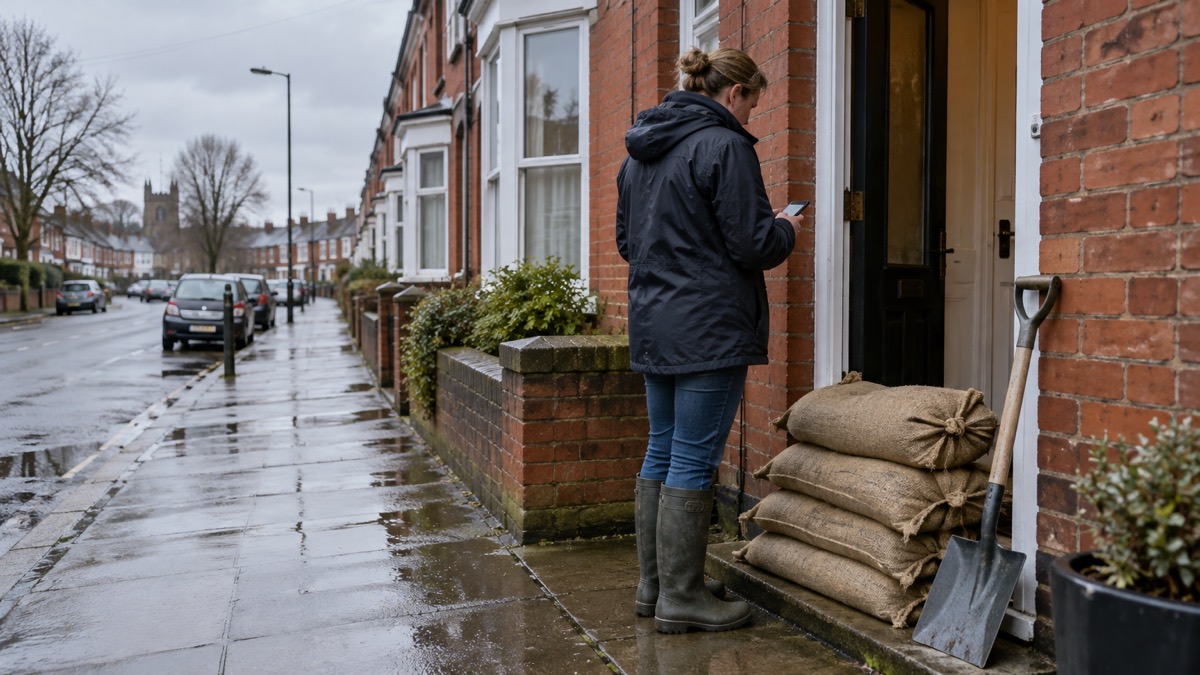
Timing matters as much as supply. Moray Council says it will not generally provide sandbags in advance to communities at risk as a precautionary measure unless forecast conditions or the Scottish Environment Protection Agency indicate a high level of risk3. That is another reason to hold your own: you can lay them when the forecast turns, not when a council decides to act.
For how to fill and lay them properly, see How to Fill and Lay Sandbags at a Door, and for alternatives when bags run short, Using Pillowcases or Bin Bags as Sandbags. If you are weighing up options, Sandbags and Sandless Alternatives sets out what each does.
When supplies run out, and what happens next
Councils are candid that demand can outstrip supply. Teignbridge District Council says its supply is limited and demand may exceed supply, and that satellite stores run by parish and town councils are only available to Teignbridge residents9. Harborough District Council cannot accept liability for failure to supply or late delivery14. Highland Council says that where resources allow it aims to provide filled sandbags to those in greatest need25.
Some councils take a different approach entirely, using limited stocks in bulk rather than for individual homes. Local authorities in Suffolk will not provide sandbags to protect individual properties, but use these limited resources in bulk to raise and repair defences or divert water away from groups of properties11. That reflects a wider point: sandbags handed out one house at a time are a weak use of a scarce resource compared with defending a street.
After the flood, disposal is yours. Carmarthenshire County Council says disposal of used sandbags is the responsibility of the home or business owner26. Ashford Borough Council says sandbags will not be collected after the event and advises householders to keep them for future use5. For safe disposal, see How to Dispose of Used Sandbags.
Whose responsibility is property protection?
It is the household's. Suffolk County Council says homeowners are responsible for protecting their property from flooding, although the council provides support and guidance11. Southend-on-Sea City Council says it is the resident's responsibility to protect their property as far as possible12. Derbyshire County Council frames it as personal responsibility, with councils and agencies providing advice and, where they can, limited emergency help27.
That does not leave you without support. Councils may provide skips and extra rubbish collections after a flood17, and they publish guidance on preparing. But the decision about whether your door has a barrier in front of it when the water arrives is yours. The most reliable preparation is a household flood plan, a check of your risk, and your own stock of sandbags or a reusable barrier kept ready. Start with Checking Your Home's Flood Risk by Postcode and Making a Household Flood Plan, and see Who Manages Flood Risk: Agencies, Councils and Water Companies for how the different bodies fit together.
Sources (27)
- Flooding support, Lancashire County Council, 2026
- Flood advice, Argyll and Bute Council, 2026
- Emergency preparations you can do, Moray Council, 2026
- Preparing for flooding, Nottinghamshire County Council, 2026
- Flood support, Ashford Borough Council, 2026
- Flooding: preparing, Nottinghamshire County Council, 2026
- Our policy on sandbags, Oxfordshire County Council, 2026
- How to recover from flooding, UK Health Security Agency, 2023
- Who to contact about flooding, Devon County Council, 2026
- Sandbags, Derbyshire County Council, 2026
- Flood management in Suffolk, Suffolk County Council, 2026
- Flood preparedness, Southend-on-Sea City Council, 2026
- Preparing for flooding, Somerset Council, 2026
- Be flood ready: guidance for flood wardens, Harborough District Council, 2026
- Report a flood, Lincolnshire County Council, 2026
- Flooding before, during and after: frequently asked questions, Nottinghamshire County Council, 2026
- Further support after a flood, Nottinghamshire County Council, 2026
- Resilience and sandbags, Derbyshire County Council, 2026
- Personal responsibility, Derbyshire County Council, 2026
- What to do in a flood, Natural Resources Wales, 2026
- Flood and coastal risk management, Isle of Anglesey County Council, 2026
- Flooding and drainage - Roads and transport, Devon County Council
- Safety in severe weather conditions, Devon and Somerset Fire and Rescue Service, 2026
- Flooding, Dorset and Wiltshire Fire and Rescue Service, 2023
- Flooding, Highland Council, 2026
- Get prepared, Carmarthenshire County Council, 2026
- Derby and Derbyshire flood warden handbook, Parwich Parish Council, 2019
 Flood Warning Checklist
 First Steps After a Flood
 Insurance Claim Records
 Signing Up for Flood Warnings
 Flood Warnings Without Email
 Who to Report Flooding To
 Reporting a Blocked Gully
 Garden Safety After Sewage
 Filling and Laying Sandbags
 Makeshift Sandbags
 Disposing of Used Sandbags
 Turning Off Utilities
 Walking or Driving in Floodwater
 Turning Electricity Back On
 Appliances After Water Damage