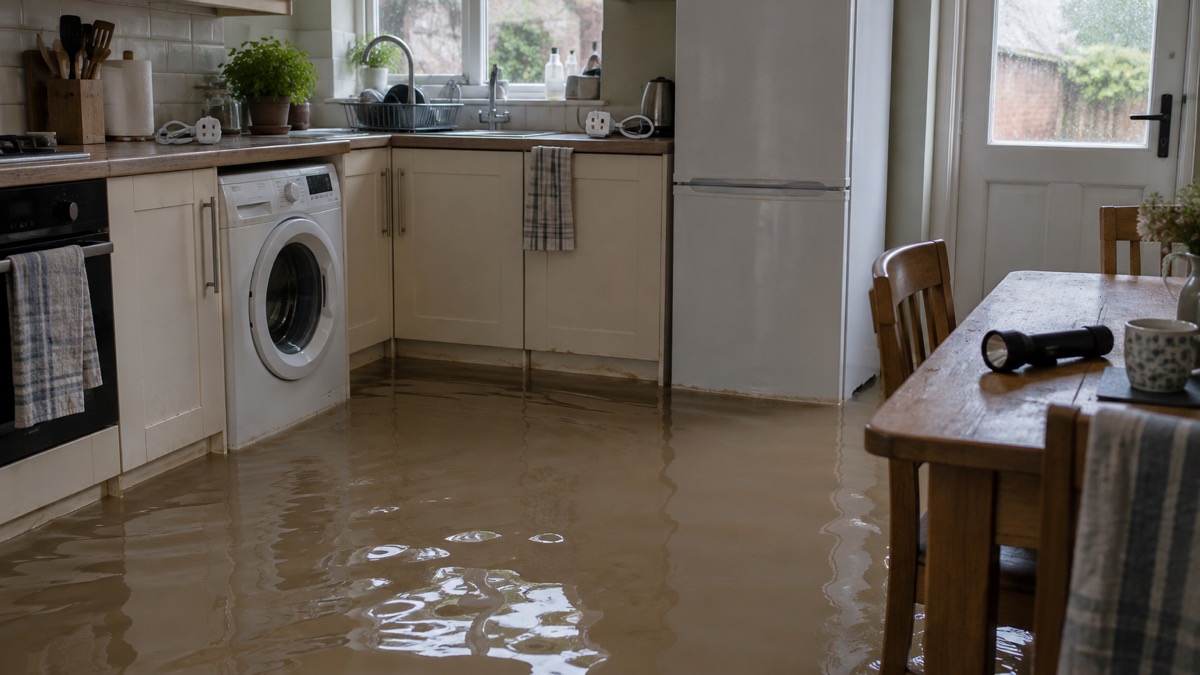
If floodwater has reached your kitchen or utility room, the short answer is no: do not switch on any electrical appliance that has been in contact with floodwater unless a competent electrician has cleaned and checked it1. The same applies to the electricity supply itself. Do not turn on your water, gas or electricity after a flood until it has been checked2, and do not use your electricity mains until a qualified electrician has passed it3.
The danger is not only the water you can see. Water gets inside casings, cable insulation and connections, and an appliance that looks dry on the outside can still be unsafe. All electrical equipment affected by the flood must be professionally checked and tested to ensure it is still safe4. Nearly a third of people are either unsure or believe it is OK to begin using appliances again immediately after floodwater has gone5, which is exactly the mistake this page is written to prevent.
What follows is the order to do things in: keep away from the electrics while water is about, get the supply isolated safely, move what can be moved, then have everything checked before anything goes back on. It also covers gas appliances, which follow the same rule with a different engineer, and how to find someone properly registered to do the testing.
Do not switch on anything that has been in floodwater
The instruction is the same across the UK's official flood guidance, and it is worded strongly for a reason. Do not switch on electrical appliances that have been in contact with floodwater until a qualified electrician has checked them, as there is a risk of electrocution8. Avoid turning on devices that use gas or electricity, because there is a possibility they may have got wet, and call a registered electrician to assess the wiring, equipment and appliances affected by the flood9. The same advice appears in Scotland10 and in Northern Ireland, where you should not touch sources of electricity while standing in floodwater11.
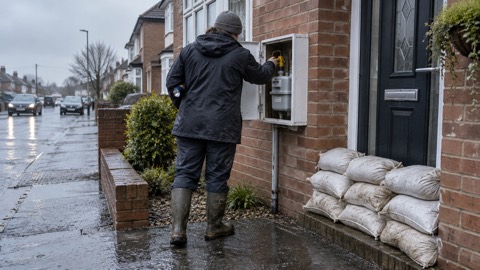
During the flood itself, do not use electrical appliances at all12. If you are leaving the house, turn off the mains water, gas and electricity if it is safe to do so, and find out in advance how to do that13. The turning off utilities guide walks through where your stopcock, fuse box and gas meter are likely to be and how to label them before you ever need them.
Once the water has gone, the temptation is to start cleaning and testing things yourself. Don't. Once all floodwater has receded and your home has been cleared for entry, do not attempt to clean up, use electrical appliances or carry out DIY electrical repairs5. Cleaning up around live or damaged electrics is how people get hurt after the emergency has passed.
Electricity off at the mains: who should do it
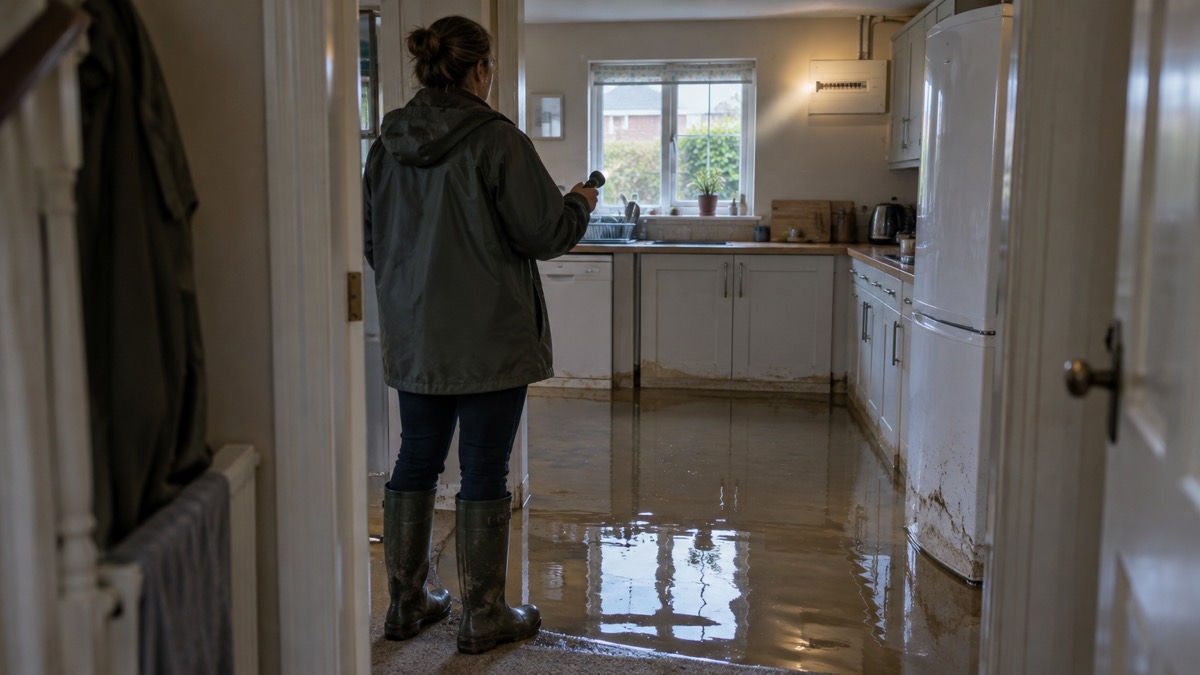
If floodwater has entered your property, switch off the electricity at the mains, if it is safe to do so7. That qualifier carries the whole instruction. Never attempt to turn off the electricity supply while standing in water6, and do not operate equipment in water or while standing in water6. If you cannot reach the main switch without wading, leave it and get out, then call your electricity supplier for advice.
If you have already left, or the water arrived faster than you could act, do not go back in to isolate the supply yourself. Only return to an evacuated building if you have been told it is safe, and get an approved service engineer to check your gas, electricity and water before turning them back on14.
Getting the supply back on is not a case of flicking a switch once the floor is dry. Wait for an electrician's approval before turning the power back on, and switch off all electrical appliances properly before the supply is restored15. Do not turn your electricity on until a competent tradesperson or your utility supplier has checked it16. If your supply is still on, or has been underwater but is now back on, contact a qualified electrician17.
| Situation | What to do | Who decides it is safe |
|---|---|---|
| Water rising, you are dry and can reach the main switch | Switch off at the mains if it is safe to do so7 | You, at the switch |
| Water already in the room with the meter or fuse box | Do not enter or reach in; get out and call your supplier | Your electricity supplier or a qualified electrician6 |
| Water gone, house empty | Do not restore the supply yourself | A competent tradesperson or your utility supplier16 |
| Supply never went off but was submerged | Treat it as damaged and get it checked | A qualified electrician17 |
Unplugging and moving portable appliances safely
Once the supply is off and the room is safe to enter, the next job is to stop water sitting against equipment. Unplug any damaged electrical appliances and move all portable ones away from the area affected by flooding4. The same instruction appears in council guidance: unplug damaged appliances and move portable ones clear7. If you are preparing before water arrives, switch off all electrical appliances, remove plugs from sockets and turn off the main switch, remembering that freezers and refrigerators will become ineffective18. Removing plugs and taking portable appliances to higher ground, or out of the home entirely if it is safe, is the standard pre-flood routine5.
Some appliances should not simply be unplugged and left. Cookers, washing machines and dishwashers connected to rigid pipes should be disconnected in a flood, because this helps prevent damage if the pipes move or float19. That is a job for someone who knows the plumbing, not a spur-of-the-moment tug on a hose.
Every affected appliance needs testing by an electrician
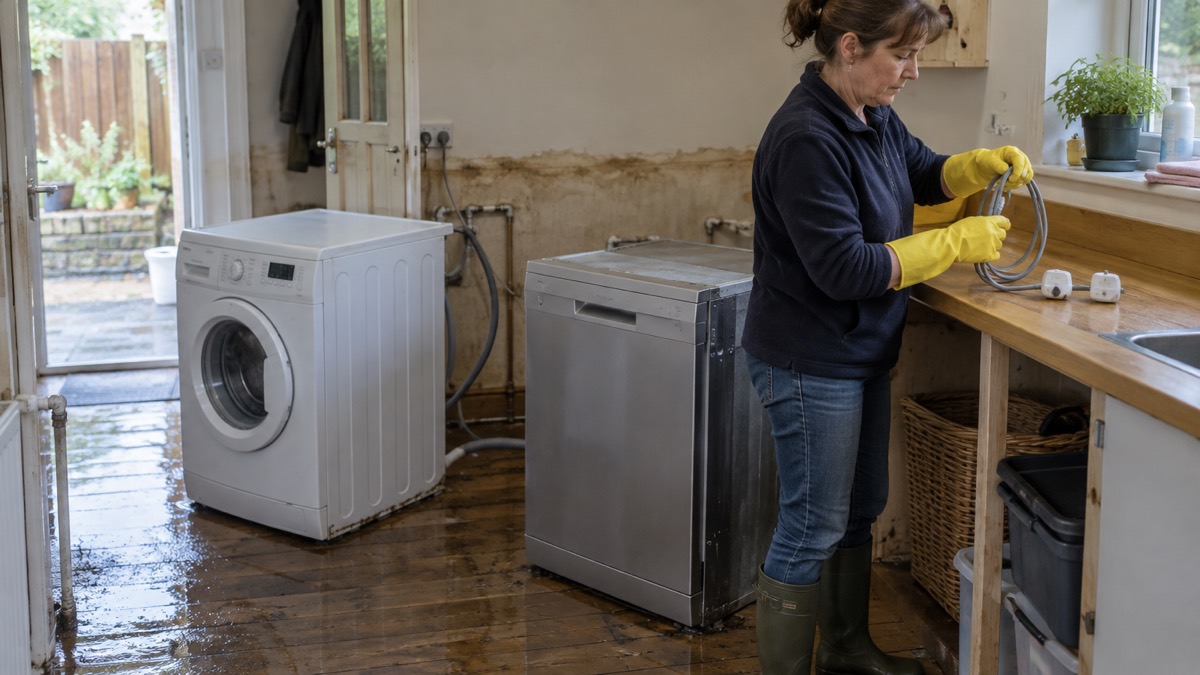
Make sure all affected appliances have been fully tested before using them again, and get specialist advice from electricians20. Get any electrical appliances that have come into contact with floodwater checked by a qualified electrician before using them again11. Do not switch on any electrical appliances in the areas affected by the flood until they have been tested and assessed as safe by a registered electrician21. If any electrical wiring has come into contact with floodwater, a qualified electrician will need to check the safety of the system and the safety of the appliances22.
This is not only about the appliances that got wet. Use a registered electrician to assess the condition and safety of the electrical wiring in the property and the fixed and portable electrical appliances affected by the flood21. That includes built-in ovens, immersion heaters and the wiring behind the walls, not just what was standing on the floor.
For smaller items, a portable appliance test is the usual check. Don't use water-damaged electrical items: have a portable appliance test carried out before use, because even if a water-damaged appliance seems fine to the naked eye, using it could cause further damage or even give you a shock23. If you have a private water supply, any electrical equipment associated with it should be inspected and declared fit for use by a suitably qualified electrician before you try to restore the supply24.
Why a dry appliance can still be unsafe
Water does not need to fill an appliance to ruin it. It creeps along cable cores, sits in terminal blocks and soaks into insulation, and it can stay there long after the outside feels dry. That is why the guidance is written around contact with floodwater rather than around how an appliance looks. During a flood and after it, your electrical supply and appliances can be dangerous25.
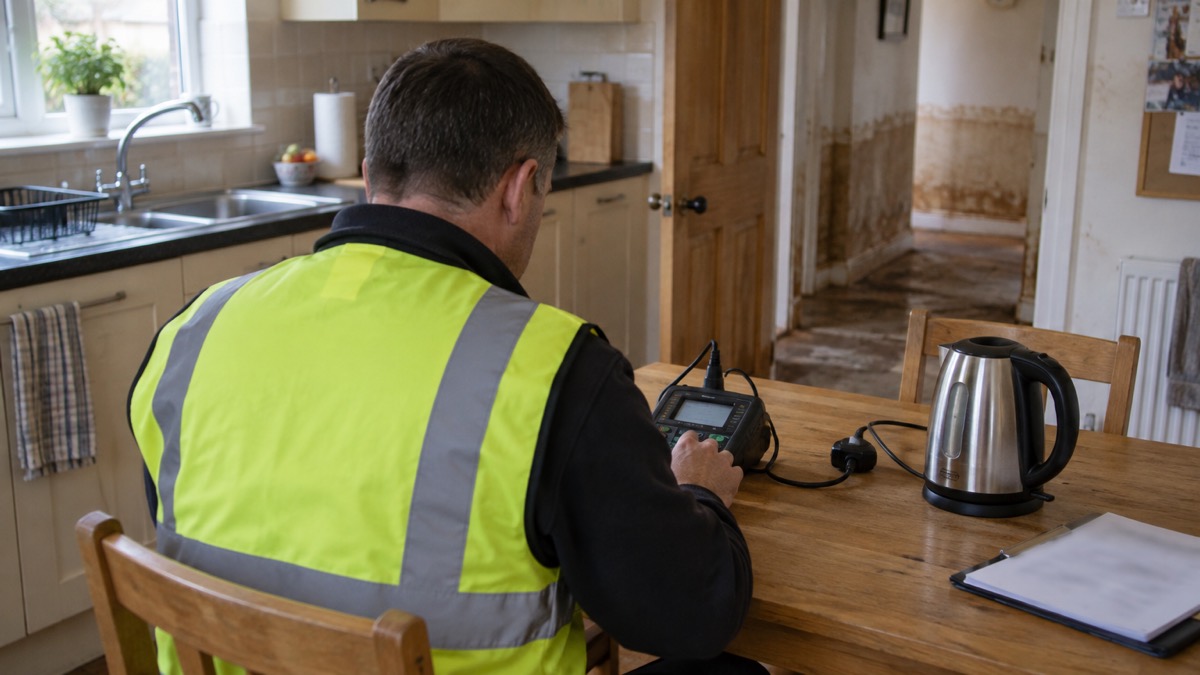
Damp also affects the fabric of the house, which is why the checks continue after the electrician has signed things off. Use circuit breakers on electrical equipment until your house dries out, even when the electrics have been checked3. A residual current device or circuit breaker cuts the power if something goes wrong, giving you a second layer of protection while walls and floors are still drying.
Dehumidifiers are a common trap. They should not be used to remove floodwater from the home, and electrical equipment should not be plugged in until it has been dried thoroughly and inspected by a qualified electrician26. If you are planning to dry the house out, read the guidance on drying out a house with dehumidifiers before you plug anything in.
Gas appliances carry the same risk with a different flavour of danger. Do not use gas and electrical appliances affected by the flood until they have been examined, cleaned if necessary, and tested18. Do not turn on gas or gas appliances until your system has been checked by a Gas Safe registered engineer3. Turn off the gas supply to appliances that have been flooded, or where vents and flues may have been affected, and contact your utility company if in any doubt16. Be wary of damage to gas appliances long after flooding, including central heating systems, radiators and hot water systems7. Any appliance that uses fossil fuels, and wood, should be installed and serviced at least annually by a qualified and registered engineer, and should not be turned on after getting wet until checked26.
Getting help and finding a registered electrician
Use a registered electrician to assess the condition and damage to electrical wiring, equipment and appliances that have been affected by the flood7. Your council's flood recovery pages, your insurer and the electrical industry's own safety body can all point you towards someone properly registered. Be cautious of anyone who turns up uninvited offering to do the work; the guidance on avoiding rogue traders after a flood explains the warning signs.
While you wait for the electrician, keep the practical side of the recovery moving. Wear rubber boots, waterproof gloves and an apron when cleaning up27, and use a domestic disinfectant following the manufacturer's directions on concentration, washing food preparation surfaces, storage cupboards and refrigerators with a food safe disinfectant9. None of that requires the power to be back on.
If you are not yet home, work through the first steps after your home floods checklist before you start moving back in, and read after a flood: returning home safely for the wider sequence of checks. For the electricity supply specifically, is it safe to turn the electricity back on? covers the questions to ask before the main switch is touched. If your meter box or cable entry is where the water got in, stopping water getting in through meter boxes and cable holes explains how to seal it before next time.
Sources (27)
- Flooding before, during and after: frequently asked questions, Nottinghamshire County Council, 2026-10-29
- After a flood, GOV.UK, 2026-10-25
- Flooding advice, Belfast City Council, 2026-10-29
- Electrical safety after a flood, Electrical Safety First, 2026-10-25
- Flooding electrical safety, NICEIC, 2025-10-03
- After a flood, London Fire Brigade, 2026-10-29
- Flooding aftercare, Runnymede Borough Council, 2026-10-26
- Flooding and health, Public Health Wales, 2026-07-31
- Cleaning up and returning home after flooding, Derbyshire County Council, 2026-10-29
- Flooding advice, Scottish Borders Council, 2026-10-29
- After a flood: clearing up, nidirect, 2026-05-06
- Rain and flooding, Ready Scotland, 2026-03-24
- Flooding, London Assembly, 2026-10-26
- Flooding - Cornwall Council, Cornwall Council
- Clearing flood, Oxford City Council, 2026-10-29
- Flooding: after, Surrey County Council, 2026-09-23
- Flooding advice, Electricity North West, 2026-10-25
- Be prepared: flooding, Lancaster City Council, 2026-10-26
- Flooding, Orkney Islands Council, 2026
- Further support after a flood, Nottinghamshire County Council, 2026-10-29
- Flooding advice, Electrical Safety First, 2026-10-26
- What to do if a flood happens, nidirect, 2025-10-24
- Storm damage: how to protect your home from a thunderstorm, Which?, 2026-10-21
- Private water supplies after floods or storms, Argyll and Bute Council, 2026
- Safety first, National Grid, 2026
- How to recover from flooding, GOV.UK, 2023-12-19
- Flood, City of York Council, 2026-10-29
 Flood Warning Checklist
 First Steps After a Flood
 Insurance Claim Records
 Signing Up for Flood Warnings
 Flood Warnings Without Email
 Who to Report Flooding To
 Reporting a Blocked Gully
 Garden Safety After Sewage
 Council Sandbag Duties
 Filling and Laying Sandbags
 Makeshift Sandbags
 Disposing of Used Sandbags
 Turning Off Utilities
 Walking or Driving in Floodwater
 Turning Electricity Back On