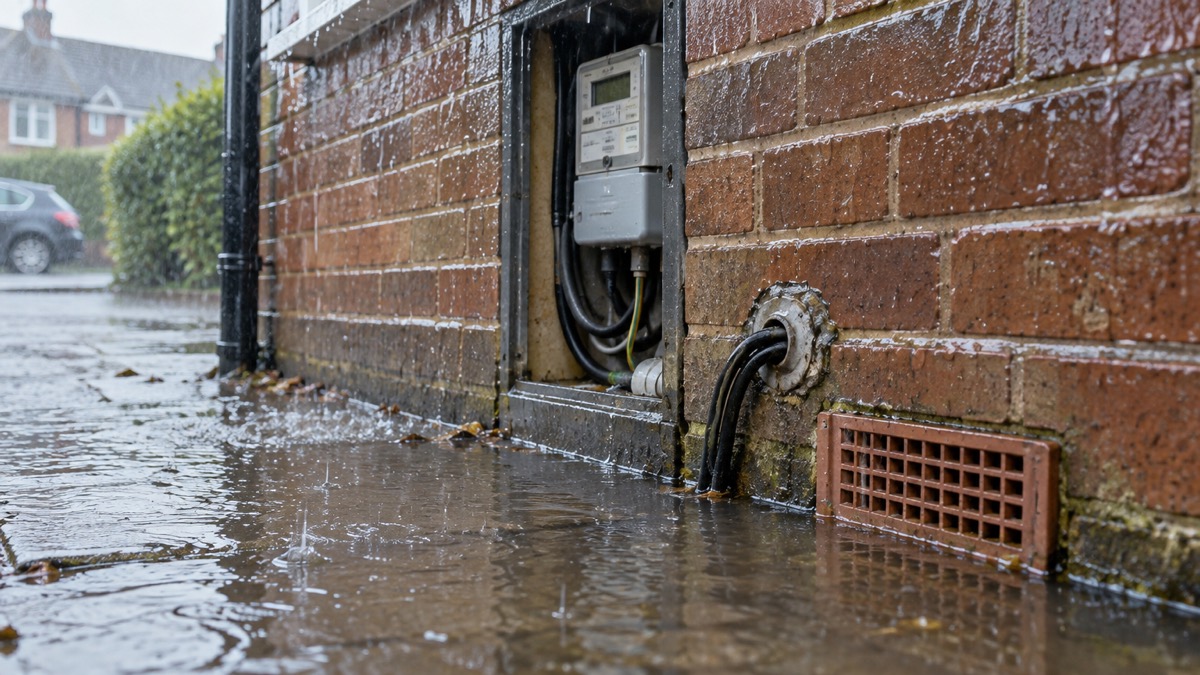
Water rarely enters a home through the front door alone. Official guidance is clear that water can enter a property via doorways, windows, air bricks or as groundwater through floors1. Meter boxes, cable holes and the gaps around pipes are the same kind of opening: small, easy to overlook, and enough to let a steady trickle into a hallway or under a floor.
The good news is that these routes are practical to deal with. Sealing gaps, fitting covers over air bricks, and putting non-return valves on drains are all practical changes that reduce the damage a flood does2. None of them works alone, and none is a guarantee, but together they turn a flood that soaks a ground floor into one that wets a doormat.
This page covers where water gets in, how to seal it out, how to stop it coming back up the drains, what to raise above floor level, what to switch off before it arrives, and how to get a survey and grant of up to £5,000 to do the work properly3. If you are starting from scratch, the wider Flooding: A Household Guide sets the scene.
How water finds its way in through meter boxes, cable holes and air bricks
The routes into a house are more numerous than most people expect. Official guidance lists doorways, windows, air bricks and groundwater through floors as the main ways water enters1. Each of those is a deliberate opening in the building fabric, and each has a smaller cousin: the hole drilled for a gas pipe, the slot where the electricity cable comes in, the recessed box that holds your meter.
Air bricks are the most obvious. They exist to ventilate the space under a suspended floor, and they sit close to ground level, which is exactly where floodwater collects. In Northern Ireland, official advice is to seal airbricks with plastic covers, cloths or towels when flooding threatens6. In Scotland, official guidance lists airbrick covers among flood protection products that could help reduce overall damage and the amount of silt and mud that enters your property7.
Meter boxes and cable holes are less discussed but work the same way. A meter box set into an external wall is a cavity, and if the seal around it has perished, water can track behind it and into the wall. Cable holes are often plugged with mastic that has cracked with age. Water does not need a large opening: it will find a pinhole and work at it.
Groundwater is the harder case. Where the water table rises, water can come up through the floor itself, and no amount of sealing around the walls will stop it. That is a different problem with different answers, covered in Groundwater Flooding: Why It Lasts and What Helps.
Sealing gaps in walls: resistance measures that keep water out
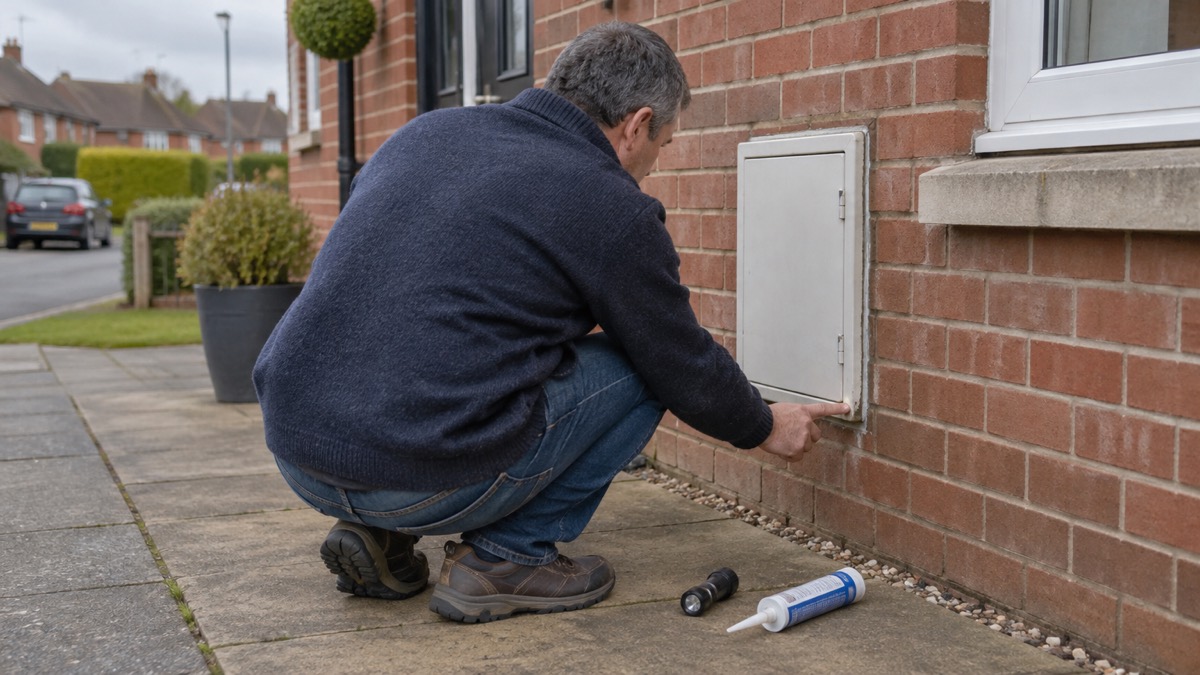
Resistance measures are the ones that keep water out in the first place. Official guidance describes resistance measures as flood doors, barriers, gates and walls installed to keep the water out8. At the smaller end of the same family are the products that deal with gaps: sandbags, water-resistant barriers and doors, and special valves on drains to stop water entering through the sewerage system9.
For the specific openings this page is about, the practical steps are straightforward:
- Air bricks: fit covers, or use plastic covers, cloths or towels as a temporary measure when flooding is expected6. See Airbrick Covers and Self-Closing Airbricks for the options.
- Meter boxes: check the seal around the box and renew it if it has cracked. If the box sits low on the wall, a bead of sealant around the frame is a small job with a real effect.
- Cable holes and pipe entries: seal the gap around the cable or pipe where it enters the wall. This is the same principle as draught-proofing, where official guidance advises sealing cracks in floors and skirting boards and lining your letterbox10.
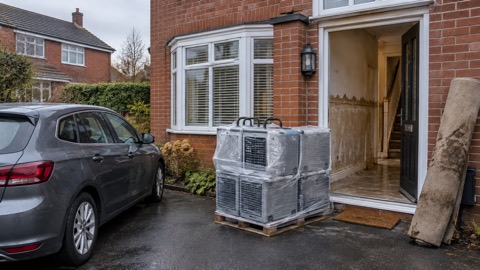
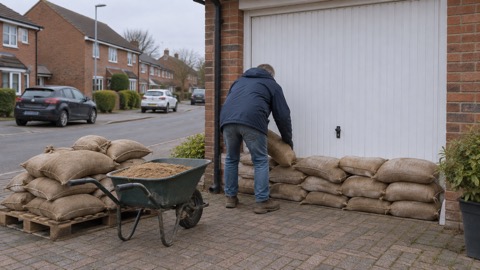
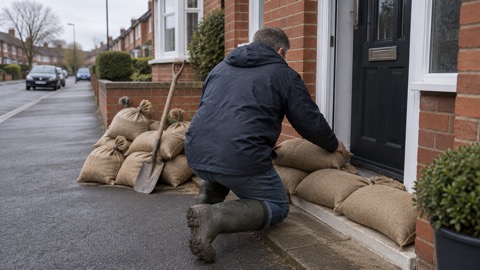
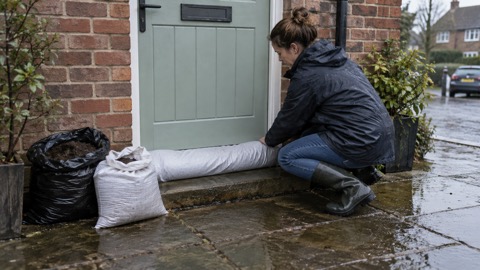
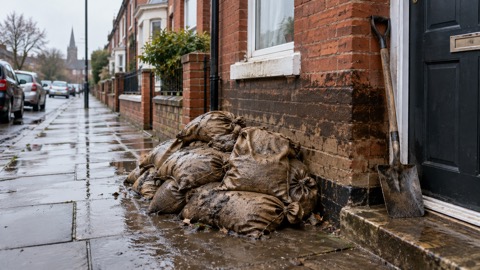
- Doorways: use flood barriers to divert water away from your home and prevent it entering; flood prevention devices can be bought online or from a hardware store11. You can also prevent entry by making sandbag walls at doorways or using other products that may be more effective1.
It is worth being honest about limits. Sealing gaps reduces the volume of water that gets in and buys time; it does not make a building watertight against a deep flood. The measures work best as a set, and they work best when fitted before the water arrives. For the full range, see Protecting Your Home: Resistance and Resilience Measures.
Non-return valves stop water coming back up through drains and pipes
Not all floodwater arrives through the wall. Some comes up through the floor, out of the drain, or back along the pipes. Fitting non-return valves stops flood water entering your property through the drains2. They only let water flow one way, so what is in the sewer cannot reverse into your kitchen.
Official guidance in Surrey advises considering non-return valves in sewage pipes to prevent sewage backing up into the house13. In Northern Ireland, the advice goes further: install a sump and pump to remove water and fit non-return valves to all drains and water inlet pipes14. If you do not have non-return valves fitted, official advice is to plug water inlet pipes with towels or cloths and turn off any equipment that uses water, such as washing machines and dishwashers6.
There is a second, quieter reason to fit one. Non-return valves also protect the drinking water supply: fitting a non-return valve will prevent affected water being sucked back into the supply15. That matters if you have an outside tap or a hose left connected.
| Opening | What helps | Who advises it |
|---|---|---|
| Air bricks | Covers, or plastic covers, cloths or towels as a temporary seal | Northern Ireland guidance6; Scottish guidance7 |
| Drains and sewage pipes | Non-return valves | UK Government2; Surrey County Council13 |
| Water inlet pipes | Non-return valves, or plug with towels and turn off water-using appliances | Northern Ireland guidance6 |
| Doorways | Flood barriers, sandbag walls | Property flood resilience guidance1 |
The detail on valves, including toilet bungs, is in Non-Return Valves and Toilet Bungs: Stopping Backflow. If sewage has already come up, Sewer Flooding: Causes and Who Is Responsible explains what happens next.
Raising sockets and meters for when water does get in
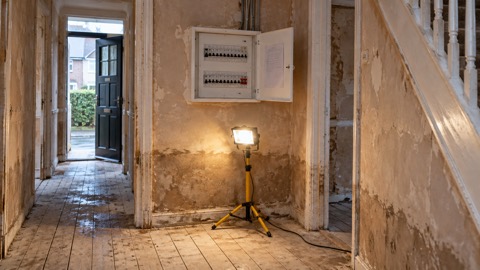
Some water will always get in. The question then becomes how much damage it does when it reaches the wiring. Official guidance is to fit plug sockets, boilers and service meters higher up on walls13. A socket at skirting level is at exactly the height a shallow flood reaches; a socket raised above that level may never need to be replaced.
The same logic applies to the meter box itself. If the meter and its cabling sit low, water in the box can reach live parts. Raising them is a job for a qualified electrician, not a DIY task, and it is best planned alongside other resilience work rather than in a hurry.
There are smaller steps for the moment the water is at the door. Official guidance advises placing plugs into sinks and basins and weighing them down to prevent surcharge into the sink16. That is the same backflow problem as the drains, dealt with at the fixture. Moving vehicles to higher ground is also advised17.
Before the water arrives: switch off gas, electricity and water
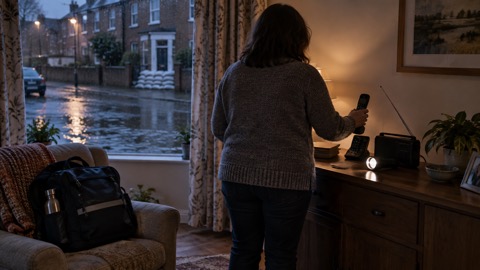
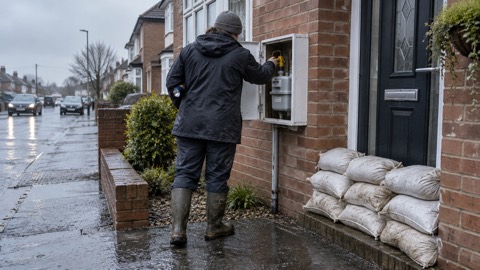
The single most useful thing you can do before floodwater reaches the house is to know how to turn off the utilities, and to do it in time. Official guidance is to turn off gas, electricity and water supplies if flood water is about to enter your home5. Make sure you know how to turn off your gas, electricity and water if necessary, before a flood rather than during one16.
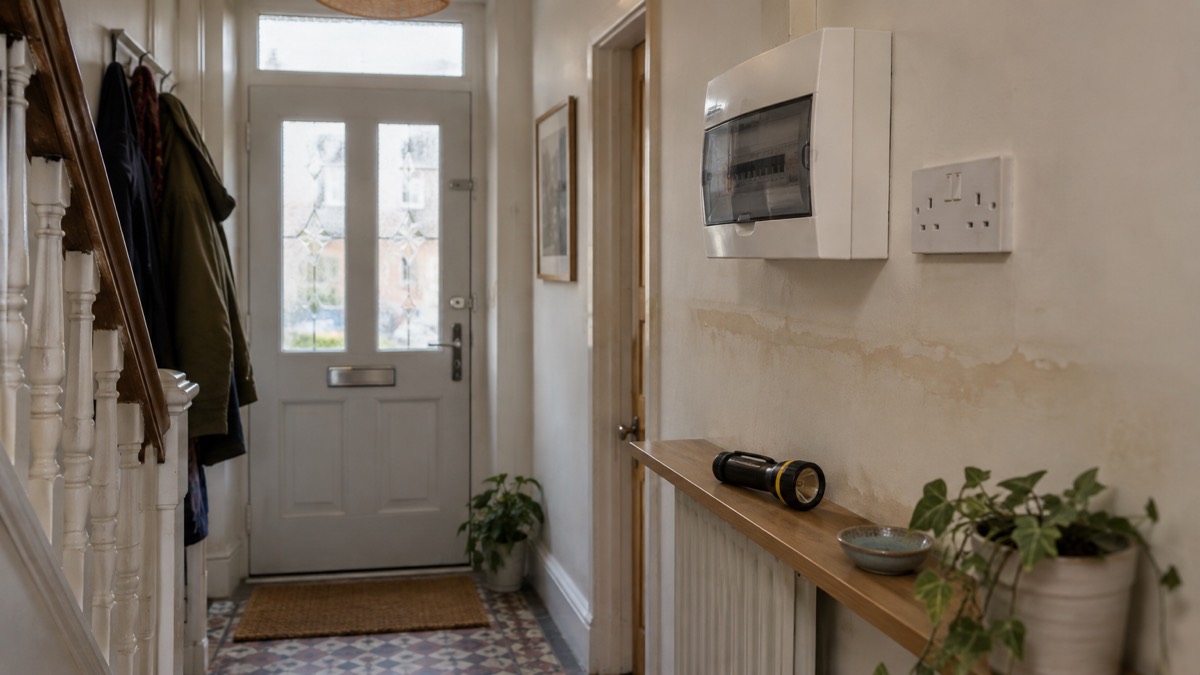
The locations are usually predictable. During a flood, you should turn off gas, electricity and water: the gas valve is usually next to the gas meter, the electricity main is usually a red switch on the fuse box, and the water stopcock is usually under a kitchen sink or where the pipe enters the home19. The water stop tap is also called a stopcock2.
A sensible order, drawn from official guidance, is:
- Know your shut-offs before you need them. Find the gas valve, the red switch on the fuse box and the stopcock, and check they turn16.
- Turn off water, gas and electricity before water comes into your home20.
- Turn off the gas emergency control valve, normally near your meter, if flooding is imminent18.
- Turn off the electricity by tripping the main switch in your fuse box18.
- Only do any of this if it is safe to do so5.
If you are unsure, leave it and get out. The Checklist When a Flood Warning Is Issued walks through the whole sequence, and Turning Off Gas, Electricity and Water Before a Flood covers each utility in detail.
Getting a property flood resilience survey and grant: up to £5,000
Doing this work properly starts with a survey. A surveyor will look at the specific openings in your property, including the meter box and cable entries, and recommend measures that suit the building rather than a generic kit. The Property Resilience Surveys and Professional Installation page explains what a survey involves.
Money is available. Eligible property owners can apply for up to £5,000 including VAT to help make their property more resilient to future flooding3. The grant covers domestic and commercial property owners, and grants of up to £5,000 including VAT, including survey costs, are paid retrospectively to the property owner once the council receives proof of completed installation and invoicing for the approved measures21. Owners source their own surveyor21.
There is a second route, through insurance. Build Back Better offers householders the chance to install property flood resilience measures up to the value of £10,000 when repairing their properties after a flood22. Whether it is available to you depends on your insurer participating, so ask before you plan around it. What Build Back Better Means for a Claim sets out the detail.
| Route | Amount | When it applies |
|---|---|---|
| Property Flood Resilience Grant | Up to £5,000 including VAT, including survey costs3 | Eligible property owners, paid retrospectively after approved work is completed21 |
| Build Back Better | Up to £10,00022 | When repairing after a flood, through a participating insurer23 |
Before you apply, check your risk. Use the Environment Agency's flood risk checker to see the likelihood of flooding in your area24. In Wales, use Natural Resources Wales flood maps to find the level of flood risk in your area25, though results are for an area within 10 metres of the address you select26. The Property Flood Resilience Grants page covers eligibility in full, and Checking Your Home's Flood Risk by Postcode explains how to read the results.
Sources (26)
- Personal flood resilience, Derbyshire County Council, 2026-10-29
- Protect your property, UK Government, 2026-10-29
- Property flood resilience grant scheme, Suffolk County Council, 2026-10-29
- Flood Recovery Support | Argyll and Bute Council, Argyll and Bute Council
- Flooding support, Lancashire County Council, 2026-10-29
- What to do if a flood happens, nidirect, 2025-10-24
- Flooding guide for communities, Scottish Environment Protection Agency, 2026-10-29
- How to prepare for flooding, UK Government, 2023-12-19
- Resilience and sandbags, Derbyshire County Council, 2026-10-29
- Keeping your home warm, NHS Frimley Healthier Together, 2026-10-25
- Preparing for a flood, London Fire Brigade, 2026-10-25
- How to prepare for flash flooding, Greater London Authority, 2026-10-25
- Getting back into your home following flooding, Surrey County Council, 2026-10-28
- How to protect your home from flooding, nidirect, 2025-12-18
- Taste and smell, Drinking Water Quality Regulator for Scotland, 2026-10-28
- Flooding advice, Merseyside Fire and Rescue Service, 2026-10-29
- Flooding, West Yorkshire Prepared, West Yorkshire Prepared
- Flooding, Ready Scotland, 2026-03-24
- Preparing for a flood, Natural Resources Wales, 2026-10-29
- Flooding during a flood (easy read), Nottinghamshire County Council, 2025-11-02
- Apply for the Property Flood Resilience Grant, Lincolnshire County Council, 2026-10-29
- Preparing for a flood, Natural Resources Wales, 2026-10-29
- Storm Babet, Suffolk County Council, 2026-10-29
- Homeowner flood protection responsibilities and prevention tips, Central Bedfordshire Council, 2026
- Before, during and after a flood, Scottish Environment Protection Agency, 2026-10-29
- Understanding your flood risk results, Natural Resources Wales, 2026-10-29
 Flood Warning Checklist
 First Steps After a Flood
 Insurance Claim Records
 Signing Up for Flood Warnings
 Flood Warnings Without Email
 Who to Report Flooding To
 Reporting a Blocked Gully
 Garden Safety After Sewage
 Council Sandbag Duties
 Filling and Laying Sandbags
 Makeshift Sandbags
 Disposing of Used Sandbags
 Turning Off Utilities
 Walking or Driving in Floodwater
 Turning Electricity Back On