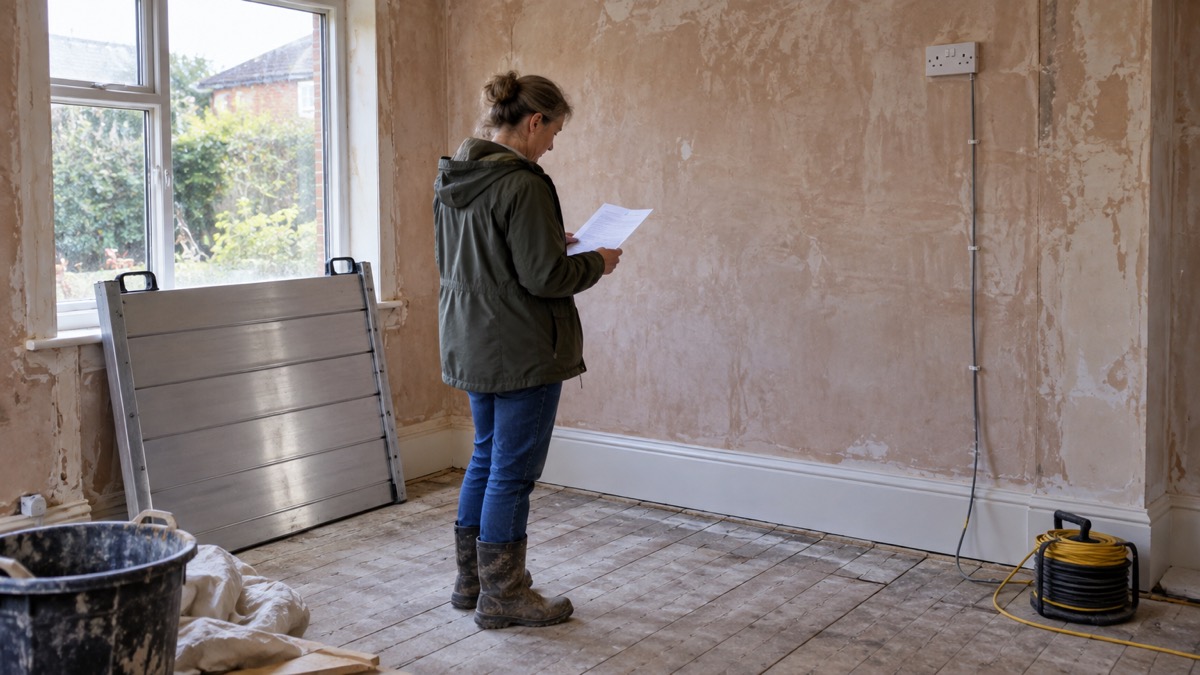
If your home floods, the repair is not just about putting back what was there. Build Back Better is an option offered by some insurance companies that lets you install property flood resilience measures while your home is being repaired after a flood1. Instead of reinstating a kitchen exactly as it was, you can use the opportunity to make the property easier to clean, quicker to recover and less likely to be damaged next time.
The first thing to do is simple: contact your insurance company to start your claim, and ask them directly whether they offer Build Back Better1. They will tell you what to do next. If they do, the resilience work can be built into the repair rather than paid for separately. If they do not, there are other routes, including council property flood resilience grants and advice from the National Flood Forum4.
This page explains what the money can pay for, how to ask for it at the right moment, and where to get help if your insurer does not offer it or your claim is already settled.
Build Back Better: resilience measures funded through your repair
Build Back Better offers householders the chance to install property flood resilience measures when repairing their properties after a flood2. It is not a standalone grant or a separate policy. It is an amount that some insurers will allow a claim to include for resilient repair, over and above the cost of reinstating the actual flood damage8.
The timing matters. The scheme is designed to be used while repairs are happening, because that is when floors are up, walls are open and changes are least disruptive to make. Official guidance is clear that when carrying out repair work you should consider making the property more resilient to flooding in future, because there may be funding available or options through your insurer9. Another council puts it plainly: consider extra protection to become more flood resilient as you make repairs10.
It is worth being realistic about the timescale. Many flooded houses will take six months or even longer to repair3. That is a long stretch, but it is also a long window in which decisions about materials, sockets and door thresholds are being made. Getting the resilience question asked at the start, rather than after the plaster is back on, is what makes the difference.
Not every insurer offers it. Build Back Better is described as being offered by some insurance companies, so the answer depends on your policy3. That is why the guidance repeats the same instruction: ask. If your insurer does not offer the scheme, the repair still goes ahead, and you can look at a council grant for resilience measures separately.
What the money can pay for: Property Flood Resilience measures
Property flood resilience is an approach to flood management that involves installing a range of measures to help minimise flood-related damage to your home, making recovery quicker and less costly11. The measures generally fall into two ideas, and it helps to know which one you are buying.
Flood resistance measures can prevent water entering a property11. Flood resilience measures are an approach to flood management that involves installing a range of measures to help to minimise flood-related damage to your home, making recovery quicker and less costly3. In everyday terms, one keeps the water out, the other limits the damage and helps you clean up and move back in sooner when it gets in anyway.
| Approach | What it does | Examples from official guidance |
|---|---|---|
| Resistance | Aims to stop water entering | Flood gates, replacement anti-flood air bricks or covers, waterproofing works12 |
| Resilience (recoverability) | Lets water through but speeds recovery | Hard wood or tiled floors at ground level, raising electrical circuits close to the ground8 |
| Resilience (recoverability) | Speeds recovery and return | Flood resilient building materials, raising sockets further up walls11 |
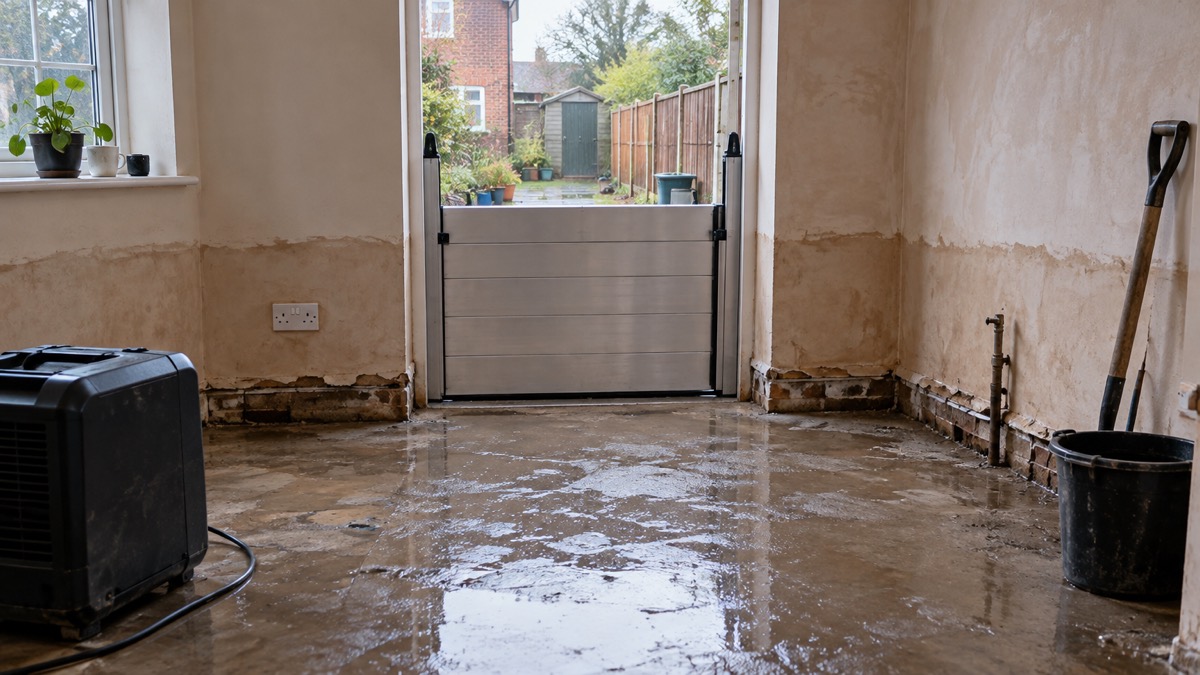
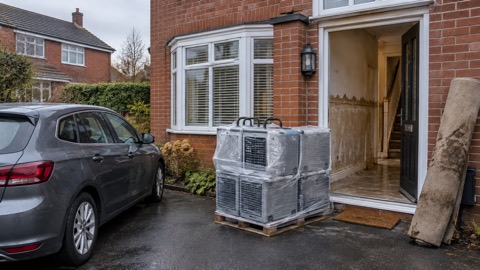
Other practical measures named in official guidance include choosing water resistant door and window frames and using silicone sealant, and picking lime or cement render because it is more water resistant than normal plaster3. These are small decisions that cost little at the time of repair and are awkward to change later.
The point of all of it is recoverability: making the property more resilient to flooding so that it recovers faster after a flood and you can move back in sooner5. One council describes property flood resilience measures as both cost-effective and easy to implement, giving homeowners more control over managing flood risk13. Another lists the benefits of a resilience project as improved resilience against river and surface water flooding, reduced impacts and recovery time, increased self-sufficiency during a flood, and peace of mind14.
If you want to go further into the individual measures, from airbrick covers to non-return valves, see Protecting Your Home: Resistance and Resilience Measures.
Asking for Build Back Better when you make a flood claim
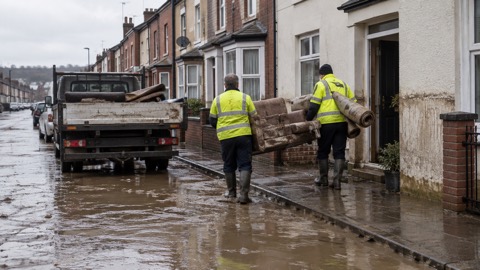
The order you do things in after a flood affects what you can claim for. Official guidance is consistent: contact your insurance company to start your claim, and they will tell you what to do next1. Do this as soon as you can, because they may require evidence of damage before clean up begins7. Photographs and samples taken before anything is thrown away are what support the claim.
- Contact your insurer and start the claim1.
- Ask whether they offer Build Back Better, and follow their advice15.
- Check what evidence they need before you clear up or dispose of anything16.
- Take advice from specialists before starting repairs, since most repair work after flooding will need to be done by professionals appointed by your insurers15.
- Use a builder recommended by your local council or your insurance company10.
- Get three quotes and double check them, and do not pay for work before it has been done17.
There is a practical reason to raise resilience early rather than late. Once a like-for-like repair is agreed and underway, adding different materials or raised sockets becomes a variation, and variations are harder to argue. Raised at the start, the same work sits inside the claim.
If your insurer does not offer Build Back Better, ask what they will fund and then look at the alternatives. A council property flood resilience grant scheme may be able to help, and one council advises speaking to your insurer first, because if they can repair your property under Build Back Better there may be no need to apply for a grant5. For the claim process itself, see Making an Insurance Claim After a Flood.
Where to get help with a flood claim and resilience repairs
Start with your insurer. Contact them as soon as you can, because they may be able to provide financial assistance for blowers and skips, and recommend reputable contractors19. When you are undertaking renovations and repairs after a flood, talk to your loss adjuster and builder about making resilient repairs so your property is better prepared in the event of any future floods20. Householders wanting more information on resilient repair should contact their insurer or Flood Re8.
Flood Re is a joint government and insurance industry initiative created to help provide affordable insurance to households at highest risk of flooding21. It makes the flood cover part of insurance policies more affordable for high-risk properties22, and it allows your home to be reinsured even if it has been flooded in the past23. It is a government endorsed scheme designed to help provide better access to affordable home insurance for those in high flood risk areas across the UK24. It works behind your policy rather than as a direct service to householders, so the question to ask your insurer is whether your home is covered through it. For more on how it fits with a policy, see Home Insurance in a Flood Risk Area and Flood Re.
If your insurer does not offer Build Back Better, a property flood resilience grant is the other main route. These grants help households install measures that reduce future flood damage6. One council scheme offers eligible property owners up to £5,000 including VAT to make their property more resilient to future flooding6, and another describes the same upper figure5. Schemes vary by council, so check what yours offers. Property Flood Resilience Grants explains the application process.
For independent advice on resilience and flood products, contact the National Flood Forum4. In Scotland, the Scottish Environment Protection Agency's flooding FAQs and Ready Scotland's flooding guidance set out the national picture21, and Flood Re operates across the UK24. In Northern Ireland, local council flooding advice covers recovery17.
What it covers and what to do if you miss it
Build Back Better is not described in official guidance as an extra product you buy. It is an amount some insurers will allow within a claim for resilient repair, over and above like-for-like reinstatement8. What you actually pay depends on your policy and excess, so ask your insurer to set it out in writing before work starts.
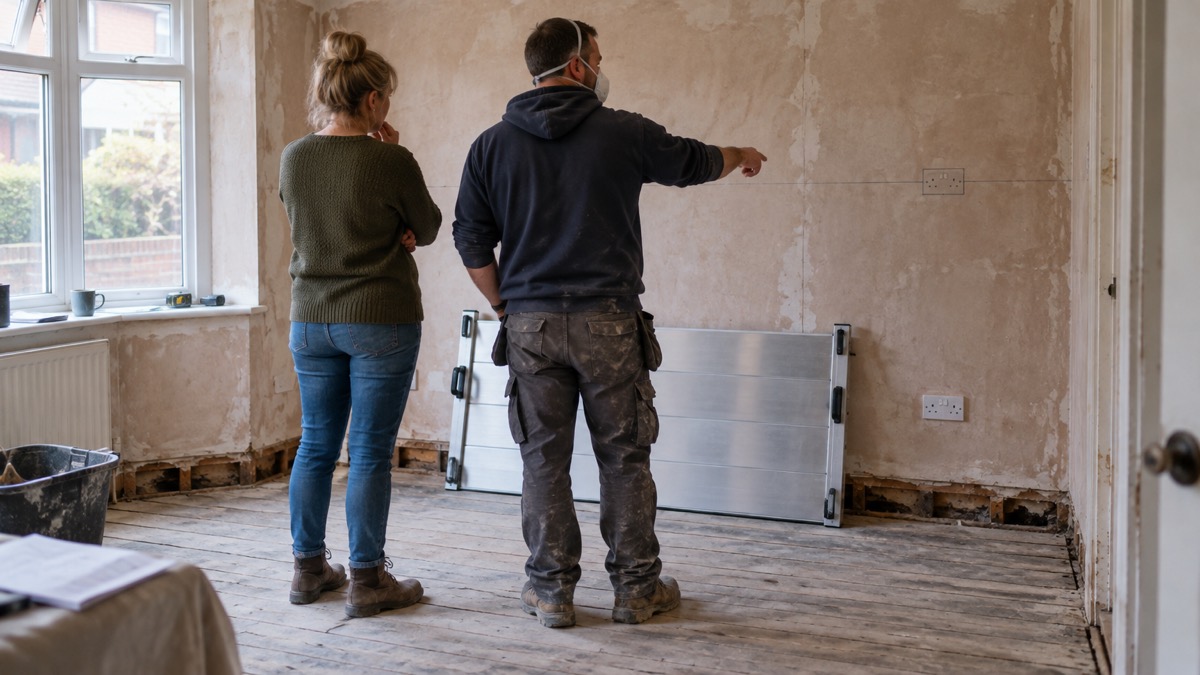
The scheme's limit is a ceiling, not a target. If the measures you want cost more, the claim will fund up to the value the scheme allows and the rest is a conversation with your insurer about what you pay yourself. A separate council grant may help with some measures, but these are different schemes with their own eligibility rules and limits, and one council notes that its grant can be used towards survey costs6.
If your claim is already settled, contact your insurer and ask whether any resilience element can still be added. If it cannot, ask your council whether a property flood resilience grant is open, and contact the National Flood Forum for advice4. It is also worth knowing that resilience can pay off in ways beyond the repair itself: one case study reports that a householder's Flood Re insurance excess fell sharply after resilience work was carried out7. That is a single reported case, not a promise, but it shows why insurers take an interest in resilience.
Sources (24)
- After a flood, GOV.UK, 2026
- Preparing for a flood, Natural Resources Wales, 2026
- Getting back into your home following flooding, Surrey County Council, 2026
- Personal resilience, Derbyshire County Council, 2026
- Property flood resilience grant scheme, Suffolk County Council, 2026
- Storm Babet, Suffolk County Council, 2026
- Property flood resilience case studies, Derbyshire County Council, 2024
- How to prepare for flooding, GOV.UK, 2023
- Flood recovery information, Devon County Council, 2026
- After a flood: clearing, nidirect, 2026
- Property flood resilience projects, Cornwall Council, 2025
- Campbeltown Flood Protection Scheme | Argyll and Bute Council, Argyll and Bute Council
- Homeowner flood protection responsibilities and prevention tips, Central Bedfordshire Council, 2026
- Property flood resilience questions and answers, Argyll and Bute Council, 2026
- Protecting your property from flooding, Met Office, 2026
- After a flood, London Fire Brigade, 2026
- Flooding advice, Belfast City Council, 2026
- Natural Resources Wales / What to do after a flood, Natural Resources Wales
- Be Prepared, Lancaster City Council
- Recovering After The Flood - Scottish Flood Forum, Scottish Flood Forum
- Flooding, Ready Scotland, 2026
- Rain and flooding, Ready Scotland, 2026
- Communities affected by flooding, Derbyshire County Council, 2026
- Flood management in Suffolk, Suffolk County Council, 2026
 Flood Warning Checklist
 First Steps After a Flood
 Insurance Claim Records
 Signing Up for Flood Warnings
 Flood Warnings Without Email
 Who to Report Flooding To
 Reporting a Blocked Gully
 Garden Safety After Sewage
 Council Sandbag Duties
 Filling and Laying Sandbags
 Makeshift Sandbags
 Disposing of Used Sandbags
 Turning Off Utilities
 Walking or Driving in Floodwater
 Turning Electricity Back On