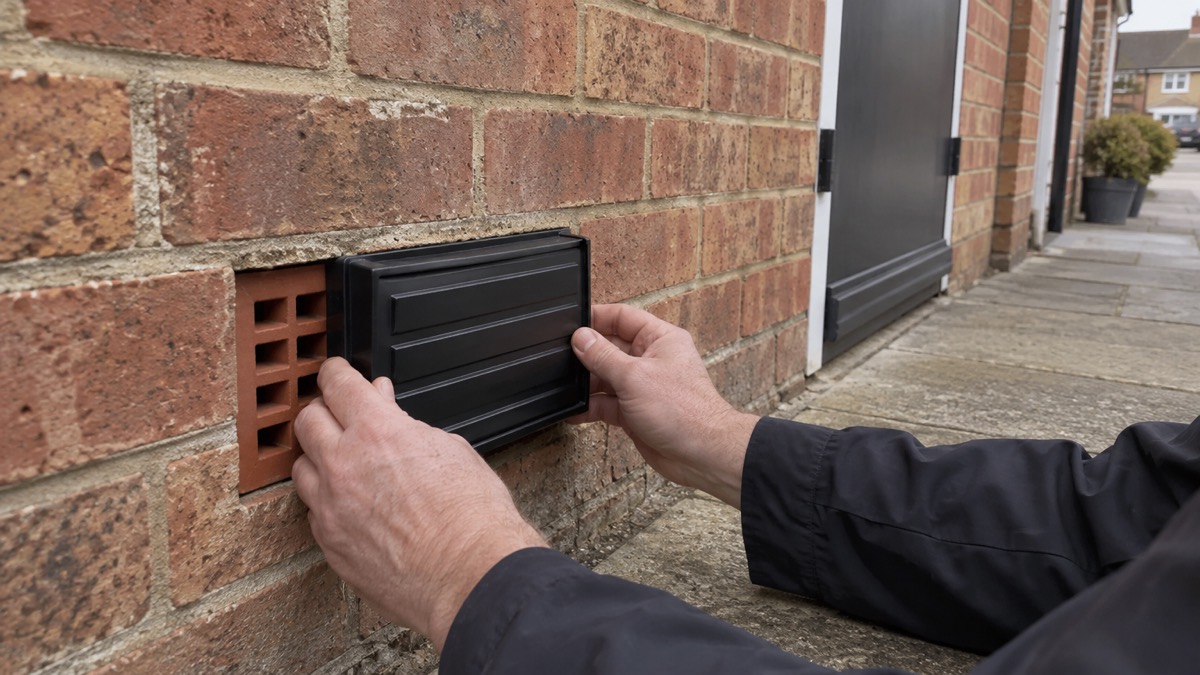
If your home has flooded, or sits in an area at real risk of flooding, a property flood resilience (PFR) grant can pay towards practical changes that reduce the damage the next flood does: flood doors, door barriers, airbrick covers, non-return valves, sump pumps and water-resistant flooring. In England, the grant is capped at a set amount including VAT, and that sum normally covers both a professional survey of your property and the measures the survey recommends1. In Northern Ireland, the Homeowner Flood Protection Grant works differently: the scheme can support work up to a fixed limit, with the homeowner paying ten per cent of the costs plus anything above that figure4.
There is no single national application form. These schemes are run by local councils, which decide when a scheme opens, who is invited to apply and how the money is paid out2. Some councils run schemes after a named storm, funded by central government money routed through the council; others run standing schemes funded from annual allocations5. That means the practical answer to "how do I apply" is always: contact your own council's flood risk team and ask what is open now.
Your council runs the scheme, not a national body
Property flood resilience is an approach to flood management that involves installing a range of measures on individual properties to minimise flood-related damage, making recovery quicker and less costly5. Grants to pay for it are traditionally funded through a combination of national and local government funding5, but the scheme you actually apply to is administered by your local council.
The pattern repeats across the country. Suffolk County Council administered the PFR grant that followed Storm Babet in October 2023, when the government activated its Flood Recovery Framework and required the council to run the grant process8. Devon County Council runs a standing Property Flood Resilience Funding Scheme, previously known as the Property Level Resilience (PLR) Grant Scheme, with limited funding allocated each year by DEFRA, the Local Levy and the council itself3. Cornwall Council is running a delivery scheme from 2025 to Spring 2027, funded through Defra, Cornwall Council and the South West Regional Flood and Coastal Committee Local Levy, aiming to install resistance measures at up to 68 residential properties6. In Scotland, Argyll and Bute Council's PFR project is 80 per cent funded by the Scottish Government Flood Risk Management Budget and 20 per cent from council capital funding7.
Two practical points follow from this. First, the rules differ between councils: who is eligible, what is paid for, and whether the money goes to you or straight to the supplier all depend on the local scheme2. Second, schemes open and close. Suffolk's DEFRA-funded scheme following Storm Babet is now closed to new applications2. Cornwall's runs until Spring 20276. Devon reviews applications every three months9. If you have missed one window, another may open, so it is worth asking your council to keep you informed. If you are not sure who covers your area, our guide to who manages flood risk explains the split between councils, the Environment Agency and water companies.
How much you can get: England and Northern Ireland compared
In England, the figure you will see most often is up to £5,000 including VAT per property. Suffolk's Storm Babet scheme offered up to £5,000 including VAT to eligible property owners, both domestic and commercial8, and Devon's standing scheme allows homeowners to apply for up to £5,000 to carry out a property survey and purchase the recommended measures3. Lincolnshire's guidance describes grants that help households install measures that reduce future flood damage1. In Cornwall's current scheme, the value of the grant the council can offer varies by vulnerability and property type rather than being a flat sum6.
Northern Ireland's Homeowner Flood Protection Grant is structured differently. The grant can give owners financial help to install physical barriers and equipment such as door barriers, airbrick covers, non-return drainage outlets and waterproofing walls4. The homeowner pays ten per cent of the cost, plus any additional cost above £10,0004. Depending on the size and type of your property, a homeowner might pay between £350 and £750 of the overall costs4. The Department for Infrastructure has invested approximately £1 million in the scheme10.
| England (typical council scheme) | Northern Ireland | |
|---|---|---|
| Maximum grant | Up to £5,000 including VAT2 | Support towards work up to £10,0004 |
| What you pay | Anything above the grant limit9 | Ten per cent, plus any cost above £10,0004 |
| Typical homeowner payment | Depends on the quote | Between £350 and £7504 |
| Survey | Included in the £5,000 in most schemes9 | £50 up-front fee to the Rivers Agency4 |
Wales and Scotland do not have an equivalent nationwide homeowner grant described in the same terms. In Wales, the emphasis in official guidance is on Build Back Better through your insurer, and on getting a chartered surveyor to carry out a flood survey if you live in a flood risk area or have flooded before11. In Scotland, SEPA advises considering extra protection to become more flood resilient as you make repairs12, and delivery happens through council projects such as Argyll and Bute's, where eligible householders are written to directly7.
Who is eligible: flooded homes and properties at significant risk
The core test everywhere is the same in spirit: your property has flooded internally, or it is at significant risk of doing so. Lincolnshire's guidance puts it simply: if your home has been affected by flooding, you may be eligible for support through a PFR grant1. Devon's scheme requires that you have been affected by internal flooding or be considered to be at very high risk of flooding9. Suffolk County Council works with the Environment Agency to obtain funding for PFR installations where there is a known significant risk of flooding to a property, established through flood risk modelling studies or through past flooding5. In Northern Ireland, the grant is for homeowners whose home has been flooded before or is in a flooding area4, and Belfast City Council describes it as a government scheme designed to help residents in known flood prone areas14.
Storm-specific schemes are narrower. Suffolk's Storm Babet grant was only available to people who suffered internal flood damage to their homes or businesses during Storm Babet, between 19 and 25 October 2023, where the property subsequently required drying out or repairs to the fabric of the building2. The Environment Agency's flood risk information for Bassetlaw similarly notes that homes or businesses flooded as a result of Storm Babet or Storm Henk may be eligible for PFR grant funding15.
Not every property qualifies. Suffolk's scheme lists the exclusions plainly2:
- Garages, outhouses or storage areas
- Second homes
- Empty homes
- Basements or cellars not used as part of the habitable or business area
- Holiday cottages not part of a commercial enterprise and not the owner's principal residence
One more rule matters if you are also making an insurance claim: the grant can only be used for resilience measures that are in addition to any reinstatement covered by insurance claims2. The grant pays for protection against the next flood, not for repairing the damage from the last one. If you are unsure whether your home counts as at risk, start with our guide to checking your home's flood risk.
What the grant pays for: survey, doors, barriers and valves
A PFR grant normally covers two things: a professional survey that identifies where water enters your property and what will help, and the purchase and installation of the measures that survey recommends3. Devon's guidance lists the products its scheme can fund9:
- Flood doors and flood gates
- Temporary demountable barriers
- Pumps
- Airbrick covers
- Water-resistant flooring
Other councils describe a similar range. Lincolnshire's guidance includes flood doors, air brick covers, sump pumps and non-return valves1. Argyll and Bute's project identifies products appropriate for the type of flooding, the property and the needs of owners, including barriers on windows and doors, non-return valves, automatically closing airbricks and pump systems for groundwater flood risks7. Central Bedfordshire Council advises homeowners on installing flood barriers on doors and windows, using non-return valves on drains and elevating electrical sockets16. Cornwall's Campbeltown-related scheme work includes flood gates, replacement anti-flood air bricks or covers, and waterproofing works13.
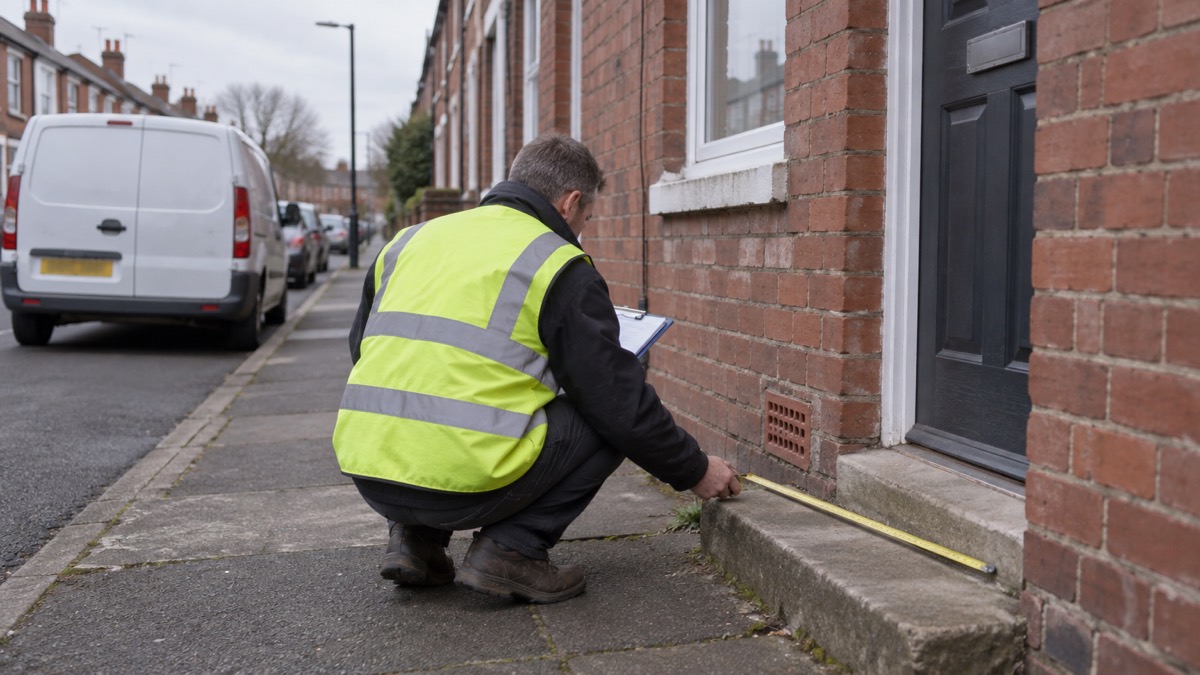
The survey is a required part of the process, not an optional extra. Suffolk requires a survey carried out by an independent, qualified building surveyor, who must be independent from any company that installs PFR measures and must have completed the CIWEM PFR Foundation training2. Devon's preliminary survey is arranged through the surveyor and takes around an hour to complete9. In Cornwall's scheme, the council covers the cost of the risk assessment and survey for all properties, provides a certified contractor to supply and fit the measures to National Code of Practice standards, and contributes towards installation costs6.
If you want to understand the products themselves before a surveyor arrives, our pages on flood doors and windows, door flood barriers, airbrick covers and non-return valves explain how each works and what suits which property.
How to apply, and what happens next
Because each council runs its own scheme, the first step is always to contact your council's flood risk management team and ask what is open. The mechanics then differ by area.
In Devon, you complete an application form and submit it by email or post to the council's Flood and Coastal Risk Management team3. Applications are reviewed every three months9. In Cornwall, you complete an expression of interest form on the council's consultation site, or contact the Environmental Resilience and Adaptation team by email; a desktop review is then completed for all applications to confirm eligibility and suitability6. In Suffolk's storm scheme, properties needed to have reported their flood damage to the council via its Highways Reporting Tool and to have received a letter or email inviting them to apply2. In Northern Ireland, you make an up-front payment of £50 to the Rivers Agency, which appoints a building surveyor to conduct a water entry survey and recommend protection measures; an experienced contractor then installs the recommended changes4.
A typical scheme then moves through stages that Suffolk's case study sets out5:
- Understanding the risk in a location and confirming PFR is suitable and cost-effective
- Establishing the properties most at risk and inviting them to apply
- Appointing consultants to survey entry points and recommend measures
- Sharing survey results with owners and seeking agreement
- Appointing contractors and arranging manufacture and installation
- Final surveys to sign off, ensuring owners know how to use and maintain the products
Once a survey is done, the report is normally sent to you: Argyll and Bute's project team emails survey reports to property owners on receipt from the specialist surveyor7. Installation itself is often quicker than people expect. Some measures are installed within one hour, with minimal interruption, and impacts are likely to include low-level noise similar to minor works7. Cornwall's scheme has one rule worth knowing in advance: all the measures identified in the survey must be installed, and the homeowner cannot choose to have only some of them6.
How the money is paid: to the supplier, or back to you
Councils pay these grants in one of two ways, and the difference matters to your cash flow.
Devon pays the supplier directly. All funding payments are made to the survey consultant and the product supplier for the specific property, and no funding is paid direct to the property owner or their representative3. The product supplier must be agreed with the council before works begin, and you will not be expected to pay any portion of the council's funding in advance if a supplier requests it3. Devon County Council acts only as a payment body, and the contract is between you and the supplier9.
Suffolk's storm scheme worked the other way: grants of up to £5,000 including VAT, including survey costs, were paid retrospectively to the property owner once the council received proof of the completed installation and invoicing for the approved measures2. Under that arrangement you fund the work first and claim it back, so check with your council which model applies before you commit to a quote.
What you may have to pay yourself
Even with a grant, part of the bill usually lands with you. The amounts depend on the scheme.
In England, the grant is capped, so anything above the cap is yours. Devon requires applicants to be willing and able to top up the given funding if the quote for the work exceeds the grant, less the survey cost9, and its guidance states that any additional budget requirements will be at the expense of the property owner unless specified otherwise3. Cornwall's rule is the same in effect: if the installation costs are greater than the grant available, the homeowner contributes the difference6.
In Northern Ireland, the structure is fixed: the homeowner pays ten per cent of the overall costs plus any additional cost above the scheme's limit, and the exact amount depends on the size and type of your property4.
There are also costs a grant will not touch. If you have a survey but decide not to proceed with any recommended measures, no grant to cover the survey costs can be claimed2. And the grant cannot pay for reinstatement of flood damage that insurance covers; it only pays for resilience measures in addition to that reinstatement2. If you are uninsured, Nottinghamshire's Local Resilience Forum leaflet is blunt: you will be responsible for covering the costs of flood damage, though your local authority or charities may be able to help with practical things such as skips or grants17. Our page on recovery grants and help if you are not insured covers that route.
Meeting the criteria does not guarantee a grant
This is the point most applicants underestimate. Devon's guidance says it directly: funding will be allocated subject to the number and priority of applications received, and meeting the required criteria does not guarantee funding3. Applications are prioritised against fixed criteria set out in the council's funding policy3. Even if an application meets all the criteria, a high number of applications can mean rejection because properties at greater flood risk are prioritised9.
The wider funding picture explains why. The National Audit Office reported in 2023 that government has not set a target for the level of flood resilience it expects to achieve and has not mapped out solid plans beyond 202618. Council schemes depend on annual allocations and local decisions: Devon's funding comes from DEFRA, the Local Levy and the council3, Cornwall's from three sources6, and Argyll and Bute's from a Scottish Government budget plus council capital7. Northumberland notes that flood schemes are usually only made possible by contributions from other sources, such as regional Local Levy funding and public and private contributions19.
PFR is also targeted deliberately at particular places. Cornwall's guidance notes it is most suitable for properties in locations that are vulnerable to flooding but where a large-scale flood protection scheme is not viable6. If a community defence scheme is planned for your area, that may be the route to protection instead. Our page on flood defences and alleviation schemes explains how those work.
Looking after your flood protection once it is fitted
When the installers leave, the equipment is yours, and so is the responsibility for it. Ownership and maintenance of PFR measures rest with property owners following installation7. Devon's scheme sets out what that means in practice: store any PFR securely, protect it from damage, conduct maintenance, and transfer ownership of the equipment when the property ownership transfers9.

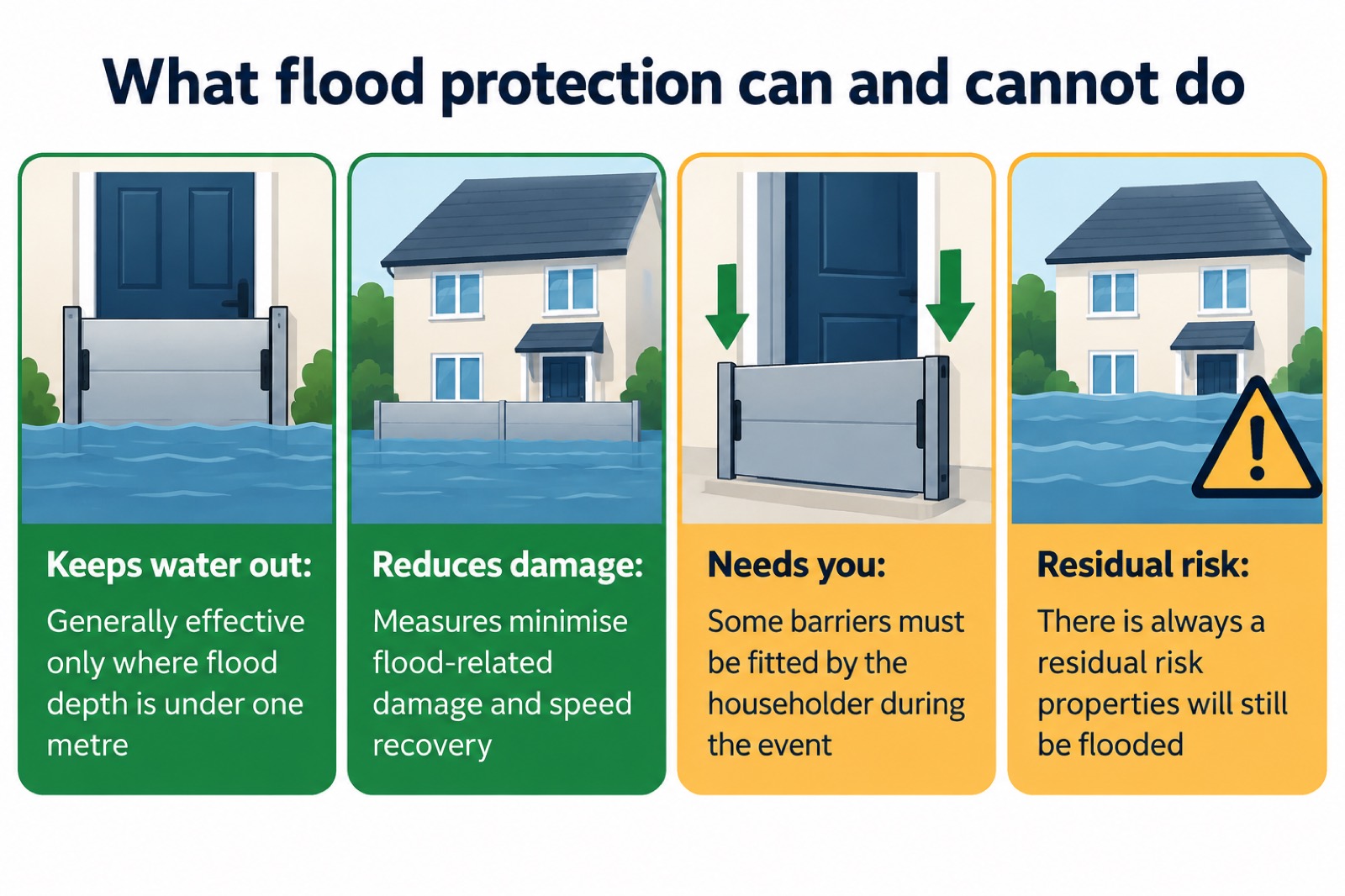
Maintenance is not busywork. Some resistance measures require active intervention by the householder during a flood event, such as fitting a barrier across a door20. A barrier you cannot find, or that has seized because it was never checked, will not keep water out at two in the morning. Somerset's guidance frames the wider habit: making sure you have adequate insurance, doing maintenance on the exterior of the property, and investing in flood protection such as flood doors21. Our checklist on storing and checking flood barriers gives you a routine to follow.
Keep your paperwork too. Survey reports, invoices and proof of installation are what a council needs if a grant is paid retrospectively2, and they are what a future buyer will want to see. Westminster's guidance also flags the insurance angle: if you live in a high flood risk area and struggle with the price of insurance, you may be eligible for Flood Re, though not all properties qualify due to the scheme's limitations22. Our guide to home insurance in a flood risk area goes through that in detail.
Flood protection reduces damage, it does not stop every flood
Be clear about what these measures do. Flood resilience measures can prevent water entering a property23, and PFR aims to reduce the impact of flooding on individual properties6. Argyll and Bute lists the benefits as improved resilience against river and surface water flooding, reduced impacts and recovery time, increased self-sufficiency during a flood, peace of mind, and businesses able to keep trading during and after an event7. Suffolk's case study describes it as an approach that minimises flood-related damage, making recovery quicker and less costly5.
But Suffolk's own guidance adds the caveat that matters: there is always a residual risk that people and properties will still be flooded2. The government's flooding and health guidance for frontline responders is specific about the limit: resistance measures are generally only effective where flood depths are less than one metre, and keeping out floodwater above that depth may impact the structural integrity of the property20. In deep flooding, keeping water out of the walls can do more harm than good.
So a grant-funded survey and a set of measures are one layer of protection, not a substitute for the rest. Sign up for flood warnings, make a household flood plan, know how to turn off gas, electricity and water before water arrives, and think about repairing your home so it recovers faster next time. The Environment Agency's 2024 national assessment gives a sense of why the work is worth doing: about 1.1 million properties in England are in areas at high risk of flooding from surface water, around three times greater than the previous assessment, and that number is projected to rise as the climate changes24. Northern Ireland's flood risk assessment, NIFRA 2018, published on 21 December 2018, identified the areas at greatest flood risk using departmental flood mapping25.
Where to get help alongside the grant
A grant is not the only support available, and some of it is easier to get. If your home floods, Northern Ireland's advice is to put flood protection equipment in place and to contact your council, which will inspect your property; if your claim is eligible, you receive payment within days, a payment to make a home fit to live in quickly rather than compensation26. Councils may prioritise sandbags for properties in imminent danger of flooding occupied by vulnerable residents, including elderly, disabled and reduced-mobility households27.
After a flood, ask your insurance provider whether they will reinstate your property with property flood resilience measures such as flood doors and non-return valves28. Devon's recovery guidance and Surrey's aftercare both point to Build Back Better, under which some insurers allow claims to include an amount for resilient repair over and above the like-for-like reinstatement cost, giving homeowners the opportunity to install flood resilience measures up to the value of £10,000 when repairing their properties after a flood23. Householders should contact their insurer or Flood Re for more information20. If your insurer can repair your property under Build Back Better, there may be no need to apply for a grant at all2. Our page on what Build Back Better means for a claim explains how to raise it with your insurer.
If you are not insured, ask your council about practical help and grants for recovery17, and see our first steps after a flood checklist. And if a grant is not open in your area right now, the survey advice from Natural Resources Wales is worth acting on anyway: consider getting a chartered surveyor to carry out a flood survey showing where flood water might enter your property, how fast it will flow and where it could cause the worst damage11. Knowing your property's weak points costs less than the measures themselves and puts you first in line when the next scheme opens.
Sources (29)
- Apply for a Property Flood Resilience grant, Lincolnshire County Council
- Property Flood Resilience grant scheme, Suffolk County Council
- Property Flood Resilience Funding Scheme, Devon County Council, August 2022
- How to protect your home from flooding, nidirect, 18 December 2025
- PFR website case study, Suffolk County Council, 2025
- Property Flood Resilience projects, Cornwall Council, 15 August 2025
- Property Flood Resilience questions and answers, Argyll and Bute Council, 2026
- Storm Babet, Suffolk County Council, October 2023
- Property Flood Resilience funding, 2nd edition, Devon County Council, July 2023
- National Risk Register, UK Government, 2020
- Preparing for a flood, Natural Resources Wales, 29 October 2026
- Before, during and after a flood, SEPA
- Campbeltown Flood Protection Scheme, Argyll and Bute Council, 2026
- Flooding advice, Belfast City Council
- Bassetlaw district flood risk information page, Environment Agency
- Homeowner flood protection responsibilities and prevention tips, Central Bedfordshire Council, 2026
- Flood recovery leaflet from LRF, Nottinghamshire Local Resilience Forum, 2025
- Resilience to flooding, National Audit Office, 15 November 2023
- Flood risk management, Northumberland County Council, 28 October 2026
- How to prepare for flooding, UK Government, 19 December 2023
- Preparing for flooding, Somerset Council, 28 October 2026
- Plan and prepare for floods, Westminster City Council, 3 September 2026
- Getting back into your home following flooding, Surrey County Council, 28 October 2026
- National assessment of flood and coastal erosion risk in England 2024, Environment Agency, 5 August 2026
- Northern Ireland Flood Risk Assessment (NIFRA) 2018, Department for Infrastructure Northern Ireland, 21 December 2018
- What to do if a flood happens, nidirect, 24 October 2025
- Preparing for flooding, Nottinghamshire County Council, 29 October 2026
- Flood recovery information, Devon County Council, 29 January 2026
- Flood and coastal erosion risk management report, 1 April 2024 to 31 March 2025, UK Government, January 2025
 Guaranteed Standards Payments
 Recovery Grants If Not Insured