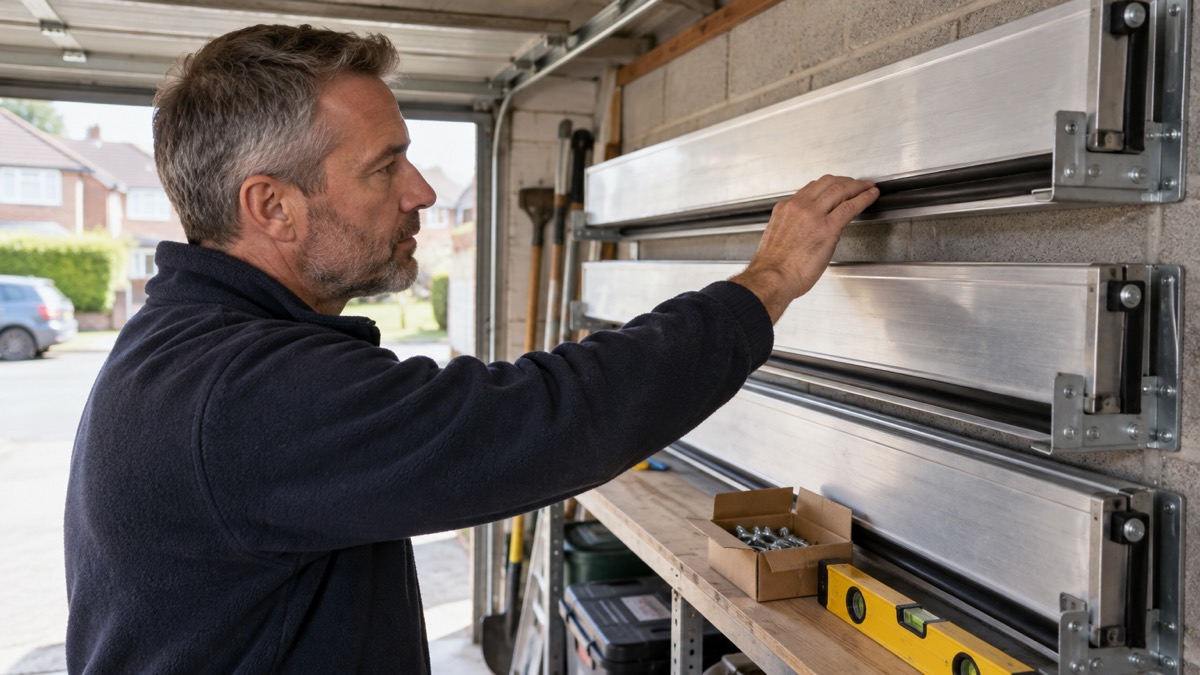
Flood boards, barriers and air brick covers only do their job if they are complete, in good condition and to hand when a warning arrives. The single most useful habit is to check them before each flood season and again after every use, so that nothing is cracked, missing or seized up on the night you need it. Store them somewhere dry and easy to reach, keep the seals and fixings with the boards, and make sure everyone in the household knows where they are1.
Temporary protection should go in as soon as you get a flood warning, or before if you are not likely to be home at the time, and should always be removed once the flood water has gone to help the property dry out2. That means your boards need to be ready to fit in minutes, not hunted for in a dark shed. Practise fitting them at least once before you need them, and label each board for the doorway it belongs to.
After a flood, clean and dry everything before it goes back into store. Flood boards can be washed, stored and used again, and sandbags that the floodwater did not reach can be kept for future use2. Anything that was contaminated by floodwater needs more care, and used sandbags should be discarded rather than saved3.
The flood barrier storage and check checklist
Work through this list before each flood season, and again after any flood. Each item takes minutes and prevents the commonest failures: a board that will not seat, a seal that has perished, or fixings that have gone missing since last time.
Where to store flood boards so they are ready to fit
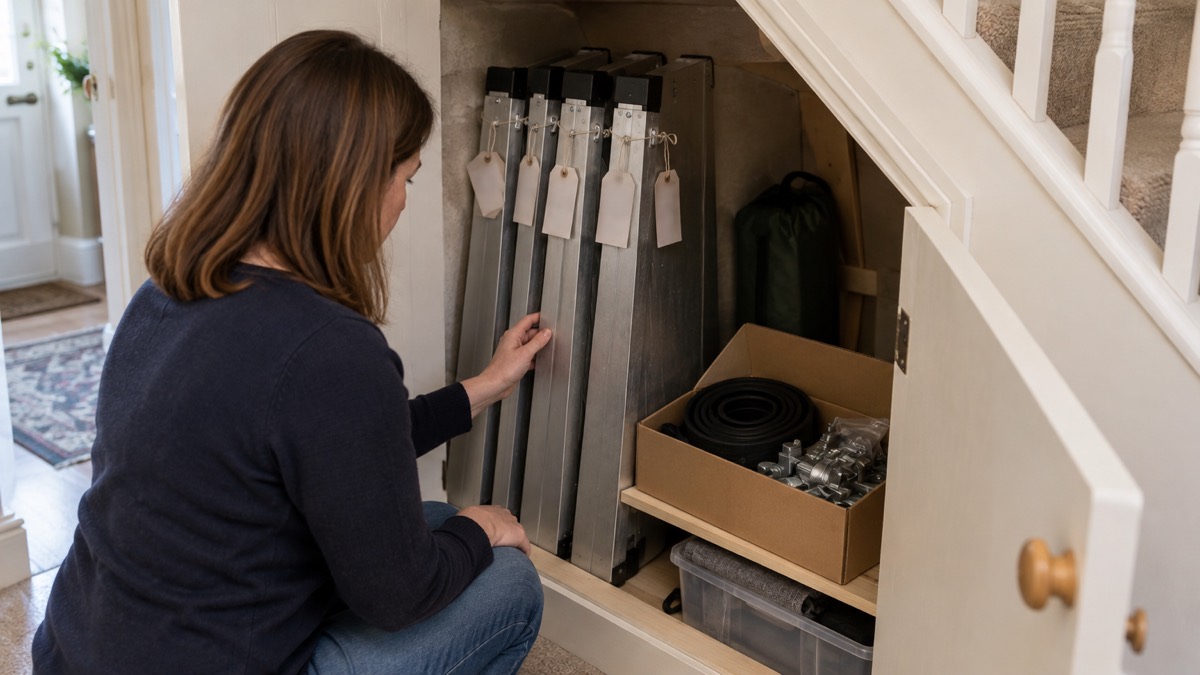
Store flood boards somewhere dry, clean and easy to reach, with the seals, fixings and any tools kept alongside them. Official guidance on flood kits makes the same point: keep the kit together in an easily accessible area, and make sure as many people as possible know where to find it4. A flood can happen at any time of day or night, which is why one household in a published resilience case study keeps all the essential flood preparation items in a dedicated "flood cupboard"9.
A garage or shed can work, provided it does not flood itself and you can get to the boards quickly. Northern Ireland guidance suggests getting a stock of sandbags from a local DIY store and keeping them in a dry place6. Boards themselves can be washed, stored and used again, so a dry store protects your investment as well as your home2.
Keep the boards off a damp floor and away from anything that could fall on them. Store them flat or upright as the maker advises, so they do not warp. If you have more than one doorway to protect, group each board with its own fixings and label the group.
Seals, frames and fixings: what to check and when
Check your barriers before each flood season and after every use. There is no fixed replacement interval in official guidance, so the condition of the seal decides it: replace any seal that is cracked, flattened, gritty or no longer sits snugly against the frame. Follow the maker's instructions for your own product, because seal designs differ between barriers.
The frame matters as much as the board. The most basic flood barrier is a strong wooden or metal barrier secured flat against the wall or frame surrounding a door or window, with the pressure of floodwater itself helping to seal it5. If the frame is cracked, crumbly or uneven, the board cannot seal against it, so check the frame at the same time as the board.
Fixings seize. Turn each bolt or clamp before the season starts, and keep any threads clean and lightly protected as the maker advises. Keep spare seals and fixings with the boards so a failure on the night does not leave you without a barrier.
Air brick covers need their own check. Official guidance suggests replacing air bricks with self-closing air bricks, which close automatically during flooding, or buying watertight covers to put over them5. Covers should be removable, and must be removed or opened after flooding to help the property dry out5.
Practise fitting your barriers before a flood warning
Fit each barrier once in dry weather, so you know how it seats, how the fixings work and how long it takes. Official guidance is clear that you should have sandbags, floodboards or plastic covers prepared to block doorways and airbricks, and that you should buy or construct the barriers you need as soon as possible rather than postponing it12. A practice fit turns a strange piece of kit into a familiar one.
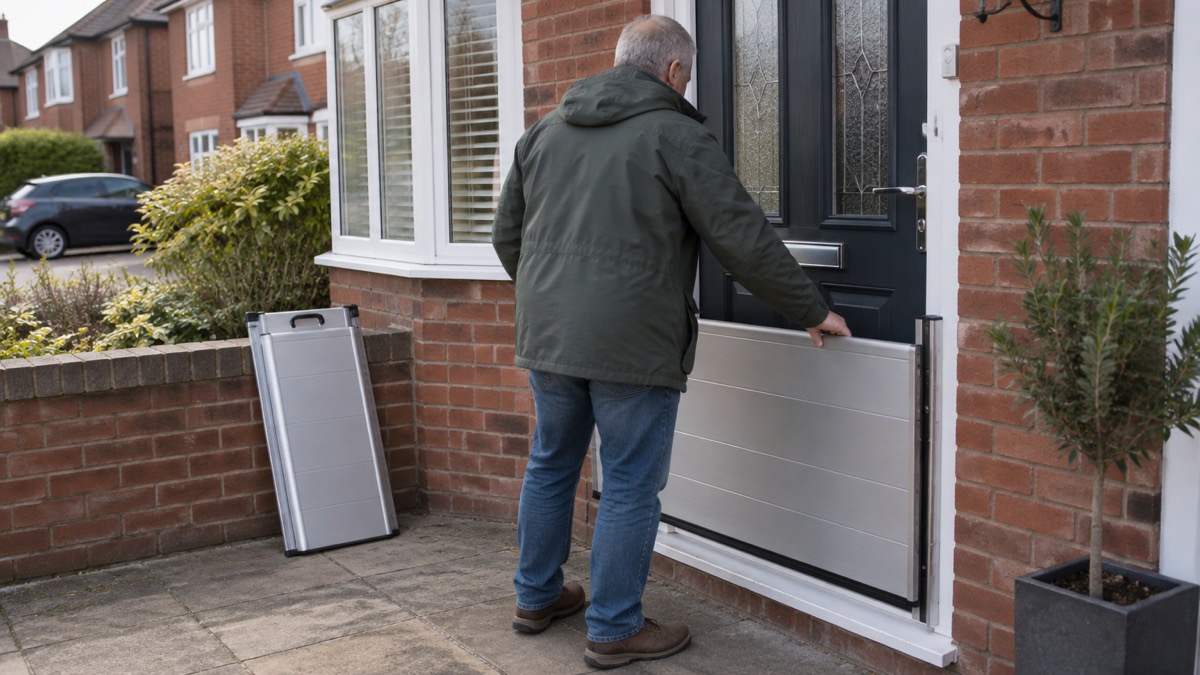
Time yourself. If fitting one doorway takes longer than you expected, that tells you how much warning you need, and why signing up for warnings matters. Warnings by phone, text or email cover flooding from rivers, the sea and groundwater8. In Wales, Natural Resources Wales leads on flooding and community flood plans14.
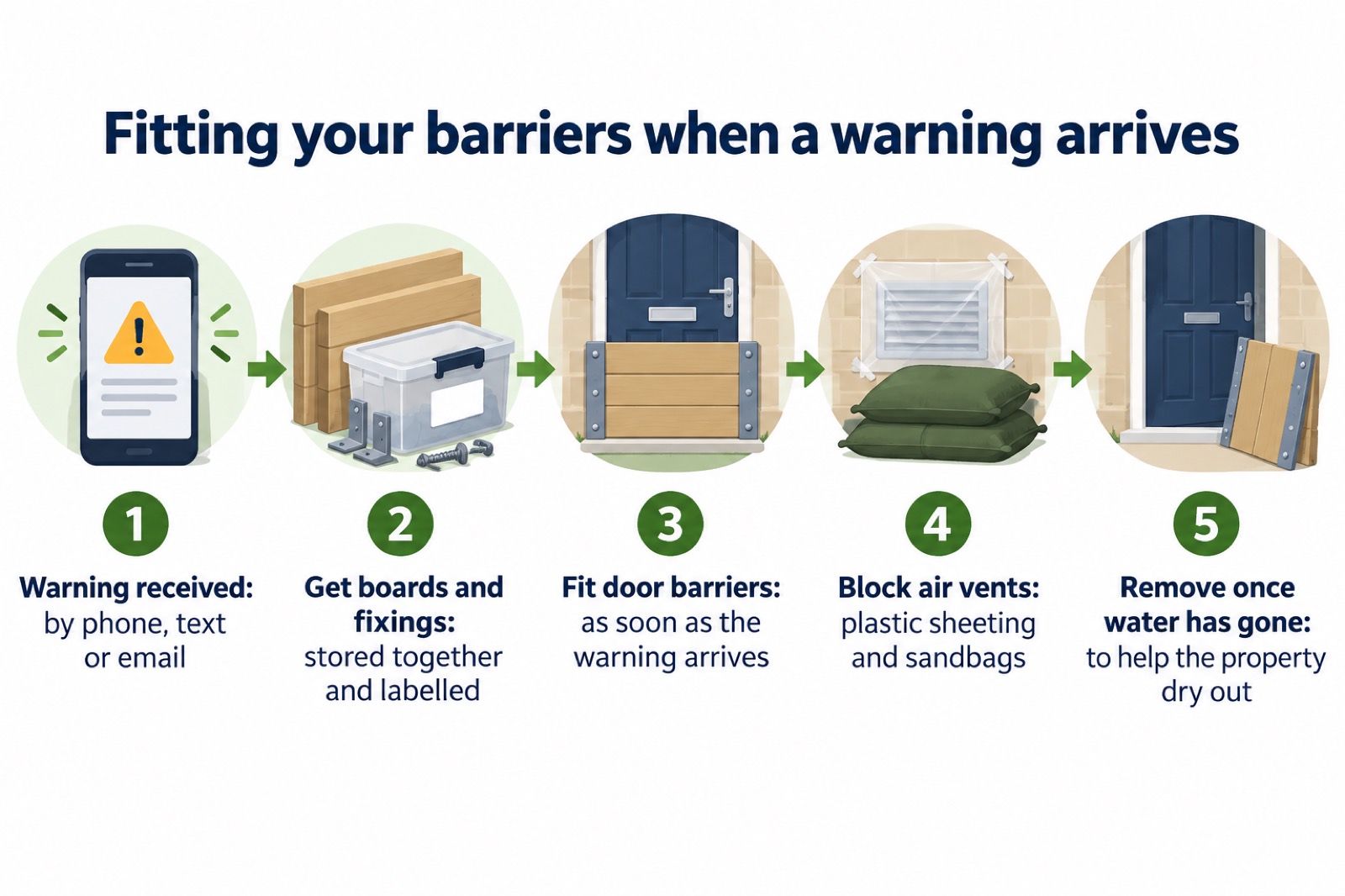
When a warning does arrive, fit the barriers straight away, or before if you are not likely to be home at the time2. Block doors with floodboards if available, and air vents with plastic sheeting and sandbags7. Keep a small stock of empty sandbags and sand, available from builders' merchants and hardware shops, for doorways and air vents7.
After a flood: cleaning, drying and putting barriers away
Once the floodwater has gone, remove temporary protection so the property can dry out2. Wash boards and covers to remove silt, dry them thoroughly, check the seals again and store them ready for next time. Flood boards can be washed, stored and used again2.
Sandbags are different. Discard floodwater-exposed sandbags, as they may be contaminated, and dispose of used sandbags in the landfill containers at your nearest waste recycling centre3. Sandbags that the floodwater did not reach can be stored for future use3.
Cleaning up carries its own risks. Wear waterproof boots and gloves during cleanup, wash hands regularly with soap and clean water, disinfect toys that came into contact with floodwater, and keep cuts and sores covered with waterproof plasters or gloves3. Keep open cuts or sores clean, and use waterproof plasters to prevent them being exposed to floodwater15.
Remove all dirty water and silt from the property as much as possible, including from the space under downstairs floorboards, which may require pumping out16. Ensure air bricks to underfloor spaces are unblocked to boost cross ventilation, and vacuum loose material or dust regularly while floorboards and walls dry17.
Before you throw anything away, contact your insurers as soon as possible, and do not throw damaged items away until your insurers have inspected them7. Take photographs or video footage of all damage, mark the water levels on the wall before they recede, and do not dispose of any item until you are told to do so8.
Keeping barriers ready through the year
A barrier that is stored well in October can still fail in January if nobody has looked at it since. Build the checks into the year: a full inspection before the flood season, a quick look after any near miss, and a clean and dry after every use. Check your property's flood risk and think about what you store on the ground floor, keeping important documents upstairs18.
If you are a renter, speak to your landlord or housing association about how they can better protect you from flooding19. Ask who is responsible for storing and maintaining any barriers, and keep your own flood kit and documents raised off the floor in the meantime.
Sign up for flood warnings by phone, text or email, and check your long-term flood risk from rivers, the sea, surface water, reservoirs and groundwater where data is available5. Warnings are what turn a stored board into a fitted one in time.
Sources (19)
- Personal flood plan, GOV.UK, 2023
- Before, during and after a flood, Suffolk County Council, 2021
- Flooding and health: advice for the public, GOV.UK, 2024
- Create a flood pack, Bradford Council, 2026
- Adapting your home or business to the risk of flooding, GOV.UK, 2009
- Preparing for a flood, nidirect, 2025
- Clearing up after a flood, Oxford City Council, 2026
- Be informed about hazards: flooding, Prepare campaign, 2026
- Property flood resilience case studies, Derbyshire County Council, 2024
- Keeping safe during high winds and heavy rain, North Yorkshire Fire and Rescue Service, 2024
- Flooding guide for older communities, Scottish Environment Protection Agency, 2026
- Help during a flood, GOV.UK, 2026
- Preparing for flooding, Surrey County Council, 2026
- Flooding advice, Belfast City Council, 2026
- Flood advice, City of York Council, 2026
- Cleaning up and returning home after flooding, Derbyshire County Council, 2026
- Water storage tanks and cisterns, Drinking Water Inspectorate, 2026
- Climate adaptation, Birmingham Women's and Children's NHS Foundation Trust, 2026
- How to prepare for flash flooding, London Assembly, 2026
 Flood Warning Checklist
 First Steps After a Flood
 Insurance Claim Records