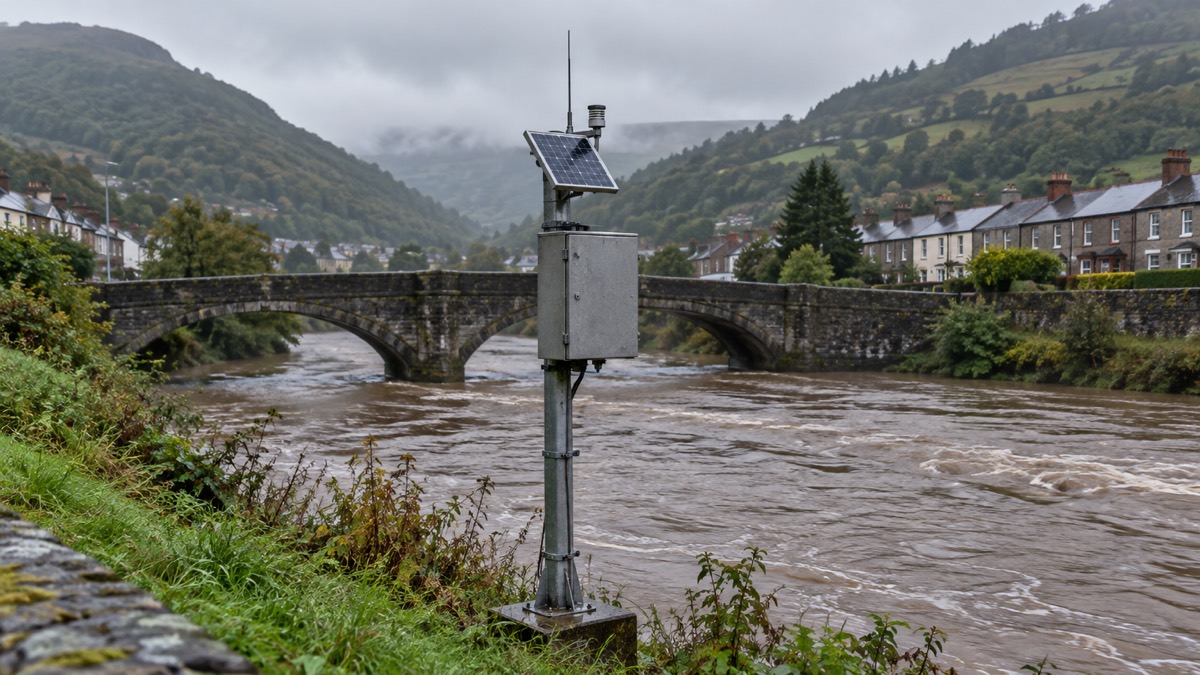
In Wales, flood warnings come from Natural Resources Wales (NRW), not the Environment Agency. The Welsh Government directs households to check current flood warnings on the Natural Resources Wales website1, where a live warnings page shows every alert and warning in force across Wales2. The service is free to sign up to, and warnings arrive by text message, phone call or email as soon as they are issued for your chosen location3.
The scale of the risk is worth knowing before you check. NRW estimates that there are approximately 275,000 properties at risk of flooding in Wales, which is approximately one in seven properties4. The warning service covers floods from rivers and the sea, reaching around 90% of the properties at risk from those sources, but it does not warn for surface water or small watercourses, which can flood with little or no notice3. This page explains how to check warnings, what each level means, how to register, how to read the Flood Risk Assessment Wales map, and where to turn when a warning arrives.
Check current flood warnings for Wales
The first stop in any flood situation is the Natural Resources Wales website. The Welsh Government's flood advice for Wales points households to NRW's live flood warnings page, which shows the current situation across the country1. NRW's own postcode checker page likewise directs readers to the live warnings page for the current situation2. Fire and rescue services in Wales reinforce the same message: North Wales Fire and Rescue Service advises that for up-to-date information on flood warnings and advice you should visit Natural Resources Wales, which monitors the weather situation closely and provides advice on flood warnings and river levels online6. Mid and West Wales Fire and Rescue Service tells residents simply to pay attention to flood warnings issued by Natural Resources Wales7.
The live page provides real-time information on flood warnings and alerts across Wales, so you can check whether any are active in your area8. It is the fastest answer to the question "is there a flood warning where I live right now?", and it works whether or not you have registered for warnings. Pembrokeshire County Council notes that NRW's warning information is updated every 15 minutes, 24 hours a day, 7 days a week9.
Behind the live page sits a permanent monitoring operation. NRW constantly monitors rainfall, river levels and sea conditions to forecast the possibility of flooding10, and provides 24/7 flood forecasting across much of Wales, allowing warnings to be issued as conditions develop3. In total across Wales, NRW provides flood forecasts for 89 sea flooding locations and 112 river flooding locations4.
If you want a view further ahead, the Flood Guidance Statement gives a daily flood risk forecast for five days, provided to government and professional partners11. Carmarthenshire County Council describes the five-day forecast webpage as a summary of the forecasted flood risk for the next five days, updated daily and more frequently if there is a medium or high flood risk8. As an example of its output, the statement issued at 10:30 on 19 October 2026 put the overall flood risk for England and Wales for the next five days at VERY LOW, with moderate surface water flooding impacts possible but not expected on the Thursday and Friday12. Our page on the Flood Guidance Statement and five-day forecasts explains this in more detail.
Flood alert, flood warning, severe flood warning: what each asks you to do
There are three types of warning issued when flooding is forecast: flood alerts, flood warnings and severe flood warnings10. Each one asks your household for a different level of response, and NRW sets out what to do at each stage5.
| Warning | What it means | What NRW asks you to do |
|---|---|---|
| Flood alert | Be prepared5 | Prepare a flood kit of essential items, monitor local river levels, check the five-day flood risk; farmers should consider moving livestock and equipment away from areas likely to flood5 |
| Flood warning | Immediate action required5 | Move family, pets and valuables to a safe place; turn off gas, electricity and water supplies if it is safe to do so; put flood protection equipment in place5 |
| Severe flood warning | Danger to life5 | Stay in a safe place with a means of escape, be ready to leave your home, cooperate with the emergency services, and call 999 if you are in immediate danger5 |
A flood alert is the earliest signal. Flood alerts cover large areas and can give advance warning about the possibility of flooding; they are issued earlier and more often than flood warnings, and some locations will only receive flood alerts, not flood warnings3. Treat an alert as your cue to get things ready: assemble the flood kit, check where the barriers are, and watch river levels.
A flood warning means flooding is expected at your location and you should act now. The UK Government's help-during-a-flood advice repeats the core actions: turn off your gas, electricity and water supplies if it is safe to do so13. Our checklist when a flood warning is issued walks through those steps in order, and turning off utilities before a flood shows you how.
A severe flood warning is the most serious level: severe flooding, danger to life5. NRW issued two severe flood warnings during 2024/254 and three during 2023/2411, so they are rare but they do happen in Wales. At that level, follow the emergency services' instructions and call 999 if you are in immediate danger5.
When a warning arrives, the message itself tells you four things: the type of flood warning, the location affected, the expected timing, and the action to take3. Checking that you understand what each level means before flooding happens is the point of the table above: a flood alert means be prepared, a flood warning means you should take action, and a severe flood warning means severe flooding and danger to life.
Sign up for free flood warnings by text, phone call or email
Registration is free and takes a few minutes. You can sign up for flood warnings in Wales through NRW's Flood Warning Information Service14, and you will be notified by text message, phone call or email of warnings as soon as they are issued for your chosen location3. If you prefer to register by phone, call the 24-hour Floodline service on 0345 988 11883; Floodline can sign you up, update your details or cancel your account whether you are in England, Scotland or Wales15.
To register you will need three things3:
- the address or location you are registering for
- a phone number you can be contacted on day or night
- an email address
You can sign up for more than one location: your home address, a business, other property you own, or other locations of interest such as a relative's house3. Businesses with more than one site at risk of flooding are encouraged to register each property16. If your own address falls outside the warning areas, you can sign up for the nearest relevant area by searching by town or city and selecting from the list3.
Two practical points about the account. First, language: you can choose to receive warnings and correspondence in either Welsh or English, and NRW promoted the fact that the service is available in Welsh4, but messages are only provided in those two languages, and in an emergency NRW may send warning information in English instead of Welsh3. Second, privacy: NRW states that the information you provide will only be used for the purposes of flood warning and informing3.
To manage the account later, sign in online to update your details or cancel your account, or call Floodline on 0345 988 11883. If you registered but have not received warnings or alerts, NRW asks you to get in touch so they can check your registration3.
Wales now runs its own service. NRW's new Flood Warning Information Service for Wales allows its duty officers to issue Flood Alert and Warning messages more efficiently, which reduces their workload during flooding incidents and enables faster issuing of messages to those at risk4. To register, you need the address or location you are registering for, a phone number you can be contacted on day or night, and an email address3. Our guide on how to sign up for free flood warnings covers the process step by step.
What the warning service does not cover
The warning service covers floods from rivers and the sea3. It does not warn for surface water or small watercourses. NRW explains why: these types of flooding can occur very quickly and are often very localised, meaning there is not time to issue advance warning messages3. The Welsh Government's resilience assessment for Wales makes the same point, noting that such events can be difficult to forecast accurately and can happen with little notice17.
This matters because surface water is a large part of Wales's flood risk. The Welsh Government's assessment puts over 127,000 residential properties and 13,600 non-residential properties at risk from surface water flooding, plus 3,540 key services17. These events can be difficult to forecast accurately and can happen with little notice17. By comparison, river flooding puts over 91,100 residential properties at risk and coastal flooding over 80,20017.
So a household can be squarely at risk of flooding and still receive no warning at all. If the Flood Risk Assessment Wales map shows surface water risk at your address, do not rely on a text message arriving in time. Instead, watch the weather, know your local low points, and have your household flood plan ready to act on without a trigger. Our page on types of flooding explains the differences between river, sea, surface water and groundwater flooding, and groundwater flooding covers the slow, long-lasting kind that warning services also struggle to forecast.
Flood Risk Assessment Wales map: check the risk for your area
To find out whether your home is in a flood risk area, use the Flood Risk Assessment Wales (FRAW) map. You can check your flood risk by postcode on NRW's website2, and the map shows your risk of flooding from rivers, the sea, surface water and small watercourses, and reservoirs18. It also shows the location of flood defences, the areas benefitting from flood defences, shoreline management plans and coastal erosion18, and you can see all the areas NRW covers for free flood warnings and alerts18.
Know the map's limits before you rely on it. The Flood Risk Assessment Wales map has no official status for planning purposes18. You should not use it to inform a Flood Consequences Assessment to support planning proposals; NRW directs planning use to the separate Flood Map for Planning18.
The map is kept current, and many of the map layers can be downloaded from DataMapWales18. The service is available in Welsh as well as English18, and you can also see all the areas NRW covers for free flood warnings and alerts18.
Reservoir flooding is shown on the map too, through the Risk of Flooding from Reservoirs layer. The shading shows the worst-case scenario for the area that could be flooded if a large reservoir were to fail and release the water it holds19. NRW is the enforcement authority for the Reservoirs Act 1975 in Wales and ensures that reservoirs are inspected regularly and essential safety work is carried out19. The Welsh Government's resilience assessment notes there are around 270 reservoirs in Wales in the higher-risk category17. Our page on reservoir flooding goes into what the maps show and what to do.
For a fuller walk-through of checking your address, see checking your home's flood risk by postcode.
One in seven properties in Wales is at risk of flooding
NRW's estimate is that there are approximately 275,000 properties at risk of flooding in Wales, which is approximately one in seven properties4. An earlier report put the figure at 272,817 properties as of April 202411; the documents differ slightly, but both round to the same one-in-seven proportion. Removing double and triple counting of properties at risk from multiple sources, there are over 274,000 properties at risk4.
The breakdown by source of flooding, from the Welsh Government's assessment of flood risk in Wales, shows where that risk sits17:
| Source of flooding | Residential | Non-residential | Key services | Total |
|---|---|---|---|---|
| Rivers | 91,102 | 12,630 | 2,745 | 106,477 |
| Surface water and small watercourses | 127,076 | 13,627 | 3,549 | 144,252 |
The risk is growing. NRW reports that by 2120 there are predicted to be over 131,000 properties at risk of flooding from the sea and nearly 131,000 at risk from rivers, an increase of nearly 40,000 from present day, and over 48,000 more properties at risk of flooding from surface water and small streams4.
Within local areas the concentration can be much higher. Mid and West Wales Fire and Rescue Service reports that within its service area a total of nearly 31,000 properties are at risk from flooding, of which nearly 24,000 are at risk from river flooding7. That is a reminder that risk is not evenly spread: some communities carry a far higher share than the national one-in-seven average.
Prepare a flood kit and a plan before a warning arrives
NRW's advice at the flood alert stage is to prepare a flood kit of essential items5, and the best time to do that is now, before any warning arrives. NRW's national #BeFloodReady campaign distilled preparation into three steps: check your risk by postcode, sign up for warnings, and know what to do to prepare for flooding4. This page covers the first two; the third is your household plan.
A basic flood kit, drawn from official flood advice for Wales and the wider UK5:
- torch and spare batteries
- radio (battery or wind-up) for news and weather
- first aid kit and essential medicines
- warm, waterproof clothing and blankets
- bottled water and food that keeps
- phone charger or power bank
- copies of important documents, kept waterproof
- children's and pets' needs
- your flood protection equipment, where you can reach it quickly
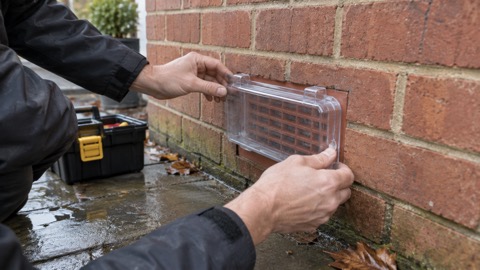
Write the plan down. The Environment Agency's personal flood plan template, published on GOV.UK, is designed for exactly this: it prompts you to record how you will switch off gas, electricity and water, where you will move people and valuables, and who you will contact21. The UK Government's Prepare campaign likewise advises signing up for flood warnings by phone, text or email and knowing what to do before flooding happens20. Our household flood plan page takes you through it, and protecting your home covers the equipment worth having in place, from door flood barriers to airbrick covers.
On sandbags: plan as if you will supply your own. Natural Resources Wales does not supply sandbags; it directs households to contact their local authority, which may have some available during a flood, or to buy their own from DIY stores and builder's merchants5. Council provision is limited: one English county council states that when flooding is threatened it may have limited supplies of sandbags for vulnerable residents who are unable to provide their own, and that sandbags are not guaranteed, recommending residents in flood risk areas purchase their own as part of their preparations16. Our pages on sandbags and on whether the council has to provide them cover the detail.
Where to get help during a flood in Wales
When flooding is happening, the numbers and routes to help are straightforward.
- If you are in immediate danger, call 999. NRW's severe flood warning advice is to stay in a safe place with a means of escape, be ready to leave your home, cooperate with the emergency services, and call 999 if you are in immediate danger5.
- Call Floodline on 0345 988 1188. NRW's what-to-do-in-a-flood guidance for Wales gives this 24-hour number for flood warnings and advice5; Pembrokeshire County Council repeats it9.
- Check the live warnings page for the current situation and any change in warning level2.
- Follow the emergency services and your council. Fire and rescue services in Wales publish flood and severe weather advice and ask residents to pay attention to NRW warnings7; your local authority is the route for sandbags and local help5.
The Welsh Government's flood pages signpost households to NRW for what to do during a flood in Wales1, and Public Health Wales advises checking whether your area is at risk with Natural Resources Wales and provides guidance on flooding and health22. Anglesey County Council notes that NRW's website can be used to learn more about flood risk and what to do during a flood, including how to sign up for flood alerts23.
One further channel exists for the most serious events: the UK Government's emergency alert system, which sends alerts to compatible mobile phones in an affected area. It was used for the first time since being introduced in 2023 during Storm Darragh on 6 to 7 December 2024, sending an alert by phone to affected areas of Wales24. Treat it as a backstop, not a plan: register for NRW warnings so the first notice you get is the earliest one.
For the aftermath, our guides on what to do during a flood at home, returning home safely and cleaning up safely after floodwater pick up where this page leaves off, and who manages flood risk explains which body is responsible for what in Wales.
Sources (24)
- Flood warnings and help before, during and after a flood, Welsh Government
- Check your flood risk by postcode, Natural Resources Wales
- Sign up to receive flood warnings, Natural Resources Wales
- Flood Risk Management Annual Report 2024 to 2025, Natural Resources Wales
- What to do in a flood, Natural Resources Wales
- Flooding and high winds, North Wales Fire and Rescue Service
- Flooding advice, Mid and West Wales Fire and Rescue Service
- Weather warnings and alerts, Carmarthenshire County Council
- Severe weather, Pembrokeshire County Council
- Flood warnings guide, Met Office
- Flood Risk Management Annual Report 2023 to 2024, Natural Resources Wales
- Flood Guidance Statement, 19 October 2026, Flood Forecasting Centre
- Help during a flood, GOV.UK
- Sign up for flood warnings, GOV.UK
- Get flood warnings, GOV.UK
- Flooding help and advice: preparing, Nottinghamshire County Council
- Resilience and risks in Wales, Welsh Government
- Flood Risk Assessment Wales map, Natural Resources Wales
- Risk of flooding from reservoirs, Natural Resources Wales
- Flooding: be informed about hazards, Prepare Campaign, UK Government
- Personal flood plan, Environment Agency
- Flooding and health, Public Health Wales
- Flood and coastal risk management, Isle of Anglesey County Council
- Flood Risk Management Annual Report 2024 to 2025, Natural Resources Wales
 Flood Warning Checklist
 First Steps After a Flood
 Insurance Claim Records
 Checking Flood Risk by Postcode
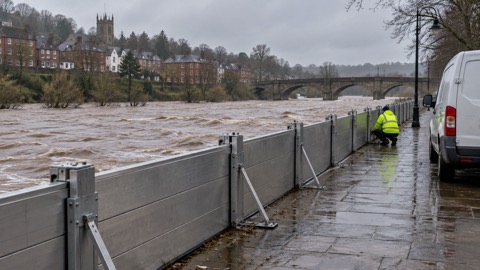 Types of Flooding
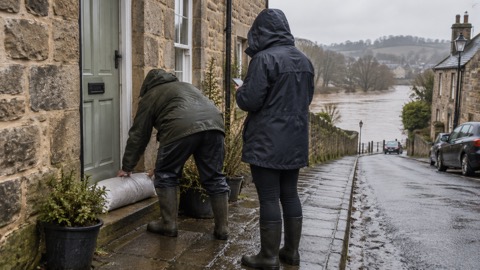 Flood Alerts and Flood Warnings
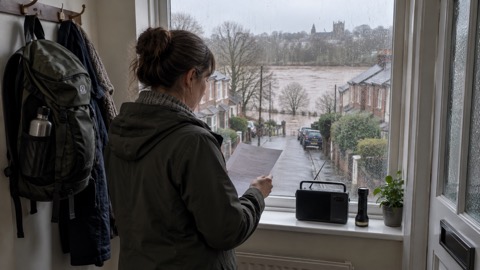 Flood Guidance Statement
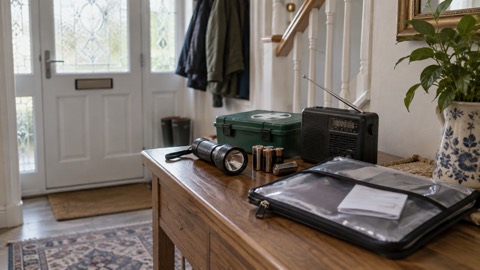 Making a Household Flood Plan
 Protecting Your Home
 Door Flood Barriers
 Sandbags and Alternatives
 Flood Doors and Windows
 Airbrick Covers
 Non-Return Valves and Bungs
 Sump and Submersible Pumps