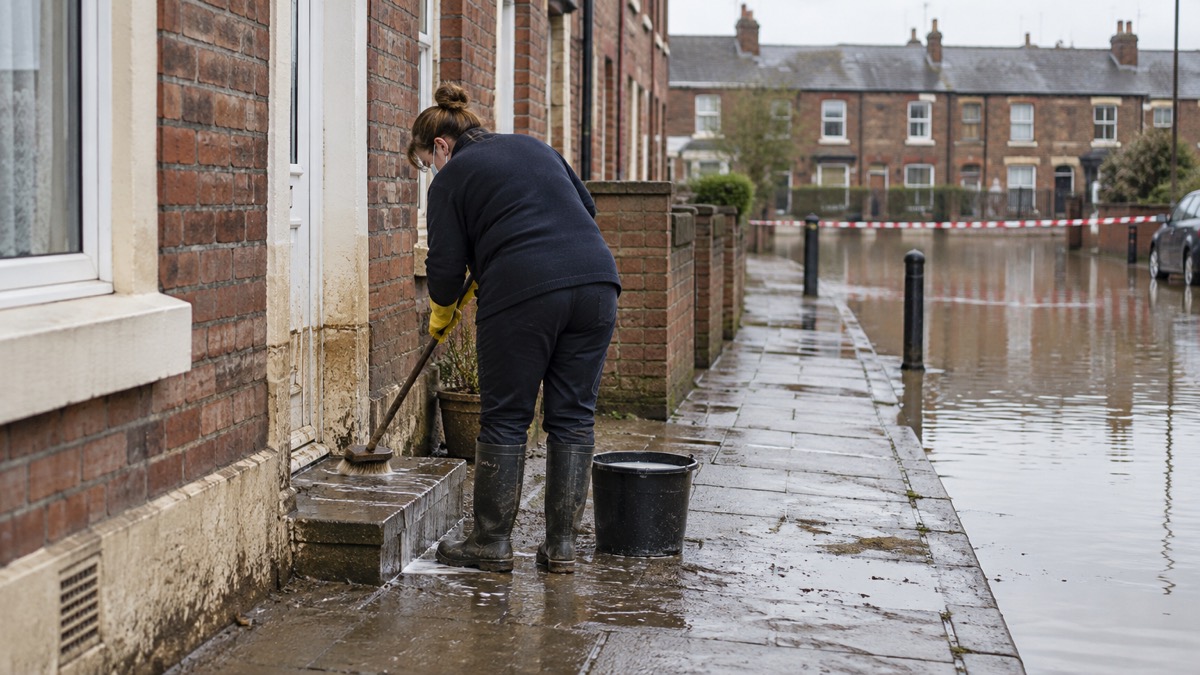
Floodwater is not clean river water. It picks up sewage, animal waste, oil, chemicals and debris as it moves, and it hides dangers below the surface, from missing manhole covers to sharp objects. The single most important health rule is simple: keep out of it. Public Health Wales states plainly that drowning is the most immediate health risk from flooding, and advises: "Do not walk, drive or allow children or pets to play in floodwaters"1.
The risk of becoming ill from touching floodwater is generally low, but because you cannot tell by looking whether water is contaminated, official advice is to assume that it is and take precautions2. Most people who come through a flood safely do not get an infection. The bigger health burden, in England especially, comes later: the stress and strain of the event and the clean-up, and the mental health effects that can last for years afterwards3.
This page covers the risks in the order you meet them: the immediate danger to life, what is actually in the water, who should keep well away, when to seek medical help, how to clean up safely, and where to find support afterwards.
Drowning and injury: why you must stay out of the water
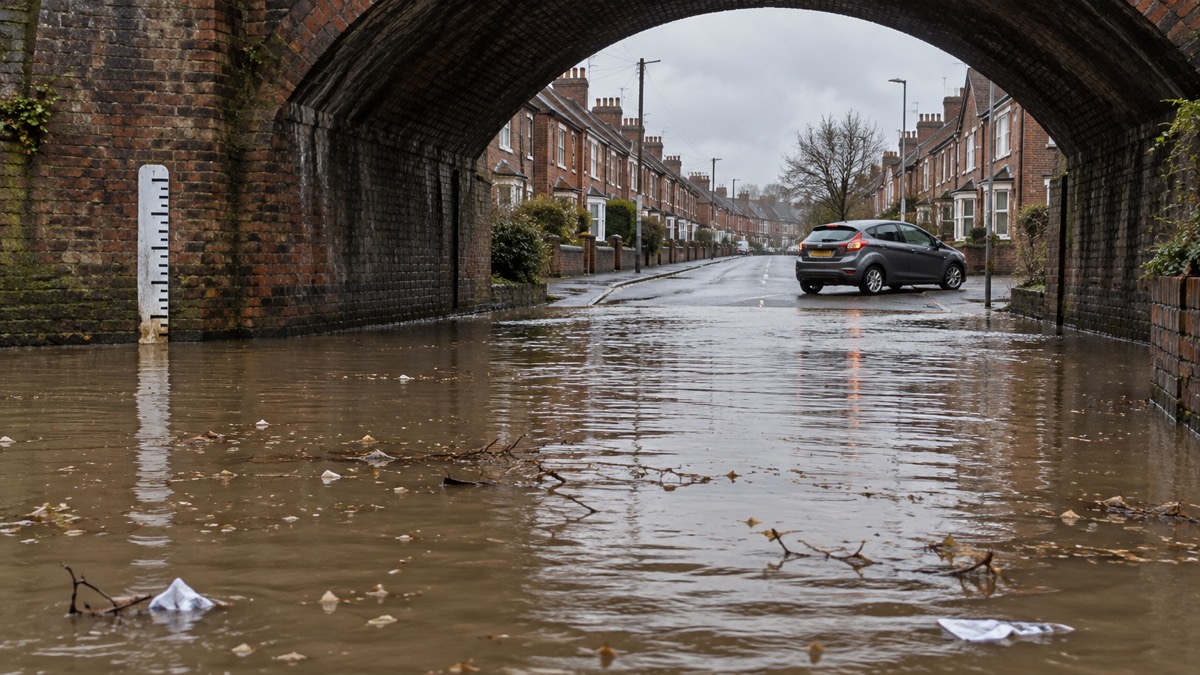
Drowning is a real risk in flooding, though official guidance notes it occurs in extreme cases1. The water itself is often not clean: floodwater may be contaminated, especially by untreated sewage1. Floodwater can cause a lot of damage to your home, especially if the water has been flowing quickly, is over 1 metre deep or has been in the property for a long time1, so treat any standing water as both a safety and a health hazard and keep children and pets away from it.
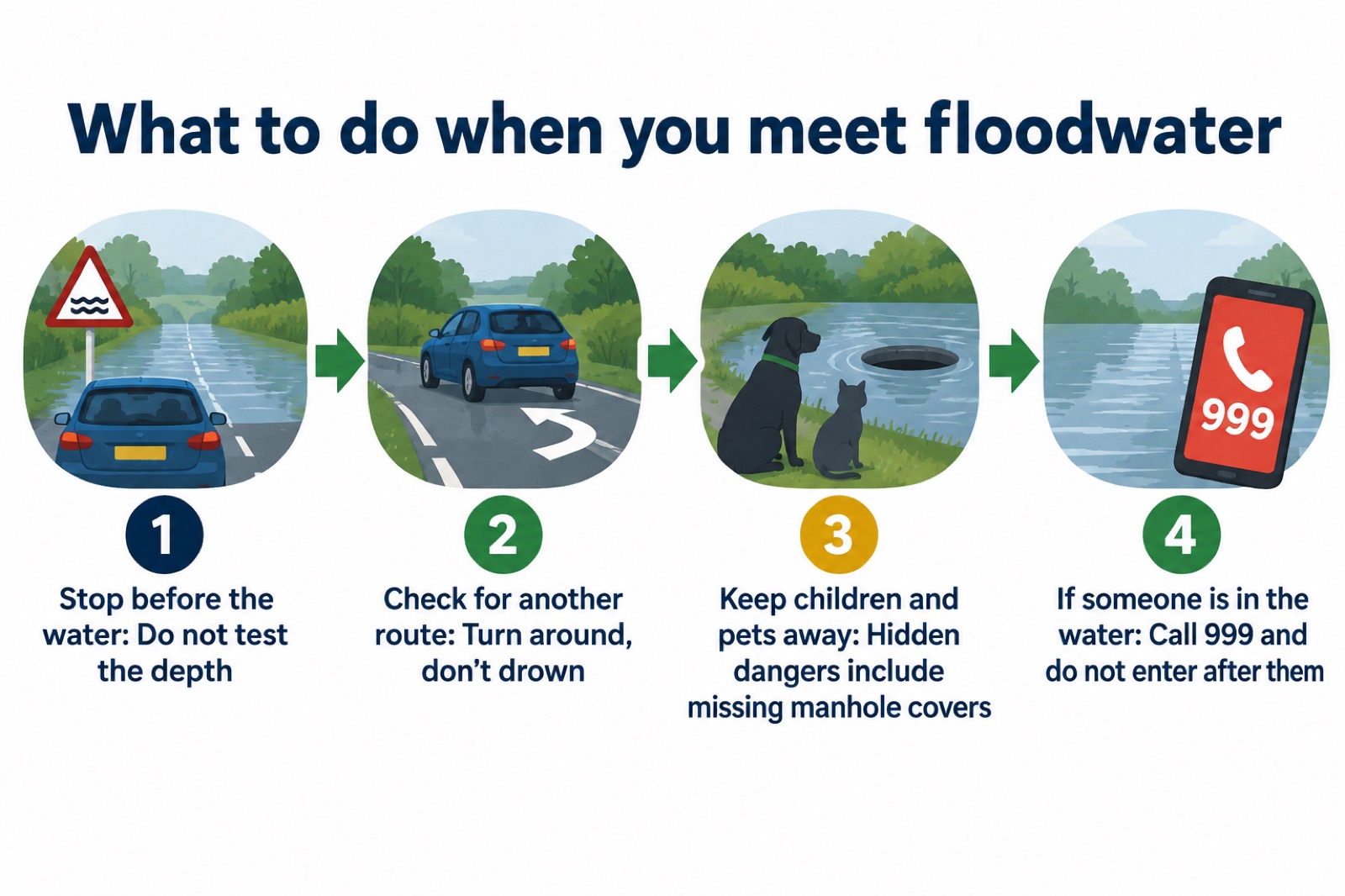
The reason driving is singled out is that it is the most common way people die in floods. The Met Office warns that "The number one cause of death during flooding is driving through flood water, so the safest advice is turn around, don't drown"4. The physics is unforgiving: the Met Office advises that "just 12 inches (30cm) of moving water can float your car, potentially taking it to deeper water from which you may need" to be rescued4. London Fire Brigade gives the same figure with the speed that matters: "A foot of moving water, moving at just 6 miles per hour, is enough to float a car"8. Devon and Somerset Fire and Rescue Service puts it as "Just 30cm of water is enough to float a car"9.
North Yorkshire Fire and Rescue Service gives two figures that together show how quickly the danger escalates: it takes only 30cm of floodwater to move your car, and around 60cm for your car to float away10. Belfast City Council advises in similar terms that two feet of water can lift and float a car11. Whether a car is moved or fully floated, the outcome for anyone inside can be fatal, so if you come to a flooded road, turn around and find another route.
On foot the danger is just as real. nidirect, the Northern Ireland government service, warns that "Even shallow water moving fast can sweep you off your feet and there may be hidden dangers, such as open drains, damaged road surfaces, submerged debris or deep channels which can result in serious injury or, in the worst cases, death"2. Public Health Wales warns that serious injury can be caused by falling into fast-flowing water or from hidden dangers under the water, such as missing manhole covers1. Scottish Borders Council states that the main threats to health with floods are drowning and injuries caused by accidents in fast flowing water12.
The hazards under the surface are worth spelling out, because clear water can look safe. Natural Resources Wales lists sharp objects in floodwater, raised or missing manhole covers, pollution, and structural damage to your property among the dangers13. The Met Office adds heavy debris and open manhole covers to that list4. During the clean-up, the UK Health Security Agency's public advice warns to be careful, as injuries can occur from electrocution or sharp items hidden by flood waters3. If someone is cut or wounded by debris, treat it as you would any wound and see our first aid guide; seek medical help if the wound was caused by anything dirty or contaminated.
What is actually in floodwater
Floodwater is a mixture of whatever it has passed through, and in built-up areas that usually includes untreated sewage. London Fire Brigade states that "Floodwater may be contaminated, especially by untreated sewage"15. Manchester City Council and Oxford City Council both describe floodwater as potentially containing sewage, animal waste and other contaminants16, and the government's flooding and health advice for frontline responders gives the fullest list: human and livestock waste, sewage, household, medical and industrial hazardous waste, physical objects, wild or stray animals, and petrol or oil spillages5.
Herefordshire Council notes that flood water may be contaminated by silt, sewage, oil or chemicals18. The government's food safety advice adds that flood water is dirty and can be contaminated with sewage, animal waste and other waste, from drains or the surrounding area19.
The key point for an ordinary household is that the contaminants are usually diluted. Oxford City Council notes that although these contaminants are usually diluted, they can still pose a health risk17. The same government advice states that the risk from getting ill from chemicals in flood water is low, because chemicals are likely to be diluted19. Dilution is not the same as safety, which is why the working rule is to treat every puddle and every stretch of standing water as contaminated.
| What may be in the water | Where it comes from | How it can harm you |
|---|---|---|
| Untreated sewage | Drains and sewers backing up or overflowing15 | Stomach upsets, diarrhoea if swallowed5 |
| Animal waste | Farmland and livestock areas5 | Same gut infections as sewage |
| Oil and petrol | Vehicles, spills, tanks5 | Skin and chemical contamination |
| Industrial and household chemicals | Soaked or displaced containers20 | Chemical contamination of skin and belongings |
| Sharp objects and debris | Broken items carried by the water13 | Cuts and wounds, including during clean-up3 |
Is floodwater dangerous to touch, and who should keep away
The honest answer is that the risk is low but not zero, and you should behave as though the water is contaminated. nidirect states that "The risk of becoming ill after contact with flood water is generally low. However, as it is not always clear whether flood water is contaminated, you should assume that it is and take appropriate precautions"2. Those precautions include not letting children play in flood water and washing children's hands regularly2.
Some groups should keep away from floodwater altogether, not just be careful around it. Wiltshire and Swindon Prepared advises that women that are pregnant, small children, the elderly or vulnerable should stay as far away from it as possible21. The government's food safety advice says you should be cautious especially if you or others fall into a vulnerable category, naming young children, older people and people with an underlying health condition19.
Mould is a separate hazard that appears after the water has gone, and it affects the same groups. Herefordshire Council and the Tewkesbury flood recovery leaflet both warn that mould can be a health hazard for babies, people with allergies, asthmatics and the elderly, and that if possible they should stay away during the clean-up18. If your home includes anyone in these groups, plan for them to stay with family or friends while the worst of the clean-up happens.
Getting ill after a flood: when to call 111 or your doctor
If you accidentally swallow floodwater or mud and then feel unwell, seek medical advice promptly and say that you have been in contact with floodwater. Oxford City Council advises contacting your doctor if you become ill after accidentally swallowing mud or contaminated water17. Wiltshire and Swindon Prepared advises seeking professional medical attention as soon as possible if you ingest any flood water or start to feel unwell, and to state that you have been in contact with flood water21.
The symptoms to watch for, and the timescale, come from Public Health Wales: contact NHS 111 Wales or your doctor if you become ill after accidentally swallowing floodwater or mud, particularly if you develop diarrhoea, a fever or stomach pains within 10 days of being in contact with floodwater or sewage1. In England, the UK Health Security Agency's public advice is to contact your GP for advice, or call NHS 111, for any health concerns after a flood3. The Tewkesbury flood recovery leaflet gives the same advice: if you feel unwell, contact your GP or ring NHS 1116.
Parents of babies should not wait and see. Public Health Wales advises that parents with infants that are unwell with diarrhoea and vomiting after contact with floodwater should seek medical advice from NHS 111 or their doctor1. A separate hazard for households with very young children: the Child Accident Prevention Trust warns that water-absorbing gel beads pose a serious risk of blockage in a child's bowel if swallowed, and there is also a risk of inhalation causing coughing or choking, so keep them away from young children23.
Pets can also be affected. The government's recovery advice notes that infections in pets during and after flooding in the UK are very rare, because harmful bacteria in floodwater are usually diluted, but swallowing floodwater or mud brought into the garden can cause stomach upsets or diarrhoea5. See our pets and animals guide for looking after animals in an emergency.
Cleaning up after sewage flooding
The first thing to know about the clean-up is what the main hazard actually is. North Warwickshire Borough Council's health advice states that "The main health hazard following flooding comes from the stress and strain of the event, not from infections"20. That does not mean infection risks can be ignored, but it does mean you should approach the clean-up without overexerting yourself, pace the work, and consider your mental health as part of the recovery20. Scottish Borders Council says the same: once floodwaters have reduced, the other main health hazard is from the stress and strain of the event and clean-up12.
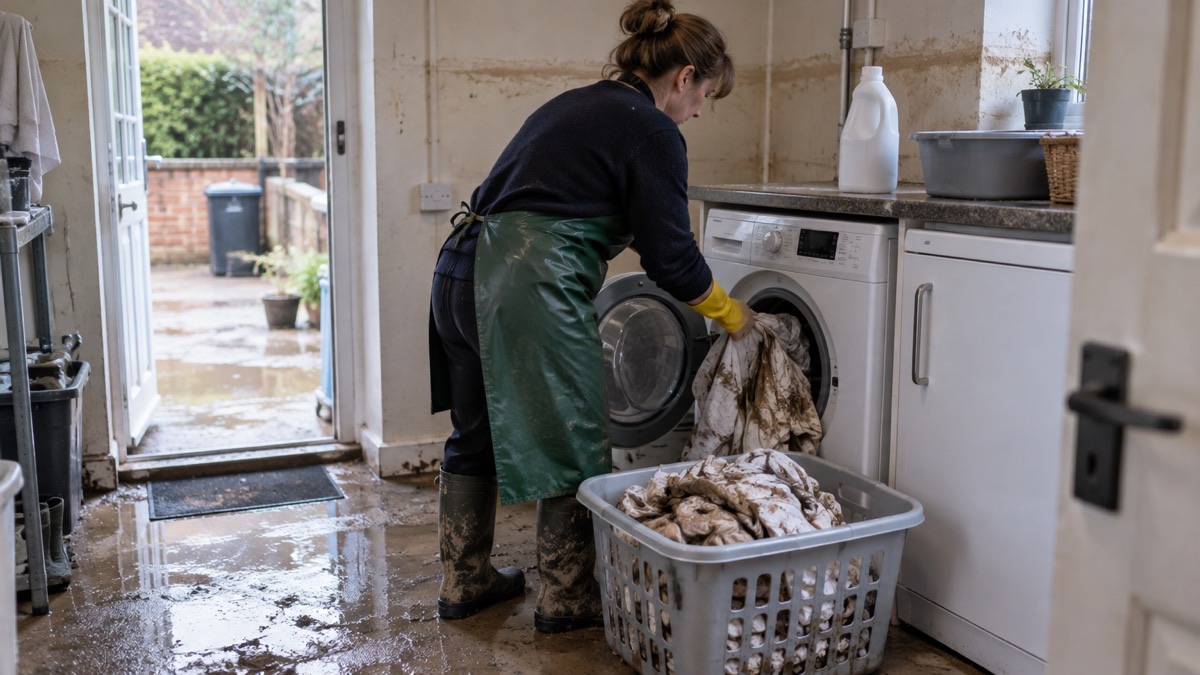
When you do handle contaminated material, protect yourself. North Warwickshire's advice warns that flood waters may have moved or soaked into containers of chemicals, solvents and other industrial items from their normal storage place, so avoid contact with water and materials which may be chemically contaminated, and if handling them wear rubber gloves, boots and a disposable apron20.
For anything soft that has been soaked, the rule is a hot wash. The Tewkesbury flood recovery leaflet advises: "Wash soft items (e.g. clothing, bedding, toys) on a 60°C cycle"6. Our page on cleaning up safely after floodwater goes through the process step by step, and our first steps checklist covers what to do in the first hours after water enters your home.
Gardens, grass and play areas
Outside, the advice is mostly to leave the ground alone and let nature do the work. nidirect is explicit: "do not dig or rake the affected area as this will spread contamination further into the soil where lack of light will prolong the life of bacteria"7. Runnymede Borough Council gives the same warning for lawns and borders: do not dig or rake, as it spreads the contamination further into the soil or turf24.
On timing, several councils agree. Herefordshire Council advises that after the grass has grown and been cut there should be no further risk, as sunlight and soil will usually destroy harmful bacteria within a week18. Belfast City Council says the same: after the grass has grown and been cut once there should be no further risk, because sunlight and soil will usually destroy harmful bacteria within a week11. Perth and Kinross Council adds that grass is usually safe after about a week because sunlight and soil help destroy harmful bacteria25. The government's recovery advice is more cautious for play areas: do not let young children play on affected grassed or paved areas until cleaned down and restored, and any excess risk to health should disappear within a number of weeks as sunlight and natural soil processes destroy harmful bacteria5. Our page on when your garden is safe after sewage covers this in more detail.
Home-grown fruit and vegetables
Food Standards Scotland warns that floodwater can impact any home-grown fruit and vegetables grown in a garden or an allotment, and its instruction is blunt: "Discard all produce if it has come into contact with or even splashed by flood water"26. Oxford City Council likewise advises discarding above-ground, flood-touched produce like cabbages17, and Herefordshire Council says do not eat any vegetables you may be growing that have been contaminated with flood water18.
There is some room for produce that stayed clear of the water. The government's food safety advice states that produce that has been growing above the flood water line, such as fruit on trees, may have been contaminated through splashing, so it is advisable to cook this before eating, as cooking will effectively destroy any harmful micro-organisms that might be present; washing and peeling produce will also reduce the risk19. When in doubt, throw it out: the cost of a cabbage is not worth a gut infection.
Gas, electrics and appliances that have been under water
Water and household systems do not mix, and the dangers persist after the water has drained. Runnymede Borough Council warns: "Be wary of damage to gas appliances long after flooding, including central heating systems, radiators and hot water systems"24. Do not relight boilers or use gas appliances that have been under water until they have been checked by a qualified engineer.
The UK Health Security Agency's public advice warns that injuries during clean-up can occur from electrocution as well as from sharp items hidden by flood waters3. Do not touch electrical appliances or wiring that has been wet until a qualified electrician has checked them. Our pages on turning off utilities before a flood, whether it is safe to turn the electricity back on and using electrical appliances after water damage cover this in detail.
London Fire Brigade also notes that floodwater can cause lots of damage to your home, especially if the water has been flowing quickly, is over 1 metre deep or has been in the property for a long time15. The longer water stands, the more it soaks into wiring, plaster and possessions, so pumping out and drying out safely matter as much as the initial clean-up. See our guides on pumping water out and drying out with dehumidifiers.
Stress, anxiety and mental health after a flood
The mental health effects of flooding are real, common, and often the least considered impact. Wiltshire and Swindon Prepared notes that flooding is very traumatic for those involved, but often the least considered impact is the mental health impacts in the short to long term27. The UK Health Security Agency is blunt about the scale: "In England, most of the health burden linked to flooding comes from effects on people's mental health and wellbeing"3.
The evidence behind that statement comes from the English National Cohort Study of Flooding and Health, which found that people who had experienced flooding were more likely to have symptoms of post-traumatic stress disorder, depression and anxiety disorders, such as general anxiety disorder, between 6 months to 3 years following the event5. The same study found symptoms suggestive of a mental health disorder even in those who lived in the vicinity of flooded homes or in a community affected by a flood, but who were not directly flooded themselves5. So if your home stayed dry but your street did not, your feelings still count.
What you feel in the days afterwards is normal. The UK Health Security Agency advises that it is normal to experience tiredness, difficulty sleeping and anxiety in these circumstances even if your home was not flooded, and suggests contacting a local community support group or neighbours to help cope and recover3. The Tewkesbury flood recovery leaflet puts it simply: "Flooding is stressful. It is normal to feel anxious, upset and experience sleeping difficulties"6.
Some circumstances make the mental health burden heavier. Surrey County Council lists events after a flood that can be a source of stress, including difficulties accessing continuing healthcare and prescription medications, disruption to normal household activities, loss of school facilities, seeking compensation and insurance claims, and loss of employment or income28. The government's recovery advice notes that people whose homes are flooded and who do not have home or contents insurance, or who find insurance processes stressful, experience worse mental health symptoms5. Wider risk factors that may increase the likelihood of mental distress include pre-existing mental health problems, a previous history of trauma, family history of mental health problems, absence of social networks, concurrent stressful life events, substance misuse and bereavement5.
Two things clearly help. The recovery advice states that positive health behaviours, particularly physical activity and fostering social connections, are associated with fewer mental health symptoms following a flood5. And Surrey County Council, whose advice was reviewed in September 2026, states that support from families, friends and neighbours is key to helping to protect people from the negative impacts of flooding on mental health28. Wiltshire and Swindon Prepared advises seeking support from loved ones such as family, friends and neighbours to lessen the negative impacts29. Our page on mental health after a flood lists where to get support.
Helping a flooded neighbour, and checking your own risk
If someone near you has been flooded, practical help matters more than you might think. West Midlands Ambulance Service advises helping vulnerable relatives or neighbours with support, as they may need help with food and supplies during flooding14. Wiltshire and Swindon Prepared sets out what good help looks like: assess the situation and ensure a person's circumstances are safe, help them make contact with recovery agencies such as through the local authority or a flood warden, check there are no immediate physical health needs, check whether basic needs such as access to food, water, shelter and medication are met, help people contact their loved ones, listen, provide information if you have it, and help them make plans for next steps29. Before offering help, it may be useful to identify access to support for those affected, or check the local flood warnings in case there is a continued flood risk29.
Public Health Wales adds a note on being useful rather than just well-meaning: try to become familiar with the nature of the flooding event, identify how those affected can access help and whether there are flood risks in the future1. The government's flood health action card for the voluntary and community sector asks community groups to assist health services by checking on the health and wellbeing of those affected by flooding and reporting injuries or health concerns30. Our community resilience guide covers how neighbourhoods can organise this before a flood happens.
For your own household, the starting point is knowing your risk. SEPA advises using its flood maps to find out the level of flood risk in your area31, and Public Health Wales directs readers to Natural Resources Wales to check if an area is at risk of flooding1. Devon and Somerset Fire and Rescue Service advises that if you are at risk of flooding you can check your flood risk, sign up for free flood warnings and keep up to date with the latest situation on the Environment Agency website9. Signing up for warnings is free and gives you time to act before water arrives; see our pages on checking your home's flood risk by postcode and how to sign up for free flood warnings.
Frequently asked questions
How do I report sewage flooding in my area? Sewage flooding is usually the responsibility of your water company or sewerage provider, so contact them first and keep a record of when you reported it and what was said. For flooding on roads and pavements, report it to your local council. If sewage has entered your home, take photographs before you clean up, as this helps with any claim. See our page on sewer flooding for who is responsible and what to expect.
How long do sewage bacteria survive in a garden after flooding? Official advice is that sunlight and soil usually destroy harmful bacteria within about a week, and grassed areas are generally safe after the grass has grown and been cut once18. Keep children and pets off affected grass and paved areas until they have been cleaned down and restored, as any excess risk to health should disappear within a number of weeks5. Do not dig or rake the affected area, as this pushes contamination deeper into the soil where lack of light prolongs the life of bacteria7.
Can I eat fruit and vegetables from my garden after a flood? Food Standards Scotland advises discarding all produce that has come into contact with floodwater, or even been splashed by it26. Produce growing above the water line, such as fruit on trees, may have been contaminated through splashing, so it is advisable to cook it before eating, as cooking effectively destroys harmful micro-organisms; washing and peeling also reduce the risk19. Discard flood-touched produce that grows above ground, such as cabbages17.
How should I wash clothes and soft furnishings after a flood? Wash soft items such as clothing, bedding and toys on a 60°C cycle, according to official flood recovery advice6. Wear rubber gloves, boots and a disposable apron when handling anything that may be contaminated, and be aware that floodwater may have moved or soaked containers of chemicals and solvents from their normal storage place20.
Is it safe to dig or rake my garden after sewage flooding? No. Official guidance says do not dig or rake the affected area, because this spreads contamination further into the soil or turf, where the lack of light prolongs the life of bacteria7. Leave the surface alone, keep children and pets off, and let sunlight and natural soil processes do the work. Grass is usually safe after about a week once it has grown and been cut once25.
My baby has diarrhoea and vomiting after contact with floodwater. What should I do? Public Health Wales advises that parents with infants who are unwell with diarrhoea and vomiting after contact with floodwater should seek medical advice from NHS 111 or their doctor1. Do not wait to see whether it passes. Also keep small water-absorbing gel beads away from young children, as these pose a serious risk of bowel blockage if swallowed and can cause coughing or choking if inhaled23.
How can I help a neighbour whose home has flooded? Check they are safe, help them contact recovery agencies through the local authority or a flood warden, and check whether basic needs such as food, water, shelter and medication are met29. Help them contact loved ones, listen, and help them plan next steps. Support from family, friends and neighbours is key to protecting people from the negative mental health impacts of flooding28, and vulnerable neighbours may need help with food and supplies14.
How do I check whether my area is at risk of flooding? In England you can check your flood risk and sign up for free flood warnings on the Environment Agency website9. In Wales, use Natural Resources Wales1, and in Scotland, SEPA's flood maps show the level of risk in your area31. Signing up for warnings means you hear before water arrives, which gives you time to act. See our page on checking your home's flood risk by postcode.
Sources (31)
- Flooding and health, Public Health Wales, 2026
- Thunderstorms weather warning advice and information, nidirect, 2026
- Flooding and health: advice for the public, UK Health Security Agency, 2024
- Driving in severe weather, Met Office, 2026
- Flooding and health: how to recover from flooding, UK Health Security Agency, 2023
- After a flood: flood recovery leaflet, Tewkesbury Borough Council, 2023
- What to do if a flood happens, nidirect, 2025
- Flood water is coming into my home, London Fire Brigade, 2026
- Safety in storms: how you can stay safe, Devon and Somerset Fire and Rescue Service, 2022
- Safe on the road: floodwater, North Yorkshire Fire and Rescue Service, 2021
- Flooding advice, Belfast City Council, 2026
- Flooding advice, Scottish Borders Council, 2026
- What to do after a flood, Natural Resources Wales, 2026
- Staying safe in flooding, West Midlands Ambulance Service NHS Foundation Trust, 2026
- After a flood, London Fire Brigade, 2026
- After a flood, Manchester City Council, 2026
- Clearing up after a flood, Oxford City Council, 2026
- Staying safe in a flood, Herefordshire Council, 2026
- Food safety after a flood: consumer advice, Food Standards Agency, 2018
- Cleaning up after a flood: health advice, North Warwickshire Borough Council, 2024
- What to do in a flood, Wiltshire and Swindon Prepared, 2026
- Keeping children safe during a flood, nidirect, 2025
- Keep water beads away from young children, Child Accident Prevention Trust, 2025
- Flooding aftercare, Runnymede Borough Council, 2026
- Flooding checklist for residents, Perth and Kinross Council, 2024
- Food safety in the kitchen: flooding, Food Standards Scotland, 2026
- Flooding and health: mental health, Wiltshire and Swindon Prepared, 2026
- Staying healthy and safe after flooding, Surrey County Council, 2026
- Flooding and health: mental health, Wiltshire and Swindon Prepared, 2026
- Flood health action card for the voluntary and community sector, UK Health Security Agency, 2025
- Before, during and after a flood, Scottish Environment Protection Agency, 2026
 Flood Warning Checklist
 First Steps After a Flood
 Insurance Claim Records
 Checking Flood Risk by Postcode
 Types of Flooding
 Flood Alerts and Flood Warnings
 Flood Guidance Statement
 Wales Flood Warnings and Maps
 Making a Household Flood Plan
 Protecting Your Home
 Door Flood Barriers
 Sandbags and Alternatives
 Flood Doors and Windows
 Airbrick Covers
 Non-Return Valves and Bungs