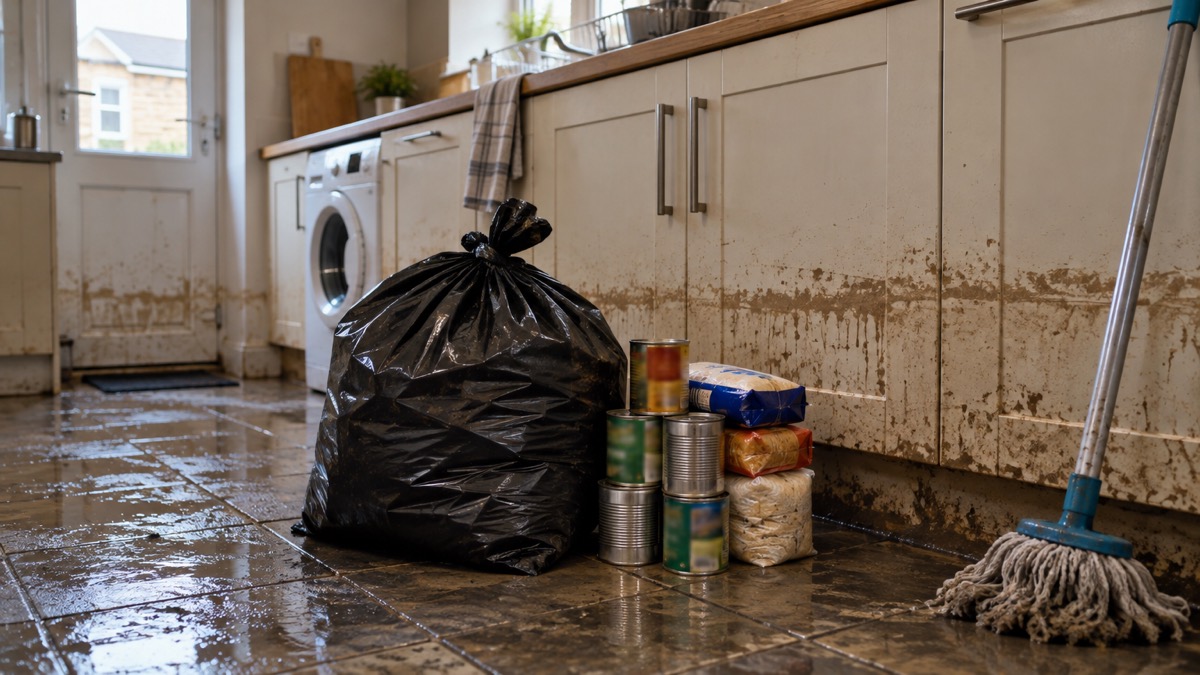
Flood water is not clean water. It picks up sewage, animal waste, silt and chemicals as it moves, and anything it touches can carry bacteria that cause serious illness. The single most important rule after a flood is simple: throw away any food that has been in contact with flood water1. That rule comes from every official source in the UK, from the Food Standards Agency to council environmental health teams, and it applies even to food that looks fine and smells fine.
The good news is that not everything is lost. Food in undamaged water-resistant packaging, such as sealed tins, can be kept if you clean and sanitise the outside first2. Kitchen surfaces and utensils can be washed and reused. And with the right steps you can make your kitchen safe to use again, protect your family from infection, and deal with insurers without throwing away things you should have kept.
This page sets out what to throw away, what to keep and how to clean it, what to do about your fridge, freezer and garden vegetables, and who to call for help. It is written for ordinary households in the UK, and it follows official advice from the Food Standards Agency, Food Standards Scotland, the NHS and local authorities.
What to throw away: any food touched by flood water
Start with the food itself. Throw away any food that has been in contact with flood water, even if it looks undamaged1. Never drink flood waters, and do not allow children to play in them, as flood water gets contaminated with raw sewage1.
Be strict about what counts as "touched". Food Standards Scotland says to discard any food packaging that is punctured, torn, swollen or damaged2. The Food Standards Agency's consumer advice says to discard any food and beverages that are not in a sealed waterproof container if your home is affected by flood water3. Where advice differs this much, the safe course is the strict one: if a container was submerged and you have any doubt about the seal, bin it.
How to dispose of flood-damaged food
Do not just put contaminated food in an open bin. Official guidance is consistent on the method:
- Put flood-damaged food and kitchen items in black plastic refuse sacks, double bagged if possible6.
- Seal the bags6.
- Put them out when the next refuse collection is due6.
- Oxford City Council offers an alternative: recycle your food waste, or double-wrap contaminated food in plastic bags and put it in your green bin for the next collection. If you do not have a green bin, do not put the waste out earlier than necessary, as extra food waste in plastic sacks might attract animals7.
- Check with your insurer before you dispose of food, as it may be insured5.
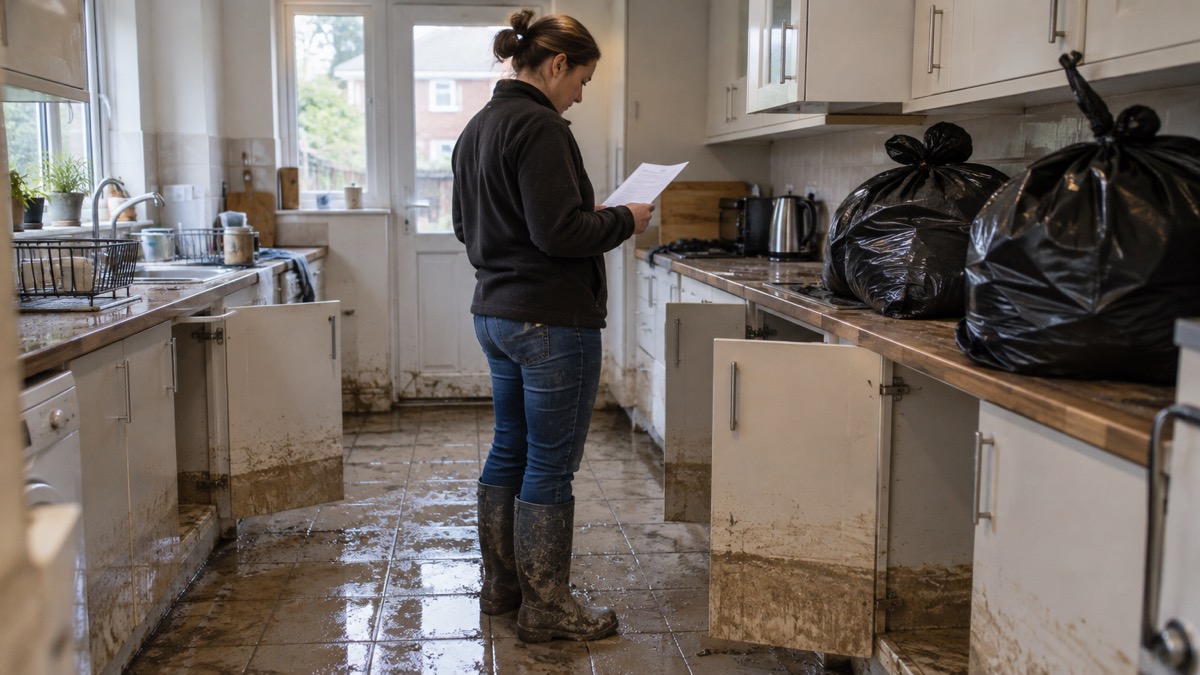
That last step matters. Flooded households sometimes throw everything away immediately and then find their insurer would have paid for it. Tewkesbury Borough Council's flood recovery leaflet advises contacting your insurer's 24-hour emergency helpline as soon as possible5, and the UK government's recovery guidance for frontline responders says to check with insurers before discarding freezer contents6. Ruined food itself can go out, but damaged possessions other than food should wait: Natural Resources Wales advises "don't throw anything away until told (except ruined food)"8.
"As a general rule within your home, do not eat any food that has been touched by floodwater. If in doubt throw it out!"
What you can keep: sealed packaging and cleanable kitchen items
Not everything has to go. Food Standards Scotland states that food in water-resistant packaging such as metal cans, sealed pouches and tetra packs can be kept if they are not damaged, but the outside of the packaging must be cleaned and sanitised first to avoid cross-contamination2. So a sealed, undented tin that was splashed but not submerged, or whose seal you have no reason to doubt, can be washed, sanitised and kept. A tin that was underwater for hours, is swollen, punctured or torn, cannot2. For more on what damaged cans mean, see our page on dented and swollen tins.
Kitchen items divide the same way. Oxford City Council advises cleaning kitchen surfaces and utensils with hot water, detergent and a food-safe sanitiser, and discarding chipped or damaged kitchenware7. Food Standards Scotland is specific about what cannot be saved: throw away any chipped or damaged crockery, as well as wooden chopping boards and spoons if they have come into contact with flood water, because they cannot be properly sanitised and can absorb contaminated water2. Derbyshire County Council adds that food preparation surfaces, storage cupboards and refrigerators should be washed down with food-safe disinfectant9.
| Item | Keep or throw | What to do |
|---|---|---|
| Undamaged tins, sealed pouches, tetra packs | Keep | Clean and sanitise the outside before use2 |
| Packaging that is punctured, torn, swollen or damaged | Throw away | Discard it2 |
| Food not in a sealed waterproof container | Throw away | Discard it3 |
| Chipped or damaged crockery | Throw away | Cannot be properly sanitised2 |
| Wooden chopping boards and spoons touched by flood water | Throw away | They absorb contaminated water2 |
| Intact utensils and surfaces | Keep | Wash with hot water, detergent and a food-safe sanitiser7 |
| Food preparation surfaces, cupboards, fridges | Keep | Wash down with food-safe disinfectant9 |
Your fridge and freezer after a flood
Fridges and freezers need special care for two reasons: contaminated water can get into them, and a flood often means a power cut.
If the appliance itself has come into contact with flood water, discard the food inside. Food Standards Scotland explains why: the seals are not watertight, so flood water can enter even a closed fridge or freezer2. The Food Standards Agency's consumer advice says the same, and adds a safety warning: do not turn the appliances on unless they have been checked as safe for use3.
Separately, dispose of any frozen or chilled food that has been at room temperature for a few hours7. North Warwickshire Borough Council's health advice also says to discard frozen or chilled food that has been at ambient temperature for a few hours, and not to be tempted to try to salvage damaged items10. Consult your insurer before discarding freezer contents, because they may be covered6. Our page on fridge and freezer temperatures explains how cold these appliances need to be in normal times.
Do not switch the power back on until it is safe. Oxford City Council says to wait for an electrician's approval before turning the power back on, and not to use any electrical equipment exposed to flood water until it has been checked by a qualified electrician7. Properly switch off all electrical appliances before restoring the supply7.
Home-grown fruit and vegetables from a flooded garden or allotment
If you grow your own food, a flood puts your garden or allotment produce in the same category as kitchen food: do not eat it if flood water touched it. Food Standards Scotland warns that floodwater can impact any home-grown fruit and vegetables grown in a garden or an allotment, and says to discard all produce if it has come into contact with, or has even been splashed by, flood water2. Herefordshire Council's advice is blunt: do not eat any vegetables you may be growing that have been contaminated with flood water11.
The Food Standards Agency's consumer advice says to throw away any produce that has come into contact with flood water3, and a Nottinghamshire flood recovery leaflet is specific about which crops matter most: throw away any produce touched by flood water if it is ready to eat and grown above ground, such as lettuce or strawberries12. Oxford City Council says the same about above-ground, flood-touched produce like cabbages7. Ready-to-eat crops are the danger because nothing will kill the bacteria before you eat them.
What can you do afterwards? Nottinghamshire County Council advises leaving undamaged vegetables in the ground for at least another 2 weeks, then using them only after thorough washing and cooking4. The Nottinghamshire recovery leaflet adds that it is OK to eat produce that has been cooked, even if it was contaminated by flood water, because cooking kills any harmful germs that might be present12. The same leaflet advises waiting at least six months before harvesting new produce from flooded land12.
Two further precautions from Oxford City Council: keep young children away from allotments to prevent soil eating, and always wash your hands after gardening and avoid soil ingestion7. If you keep a food store in a flood-prone area, see our advice on where to keep an emergency store if your area floods.
Why flood water makes food unsafe
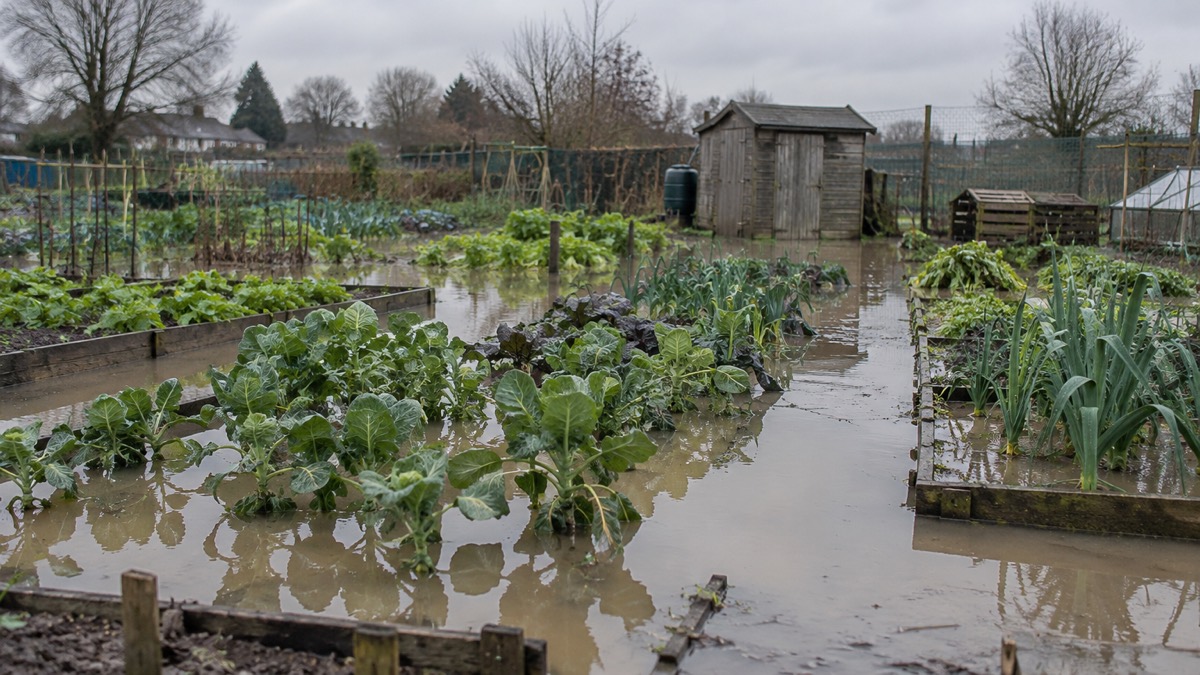
It is worth understanding why the rules are this strict, because it helps you judge the cases the lists do not cover. Flood water is dirty and can contain harmful bacteria, viruses or chemicals from silt and sewage that can cause illness2. Somerset Council puts it plainly: flood water is contaminated with sewage and other sources of bacteria and chemicals13. Orkney Islands Council adds a warning that matters for the weeks after the water goes down: contamination remains after the floodwater has gone and can be hazardous unless simple procedures are followed14.
The contamination comes from more than one source. The Northern Ireland Direct household flood plan warns that floodwater affecting your home may be contaminated with sewage, animal waste and other contaminants15. The UK government's personal flood plan reminds people returning home that flood water may contain sewage and conceal hidden dangers16. That is why the cleaning steps in this page matter as much as the throwing-away steps: bacteria left on a worktop or a cupboard door can transfer to the next meal you prepare.
The Food Standards Agency's consumer advice also warns against contaminating food through contact with flood water, particularly food that will be eaten without being cooked3. Uncooked food is the highest risk because nothing destroys the bacteria before it reaches you. If you are unsure about any item, Food Standards Scotland's rule is short: if you are not sure if food is safe to eat, throw it out2. North Yorkshire Fire and Rescue Service uses the same words for food after a fire or power loss: "If in doubt, throw it out"17.
E. coli and other infections: symptoms to watch for
The bacteria in flood water include some that cause serious illness. The Public Health Agency in Northern Ireland notes that E. coli O157 symptoms can range from mild gastroenteritis to severe bloody diarrhoea, mostly without fever18. Cornwall Council says symptoms include severe bloody diarrhoea, and that the infection can lead to serious kidney damage in children19. In its 2026 safety notice on a contaminated sprouting seed product, Food Standards Scotland warned that E. coli (STEC) symptoms can include severe diarrhoea, including bloody diarrhoea, abdominal pain, and occasionally haemolytic uremic syndrome (HUS), a serious condition that can lead to kidney failure and can be fatal20.
People catch these infections through several routes, and a flood touches most of them. The Public Health Agency lists eating contaminated food, contact with infected animals or animal faeces, contact with other people who have the illness through inadequate hand hygiene, drinking water from inadequately treated water supplies, and swimming or playing in contaminated water such as ponds or streams18. Flood water in a home or garden fits that picture closely.
General food poisoning symptoms, as listed by NHS inform, include nausea, diarrhoea which may contain blood or mucus, lack of energy and weakness, loss of appetite, fever of 38C or above, aching muscles and chills21. Cornwall Council lists diarrhoea, stomach cramps, vomiting, fever, nausea, headache and dizziness as the main symptoms of food-borne illness19.
See a doctor in defined circumstances. NHS inform says to seek help with symptoms of severe dehydration, vomiting constantly and unable to keep down fluids, bloody diarrhoea, diarrhoea for more than 7 days or vomiting for more than 2 days, or if you have kidney disease, inflammatory bowel disease or a weak immune system alongside diarrhoea and vomiting21. After a flood specifically, Tewkesbury Borough Council advises mentioning flooding if you see your GP with abdominal complaints within 10 days of being exposed to flood water5. Northern Ireland Direct says to contact your GP if you, or someone you know, develops a stomach upset following flooding22. Our page on food poisoning symptoms and when to get help covers this in more detail.
Hand washing is the main defence. The Public Health Agency says everyone should wash their hands after using the toilet and before eating or preparing food18. Nottinghamshire County Council says to wash children's hands frequently, always before meals23.
Never drink flood water, and keep children out of it
Food is only half the picture. Do not drink flood water, and treat anything it has touched as contaminated. Natural Resources Wales is direct: never let children play in floodwater8. Public Health Wales goes further: avoid contact with flood water, and do not walk, drive or allow children or pets to play in floodwaters24. Nottinghamshire County Council says not to allow children to play in floodwater areas and to wash children's hands frequently, always before meals23.
If your drinking water is affected, use a safe alternative. Argyll and Bute Council, whose area has many private water supplies, advises ensuring you have adequate supplies of safe drinking water, such as bottled water or mains water from friends or relatives, until your supply has been restored27. Private water supplies may be contaminated with floodwater and may not be suitable for drinking, because floodwater can contain sewage and harmful microorganisms27. Northern Ireland Direct notes that a tanker with uncontaminated water is usually available to people living in an area affected by flood water28.
If you have to boil water, take care. The UK government's health guidance for flood recovery responders warns that boiling water can carry a risk of scalding accidents, advises using a kettle rather than pots and pans, turning pan handles inwards, and using boiled water as soon as possible because it is vulnerable to recontamination as it cools6. Our water in an emergency guide covers safe water supplies in more depth.
Cleaning up and returning home
Once the water has gone, the clean-up makes your kitchen safe to use again. Work through it in order, and keep children and pets out of the affected area until the clean-up is complete28.
- Wear protective clothing. Derbyshire County Council says to wear gloves and a disposable plastic apron when using cleaning products, and to follow the manufacturer's instructions correctly9. The Northern Ireland Direct household flood plan says to wear gloves, a face mask and work clothes when cleaning up15.
- Throw away the food first, double bagged, as set out above6.
- Clean kitchen surfaces and utensils with hot water, detergent and a food-safe sanitiser7. Wash food preparation surfaces, storage cupboards and refrigerators with food-safe disinfectant9.
- Throw away chipped or damaged crockery and wooden boards and spoons that touched the water2.
- Change your clothes when you are finished, and always wash your hands after cleaning up and before eating15.
- Do not turn electrical appliances back on until a qualified electrician has checked them7.
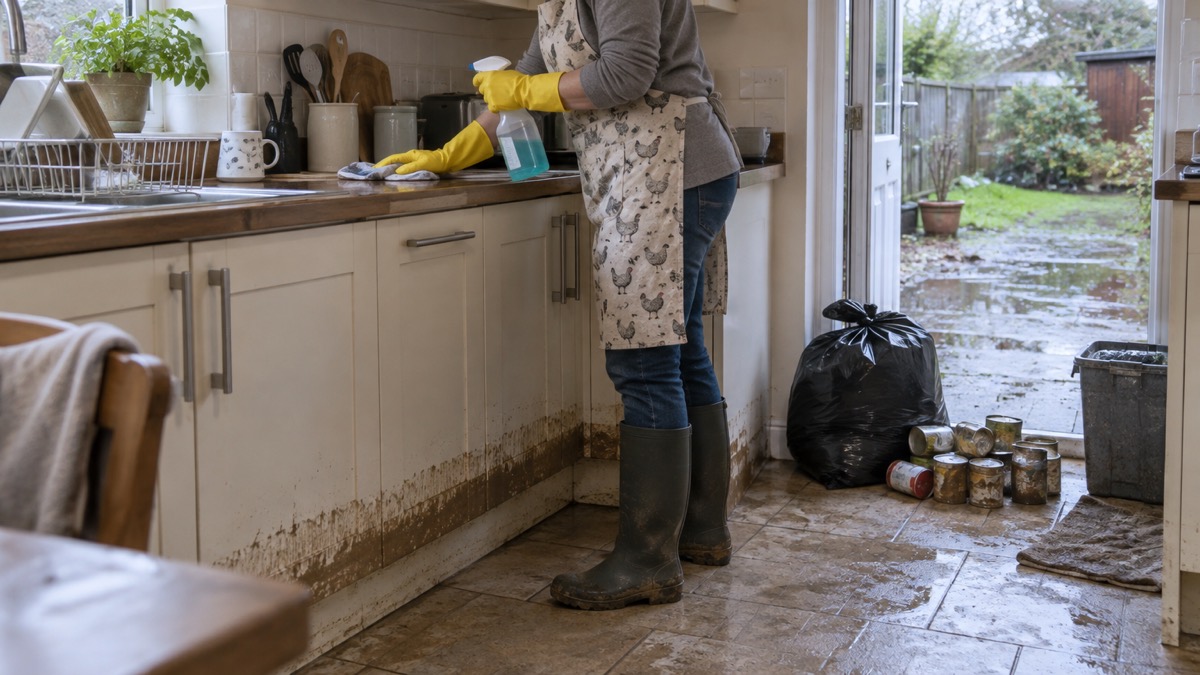
The disinfectant itself needs care. Derbyshire County Council says to use a domestic disinfectant following the manufacturer's directions on concentrations9. Keep children and pets out of the affected area until the clean-up is complete28, and remember that contamination remains after the floodwater has gone14, so do not stop at the visible water line: clean everything the water could have touched, including cupboard interiors and fridge seals.
Getting ready before a flood
If your area floods, or could, a few preparations sharply reduce how much food and equipment you lose. Food Standards Scotland advises households in areas that regularly flood to keep food in high cupboards or shelves2. The Fire and Rescue Service in Mid and West Wales advises raising heavy electrical items such as fridges, freezers and washing machines on bricks1.
Know your utilities before you need them. Make sure you know how to turn off your gas, electricity and water if necessary1. Northern Ireland Direct's storm advice says the same: know where to turn off your electricity or gas22. The UK government's personal flood plan lists the immediate actions when a flood warning arrives: turn off electricity, water and gas supplies, lift curtains over rails above flood water levels, use door guards or air brick covers, move important items to safety, lift rugs and smaller furniture upstairs or on to tables or worktops, get your flood kit together, move pets and vehicles away from flood areas, and make sure mobile phones or devices are charged16.
Croydon Council's flood evacuation checklist adds the final steps just before you leave: turn off the gas, electricity and water before flood water enters your home, lock doors, windows, gates and sheds, set the burglar alarm, take house keys and put spare keys out of the reach of letterboxes. It also lists what to pack in a flood kit: non-perishable food such as tinned food, a can opener and bottled water29. Our pages on what to keep in an emergency store cupboard and the emergency store cupboard checklist can help you build that kit, and the wider flooding guide covers warnings, barriers and insurance in detail.
Who to call during and after a flood
Several organisations have distinct roles, and knowing who handles what saves time in a stressful week.
| Who | When to contact them |
|---|---|
| Your insurer's emergency helpline | As soon as possible after the flood; do not throw damaged items away until they have inspected them, except ruined food5 |
| Your local council | For financial support after a flood30, and for environmental health advice on cleaning up25 |
| Your GP | If you or someone you know develops a stomach upset following flooding22, mentioning flooding for abdominal complaints within 10 days of exposure5 |
| Scottish Water (Scotland) | For public water supply questions2 |
| Your local authority (private supplies) | If you use a private water supply that may be contaminated2 |
| The Food Safety team at your local authority | If you run a catering business affected by flooding31 |
The UK government's after-a-flood guidance notes that you may be able to get financial support from your local council after a flood30, so contact the council early even if you are not sure you qualify. Lancaster City Council directs people cleaning up after flooding to their local environmental health department for further advice25. For questions about chemical hazards or pollution in homes, the government's recovery guidance says to contact the local council, the local health protection team or the Environment Agency, whose helpline is 0800 80 70 606.
If you are helping someone else affected by flooding, Public Health Wales advises asking about their needs and concerns, such as access to food, water, shelter and medication24. Households that need practical help getting food after an emergency can read our guide to getting emergency food help.
Sources (31)
- Flooding advice, Mid and West Wales Fire and Rescue Service, 2026
- Flooding food safety advice, Food Standards Scotland, 2026
- Food safety after a flood: consumer advice, Food Standards Agency, 2018
- Flooding before, during and after: frequently asked questions, Nottinghamshire County Council, 2026
- After a flood: flood recovery leaflet, Tewkesbury Borough Council, 2023
- How to recover from flooding, GOV.UK, 2023
- Clearing up after flooding, Oxford City Council, 2026
- What to do after a flood, Natural Resources Wales, 2026
- Cleaning up and returning home after flooding, Derbyshire County Council, 2026
- Cleaning up after a flood: health advice, North Warwickshire Borough Council, 2024
- Staying safe in a flood, Herefordshire Council, 2026
- Flood recovery leaflet, Nottinghamshire County Council, 2025
- After flooding: information and advice, Somerset Council, 2026
- During the flood: combined advice, Orkney Islands Council, 2026
- Household flood plan, nidirect, 2018
- Personal flood plan, GOV.UK, 2023
- Steps after a fire, North Yorkshire Fire and Rescue Service, 2026
- E. coli O157, Public Health Agency Northern Ireland, 2015
- Infectious diseases: E. coli 0157, Cornwall Council, 2026
- Recall: Rapunzel Biosnacky red clover seeds for sprouts, E. coli STEC contamination, Food Standards Scotland, 2026
- Food poisoning, NHS inform, 2026
- Thunderstorms: weather warning advice and information, nidirect, 2026
- Further support after a flood, Nottinghamshire County Council, 2026
- Flooding and health, Public Health Wales, 2026
- Be prepared: flooding advice, Lancaster City Council, 2026
- Flooding, Readiness campaign, Scottish Government, 2026
- Private water supplies after floods or storms, Argyll and Bute Council, 2026
- Keeping children safe during a flood, nidirect, 2025
- Flood evacuation checklist, Croydon Council, 2025
- What to do after a flood, GOV.UK, 2026
- Food safety after a flood: consumer advice, Food Standards Agency, 2018
 Long-Term Storage Kit Checklist
 Store Cupboard Checklist
 30-Day Household Checklist
 How Much Emergency Food to Store
 What to Store in an Emergency
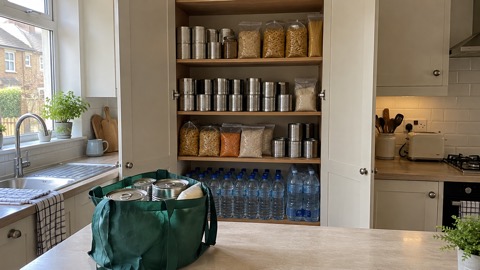 Starting a Store Cupboard
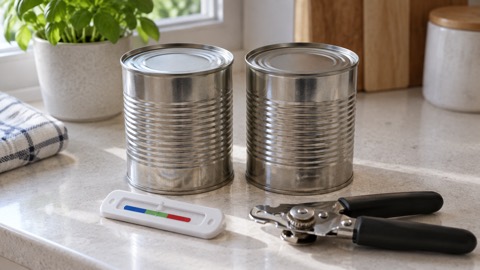 Shelf Life and Date Labels
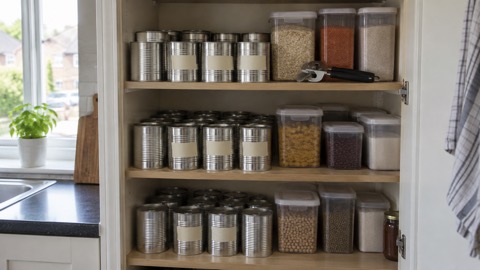 Rotating Your Food Store
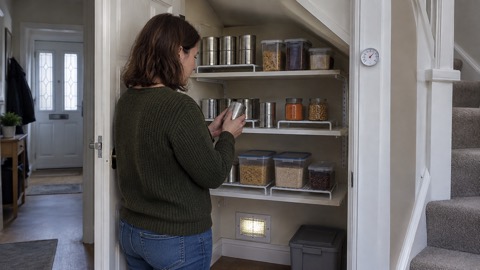 Long-Term Storage Conditions
 Meals Without Power
 Self-Heating Meals
 Tinned Food Guide
 Rice, Pasta and Pulses Storage
 Freeze-Dried Meals
 Emergency Ration Packs