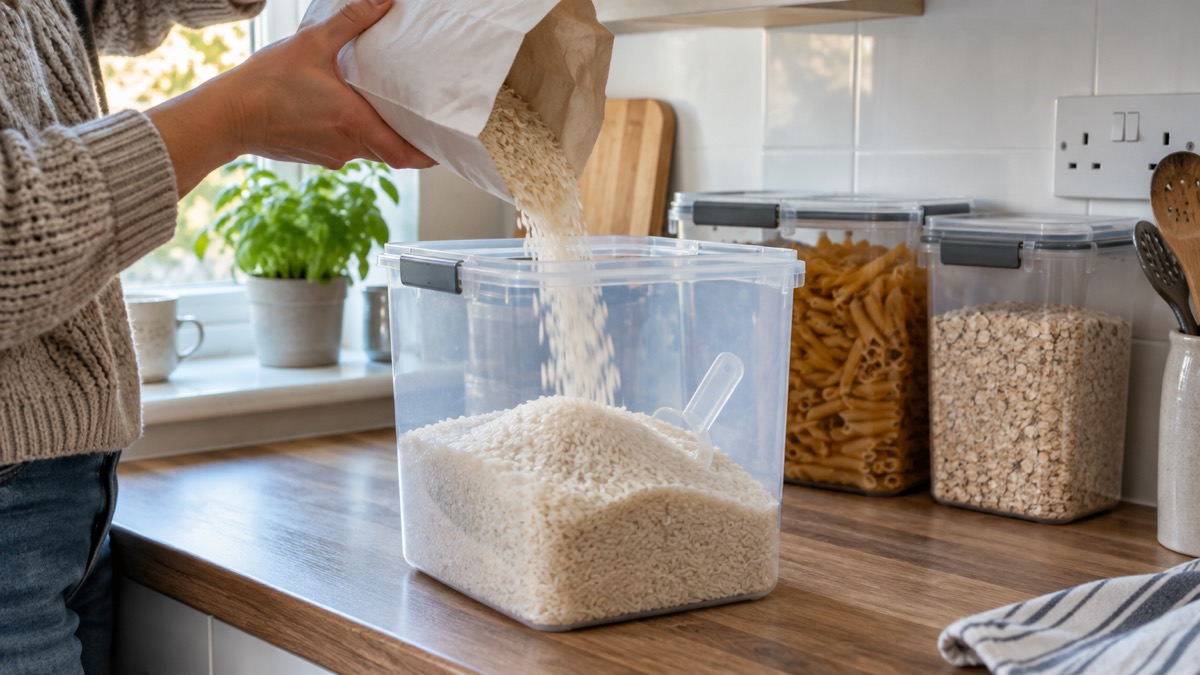
Emergency food is not special food. It is the everyday food you already buy, kept in a form that survives a power cut, a storm, a flood or a few days when you cannot get to the shops. The government's Be Ready checklist asks households to hold non-perishable food for 3 days, and its advice is simple: "It's best to buy food you'd usually eat"1. That means tinned meat, fish or vegetables, dried fruit and nuts, and the dry staples this page is about: rice, pasta, oats and pulses1.
Most UK local authorities and resilience partnerships say something similar in their own words. A few go further: Central Bedfordshire recommends a home emergency kit covering "at least 7 days of disruption"2, and one community preparedness booklet suggests reserves for "up to ten days"3. Between the shortest and longest of those figures sits a wide middle ground: emergency food is simply "food that may be able to last for a couple of days or weeks"4. Rice, pasta, oats and pulses are how you bridge the gap between those numbers without buying anything you would not normally eat.
How long your emergency food needs to last
How long your store should last depends on which guidance you read, and the honest answer is a range rather than a single number. Emergency food is described as food that "may be able to last for a couple of days or weeks"1, while one council's home emergency kit planning works from a longer horizon of "at least 7 days of disruption"2. The Household Emergency Plan template spells out one practical version of the shorter end: "Non-perishable food to last at least 3 days that does not require cooking or refrigerating (e.g. tinned meat, fruit or vegetables), plus a tin opener"7. In practice that means building a store that covers the first few days with food that needs nothing but a tin opener, and having the dry staples on hand to go further if the disruption runs on.
Some authorities think households should plan for longer. Central Bedfordshire's home emergency kit guidance is written for "at least 7 days of disruption"2. A parish council preparedness booklet goes further still, advising residents to "ensure you have enough emergency reserves in your house for up to ten days including: essential medications, food and water"3. Denbighshire's emergency supplies kit explains the reasoning: in a major emergency covering a widespread area, "you may have to survive on your own for up to three days or more"8.
| Guidance | How much food | Source |
|---|---|---|
| Be Ready checklist (2026) | Non-perishable food for 3 days | 1 |
| Household Emergency Plan template | At least 3 days, no cooking or refrigeration needed | 7 |
| Renfrewshire | Essential household supplies for at least 3 days | 9 |
| Central Bedfordshire | Home Emergency Kit for at least 7 days | 2 |
Three days is the floor, not the ceiling. If you want to be ready for a week or more, the way to extend the store is with dry staples and tins added to your normal shopping a little at a time. For working out quantities per person, see How Much Emergency Food to Store per Person; for the wider picture of what a store cupboard holds, see What to Keep in an Emergency Store Cupboard.
Rice, pasta, oats and pulses: what they are for
Dry staples are the grains and seeds that keep for a long time at room temperature and form the bulk of a longer store: rice, pasta, oats, and pulses such as dried beans and lentils. They sit alongside the tinned and ready-to-eat food that covers the first days of an emergency. Wiltshire and Swindon Prepared's guidance on a national power outage makes the point directly: the food you keep "does not need to be fresh or perishable, in fact it is better to avoid these and keep some longer lasting products such as tinned food for emergencies"10. Argyll and Bute's winter guidance likewise lists "tinned and dry foods which store safely without need for electricity" among the essentials11.
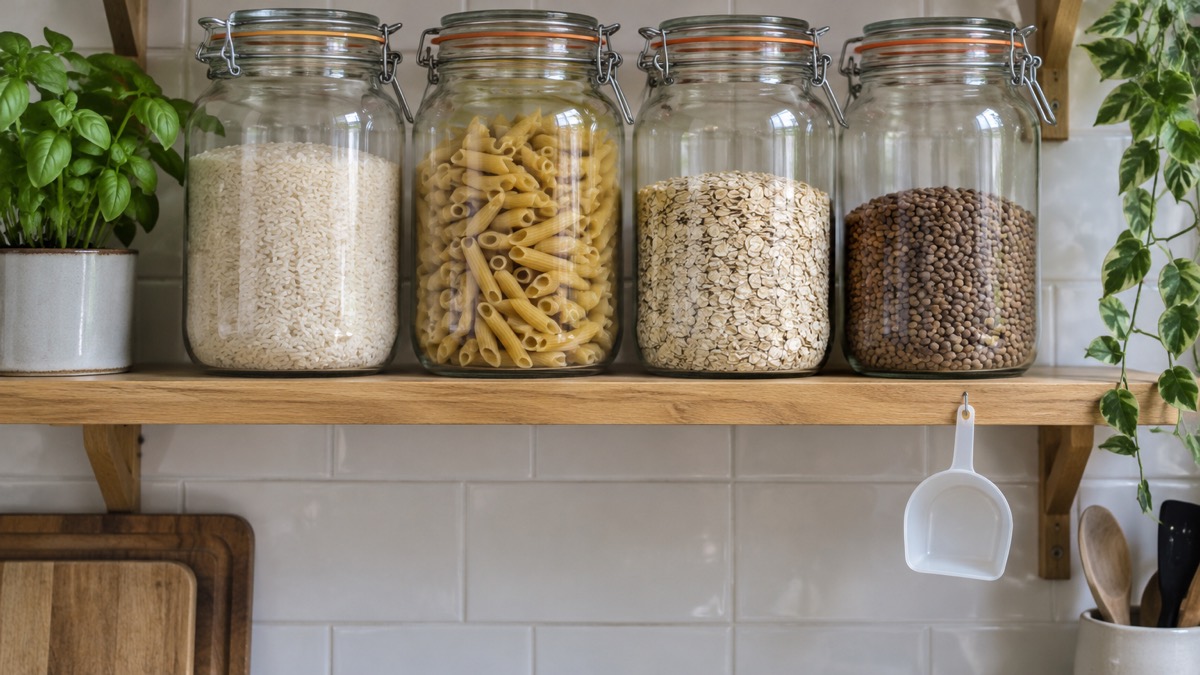
What dry staples give you is staying power. Emergency food, at its simplest, is "food that may be able to last for a couple of days or weeks"1, and grains and pulses fit that description exactly. They do need water and heat, so they are not the food for the first hours of a power cut. What they do is let a household stretch a store from three days towards a week or ten days, because a bag of rice or oats is compact, keeps at ambient temperature and, unlike everything in your fridge, is unaffected by a power cut. Wiltshire Council's kit guidance includes "bottled water and dried foods such as cereal bars" as the food side of an emergency kit12.
Two things decide whether dry staples actually last: the container and the storage conditions. Food Standards Scotland advises keeping cupboard foods "in sealed bags or containers", which keeps food fresh and stops anything falling into it by accident5. Denbighshire's emergency supplies kit is more specific about pests: "Keep tinned foods in a dry place where the temperature is fairly cool. To protect boxed food from pests, store food in tightly closed plastic or metal containers"8. That applies to oats and pasta in cardboard boxes and to opened bags of rice and dried beans alike.
For longer-term storage beyond the original packaging, households use sealed bags with oxygen absorbers. That is a technique with its own rules, covered in Mylar Bags and Oxygen Absorbers for Dry Stores and How Long Food Lasts in Mylar Bags With Oxygen Absorbers. The storage conditions themselves, cool, dry and pest-free, are covered in Keeping a Long-Term Store Cool, Dry and Free of Pests.
Building the store from the food you already buy
The most consistent piece of advice across every official source is to store what you eat. The Be Ready campaign states it plainly: "It's best to buy food you'd usually eat"13. The checklist repeats it1. This matters for dry staples more than for anything else, because a sack of rice you never cook is not a store, it is clutter. A bag of the rice your household actually eats each week rotates itself: you cook from it, and you buy more.
Rotation is where a store built from ordinary shopping beats a special kit. Denbighshire's guidance on emergency supplies suggests one approach for kit food: "just replace the whole food side of the kit every six months and live off the replaced food for a few days"8. Living off the store for a few days does two jobs at once: it uses up the food before it ages, and it shows you whether the store actually works. For a fuller method, see Rotating Your Store: First In, First Out and Starting a Store Cupboard Supply Step by Step.
A practical way to start:
- List the long-life foods your household already eats each week: rice, pasta, oats, tinned tomatoes, tinned beans, and so on.
- Buy one or two extra of each on your normal shop, so the store grows without a big outlay.
- Decant boxed and bagged dry goods into sealed containers to keep them fresh and pest-free8.
- Date everything and cook from the oldest first.
- Every six months, eat through the oldest food and replace it8.
Waste is the enemy of a store, and official guidance has an answer for it. Food Standards Scotland advises: "If you've too much food to eat before it goes off, you could share some with friends, family or neighbours to avoid it going to waste"6. The UK government's power cut advice makes the same point about refrigerated food: "Any foods that need refrigeration that you have not had time to eat could be shared with your neighbours if they have been stored correctly"14. Sharing surplus, rather than binning it, keeps a neighbourhood store working as a whole.
Dry staples alongside the fridge and freezer
In an emergency, the order you eat in matters. Food Standards Scotland's power cut advice sets the rule: "As chilled foods will go off the quickest, you should try to use these up first before other foods during a power cut"6. The UK government's consumer advice agrees: food normally stored at ambient temperature "will continue to be safe to eat", and tinned foods are safe without heating, so eat them after the perishable food14. West Yorkshire's flooding checklist is blunter about not counting on the cold: "Food and bottled water for 3 days (do not rely on fridge/freezer for food)"15.
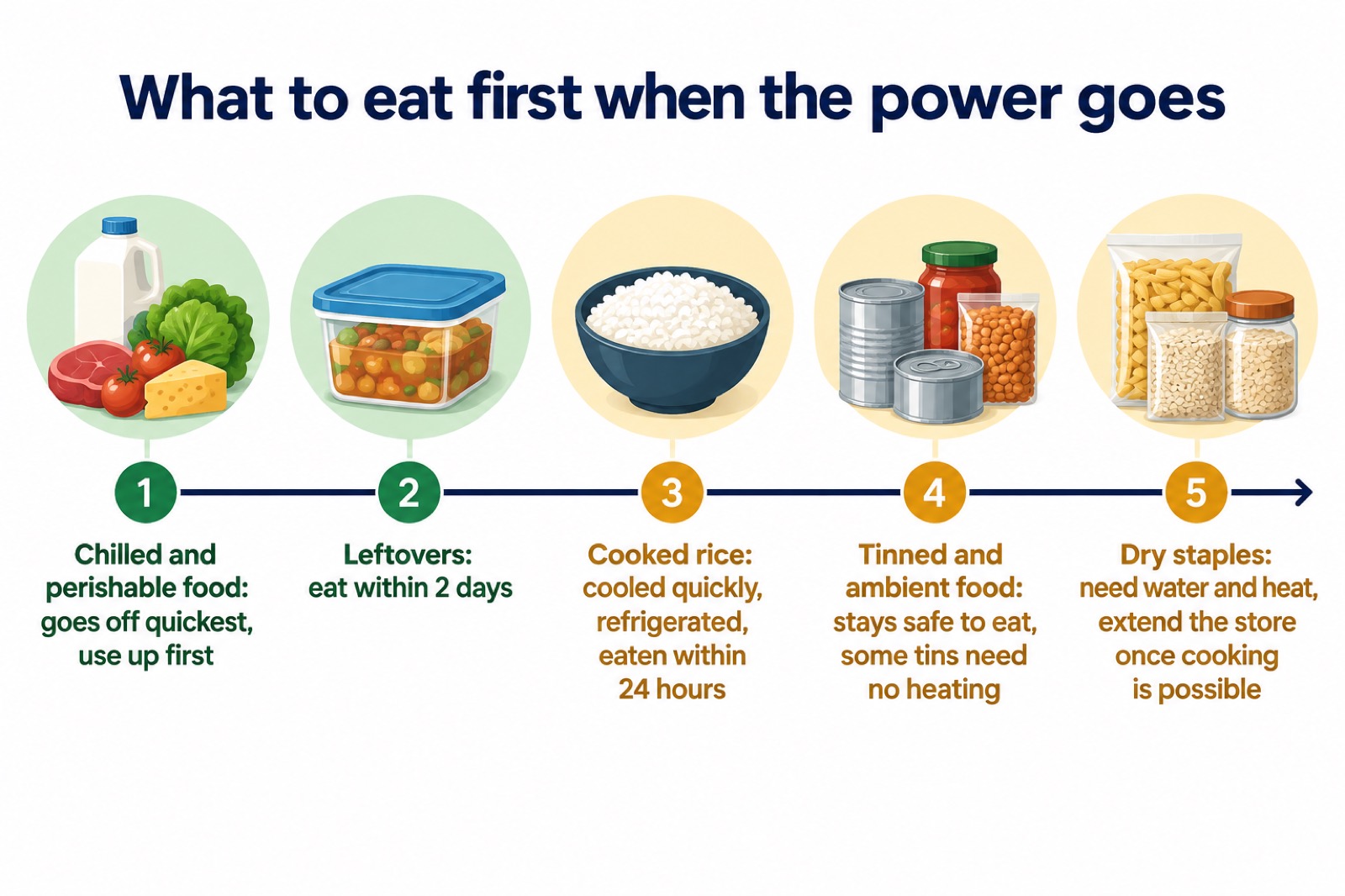
The fridge holds cooked dishes and anything labelled with a "use by" or "keep refrigerated" label: dairy produce such as milk, cheese and butter, raw and cooked meat, eggs, fresh fruit and vegetables, and ready meals17. Leftovers keep to a strict clock. NHS Inform and Food Standards Scotland both say to eat leftovers within 2 days17. Cooked rice is tighter still: "It's safe to eat cold cooked rice if it's cooled down quickly, stored in the fridge and eaten within 24 hours", and Food Standards Scotland adds "do not store it for longer than 24 hours before eating"5.
The freezer extends the fresh side of your food. NHS Inform advises that you can freeze all types of meat, fish and poultry as long as they are within their use-by date and wrapped properly to prevent freezer burn, and that you should try to eat these foods within 3 to 6 months as quality can be affected17. Frozen foods should always go into airtight containers or freezer bags, because the cold air dries them out17. Some foods can be frozen right up to the "use by" date to avoid waste18. Lancashire's winter guidance suggests a practical version of this: "Try to stock up on food essentials; long life milk, bread in the freezer"19.
For the details of temperatures and how long a fridge or freezer holds its cold in a cut, see Fridge and Freezer Temperatures and Thermometers and Power Cuts: A Household Guide. For keeping chilled food cold without mains power, see Cool Boxes and Cool Bags: Keeping Food Cold Without a Fridge.
Tinned and freeze-dried food beside your grains
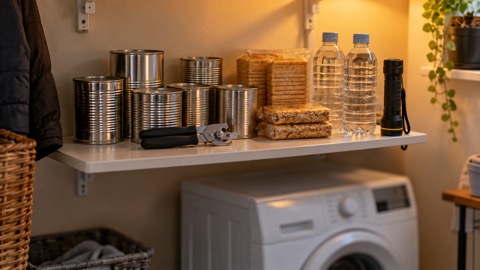
A store built on grains alone is only half a store, because rice and dried beans need cooking. The other half is food that needs nothing at all. Greater Manchester's guidance on loss of essential services is typical: "Store some bottled water and non-perishable tinned food that doesn't need cooking, like ready-to-eat tinned meat, fruit or vegetables and a tin opener", plus ready-made baby formula and pet food if the household needs them20. Nottinghamshire's kit list asks for "in date tinned food and tin opener/long life snacks"21. Denbighshire's list is the fullest: foods you can readily eat without heating or water, including ready-to-eat meats or tuna, fruits, vegetables, canned or boxed juices, UHT milk, soup, high energy food like crackers or cereal bars, vitamins, food for infants or persons on special diets, biscuits, boiled sweets and powdered milk8.
The two halves of the store do different jobs, and official guidance treats them as complementary:
| Tinned and ready-to-eat food | Dry staples (rice, pasta, oats, pulses) | |
|---|---|---|
| Needs cooking | No, some tins can be eaten cold | Yes, plus water to boil |
| Works in a power cut | Yes, from hour one | Only with an alternative way to cook |
| Storage | Dry place, fairly cool8 | Sealed containers, protected from pests8 |
| Suits | The first few days | Extending the store over a week or more |
Dates work differently for the two halves. Best-before dates "appear on a wide range of foods, which can include frozen, dried and tinned foods, such as canned tomatoes, bread and cereal", and they are about quality rather than safety18. Food Standards Scotland's power cut advice states the key point: "Food that is normally stored at room temperature will continue to be safe to eat as you usually would, even if the best before date has passed"6. That is what makes tins and dry goods the backbone of a store. Use-by dates are the other kind, and they are the ones that matter for the fridge food you will eat first. See Shelf Life, Use By and Best Before Dates Explained for the full picture.
Two safety rules from Food Standards Scotland apply directly to a mixed store. First, "do not reuse empty tins to cook or store food", because in an opened can the food and tin are exposed to air and the tin might transfer to the food more quickly5. Decant leftovers from tins into a proper container. Second, keep cupboard foods in sealed bags or containers so nothing falls into them5. For tins specifically, see Tinned Food: Shelf Life, Damaged Cans and Opening Without Power and Is It Safe to Eat From a Dented or Swollen Tin.
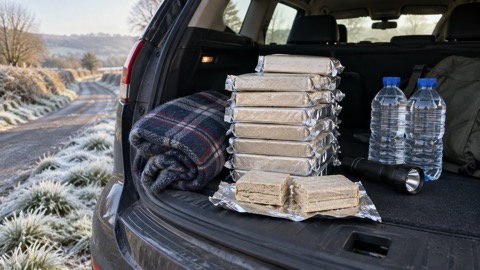
Freeze-dried meals sit between the two halves: light, long-lasting and needing only hot water, or in some cases cold. They are covered in Freeze-Dried Meals: What They Are and How to Choose and compared with tins in Tinned or Freeze-Dried Meals. Ration bars and packs, covered in Emergency Ration Bars and Emergency Ration Packs, are the compact end of the ready-to-eat range.
Grains as both emergency and survival food
The distinction between "emergency" and "survival" food is mostly about timescale, and the same store cupboard serves both. Emergency food, in UK official usage, is the three-day minimum of non-perishable food that gets a household through a power cut, storm or flood1. Survival food is the same idea at greater length and greater isolation. Denbighshire's kit guidance frames it: in a major emergency covering a widespread area, "you may have to survive on your own for up to three days or more", so keep your own water, food and emergency supplies8.
Dry staples are the one category that works at both scales. A few tins cover three days; a store built on rice, pasta, oats, pulses and more tins covers seven2 or ten3. The government's national emergencies guidance adds the reassurance that sits behind all of this: "There are also government plans to make sure essential services, like food, water, transport, health and financial services, keep working in the event of an emergency"23. A household store is not a substitute for those plans; it is the buffer that covers the hours or days before they catch up. For how the food system itself copes, see How the UK Supply Chain Copes With Disruption.
If you keep pets, remember their store too. Wiltshire and Swindon Prepared advises "a couple of days' supply of food (ideally tinned or long lasting)" in a pet emergency kit24. For the wider arrangements, see Pets and Animals in an Emergency.
Keeping the store safe and usable
A store you cannot reach or cannot use safely is not much of a store. Three practical points from official guidance:
- Store day-to-day items within easy reach. NHS guidance on preventing falls advises storing items you use regularly "in easy to reach places"25. Keep the food you eat weekly on reachable shelves, not stacked at the back of a high cupboard.
- Keep the emergency bag findable. West Yorkshire's household emergency plan advises storing items in a bag so they are easy to access, particularly if you need to leave home in a hurry, and making sure everyone in the house knows where it is kept26. Nottinghamshire makes the same point, including the option of keeping a kit in the car or simply a list of where the items are21.
- Keep chemicals away from food. NHS poisoning guidance on the SAFE 6 rule is explicit: "Safe Storage, Keep medicines, oils, vape liquids, cleaning products, and laundry pods out of reach and out of sight"27. Never store cleaning products or chemicals in the same cupboard as an open food store.
Food hygiene rules still apply in an emergency, in fact more so. NHS Inform's advice on cross-contamination covers keeping raw meat and unwashed vegetables separate from ready-to-eat foods, using different chopping boards and utensils for raw and cooked food or washing them thoroughly between uses, washing hands, worktops and utensils after touching raw meat, poultry, fish and eggs, keeping raw meat in a sealed container at the bottom of the fridge, never washing raw meat, and using separate shopping bags for raw and ready-to-eat foods17. See Handling Raw Meat, Poultry and Eggs Safely and Food Poisoning: Symptoms, Who Is at Risk and When to Get Help.
If your area floods, the store itself needs checking. Food Standards Scotland's flooding advice states: "Food in water-resistant packaging such as metal cans, sealed pouches and tetra packs can be kept if they're not damaged", with the outside of the packaging cleaned and sanitised first to avoid cross-contamination, and "canned food may be kept if undamaged as long as the cans are cleaned and sanitised before opening"28. Anything in paper, card or fabric packaging that has been wet is not in that category. See Food After a Flood: What to Keep and What to Throw Away and Where to Keep an Emergency Store If Your Area Floods.
If you preserve your own food to add to the store, follow the government's home preservation advice exactly: wash hands thoroughly before, during and after preparing food, clean and sanitise surfaces and equipment, use reputable instructions and follow them exactly including temperatures and processing times, use suitable containers, check jars, lids and containers for damage and discard damaged ones, sterilise containers when instructed, use fresh ingredients, label and date preserved foods, use them within the recommended shelf life, and check stored foods regularly for spoilage29. Canning itself is defined in that guidance as "putting food into airtight jars or cans and then heating them for a specified temperature and time period to destroy bacteria and other microorganisms"29. See Preserving at Home Safely and How to Tell If Preserved Food Has Gone Off.
Cooking grains when the power is off
Dry staples need heat and water, which means an emergency that takes out your cooker changes how the store works. In the first hours of a power cut, the food that needs no cooking is what carries you through; the grains and pulses come into their own once you have a safe way to heat water, whether that is a camping stove or another alternative. The choices and their safety rules are covered in Heating and Cooking Without Mains Power or Gas and Meals Without Power: No-Cook and Low-Fuel Ideas. Water for cooking and drinking is its own subject, covered in Water in an Emergency: A Household Guide.
Lancashire's winter wellbeing guidance adds a community angle worth acting on: check that vulnerable people around you are "stocked up with enough food supplies for a few days, in case they can't go out"19. A store of rice and tins is easiest to build for yourself, but the same shopping trip can cover an older neighbour. For organised local help, see Community Resilience: A Guide for Neighbours and Local Groups and Getting Emergency Food Help: Food Banks, Councils and Local Support.
Sources (29)
- Be Ready Checklist, UK government Be Ready campaign, 2026
- Emergency Kits and Grab Bags, Central Bedfordshire Council, 2026
- Are You Ready booklet, Culham Parish Council, 2025
- Get Help and Advice in an Emergency, Lincolnshire County Council, 2026
- Food Storage, Food Standards Scotland, 2026
- Food Safety in the Kitchen: Power Cuts, Food Standards Scotland, 2026
- Household Emergency Plan, UK government Be Ready campaign, 2026
- Emergency Supplies Kit, Denbighshire County Council, 2020
- Prepare Your Home for Emergencies, Renfrewshire Council, 2025
- What is a National Power Outage, Wiltshire and Swindon Prepared, 2026
- Winter Weather: Be Prepared at Home and in Your Community, Argyll and Bute Council, 2026
- Planning for an Emergency Kit, Wiltshire Council, 2026
- Be Ready for Emergencies, UK government Be Ready campaign, 2026
- Food Safety in a Power Cut: Advice for Consumers, UK government, 2023
- Flooding Checklist, West Yorkshire Prepared, 2022
- Food Safety in the Kitchen: Chilling, Food Standards Scotland, 2026
- Preparing and Cooking Food Safely, NHS Inform Scotland, 2025
- Use By and Best Before Dates, Food Standards Scotland, 2026
- Keeping Warm and Well During Winter, Lancashire County Council, 2026
- Loss of Essential Services, Greater Manchester Combined Authority, 2026
- Preparing for an Emergency, Nottinghamshire County Council, 2026
- Emergency Pack, Lancashire Prepared, 2026
- National Emergencies, UK government, 2026
- Your Pets, Wiltshire and Swindon Prepared, 2026
- Preventing Falls, NHS North Cheshire and Mersey, 2024
- Household Emergency Plan, West Yorkshire Prepared, 2020
- Poisoning: Accidental Swallowing, NHS Healthier Together, 2026
- Food Safety in the Kitchen: Flooding, Food Standards Scotland, 2026
- Consumer Advice for Food Preservation at Home, UK government, 2026
 Long-Term Storage Kit Checklist
 Store Cupboard Checklist
 30-Day Household Checklist
 How Much Emergency Food to Store
 What to Store in an Emergency
 Starting a Store Cupboard
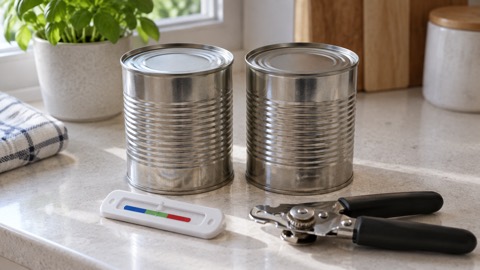 Shelf Life and Date Labels
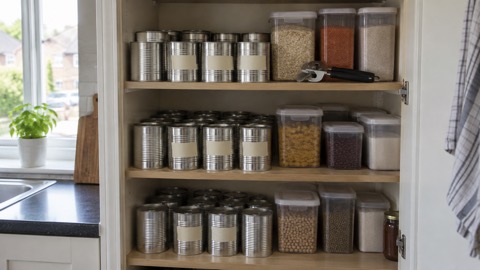 Rotating Your Food Store
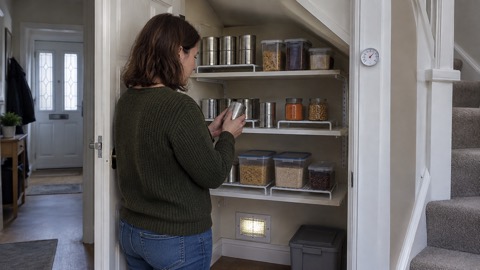 Long-Term Storage Conditions
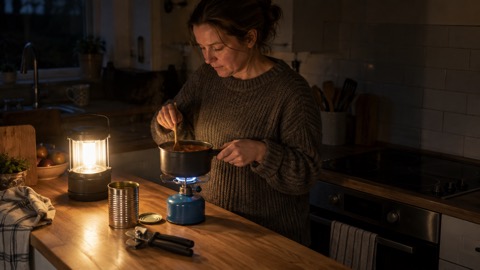 Meals Without Power
 Self-Heating Meals
 Tinned Food Guide
 Freeze-Dried Meals
 Emergency Ration Packs
 Emergency Ration Bars