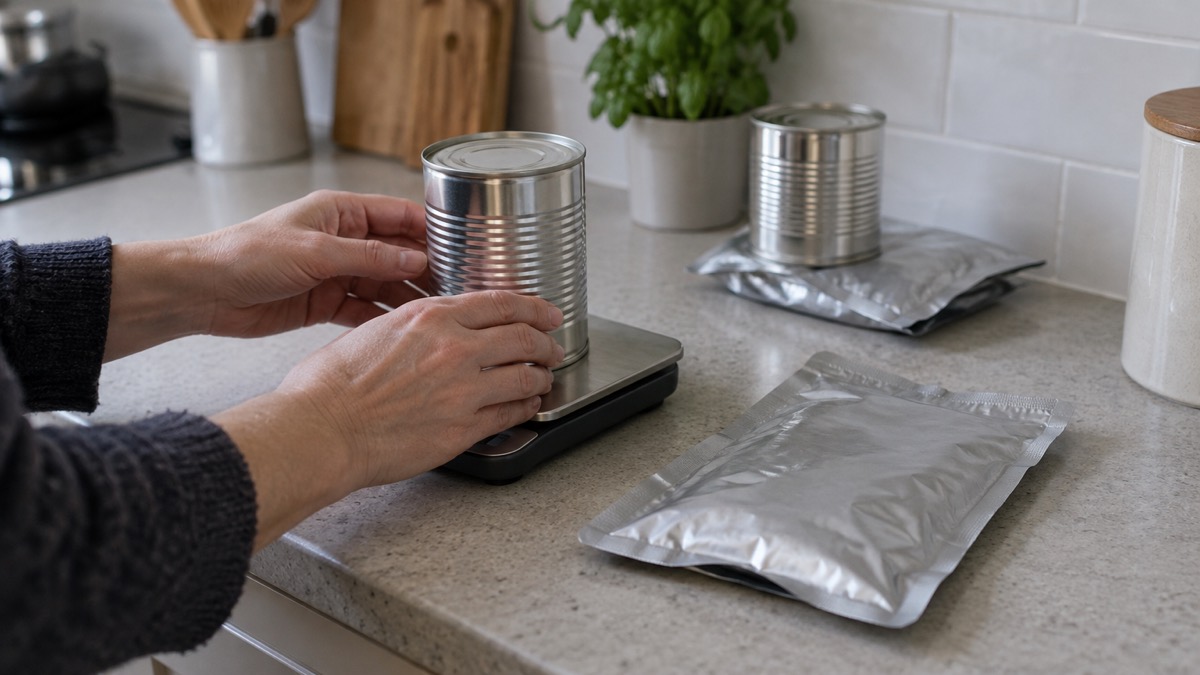
If you are building a food store and wondering whether to fill it with tins or freeze-dried meals, the short answer is that both work, and most households are better off with some of each. Tins are ready to eat cold, need no water and no fuel, and are the food official guidance names again and again for a power cut or a few days indoors. Freeze-dried meals are light, keep for years and need only water, hot or cold, to become a hot meal.
The choice comes down to what you are preparing for. For the first three days of a disruption, the advice from central and local government is consistent: keep non-perishable food that does not need cooking or refrigeration, such as tinned meat, fish, fruit and vegetables, plus a tin opener1. For a longer store you may have to carry, or one you want to keep for a decade, freeze-dried meals earn their place.
This page sets the two side by side by what they do for your household: how long they last, how much they weigh, how you prepare them, what they cost you in water and fuel, and how to use each safely. It does not rank brands or tell you what to buy.
Start with three days of food you can eat without power
Before you weigh tins against freeze-dried meals, get the baseline right. Official guidance for households is to keep at least three days' supply of food, bottled water and other essentials, including medicines, and to favour tinned and dry foods that store safely without electricity8. The Be Ready household plan is specific: non-perishable food to last at least three days that does not require cooking or refrigerating, such as tinned meat, fruit or vegetables, plus a tin opener1.
That three-day figure is the floor, not the target. It covers the typical window before power, water or shop supplies settle, and it is the amount every household can reasonably hold. The Be Ready checklist adds a useful test: buy food with a long shelf life that does not need refrigeration or cooking, such as tinned meat, fish or vegetables, dried fruit and nuts, and buy food you would usually eat2. Food your household actually likes gets rotated and eaten; food bought for a crisis and never touched goes out of date in the back of a cupboard.
A workable three-day store looks like this:
- Tinned meat, fish, fruit and vegetables: ready to eat cold, no water or fuel needed1
- A tin opener: essential if your kit contains tins10
- Dried fruit, nuts and cereal bars: compact, no preparation, good energy2
- Bottled water: stored alongside the food, not instead of it8
- Baby formula and pet food: if your household needs them6
Keep the store somewhere dry and not too warm, and follow any storage instructions on the label, since some foods need the fridge once opened12. For a fuller picture of quantities per person, see how much emergency food to store, and for a room-by-room list, the emergency store cupboard checklist.
Tinned food: ready to eat, heavy, and the backbone of a short store
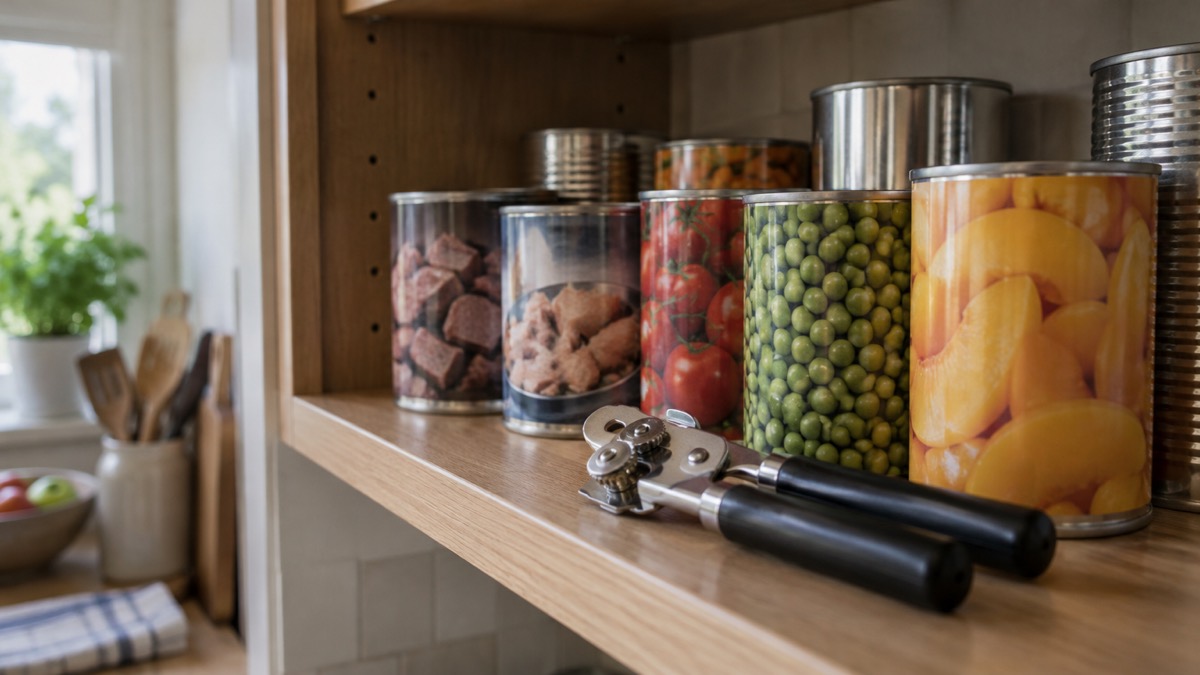
Tinned food is the simplest emergency food there is. It needs no refrigeration, no cooking and no water, and it can be eaten straight from the tin if you have to. That is why official guidance returns to it so often: keep some longer lasting products such as tinned food for emergencies5, store non-perishable tinned food that does not need cooking, like ready-to-eat tinned meat, fruit or vegetables6, and keep a supply of tinned food and bottled water at home in case you need to stay indoors13.
Its weaknesses are weight and bulk. A store of tins for a family of four for a fortnight is heavy and takes up real space, which matters if you might have to move it or carry it. Tins also need opening, so a tin opener belongs in the kit10. Once opened, decant what you do not eat into a clean bowl or container in the fridge, and do not store food in the opened can, because the food and tin are exposed to air and the tin can transfer to the food more quickly12. Do not reuse empty tins to cook or store food for the same reason12.
On dates, tins are forgiving. Food that is normally stored at room temperature will continue to be safe to eat as you usually would, even if the best before date has passed4. Best before dates appear on a wide range of foods, including tinned foods such as canned tomatoes14. That does not mean a tin lasts forever: check for damage, and see tinned food: shelf life, damaged cans and opening without power for what to look for.
Freeze-dried meals: light, long-keeping, and dependent on water
Freeze-dried meals are the other end of the trade. They are light, they keep for years without a fridge, and they turn into a hot meal with nothing more than water. That makes them the natural choice for a store you might have to carry, for a car kit, or for a household that wants a long-term reserve it does not have to rotate often.
The catch is that a freeze-dried meal is only as good as the water and time you can give it. It needs water, and if you want it hot, it needs fuel to heat that water. In a power cut or a water interruption, both can be in short supply. That is why freeze-dried meals work best alongside a tinned store rather than instead of one: the tins cover the first days when you have nothing, and the freeze-dried meals cover the longer stretch or the journey.
For the detail on what they are and how to choose between them, see freeze-dried meals: what they are and how to choose, and for how long they keep, how long freeze-dried emergency meals keep.
How the two compare, side by side
The table below sets out what each does for a household. It is a comparison of what the food does, not a ranking.
| What matters | Tinned food | Freeze-dried meals |
|---|---|---|
| Water needed | None | Yes, hot or cold15 |
| Storage without power | Fine, in a dry, fairly cool place | Fine, in a sealed pouch |
| Tin opener needed | Yes | No |
| Best fit | First days of a power cut, a stay indoors, a short store | A longer store, a carried kit, a reserve kept for years |
The pattern is clear. Tins win on simplicity and on the first three days. Freeze-dried meals win on weight and on the length of time you can leave them untouched. A household that stores only tins has a heavy store that needs opening; a household that stores only freeze-dried meals has a store that needs water and fuel it may not have. Most households are best served by tins for the short term and a smaller freeze-dried reserve for the long term or the bag.
Preparing freeze-dried meals with hot or cold water
Freeze-dried meals are made by adding water and leaving the food to rehydrate. Hot water gives a hot meal and a shorter wait; cold water works too, but the meal is cooler and takes longer, so it suits a situation where you have no way to heat water at all. Always follow the maker's instructions on the pouch for how much water to add and how long to leave it.
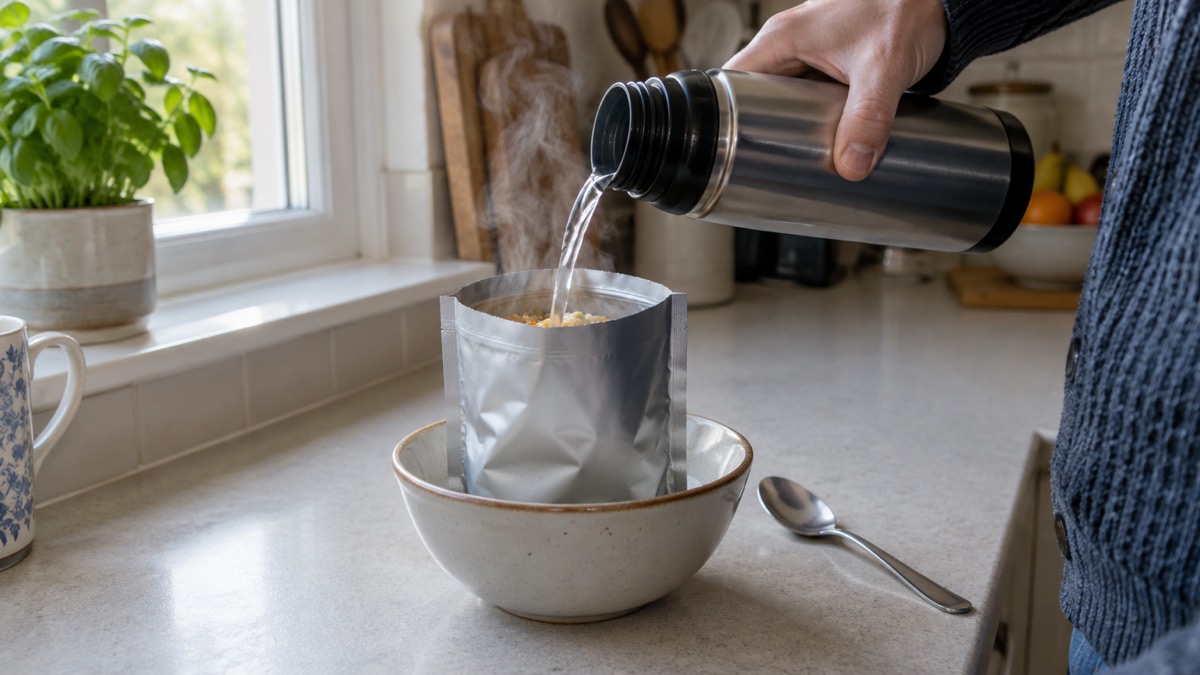
If you are relying on cold water, plan for it. A cold-water meal is not a hot dinner, and in cold weather a hot meal does more for morale than a cold one. If you have a flask, boiling water in the morning and keeping it in the flask gives you hot water for a meal later without lighting a stove again. For the practical steps, see how to prepare a freeze-dried meal and can you make freeze-dried meals with cold water.
What lasts how long without power
The shelf life of the food is only half the question. The other half is what happens to the food already in your fridge and freezer when the power goes. Official guidance is consistent on the timings:
- Fridge: stays cold for up to 4 hours with the door closed3.
- Freezer: food stays frozen for up to 48 hours if the freezer is full, or about 24 hours if it is half full4.
- Fridge at 8°C or above: eat food that normally needs refrigeration within four hours, and discard it after four hours unless power is restored4.
- Frozen food above 8°C for more than four hours: throw it away16.
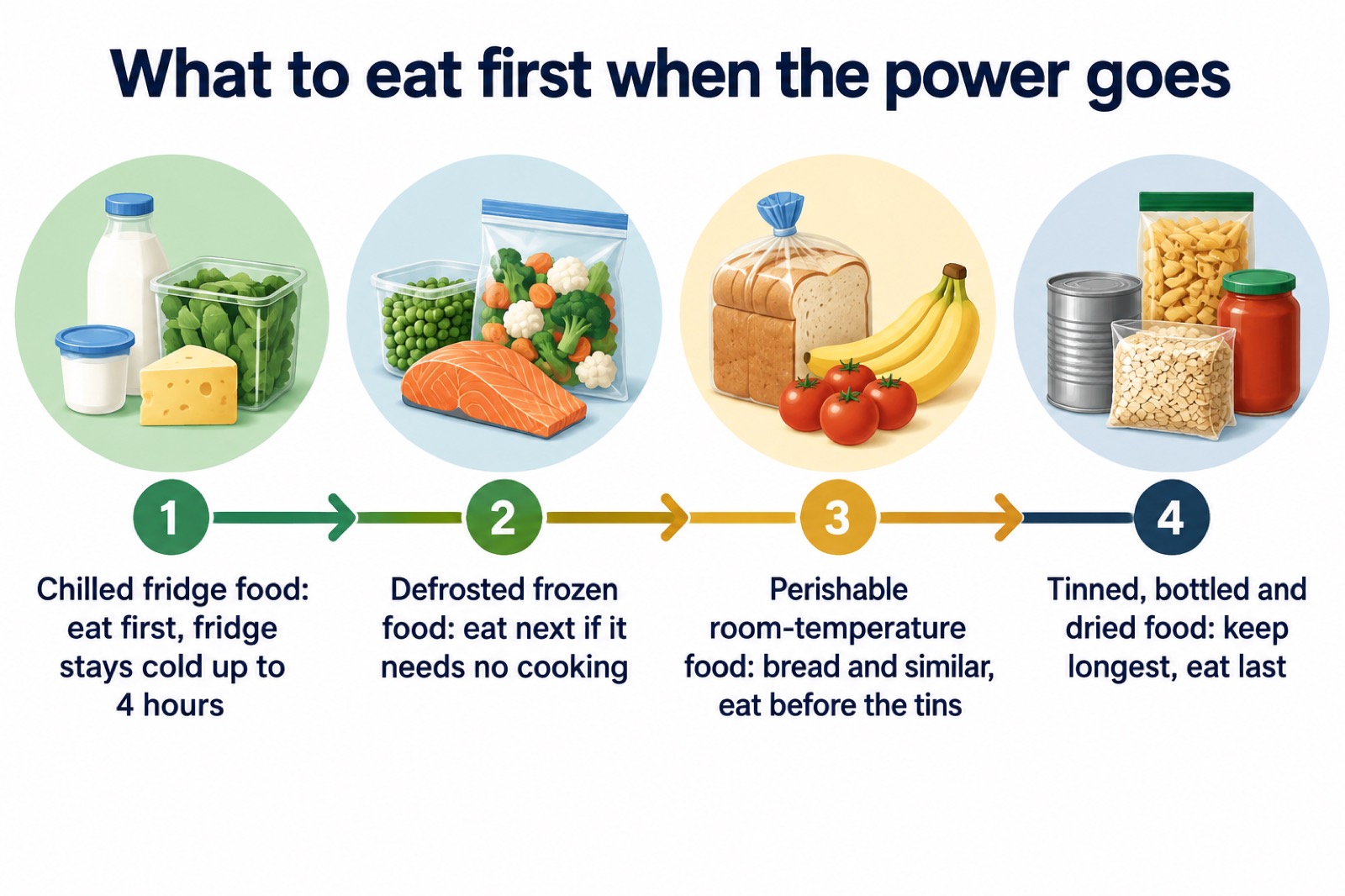
Use food in a set order to keep it safe and avoid waste: chilled fridge food first, then defrosted frozen food that does not need cooking, then room-temperature perishable food such as bread, and finally room-temperature tinned, bottled and dried food4. Food normally stored at ambient temperature will continue to be safe to eat, and some foods such as tinned foods are safe to eat without heating through, so eat these after the perishable foods that need chilled storage3.
If the weather is cold, below 8°C, you can store food outside in clean dry conditions, out of direct sunlight, protected from animals, in a sealed box to prevent contamination and tampering3. Chilled foods can be safely stored outside if it is 8°C or lower, in a sealed container, out of direct sunlight, in clean dry conditions and protected from animals4. Do not put thawed ice cream or frozen desserts back in the freezer once they have thawed17.
Keeping the store safe: dates, storage and what to throw away
A store is only useful if it is safe to eat when you need it. Three habits keep it that way.
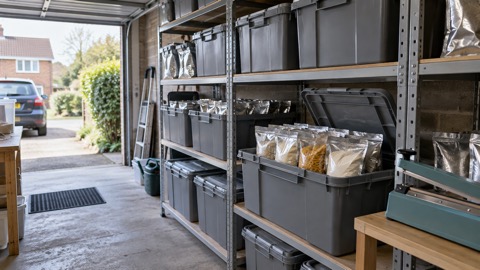
Store it properly. Keep tinned foods in a dry place where the temperature is fairly cool, and store boxed food in tightly closed plastic or metal containers to protect it from pests18. Keep the storage area dry and not too warm, and follow label storage instructions, since some foods need the fridge once opened12. For more on this, see keeping a long-term store cool, dry and free of pests.
Rotate it. Buy food you would usually eat2, and use the oldest first. Best before dates are about quality rather than safety, and food normally stored at room temperature will continue to be safe to eat even if the best before date has passed4. Use by dates are different: they are about safety, so check them on anything chilled. See shelf life, use by and best before dates explained and rotating your store: first in, first out.
Do not trust your senses alone. Preserved foods that have not been prepared correctly may not look, smell or taste unusual, so do not rely on appearance, smell or taste to decide whether food is safe to eat19. If a tin is damaged or swollen, treat it with suspicion and see is it safe to eat from a dented or swollen tin.
Freeze-dried meat, fruit and grains: what to store and why
Beyond the tins and the pouches, three categories come up again and again.
Freeze-dried meat. Light, long-keeping and rehydrated with water, it suits a store you may have to carry. But it needs water and time, and it is not ready to eat cold in the way a tin of meat is. If you have neither the water nor the patience, tinned meat is simpler. For handling any raw meat safely, keep raw and defrosting meat at the base of the refrigerator, below everything else, and store raw meat and ready-to-eat food separately20. Store raw meat in sealed containers at the bottom of the fridge, use different boards for raw and ready-to-eat foods, and keep them apart21.
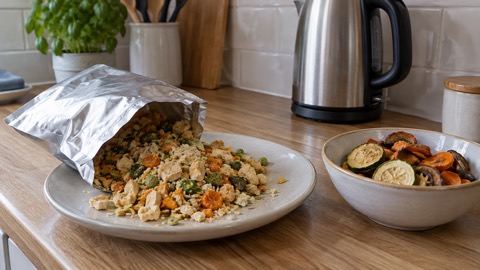
Freeze-dried versus dehydrated fruit. These are different processes with different results. Freeze-dried fruit is crisp and light and rehydrates quickly; dehydrated fruit is denser and chewier. Both keep well sealed and dry. For an emergency store, the deciding factor is usually what your household will actually eat, since food you dislike is food you will not rotate. See freeze-dried or dehydrated food for the full comparison.
Grains. Rice, pasta, oats and pulses are cheap, filling and keep for a long time in the right conditions, so they earn a place in a longer-term store. But they need water and fuel to cook, which makes them a poor choice for the first days of a power cut. Keep a mix: quick, no-cook food for the first three days and grains for a longer disruption when you have a way to cook. See rice, pasta, oats and pulses for long-term storage.
Where to get help and what to do next
If you are starting from nothing, the order is simple. First, buy three days of food you can eat without power: tins, dried fruit, nuts, cereal bars and bottled water, plus a tin opener2. Second, add a small freeze-dried reserve for the longer term or for a bag you might carry. Third, store it cool and dry, rotate it, and check the dates18.
If money is tight, help exists. Food banks and councils can provide emergency food, and the getting emergency food help page explains how referrals work. Households with babies or special diets should look at babies, young children and medical diets in an emergency, and pet owners at pets and animals in an emergency.
For the wider picture, the emergency food guide covers stores, safety and meals without power, and starting a store cupboard supply step by step walks you through building one from scratch. If you want to know what to keep for a power cut specifically, see power cuts: a household guide, and for cooking without mains power, heating and cooking without mains power or gas.
Sources (21)
- Be Ready Household Emergency Plan, UK Government, 2026
- Get prepared for emergencies, UK Government, 2026
- Food safety in a power cut: advice for consumers, UK Government, 2023
- Food safety in a power cut, Food Standards Scotland, 2026
- What is a national power outage, Wiltshire and Swindon Prepared, 2026
- Loss of essential services, Greater Manchester Combined Authority, 2026
- Create a flood pack, Bradford Council, 2026
- Winter weather: ready, be prepared, Argyll and Bute Council, 2026
- Be prepared at home and in your community, Argyll and Bute Council, 2026
- Infectious diseases, Northumberland County Council, 2026
- Planning for an emergency kit, Wiltshire Council, 2026
- Food storage, Food Standards Scotland, 2026
- Steps after a fire, North Yorkshire Fire and Rescue Service, 2026
- Use by and best before dates, Food Standards Scotland, 2026
- Benefits of Freeze-Dried Food - Expedition Foods, Expedition Foods
- Information about specific safety concerns, Northumberland County Council, 2026
- Preparing and cooking food safely, NHS Inform, 2025
- Emergency supplies kit, Denbighshire County Council, 2020
- Consumer advice for food preservation at home - GOV.UK, GOV.UK
- Chilling, Food Standards Scotland, 2026
- Get help and advice in an emergency, Lincolnshire County Council, 2026
 Freeze-Dried vs Dehydrated Food
 Mylar Bags vs Glass Jars