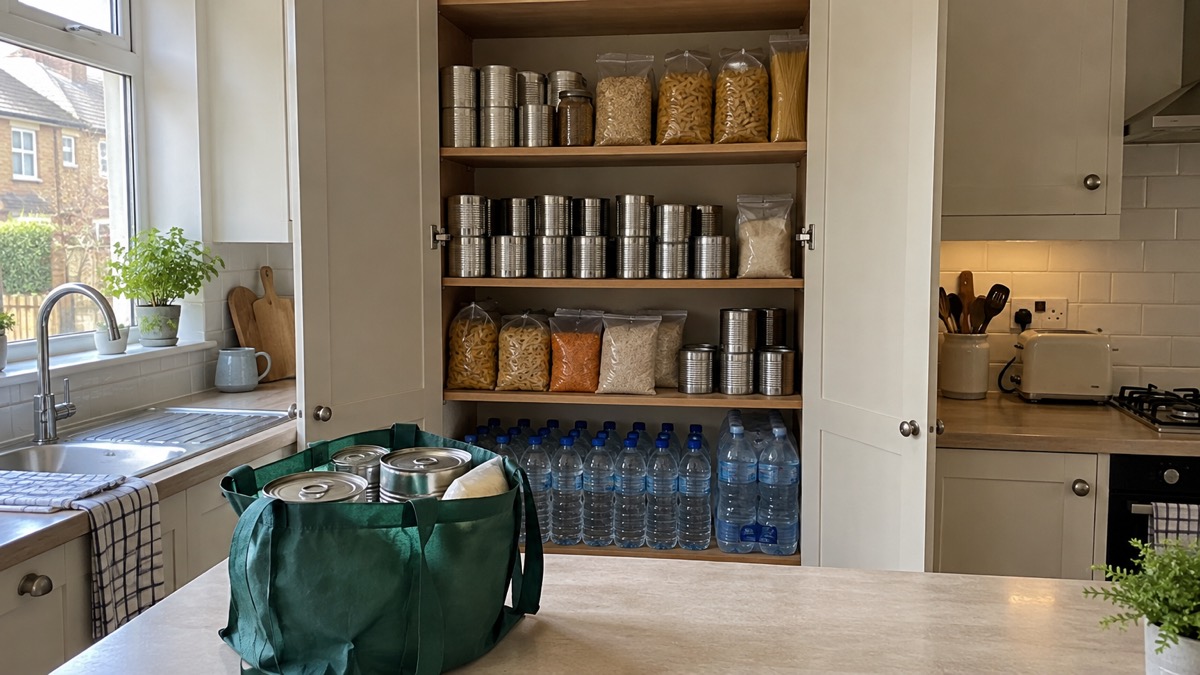
An emergency food store is not a separate stockpile of special supplies. It is the everyday food your household already eats, kept in a form that lasts, in an amount that carries you through a disruption. The government's Be Ready checklist puts it plainly: keep "food with a long shelf life that doesn't need refrigeration or cooking e.g. tinned meat, fish or vegetables, dried fruit and nuts", and "it's best to buy food you'd usually eat"1. In other words, a few extra tins of the things already in your cupboard, not a crate of unfamiliar rations.
The starting point most UK guidance gives is three days. The Be Ready checklist asks for non-perishable food for 3 days1; Lancashire's emergency pack asks for enough food and bottled drinking water to last three days2; Renfrewshire Council advises supplies that "can meet essential household needs for at least 3 days"3. One council booklet goes further and suggests enough emergency reserves in your house for up to ten days, including essential medications, food and water4. Between those two figures sits a sensible target for an ordinary household: start at three days, then build towards a week or two if you want more margin.
The Welsh Government's advice on resilience captures how to get there steadily: "You can also build up a small supply of essential items gradually, as part of your normal shopping"5. That is the whole method. Add one or two extra items to each weekly shop, keep a simple record of what you hold, and within a couple of months you have a store that would carry you through a storm, a power cut or a supply disruption, built from food you will actually eat anyway.
Start with what your household already eats
Every piece of official guidance on this point says the same thing, and it is the single most useful rule for starting a store. The Be Ready campaign states it directly: "It's best to buy food you'd usually eat"8. Wiltshire and Swindon Prepared make the same point from the other direction, advising that "the food you have does not need to be fresh or perishable, in fact it is better to avoid these and keep some longer lasting products such as tinned food for emergencies"9.
There are three practical reasons this matters. First, food you already eat gets eaten: it rotates naturally through your normal cooking, so nothing sits at the back of the cupboard until it expires. Second, in an emergency you do not want to be learning to cook unfamiliar foods, possibly without power, possibly with unwell or anxious children. Third, it is far cheaper to add two tins of your usual soup to a weekly shop than to buy a dedicated survival ration you may never open.
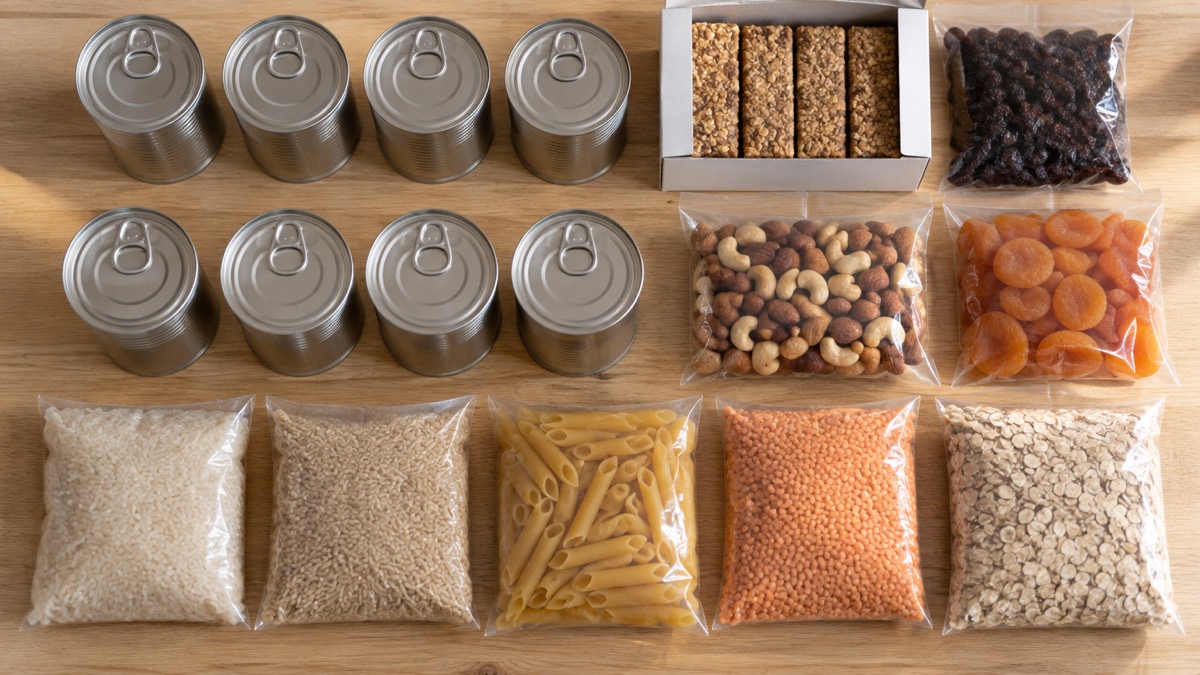
So the first step costs nothing. Sit down with the people in your household and list the foods you eat in a normal week that come in tins, packets or jars and need no fridge: tinned meat, fish, beans, vegetables and fruit, dried fruit and nuts, cereal, crackers, cereal bars, UHT or powdered milk, rice, pasta and oats. That list is your shopping template. Birmingham City Council's preparedness guidance groups it as "long-life food such as canned food, dried food and energy bars"10, and Denbighshire's emergency supplies kit adds canned or boxed juices, soup, biscuits, boiled sweets and food for infants or anyone on a special diet11.
How long should a store last: three days to ten days
UK local authority and government guidance is remarkably consistent on the minimum, and varies on how far beyond it to go. The figures side by side:
| Source of guidance | How much food to keep |
|---|---|
| Be Ready checklist (UK government campaign) | Non-perishable food for 3 days1 |
| Be Ready Household Emergency Plan | Non-perishable food to last at least 3 days, no cooking or refrigerating needed12 |
| West Yorkshire Prepared household plan | Food and bottled water for 3 days, do not rely on fridge or freezer13 |
| Lincolnshire Council | At least three days' supply of non-perishable food14 |
| North Hertfordshire Council | Plan for at least three days15 |
| Renfrewshire Council | Essential household supplies for at least 3 days3 |
| Birmingham City Council | Enough supplies for at least 72 hours10 |
| Culham parish "Are You Ready" booklet | Emergency reserves for up to ten days4 |
Three days is the floor, not the ceiling. Denbighshire's guidance explains the reasoning behind even that figure: "you may have to survive on your own for up to three days or more in a major emergency covering a widespread area"11. Greater Manchester Combined Authority frames it as thinking through "what supplies you and your household might need during an emergency lasting a few days, such as a power cut"16.
Whether to go beyond three days is a judgement about your own circumstances: how many people and pets you feed, whether anyone depends on medication or special formula, how remote you are, and how much space and money you can spare. The ten-day figure from the Culham booklet4 is a reasonable upper target for a household that wants solid margin without turning prepping into a hobby. For working out quantities per person, see How Much Emergency Food to Store per Person.
One thing to be clear about: this is not a bet that shops will empty. The UK government maintains "plans to make sure essential services, like food, water, transport, health and financial services, keep working in the event of an emergency"17. A household store is insurance for the gap before those plans catch up, and for the ordinary British emergencies, storms, floods and power cuts, where the disruption is local and short.
Food that keeps: tins, packets and dried staples
What qualifies as store food is anything that survives on a shelf without refrigeration and, ideally, without cooking. The guidance lists overlap heavily:
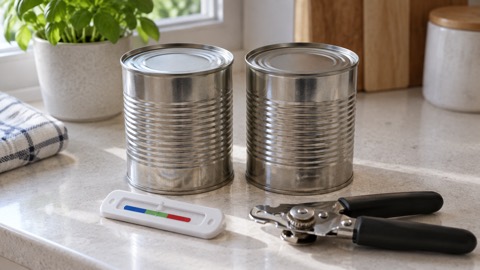
- Tinned food: ready-to-eat tinned meat, fish, fruit and vegetables, with a tin opener16. Nottinghamshire Council and Hillingdon Council both specify ready-to-eat tinned food plus a tin opener18.
- Dried food and snacks: cereal bars20, dried fruit and nuts1, crackers and biscuits11.
- Complex carbohydrates: Which? recommends "dried rice, oats, pasta, crackers and wholegrain cereals" as the backbone of an emergency food stockpile21.
- Drinks and milk: canned or boxed juices, UHT milk and powdered milk11.
- For babies and special diets: ready-made baby formula and food for anyone on a special diet16.
Two properties decide what belongs in the store. It must keep without a fridge, and it should be usable without cooking, because the most likely emergencies, power cuts and storms, can take out your hob and oven along with your lighting. Tinned food you can eat cold, cereal bars, dried fruit and nuts all meet both tests. Rice, pasta and oats keep for years but need water and heat, so treat them as the second layer of a store, useful if you also have a camping stove, and see Rice, Pasta, Oats and Pulses for Long-Term Storage and Meals Without Power: No-Cook and Low-Fuel Ideas.
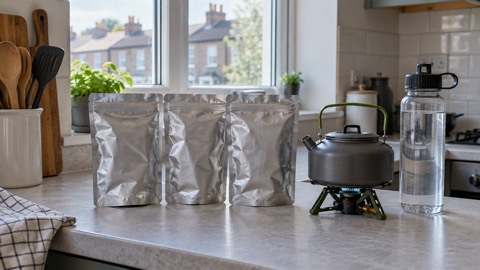
Freeze-dried meals sit at the far end of this spectrum: very light, very long-lasting, and needing only hot water, or in some cases cold water. They are a genuine option for a store that has to fit in a small space, and they overlap with the camping and expedition foods sold as rations. If you are weighing them against tins, see Freeze-Dried Meals: What They Are and How to Choose and Tinned or Freeze-Dried Meals.
Fresh food in the fridge: use it first
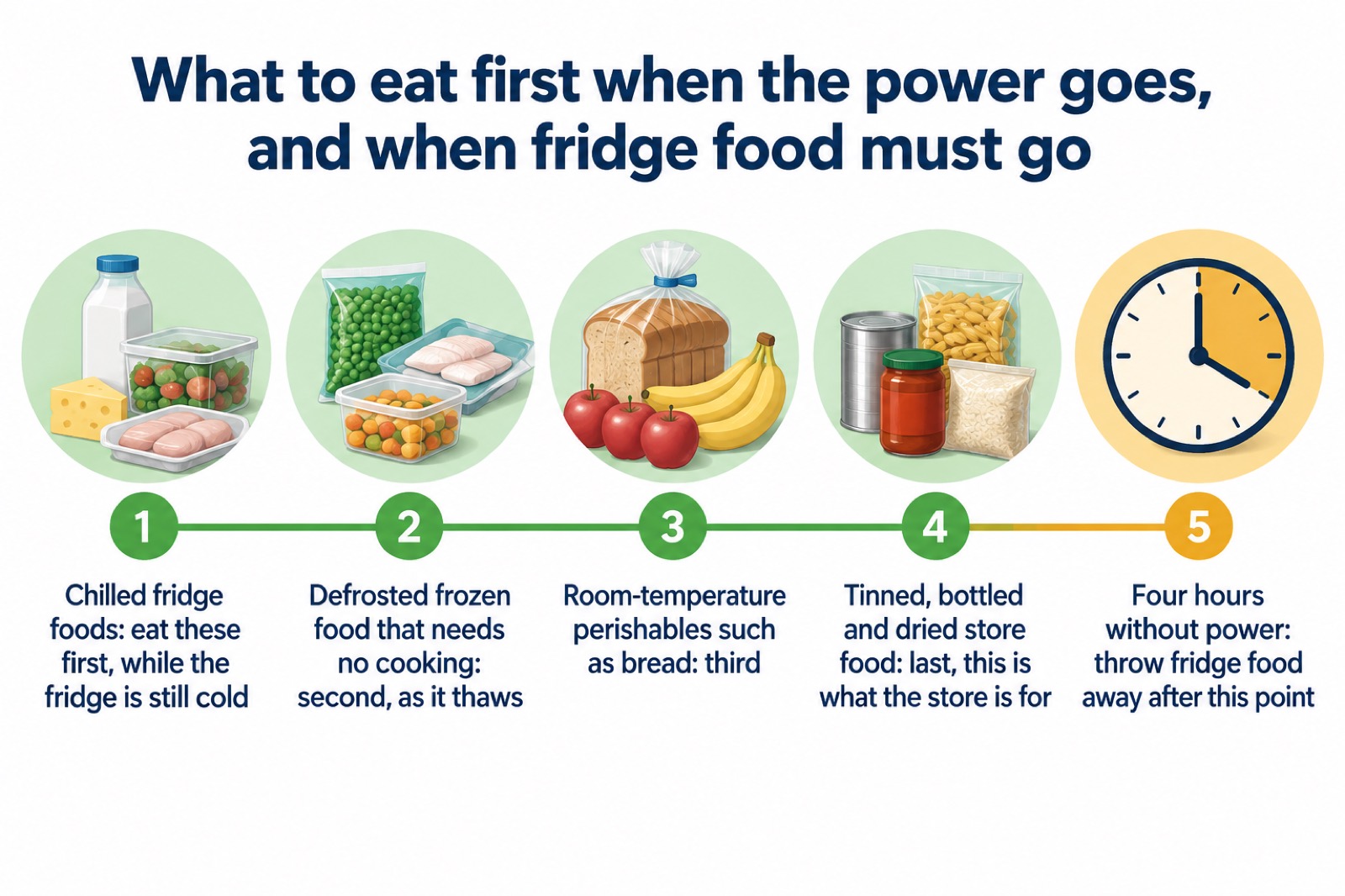
Your store is the last thing you should open in an emergency, not the first. Everything perishable should be eaten before it spoils, and there is a set order for doing that. Food Standards Scotland advises that during a power cut you "use up foods in the following order": chilled fridge foods first, then defrosted frozen food that doesn't need cooking, then room-temperature perishable food such as bread, and finally room-temperature tinned, bottled and dried food6. In other words, work from the most perishable to the least, and your store is the bottom of the list.
The safety limits around that order matter. Food Standards Scotland states that "during a power cut, it should be safe to store your food in the fridge as long as it doesn't rise to 8°C"6. Runnymede Borough Council's flooding aftercare advice is blunter about the deadline: "If your fridge has lost power for more than four hours, throw away the food"7. The reason is bacterial growth: Food Standards Scotland describes how "when food is stored above fridge temperatures, bacteria can grow and multiply", which it calls the 'Danger Zone'22. NHS inform adds that you shouldn't keep leftovers for longer than two days23.
Two further points from official guidance are worth acting on. North Yorkshire Fire and Rescue Service, advising after a fire or power loss, suggests you "consider transferring food to a neighbour's house" if your own refrigeration is out but theirs is working24. And Food Standards Scotland notes you can freeze food up until the 'use-by' date22, so a freezer run ahead of a named storm is a legitimate way to extend fresh food, provided you accept it depends on the power staying on. West Yorkshire Prepared's household plan warns against relying on the fridge or freezer for your emergency food for exactly that reason13. For more detail, see Fridge and Freezer Temperatures and Thermometers and Cool Boxes and Cool Bags: Keeping Food Cold Without a Fridge.
Building the supply step by step
The method is gradual accumulation, and the Welsh Government states it as policy: build up "a small supply of essential items gradually, as part of your normal shopping"5. Here is that method as a sequence of steps.
- List what your household eats. Use a normal week's meals as the template, as above. Include everyone: babies who need ready-made formula16, anyone on a medical or religious diet11, and pets.
- Set your first target. Three days of non-perishable food is the standard minimum1. Write the target down so you know when you have reached it.
- Add extras to each shop. One or two extra tins, a packet of cereal bars, a bag of rice. The Welsh Government's advice is to start with the essentials and build up gradually, because every small step helps5.
- Add the non-food essentials alongside. A manual tin opener for the tins, bottled water1, and the essential medicines your household relies on10.
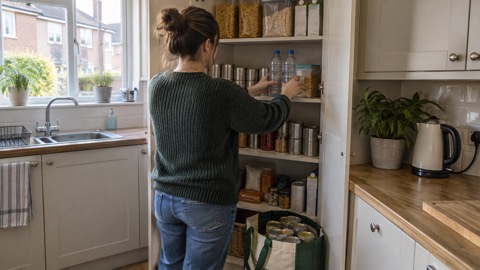
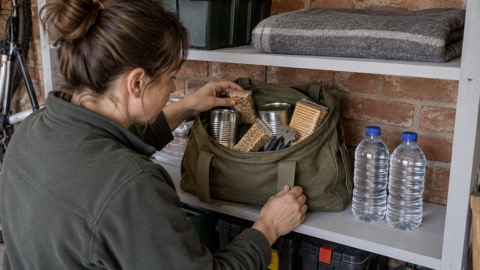
- Store it in one place, in a bag if you may need to leave. West Yorkshire Prepared advises storing items in a bag "so they are easy to access in an emergency, particularly if you need to leave your home in a hurry", and making sure everyone in the house knows where it is kept13. Wiltshire Council describes an emergency kit simply as "a bag filled things you may need when an emergency happens"20.
- Record what you hold. A written list of what is in the store, with dates, is part of a household emergency plan. The Be Ready Household Emergency Plan template covers supplies including food to last at least 3 days12. See also Emergency Store Cupboard Checklist.
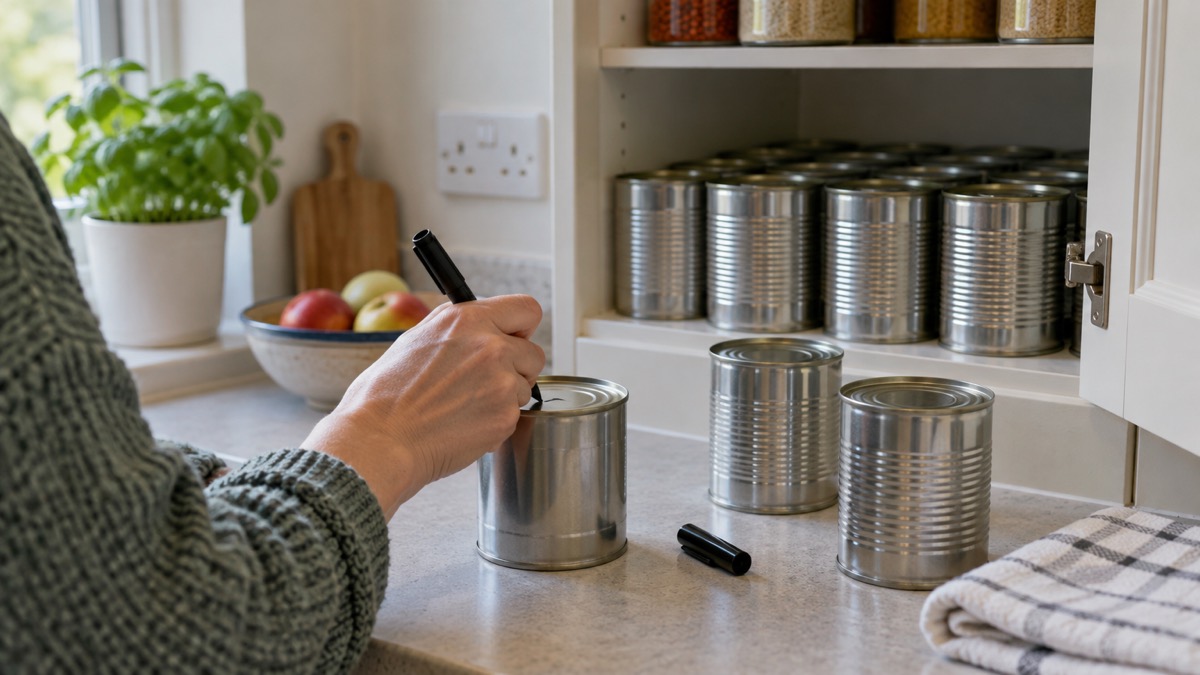
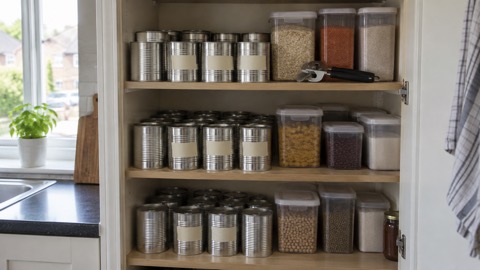
- Rotate as you shop. Move older items to the front, use them in normal cooking, and replace them. Denbighshire suggests a rhythm: "just replace the whole food side of the kit every six months and live off the replaced food for a few days"11. Full detail is in Rotating Your Store: First In, First Out.
Do not forget the animals. Wiltshire and Swindon Prepared advise a couple of days' supply of pet food, ideally tinned or long lasting25, and Slough Borough Council goes further: "Be sure to have a week's worth of food, water, medication, cat litter, or any other supplies your pet needs on a regular basis"26. For anyone who may need to evacuate with animals, the same guidance expects an evacuation site to have, or be able to readily obtain, food, water and veterinary care26. More in Pets and Animals in an Emergency: A Household Guide.
Emergency food and survival food: the same things in different packaging
Browse online for "survival food" and you will find ration packs, freeze-dried expedition meals and compressed ration bars, sold with imagery that has nothing to do with a power cut in Milton Keynes. Look at what the official guidance actually recommends and the overlap is almost total: tinned meat, fish, fruit and vegetables, dried fruit and nuts, cereal bars, crackers and UHT milk1 are all ordinary supermarket items, and all of them are also the contents of the "in date tinned food and tin opener or long life snacks" that Nottinghamshire Council puts in an emergency kit18.
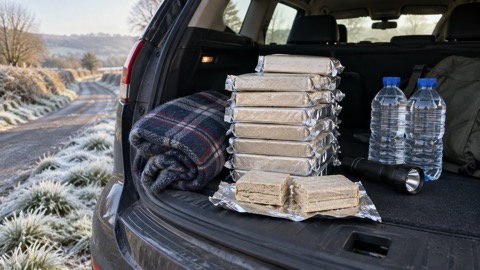
The specialist products do have a place, but a narrow one. Ration bars and packs are compact and light, which matters if the store has to be carried, in a grab bag or a car kit. Freeze-dried meals last a very long time and need only water, which suits a small flat or a store you do not want to think about for years. Which?'s emergency kit guidance adds a point that applies to any dried-heavy store: you will want extra water, "an extra six to seven litres per person per day for hygiene and cooking, especially if you have a lot of dry food"21. That is a real cost of a dry-food store, and it belongs in the decision, not just the food.
The sensible order for most households is everyday food first, specialist items only if they fill a gap. If you do want them, see Emergency Ration Packs: Calories, Weight and Contents, Emergency Ration Bars: How They Work and How to Choose and Expedition Foods Emergency Rations for 1 Week. Whatever you choose, keep it in the same store as the rest of your food and rotate it with everything else, so nothing sits forgotten past its date.
Where long storage goes wrong
A store that has quietly spoiled, or been ruined by damp, pests or flood water, is worse than no store, because you will rely on it at the moment you need it. The failure modes are known and each has an official answer.
Spoilage and lost power. The four-hour fridge rule7 and the 8°C limit6 above cover the power-cut case. North Yorkshire Fire and Rescue Service gives the general rule for any food affected by fire, smoke or power loss: "If in doubt, throw it out"24.
Flood water. Runnymede Borough Council is categorical: "Any food which has come into contact with flood water should be disposed of immediately, preferably in plastic refuse sacks (double bagged if possible) put out for your next refuse collection"7. If you live somewhere that floods, store food above the likely water line, and see Food After a Flood: What to Keep and What to Throw Away and Where to Keep an Emergency Store If Your Area Floods.
Damp, pests and contamination. Food Standards Scotland advises keeping cupboard and pantry food "in sealed bags or containers", which "helps to keep food fresh and stops anything falling into the food by accident"27. Sealed containers keep dry staples protected without any special equipment. The same source adds a rule for anything without storage instructions that spoils quickly: put it in the fridge and eat it within 2 days27, which is a reminder that some foods never belong in a store at all.
Dates drifting past. This is what rotation prevents. Denbighshire's suggested rhythm is the systematic version: "just replace the whole food side of the kit every six months and live off the replaced food for a few days"11. For how the dates themselves work, see Shelf Life, Use By and Best Before Dates Explained.
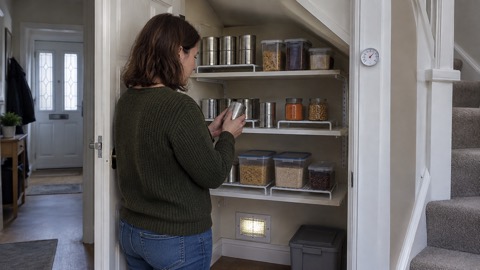
Storage conditions. Heat and light shorten the life of everything on the shelf. Keep the store somewhere cool, dry and dark, and see Keeping a Long-Term Store Cool, Dry and Free of Pests.
Keeping a record, and where to get help
A store you cannot find, or have forgotten the contents of, is only half built. The household emergency plan is the natural home for the record. The Be Ready Household Emergency Plan template lists the supplies to keep, including non-perishable food to last at least 3 days and a tin opener12, and West Yorkshire's version asks that everyone in the house knows where the emergency bag is kept13. Nottinghamshire Council adds that you may keep a kit in the car as well as the home, or simply a list of where to find the items18. A photo of the cupboard contents on your phone is a reasonable low-effort version.
Finally, a store is one layer among several. Dorset Prepared notes that a community emergency hub "likely won't come with food, so the community will need to consider how they will feed people who are evacuated"28, which is a reminder that neighbours and local groups matter as much as tins. Dumfries and Galloway Council's household emergency pack includes a first aid kit alongside the food29. And if an emergency does outlast your store, help exists: see Getting Emergency Food Help: Food Banks, Councils and Local Support and How to Get a Food Bank Voucher Referral.
Sources (29)
- Be Ready Checklist, UK Government Be Ready campaign, 2026
- Emergency pack, Lancashire Prepared, 2026
- Prepare your home for emergencies, Renfrewshire Council, 2025
- Are You Ready booklet, Culham Parish Council, 2025
- Statement on resilience and emergency preparedness, Welsh Government, 2026
- Food safety in the kitchen: power cuts, Food Standards Scotland, 2026
- Flooding aftercare, Runnymede Borough Council, 2026
- Be ready for emergencies, UK Government Be Ready campaign, 2026
- What is a national power outage, Wiltshire and Swindon Prepared, 2026
- Are you ready, Birmingham City Council, 2026
- Emergency supplies kit, Denbighshire County Council, 2020
- Be Ready Household Emergency Plan, UK Government Be Ready campaign, 2026
- Household Emergency Plan, West Yorkshire Prepared, 2020
- Get help and advice in an emergency, Lincolnshire County Council, 2026
- Preparing for emergencies, North Hertfordshire District Council, 2015
- Loss of essential services, Greater Manchester Combined Authority, 2026
- National emergencies, GOV.UK, 2026
- Preparing for an emergency, Nottinghamshire County Council, 2026
- Household emergency plan, Hillingdon Council, 2026
- Planning for an emergency kit, Wiltshire Council, 2026
- Emergency kit packing list, Which?, 2026
- Food safety in the kitchen: chilling, Food Standards Scotland, 2026
- Preparing and cooking food safely, NHS inform, 2025
- Steps after a fire, North Yorkshire Fire and Rescue Service, 2026
- Your pets, Wiltshire and Swindon Prepared, 2026
- How you prepare for an emergency, Slough Borough Council, 2026
- Food safety in the kitchen: food storage, Food Standards Scotland, 2026
- Community involvement, Dorset Prepared, 2026
- Prepare for emergencies, Dumfries and Galloway Council, 2026
 Long-Term Storage Kit Checklist
 Store Cupboard Checklist
 30-Day Household Checklist
 How Much Emergency Food to Store
 What to Store in an Emergency
 Shelf Life and Date Labels
 Rotating Your Food Store
 Long-Term Storage Conditions
 Meals Without Power
 Self-Heating Meals
 Tinned Food Guide
 Rice, Pasta and Pulses Storage
 Freeze-Dried Meals
 Emergency Ration Packs
 Emergency Ration Bars