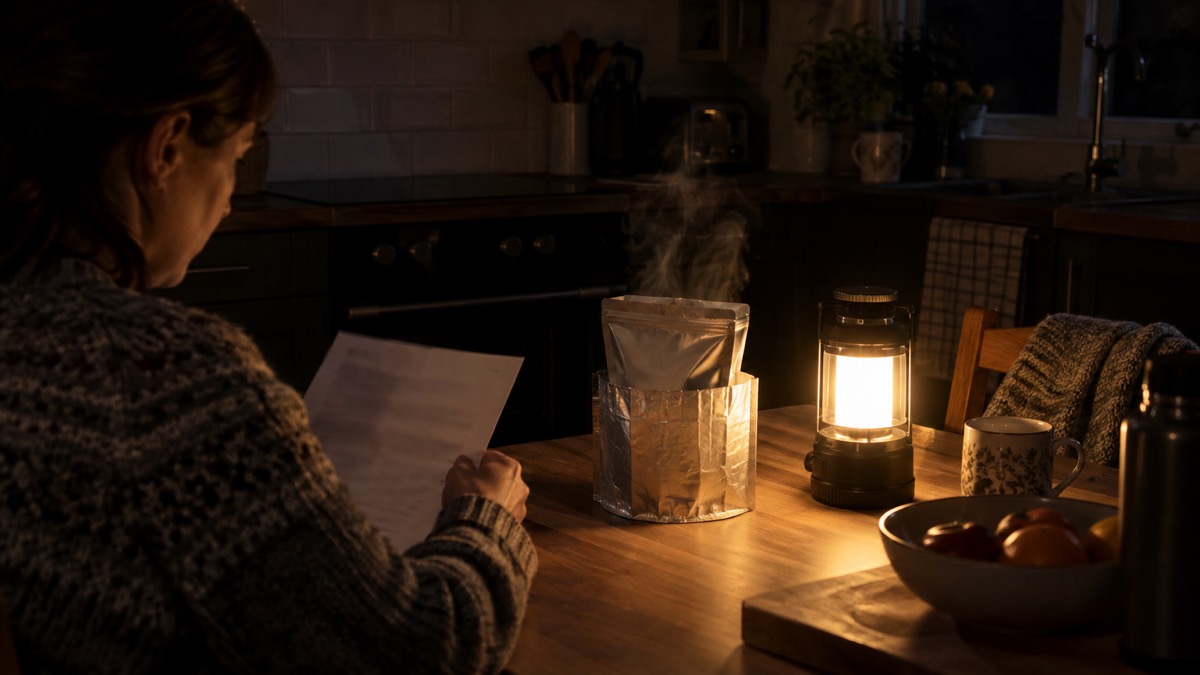
A self-heating meal is a pre-cooked, sealed meal that comes with a flameless ration heater: a small pad or sleeve that warms the food when you add water. No flame, no stove, no electricity and no camping gas are involved. Manchester Fire and Rescue Service describes self-heating pads for cooking or warming food as "a convenient, flame-free solution ideal for outdoor adventures, emergency preparedness, catering, and travel"1. That combination, a hot meal with nothing to light and nothing to plug in, is exactly what makes them worth a place in a UK household's emergency supplies.
They work by chemistry rather than combustion. As the fire and rescue service explains, the heaters "do not involve combustion. Instead, they rely on chemicals and water to create an exothermic reaction, typically involving magnesium, iron, salt, and water, to heat pre-cooked meals"1. You place the sealed meal inside the heater sleeve, add water to start the reaction, wait, and then eat a hot meal from the pouch. Because the meal is pre-cooked, the heater is warming food that is already safe to eat cold; the heat is for comfort and palatability rather than to make it safe.
Where do they fit in your wider food plans? They are one layer in an emergency food store, not a replacement for one. The government's Be Ready checklist advises every household to keep non-perishable food for 3 days, with a long shelf life, that does not need refrigeration or cooking, and it is best to buy food you would usually eat2. Self-heating meals sit alongside the tins and dried goods: they are the option for when you want something hot, quickly, without lighting a camping stove.
What counts as emergency food
Emergency food is simply the food you keep in the house in case an emergency stops you shopping, cooking or both. The government's Be Ready checklist is specific about what that means: "Food with a long shelf life that doesn't need refrigeration or cooking e.g. tinned meat, fish or vegetables, dried fruit and nuts. It's best to buy food you'd usually eat"2. Greater Manchester Combined Authority gives the same shape of advice: store bottled water and non-perishable tinned food that does not need cooking, such as ready-to-eat tinned meat, fruit or vegetables, along with a tin opener, and ready-made baby formula and pet food if your household needs them6.
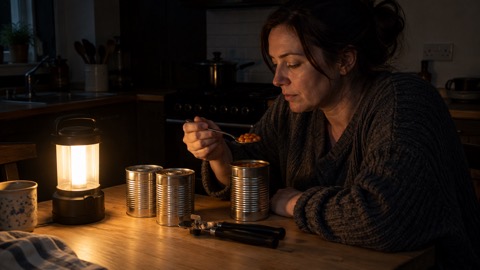
The common thread across official guidance is that emergency food should be ready to eat as it stands. Neath Port Talbot Council tells households to keep bottled water and ready-to-eat food that will not go off at home7, and to take ready-to-eat food, a warm drink in a flask and bottled water if you have to leave your home in a hurry7. Nottinghamshire Council advises having a supply of bottled water, ready-to-eat food, for example tinned, and a tin opener in your home8. Nothing in that list needs a hob, an oven or a microwave, which is deliberate: in a power cut, in a flood, or when you are told to stay indoors, the food has to work with no cooking at all.
Self-heating meals meet that test in their own way. The meal itself is pre-cooked and sealed, so it is ready to eat even if the heater fails or you choose not to use it. The heater adds the option of warmth without introducing a flame into the situation, which matters in a house with no power, no working smoke alarm circuitry assumptions and possibly candles in use. If you are building a store from scratch, start with the ordinary food in the lists above, and add a few self-heating meals once the basics are covered. Our page on what to keep in an emergency store cupboard goes through the full shopping list.
How much to store: from a few days to a few weeks
The most common figure in UK official guidance is three days. The Be Ready checklist says non-perishable food for 3 days2, and the accompanying Be Ready campaign page repeats the same figure5. Lincolnshire Council advises at least three days' supply of non-perishable food9, the Royal Borough of Windsor and Maidenhead's household emergency plan asks for non-perishable food to last at least 3 days that does not require cooking or refrigerating, such as tinned meat, fruit or vegetables, plus a tin opener10, Lancashire Prepared says enough food and bottled drinking water to last three days11, and Hillingdon Council simply says to keep a supply of tinned food and bottled water at home in case you need to stay indoors12.
Some councils go further, and it is worth knowing the range so you can decide your own target. Central Bedfordshire Council recommends a Home Emergency Kit so you can look after your household for at least 7 days of disruption3. The "Are You Ready" booklet goes further still: "Ensure you have enough emergency reserves in your house for up to ten days including: essential medications, food and water"4. Birmingham City Council frames it as at least 72 hours of supplies, including long-life food such as canned food, dried food and energy bars, a manual can opener, a camping stove and a camping lantern13.
| Target | Who advises it | What it covers |
|---|---|---|
| 3 days | Be Ready campaign2, Lincolnshire9, Windsor and Maidenhead10, Lancashire11 | Non-perishable food that needs no cooking or refrigeration, plus a tin opener |
| 72 hours | Birmingham City Council13 | Long-life food, water, medication, lighting, camping stove |
| 7 days | Central Bedfordshire Council3 | A full home emergency kit for disruption |
| Up to ten days | "Are You Ready" booklet4 | Food, water and essential medications |
A practical reading for an ordinary household: three days is the minimum everyone agrees on, and a week to ten days is a sensible stretch goal once the basics are in place. How much food that means in tins, packets and self-heating meals depends on your household, which our how much emergency food to store per person page works through. If you have pets, Wiltshire and Swindon Prepared advise a couple of days' supply of pet food, ideally tinned or long lasting14.
Start with the food you already buy
The most reliable emergency food store is made of things you already eat. The Be Ready campaign puts it plainly: "It's best to buy food you'd usually eat"5. That advice exists for good reasons. Food your household likes gets eaten, so it rotates naturally and never goes to waste. Food nobody likes sits at the back of the cupboard past its best, and in an emergency you may be feeding children or fussy eaters under stressful conditions where a familiar meal is worth a great deal.
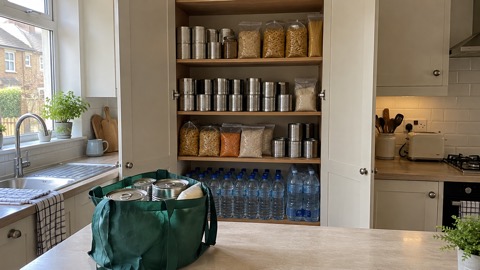
Build the store by buying slightly more of your normal long-life shopping each week: an extra tin or two here, an extra packet of rice, pasta or oats there. Nottinghamshire Council's kit list is typical of what you are aiming at: in-date tinned food and a tin opener, or long-life snacks8. Before long you have a working store cupboard without a single specialist purchase, and every item in it is something you know how to prepare and enjoy.
Self-heating meals are the exception to the "buy what you eat" rule, because most households do not eat them week to week. Treat them as a small, deliberate addition: a few meals bought for the store, checked occasionally for date, and replaced when needed. Because they are sealed and pre-cooked they keep well, but they should still be rotated like everything else. Our starting a store cupboard supply step by step page sets out the whole build-up process.
Use fresh and perishable food first
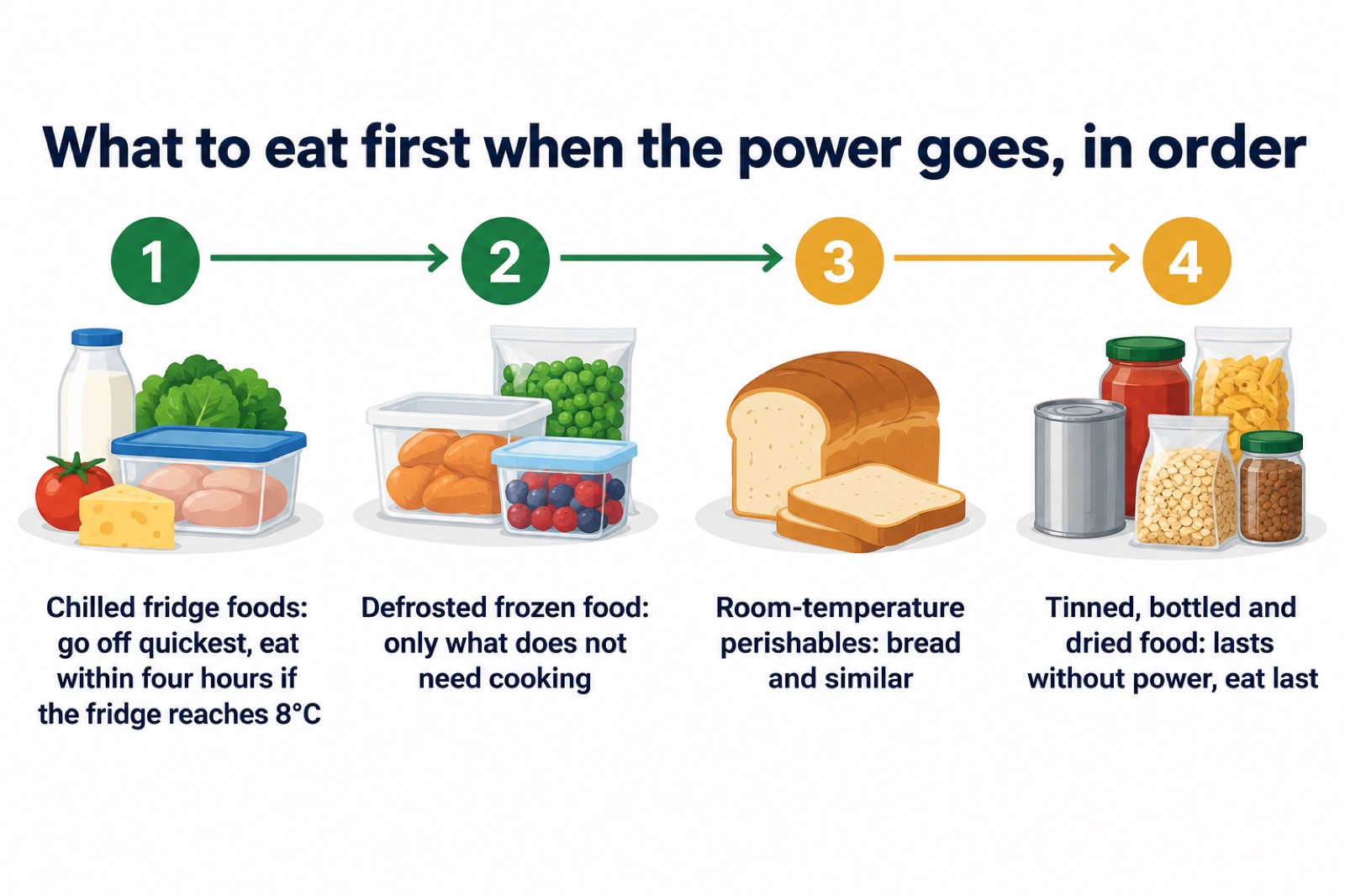
When an emergency begins, the food in your fridge is the food on a clock. Food Standards Scotland's power cut advice is to use up foods in a set order: chilled fridge foods first, then defrosted frozen food that does not need cooking, then room-temperature perishable food such as bread, and finally room-temperature tinned, bottled and dried food15. The reason is simple: "As chilled foods will go off the quickest, you should try to use these up first before other foods during a power cut"15.
There is a hard limit to know. If the fridge temperature rises to 8°C or more, Food Standards Scotland advises eating food that normally needs refrigeration within four hours15. After that, the risk of food poisoning rises and the food should be thrown away. NHS inform adds the everyday rules that matter even more in an emergency: do not keep leftovers for longer than two days16, and when reheating food make sure it is steaming hot and heated all the way through16.
Households with a baby have an extra item on the list. nidirect's severe weather advice is to prepare a flask of hot water to heat bottles and baby food, noting it is always safer to make up a fresh feed, and that when this is not possible, feeds should never be stored for longer than 24 hours17. Our page on how to make up baby formula in a power cut covers this in full.
Tinned, dried and freeze-dried food: the long-keeping core
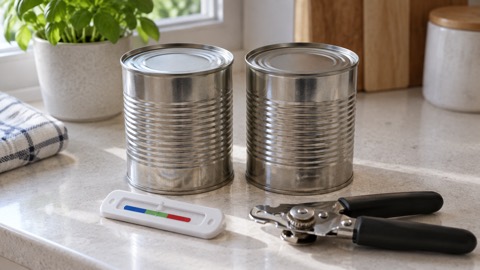
Once the perishables are gone, your store is what carries you, and the long-keeping categories are tins, dry staples and freeze-dried meals. The key to all of them is understanding the two date labels. Food Standards Scotland explains that use-by dates appear on foods like raw meat or fish, cooked sliced meats, and some dairy products, and are about safety18. Best-before dates appear on a wide range of foods, including frozen, dried and tinned foods such as canned tomatoes, bread and cereal, and are about quality18.
That distinction matters in an emergency. Food Standards Scotland's power cut guidance states that food normally stored at room temperature will continue to be safe to eat even if the best-before date has passed15. A tin a month past its best-before is still food; a chilled item past its use-by is not. Our shelf life, use by and best before dates explained page unpicks this in detail, and how long freeze-dried emergency meals keep covers the dried end of the store.
| Food type | Date label | What it means in an emergency |
|---|---|---|
| Tinned food | Best before18 | Safe after the date if stored at room temperature15 |
| Dried and freeze-dried food | Best before18 | Safe after the date, quality may decline15 |
| Raw meat, fish, some dairy | Use by18 | About safety: do not use past the date |
| Chilled and frozen food | Use by or keep refrigerated | Eat within four hours if the fridge reaches 8°C15 |
Freezing is also part of the picture in normal times: Food Standards Scotland notes some foods can be frozen up until the use-by date to avoid waste18, and repeats that you can freeze food up until the use-by date in its chilling advice19. Shropshire Council's food safety guidance adds the cooking rules that keep reheated food safe: thorough cooking kills food poisoning bacteria, food should be cooked right through and piping hot in the middle, and food should not be reheated more than once20.
Emergency food and survival food: the overlap
You will see both phrases used, and in practice they describe the same thing from different angles. Emergency food, in official UK guidance, means the ordinary long-life food a household keeps for disruptions: tinned meat, fish and vegetables, dried fruit and nuts, bottled water, a tin opener2. Survival food is the informal label for the same idea taken further, usually meaning specialist items with very long storage lives, such as ration bars, freeze-dried meals and, indeed, self-heating meals.
The overlap is real and the distinction is mostly marketing. What matters is that your store meets your household's needs for the disruptions you actually face: power cuts, storms, floods, being cut off for a few days. Official guidance consistently points at the supermarket, not the specialist supplier, as the first stop. Where the specialist products earn their place is convenience and storage life, and self-heating meals are a good example: compact, sealed, pre-cooked, and with their own heat source built in.
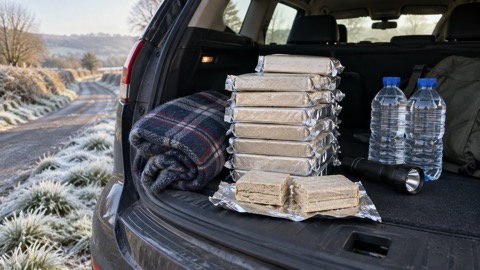
One thing worth knowing about the wider picture: if your community opens a Community Emergency Hub during an evacuation, Dorset Prepared's guidance notes a hub likely will not come with food, so the community will need to consider how it will feed people who are evacuated21. Your own store, including any self-heating meals in it, is what stands between your household and an empty table in the first hours and days. Our emergency ration packs and emergency ration bars pages cover the other specialist options.
Where self-heating meals fit in your food store
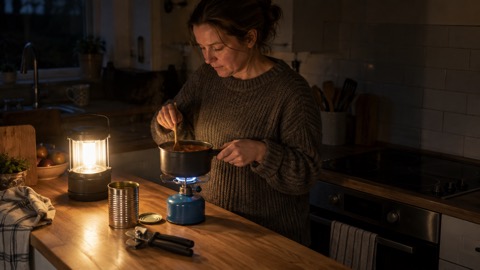
A self-heating meal earns its shelf space in specific situations. The first is a power cut where you want a hot meal but do not want to set up a camping stove. Food Standards Scotland notes you can cook food and heat water using a camping stove, barbecue or bottled gas stove, checking the manufacturer's instructions for safe use15, but that assumes you have one, have fuel for it, and can use it safely, which generally means outdoors or with great care regarding ventilation and carbon monoxide. A flameless heater removes all of those requirements at once.
The second situation is leaving home. If you have to evacuate, Neath Port Talbot Council advises taking ready-to-eat food, a warm drink in a flask and bottled water7. A self-heating meal in a grab bag gives you a hot meal wherever you end up, with no stove to carry and nothing to light. The third is simply morale: after a day of cold tins during a storm, a hot meal is a real lift, and that is not a trivial consideration when a household is stressed.
Set against that, they have limits. They cost more per meal than a tin, they heat rather than cook, and the heater is single-use. They also need water, which is itself an emergency store item: every council list pairs food with bottled water6. Treat them as a top layer on a store built from tins, dry staples and everyday food, not as the store itself. For comparison with the other hot-meal options, see meals without power: no-cook and low-fuel ideas and food flasks and vacuum insulation for hot meals.
How to use a flameless heater safely
The safety rules for flameless heaters are short and worth following exactly. Manchester Fire and Rescue Service's advice on self-heating pads is to "Use in a well-ventilated area (avoid small, enclosed space), ideally outdoors"1. The chemical reaction produces heat and gas, and in a small sealed room that is exactly the wrong condition. Use them in a room with open windows, or better, outside the door, on a stable surface.
"Use in a well-ventilated area (avoid small, enclosed space), ideally outdoors."
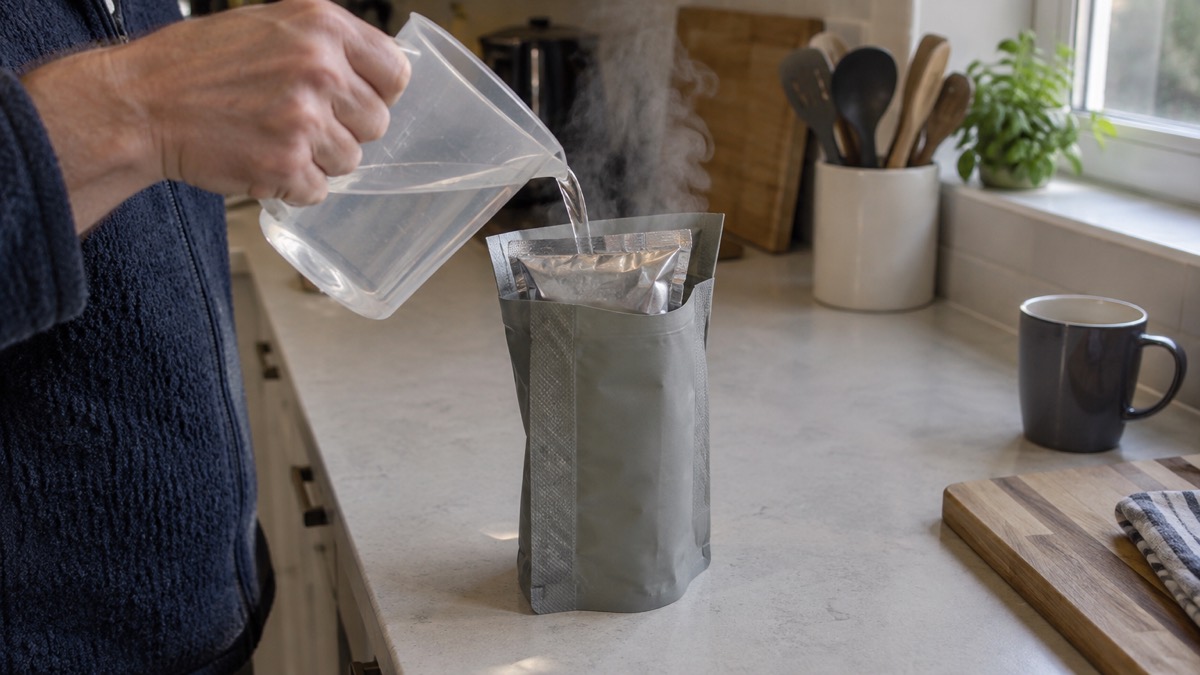
A few practical points follow from how the heaters work. Because the reaction involves magnesium, iron, salt and water1, the heater pad gets hot: keep it away from bare skin while it is working, keep the meal upright so water does not escape the sleeve, and keep it away from children and pets. Do not open the heater sleeve or attempt to reuse a spent pad. Let the heater finish and cool before disposing of it with normal household waste once cool, and never put a hot or reacting pad in a bin. Follow the meal manufacturer's own instructions on the pack for water quantity and heating time, as these vary between products.
The wider safety point is that a flameless heater is one of the safest ways to warm food in an emergency precisely because there is no flame. The same cannot be said for every alternative: nidirect's storm advice includes keeping a supply of candles17, and candles bring their own fire risk, which our emergency lighting page covers. If you do use a camping stove, Food Standards Scotland's advice stands: check the manufacturer's instructions for safe use15, and never use one indoors without proper ventilation.
Building up the store over time
Do not try to assemble three days, let alone ten, in one shopping trip. Build gradually, adding a few long-life items to each weekly shop, and the store appears without strain on the budget or the cupboard space. Start with the core that every council list agrees on: tinned meat, fish, fruit and vegetables, a tin opener, bottled water, and dried goods such as rice, pasta and oats2. Add baby formula or pet food if your household needs them6.
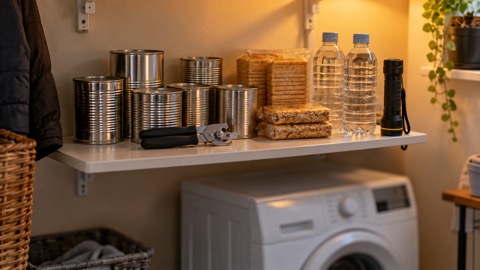
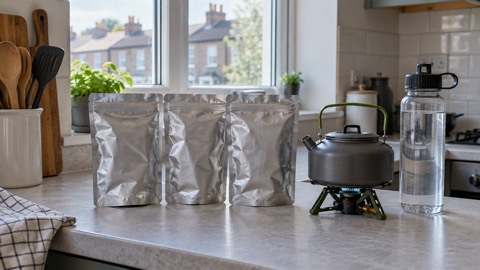
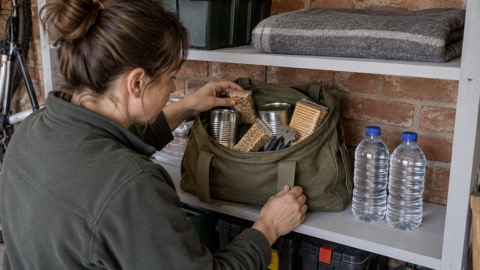
Once the core is in place, add the layers that make an emergency more comfortable: a flask or two, a torch with spare batteries or a wind-up torch, and then the hot-food options, whether that is a camping stove with fuel stored correctly, or a handful of self-heating meals, or both13. Birmingham's list is a good model of the full kit: long-life food, a manual can opener, lighting, medication and a first aid kit, pet supplies, sleeping bags or warm blankets, and hygiene items13.
Checking and rotating what you keep
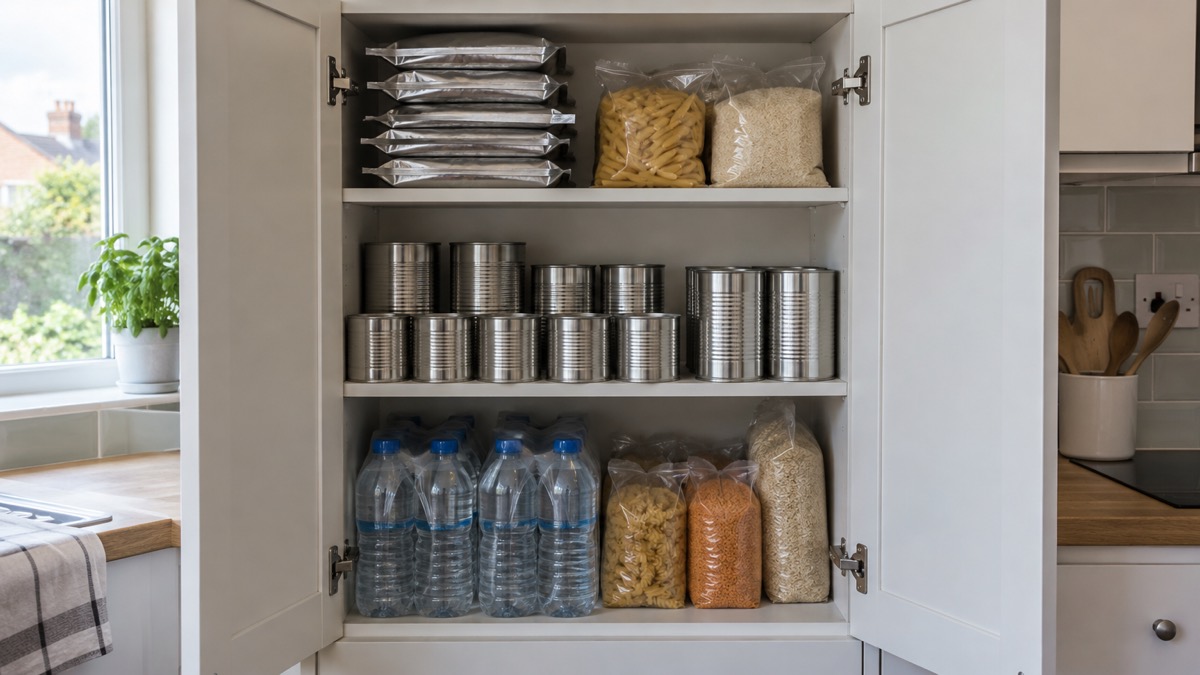
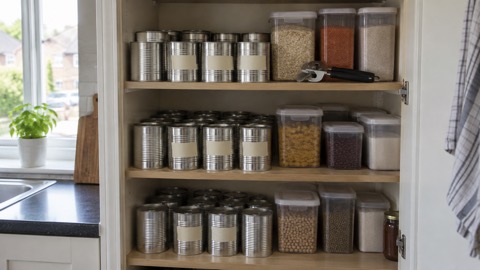
A store you never touch is a store that quietly expires. Rotate it: eat from it in everyday life and replace what you use, so the oldest items are always at the front. This is easiest if, as the Be Ready campaign advises, you bought food you would usually eat in the first place5. Check dates a couple of times a year, and remember the label rules: best-before dates on tinned and dried food are about quality, and such food remains safe to eat after the date has passed15, while use-by dates on perishable food are about safety and must be respected18.
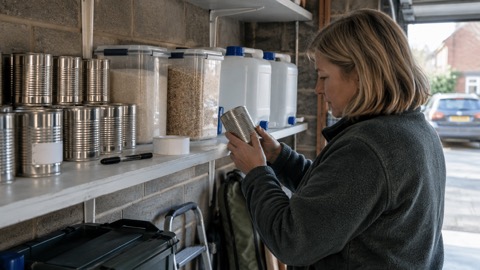
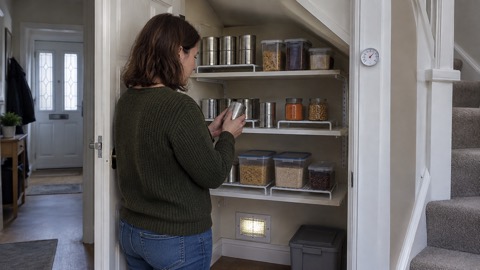
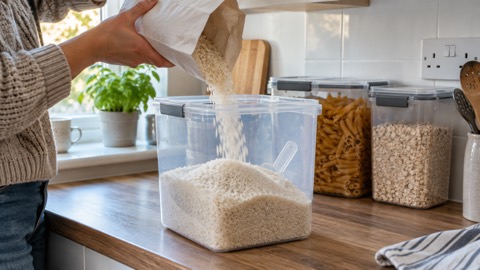
How you store the food matters as much as when. Food Standards Scotland's storage advice for cupboard and pantry food is to keep it in sealed bags or containers, which helps keep food fresh and stops anything falling into it by accident, and not to store food on the floor, as this can encourage mice, ants and other pests22. A cool, dry, dark shelf beats a damp garage or a loft that swings between hot and cold. Our pages on rotating your store: first in, first out and keeping a long-term store cool, dry and free of pests cover the practical detail.
For self-heating meals specifically, rotation has an extra dimension: the heater and the meal can have different lives. Check the date on the outer pack, which covers the whole unit, and treat any meal whose pack is damaged or swollen as unfit, exactly as you would a damaged tin. When you replace them, buy only as many as your household would realistically use in an emergency, so nothing sits for years unused. A simple annual check, perhaps when the clocks change, is enough to keep the whole store, heaters included, in order.
Where to get help with food in an emergency
Even a well-stocked household can be caught out, and help exists. If you are struggling to afford food, food banks and local council support are the first ports of call, and our page on getting emergency food help explains how referrals work. Households that need extra support during power cuts, such as older, disabled or medically dependent people, can ask their energy supplier about the Priority Services Register, covered in our extra help in an emergency guide.
In a widespread emergency, your council is the local source of information on what is happening and what support is available, and community hubs may open, though as Dorset Prepared notes, a hub likely will not come with food, so communities need to plan for feeding evacuees21. For the everyday safety questions that arise once the emergency starts, Food Standards Scotland's power cut guidance15 and NHS inform's food safety advice16 are the references to trust, and our food poisoning page explains the symptoms and when to get medical help.
Sources (22)
- Outdoor Cooking Safety, Manchester Fire and Rescue Service, 2026
- Be Ready Checklist, UK Government Be Ready campaign, 2026
- Emergency Kits and Grab Bags, Central Bedfordshire Council, 2026
- Are You Ready Booklet, Culham Parish Council, 2025
- Be Ready for Emergencies, UK Government Be Ready campaign, 2026
- Loss of Essential Services, Greater Manchester Combined Authority, 2026
- NPT Prepared Emergency Kit Checklist, Neath Port Talbot Council, 2026
- Get Help and Advice in an Emergency, Nottinghamshire County Council, 2026
- Get Help and Advice in an Emergency, Lincolnshire County Council, 2026
- Household Emergency Plan, UK Government Be Ready campaign, 2026
- Emergency Pack, Lancashire Prepared, 2026
- Household Emergency Plan, London Borough of Hillingdon, 2026
- Are You Ready, Birmingham City Council, 2026
- Your Pets, Wiltshire and Swindon Prepared, 2026
- Food Safety in the Kitchen: Power Cuts, Food Standards Scotland, 2026
- Preparing and Cooking Food Safely, NHS inform, 2025
- Strong Winds and Heavy Rain Warning: Information and Advice, nidirect, 2026
- Use By and Best Before Dates, Food Standards Scotland, 2026
- Food Safety in the Kitchen: Chilling, Food Standards Scotland, 2026
- Food Poisoning and Waterborne Infections, Shropshire Council, 2026
- Community Involvement, Dorset Prepared, 2026
- Food Safety in the Kitchen: Food Storage, Food Standards Scotland, 2026
 Long-Term Storage Kit Checklist
 Store Cupboard Checklist
 30-Day Household Checklist
 How Much Emergency Food to Store
 What to Store in an Emergency
 Starting a Store Cupboard
 Shelf Life and Date Labels
 Rotating Your Food Store
 Long-Term Storage Conditions
 Meals Without Power
 Tinned Food Guide
 Rice, Pasta and Pulses Storage
 Freeze-Dried Meals
 Emergency Ration Packs
 Emergency Ration Bars