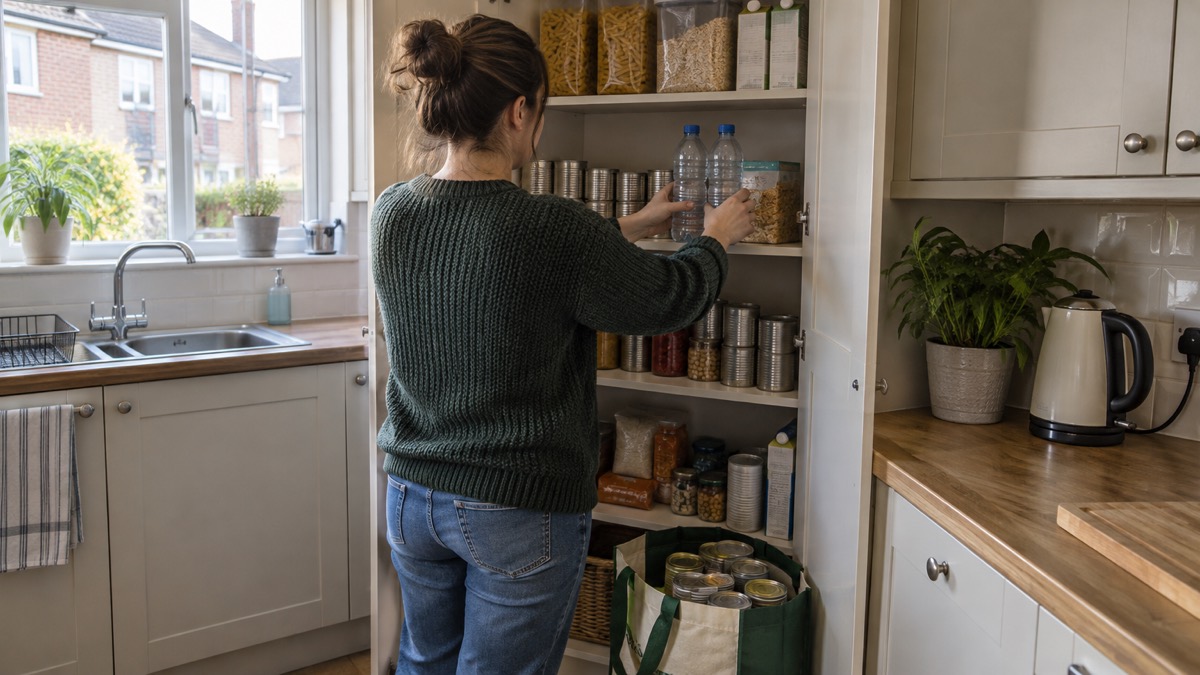
An emergency food store is simply food you keep at home so you can feed your household if shopping becomes difficult or the power goes off. It does not need to be special survival food. Official UK guidance is clear that the food you have does not need to be fresh or perishable, and that it is better to avoid those and keep some longer lasting products such as tinned food for emergencies1. The government's Be Ready checklist puts it plainly: keep food with a long shelf life that does not need refrigeration or cooking, such as tinned meat, fish or vegetables, dried fruit and nuts, and buy food you would usually eat2.
The standard amount most UK authorities ask households to hold is three days. The Be Ready checklist says non-perishable food for 3 days2; council and resilience guidance across England, Scotland and Wales repeats the same figure, with food that does not need cooking and will not go off3. One community preparedness booklet goes further and suggests enough emergency reserves in your house for up to ten days, including essential medications, food and water5. Three days is the realistic starting point for an ordinary household; ten days is a longer-term ambition once the basics are in place.
The rest of this page sets out what to keep, how to use it when the power goes off, what to do about fresh and frozen food, and how to keep the store fresh by rotating it through your normal shopping.
How long your store needs to last
Across the UK, official guidance converges on three days as the minimum. The Be Ready checklist asks for non-perishable food for 3 days2. Lancashire's emergency pack guidance says enough food and bottled drinking water to last three days3. Lincolnshire asks for at least three days' supply of non-perishable food8, and Dumfries and Galloway for enough emergency food for three days and a can opener9. Scotland's Ready Scotland guidance asks for 3 days' supply of bottled water and food that does not need cooking and will not go off4. Argyll and Bute Council spells out the reasoning: keep at least three days' supply of food, bottled water and other essentials, including medicines, and tinned and dry foods which store safely without need for electricity10.
Three days is not a prediction that help will take exactly that long. Denbighshire's emergency supplies kit guidance explains the logic: you may have to survive on your own for up to three days or more in a major emergency covering a widespread area, so keep your own water, food and emergency supplies11. Greater Manchester guidance frames it the same way, asking you to consider what supplies you and your household might need during an emergency lasting a few days, such as a power cut12. Renfrewshire asks for supplies that can meet essential household needs for at least 3 days13.
Some guidance goes beyond three days. The "Are You Ready" booklet produced for Culham parish suggests enough emergency reserves in your house for up to ten days, including essential medications, food and water5. That figure suits households who want a deeper buffer for severe winter weather or longer disruption, and it matches NHS advice to keep enough food and essentials at home in case the weather becomes very bad14. For most households the sensible path is to reach three days first, then build towards a week or more by adding a little with each shop. How much food that actually means per person is covered in How Much Emergency Food to Store per Person.
| Guidance | How much food | Source |
|---|---|---|
| Be Ready checklist (UK government) | Non-perishable food for 3 days | 2 |
| Ready Scotland | 3 days of food that needs no cooking and will not go off | 4 |
| Lancashire emergency pack | Enough food and bottled water for three days | 3 |
| Argyll and Bute | At least 3 days of tinned and dry food needing no electricity | 10 |
What to keep: the core of the cupboard
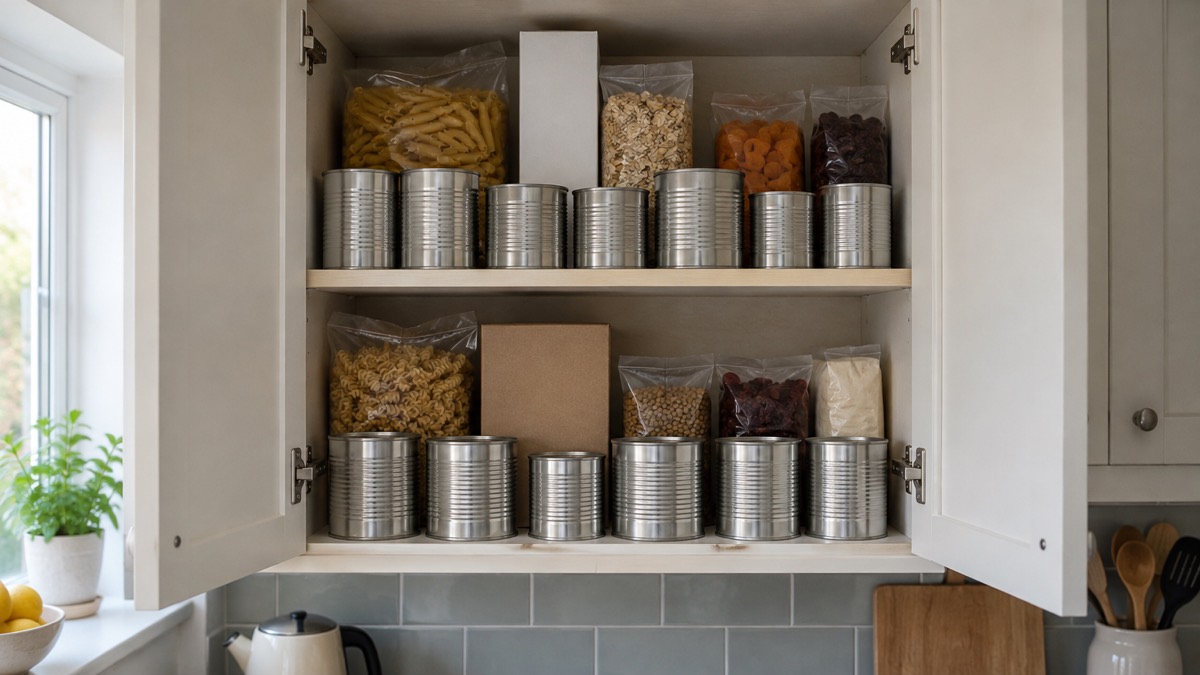
The consistent instruction across official sources is food that lasts, needs no fridge, and needs little or no cooking. The Be Ready checklist names tinned meat, fish or vegetables, dried fruit and nuts15. Nottinghamshire asks for a supply of bottled water, ready to eat food (for example tinned) and a tin opener in your home16. NHS guidance for staying warm and nourished suggests a supply of long-lasting cupboard essentials such as tinned vegetables, beans, pulses, soup and pasta17.
The most detailed official list comes from Denbighshire's emergency supplies kit: store foods that you can readily eat without heating or water, such as ready-to-eat meats or tuna, fruits, vegetables, canned or boxed juices, UHT milk, soup, high energy food like crackers or cereal bars, vitamins, food for infants or persons on special diets, biscuits, boiled sweets and powdered milk11. North Hertfordshire gives a similar short list: non-perishable items such as canned food (with a can opener) that does not need to be cooked, cereal, and fruit bars, with the reminder to ensure they are kept up to date18.
Grouping those lists, a practical cupboard covers five jobs:
- Meals from a tin: tinned meat, fish, beans, pulses, vegetables and soup, all eatable cold if necessary2
- Carbohydrate that keeps: cereal, crackers, biscuits and, if you have a way to heat water, pasta17
- Drinks and milk: canned or boxed juices, UHT milk and powdered milk11
- High energy snacks: cereal bars, fruit bars, dried fruit and nuts, boiled sweets2
- For those who need it: baby food, pet food and food for anyone on a special diet11
Two small items matter as much as the food itself. A tin opener appears on list after list, including the Be Ready household emergency plan, which asks for non-perishable food to last at least 3 days that does not require cooking or refrigerating, plus a tin opener19. And vitamins appear on the Denbighshire list, worth considering if your store will stand in for fresh fruit and vegetables for more than a few days11.
For a fuller item-by-item list, see the Emergency Store Cupboard Checklist, and for building the store step by step, Starting a Store Cupboard Supply Step by Step.
Food that keeps at room temperature when the power goes off
When the power goes off, your fridge and freezer stop being reliable, and your store cupboard becomes the food that matters. Food Standards Agency guidance for consumers is reassuring on short cuts: if the power outage is for less than 4 hours this is unlikely to impact the safety of food in chilled or frozen storage20. A closed fridge will keep food safe for up to four hours during a power outage, provided you keep the door closed as much as possible6. Wigan Council's power cut advice adds the practical steps: protect the food in your fridge or freezer by keeping the door closed to protect the temperature, and leave the fridge and freezer switched on with the door shut21.
Food Standards Scotland guidance adds a temperature rule: during a power cut, it should be safe to store your food in the fridge as long as it does not rise to 8°C7. If you want to check rather than guess, a fridge thermometer helps, as covered in Fridge and Freezer Temperatures and Thermometers.
The food in your cupboard is unaffected. Food Standards Agency guidance states that food normally stored at ambient temperature will continue to be safe to eat, and some foods such as tinned foods are safe to eat without heating through; eat these after perishable foods requiring chilled storage20. That last point is the key instruction for a power cut: eat the perishable food first, and save the tins and packets for later.
The Food Standards Agency and Food Standards Scotland both give the same order for using food during a power cut7:
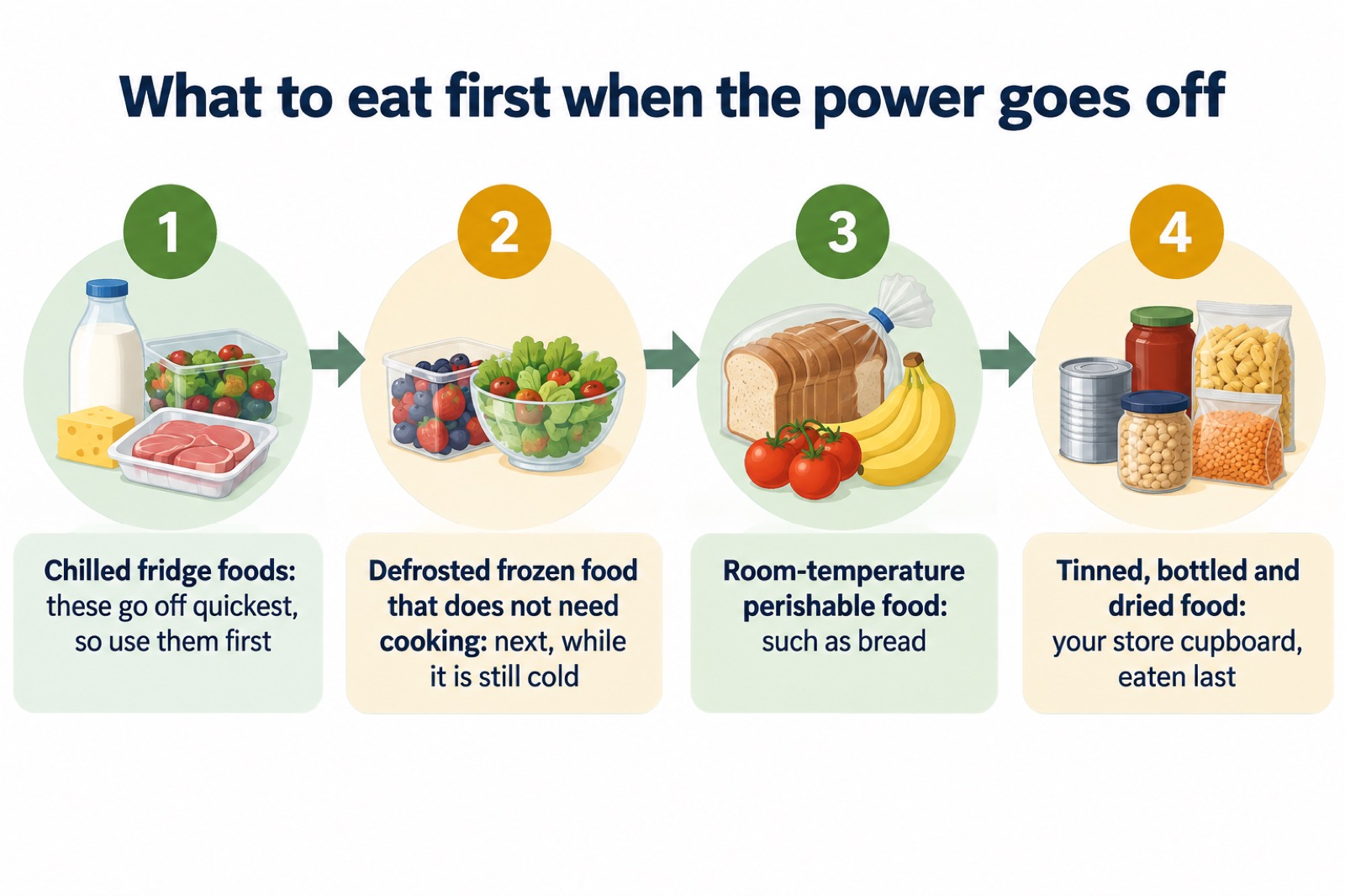
Food Standards Scotland explains the reasoning: as chilled foods will go off the quickest, you should try to use these up first before other foods during a power cut7. Doing this keeps food safe and reduces food waste at the same time. For meal ideas that need no heat at all, see Meals Without Power: No-Cook and Low-Fuel Ideas.
Fresh meat, leftovers and food safety without a fridge
Fresh meat is the item that needs the most care, and the honest answer is that an emergency store exists precisely so you do not have to depend on it. West Yorkshire's household emergency plan says it directly: keep food and bottled water for 3 days and do not rely on fridge/freezer for food22. Horsted Keynes parish council's power cut tips make the same point from the other direction: make sure there is something available to eat that does not require electricity or heat preparation6.
While the fridge is still cold, handle raw meat as you normally would. Food Standards Scotland advises keeping raw meat in a clean, sealed container on the bottom shelf of the fridge so that it does not touch or drip onto other food23. NHS inform's food safety guidance adds the wider rules that matter most when you are cooking without your usual routine: keep raw meat and unwashed vegetables separate from ready-to-eat foods during storage and preparation, use different chopping boards, plates and utensils for raw and cooked food or wash them thoroughly between uses, wash your hands, worktops and utensils thoroughly after touching raw meat, poultry, fish and eggs, and never wash raw meat24. If you are defrosting frozen meat to cook during a power cut, defrost it thoroughly before cooking, ideally in your fridge24.
Leftovers have their own limit: NHS inform guidance says do not keep leftovers for longer than two days24. In a power cut, treat that as a maximum only while the fridge is still holding its temperature, and see How Long You Can Keep Leftovers in the Fridge and Handling Raw Meat, Poultry and Eggs Safely for more detail.
Dried food and other long-life options for a deeper store
Once you have three days of tins and snacks, the natural next step is dry staples that keep for much longer and bulk out the store. Grains, cereals and dehydrated food are all recognised as stores that will not easily spoil at room temperature, including when a home loses the electricity needed to run a refrigerator11. These need water and heat to become a meal, so they suit a store built for longer disruption where you expect to have some way to cook, such as a camping stove used safely outdoors. The trade-offs between tins and dried food, and how to store dry goods for the long term, are covered in Rice, Pasta, Oats and Pulses for Long-Term Storage and Tinned or Freeze-Dried Meals.
However deep your store goes, the storage conditions are the same. Food Standards Scotland advises that for cupboard and pantry food you should try to keep them in sealed bags or containers, which helps to keep food fresh and stops anything falling into the food by accident23. Sealed containers also protect against pests, which is covered in Keeping a Long-Term Store Cool, Dry and Free of Pests. For very long-term dry storage, households sometimes use sealed foil pouches with oxygen absorbers; see Mylar Bags and Oxygen Absorbers for Dry Stores.
One piece of official guidance is worth knowing if you live somewhere that floods. Food Standards Scotland's flooding advice states that food in water-resistant packaging such as metal cans, sealed pouches and tetra packs can be kept if they are not damaged, but the outside of the packaging will need to be cleaned and sanitised first to avoid cross-contamination25. Water-resistant packaging is therefore a genuine advantage in a flood-prone area, and where to keep the store in the first place is covered in Where to Keep an Emergency Store If Your Area Floods.
Food that serves both everyday and emergency use
The best emergency food is the food your household already eats. The government's Be Ready campaign says it plainly: "It's best to buy food you'd usually eat."26 That single instruction shapes everything else. A store built from your normal shopping is food you know how to prepare, food your children will actually eat, and food that gets used up and replaced rather than sitting forgotten until it expires.
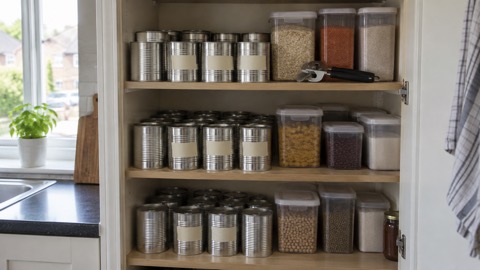
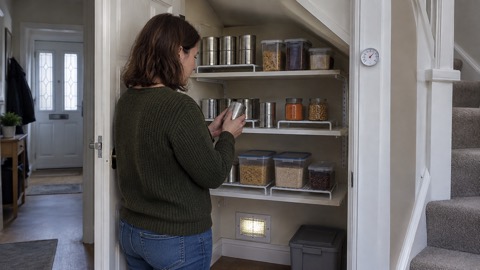
This is also how rotation works without effort. Keeping the store at the front of your ordinary cupboard makes it simple to keep items up to date: buy an extra tin or two with each shop, put new items at the back, use the oldest first, and check dates when you shop. Nothing is wasted, and the store stays fresh by itself. The mechanics are covered in Rotating Your Store: First In, First Out and Shelf Life, Use By and Best Before Dates Explained.
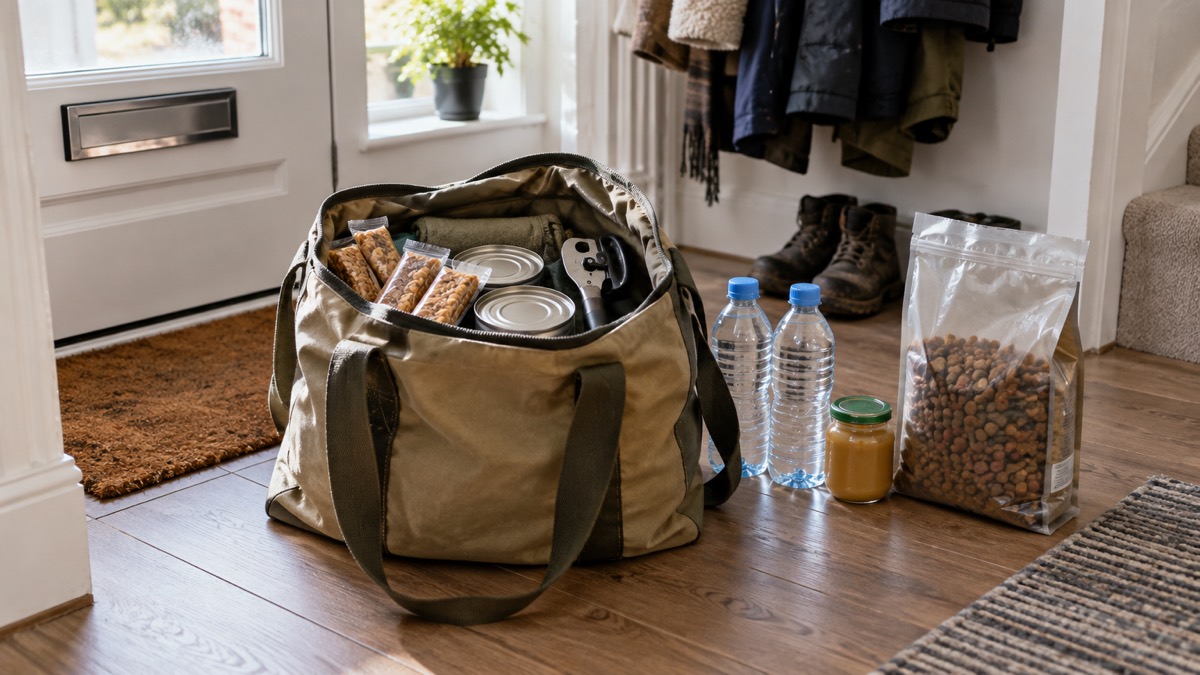
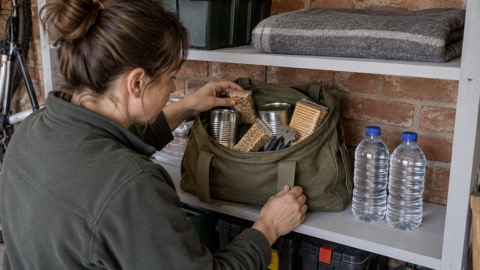
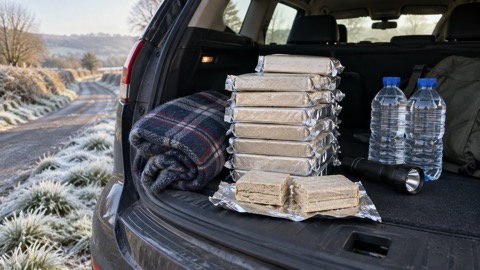
The same food does double duty outside the home. Ready Scotland's car emergency kit advice is to include some food and a warm drink in a flask27. Neath Port Talbot's emergency kit checklist says to take ready-to-eat food, a warm drink in a flask and bottled water if you have to leave your home28. Scottish Borders' guidance adds that if there is time before evacuating, you should take along medicines, warm clothes, any special foods, and personal documents29. So the same long-life snacks that sit in your kitchen cupboard can also fill a grab bag or a car kit.
Storing for a whole household, including the people and pets with special needs
A store is for the household, not the individual, and official grab bag lists reflect that. Hillingdon's household emergency plan lists long life food and snacks, bottled water, baby food and care items, and pet items among the contents of an emergency grab bag30. The Royal Borough of Windsor and Maidenhead's home emergency plan lists non-perishable foods including baby food and pet food among its essentials31. Denbighshire's kit list includes food for infants or persons on special diets11. Nottinghamshire's kit list asks for in date tinned food and a tin opener, or long life snacks16.
For pets, Wiltshire and Swindon Prepared advises a couple of days' supply of food, ideally tinned or long lasting32, and Lincolnshire's pet emergency kit includes pet food and treats8. For babies and anyone with a medical, religious or allergy diet, see Babies, Young Children and Medical Diets in an Emergency and Emergency Food for Medical, Religious and Allergy Diets. Making up formula safely during a power cut has its own page: How to Make Up Baby Formula in a Power Cut.
Where you keep everything matters as much as what is in it. West Yorkshire Prepared's household emergency plan advises that if these items are stored in a bag, they are easy to access in an emergency, particularly if you need to leave your home in a hurry, and that you should make sure everyone in the house knows where it is kept22. Northumberland's resilience guidance makes the same point about the grab bag: keep it in a safe place, and make sure family members know where it is located33. A shelf your teenager cannot find at 10pm during a power cut is not an emergency store.
Where the wider system fits in
Your store is a bridge, not a substitute for the systems that keep the country running. UK government guidance notes that there are government plans to make sure essential services, like food, water, transport, health and financial services, keep working in the event of an emergency34. Three days of food at home is what lets those plans work: it takes the immediate pressure off shops and delivery routes in the first hours of a disruption, which is exactly when they are busiest. How the supply chain behaves under strain, and what tends to disappear from shelves first, is covered in How the UK Supply Chain Copes With Disruption and What Disappears From Shops First in an Emergency.
If an emergency stretches beyond what your store can cover, help exists. Start with Getting Emergency Food Help: Food Banks, Councils and Local Support and, for households that qualify, The Healthy Start Scheme: Who Qualifies and What It Gives. Households that need extra support during power cuts and other disruptions should also ask their energy supplier about the Priority Services Register, covered in Extra Help in an Emergency: Older, Disabled and Medically Dependent Households.
A first store, built from your next shop
Putting all of this together, the practical first step is small. On your next ordinary shop, buy a few extra items from the lists above: tins your household eats, a cereal or fruit bar, some dried fruit and nuts, a carton of UHT milk, and a tin opener if you do not have a spare2. Store them in sealed containers in a cupboard or bag everyone knows the location of23. Check the dates when you shop, use the oldest first, and replace what you use18. Repeat until you can feed everyone for three days without electricity2, then keep going towards a week or more if you want the deeper buffer some guidance recommends5.
That is the whole system: ordinary food, bought a little at a time, kept where it can be found, and used before it expires. For the next steps, see Starting a Store Cupboard Supply Step by Step and the wider Emergency Food: A Household Guide to Stores, Safety and Meals Without Power.
Sources (34)
- What is a National Power Outage, Wiltshire and Swindon Prepared, 2026
- Be Ready Checklist, UK government Be Ready campaign, 2026
- Emergency Pack, Lancashire Prepared, 2026
- Emergency Kit, Ready Scotland, 2026
- Are You Ready booklet, Culham Parish Council, 2025
- 12 Tips to Prepare for a Power Cut, Horsted Keynes Parish Council
- Food Safety in the Kitchen: Power Cuts, Food Standards Scotland, 2026
- Get Help and Advice in an Emergency, Lincolnshire County Council, 2026
- Prepare for Emergencies, Dumfries and Galloway Council, 2026
- Winter Weather: Ready and Be Prepared, Argyll and Bute Council, 2026
- Emergency Supplies Kit, Denbighshire County Council, 2020
- Prepare Yourself, Greater Manchester Combined Authority, 2026
- Prepare Your Home for Emergencies, Renfrewshire Council, 2025
- Weather Safety, Oxford Health NHS Foundation Trust, 2026
- Be ready for emergencies - Be Ready, prepare.campaign.gov.uk (Be Ready campaign)
- Preparing for an Emergency, Nottinghamshire County Council, 2026
- Stay Warm and Nourished, NHS Norfolk and Waveney Integrated Care Board, 2026
- Preparing for Emergencies, North Hertfordshire District Council, 2015
- Be Ready Household Emergency Plan, UK government Be Ready campaign, 2026
- Food Safety in a Power Cut: Advice for Consumers, Food Standards Agency, 2023
- Power Cuts, Wigan Council, 2026
- Household Emergency Plan, West Yorkshire Prepared, 2026
- Food Safety in the Kitchen: Food Storage, Food Standards Scotland, 2026
- Preparing and Cooking Food Safely, NHS inform Scotland, 2025
- Food Safety in the Kitchen: Flooding, Food Standards Scotland, 2026
- Be Ready for Emergencies, UK government Be Ready campaign, 2026
- Emergency Kit, Ready Scotland, 2026
- Emergency Kit Checklist, Neath Port Talbot Council, 2026
- Emergency Planning, Scottish Borders Council, 2026
- Household Emergency Plan, London Borough of Hillingdon, 2026
- Home Emergency Plan, Royal Borough of Windsor and Maidenhead, 2026
- Your Pets, Wiltshire and Swindon Prepared, 2026
- Northumbria Local Resilience Forum, Northumberland County Council, 2026
- National Emergencies, GOV.UK, 2026
 Long-Term Storage Kit Checklist
 Store Cupboard Checklist
 30-Day Household Checklist
 How Much Emergency Food to Store
 Starting a Store Cupboard
 Shelf Life and Date Labels
 Rotating Your Food Store
 Long-Term Storage Conditions
 Meals Without Power
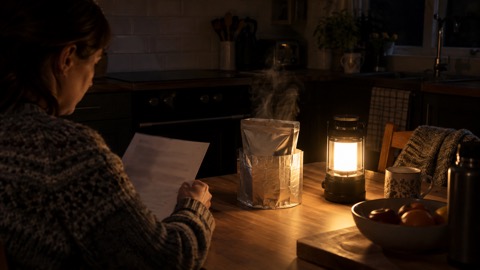 Self-Heating Meals
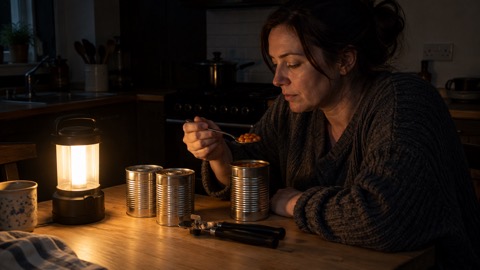 Tinned Food Guide
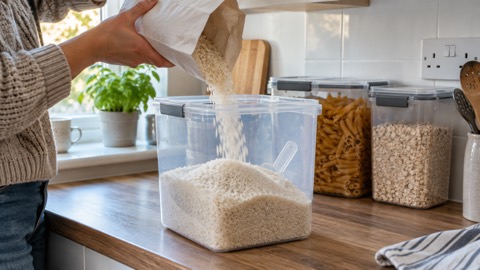 Rice, Pasta and Pulses Storage
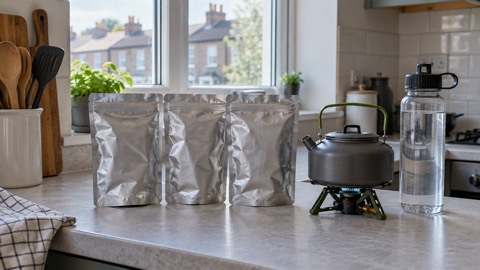 Freeze-Dried Meals
 Emergency Ration Packs
 Emergency Ration Bars