Two dates appear on food in the UK, and they mean quite different things. A use by date is about safety: after that date the food is not safe to eat, even if it looks and smells fine, because it could still contain harmful bacteria1. A best before date is about quality: after that date the food will still be safe to eat, but its flavour, colour or texture might not be as good1. Most prepacked foods carry one or the other, though a few foods carry neither1.
For an emergency food store, this distinction matters more than anything else. Tinned, dried and frozen foods carry best before dates and stay safe to eat after them, so they form the backbone of a store cupboard. Fresh meat, fish and some dairy carry use by dates and must never be kept past them, so they are the foods you use first in any disruption. Knowing which is which tells you what to buy, what to rotate and what to throw away.
Who is responsible for food date advice in the UK
Food advice is not issued by a single UK-wide body. In England, Wales and Northern Ireland it comes from the Food Standards Agency; in Scotland it comes from Food Standards Scotland3. The practical effect for households is small, because both bodies give the same core message about use by and best before dates, but it does affect where you look for alerts and guidance. Food Standards Scotland publishes all its food alerts and notices on its own website and social media channels, and it works closely with local authorities and the food industry to publish alerts when food products are recalled4.
The same split applies to related advice. The Food Standards Agency's guidance on food safety in a power cut applies to England, Northern Ireland and Wales5, and its recalls and alerts publication likewise applies to England, Northern Ireland and Wales6. In Scotland, Food Standards Scotland also holds responsibility for the quality of bottled water7, which is worth knowing if you store bottled water as part of your emergency supplies. Public health advice follows a similar pattern: in England it comes from the UK Health Security Agency, in Scotland from Public Health Scotland, in Wales from Public Health Wales and in Northern Ireland from the HSC Public Health Agency3.
Use by versus best before: what each label means
The two labels answer different questions, and treating them the same way leads to both waste and risk.
| Label | What it is about | What it means | Typical foods |
|---|---|---|---|
| Use by | Food safety | After this date the food is not safe to eat1 | Raw meat or fish, cooked sliced meats, and some dairy products1 |
| Best before | Food quality | After this date the food is safe but its flavour, colour or texture might not be as good1 | A wide range including frozen, dried and tinned foods, such as canned tomatoes, bread and cereal1 |
A use by date is used on foods that go off quickly1. The rule is absolute: even if food looks and smells fine, it should not be eaten past its use by date, because it might contain harmful bugs that could make you sick1. Food Standards Scotland is explicit that the sniff test is not a suitable way to decide whether food is safe, precisely because food can look and smell normal and still be unsafe1. Milk and dairy products with a use by date should never be sniffed or used past that date1.
A best before date only promises quality, and only if you have stored the food properly: the date is valid only if the food is stored according to the instructions on the label1. That is why checking storage instructions matters for a store cupboard. Always check food labels so you are sure about the right way to store your food8.
Two quirks are worth knowing. First, some milk and dairy products carry a best before date rather than a use by date, because food businesses use certain technologies during production and the products are tested to make sure they are safe1. Second, eggs carry a best before date of no more than 28 days after they are laid, and they can be eaten a day or two after that date as long as they are cooked thoroughly, for example as a hard-boiled egg or in a cake, because thorough cooking kills any bacteria1.
The foods that must never pass their use by date
Raw meat and poultry top the list. Do not eat raw meat or poultry past its use by date8, and keep raw and cooked meat separate to avoid cross-contamination8. Cooked dishes and foods labelled with a use by or keep refrigerated label belong in the fridge, including dairy produce such as milk, cheese and butter, raw and cooked meat, eggs, fresh fruit and vegetables, and ready meals9. Leftovers should not be kept for longer than two days9.
Some ready-to-eat chilled foods carry a particular risk from listeria. Food Standards Scotland advises that when you add cold-smoked or cured fish to dishes like cooked pasta or scrambled eggs, you should cook the fish first, because warming it through while preparing the meal will not heat the fish to a high enough temperature to kill listeria10. It has also developed guidance for healthcare and social care organisations to help protect people within their care from becoming ill with listeriosis10, which reflects how seriously the risk is taken for vulnerable groups.
A few other time limits sit alongside the use by rule. Cooked rice should not be stored for longer than 24 hours before eating8. If your household includes a baby, official advice is that it is always safer to make up a fresh feed, and when this is not possible feeds should never be stored for longer than 24 hours11. Defrosted food should be used within 1 to 2 days after it has been defrosted, because it will go off in the same way as if it were fresh12. You can freeze food up until its use by date12, which is a useful way to pause the clock on food you cannot eat in time.
What emergency food actually is
Emergency food is simply the food you keep at home in case of an emergency: a storm, a power cut, a supply disruption or anything else that stops you shopping as usual. It does not need to be specialist equipment. The food you have does not need to be fresh or perishable; in fact it is better to avoid these and keep some longer lasting products such as tinned food for emergencies13.
Everyday food in your fridge and cupboard already counts towards this. The point of an emergency store is not a separate pantry of survival rations but a deliberate stock of food you would happily eat anyway. The government's Be Ready campaign puts it plainly: food with a long shelf life that does not need refrigeration or cooking, such as tinned meat, fish or vegetables, dried fruit and nuts, and it is best to buy food you would usually eat14. The same message appears on the campaign's own pages15.
That principle, buy what you eat, is what makes a store sustainable. Food you rotate into normal meals never sits long enough for dates to become a problem, and nothing is wasted. If you are building a store from scratch, our guides on what to keep in an emergency store cupboard and starting a store cupboard supply step by step cover the practical side, and rotating your store: first in, first out covers the habit that keeps dates under control.
How much to store: a few days or longer
Official advice varies with the source, and it is worth seeing the range. The national Be Ready checklist suggests non-perishable food for 3 days14. Local guidance in England echoes this: at least three days' supply of non-perishable food16, bottled water and ready-to-eat food that will not go off17, and non-perishable tinned food that does not need cooking, such as ready-to-eat tinned meat, fruit or vegetables, plus a tin opener, with ready-made baby formula and pet food if your household needs them18. One local preparedness booklet goes further and suggests enough emergency reserves in your house for up to ten days, including essential medications, food and water19.
| Source of advice | Amount of food suggested | Notes |
|---|---|---|
| Be Ready checklist | Non-perishable food for 3 days14 | Long shelf life, no refrigeration or cooking needed |
| Lincolnshire council | At least three days' supply of non-perishable food16 | Part of a household emergency kit |
| Greater Manchester guidance | Bottled water and ready-to-eat tinned food, plus formula and pet food if needed18 | Includes a tin opener |
| Local preparedness booklet | Reserves for up to ten days19 | Includes essential medications and water |
None of these amounts requires anything exotic. A three-day store is a modest extension of an ordinary cupboard, and a ten-day store is achievable by buying a little extra of what you already eat over several weeks. Whichever target you choose, check the dates on it from time to time: it is a good idea to regularly check the expiry dates on first aid supplies and food to check they are not past their use by dates20. Bottled water in an emergency kit should be changed regularly as noted on its best before dates21.
If you take regular medicines, the same planning applies: ask your GP practice or pharmacy for your prescription at least 1 week before Christmas, so they have enough time to process your request22. Pets need their own small store: a couple of days' supply of food, ideally tinned or long lasting23.
Food that keeps longer: tinned, dried and frozen
The foods that carry a store cupboard are the ones with best before dates rather than use by dates. Tinned food is the clearest case. Food that is normally stored at room temperature will continue to be safe to eat as you usually would, even if the best before date has passed2. Some foods such as tinned foods are safe to eat without heating through, so they are ideal for eating after perishable foods that require chilled storage5.
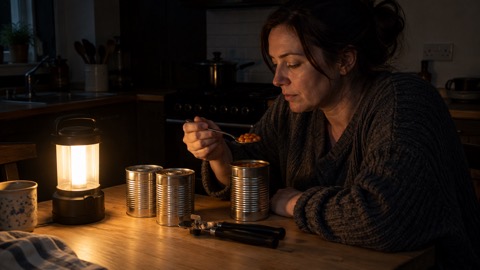
The condition of the container matters as much as the date. Throw away any tins that have become corroded, swollen or dented, and do not eat food past its sell-by date or food that might have been in contact with floodwater24. Our page on tinned food: shelf life, damaged cans and opening without power covers this in detail, including whether it is safe to eat from a dented or swollen tin.
The same container checks apply to food you have preserved yourself. Do not eat preserved food if containers are bulging, containers are leaking, damaged or heavily rusted, food shows signs of mould or spoilage, or you are unsure it was preserved safely25. Preserved foods that have not been prepared correctly may not look, smell or taste unusual, so do not rely on appearance, smell or taste to decide whether food is safe to eat25. If you preserve at home, follow preserving at home safely and check how to tell if preserved food has gone off.
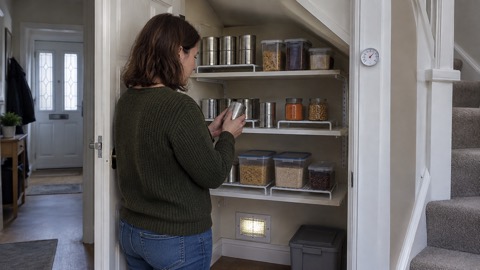
Storage conditions decide whether a best before date means anything at all. Because the date is only valid if the food is stored according to the label instructions1, a cool, dry, pest-free cupboard is part of the food's shelf life, not a luxury. See keeping a long-term store cool, dry and free of pests. Do not store food in containers that have been used for other purposes8.
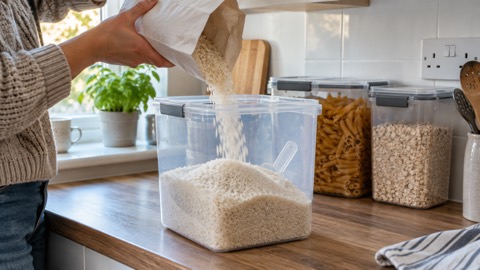
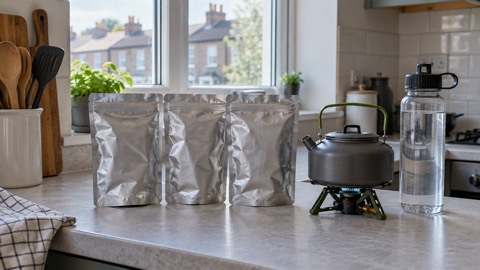
For longer stores, dry staples such as rice, pasta, oats and pulses, and freeze-dried meals, keep for much longer still. Our guides on rice, pasta, oats and pulses for long-term storage, freeze-dried meals, how long freeze-dried emergency meals keep and how long food lasts in mylar bags with oxygen absorbers cover those options, and tinned or freeze-dried meals compares them side by side.
Using food safely in a power cut
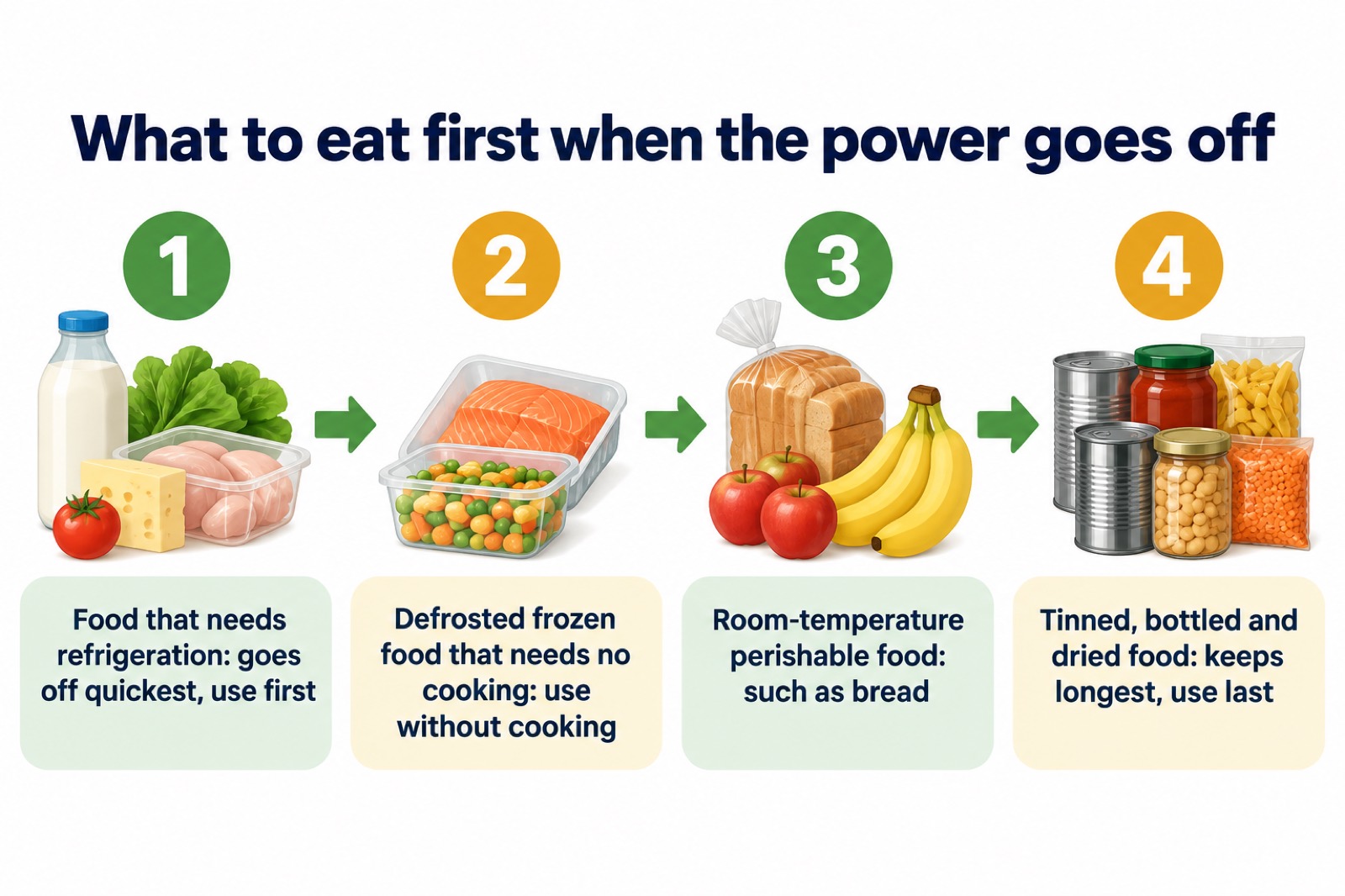
A power cut is the moment when date labels and storage rules start to matter hour by hour. The official eating order is:
- Foods that need refrigeration5
- Defrosted frozen food that does not need cooking5
- Room-temperature perishable food, such as bread5
- Room-temperature canned, bottled and dried food5
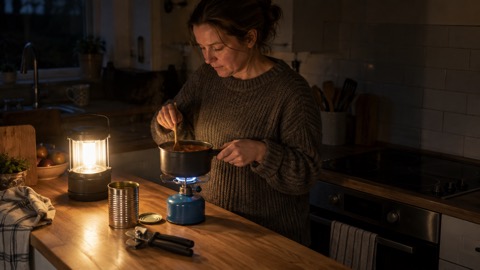
Chilled foods go off quickest, so use these up first before other foods during a power cut2. Food normally stored at ambient temperature will continue to be safe to eat throughout5. Remember that electric cookers will not work during a power cut, but gas cookers are more likely to function2; our guide to meals without power sets out what you can actually cook, and heating and cooking without mains power or gas covers the equipment side.
Two hygiene points from official storm advice. If your water supply is cut off, it is recommended to use alcohol-based hand sanitiser for cleaning your hands before touching food11. The same advice appears in the severe weather guidance for Northern Ireland26. If you have a baby, make up fresh feeds where you can, and never store feeds for longer than 24 hours11; see how to make up baby formula in a power cut.
For defrosted food in general, use it within 1 to 2 days after it has been defrosted, as it will go off in the same way as if it were fresh12. Questions about refreezing are covered in can you refreeze defrosted meat. If flooding rather than a power cut is your problem, never eat food that might have been in contact with floodwater24, and see food after a flood.
Recalls and alerts: when stored food must not be eaten
Dates are not the only reason stored food becomes unsafe. Food is sometimes recalled after it has been sold, and a recall overrides every date on the pack. Food businesses recall products when there is a safety risk, and incorrect or missing allergen information can also lead to an allergen recall6. Food Standards Scotland works closely with local authorities and the food industry to publish alerts to consumers when food products are recalled4.
There are two main kinds of alert. A Food Alert is issued when food is unsafe. An Allergy Alert is issued when the allergy information on food labels is missing or incorrect, and affected foods therefore need to be recalled from consumers4. These alerts also include information about the risk and advice about what you should do if you have bought the product6.
A real example shows how this affects a store cupboard. In March 2026, MOMA Foods recalled various porridge pots and sachets because of possible mouse contamination, and the recall was extended to all products with a best before date between 24/04/2026 and 12/03/202727. The affected list included items a household might well hold in an emergency store, among them MOMA Jumbo Oats 450g in 1pk and 6pk, and porridge pots in several flavours, all with best before dates in that range27. Porridge is exactly the kind of long-life food people store, which is why checking alerts matters as much as checking dates.
"If you have bought the above product do not eat it."
That instruction, from a Food Standards Scotland alert concerning Trotter's Fresh Wild Garlic Pesto with all best before dates affected28, is the standard response to any food recall: stop, do not eat it, and follow the alert's advice on what to do with the product.
How to check whether food you have stored has been recalled
Recall notices identify affected products by batch code and date, so checking is a matter of matching those details against your packets. A food alert example shows the pattern: a recall of Nutella Croissants covered batch code L126Z39 with best before 06 May 2027, and batch code L127Z39 with best before 07 May 202729. Only products matching those details were affected. Product safety notices use the same system with a notification number, for example PSD notification number 2607-0120 on a recall of a Bull and Cygnus Fire Alarm Detection System, which identified NCU serial numbers ranging from XAB.2410.01.0001/17518/06.00 to XAB.2410.01.0528/17518/06.0030.
To check your store:
- Look up current food alerts from the Food Standards Agency (England, Wales and Northern Ireland) and Food Standards Scotland6
- Match the product name, batch code and best before or use by date against the notice29
- Follow the alert's advice about what to do if you have bought the product6
- Do not eat recalled food, whatever the date on the pack28
Recalls are not limited to human food. Pet food is recalled too, and pet equipment as well: a Nomoy Pet reptile heat lamp was subject to a recall of the product from end users31. If you keep pet food in your emergency kit, as official pet guidance recommends23, check pet products against the same notices.
Where to get official food safety advice
For date labels, storage and power cuts, go to the food standards bodies: the Food Standards Agency for England, Wales and Northern Ireland, and Food Standards Scotland for Scotland3. Both publish consumer guidance and alerts. For public health questions around illness, the corresponding bodies are the UK Health Security Agency in England, Public Health Scotland, Public Health Wales and the HSC Public Health Agency in Northern Ireland3. NHS inform in Scotland also publishes practical kitchen guidance, including on storing food, defrosting and avoiding cross-contamination9.
One caution applies with particular force to long-life food. Food preservation advice on social media may not always come from people with the necessary knowledge or experience, so use only trusted and reputable sources and follow recognised food safety guidance25. This matters for a store cupboard because home-preserved food carries risks that cannot be detected by looking at it25. Our pages on food poisoning, the bacteria behind it and reporting a food problem to your council cover what to do if something does go wrong, and getting emergency food help covers where to turn if you cannot afford to build a store.
Sources (31)
- Use by and best before dates, Food Standards Scotland, 2026-10-25
- Power cuts, Food Standards Scotland, 2026-10-25
- What to do in a chemical emergency, UK Government, 2024-10-10
- Why food is recalled, Food Standards Scotland, 2026-10-25
- Food safety in a power cut: advice for consumers, UK Government, 2023-07-26
- Recalls and alerts, Food Standards Agency, 2026-07-07
- Drinking water quality FAQs, Drinking Water Quality Regulator for Scotland, 2026-10-28
- Food storage, Food Standards Scotland, 2026-10-25
- Preparing and cooking food safely, NHS inform, 2025-02-21
- Listeria, Food Standards Scotland, 2026-10-25
- Strong winds and heavy rain warning: information and advice, nidirect, 2026-01-27
- Chilling, Food Standards Scotland, 2026-10-25
- What is a national power outage, Wiltshire and Swindon Prepared, 2026-10-25
- Be Ready Checklist, Be Ready campaign, 2026
- Be ready for emergencies, Be Ready campaign, 2026-10-21
- Get help and advice in an emergency, Lincolnshire County Council, 2026-10-29
- Emergency kit checklist, Neath Port Talbot Council, 2026-10-29
- Loss of essential services, Greater Manchester Combined Authority, 2026-10-29
- Are You Ready booklet, Culham Parish Council, 2025-09
- Create a household emergency lifesaving plan, Dumfries and Galloway Council, 2026
- Preparing for an emergency, Nottinghamshire County Council, 2026-10-29
- Prepare for winter, King Street Surgery, 2026-01-20
- Your pets, Wiltshire and Swindon Prepared, 2026-10-25
- Emergency supplies kit, Denbighshire County Council, 2020
- Consumer advice for food preservation at home, UK Government, 2026-10-26
- Strong winds weather warning: information and advice, nidirect, 2026-10-24
- MOMA Foods recalls various porridge pots and sachets, Food Standards Scotland, 2026-03-27
- Trotter's Fresh Wild Garlic Pesto alert, Food Standards Scotland, 2025-06-20
- Nutella Croissant recall, Food Standards Agency, 2026-06-25
- Bull and Cygnus Fire Alarm Detection System recall, UK Government, 2026-08-12
- Nomoy Pet reptile heat lamp recall, UK Government, 2023-12-15
 Long-Term Storage Kit Checklist
 Store Cupboard Checklist
 30-Day Household Checklist
 How Much Emergency Food to Store
 What to Store in an Emergency
 Starting a Store Cupboard
 Rotating Your Food Store
 Long-Term Storage Conditions
 Meals Without Power
 Self-Heating Meals
 Tinned Food Guide
 Rice, Pasta and Pulses Storage
 Freeze-Dried Meals
 Emergency Ration Packs
 Emergency Ration Bars