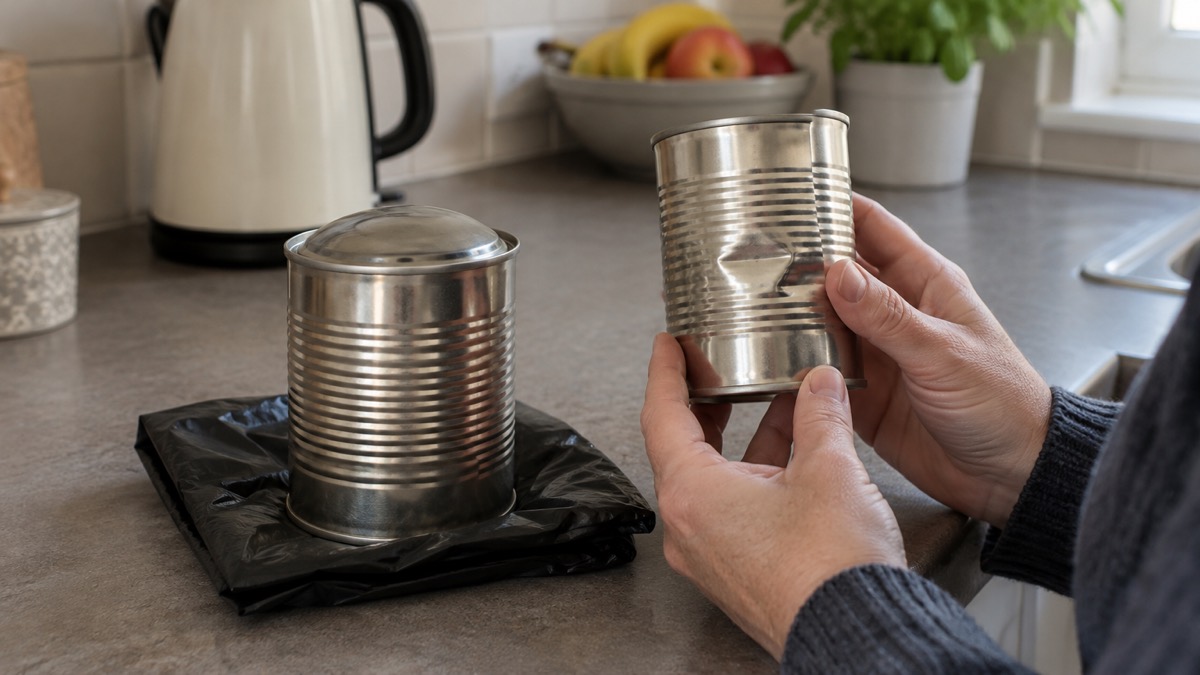
A swollen, bulging or leaking tin is never safe to eat from. Government food preservation advice is blunt: do not eat preserved food if containers are bulging, if they are leaking, damaged or heavily rusted, if the food shows signs of mould or spoilage, or if you are unsure it was preserved safely1. A small dent on the side of an otherwise sound tin is a different question from a dent that crosses the seam or rim, and the difference matters.
The risk behind a damaged tin is botulism, a rare but serious illness caused by Clostridium botulinum. The Food Standards Agency publishes guidance on it for England, Northern Ireland and Wales2. You cannot spot contaminated food by looking at it: as one council puts it, "You can't - even food which looks and tastes good can cause food poisoning"3. That is why the decision has to rest on the state of the tin, not on the smell or taste of what is inside.
For an ordinary household, the practical rule is short. Check every tin before you open it. Throw away anything swollen, leaking or heavily rusted without opening it. Keep your store cool and dry so tins do not rust in the first place. And if you or someone in the household becomes unwell after eating from a suspect tin, contact a doctor rather than waiting to see how it goes.
Throw away any tin that is swollen, bulging or leaking
A tin bulges because something inside is producing gas. That is the visible sign of spoilage or bacterial growth, and it is the one condition where the official advice leaves no room for judgement. The government's consumer guidance on food preservation at home lists bulging containers first among the reasons not to eat preserved food1. Leaking tins fail the same test, and so do tins that are damaged in a way that has broken the seal.
Do not open a swollen tin to check. Opening it releases the pressure and can spread contaminated contents, and the smell will not tell you what you need to know. The same guidance warns against relying on appearance or smell, and the Food Standards Agency's date labelling advice makes the point for food generally: "It is not suitable to use the 'sniff test' to determine if food is safe to eat, even though food can look and smell normal past the use-by date, it could still contain harmful bugs"5.
Dispose of it carefully. Do not put it out loose where children or animals could reach it. Double bag it and place it in a sealed container to prevent attracting pests6. Wash your hands afterwards.
Botulism: the risk behind a damaged tin
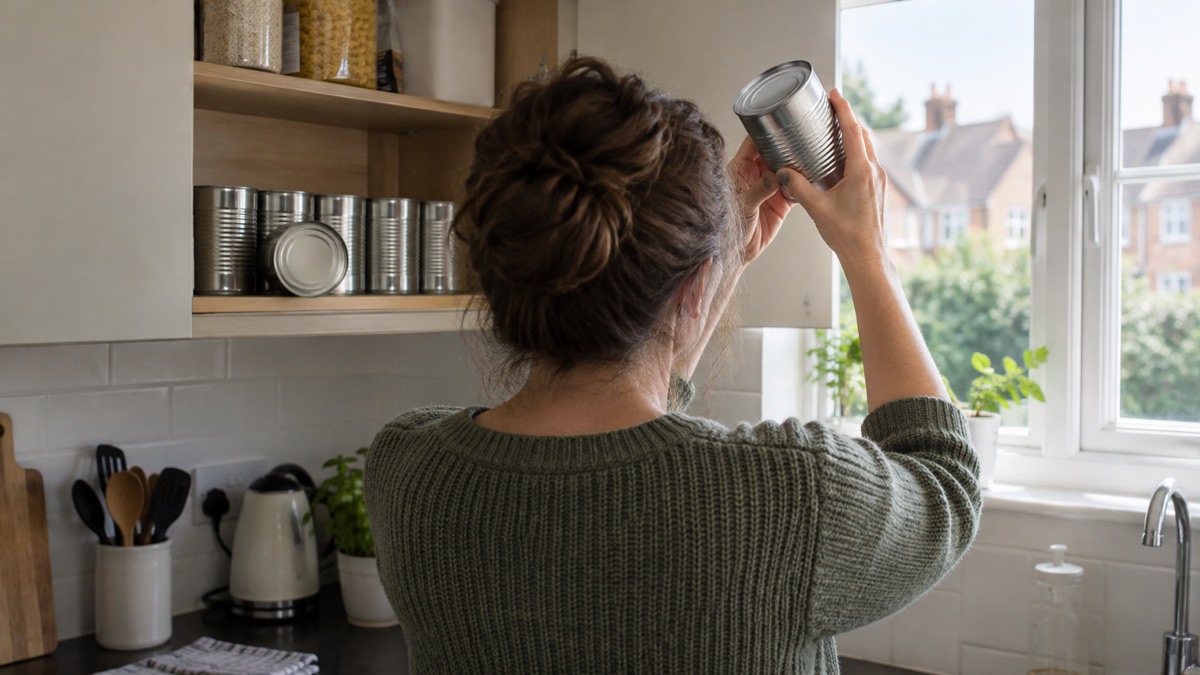
Botulism is caused by toxins produced by Clostridium botulinum, and the Food Standards Agency publishes dedicated guidance on reducing the risk of becoming ill from it2. The bacteria thrive where food is sealed away from air, which is exactly what a tin does. A tin that has lost its seal, or whose contents were not preserved safely in the first place, is the kind of container the official advice is written about.
The illness is rare, but it is serious enough that the official guidance is written as a clear list of things not to eat rather than a set of judgement calls. That is why the condition of the container carries so much weight: it is the only reliable signal an ordinary household has.
Food poisoning more generally comes from food that is not cooked or reheated thoroughly, not stored correctly, left out for too long, handled by someone who is ill or has not washed their hands, or eaten after its use by date7. A damaged tin sits in the "not stored correctly" category, and the same basic hygiene rules apply if you have handled one: wash your hands with soap and warm water, and disinfect surfaces with a bleach-based household cleaner7.
Dents on the seam or rim versus small dents on the side
Not every dent is a reason to throw a tin away, but the position of the dent decides how much it matters. The seam and the rim are where the tin is sealed. A dent that crosses the seam, distorts the rim or creases the side wall sharply may have broken that seal, and once the seal is compromised the contents are exposed to air and contamination. A shallow dent in the flat side of the tin, away from the seam, is much less likely to have done so.
The official guidance does not draw a line between acceptable and unacceptable dents. It says not to eat preserved food if containers are bulging, leaking, damaged or heavily rusted, or if the food shows mould or spoilage, or if you are unsure it was preserved safely1. Where the guidance leaves room, the safe course for a household is simple: if the dent is on the seam or rim, or you cannot tell whether the seal is intact, throw the tin away. The cost of a tin is small next to the risk.
| What you see | What it suggests | What to do |
|---|---|---|
| Swollen or bulging lid or base | Gas from spoilage or bacterial growth | Throw away unopened1 |
| Leaking, or stained and sticky around the seam | Seal has failed | Throw away1 |
| Heavy rust, or rust at the seam | Metal eaten away, seal at risk | Throw away1 |
| Sharp dent across the seam or rim | Seal may be broken | Throw away1 |
| Shallow dent on the flat side, away from the seam | Seal probably intact | Use it, and check the contents when you open it |
How to reduce the risk of botulism from stored tins
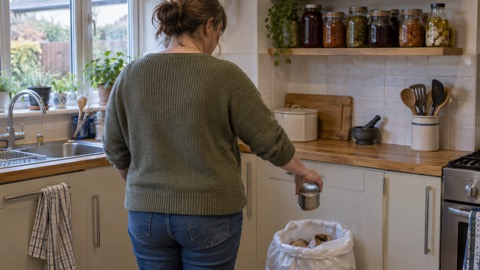
Most of the work is done before a tin is ever opened. Store tins somewhere cool and dry, keep them in sealed bags or containers so nothing falls in and to help keep food fresh, and always check the label for the right way to store that particular food8. Rotation is the other half: use the oldest tins first so nothing sits at the back of the cupboard for years, and check each one as it comes forward.
Once a tin is opened, the rules change. The Food Standards Agency for Scotland advises putting the contents into a clean bowl or container in the fridge once opened, and not storing food in the opened can, because in an opened can the food and the tin are exposed to air and the tin may transfer to the food more quickly8. The same guidance says not to reuse empty tins to cook or store food for that reason8.
A few practical habits keep a store sound:
- Keep tins off damp floors and away from walls that sweat, so rust does not get a start.
- Check tins whenever you rotate the store, and set aside anything bulging, leaking, damaged or heavily rusted, or where you are unsure it was preserved safely1.
- Keep a manual tin opener with the store, so you can open tins without power.
- Do not judge an out of date tin by its date alone: food normally stored at room temperature stays safe to eat even after its best before date has passed9.
For more on how long tins keep and how to open them without power, see Tinned Food: Shelf Life, Damaged Cans and Opening Without Power. If you are building a store from scratch, What to Keep in an Emergency Store Cupboard sets out the basics, and How to Reduce the Risk of Botulism From Food goes further on the wider risks.
Tins in an emergency store and after a flood
Tinned food is the backbone of most household emergency stores, and official kit lists treat it that way. Nottinghamshire Council's emergency planning advice includes in date tinned food and a tin opener or long life snacks10. Lincolnshire Council's list says to include a tin opener if the kit contains tinned food11. Wiltshire and Swindon's guidance advises avoiding fresh or perishable food and keeping longer lasting products such as tinned food for emergencies12. Lancashire's emergency pack list includes basic cutlery and a tin opener13, and the government's own power cut advice includes ready-to-eat tinned meat, fruit or vegetables and a tin opener among the food to have in14.
The lesson for a damaged tin is that the store only works if you check it. A tin that has been sitting in a damp garage for years, or that was bought dented and never looked at again, is not an asset. Check tins when you buy them, when you rotate them and before you open them.
Flooding is the other situation where tins need a decision. Food Standards Scotland's flooding advice says food in water-resistant packaging such as metal cans, sealed pouches and tetra packs can be kept if they are not damaged, but the outside of the packaging needs to be cleaned and sanitised first to avoid cross-contamination15. Canned food may be kept if undamaged as long as the cans are cleaned and sanitised before opening15. Where a tin has been in contact with sewage or floodwater, the advice is different: discard it6. Food After a Flood: What to Keep and What to Throw Away covers the full clean-up.
When to get medical help after eating from a damaged tin
If you think you have food poisoning, visit your doctor as soon as possible; they may ask you to submit a sample for examination, or you can request to submit one4. Do not wait to see whether it settles on its own, particularly if the person affected is very young, elderly or already unwell.
For a child who has swallowed something they should not have, the advice is to get medical help immediately and not to try to treat them yourself; if they seem well, call NHS 11116. If the child is in pain, or there is staining, soreness or blistering around their mouth, they have probably swallowed something corrosive: give them milk or water to sip to ease the burning and get them to hospital quickly16. Keep the tin or its label so the hospital can see what was involved, following the general principle of keeping products in their original packs17.
After getting medical advice or leaving hospital, keep an eye on yourself for the next 1 to 2 days, eat and drink as normal, follow any advice given by doctors, and seek medical help again if you feel worse18. If a packet or bottle suggests seeking medical help or carries warning symbols, contact a doctor or nurse that day19.
Burns and scalds are a separate hazard around tins, particularly when opening one with a sharp lid or pouring off hot contents. Run a burn under cool water and get medical help quickly if the burn is severe20. While the skin heals, keep the area clean, do not apply creams or greasy substances, and do not burst blisters, as this can lead to infection21. Burnt skin can swell, so remove anything tight such as a watch or a ring22. For more on symptoms and who is most at risk, see Food Poisoning: Symptoms, Who Is at Risk and When to Get Help.
Sources (22)
- Consumer advice for food preservation at home, GOV.UK, 2026-10-26
- Botulism (Clostridium botulinum), Food Standards Agency, 2026-06-25
- Food poisoning and waterborne infections, Shropshire Council, 2026-10-29
- Infectious diseases, Northumberland County Council, 2026-10-28
- Use-by and best before dates, Food Standards Scotland, 2026-10-25
- Cleaning up after a flood: health advice, North Warwickshire Borough Council, 2024
- Food poisoning, NHS Inform, 2026-08-17
- Food storage, Food Standards Scotland, 2026-10-25
- Power cuts, Food Standards Scotland, 2026-10-25
- Preparing for an emergency, Nottinghamshire County Council, 2026-10-29
- Get help and advice in an emergency, Lincolnshire County Council, 2026-10-29
- What is a national power outage, Wiltshire and Swindon Prepared, 2026-10-25
- Emergency pack, Lancashire Prepared, 2026-10-29
- Power cuts, Prepare Campaign, 2026-10-21
- Flooding, Food Standards Scotland, 2026-10-25
- Swallowed something, Alder Hey Children's NHS Foundation Trust, 2025-09-25
- Preventing accidents, Just One Norfolk, 2026-10-28
- Poisoning and accidental swallowing, Healthier Together, 2026-10-29
- Poisoning and accidental swallowing, Aneurin Bevan Healthier Together, 2026-10-29
- Burns first aid, NHS Inform, 2026-07-24
- Burns and scalds, NHS Inform, 2026-07-31
- Burn awareness, Cheshire Fire and Rescue Service, 2026-05-20
 Long-Term Storage Kit Checklist
 Store Cupboard Checklist
 30-Day Household Checklist
 Baby Formula in a Power Cut
 Refreezing Defrosted Meat
 Leftovers in the Fridge
 Reducing Botulism Risk
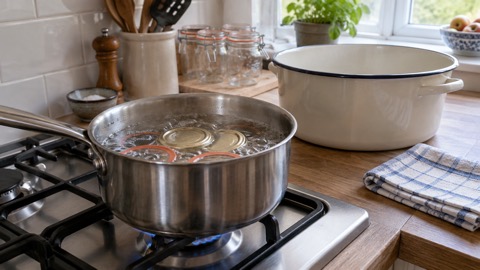 Sterilising Jars
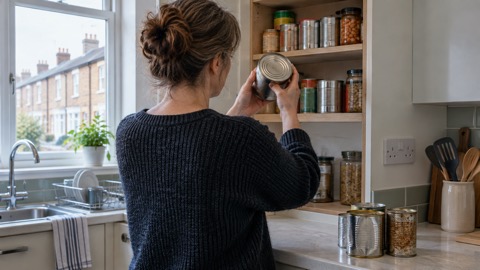 Spotting Spoiled Preserved Food
 Boiling Water in Glass Jars
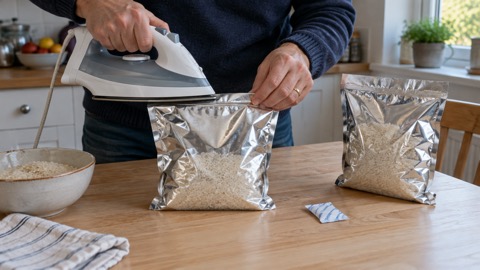 Mylar Bag Food Shelf Life
 Mylar Bag Sizes
 Are Mylar Bags Food Safe
 Oxygen Absorber Activation
 Silica Gel With Stored Food