Botulism is a rare but serious illness that affects the nervous system and can cause paralysis or death1. It is caused by a bacterium, Clostridium botulinum, which can survive in food as spores and, under certain conditions, grow and produce a toxin that causes botulism1. The reassuring part for an ordinary household is that the conditions it needs are specific, and the habits that prevent it are simple ones: keep chilled food cold, handle preserved food with care, and throw away anything that looks wrong without opening it.
The main risk at home is food that has been sealed away from air. That means home canning and bottling, especially of low-acid foods, and oils infused with garlic or herbs. Official guidance is blunt about the first: canning and bottling food safely at home can be difficult to carry out safely, and if you are unsure whether a process is safe, do not take the risk1. For the second, the rule is refrigeration.
This page sets out what to do with each of those risks, how to spot a tin or jar that should not be opened, what the symptoms look like, and where to report a problem. It is not a guide to preserving as a hobby; it is about not making your household ill.
Low-oxygen foods are the main botulism risk at home
Clostridium botulinum is an organism that does not need air. Its spores sit harmlessly on food and in the environment, and the trouble starts when they are given a sealed, moist, low-oxygen place to grow, and produce toxin1. That is why the foods that matter are not the ones you cook and eat the same day. They are the ones you pack tight, seal and put on a shelf.
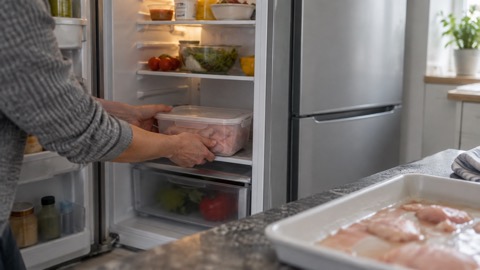
The general food safety habits still apply, and they reduce the overall burden of illness in a kitchen. Wash your hands thoroughly with soap and warm water before preparing food, wash fruit and vegetables before eating, keep worktops and chopping boards clean to avoid cross-contamination, and cook food thoroughly4. Keep raw and ready-to-eat foods apart, and store raw meat in sealed containers at the bottom of the fridge5. None of that is specific to botulism, but a kitchen that is careless about contamination is also a kitchen more likely to preserve food badly.
What makes botulism different is that the usual sensory checks do not save you. A jar of badly bottled vegetables can look and smell perfectly normal and still carry toxin. That is why the official advice leans on process rather than appearance: get the process right, or do not do it.
Home canning and bottling: why low-acid foods need pressure
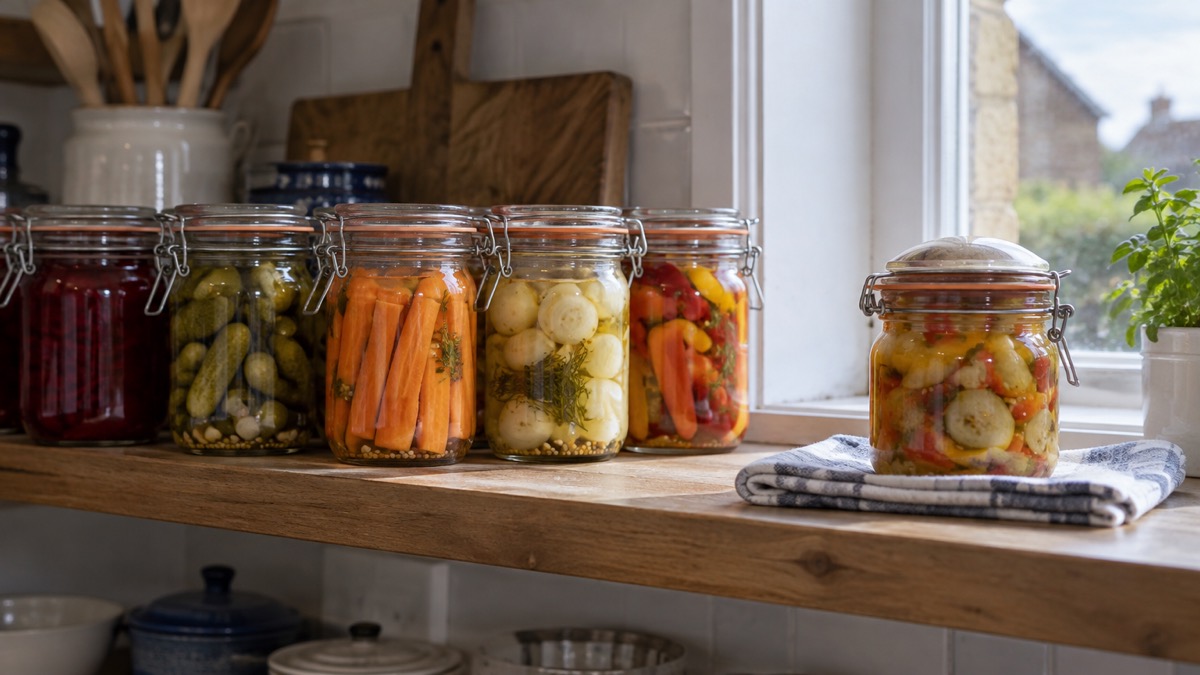
Home canning and bottling is where the risk concentrates, and the official guidance does not pretend it is easy. The temperature and processing time needed depends on the type of food, the acidity of the food, and the size and type of container used1. Those three variables are why a recipe passed between friends, or a method remembered from a grandparent, is not a safe process on its own.
Acidity is the variable that matters most. Acidic foods, such as fruit and pickles, create an environment where the organism struggles. Low-acid foods, such as vegetables, meats and stocks, do not, and they need a genuinely higher processing temperature to be made safe. That is the reason low-acid foods are the ones the guidance singles out, and the reason a water bath that works for jam is not automatically suitable for beans.
The practical position for a household with no preserving background is straightforward:
- Follow a tested process, not a remembered one. The processing time and temperature must match the food, its acidity and the container1.
- Do not improvise with low-acid foods. If you cannot confirm the process is safe, the official advice is not to take the risk1.
- Label and date everything you preserve, so you know what it is and when it was made.
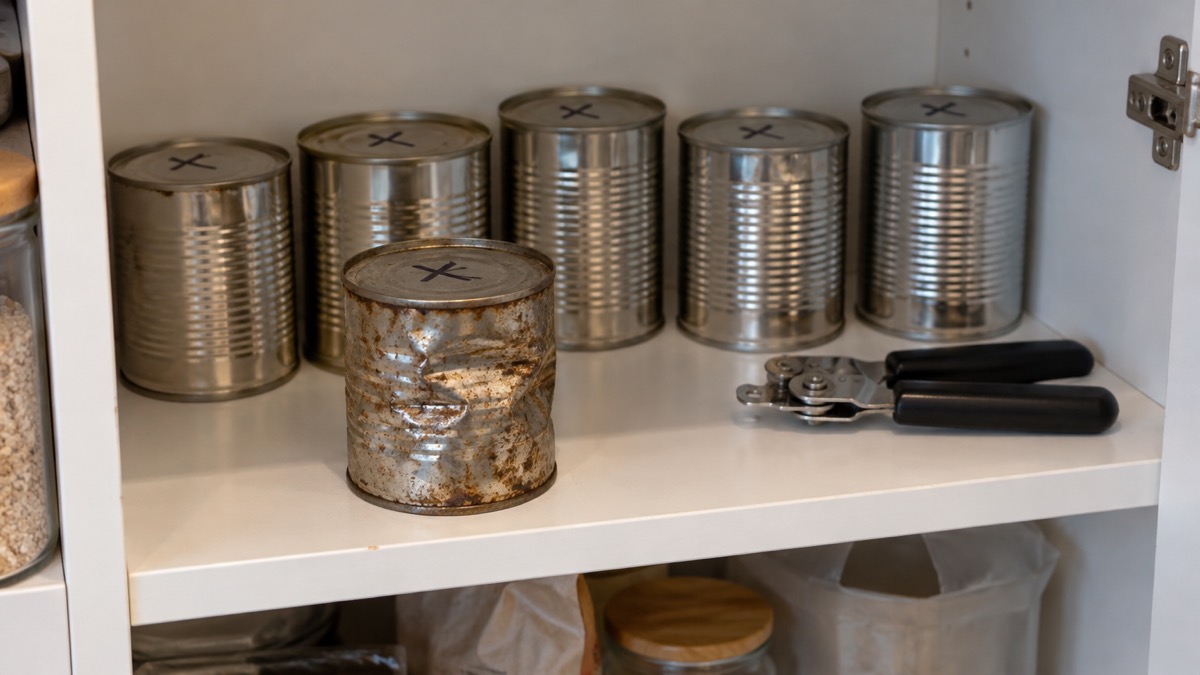
- Check before you open. Bulging, leaking, damaged or heavily rusted containers, or any sign of mould or spoilage, mean the food is not to be eaten1.
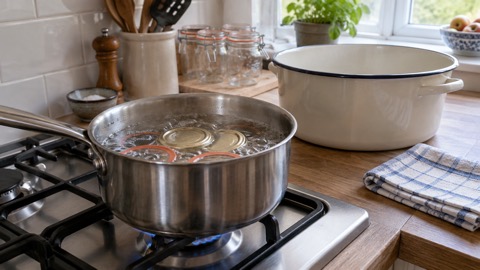
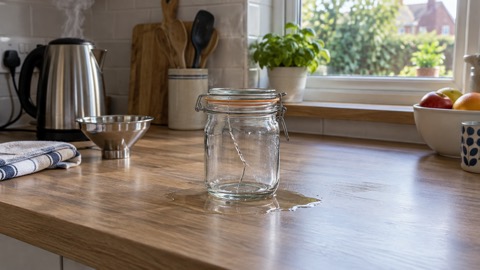
If you want to preserve at home, start with the methods that carry less risk and read our guide to preserving at home safely, which covers jams, pickles and bottling. If you are sterilising containers, see how to sterilise jars for preserving, and for judging a jar you are unsure of, how to tell if preserved food has gone off.
Garlic and herbs in oil: keep them in the fridge
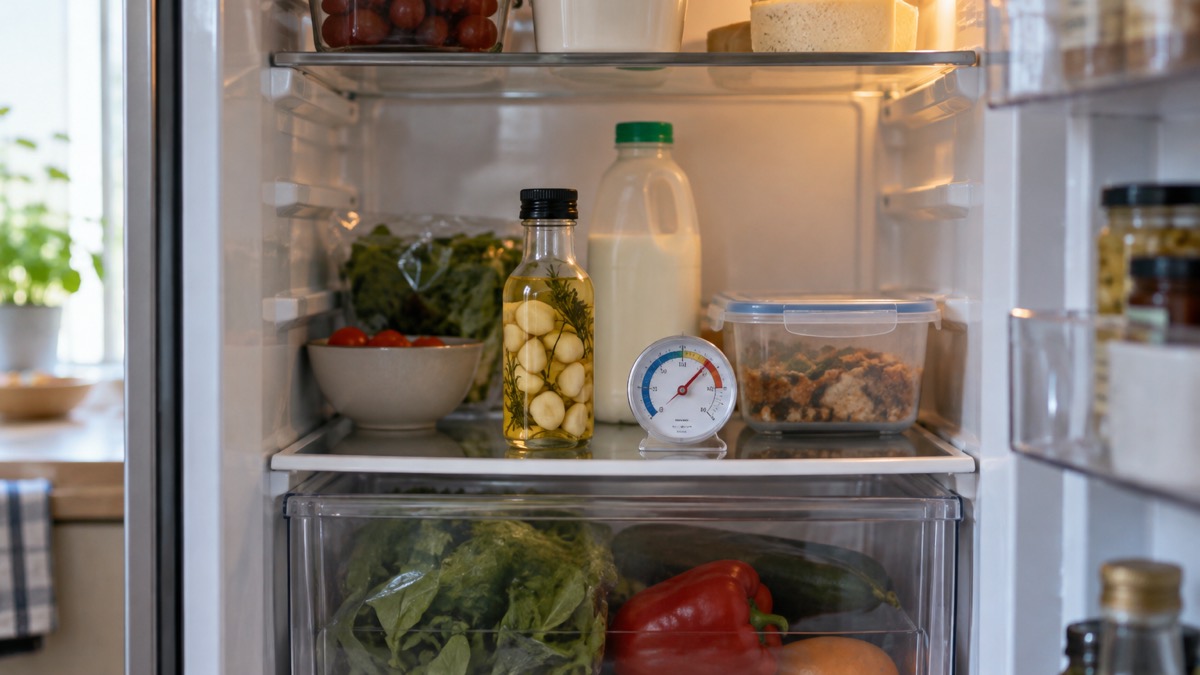
Oil infused with garlic or herbs is a low-oxygen environment by its nature: the oil excludes air, and the garlic or herbs bring moisture and spores with them. That combination is exactly what the organism needs, which is why garlic in oil is one of the classic home botulism risks and why the answer is refrigeration rather than shelf storage.
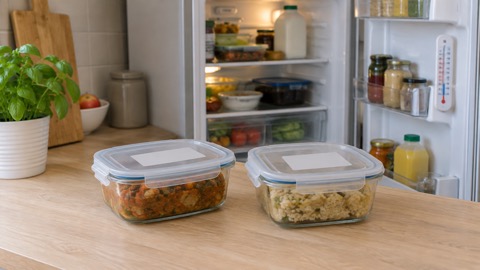
The same logic applies to any chilled ready-to-eat food you keep for later. Official guidance is to keep chilled ready-to-eat foods cold, and to make sure your fridge is working properly and is set to 5°C or below2. A fridge that is running warm, or a jar that has been left on the worktop since yesterday, is the condition to avoid.
For cold-smoked and cured fish, which is another chilled ready-to-eat product, the guidance is more specific. Older adults should be aware of the risk and eat these foods by their use-by dates, ensure the product is kept refrigerated below 5°C, and consider safer alternatives2. That is not a reason to avoid the food; it is a reason to treat the date and the temperature as non-negotiable.
| Food | What to do | Why |
|---|---|---|
| Garlic or herbs in oil | Keep in the fridge, not the cupboard | Oil seals out air, creating the low-oxygen conditions the organism needs1 |
| Cold-smoked or cured fish | Eat by the use-by date, keep below 5°C, consider alternatives if older | Official guidance for older adults2 |
| Any chilled ready-to-eat food | Fridge set to 5°C or below | Standard chilled storage advice2 |
| Leftovers | Fridge as soon as cooled to room temperature, never more than 4 hours out | Limits bacterial growth5 |
Swollen, leaking or damaged tins: throw them away unopened
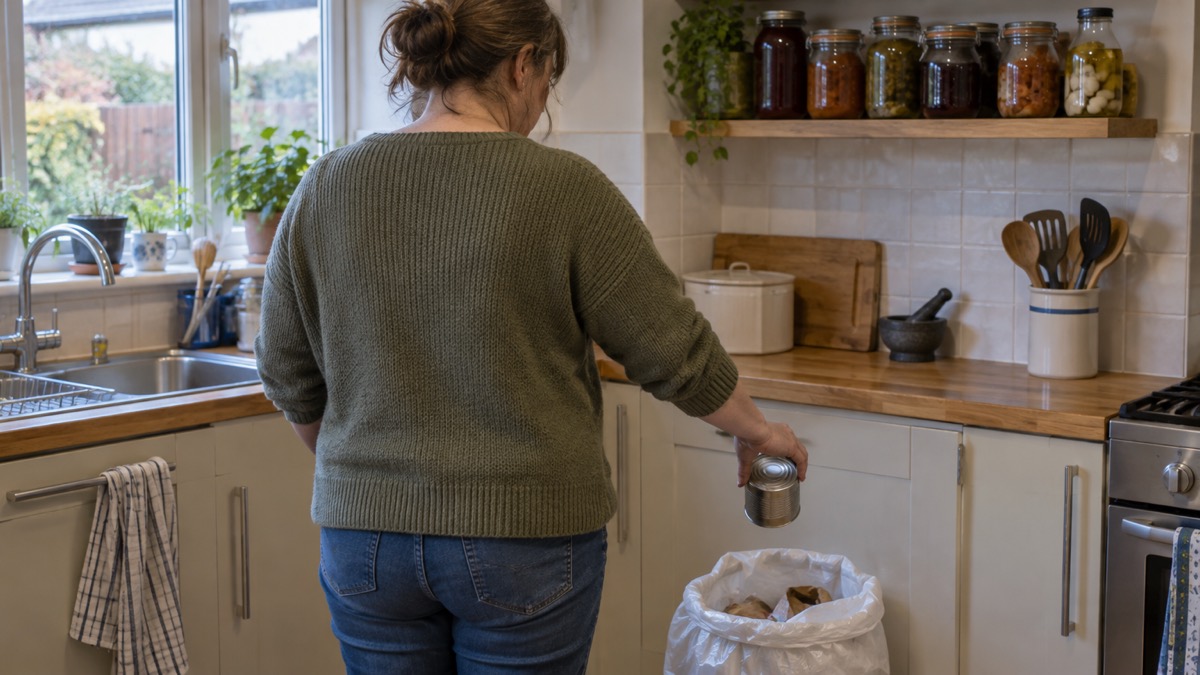
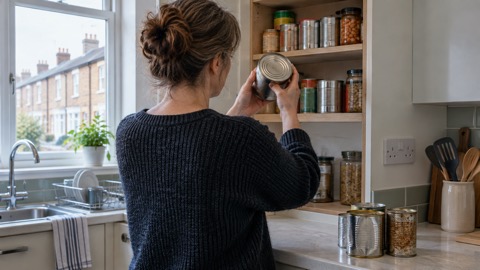
A bulging tin is a tin under pressure from something growing inside it, and the guidance is unambiguous: do not eat preserved food if the containers are bulging, leaking, damaged or heavily rusted, or if the food shows signs of mould or spoilage, or if you are unsure it was preserved safely1. Do not open it to check. Opening a bulging tin releases what is inside into your kitchen.
The same applies to jars with domed lids, pouches that have swollen, and any container that has lost its seal. The test is the container, not the contents.
Once a tin is open and the food is sound, the storage rule changes. Put it into a clean bowl or container in the fridge once it is opened, and do not store it in the opened can5. Do not reuse empty tins to cook or store food either, because in an opened can the food and the tin are exposed to air, which means the tin can transfer to the food more quickly5.
There is one exception worth knowing about, and it is about floods rather than botulism. Food in water-resistant packaging such as metal cans, sealed pouches and tetra packs can be kept after a flood if they are not damaged, but the outside of the packaging needs to be cleaned and sanitised first to avoid cross-contamination6. Canned food may be kept if undamaged as long as the cans are cleaned and sanitised before opening6. Our guide to food after a flood sets out the full routine.
What are the symptoms of botulism?
Botulism affects the nervous system, and the official description is that it can cause paralysis or death1. That is why it is treated as an emergency rather than a stomach upset, and why the advice is not to wait and see.
The general symptoms of food poisoning are worth knowing, because most illness from food is not botulism and looks quite different. They include nausea, diarrhoea which may contain blood or mucus, lack of energy and weakness, loss of appetite, a fever of 38C or above, aching muscles and chills7. Other official lists give diarrhoea, stomach cramps, vomiting, fever, nausea, headache and dizziness8, and diarrhoea, sickness, stomach pains and sometimes a high temperature9. Symptoms may last for only a day or continue for one or two weeks9.
Seek medical help rather than managing at home if you have symptoms of severe dehydration, are vomiting constantly and unable to keep down fluids, have bloody diarrhoea, have diarrhoea for more than 7 days or vomiting for more than 2 days, have returned from a part of the world with poor sanitation in the past few weeks, or have kidney disease, inflammatory bowel disease or a weak immune system along with diarrhoea and vomiting7.
If you think you have food poisoning, visit your doctor as soon as possible; they might ask you to submit a sample for examination, or you can request to submit one9. Our guide to food poisoning covers symptoms, who is at risk and when to get help in more depth.
Storing an emergency food supply without creating a risk
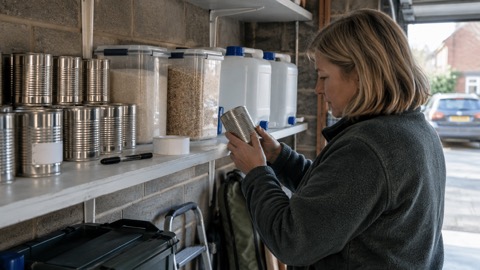
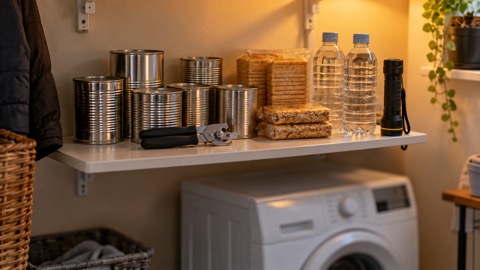
An emergency store is mostly tins and dry goods, which are low risk if they are stored and checked properly. Official advice is to avoid fresh or perishable food and keep longer lasting products such as tinned food for emergencies10. Store bottled water and non-perishable tinned food that does not need cooking, such as ready-to-eat tinned meat, fruit or vegetables, and include a tin opener11. Ready-made baby formula and pet food should be included if needed11.
What to put in, in practice:
- Tinned protein and vegetables, in date, with a tin opener13.
- Dried or tinned proteins such as beans, lentils or chickpeas, jars of peanut butter, unsalted nuts, and canned fish such as tuna, mackerel or sardines14.
- Long-life milk and bread in the freezer, alongside enough medication15.
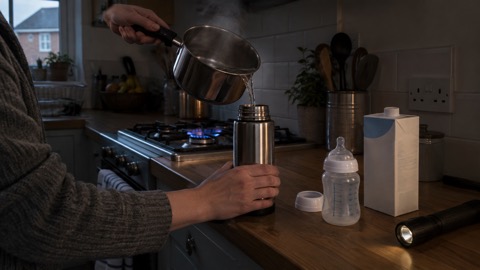
- A vacuum flask, which is useful for storing hot water when the power is off16.
Keep cupboard and pantry food in sealed bags or containers, which helps to keep it fresh and stops anything falling into the food by accident5. Check dates as you rotate the store, and apply the same container test to tins as you would to jars: bulging, leaking, damaged or heavily rusted means out1. Our emergency store cupboard checklist and guide to what to keep in an emergency store cupboard take this further.
Reporting a problem and getting help
Food poisoning is infectious, and councils advise you to contact them for advice if you think you have it17. Many councils offer an online reporting form for an incident of food poisoning6. If you think you have food poisoning you should also visit your doctor as soon as possible9.
While you are ill, limit the spread at home. Wash your hands after contact with the sick person and before handling food, do not share towels or face cloths, disinfect toilet handles and the seat, drink plenty of fluids, avoid preparing food for others, avoid sharing bathwater, put the toilet lid down when flushing and ventilate the house8. Our guide to reporting food poisoning or a food problem to your council explains what the council does with a report.
For the wider picture on keeping a household food supply that does not put anyone at risk, start with the emergency food section, and for the basics of dates and storage see shelf life, use by and best before dates explained.
Sources (17)
- Botulism (Clostridium botulinum), Food Standards Agency, 2026-06-25
- Listeria, Food Standards Scotland, 2026-10-25
- Use-by and best-before dates, Food Standards Scotland, 2026-10-25
- Foodborne viruses, Food Standards Scotland, 2026-10-25
- Food storage, Food Standards Scotland, 2026-10-25
- Flooding, Food Standards Scotland, 2026-10-25
- Food poisoning, NHS inform, 2026-08-17
- Infectious diseases, Cornwall Council, 2026-10-29
- Infectious diseases, Northumberland County Council, 2026-10-28
- What is a national power outage, Wiltshire and Swindon Prepared, 2026-10-25
- Loss of essential services, Greater Manchester Combined Authority, 2026-10-29
- Power cuts, Prepare campaign, 2026-10-21
- Get help and advice in an emergency, Lincolnshire County Council, 2026-10-29
- Emergency kit packing list, Which?, 2026-09-30
- Keeping warm and well during winter, Lancashire County Council, 2026-10-29
- What to do in a power cut, Northern Powergrid, 2026-10-25
- Food poisoning, Somerset Council, 2026-07-09
 Long-Term Storage Kit Checklist
 Store Cupboard Checklist
 30-Day Household Checklist
 Baby Formula in a Power Cut
 Refreezing Defrosted Meat
 Leftovers in the Fridge
 Sterilising Jars
 Spotting Spoiled Preserved Food
 Boiling Water in Glass Jars
 Mylar Bag Food Shelf Life
 Mylar Bag Sizes
 Are Mylar Bags Food Safe
 Oxygen Absorber Activation
 Silica Gel With Stored Food
 Freeze-Dried Meal Shelf Life