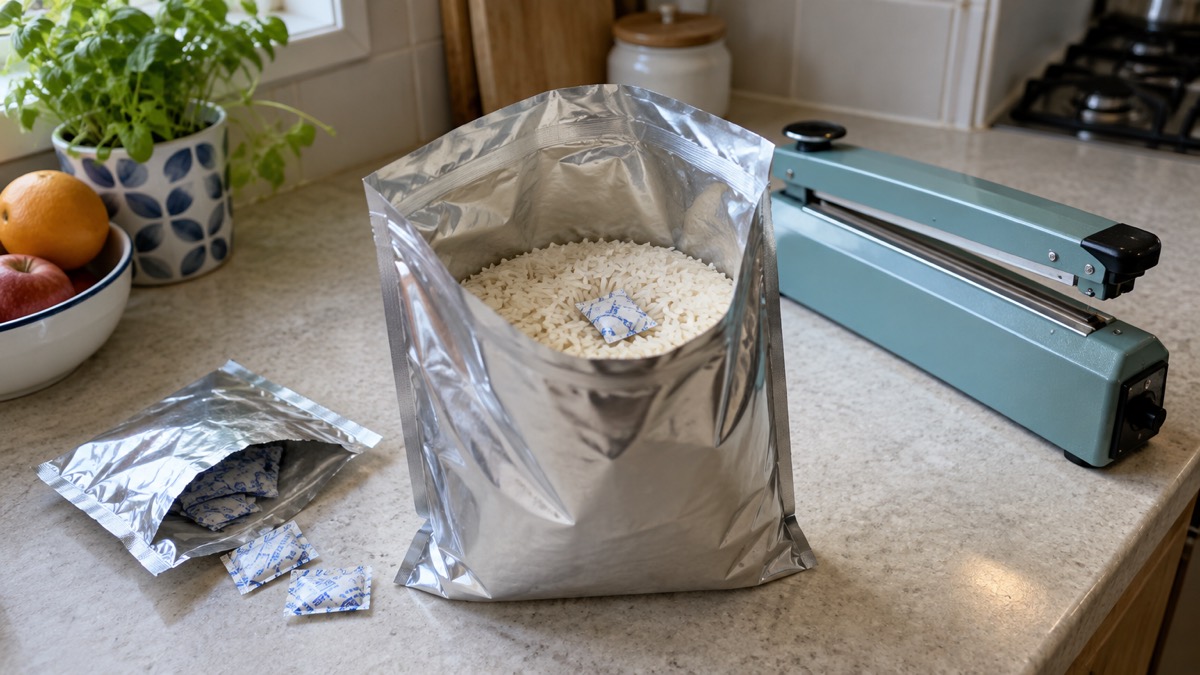
Oxygen absorbers start working within minutes of the pack being opened. That is the single most useful thing to know about them, because it means the clock starts the moment you tear the seal, not when you drop a sachet into a mylar bag. The same is true whether you are using a small 50cc sachet, a 100cc one or a large 2000cc sachet: the size changes how much oxygen the sachet can take up, not how soon it begins.
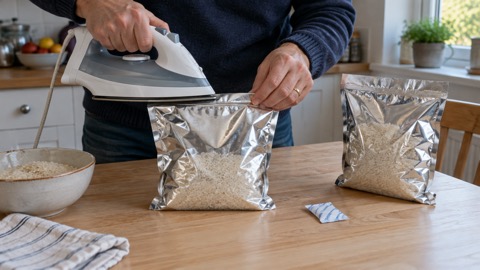
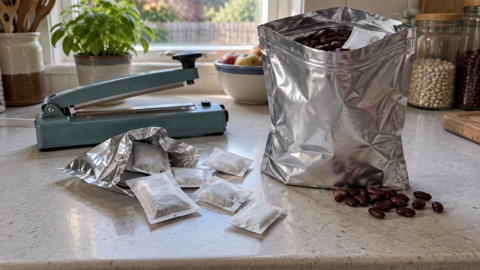
The practical consequence is simple. Get everything else ready first: food weighed out, mylar bags cut and labelled, heat sealer plugged in, containers clean and dry. Only then open the absorber pack, take out what you need, seal the food and reseal the rest of the absorbers straight away. If you open the pack and then start measuring rice, the absorbers are already working on the air in your kitchen.
This page explains why the clock starts so fast, how to time a packing session so the absorbers go into the container rather than the room, and how to store, reseal and judge the ones you have left. For the wider method, see Mylar Bags and Oxygen Absorbers for Dry Stores.
Why the clock starts as soon as the pack is open
An oxygen absorber is not switched on by contact with food. It is working from the moment it meets air, because the iron-based material inside reacts with oxygen wherever it finds it. That is why the instruction on a freeze-dried meal pouch is to remove the absorber sachet before adding water: the sachet has been doing its job inside the sealed pouch, and once the pouch is opened it is no longer needed1.
The same logic applies in reverse when you are packing. The absorber does not wait for you to place it in the bag. Every minute it sits on the worktop it is taking oxygen out of the room, and that capacity is then unavailable for your food. The start is fast; the useful life is finite.
This is not unique to absorbers. Other sealed products that begin working on activation behave the same way. An instant ice pack starts cooling within seconds of the inner water sachet being squeezed3, and a biohazard spill kit's absorbent powder contains a spill in a matter of seconds5. The pattern is consistent: sealed until needed, active immediately on opening.
The difference with absorbers is that you cannot see or feel them working. An ice pack turns cold in your hand. An absorber does nothing visible at all. That is exactly why the timing has to be managed by you rather than judged by the product.
Same start time for 50cc, 100cc and 2000cc sachets
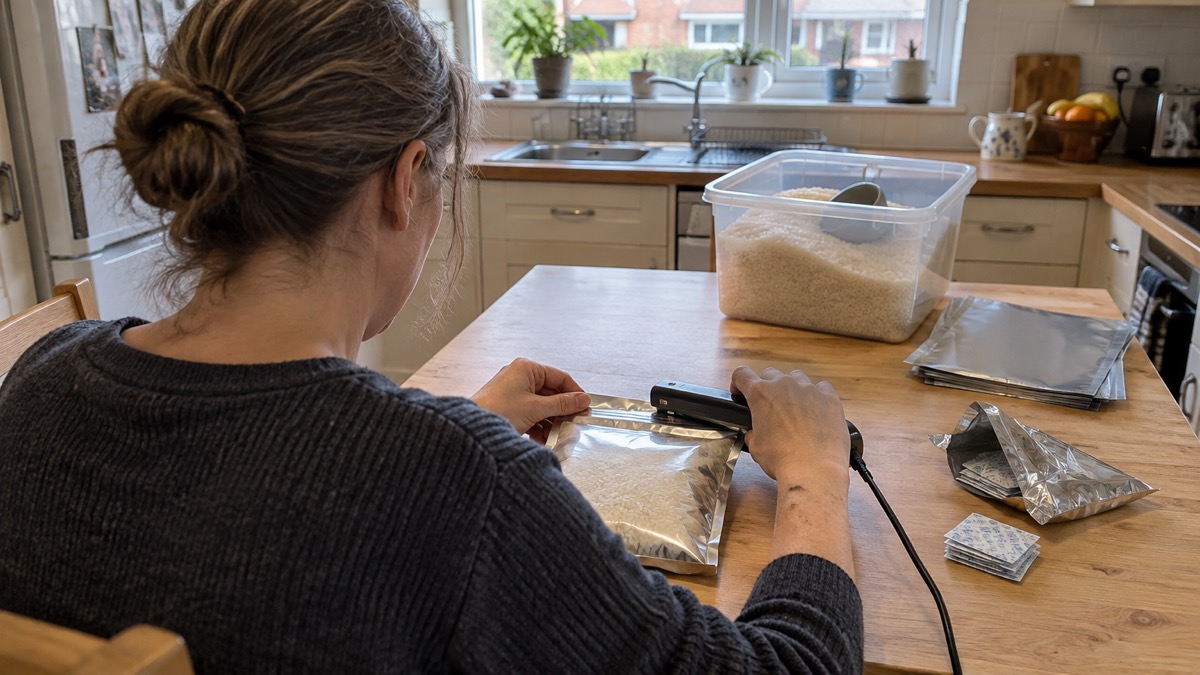
It is easy to assume a large sachet takes longer to get going, or that a small one is somehow quicker. Neither is true. The start time is the same across sizes: within minutes of the pack being opened1. What changes with size is capacity, meaning how much oxygen the sachet can take up before it is spent.
That distinction matters when you are choosing what to buy. A 2000cc sachet is not a "stronger" version that works faster; it is a larger reservoir. A 50cc sachet is not a "gentler" one; it is a smaller reservoir. Both begin at the same moment.
| Sachet size | What the size changes | What it does not change |
|---|---|---|
| 50cc | How much oxygen it can absorb | Start time after opening1 |
| 100cc | How much oxygen it can absorb | Start time after opening1 |
| 2000cc | How much oxygen it can absorb | Start time after opening1 |
The practical rule that follows is to match the sachet to the volume of air you are sealing, not to the weight of food alone. A bag with a lot of headspace needs more capacity than a tightly packed one of the same weight. If you are between sizes, the safer choice is the larger sachet, because an undersized absorber may not pull the bag tight.
Open the pack only when your containers are ready
The most common way to waste absorbers is to open the pack before the rest of the job is done. The fix is a strict order of work. Set out everything first, then open the absorbers, then pack without stopping.
- Decide how many containers you are filling and how many sachets each needs.
- Weigh or measure the dry food into its bags or containers, leaving the lids or tops open.
- Cut, label and prepare mylar bags, and have the heat sealer plugged in and tested.
- Open the absorber pack and take out only the sachets you need for this session1.
- Add the absorber to each container, then seal it immediately.
- Squeeze the air out of the original absorber pack and reseal it at once1.
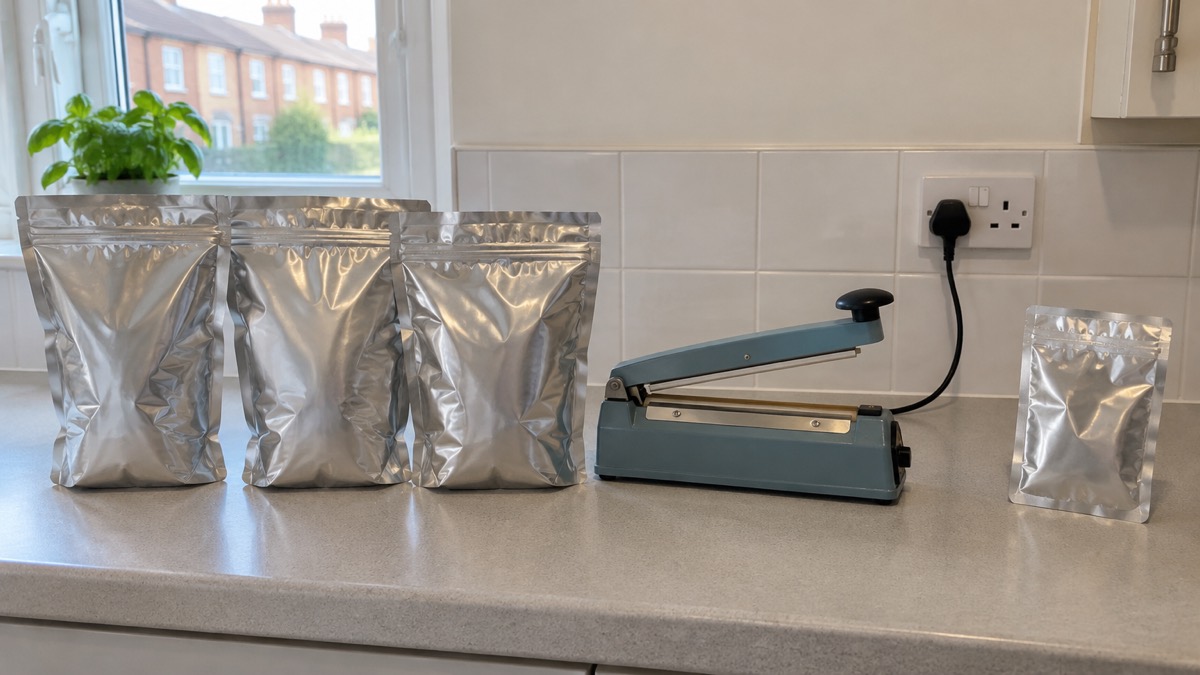
Working in this order means the absorbers spend their active minutes inside your containers rather than on the kitchen counter. It also means you are not handling food with one hand and sachets with the other.
If you are packing a large batch, split it into smaller sessions rather than opening one pack and working through the whole store. Each session gets a fresh pack, and no absorber sits out while you weigh the next batch.
Resealing, storing and checking what is left
Once the pack is open, the remaining sachets are on borrowed time. Reseal the original pack immediately, squeezing out as much air as you can before closing it, and use the remainder at your next session rather than leaving it in the cupboard indefinitely1. A resealed pack is not as good as a new one, because the absorbers inside have already started.
Store unopened packs in a cool, dry place until you need them. Do not open a pack just to count the contents, and do not decant sachets into jars or bags that let air through. Keep a note of the date you opened each pack so you know which to use first.
There is no simple household test that proves an absorber is still active. The practical check is the container. A mylar bag should collapse tightly around the food and stay firm; a rigid container lid should pull down hard. If the bag stays slack, the absorber was probably spent. This is a judgement from the container's behaviour, not a measurement of the sachet.
For the wider method, including bag sizing and sealing without a heat sealer, see How Long Food Lasts in Mylar Bags With Oxygen Absorbers and How to Seal Mylar Bags Without a Heat Sealer.
How long full absorption takes
Starting within minutes is not the same as finishing within minutes. Full absorption inside a sealed container takes longer, and the time depends on three things: how much air is trapped in the headspace, how well the container seals, and how much absorber capacity you have used.
A mylar bag with a small headspace and a correctly sized absorber will pull tight relatively quickly. A rigid container with a loose lid, or a bag with a lot of air left in it, will take longer and may never pull fully tight. The absorber can only remove oxygen it can reach, and it cannot compensate for a poor seal.
Judge completion by the container rather than by the clock. A mylar bag that has collapsed around the food and stays firm is doing what it should. A rigid container whose lid has become hard to lift has had oxygen drawn out of it. If neither happens, check the seal and consider whether the sachet was spent before it went in.
Where this fits in your store
Oxygen absorbers are one part of a dry-store method, not a standalone fix. They work alongside the bag or container, the food's own dryness and the seal. Get the order right, open the pack last, reseal the rest at once, and judge the result by how the container behaves. For the full picture, start with Emergency Food: A Household Guide to Stores, Safety and Meals Without Power and the Long-Term Food Storage Kit Checklist.
Sources (5)
- Rolled Oats, Apple and Blackcurrant, Expedition Foods, 2026-10-29
- Porridge with Strawberries, Expedition Foods, 2026-10-29
- Sterofreeze Instant Ice Packs (Long), Steroplast, 2026-10-29
- Sterofreeze Instant Ice Packs, Steroplast, 2026-10-29
- Steroguard Biohazard Spill Kit, Steroplast, 2026-10-28
 Long-Term Storage Kit Checklist
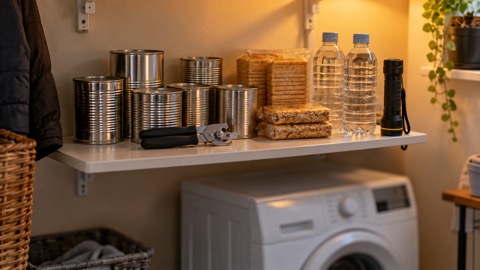 Store Cupboard Checklist
 30-Day Household Checklist
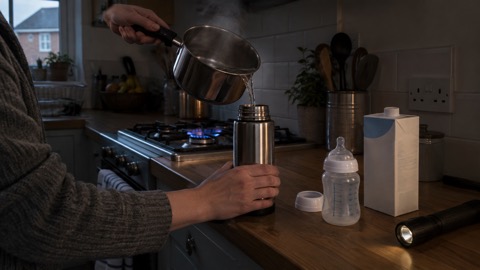 Baby Formula in a Power Cut
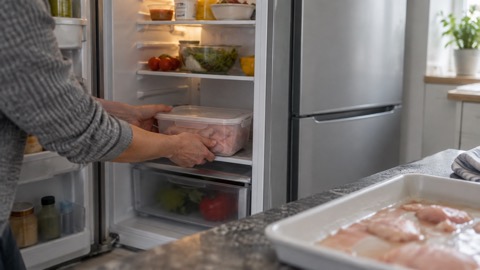 Refreezing Defrosted Meat
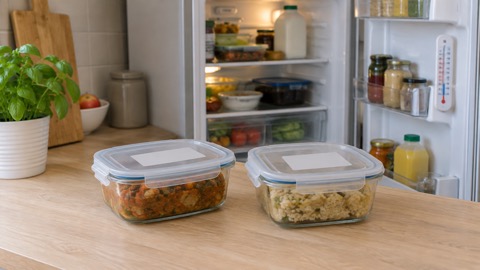 Leftovers in the Fridge
 Reducing Botulism Risk
 Sterilising Jars
 Spotting Spoiled Preserved Food
 Boiling Water in Glass Jars
 Mylar Bag Food Shelf Life
 Mylar Bag Sizes
 Are Mylar Bags Food Safe
 Silica Gel With Stored Food
 Freeze-Dried Meal Shelf Life