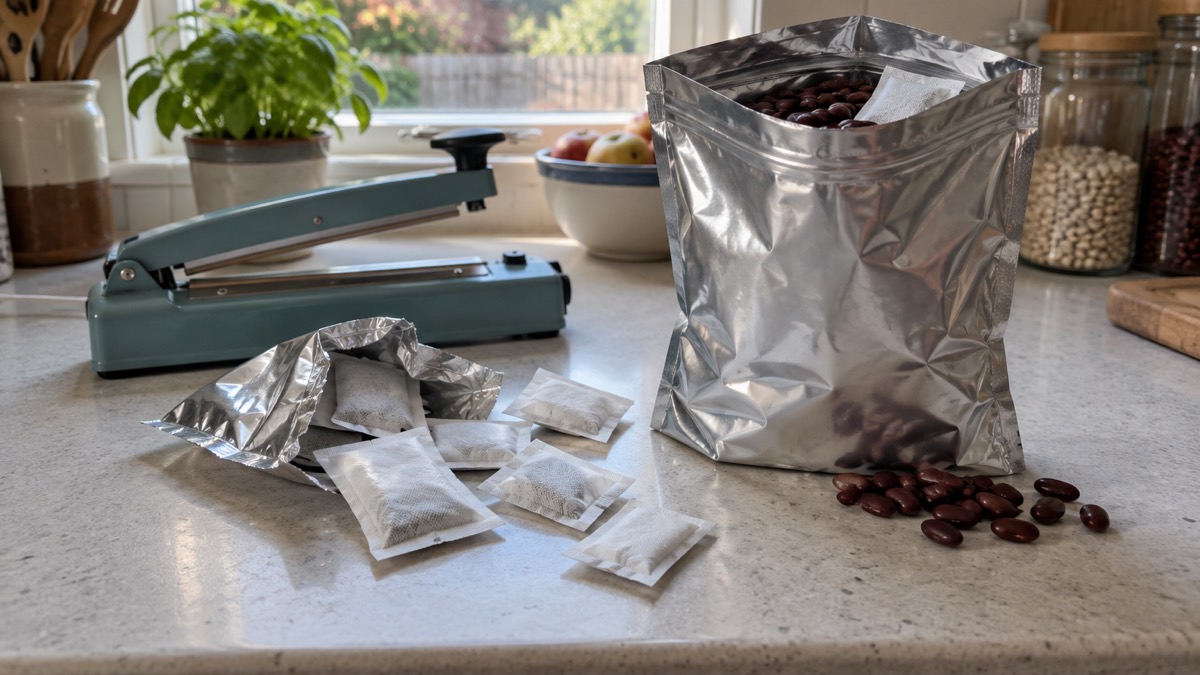
Yes, you can use silica gel sachets in mylar bags alongside oxygen absorbers, and the bag sizes sold for food storage are listed as compatible with both.
The two products do different jobs. Silica gel absorbs moisture, and an oxygen absorber removes oxygen. Used together, with a sachet sized to the bag, they give a dry, low-oxygen environment for rice, pasta, oats, pulses and other dry staples.
What follows is how to choose the sachet, how to use it safely, how to tell when one is spent and how to bring it back into service.
Silica gel and oxygen absorbers do different jobs
It helps to be clear about what each product is for, because they are often sold side by side and are easy to confuse.
Silica gel is a desiccant. Its purpose, in the supplier's words, is to "remove all the moisture which could impact the longevity of your food storage, creating the perfect dry environment for your storage and protection needs"5. Moisture inside a sealed bag is what turns dry rice soft, clumps powdered milk and gives mould a foothold. A desiccant takes that moisture out of the air in the headspace of the bag.
An oxygen absorber does something else: it removes oxygen. Mylar bags sold for food storage are commonly described in terms of the oxygen absorber they suit, and the supplier states that foods sealed in mylar bags with oxygen absorbers can last for decades5. The bag listings pair each bag size with a specific absorber, from 50cc for the smallest ziplock bags up to 2000cc for the largest heavy duty bags6.
Neither product substitutes for the other. A bag with an absorber but no desiccant still contains moisture; a bag with a desiccant but no absorber still contains oxygen. The bag listings treat them as a pair, which is the simplest guide to follow.
| Product | What it removes | What it protects against | Sized by |
|---|---|---|---|
| Silica gel sachet | Moisture from the air in the bag | Damp, clumping and mould in dry food5 | Bag dimensions4 |
| Oxygen absorber | Oxygen from the air in the bag | The spoilage that oxygen allows5 | Bag dimensions and volume7 |
Using both in one bag
The bag listings are explicit that the two can go in together. The 12cm x 20cm standup bag takes a 100cc absorber and a 10g sachet9.
Larger bags follow the same pattern. The 25cm x 35cm heavy duty bag, the 25cm x 40cm ziplock heavy duty bag and the 25cm x 35cm standup bag are each listed for a 300cc absorber and a 60g sachet10. The 35cm x 50cm heavy duty bag is listed for a 2000cc absorber and a 100g sachet12.
In practice:
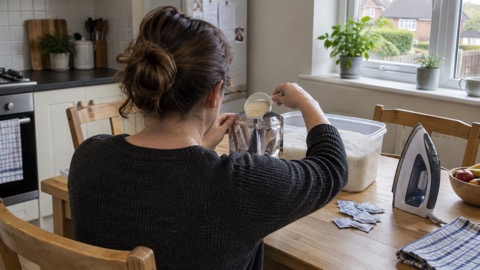
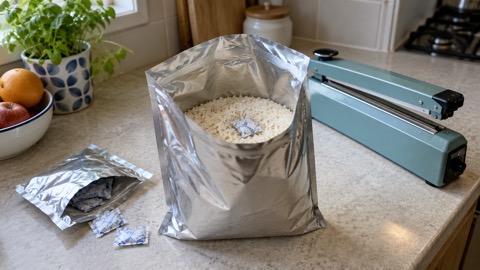
- Fill the bag with dry food, leaving enough headspace to seal.
- Add the oxygen absorber sized for the bag.
- Add the silica gel sachet sized for the bag.
- Seal the bag, pressing out as much air as you reasonably can first.
- Label the bag with its contents and the date.
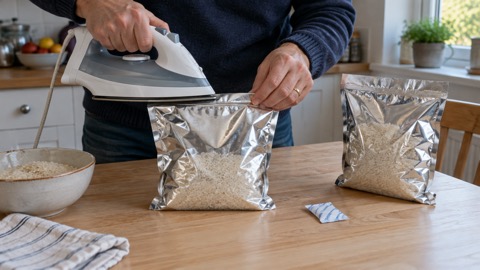
The supplier's own guidance for long-term storage is to use airtight mylar bags with oxygen absorbers, to seal them with a steam iron with the steam off or a hair straightening iron, and to label each bag with contents and date13. If you have no heat sealer, there are other ways to close a bag; see how to seal mylar bags without a heat sealer.
Which sachet size for which bag
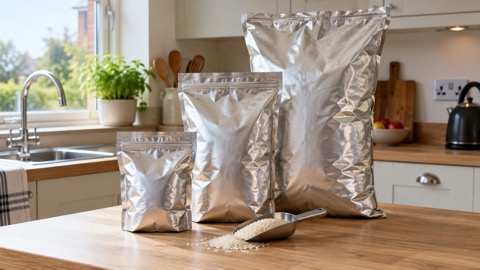
The sachet has to be big enough for the volume of air it is drying. Too small a sachet in a large bag will be spent long before the food is, and the food will slowly pick up moisture. The supplier publishes a size guide for each sachet, and the bag listings repeat it.
| Bag size | Oxygen absorber listed | Silica gel sachet listed |
|---|---|---|
| 12cm x 20cm standup | 100cc9 | 10g9 |
| 20cm x 25cm | 300cc9 | Not stated on the listing |
| 24cm x 34cm | 300cc14 | 60g4 |
| 25cm x 35cm heavy duty | 300cc10 | 60g10 |
| 25cm x 35cm standup | 300cc12 | 60g12 |
| 25cm x 40cm ziplock heavy duty | 300cc11 | 60g11 |
| 35cm x 50cm heavy duty | 2000cc12 | 100g12 |
| 48cm x 74cm, heavy duty 48cm x 74cm | 2000cc7 | 100g1 |
The sachet listings give the same advice from the other direction. The 60g sachets are described as ideal for 25cm x 35cm, 24cm x 34cm and 25cm x 40cm bags4. The 100g sachets are described as ideal for 35cm x 50cm, 48cm x 74cm and heavy duty 48cm x 74cm bags1.
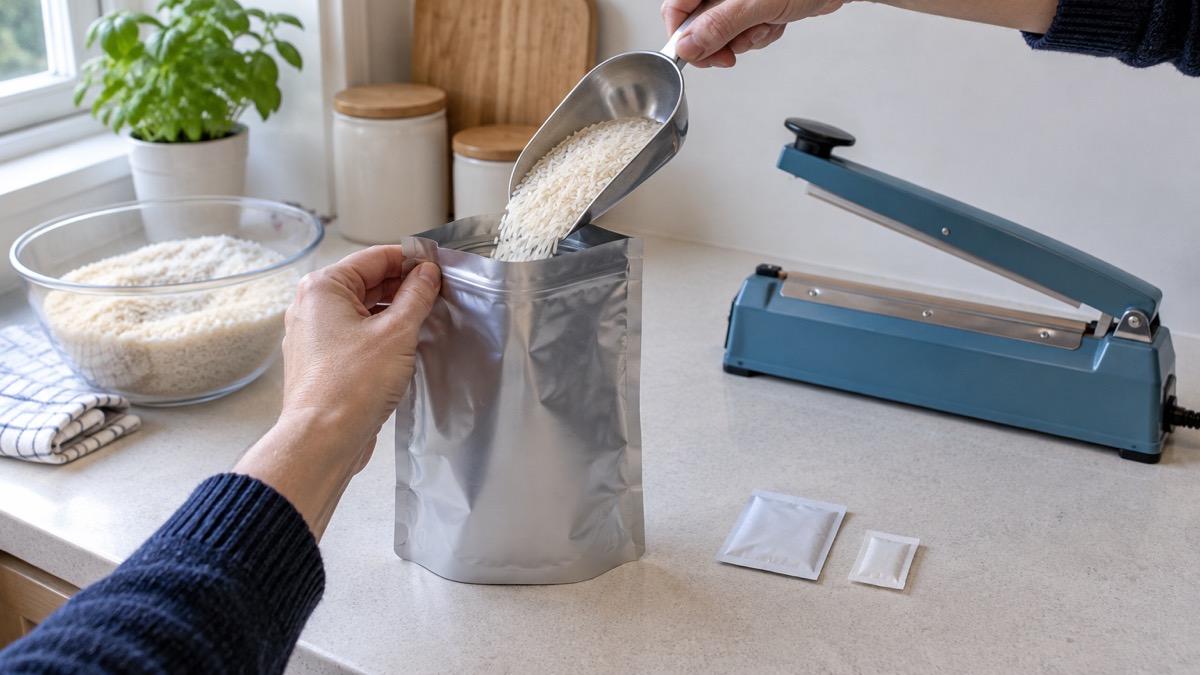
The smallest bags suit small quantities of light, moisture-sensitive foods. The 20cm x 25cm bag is suggested for small amounts of rice and pasta, cereals, oats and grains, nuts and pulses, and dehydrated meat and vegetables15. For the bigger picture on what to put in them, see rice, pasta, oats and pulses for long-term storage.
Keeping sachets dry before use and telling when they are spent
A desiccant works by absorbing moisture, and it does not wait until it is in your bag. A sachet left open in a kitchen cupboard, a shed or a garage will take in moisture from the air around it and be part-used before it ever reaches your food.
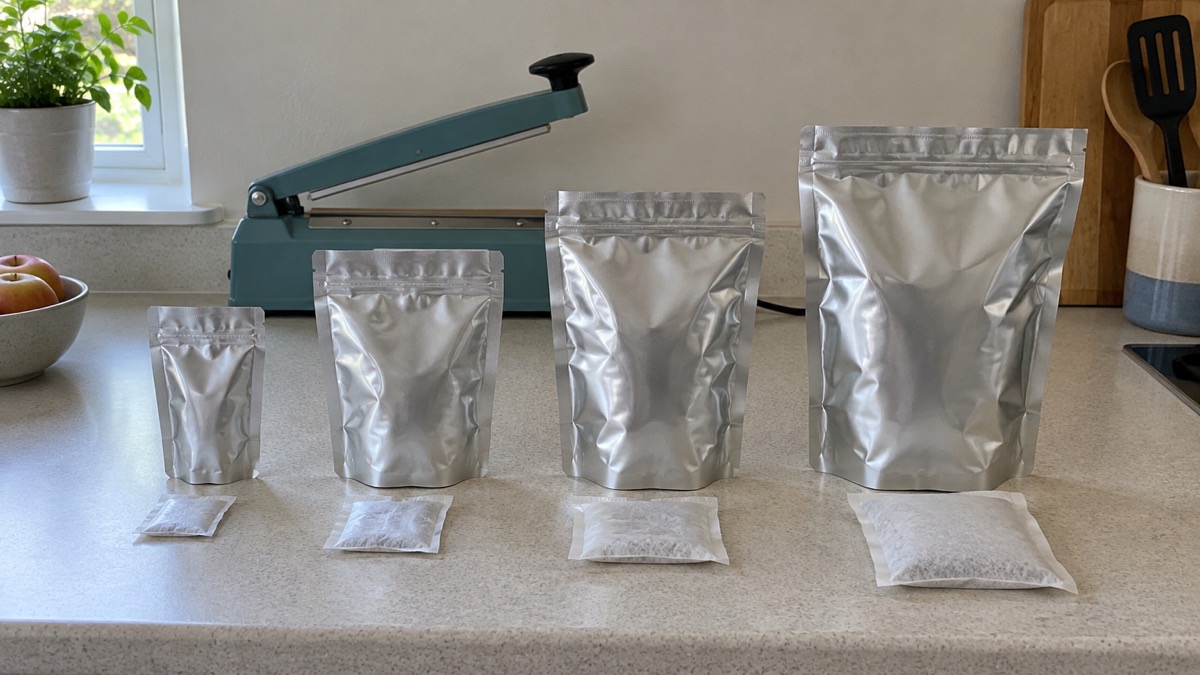
Keep sachets in their original sealed packaging until the moment you need them. The 60g sachets come in packs of 1, 5, 10, 50, 100 and 2504, and the 100g sachets in packs of 1, 5, 10, 50, 100 and 1601.
Some sachets carry a colour indicator. The supplier states that the indicator material in its desiccant packs is well suited to repeated regeneration and reuse4. When the indicator shows the sachet has taken up moisture, it can be dried out and used again.
Reusing silica gel sachets
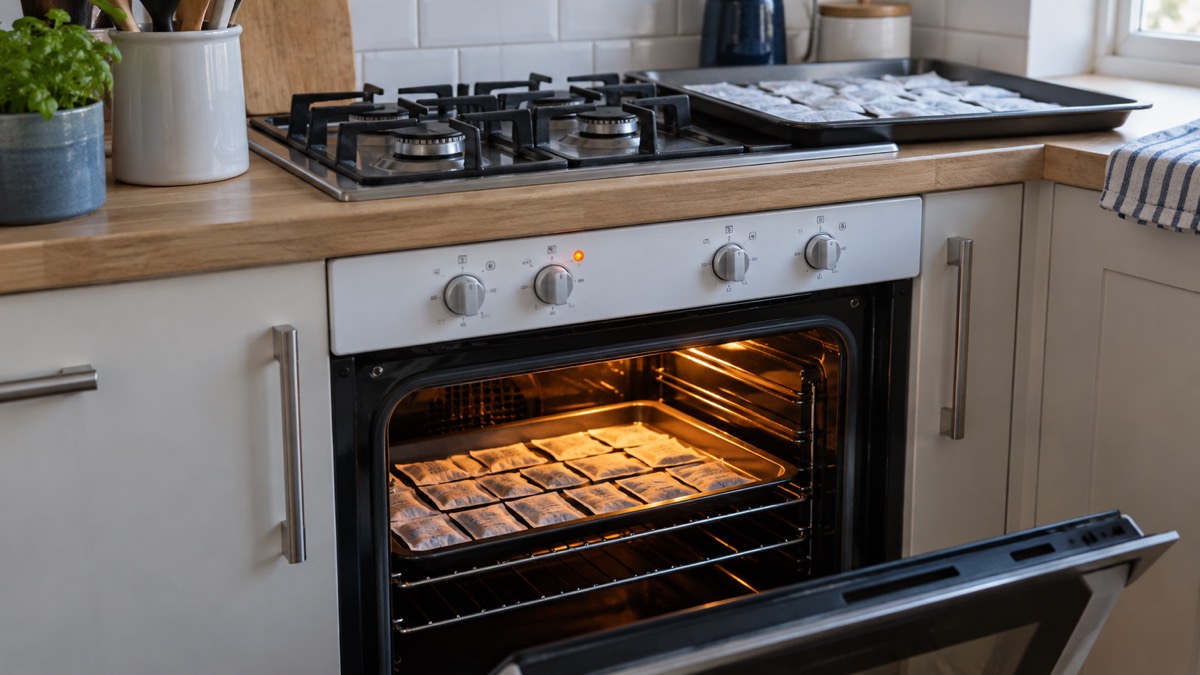
Silica gel is reusable, and the supplier says so plainly: its desiccant sachets are well suited to repeated regeneration and reuse5. The 60g sachets are described as easily regenerated in an oven or microwave, with the instruction to gently heat the sachets until the colour returns, after which they can be reused4.
That is the maker's instruction for its own product, and it is the one to follow. A few practical points sit around it:
- Regenerate only sachets that are intact. A torn sachet will spill beads into your oven or microwave.
- Let sachets cool and dry before they go back into a food bag.
- Regenerate in a batch, so you always have dry sachets ready when you fill bags.
- Keep regenerated sachets sealed until use, exactly as you would new ones.
The 60g sachets are described as completely non-toxic for food storage and as conforming to UK, EU and US FDA regulations for food safety4. The 100g sachets are described as completely non-toxic for food storage1. The 30g sachets use iron salts as the additive2.
Buying sachets on their own or in a bundle
You can buy the pieces separately or together. Mylar bags are sold on their own, and the bag listings state which absorber and which sachet suit them17. They are also sold as bundles with oxygen absorbers, and the bundle listings repeat the sachet size2.
| What you are buying | What it gives you | Who it suits |
|---|---|---|
| Sachets on their own | A pack of one size, for topping up bags you already have4 | Households with bags and absorbers already in the cupboard |
| Bag and absorber bundle | A bag with its matching absorber2 | Anyone starting out who wants the absorber matched for them |
| Bag, absorber and sachet together | All three, with the sachet size named on the listing2 | A first order, where matching by hand is the easiest thing to get wrong |
Buying the bundle removes the commonest mistake, which is putting too small a sachet in a large bag. If you buy separately, work from the sachet's own size guide rather than from memory4.
For the wider picture on bags, absorbers and how long food keeps in them, see mylar bags and oxygen absorbers for dry stores and how long food lasts in mylar bags with oxygen absorbers. If you are still deciding between bags and jars, mylar bags or glass jars for dry food sets the two side by side. And before you fill anything, keeping a long-term store cool, dry and free of pests covers where the bags should live once they are sealed.
Sources (18)
- 100g Silica Desiccant Sachets, Mylar Shop, 2026-10-10
- 20cm x 30cm HD Mylar Bag Oxygen Absorber Bundle, Mylar Shop, 2026-09-14
- 35cm x 50cm HD Mylar Bag Oxygen Absorber Bundle, Mylar Shop, 2026-09-14
- 60g Silica Desiccant Sachets, Mylar Shop, 2026-09-26
- Mylar Shop, Mylar Shop, 2025-08-11
- Mylar Ziplock Bag 10cm x 17cm Clear, Mylar Shop, 2026-09-14
- 2000cc Oxygen Absorbers, Mylar Shop, 2026-07-02
- 100cc Oxygen Absorbers, Mylar Shop, 2026-09-14
- Mylar Standup Ziplock Bag 12cm x 20cm, Mylar Shop, 2026-09-14
- Heavy Duty Mylar Bag 25cm x 35cm, Mylar Shop, 2026-10-18
- Mylar Ziplock Heavy Duty Bag 25cm x 40cm, Mylar Shop, 2026-10-24
- Heavy Duty Mylar Bag 35cm x 50cm, Mylar Shop, 2026-09-14
- The No-BS Guide to Urban Prepping in the UK, Preppers Only, 2024-06
- Mylar Ziplock Bag 24cm x 34cm, Mylar Shop, 2026-09-14
- Mylar Ziplock Bag - 20cm x 25cm | Mylar Shop, Mylar Shop
- Pet Safe Christmas, RSPCA, 2026-10-29
- Heavy Duty Mylar Bag 20cm x 30cm, Mylar Shop, 2026-10-21
- Medium Mylar Bag Oxygen Absorber Bundle, Mylar Shop, 2026-10-13
 Long-Term Storage Kit Checklist
 Store Cupboard Checklist
 30-Day Household Checklist
 Baby Formula in a Power Cut
 Refreezing Defrosted Meat
 Leftovers in the Fridge
 Reducing Botulism Risk
 Sterilising Jars
 Spotting Spoiled Preserved Food
 Boiling Water in Glass Jars
 Mylar Bag Food Shelf Life
 Mylar Bag Sizes
 Are Mylar Bags Food Safe
 Oxygen Absorber Activation
 Freeze-Dried Meal Shelf Life