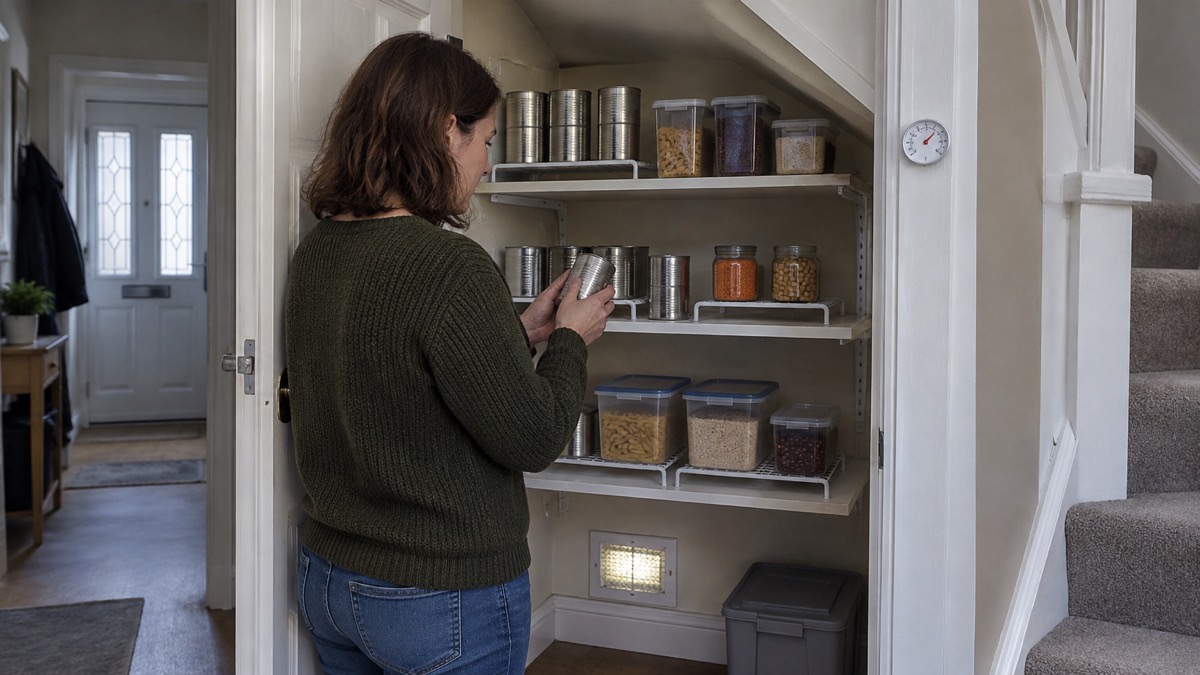
Storing emergency food well comes down to three things: keeping it cool, keeping it dry, and keeping pests away from it. UK official guidance is consistent on what to store: food with a long shelf life that does not need refrigeration or cooking, such as tinned meat, fish or vegetables, dried fruit and nuts, and it is best to buy food you would usually eat1. Most councils and the national Be Ready campaign suggest at least three days' worth of non-perishable food per household, with a tin opener1, and some local guidance goes further and suggests reserves for up to ten days3.
Where you keep that food matters as much as what you buy. Heat, damp, light and pests all shorten shelf life, and a store left in the wrong place can spoil years before its dates suggest. This page explains what counts as emergency food, how much to aim for, which foods keep longest, and how to keep the store cool, dry and pest-free in an ordinary UK home.
What counts as emergency food
Emergency food is not specialist survival kit. It is ordinary food, chosen for two qualities: it keeps for a long time without refrigeration, and it can be eaten without cooking. The national Be Ready checklist describes it as "Food with a long shelf life that doesn't need refrigeration or cooking e.g. tinned meat, fish or vegetables, dried fruit and nuts. It's best to buy food you'd usually eat"1. That last point matters for storage as much as for taste: food your household actually eats can be rotated through the kitchen cupboard, so nothing sits until it expires.
Council emergency kit lists across the UK point to the same range. Birmingham's household emergency supplies include long-life food such as canned food, dried food and energy bars, along with a manual can opener9. Wiltshire's guidance suggests bottled water and dried foods such as cereal bars10. Nottinghamshire recommends in-date tinned food and a tin opener, or long-life snacks11. North Hertfordshire lists non-perishable items such as canned food that does not need to be cooked, cereal and fruit bars, with the reminder to keep them up to date12.
Denbighshire's emergency supplies kit gives the fullest picture of what a ready-to-eat store can include: foods you can readily eat without heating or water, such as ready-to-eat meats or tuna, fruits, vegetables, canned or boxed juices, UHT milk, soup, high energy food like crackers or cereal bars, vitamins, food for infants or people on special diets, biscuits, boiled sweets and powdered milk5. If your household includes a baby, or someone with a medical diet, those needs belong in the store from the start, not as an afterthought.
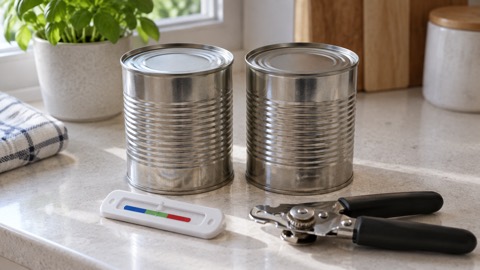
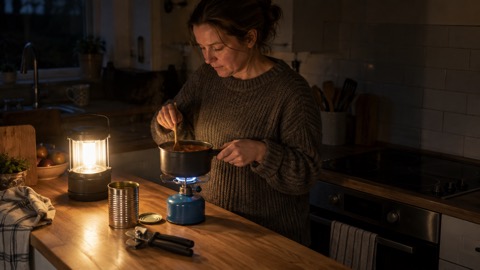
A few practical points follow from the "no cooking, no refrigeration" rule. A tin opener is listed again and again because tinned food is useless without one1. If you want the option of hot meals without mains power, that is a separate question about camping stoves and heating and cooking without mains power, covered elsewhere on this site. The core store should stand on its own.
How much to store: three days as the baseline, ten as a buffer
Almost every official source in the UK lands on the same figure: three days. The Be Ready checklist says non-perishable food for 3 days1. The Be Ready household emergency plan asks for non-perishable food to last at least 3 days that does not require cooking or refrigerating, for example tinned meat, fruit or vegetables, plus a tin opener2. Lancashire Prepared's emergency pack asks for enough food and bottled drinking water to last three days13. Lincolnshire and West Yorkshire's household emergency plans also point households to a three-day store of food they can fall back on14.
The three-day figure is a floor, not a ceiling. Argyll and Bute's severe weather guidance frames it as at least three days' supply of food, bottled water and other essentials, including medicines, and tinned and dry foods which store safely without need for electricity16. The Scottish Government's ready.scot kit asks for 3 days' supply of bottled water and food that does not need cooking and will not go off17. Renfrewshire advises keeping supplies that can meet essential household needs for at least 3 days18.
Some local guidance goes further. The "Are You Ready" booklet used in parts of England advises enough emergency reserves in your house for up to ten days, including essential medications, food and water3. Dumfries and Galloway's household emergency pack asks for enough emergency food for three days and a can opener, and recommends regularly checking the expiry dates on first aid supplies and food so nothing passes its use-by date19. A good approach for most households is to build the three-day store first, then extend towards a week or more once the basics are in place. How much food that means per person is worked through in how much emergency food to store per person.
Remember the people and animals beyond the adults of the house. The Be Ready household plan lists essential medication or medical supplies to last several days alongside the food2. Lancashire's winter guidance asks that vulnerable people are stocked up with enough food supplies for a few days in case they cannot go out20. For pets, Wiltshire and Swindon Prepared suggest a couple of days' supply of food, ideally tinned or long lasting, plus a couple of bottles of water and a bowl21.
Which foods keep longest
Within a long-life store, some foods keep far longer than others, and the storage conditions they need differ too.
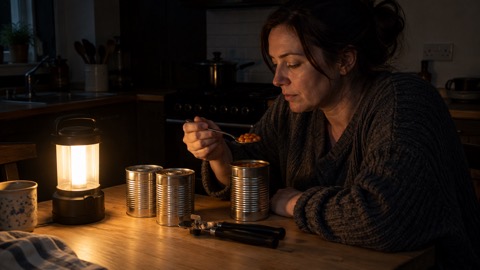
Tinned food is the backbone of most UK household stores. Wiltshire and Swindon Prepared's national power outage guidance is blunt about the choice: the food you have does not need to be fresh or perishable, in fact it is better to avoid these and keep some longer lasting products such as tinned food for emergencies22. Tins are also water-resistant packaging, which matters if your area floods: undamaged metal cans can be kept after flood contact once the outside is cleaned and sanitised8.
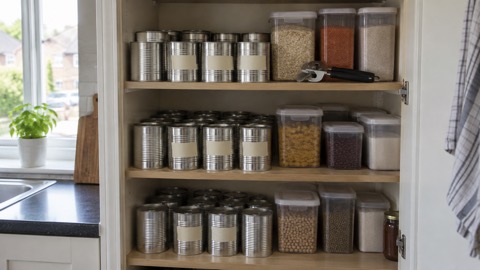
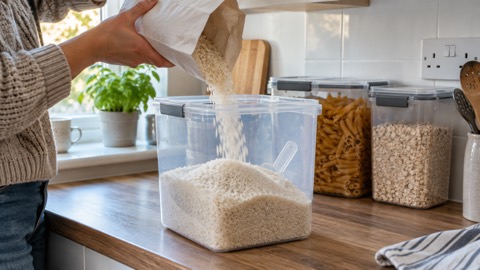
Denbighshire's kit guidance adds a storage rule for boxed food: to protect it from pests, store it in tightly closed plastic or metal containers5. Emergency food can be the everyday food families buy and store in their refrigerators and pantries, including vegetables, fruits and perishables, which can sustain a family for a good number of days10. After a flood, any food that has come into contact with flood water should be treated as unsafe and discarded8.
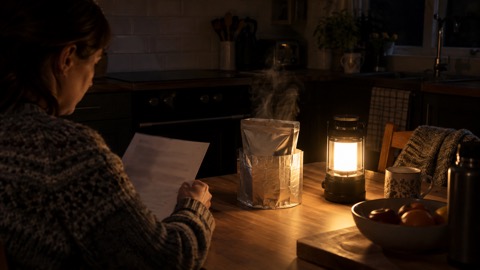
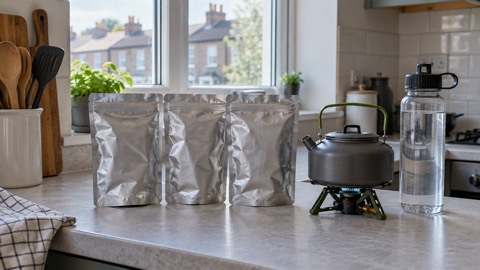
Freeze-dried meals and ration packs keep longest of all and need only water, but they are a supplement rather than a substitute: the everyday store should be food you will actually eat and rotate. The relative merits are set out in what to keep in an emergency store cupboard and tinned or freeze-dried meals.
| Food type | Keeps | Needs | Watch out for |
|---|---|---|---|
| Tinned meat, fish, vegetables, fruit | Long shelf life | A tin opener; dry, fairly cool place | Damaged, bulging or heavily rusted tins23 |
| Dried staples (rice, pasta, oats, pulses) | Long shelf life | Sealed containers against pests and damp | Paper or cardboard wrappers fail in damp or flood5 |
| Cereal bars, biscuits, dried fruit, nuts | Long shelf life | Sealed bags or containers | Keep up to date; rotate regularly12 |
| UHT milk, canned or boxed juice | Long shelf life | Cool storage | Check dates5 |
| Fridge and freezer food | Days, not years | Working refrigeration | Perishable; do not rely on it in an emergency15 |
Keeping the store cool and dry
The two conditions that matter most for a long-term store are dryness and a fairly cool, steady temperature. Food Standards Scotland's kitchen storage guidance is the clearest statement of the basics: keep cupboard and pantry food in sealed bags or containers, which helps keep food fresh and stops anything falling into the food by accident, and do not store food on the floor, because that can encourage mice, ants and other pests4. Denbighshire's kit guidance adds the temperature rule: keep tinned foods in a dry place where the temperature is fairly cool5.
Why dryness matters so much: damp corrodes tins, softens cardboard and paper packaging, and encourages mould. A tin stored in a damp garage or shed can rust, and official guidance on preserved food says do not eat from containers that are heavily rusted23. Damp also draws pests, which seek out water as well as food.
Why a steady, cool temperature matters: heat speeds up every process that ages food. A cupboard next to an oven, a boiler or a south-facing window will age a store noticeably faster than a cupboard on a cool inside wall. Choose the location accordingly, and if you use sealed plastic or metal containers, Denbighshire's guidance notes they protect boxed food from pests5.
Two further rules from Food Standards Scotland apply to the everyday food around your store. Do not reuse empty tins to cook or store food: in an opened can, the food and tin are exposed to air, which means the tin might transfer to the food more quickly4. And if a label shows no storage instructions and the food is a type that goes off quickly, put it in the fridge and eat it within 2 days4.
For frozen food, NHS inform advises that as the cold air will cause foods to dry out, you should always store frozen foods in airtight containers or freezer bags24. Chilling food correctly, at the right temperature, prevents the growth of harmful bacteria24, which is the whole purpose of the fridge and freezer in normal times. Fridge and freezer temperatures are covered in more detail in fridge and freezer temperatures and thermometers.
Mould, spoilage and why you cannot trust your eyes
Spoiled stored food is a real health risk, not just a disappointment. The government's home preservation guidance states the key warning plainly: "Preserved foods that have not been prepared correctly may not look, smell or taste unusual. Do not rely on appearance, smell or taste to decide whether food is safe to eat"23. The same guidance lists the conditions that mean preserved food must not be eaten: containers are bulging, containers are leaking, damaged or heavily rusted, food shows mould or spoilage, or you are unsure it was preserved safely23.
A bulging or swollen can is a particular danger because it can signal gas produced inside by bacteria, including the ones that cause botulism. The risks are explained in how to reduce the risk of botulism from food and is it safe to eat from a dented or swollen tin.
The same "do not trust your senses" rule runs through the official advice on food after floods and fires. Food Standards Scotland's flooding advice says that if you are not sure if food is safe to eat, throw it out8, and explains why flood contact is so serious: flood water is dirty and can contain harmful bacteria, viruses or chemicals from silt and sewage that can cause illness8. North Yorkshire Fire and Rescue Service, advising households after a fire or power loss, puts it in five words: "If in doubt, throw it out"25.
Bacteria that cause food poisoning do not always announce themselves. Shropshire Council's food poisoning guidance covers the everyday precautions that stop harmful bacteria spreading in a kitchen: store raw meat in sealed containers at the bottom of the fridge, use different boards for raw and ready-to-eat foods, and keep raw and ready-to-eat foods apart26. Anyone with diarrhoea, vomiting or nausea should not prepare food at all26. What illness from bad food looks like, and when to get medical help, is covered in food poisoning: symptoms, who is at risk and when to get help.
Signs a stored item should be thrown away
Check the store regularly, not just when an emergency looms. Dumfries and Galloway's guidance is to regularly check the expiry dates on first aid supplies and food to check they are not past their use-by dates19, and North Hertfordshire's kit list carries the same instruction to keep items up to date12.
When you check, look for:
- Bulging, swollen or heavily rusted tins, or tins that are leaking or damaged23
- Crushed or dented cans, which should be discarded along with any food in porous or damaged packaging27
- Mould, or any other visible spoilage, on or in the food23
- Packaging that has been gnawed or opened by pests, or signs of droppings around the store
- Food past its use-by date19
- Any item you are unsure about: if in doubt, throw it out25
The distinction between use-by and best-before dates matters here: a use-by date is about safety, a best-before about quality. That difference is explained in shelf life, use by and best before dates explained.
Flood damage has its own rules. Food Standards Scotland says food in water-resistant packaging such as metal cans, sealed pouches and tetra packs can be kept if it is not damaged, but the outside of the packaging must be cleaned and sanitised first to avoid cross-contamination8. Anything in paper, cardboard or plastic wrappers that has touched flood water must go8. The government's flood advice adds that you can keep food in water-resistant packaging including undamaged metal cans, sealed plastic pots and pouches, and tetra packs, washing the outside before storage or opening27. The full set of decisions is worked through in food after a flood: what to keep and what to throw away.
Keeping pests out of the store
Pests are the most common way a home food store is lost, and the defences are simple. Food Standards Scotland's storage guidance gives the two core rules: keep food in sealed bags or containers, and do not store food on the floor, because the floor encourages mice, ants and other pests4. Denbighshire's kit guidance adds the container rule for boxed and packet food: store it in tightly closed plastic or metal containers to protect it from pests5.
In practice, that means:
- Keep everything in sealed bags, containers or boxes rather than open packets4
- Use tightly closed plastic or metal containers for boxed and packet foods5
- Store nothing on the floor; use shelves or cupboards4
- Wipe up spills and crumbs around the store promptly, so the area offers no food besides the sealed store
- Check the store every few months for gnawed packaging, droppings or insects
The floor rule has a second benefit in flood-prone areas. Food Standards Scotland advises that if you live in an area that regularly floods, keep food in high cupboards or shelves8. That protects the store from rising water as well as from mice, and it is worked through further in where to keep an emergency store if your area floods.
If food does become contaminated, dispose of it in a way that does not then attract pests. Northumberland Council's flood advice, written for businesses but applying equally to a household clear-up, says all food that may have been contaminated must be destroyed, double bagged and placed in a sealed container to prevent attracting pests28.
Where in the home to keep the store
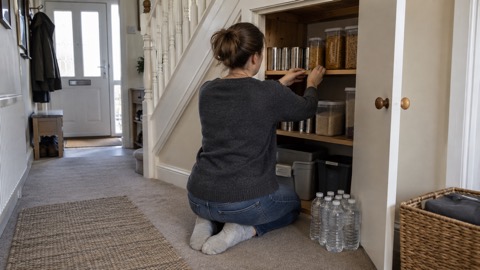
The best place for an emergency food store is a cool, dry cupboard indoors, off the floor, in a spot every member of the household knows. Denbighshire's guidance suggests using plastic boxes or backpacks to keep the supplies together, and keeping the kit in a designated place that all household members know5. Neath Port Talbot's emergency kit checklist pairs bottled water with ready-to-eat food that will not go off29, and keeping the two together means one trip in the dark rather than a search.
A garage or shed is usually the wrong place. Damp air rusts tins and spoils cardboard packaging, and outbuildings are easier for mice and other pests to enter than the inside of a house. Denbighshire's guidance is to store boxed food in tightly closed plastic or metal containers to protect it from pests5, so if you have no alternative, use sealed containers, check them more often, and expect shorter shelf life than the labels suggest.
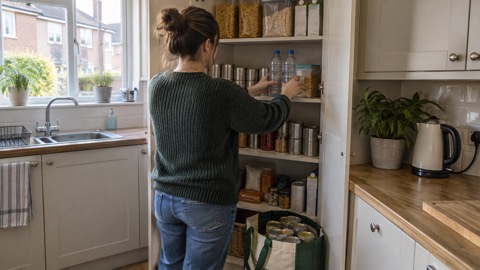
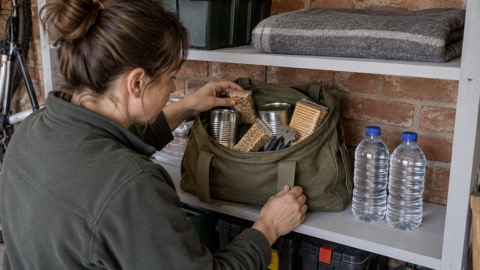
A kitchen cupboard works well for a store you rotate, because the food flows into everyday meals. A separate cupboard in a cooler room works better for a deeper long-term store you rarely touch. Buckinghamshire's grab bag guidance suggests the companion habit: prepare a small easy-to-carry bag with essentials and store it in an accessible place ready to go30. The grab bag and the main store are different things, and both have a place; the wider kit is covered in emergency kit: what a UK household should keep ready.
If your area floods, move the store up. High cupboards or shelves are the official recommendation for households in areas that regularly flood8. And if the worst happens and you face an immediate danger such as fire, North Devon's guidance is clear: leave straight away, follow the emergency services' instructions and do not delay to collect a bag31.
Fridge and freezer food in a power cut
The store cupboard carries you through a power cut, but most households also have a fridge and freezer full of food, and the official advice on saving it is specific.
Keep fridge and freezer doors closed as much as possible6. A power outage of less than 4 hours is unlikely to impact the safety of food in chilled or frozen storage, according to the government's consumer advice7. During a power cut, food should be safe in the fridge as long as the temperature does not rise to 8°C, Food Standards Scotland says6. The government advice agrees: in power cuts, food can be stored in fridges at temperatures under 8°C7.
Food should remain frozen in disconnected freezers for up to 24 hours with the doors kept closed, according to Northumberland Council's advice28. Defrosted food should be safe if treated as chilled food, refrigerated and used up within a couple of days; if frozen food has risen above 8°C for more than four hours it should be thrown away28. If the fridge has not been working for more than four hours, throw away the food inside28.
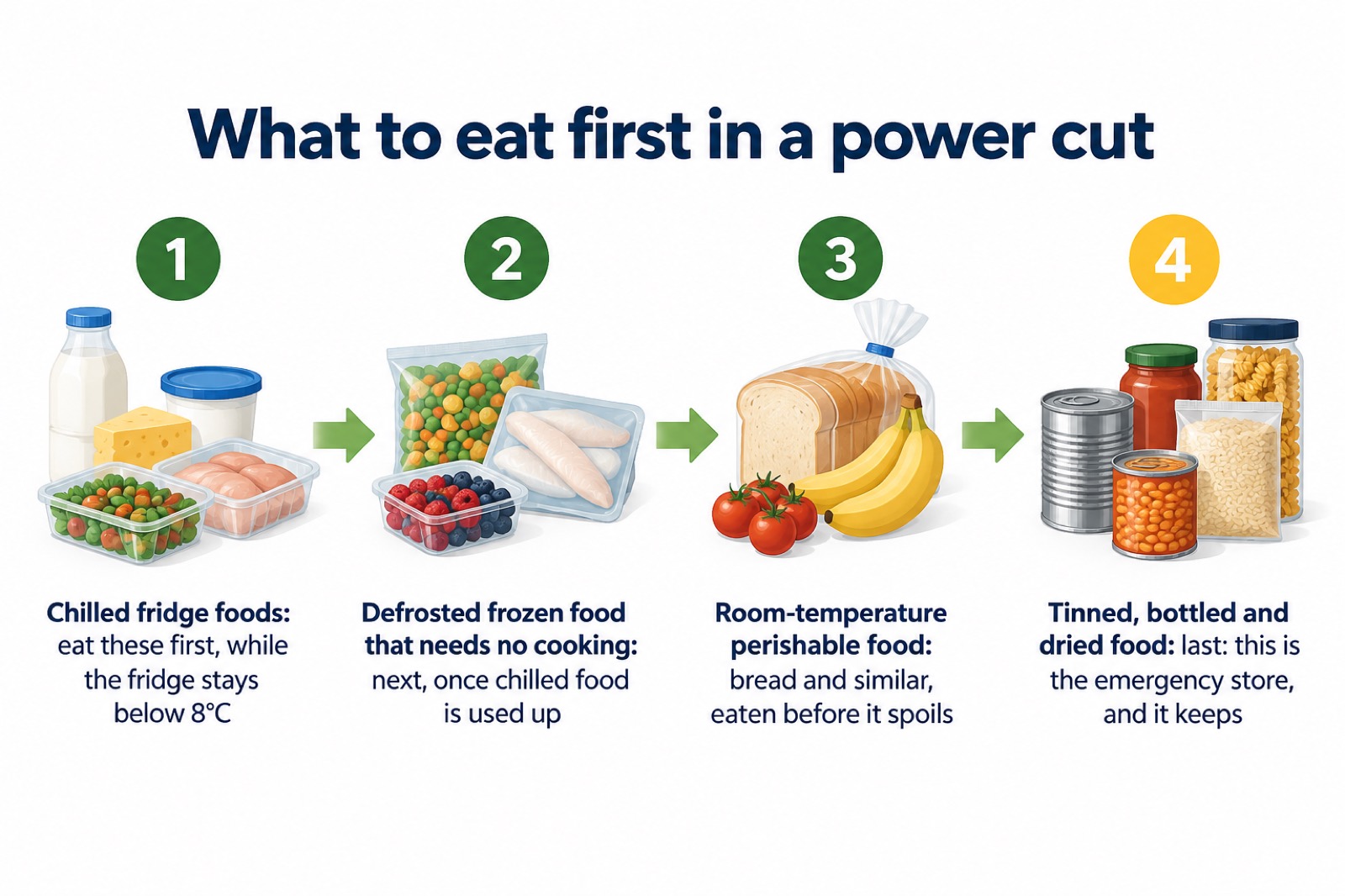
To reduce waste, use foods in a set order. Food Standards Scotland's power cut guidance says to use up foods in this order: chilled fridge foods first, then defrosted frozen food that does not need cooking, then room-temperature perishable food such as bread, and finally room-temperature tinned, bottled and dried food6.
Two more official tips can save the freezer load. North Yorkshire Fire and Rescue Service suggests considering transferring food to a neighbour's house if their power is unaffected25. And if the weather is cold, below 8°C outside, the government advice says you can store food outside, in clean dry conditions, out of direct sunlight, protected from animals, in a sealed box to prevent contamination and tampering7. Food Standards Scotland gives the same permission for chilled foods in a sealed container6. Keeping food cold without a fridge is covered in cool boxes and cool bags.
Storing water alongside the food
Every official kit list pairs food with water, so plan the storage for both together. Lancashire Prepared's pack asks for enough food and bottled drinking water to last three days13. Neath Port Talbot's checklist keeps bottled water and ready-to-eat food that will not go off at home29, and its advice for leaving home adds ready-to-eat food, a warm drink in a flask and bottled water29. The Scottish Government's ready.scot kit lists 3 days' supply of bottled water alongside the food17.
Store bottled water in the same designated place as the food, in the same cool, dry conditions, off the floor and away from chemicals or cleaning products. Water storage in depth is covered in water in an emergency. If you keep pets, remember their water too: a couple of bottles and a bowl is the official suggestion21.
Rotating the store so nothing is wasted
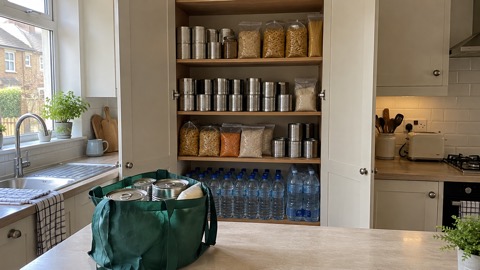
A store you never touch is a store that expires. The simplest system is first in, first out: new purchases go to the back, older items move to the front, and everything gets eaten in turn. Emergency food can simply be the everyday food families buy and store in their refrigerators and pantries10, so the store can be a deeper version of your normal cupboard, and rotation happens naturally.
For a dedicated emergency kit, Denbighshire suggests a more deliberate cycle: replace the whole food side of the kit every six months and live off the replaced food for a few days5. That uses everything up while it is still well within date, and it doubles as a practice run for eating from the store. The system is set out step by step in rotating your store: first in, first out.
Check dates on a regular schedule rather than by chance. Dumfries and Galloway recommends regularly checking the expiry dates on first aid supplies and food19. Leftovers and short-life items have their own limits: eat leftovers within 2 days32, and do not keep leftovers for longer than two days24. Defrosting meat, fish and poultry should be kept covered or in a sealed container on the bottom shelf of the fridge so liquid cannot drip onto other food32.
Getting help when you cannot build a store
Not every household can afford to hold days of extra food, and there is no shame in that; help exists. If you are struggling to afford food, food banks and local council support are the routes to try, and they are explained in getting emergency food help and how to get a food bank voucher referral. Households that need extra support during power cuts or other emergencies, including older, disabled and medically dependent people, can often join their energy supplier's Priority Services Register; that is covered in extra help in an emergency.
Sources (32)
- Be Ready Checklist, UK Government Be Ready campaign, 2026
- Be Ready Household Emergency Plan, UK Government Be Ready campaign, 2026
- Are You Ready booklet, Culham Parish Council, 2025
- Food storage advice, Food Standards Scotland, 2026
- Emergency Supplies Kit, Denbighshire County Council, 2020
- Food safety in a power cut, Food Standards Scotland, 2026
- Food safety in a power cut: advice for consumers, UK Government, 2023
- Flooding food safety advice, Food Standards Scotland, 2026
- Birmingham Prepared: household emergency supplies, Birmingham City Council, 2026
- Planning for an emergency kit, Wiltshire Council, 2026
- Preparing for an emergency, Nottinghamshire County Council, 2026
- Preparing for emergencies, North Hertfordshire District Council, 2015
- Emergency pack, Lancashire Prepared, 2026
- Get help and advice in an emergency, Lincolnshire County Council, 2026
- Household Emergency Plan, West Yorkshire Prepared, 2026
- Be prepared at home and in your community, Argyll and Bute Council, 2026
- Emergency kit, Ready Scotland, 2026
- Prepare your home for emergencies, Renfrewshire Council, 2025
- Prepare for emergencies, Dumfries and Galloway Council, 2026
- Keeping warm and well during winter, Lancashire County Council, 2026
- Your pets, Wiltshire and Swindon Prepared, 2026
- What is a national power outage, Wiltshire and Swindon Prepared, 2026
- Consumer advice for food preservation at home, UK Government, 2026
- Preparing and cooking food safely, NHS inform Scotland, 2025
- Steps after a fire, North Yorkshire Fire and Rescue Service, 2026
- Food poisoning and waterborne infections, Shropshire Council, 2026
- Food safety after a flood: consumer advice, UK Government, 2018
- Information about specific safety concerns, Northumberland County Council, 2026
- NPT Prepared emergency kit checklist, Neath Port Talbot Council, 2026
- Emergency grab bag, Buckinghamshire Council, 2023
- Be prepared for emergencies, North Devon Council, 2026
- Chilling, Food Standards Scotland, 2026
 Long-Term Storage Kit Checklist
 Store Cupboard Checklist
 30-Day Household Checklist
 How Much Emergency Food to Store
 What to Store in an Emergency
 Starting a Store Cupboard
 Shelf Life and Date Labels
 Rotating Your Food Store
 Meals Without Power
 Self-Heating Meals
 Tinned Food Guide
 Rice, Pasta and Pulses Storage
 Freeze-Dried Meals
 Emergency Ration Packs
 Emergency Ration Bars