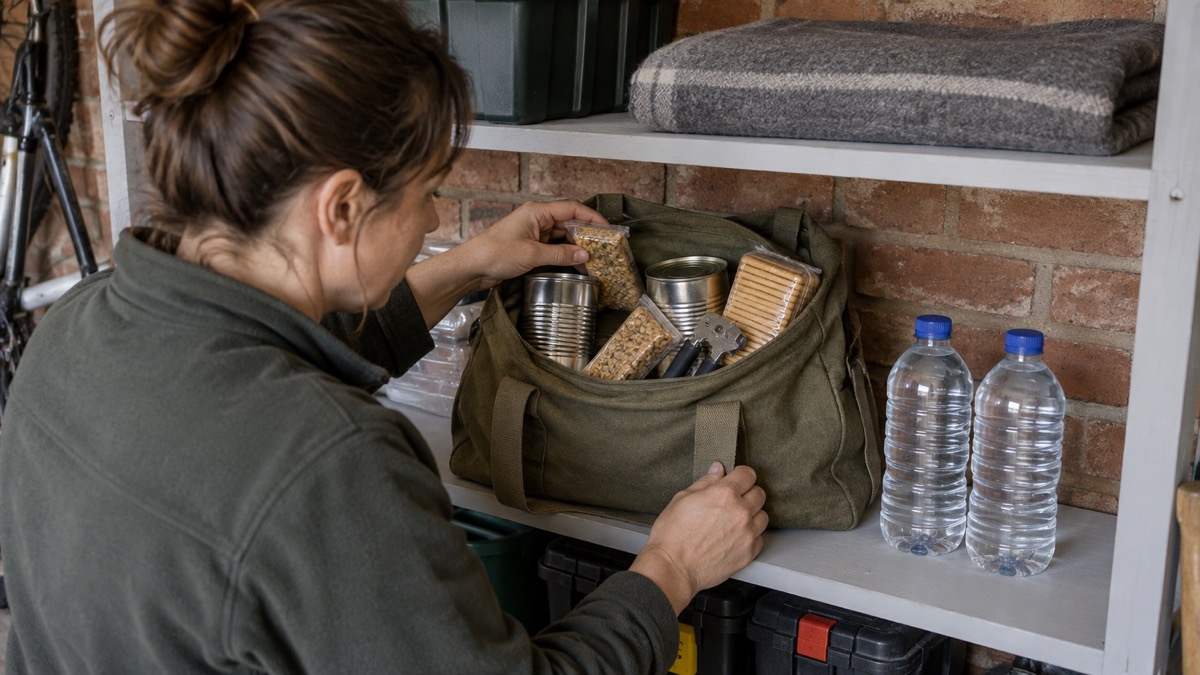
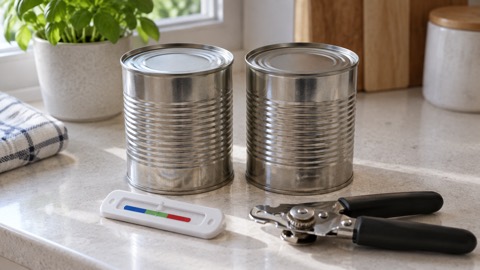
An emergency ration pack is the food part of your household's emergency kit: a store of food that keeps at room temperature, needs no refrigeration and, ideally, little or no cooking. UK official guidance is consistent on how much to aim for. Most local resilience forums and councils tell households to keep enough food and bottled water to last three days1. The national Be Ready household plan asks for non-perishable food to last at least three days that does not require cooking or refrigerating, such as tinned meat, fruit or vegetables, plus a tin opener2.
What that food actually is matters more than the packaging it comes in. The best emergency ration pack is built from food your household already eats, because you will rotate it into your normal meals and replace it, rather than buying specialist "survival food" that sits forgotten until it expires. Official guidance puts it plainly: "It's best to buy food you'd usually eat"3. This page explains what goes into a ration pack, how emergency food and long-life survival food differ, what to eat first when the power goes off, and where everyday food falls short in a longer emergency.
Emergency food and survival food: how the two differ
The two terms get used interchangeably, but they describe different jobs. Emergency food is the food you keep to get through a short disruption: a power cut, a storm that stops you reaching a shop, a flood that keeps you at home for a few days. Survival food is food manufactured to keep for years, designed to sit in storage until a serious, long-running emergency. The practical difference is shelf life and how you manage it.
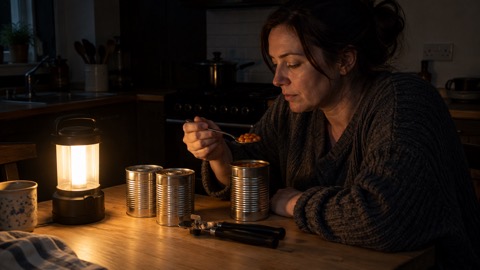
Emergency food is ordinary cupboard food. Councils and resilience partnerships across the UK list the same core items: tinned food that is ready to eat, such as tinned fish, meat, fruit, vegetables and soups, plus long-life pasta, rice, lentils, chickpeas, butter beans, oats, whole-grain crackers, oatcakes and crispbreads7. Argyll and Bute Council advises keeping at least three days' supply of food, bottled water and other essentials, including tinned and dry foods which store safely without electricity8. The point is that this food is part of your weekly shop, eaten and replaced as you go.
Survival food is bought to be stored, not eaten this month. It includes freeze-dried meals in sealed pouches, sealed ration packs and dry staples packed for very long storage. Nothing in official UK household guidance requires it: the three-day figure above is built on ordinary tinned and dried food. Where survival food earns its place is in planning for disruptions longer than your cupboard would normally cover, or where you want a store you rarely have to think about. The trade-off is weight, cost and the discipline of checking dates, which is why the rotation advice below matters whichever kind you keep.
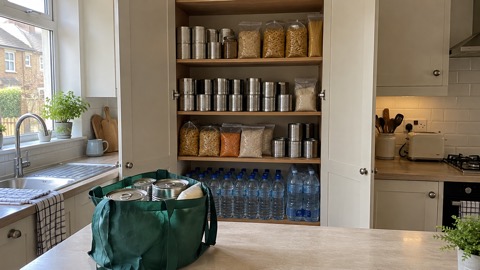
A household starting from nothing should build the emergency layer first: three days of food you like eating, in tins and packets, with a tin opener. Only then consider whether a longer survival store is worth it for your circumstances. Our pages on how much emergency food to store per person and starting a store cupboard supply step by step cover those stages in detail.
How much food to store: three days or longer
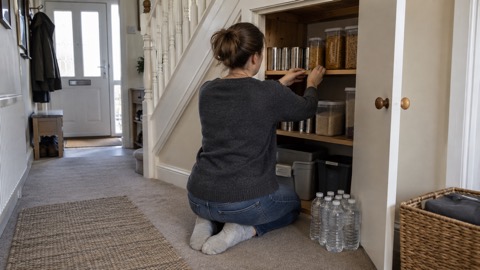
The most common official figure is three days. Lancashire's emergency pack guidance says enough food and bottled drinking water to last three days1. Dumfries and Galloway's household emergency plan asks for enough emergency food for three days and a can opener9. The national Be Ready checklist asks for non-perishable food for 3 days3.
Some guidance leaves the door open to more. Denbighshire's emergency supplies kit guidance explains the reasoning: in a major emergency covering a widespread area, you may have to survive on your own for up to three days or more, so keep your own water, food and emergency supplies6. Lancaster's winter advice gives a practical reason for a deeper store: ensure you have a good stock of tinned or long life food, as you may not be able to reach a supplier for a number of days10.
| Target | Who advises it | What it covers |
|---|---|---|
| 3 days of food and bottled water | Lancashire Prepared1; Dumfries and Galloway9; Be Ready checklist3 | The standard minimum for storms, power cuts and short evacuations |
| At least 3 days, non-perishable, no cooking or refrigeration | Be Ready household emergency plan2 | Adds the "no cooking" test to the same figure |
| Up to three days or more | Denbighshire emergency supplies kit6 | For households wanting to cover longer or widespread disruption |
Between these sits a simple rule for building your store: start at three days, then extend the cupboard store if your circumstances warrant it, for example if you live somewhere that gets cut off by snow or flooding. A 7 day ration pack or a 1 month emergency ration store is simply the same logic carried further, and the food in it is the same tinned and dried food, bought in larger quantity and rotated steadily. What changes as the store grows is the management burden: the more you hold, the more important date checking and rotation become, which is covered in rotating your store: first in, first out.
One group needs particular attention. Denbighshire's guidance notes that food, unlike water, may be rationed safely, except for children and pregnant women, and that you should include baby food and pet food if appropriate6. Greater Manchester guidance likewise says to include ready-made baby formula and pet food if needed11. If your household includes a baby, see babies, young children and medical diets in an emergency and how to make up baby formula in a power cut.
What goes into a ration pack: bars, crackers, cans and grains
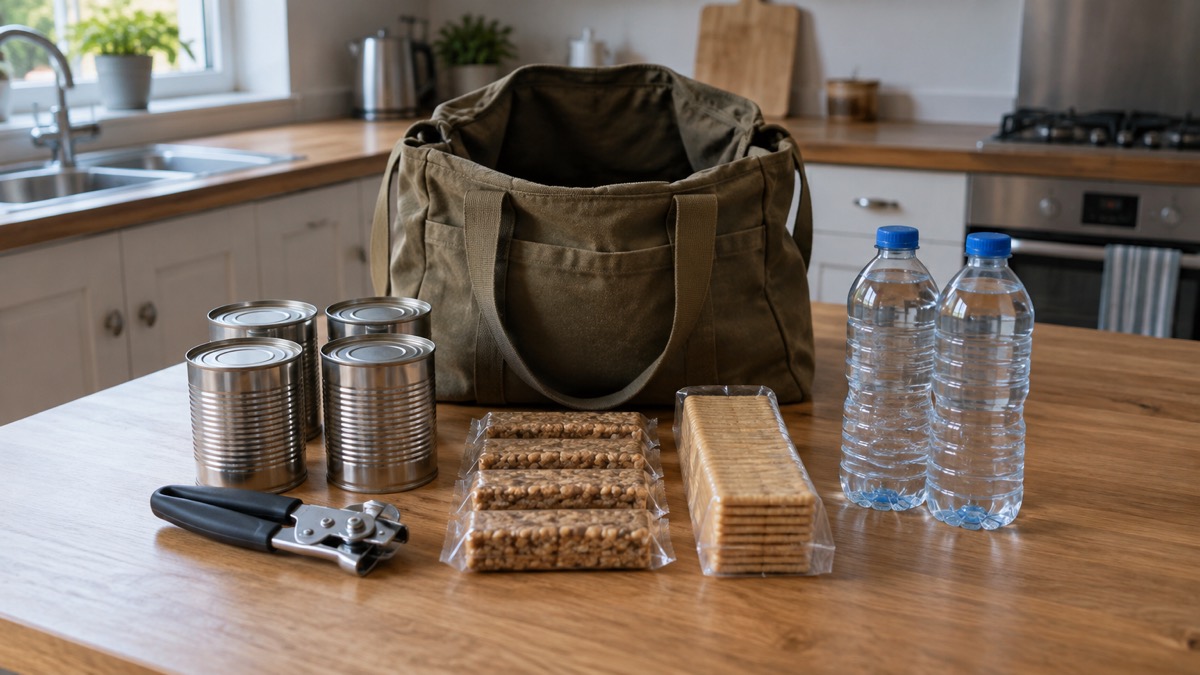
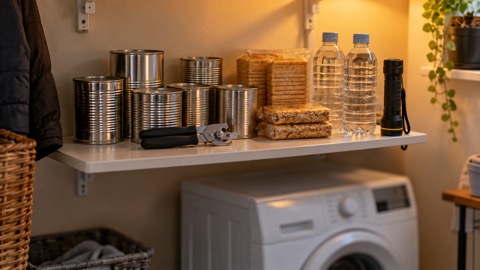
Across the many official kit lists, the same food items appear again and again. Assembled together, they give you a practical contents list for a household ration pack.
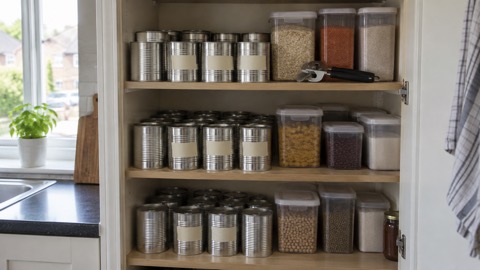
- Tinned food, ready to eat: tinned fish, meat, fruit, vegetables and soups, chosen so they can be eaten cold if there is no way to heat them7
- A tin opener: listed by name in several official kits, because tinned food is useless without one9
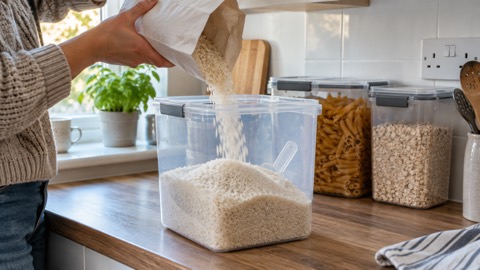
- Dry staples: long-life pasta, rice, lentils, chickpeas, butter beans and oats7
- Crackers and crispbreads: whole-grain crackers, oatcakes and crispbreads, which official guidance singles out as very helpful in a power cut7
- Bars and cereal: non-perishable items such as cereal and fruit bars, kept up to date12; energy or cereal bars appear in the Scottish Flood Forum's emergency flood kit13
- Dried fruit and nuts: long shelf life, no refrigeration or cooking needed3
- Baby food and pet food: if your household needs them6
- Bottled water: every official list pairs the food with water for drinking1
Two principles shape the choice. First, prefer food that can be eaten without cooking, because a power cut may take out your hob, oven and microwave together. North Herts' kit list specifies canned food that does not need to be cooked, plus cereal and fruit bars, and stresses keeping them up to date12. Second, buy food you normally eat, so the store turns over naturally3. A ration pack built from your own shopping is cheaper to maintain and far more likely to be edible when you need it.
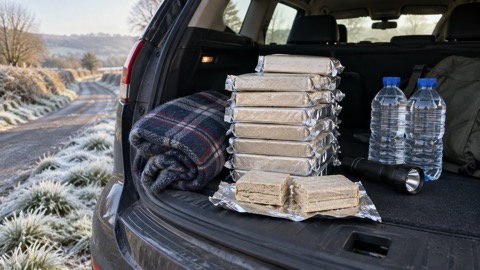
The weight of the pack depends on what you put in it. Tins are heavy and suit a store that stays at home; bars, crackers, dried fruit and nuts are light and suit a grab bag you might carry. Official grab bag lists reflect this: Hillingdon's household emergency plan grab bag includes long life food and snacks alongside bottled water, medication, a torch, a power bank and documents15, and Essex Prepared's emergency grab bag lists canned or dried food with bottled drinking water, thermos flasks and pet supplies16. If you are packing a bag to carry rather than a cupboard to sit at home, lean towards the light end and see our page on emergency ration bars.
Foods that keep at room temperature when the power goes off
When the power goes off, your fridge and freezer stop being reliable stores, and everything that depends on them becomes a countdown. The Food Standards Agency's advice, quoted in power cut guidance, is that your fridge will keep food safe for up to four hours during a power outage, provided you keep the door closed as much as possible4. The government's consumer advice on food safety in a power cut states that a power outage of less than 4 hours is unlikely to impact the safety of food in chilled or frozen storage5. Wigan Council's power cut advice adds the practical steps: keep fridge and freezer doors closed to protect the temperature, and switch off appliances at the switch so they do not come back on unattended17.
Food that was already at room temperature is unaffected by any of this. The government advice is clear: "Food that is normally stored at ambient temperature will continue to be safe to eat. Some foods such as tinned foods wil" be safe to eat without heating through, and you should eat these after perishable foods requiring chilled storage5. This is the core of what a ration pack protects you against: while the fridge is on a clock, the cupboard is not.
Food Standards Scotland sets out the order in which to use food during a power cut, and it is worth pinning inside a cupboard door:
- Chilled fridge foods first, while the fridge is still within its safe window18
- Defrosted frozen food that does not need cooking18
- Room-temperature perishable food such as bread18
- Room-temperature tinned, bottled and dried food, which keeps safely for the long haul18
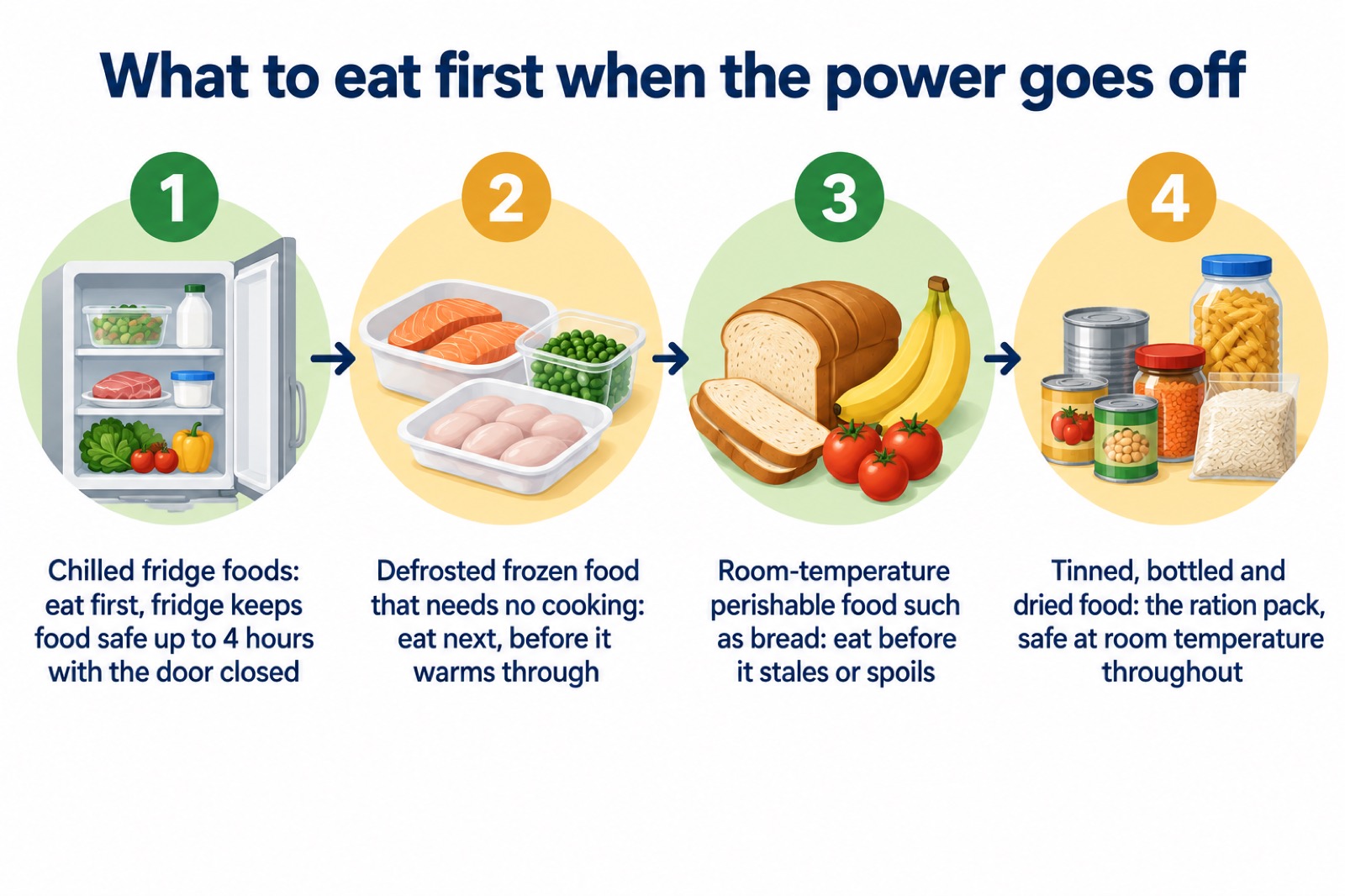
This order does two jobs: it keeps your household fed through the disruption and it cuts food waste by using up the perishable food before it becomes unsafe. It also shows why the ration pack is the last thing you should touch in a short power cut. If the outage ends within four hours, your chilled and frozen food is likely still safe5, and your cupboard store stays intact for the next event. Our page on meals without power covers what you can actually cook, and cool boxes and cool bags covers buying cold storage time for the fridge's contents.
Freeze-dried and dehydrated food, and foods that count as both
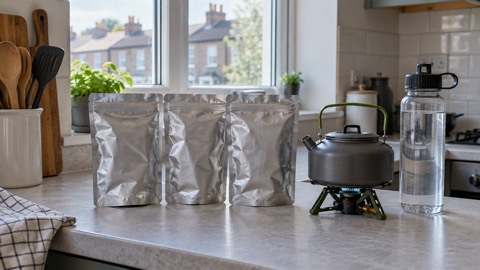
Freeze-dried and dehydrated foods are the classic "survival food" layer. They are light, they keep for a long time in sealed packaging, and they need only water, hot or in some cases cold, to become a meal. That makes them useful in two situations: a grab bag where weight matters, and a long-term store where you want food that rarely needs replacing. Our comparison page on freeze-dried or dehydrated food explains the difference between the two processes and what it means for taste and rehydration, and how long freeze-dried emergency meals keep covers storage life in detail.
What official UK household guidance does not do is recommend freeze-dried food over ordinary tinned and dried food. Every official list quoted on this page is built on tins, packets and jars from a normal shop. Freeze-dried meals are a supplement to that, not a replacement, and they carry a dependency the tins do not: they need water. Lincolnshire's emergency kit list includes water for drinking and sanitation19, and every food kit list pairs food with bottled water1. If you add freeze-dried meals to your store, your water store has to grow with them. See water in an emergency for how much to keep.
Some foods sit in both camps, working as short-term emergency food and as long-life survival food at the same time:
- Tinned food: ready to eat in a power cut, and safe for years on the shelf7
- Dried fruit and nuts: no cooking, no refrigeration, long shelf life3
- Dry staples such as rice, pasta, oats and pulses: ordinary cupboard food that also stores for the long term when kept cool, dry and pest-free7, see rice, pasta, oats and pulses for long-term storage
- Crackers, oatcakes and crispbreads: recommended for power cuts and stable at room temperature7
- Water-resistant packaging: metal cans, sealed pouches and tetra packs, which Food Standards Scotland notes can even survive flooding if undamaged, once the outside is cleaned and sanitised20
That last point matters if you are choosing packaging for a store in a flood-prone area. Food Standards Scotland's flooding advice states that food in water-resistant packaging such as metal cans, sealed pouches and tetra packs can be kept if they are not damaged, but the outside of the packaging will need to be cleaned and sanitised first to avoid cross-contamination20. Tins and sealed pouches therefore have a resilience advantage over boxes and paper-wrapped food. See food after a flood and where to keep an emergency store if your area floods.
Using up fridge and pantry food first
The pantry-first principle from the power cut section applies to every disruption, not just power cuts. Your ration pack is the food you fall back on, not the food you start with. In any emergency, work through the perishable food first: the fridge within its safe window, then defrosted frozen food that needs no cooking, then bread and other room-temperature perishables, and only then the tins, bottles and packets18. This is deliberate rationing in miniature, and it is what official guidance is designed to achieve: the three-day store is a floor under your household, not your first meal of the incident.
Managing the fridge side safely is its own discipline. Keep the door closed as much as possible4, and remember the four-hour figure is a maximum for chilled food, not a guarantee5. If the outage runs longer, treat chilled food with caution and rely on the cupboard. For the details of temperatures and safe windows, see fridge and freezer temperatures and thermometers and how long you can keep leftovers in the fridge.
On raw meat specifically: official food safety advice is to store raw meat in sealed containers at the bottom of the fridge, use different boards for raw and ready-to-eat foods, and keep raw and ready-to-eat foods apart21. In a power cut that advice still holds for as long as the fridge is within its safe window, but raw meat is the first thing to cook or discard once the window closes, because it is the food most likely to cause illness if it warms up. See handling raw meat, poultry and eggs safely and can you refreeze defrosted meat.
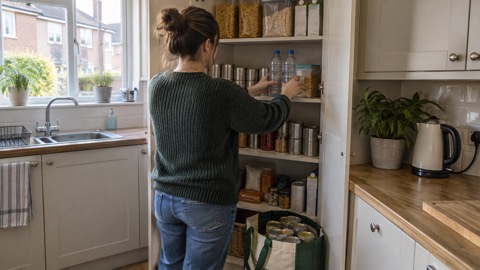
The same first-in-first-out logic runs your store between emergencies. Denbighshire's guidance suggests a simple habit: replace the whole food side of the kit every six months and live off the replaced food for a few days6. That does two things at once: it refreshes your store and it gives your household a real rehearsal of eating from it. North Herts' kit advice makes the same point in one line, ensure the items are kept up to date12. For the fuller system, see rotating your store: first in, first out and shelf life, use by and best before dates explained.
Where everyday food falls short in a long emergency
A three-day store of ordinary food covers the disruptions UK households most often face: power cuts, storms, short floods. It starts to fall short when a disruption lasts longer, cuts off resupply, or both. The weaknesses are predictable once you look for them.
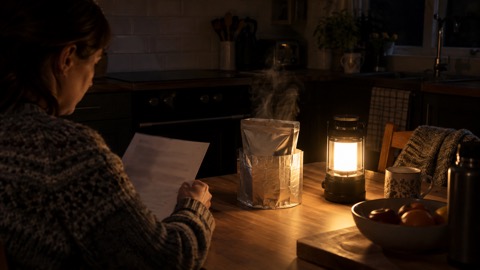
The first is cooking. Much everyday food is edible raw or cold, but a household used to hot meals will find a week of cold tins hard going, and some dry staples, rice, pasta, dried pulses, are not food at all without heat and water. This is why official lists insist on food that does not need cooking2, and why our pages on heating and cooking without mains power or gas, self-heating meals and flameless ration heaters and food flasks and vacuum insulation for hot meals are worth reading alongside this one.
The second is resupply. Lancaster's winter guidance warns that in heavy snow you may not be able to reach a supplier for a number of days10, and Denbighshire's guidance points out that in a widespread major emergency you may have to survive on your own for up to three days or more6. The government's sandbag guidance makes the wider point about emergency supplies in general: during an emergency, sufficient quantities may be difficult to obtain, stocks may be limited per person, supply routes may get blocked, and demand may exceed supply22. Food and other essentials behave the same way, which is the whole argument for having the store before the event rather than shopping during it. For what that looks like in shops, see what disappears from shops first in an emergency.
The third is the household's own needs. Everyday food falls short if it does not cover a baby who needs formula11, a pet that needs its own food23, a medical or allergy diet, or the simple fact that children and pregnant women should not have their food rationed6. A store built only from what the adults like eating is not a complete store. See emergency food for medical, religious and allergy diets and pets and animals in an emergency.
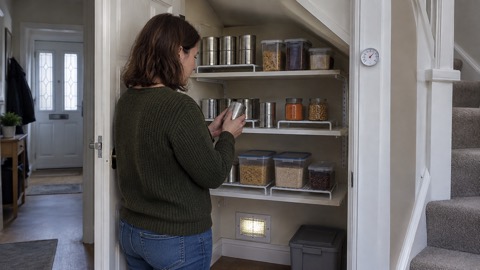
The fourth is storage conditions. A long store needs to stay cool, dry and free of pests, or the food's shelf life is not what the label promised. That is covered in keeping a long-term store cool, dry and free of pests, with mylar bags and oxygen absorbers for dry stores for packing dry staples for the long term.
Keeping the ration pack ready: a short checklist
Everything above reduces to a small set of standing actions. Run through these when you build the store and again every six months.
- Hold three days minimum of food and bottled water, per the standard official figure1
- Choose food that needs no cooking or refrigeration, with a tin opener in the kit2
- Buy what you usually eat, so the store rotates through your normal meals3
- Cover everyone in the household: baby food, pet food and any special diets, remembering that children and pregnant women should not have food rationed6
- Replace the food side of the kit every six months and live off the replaced food for a few days6
- Keep dates checked on everything, including cereal and fruit bars12
- In a power cut, eat in order: fridge, defrosted frozen food needing no cooking, bread and perishables, then the tinned and dried store18
- Keep fridge and freezer doors closed, for up to four hours of chilled food safety4
If an emergency has already stretched your food further than it will go, help exists: see getting emergency food help: food banks, councils and local support and how to get a food bank voucher referral. For the wider kit your ration pack sits inside, see emergency kit: what a UK household should keep ready and getting started: preparing your household for an emergency.
Sources (23)
- Emergency Pack, Lancashire Prepared, 2026-10-29
- Be Ready Household Emergency Plan, UK Government Be Ready campaign, 2026-10
- Be Ready Checklist, UK Government Be Ready campaign, 2026-10
- 12 Tips to Prepare for a Power Cut, Horsted Keynes Parish Council, 2026
- Food Safety in a Power Cut: Advice for Consumers, UK Government, 2023-07-26
- Emergency Supplies Kit, Denbighshire County Council, 2020
- Being Prepared for the Unexpected, Carers UK, 2026-10-25
- Winter Weather: Ready and Prepared, Argyll and Bute Council, 2026
- Create a Household Emergency Lifesaving Plan, Dumfries and Galloway Council, 2026
- Be Prepared, Lancaster City Council, 2026-10-26
- Loss of Essential Services, Greater Manchester Combined Authority, 2026-10-29
- Preparing for Emergencies, North Hertfordshire District Council, 2015-01-12
- Emergency Flood Kit, Scottish Flood Forum, 2018-01
- Flooding Checklist, West Yorkshire Prepared, 2022-10
- Household Emergency Plan, Hillingdon Council, 2026-10-29
- Step 1: Preparation, Essex Prepared, 2026-10-29
- Power Cuts, Wigan Council, 2026-10-29
- Food Safety in the Kitchen: Power Cuts, Food Standards Scotland, 2026-10-25
- Get Help and Advice in an Emergency, Lincolnshire County Council, 2026-10-29
- Food Safety in the Kitchen: Flooding, Food Standards Scotland, 2026-10-25
- Food Poisoning and Waterborne Infections, Shropshire Council, 2026-10-29
- Sandbags and How to Use Them Properly for Flood Protection, UK Government, 2009-03
- Your Pets, Wiltshire and Swindon Prepared, 2026-10-25
 Long-Term Storage Kit Checklist
 Store Cupboard Checklist
 30-Day Household Checklist
 How Much Emergency Food to Store
 What to Store in an Emergency
 Starting a Store Cupboard
 Shelf Life and Date Labels
 Rotating Your Food Store
 Long-Term Storage Conditions
 Meals Without Power
 Self-Heating Meals
 Tinned Food Guide
 Rice, Pasta and Pulses Storage
 Freeze-Dried Meals
 Emergency Ration Bars