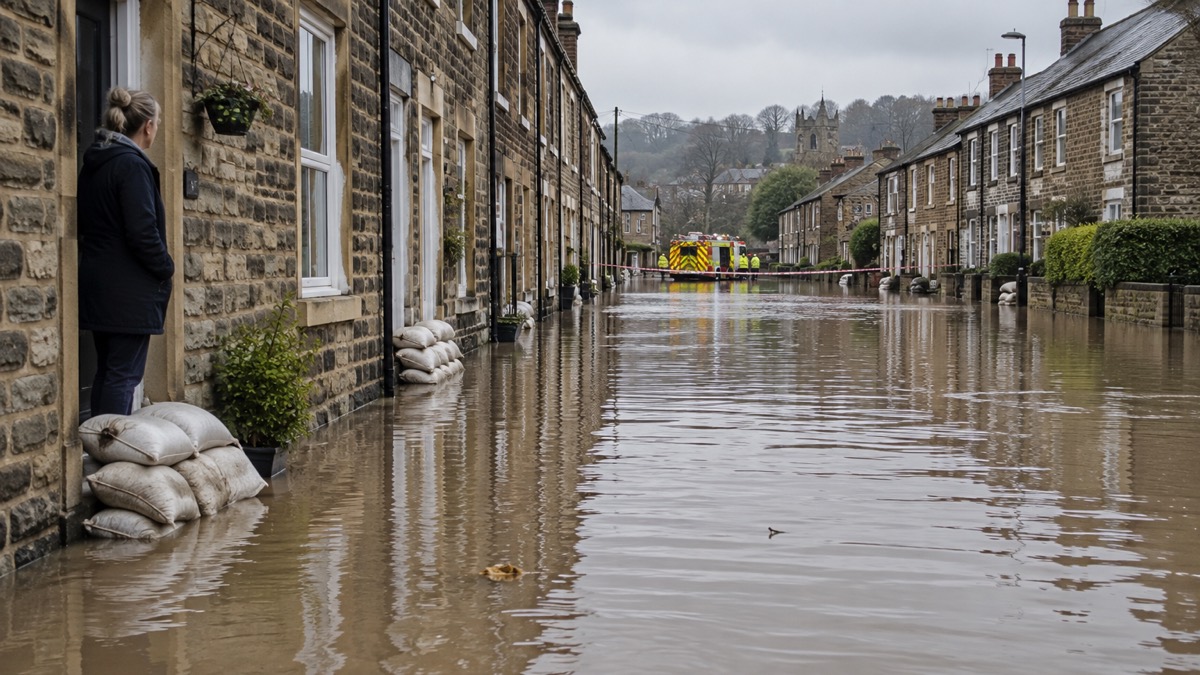
In a major flood or a spell of heavy snow, help does not arrive everywhere at once. The emergency services prioritise the worst affected areas where there is an immediate threat to life, so other areas may have to wait several hours until help is received1. If the emergency is widespread, such as flooding, heavy snow or a power outage, priority goes to the most vulnerable, and there may be a delay in support reaching your community2.
That is not a reason to be alarmed. It is a reason to be ready. The households that cope best are the ones that made a plan before the water rose, know how to keep themselves safe and warm, and have neighbours who will check on them. The single most important rule is to stay out of floodwater: it is not safe to drive, walk or swim through it, and if you are caught in fast flowing or deep water you should call 999 and wait for help3.
This page explains why help can take time, how to look after your household until it arrives, how to stay safe around water, what your council advises, and how to help your community as a volunteer.
Why help can take time to reach you in severe snow or flooding
Emergency responders are not ignoring your street. They are working to a system that puts the greatest danger first. When an emergency is widespread, such as flooding, heavy snow or a power outage, priority is given to the most vulnerable, so there may be a delay in support reaching your community2. In a major flood, the emergency services prioritise the worst affected areas where there is an immediate threat to life, which means other areas may have to wait several hours until help is received1.
Several things make this worse. Roads may be impassable, so crews cannot reach you even if they are free. Call volumes rise sharply, so a call for something that is not life-threatening may wait. And the same event that has hit you has hit the depot, the hospital and the council office.
The practical consequence is simple: assume that you and your neighbours are the first responders for the first few hours. That is why official guidance is so insistent on planning ahead. Derbyshire County Council asks households to make a personal flood plan detailing practical actions before and during a flood, and warns: "Please don't wait until a flood happens to make these plans as there may not be enough time to prepare fully."4
The same logic applies to snow. Heavy snow can strand whole communities, and the emergency services will still prioritise life-threatening calls. A household that can keep warm, fed and safe for a day or two takes enormous pressure off the system, and is far less likely to come to harm.
Being ready to look after your household until help arrives
The aim is not to become self-sufficient for weeks. It is to be comfortable and safe for the hours, or at most a day or two, before normal help reaches you. That means a plan, some basic supplies and a clear idea of what to do first.
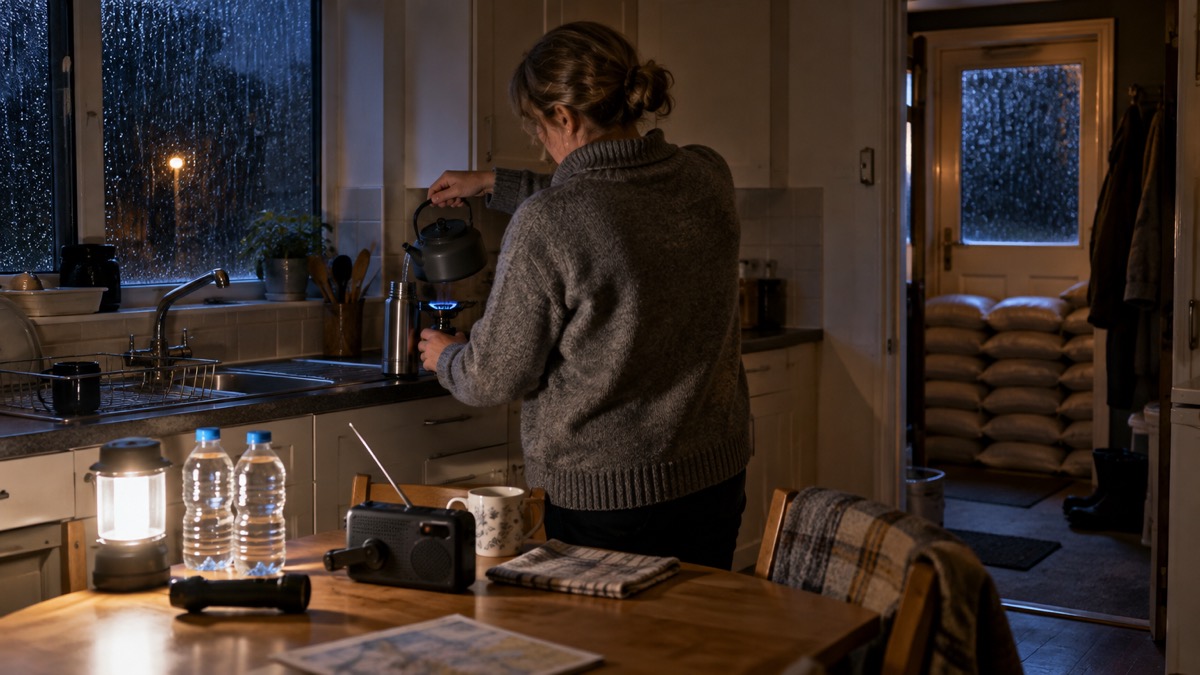
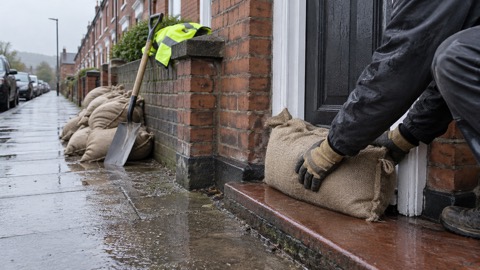
Start with a household flood plan. Somerset Council advises turning off gas and electricity or moving important items to a safe place before a flood happens8. Cornwall Fire and Rescue Service warns that people have suffered from hypothermia after their homes became flooded with cold rainwater, even in summer, so look after neighbours as well as your own household7. Do this on a quiet weekend, not in a downpour.
What to have ready, and why:
- A written plan with who to call, where to go and what to switch off4.
- A torch and a battery radio, because power cuts often accompany storms.
- Drinking water and food that needs no cooking, in case the gas or electricity is off.
- Warm, dry clothing and blankets, because hypothermia is a real risk: people have suffered from hypothermia after their homes became flooded with cold rainwater even in summer7.
- A charged phone and a power bank, so you can call for help and let family know you are safe.
- Any medicines you take regularly, kept where you can grab them.
For a fuller list, see our guide to an emergency kit and to staying informed and in touch.
If you are at the scene of an emergency and it is safe to do so, you could play a vital role by providing first aid, comfort and support while waiting for the emergency services to arrive9. That is official advice, and it reflects a simple truth: in the first hours, neighbours help neighbours.
Keep out of floodwater and open water
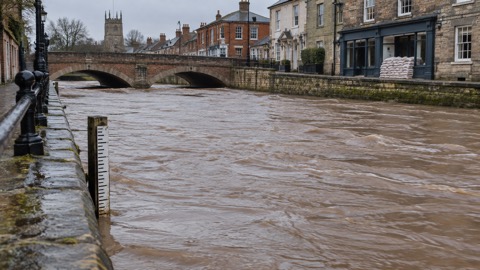
This is the section that matters most for your safety. Floodwater is not just dirty water. The main threats to health with floods are drowning and injuries caused by accidents in fast flowing water10. It can be deeper and faster than it looks, it can hide open drains and debris, and it can be cold enough to incapacitate an adult quickly.
The rules are short and absolute:
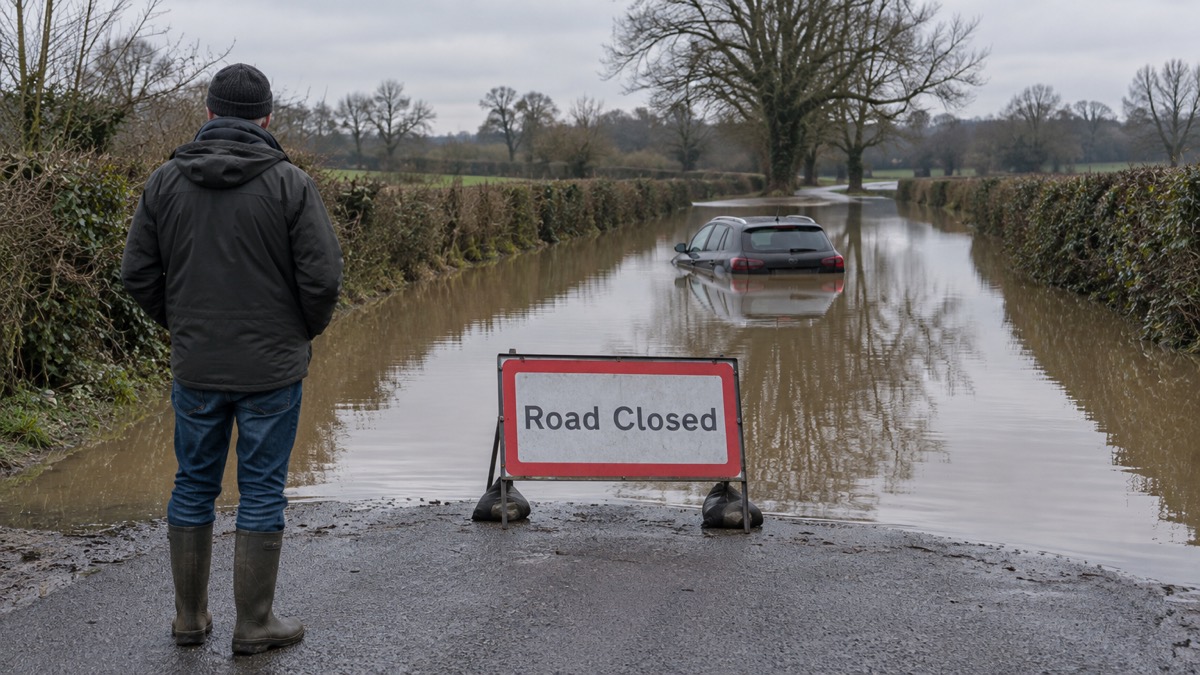
- Do not drive, walk or swim through floodwater. Call 999 if you are in danger11.
- Move to higher ground and wait for the emergency services to find you. Do not stay on lower ground12.
- If you are trapped in a building by floodwater, call 999 and wait for help11.
- If your vehicle is caught in floodwater, get out if you can, and as soon as possible after leaving the vehicle call the emergency services for help13.
- Park your car outside the flood zone when heavy rain is forecast, so it is not caught3.
If someone does end up in the water, get them out safely and get them medical attention immediately, even if they seem fine. Drowning can occur at a later stage if water has already entered the lungs, and it can cause death up to 48 hours after the near-drowning incident14.
If water is coming into your home, the priority is to keep safe and keep warm16. Move upstairs if you can, take your phone, medicines and warm layers, and call 999 if there is a risk to life.
Your council's emergency preparedness advice
Every council in the UK publishes flood advice, and it is worth reading yours before you need it. The advice is consistent, and it is built around the same few points.
| Council or body | What it advises |
|---|---|
| Derbyshire County Council | Make a personal flood plan for yourself and your family, or your business, detailing practical actions before and during a flood. Do not wait until a flood happens4. |
| Somerset Council | Turn off gas and electricity or move important items to a safe place before a flood happens8. |
| Cornwall Fire and Rescue Service | Do not underestimate flood damage; check insurance covers flood; make a family flood plan; only call for immediate help if there is a risk to life7. |
| Surrey County Council | Drying out your home can take several weeks or even months, and many houses will take six months or even longer to repair5. |
| Met Office | Park your car outside the flood zone; do not drive, walk or swim through floodwater3. |
Somerset Council is a useful example of how a council's advice fits together. It is classified as a Category 1 responder for most emergencies including flooding under the Civil Contingencies Act 200418. It asks residents to report flooding by email to flooding@somerset.gov.uk, and explains that taking the time to fill in its form will help with a multi-agency flood response, but this will not trigger an immediate response from any agency19. That is an important distinction: reporting is for the record and for planning, not a substitute for calling 999 when life is at risk.
If your home is flooded and you need housing help, Somerset Council's Housing Options team can give advice on dealing with the flood, visit the property with the landlord and agree repair timescales, refer you to local services for help with compensation or benefits, and help find temporary or permanent accommodation20. Where other options are exhausted, the council may provide emergency accommodation such as a hostel, a bed and breakfast, or a council property, and you may have to pay rent or a contribution20. The Community Council For Somerset's Village Agents also offer support to people who have been flooded21.
For the national picture, see Flooding: A Household Guide and Storms, Snow and Ice: A Household Guide.
Helping your community as an emergency volunteer
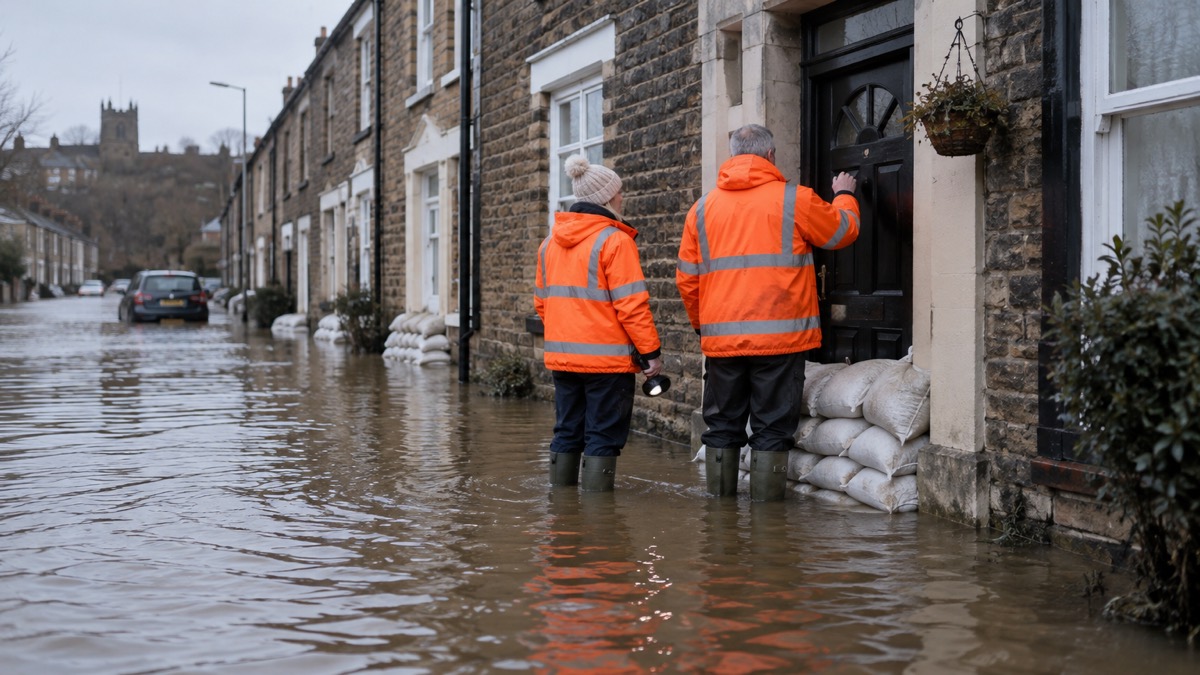
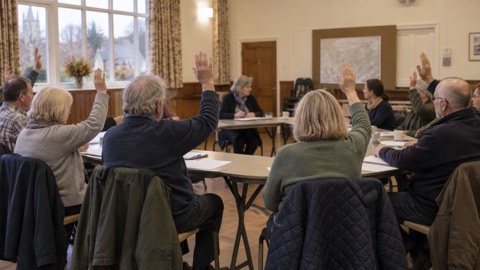
The most useful thing you can do for your community is to join something before the emergency, not during it. Greater Manchester Combined Authority advises residents to join or support a local volunteering or community group before an emergency happens, such as a local charity, a flood action group or a Neighbourhood Watch22.
There are several routes in, and they suit different people:
- Flood wardens are local volunteers who help their communities prepare for, respond to, and recover from flooding23. They help prepare communities to deal with emergencies, especially during the first critical hours of any community emergency24. See Flood Wardens: What They Do and How to Become One.
- Community First Responders provide critical, life-saving support in the vital minutes before an emergency ambulance arrives, reaching emergencies faster than an ambulance, particularly in rural areas25. Travelling in their own vehicles, volunteer CFRs provide essential lifesaving treatment and support in those crucial minutes before the ambulance crew arrives25. See Community First Responders: What They Do and How to Join.
- Community reserve volunteers sign up in advance to be called on when services are stretched.
- Local groups such as flood action groups and good neighbour schemes, which you can set up or join. See Starting a Flood Action Group in Your Area and Good Neighbour Schemes: What They Are and How to Join.
If you are asked to help, wait at a safe, agreed location if requested and provide the emergency services with further details26. Do not put yourself in danger to help: our guide to what volunteers can safely do, and where to stop sets out the limits.
Checking on vulnerable neighbours
Checking on neighbours is one of the most valuable things an ordinary household can do, and it is official advice. Nottinghamshire County Council asks residents to check on vulnerable neighbours or relatives during a flood27. In Scotland, the advice after a flood is to check on neighbours, relatives or others who may need extra support10.
Who to check on:
- Older people living alone, and anyone with a disability or long-term health condition.
- People who may struggle to keep warm, since hypothermia can occur even in summer7.
- Anyone who has recently been flooded and may be exhausted, isolated or without power.
- People whose homes are empty because they have been evacuated: arrange for a neighbour to make regular checks of your property, and ask the neighbour to inform the police by the 999 system if they see or hear anything suspicious28.
When you check, ask whether they have water, food, warmth, medicines and a working phone. If they need urgent help, call 999. If the need is not urgent, help them contact their council or a local charity. Our guide to checking on vulnerable neighbours in an emergency goes into more detail, and Extra Help in an Emergency covers households with medical or mobility needs.
After the water goes down
Recovery is where many households are caught out, because it takes far longer than people expect. Drying out your home can take several weeks or even months5, and many houses will take six months or even longer to repair6. Cleaning and repairing a flooded home so you can live in it again can take months29.
Longer-term recovery from a major emergency can take many years, and joining support groups and marking anniversaries may help30. That is not a sign of weakness; it is what the guidance says helps people recover.
For the practical steps, see Flooding: A Household Guide and the community pages on volunteering in emergencies and how councils and emergency services work with local groups.
Sources (30)
- Community Flood Planning, Thurrock Council
- Community Response Planning, West Yorkshire Prepared
- Stay Safe in Heavy Rain, Met Office
- Personal Responsibility, Derbyshire County Council
- After a Flood, Surrey County Council
- Getting Back Into Your Home Following Flooding, Surrey County Council
- Flooding, Cornwall Council
- Preparing for Flooding, Somerset Council
- Be Informed About Hazards, UK Government Prepare campaign
- Flooding Advice, Scottish Borders Council
- Staying Safe in Flooding, West Midlands Ambulance Service
- Before, During and After a Flood, Scottish Environment Protection Agency
- Flood Water Is Coming Into My Home, London Fire Brigade
- Water Safety, Devon and Somerset Fire and Rescue Service
- Alcohol and Dangers of Water, Mid and West Wales Fire and Rescue Service
- During The Flood_Download_04, Orkney Islands Council
- Clearing Flood, Oxford City Council
- Personal Responsibility, Derbyshire County Council
- After Flooding, Somerset Council
- Housing Help If Your Home Is Flooded, Somerset Council
- Flooding on the roads, Somerset Council
- Prepare Your Community, Greater Manchester Combined Authority
- Be Flood Ready: Guidance for Flood Wardens, Harborough District Council
- Flood Wardens, Wiltshire and Swindon Prepared
- How We Respond to 999, Welsh Ambulance Service
- Stay safe this summer - reduce the risk of wildfires - News - Wiltshire & Swindon Prepared, Wiltshire & Swindon Prepared
- During a Flood, Nottinghamshire County Council
- Be Prepared, Lancaster City Council
- What to Do After a Flood, Natural Resources Wales
- Prepare Yourself, Greater Manchester Combined Authority
 Emergency Hub Kit Checklist
 Severe Weather Tasks for Groups
 Flood Warden Checklist
 Testing an Emergency Plan
 Activating an Emergency Plan
 Emergency Volunteer Insurance
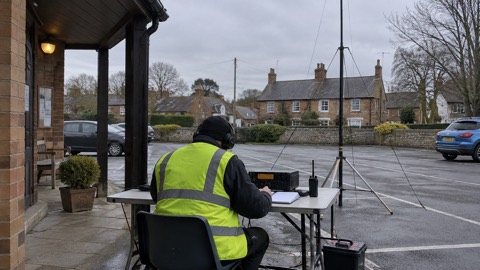 RAYNET Emergency Radio
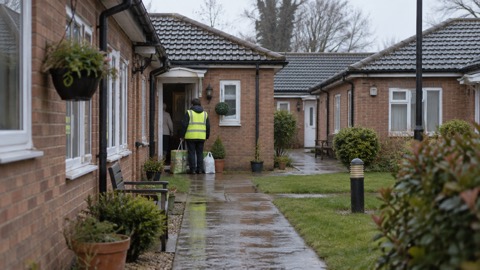 Volunteer Shopping Delivery
 Local Group Constitution
 GoodSAM Responder Alert App